Table of Contents:
- Beyond Basic Tint: The Engineering of High-Performance Film
- Specifying Performance: Key Metrics for Project Managers
- The 3M Advantage: Delivering Multi-Layered ROI
- From Spec Sheet to Installation: A Guide to Seamless Execution
- Why Your Installation Partner is as Critical as the Film
- Conclusion: Transforming Window Film from an Expense to a Strategic Asset
- Frequently Asked Questions
- Related Posts from Window Film Depot
For many project managers, the term “window film” conjures images of basic, dark tinting used for privacy. This is a critical misconception. High-performance anti-glare window film is an engineered solution, a technological asset as different from standard tint as a modern smartphone is from a rotary telephone. Understanding this distinction is the first step in leveraging film as a strategic tool rather than a simple cosmetic add-on.
Beyond Basic Tint: The Engineering of High-Performance Film
The most common point of confusion lies in equating all films that darken glass. Standard commercial window tinting primarily relies on dye or simple pigments. Its main function is to absorb light uniformly, which reduces visible light and provides privacy by making the window darker. While it can cut some glare, this often comes at the cost of significantly reduced natural light and a distorted, heavily colored view.
High-performance anti glare window film, by contrast, is a multi-layered product engineered for optical precision.
It utilizes advanced technologies like ceramic nanoparticles or microscopic layers of metal that are sputtered onto the film.
This allows the film to selectively manage specific wavelengths of the solar spectrum.
The goal is not simply to darken the window, but to precisely filter out the harsh visible light that causes glare and eyestrain, all while preserving the clarity and integrity of the view.

The effectiveness of modern film hinges on the principle of spectral selectivity. It acts as a sophisticated gatekeeper for the sun’s energy, which contains ultraviolet (UV), visible light, and infrared (IR) light. The film allows a high percentage of beneficial, ambient light to pass through while specifically targeting and rejecting the intense frequencies that create glare. At the same time, it blocks over 99% of damaging UV rays and a significant portion of heat-producing infrared radiation. This technology allows you to control the light, not just block it, resolving occupant complaints without creating the “cave effect” of heavy tints or drawn blinds.
For projects that require both glare reduction and controlled visibility, one-way window film can also be incorporated into the overall specification. This solution allows occupants to maintain outward visibility while limiting external views during the day, complementing anti-glare performance without compromising natural light or interior clarity.
Specifying Performance: Key Metrics for Project Managers
When your goal is to reduce glare on office windows, the approach must be grounded in performance metrics. The right film is a technical specification, not an aesthetic guess. As you evaluate options, focus on the manufacturer’s data sheets and look for these key indicators.
- Visible Light Transmission (VLT): This measures the percentage of visible light passing through the filmed glass. A lower VLT means a darker film and more glare reduction, but less natural light. The challenge is finding the sweet spot. A corporate office where screen visibility is paramount might need a lower VLT, while a retail storefront might prioritize a higher VLT to maintain a bright, welcoming environment.
- Total Solar Energy Rejected (TSER): This value provides a complete picture of a film’s thermal performance. It measures the total amount of solar energy, including visible light, IR, and UV, that is blocked from entering a building. A higher TSER indicates better heat-blocking performance, which directly reduces the load on HVAC systems and lowers cooling costs. This is the single most important metric for evaluating a film’s impact on energy efficiency and calculating its ROI.
- UV Rejection: High-performance films typically block over 99% of harmful UV rays. Ultraviolet radiation is the primary cause of fading in interiors, damaging furniture, flooring, artwork, and merchandise. This metric is a straightforward but powerful point for clients concerned with protecting their interior assets and promoting occupant wellness.
- Glare Reduction: This percentage quantifies how much a film reduces visible light transmission compared to an unfilmed window. A film with 60% glare reduction will eliminate that amount of visual discomfort. When reviewing a specification, cross-reference this value with the VLT to find the ideal balance of glare control and natural daylight for your project’s specific needs.
The 3M Advantage: Delivering Multi-Layered ROI
Choosing a premium solution like 3M Sun Control Window Film allows you to move beyond single-issue fixes. Instead of specifying one product for glare, another for energy savings, and a third for UV protection, you can meet multiple client demands with a single, elegant specification. This consolidation of benefits is where a project manager can demonstrate exceptional value.
With one product, you can deliver on:
- Occupant Comfort and Productivity: Drastically reduce glare on screens and surfaces to mitigate eye strain.
- Energy Efficiency: Lower solar heat gain, which reduces HVAC costs and contributes to LEED certification points.
- Asset Protection: Block over 99.9% of UV rays to prevent fading of valuable interiors and merchandise.
- Aesthetic Enhancement: Modernize a building’s facade and create a uniform, sophisticated appearance.
These benefits can be integrated with safety and security film constructions. These hybrid films provide all the solar benefits within a thicker, more robust polyester layer bonded with a stronger adhesive. This single product can mitigate glare, enhance privacy, and provide a formidable barrier against forced entry or injury from shattered glass. In applications requiring total visual concealment or signal control, blocking film can also be specified to fully restrict visibility or electronic transmission through glass.
Consider these common scenarios:
Need More Info?
The Window Film Depot team is happy to help.
- The Corporate Office Retrofit: A client complains of afternoon glare causing productivity drops and high cooling bills. Specifying a 3M Sun Control Film, Prestige Series, reduces glare and heat while remaining virtually clear, preserving views and natural light. The result is improved comfort, lower energy consumption, and UV protection for office furnishings.
- The Street-Level Retail Space: A luxury retailer is concerned about merchandise fading in their window displays. A 3M Sun Control Window Film with high VLT and superior UV rejection protects merchandise and cuts glare, enhancing the customer experience without compromising the bright aesthetic essential for retail storefronts.
From Spec Sheet to Installation: A Guide to Seamless Execution
Specifying the right film is the first step. Translating that specification into a flawless installation requires a disciplined approach to planning and execution, which is key to mitigating risk and controlling costs.
Pre-Installation Planning and Logistics
A successful installation begins with due diligence. A comprehensive site survey involves assessing glass type, frame conditions, and potential access challenges. Glass compatibility is a crucial technical checkpoint. A professional assessment is required to ensure the selected film will not cause thermal stress fracture, a costly and preventable failure.
Strategic scheduling is paramount, especially in occupied buildings. A phased work plan, often executed during non-operational hours, minimizes disruption. Clear communication with tenants about the schedule and process can turn a potential inconvenience into an anticipated improvement.
Quality Control During and After Installation
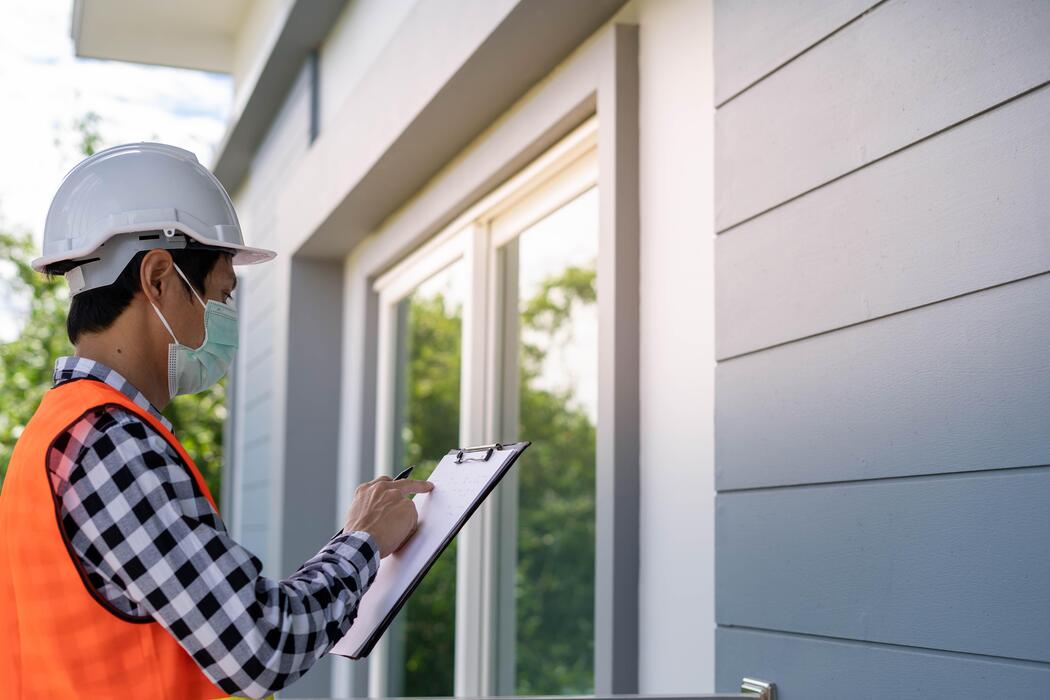
As a project manager, you are the final arbiter of quality. During installation, observe the crew’s process for cleanliness, as any debris trapped under the film is a sign of poor workmanship.
After a window is completed, conduct a visual inspection. Look for:
- Contamination: Specks of dust, hair, or debris trapped between the film and the glass.
- Bubbles or Lifts: While small water pockets are normal during curing, large air bubbles or lifting at the edges are defects.
- Edge Quality: The film should be cut neatly with a consistent, minimal gap (typically 1/16″ to 1/8″) around the edge.
Finally, communicate the film’s curing period to your client. The film requires 30 to 60 days for the mounting solution to fully evaporate, during which a slightly hazy appearance is normal. Advise against cleaning the windows during this time.
Why Your Installation Partner is as Critical as the Film
The performance data on a spec sheet can only be realized through expert application. The choice of installation partner is a strategic decision that carries as much weight as the choice of the film itself.
Engaging an inexperienced installer introduces significant risks, including poor quality control, film failure, project delays, and even glass fractures from incompatible film choices. For project managers overseeing national retail rollouts or corporate campus upgrades, a national installer for commercial window tinting for glare reduction offers a powerful advantage. It ensures absolute consistency in quality, standards, and pricing across every location, simplifying a complex logistical puzzle into a single relationship.
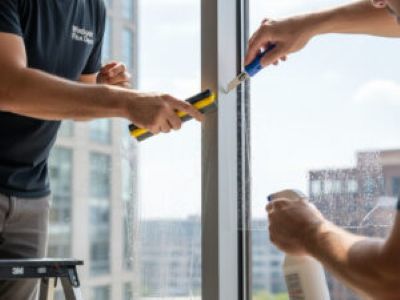
Partnering with a top-certified installer, such as the #1 U.S. 3M Window Film Installer, provides a level of project assurance that goes beyond standard practice. This partnership de-risks the project by ensuring the team on-site has the backing and technical authority of the leading name in the industry. It also ensures that the manufacturer’s comprehensive warranty is protected, as these warranties are contingent on installation by a certified professional. This is the final step in delivering a complete, protected, and long-term asset to your client.
Conclusion: Transforming Window Film from an Expense to a Strategic Asset
High-performance anti glare window film is no longer a minor add-on. It has evolved into a critical building component that delivers a multi-layered return on investment, shifting its classification from a simple expense to a strategic asset.
The business case is clear. By mitigating glare, the film improves occupant comfort and productivity. By blocking over 99% of UV radiation, it acts as a powerful shield for a building’s interior, protecting valuable furnishings, flooring, and merchandise from fading. When combined with measurable energy savings from reduced solar heat gain, the film becomes a tool for lowering long-term operational costs and enhancing a building’s marketability.
When justifying your specification, focus on value. Frame the film as a multi-problem, single-solution investment that protects the larger project investment in interior finishes. To ensure your project is a success, follow these steps:
- Conduct a Glare and Solar Audit: Identify problem areas to establish a baseline and define project goals.
- Define Primary Objectives: Clarify if your priority is maximum glare reduction, UV protection, heat rejection, or a balance of all three.
- Request Samples and Data Sheets: Evaluate physical samples in the space and compare VLT, TSER, and UV Rejection metrics across products.
- Engage a Specialist for Consultation: Partner with a qualified window film consultant early to ensure the correct product is selected and installed to warranty standards.
Frequently Asked Questions
What is the main difference between anti-glare film and regular window tint?
Regular window tint primarily uses dye to darken glass, which reduces light and offers privacy but can distort views and block beneficial natural light. High-performance anti glare window film is an engineered product that uses advanced technologies like ceramics or metals to selectively filter out the harsh frequencies of light that cause glare, all while maintaining high levels of natural light and view clarity.
How long does commercial window film last?
Not necessarily. Modern spectrally selective films are designed to solve this exact problem. You can choose a film with a higher Visible Light Transmission (VLT) that significantly reduces glare while allowing a large percentage of natural light to pass through. This preserves the bright, open feel of a space without the “cave effect” of dark, traditional tints.
How can I be sure the film will actually lower our energy bills?
The key metric to look for is Total Solar Energy Rejected (TSER). A film with a high TSER value blocks a significant amount of the sun’s heat-producing infrared radiation. This reduces the heat load on your building, meaning your HVAC system doesn’t have to work as hard to maintain a cool temperature, directly leading to lower energy consumption and costs.
Is professional installation really necessary for commercial window film?
Yes, for several critical reasons. First, professional installers have the tools and experience to ensure a flawless, bubble-free application. Second, they can verify that the chosen film is compatible with your existing glass to prevent thermal stress fractures. Finally, using a manufacturer-certified installer is almost always required to validate the product warranty, protecting your client’s investment.
How long does commercial window film last?
High-quality, professionally installed window film is extremely durable. Most leading manufacturers, like 3M, offer comprehensive warranties that often last for 10 to 15 years in commercial settings. Proper, non-abrasive cleaning helps ensure the film’s longevity and performance throughout its lifespan.