Table of Contents:
- Beyond the Hype: How Ballistic Resistant Film Functions
- The Unseen Foundation: Why the Complete Glazing System is Paramount for Project Managers
- Navigating Standards: Understanding UL 752 and Ballistic Performance Ratings
- Specifying for Success: Engineering a Comprehensive Ballistic Security Solution
- Protecting Your Project and Reputation: Risk Mitigation Through Expert Specification
- Conclusion: Key Takeaways for Engineered Security and Future Preparedness
- Frequently Asked Questions
- Related Posts from Window Film Depot
Unpacking the Misconception: “Bulletproof” vs. “Bullet Resistant”
The term “bulletproof” is a pervasive misnomer in the security industry, often leading to dangerous assumptions about a material’s capabilities. In reality, no material is impervious to all ballistic threats. What is achievable, and what accredited manufacturers design for, is “bullet resistance.” This distinction is critical for anyone specifying security solutions, such as bullet-resistant film.
Bullet-resistant materials and specialized glazing systems withstand specific threat levels for defined durations. Independent testing standards like UL 752 categorize these materials based on their engineered performance.
These ratings indicate resistance to particular projectile types and velocities, designed to delay or defeat penetration. To assume any product is “bulletproof” against every potential weapon system invites catastrophic failure and undermines the entire security objective.
The Critical Implications of Misinformation for Project Managers
For project managers, operating with the bulletproof shield misconception carries significant implications. Specifying products based on marketing hype rather than verified performance data creates a dangerously false sense of security. This misinformed decision results in inadequate solutions that fail to meet actual threat requirements and leave occupants vulnerable.
Effective security is about informed risk mitigation. Relying on an unverified or misunderstood term jeopardizes the integrity of the security design. This fundamentally misrepresents installed system capabilities to building occupants and owners. It creates a critical gap between perceived and actual protection levels.
The Liability Trap: Understanding Your Responsibility in Security Specification
Precise security specification reflects a project manager’s due diligence and carries significant professional liability. Specifying film as “bullet-resistant” without understanding the complete system creates a substantial liability trap. Any failure event will inevitably scrutinize specifications and choices made during the security design phase.
Failure to select a solution that demonstrably meets the intended threat level, or misrepresenting its capabilities, can lead to:
- Legal Exposure: Negligence claims arising from injury, loss of life, or property damage due to inadequate protection.
- Reputational Damage: The irreparable harm to professional standing and organizational credibility.
- Financial Repercussions: Costs associated with remediation, litigation, and insurance implications.
Mitigating this liability requires moving beyond product-centric thinking to a more robust, system-centric approach. This demands engaging specialists who accurately assess threats and translate them into verifiable performance specifications. Professionals must integrate film, glass, and anchoring into a certified, ballistic-resistant assembly.
Beyond the Hype: How Ballistic Resistant Film Functions
The Science of Impact: Understanding Energy Dissipation and Film Structure
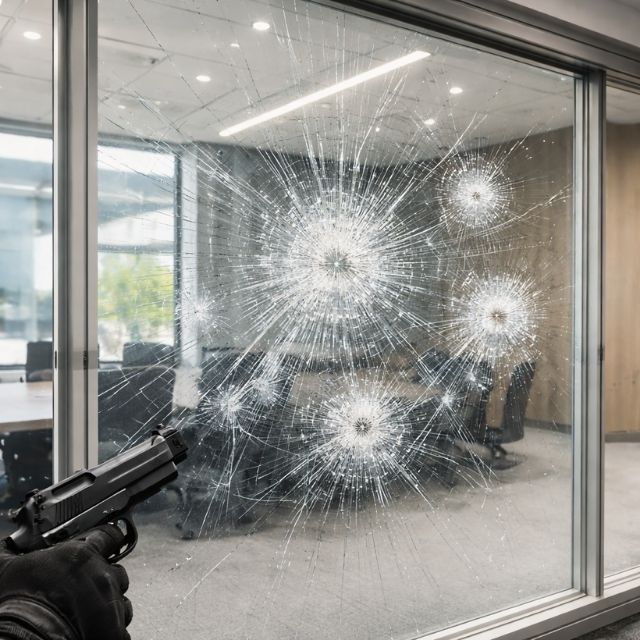
Ballistic-resistant window film functions on the principle of energy dissipation, fundamentally altering how glass responds to high-velocity impacts. Gemini said
Traditional glass shatters upon impact, but specialized security films absorb and distribute kinetic energy across broader surface areas. This design prevents fragmentation and manages the intense force of a projectile more effectively than standard glazing.
- Multi-layered Polyester: These films are typically constructed from multiple layers of high-tensile polyester, bonded together with robust adhesives.
- Elastic Deformation: Upon impact, the film flexes and stretches, absorbing a significant portion of the bullet’s energy through elastic deformation. This action slows the projectile and prevents the immediate catastrophic failure of the glass pane.
- Containment: While the glass substrate will still fracture, the film’s primary role is to hold the fractured glass together, preventing an open breach and maintaining a protective barrier.
Anti-Spall Protection: Mitigating Secondary Hazards from Projectiles
One of the most critical, yet often overlooked, functions of ballistic-resistant film is its anti-spall protection. Projectiles striking glass can create dangerous shards that explode inwards, even if the primary object is stopped. This phenomenon, known as spall, poses a severe secondary hazard and can cause significant injury to building occupants. Security films are engineered to mitigate this risk. By adhering firmly to the glass, the film effectively contains these sharp fragments, preventing them from becoming dangerous projectiles themselves. This capability dramatically reduces injury risk from flying glass during a ballistic event. It enhances the overall safety profile of the protected space.
Adhesion and Tensile Strength: The Film’s Role Within a System
The effectiveness of ballistic-resistant film is tied to its adhesion to the glass and its tensile strength. The film does not stop bullets alone; it performs a crucial containment role within a broader system.
- Adhesion: The proprietary adhesive system is paramount. It must form an exceptionally strong and durable bond with the glass surface, ensuring that the film remains integrally attached even under extreme impact stress. Without superior adhesion, the film can delaminate, allowing glass fragments to dislodge or the entire pane to fail prematurely.
- Tensile Strength: This refers to the film’s resistance to breaking under tension or stretching. High tensile strength allows the film to absorb and distribute impact forces without tearing, effectively holding the integrity of the compromised glass in place. It acts as a flexible, strong net, preventing the creation of a clear opening.
This symbiotic relationship — the film holding the fractured glass, and the glass initially absorbing the primary impact energy — underscores why the film is only one component of a “system” and not a standalone solution for ballistic resistance.
Introduction to Specialized Film Technologies
The field of ballistic-resistant film technology has advanced significantly, offering solutions tailored to various security needs and aesthetic considerations. These specialized films often combine multiple attributes to deliver both protection and practicality.
Key characteristics and technologies often found include:
- Multi-Layered Construction: Advanced films utilize complex laminate structures, often comprising ten or more layers of polyester, to maximize energy absorption and impact dispersion.
- Proprietary Adhesive Systems: These are custom-engineered for extreme bond strength and durability, crucial for maintaining system integrity under attack.
- Optical Clarity: Despite their multi-layered thickness, high-quality ballistic films maintain exceptional optical clarity, ensuring an uncompromised view and preserving the aesthetic of the glazing. Brands like 3M Scotchshield are recognized for their robust construction and clarity.
- Varying Thicknesses: Films are available in different gauges, with thicker films generally offering higher levels of resistance when properly integrated into a system. The appropriate thickness is determined by the specific threat assessment and desired UL 752 rating.
The Unseen Foundation: Why the Complete Glazing System is Paramount
Effective security glazing extends far beyond the film itself; it encompasses a meticulously engineered system where each component plays a critical role in overall performance. A common misconception is that applying a security film inherently creates a bullet-resistant barrier. In reality, the film functions as one layer within a complex assembly, and its efficacy is entirely dependent on the characteristics of the glass it adheres to and the structural integrity of its attachment to the window frame. Ignoring any of these elements creates significant vulnerabilities and can lead to catastrophic failure, directly impacting project safety and liability.
The Critical Role of Glass Type and Thickness in Ballistic Resistance
The inherent properties of the glass substrate are foundational to any ballistic-resistant glazing system. Different glass types react uniquely to impact, and their thickness is directly correlated with their ability to absorb and dissipate energy. For instance, while a security film can significantly enhance the post-breakage integrity of annealed or tempered glass, it cannot unilaterally elevate their ballistic performance to the levels required for true bullet resistance.
- Annealed Glass: Breaks into large, sharp shards. Film helps hold these shards together but offers minimal initial ballistic resistance.
- Tempered Glass: Shatters into small, relatively harmless cubes. Film helps contain these fragments but provides limited structural integrity against high-energy impacts.
- Heat-Strengthened Glass: Offers an intermediate strength between annealed and tempered glass.
- Laminated Glass: Consists of two or more panes bonded by an interlayer (often PVB). This construction is inherently more resistant to penetration and provides a crucial foundation for higher-level ballistic protection when combined with specialized films.
The combination of appropriate glass type and sufficient thickness forms the primary line of defense. Specifying security film without a detailed understanding of the existing or proposed glass can create a dangerous illusion of security, leaving the project exposed to an unacceptable level of risk.
Anchoring and Attachment Systems: Securing the Entire Assembly to the Frame
Even if the combined film and glass assembly successfully resists ballistic penetration, the entire unit can be dislodged from the window frame if not properly secured. This is a critical failure point that is often overlooked. An anchoring or attachment system binds the security film, the glass, and the existing window frame into a cohesive unit. Without it, a successful attack could simply force the entire pane out of its opening, rendering the film and glass protection irrelevant.
These systems typically involve structural adhesives, such as specialized silicones, or mechanical attachments that create a robust bond between the glazed assembly and the frame. The choice of anchoring system depends on various factors, including the frame material, the expected threat level, and environmental conditions. Professional installation and careful specification of these systems are paramount to ensure that the entire window opening maintains its integrity during an attack, thereby preventing forced entry even after the glass has been compromised. Overlooking this detail directly compromises occupant safety and increases project liability.
System Integration: The Synergy of Film, Glass, and Frame for True Protection
True ballistic resistance is achieved not through a single component but through the seamless integration of the film, glass, and frame into a unified system. Each element must be engineered to work in concert, contributing to the overall strength and energy-dissipating capabilities of the assembly. The film enhances the glass’s ability to resist shattering and post-breakage penetration. The glass provides the initial mass and structural integrity. The anchoring system ensures the entire unit remains fixed within its opening.
When these components are properly integrated, they create a robust barrier designed to absorb and distribute impact energy, minimize spall (flying glass fragments), and prevent unauthorized access. The weakest link in this chain determines the performance of the entire system. Therefore, specifying a security film in isolation, without considering its interaction with the specific glass type and the necessity of a complementary anchoring system, is a fundamental misstep. This integrated approach is non-negotiable for achieving reliable security performance.
Mitigating Broader Threats: Forced Entry and Blast Resistance Beyond Ballistics
While ballistic resistance is a critical concern, a well-engineered security glazing system offers significant benefits against a wider spectrum of threats. The same system components designed to mitigate ballistic impacts also inherently provide enhanced protection against forced entry and blast events.
- Forced Entry: The combination of security film and robust glass, secured by an anchoring system, substantially increases the time and effort required for an intruder to breach the opening using blunt force tools. This delay is crucial for response teams and directly enhances the security posture of the facility.
- Blast Resistance: In the event of an explosion, a properly designed and anchored security glazing system helps to contain the glass fragments within the frame, preventing dangerous spall that can cause severe injuries or fatalities. While specific blast-resistant films and glazing systems exist, a ballistic-rated system often provides a baseline level of blast mitigation.
Considering these broader threat categories during the initial specification process allows for a more comprehensive security solution, addressing multiple risks with a single, integrated system. This proactive approach minimizes future vulnerabilities and bolsters a project manager’s ability to demonstrate due diligence in protecting occupants and assets.
Bullet Resistant Film: Understanding UL 752 and Ballistic Performance Ratings
To ensure that a security glazing system meets the specific protection requirements of a project, it is essential to understand and correctly apply industry-recognized performance standards. These standards provide a quantifiable measure of a system’s ability to withstand various threats, moving beyond marketing claims to verifiable performance data. For ballistic resistance, UL 752 is the most widely referenced standard.
Demystifying UL 752: Levels of Protection and Their Real-World Meaning
UL 752, “Standard for Bullet-Resisting Equipment,” is the definitive industry standard for evaluating the ballistic performance of building components, including glazing systems. It is crucial to understand that UL 752 rates complete systems, not individual components like film or glass in isolation. The standard defines various levels of protection, each corresponding to resistance against specific firearm types and bullet calibers.

- Level 1: Resists three shots from a 9mm handgun.
- Level 2: Resists three shots from a .357 magnum handgun.
- Level 3: Resists three shots from a .44 magnum handgun.
- Level 4: Resists one shot from a .30 caliber rifle.
- Level 5: Resists one shot from a 7.62mm rifle.
- Level 6: Resists five shots from a 9mm submachine gun.
- Level 7: Resists five shots from a 5.56mm rifle.
- Level 8: Resists five shots from a 7.62mm rifle.
Each level specifies the ammunition type, projectile mass, velocity, and the number of impacts the system must withstand without penetration or significant spall. Project managers must align the required UL 752 level with the identified threat assessment for their specific facility. Specifying a system that is either over-engineered or under-engineered for the actual threat profile can lead to unnecessary costs or, critically, an inadequate level of protection.
Beyond UL 752: Other Relevant Standards for Comprehensive Security Glazing
While UL 752 is paramount for ballistic resistance, comprehensive security glazing often requires consideration of other relevant standards to address a broader range of threats and safety concerns. Relying solely on a UL 752 rating without evaluating these complementary standards can leave significant vulnerabilities.
- ASTM F1233: This standard evaluates the forced-entry resistance of security glazing, measuring the time and effort required to create a breach using various tools and attack methods.
- GSA TS01/ASTM F1642: These standards pertain to blast resistance, primarily used for government and critical infrastructure applications. They define performance criteria for glazing systems to mitigate injuries from flying debris following an explosive event.
- ANSI Z97.1 and CPSC 16 CFR 1201: These are safety glazing standards that dictate how glass should break to minimize injury, regardless of security enhancements. Compliance with these general safety standards remains essential even when integrating security features.
A project manager’s responsibility extends to ensuring that the specified glazing system not only resists ballistic threats but also adheres to general safety guidelines and provides appropriate protection against other probable attacks. This holistic approach is fundamental to managing project liability and ensuring occupant safety.
The Importance of Third-Party Certification and Testing Data for System Components
In the realm of security glazing, claims of performance must be substantiated by objective evidence. This is where third-party certification and comprehensive testing data become indispensable. Third-party certification means that an independent, accredited laboratory has rigorously tested the complete system (film, glass, and anchoring) against established standards like UL 752, and has verified its performance.
Project managers should always demand and meticulously review the following:
- UL Certification Marks: Look for UL Marks directly on the product or in official documentation.
- Detailed Test Reports: These reports should outline the specific testing protocols, ammunition used, and the observed performance of the exact system configuration being specified.
- Certificates of Compliance: Official documents from the testing authority confirming that the system meets the stated standard.
Relying solely on manufacturer assurances or marketing literature without verifiable third-party testing data exposes the project to significant risk. Without this empirical evidence, there is no guarantee that the installed system will perform as expected in a real-world scenario, directly impacting the project’s security efficacy and increasing potential liability.
Conducting a Professional Threat Assessment as the Starting Point for Specification
The most critical initial step in specifying any security glazing system is to conduct a professional and comprehensive threat assessment. This assessment serves as the foundational blueprint, guiding all subsequent decisions regarding the appropriate level of protection. Without a clear understanding of the specific threats a facility faces, any security measures implemented are based on conjecture rather than data, potentially leading to misallocated resources or, worse, an inadequate defense.
A professional threat assessment involves:
- Identifying Potential Threats: Analyzing the likelihood and nature of ballistic attacks, forced entry attempts, blast incidents, and other risks specific to the location and operational profile.
- Vulnerability Analysis: Evaluating existing structural weaknesses, entry points, and current security measures.
- Defining Acceptable Risk: Collaborating with stakeholders to determine the acceptable level of risk and the corresponding desired protection level.
- Regulatory and Compliance Review: Ensuring all specified systems meet local, state, and federal regulations.
Only after a thorough threat assessment has been completed can a project manager accurately specify the required UL 752 rating, the appropriate glass and film combination, and the necessary anchoring systems. This ensures that the investment in security glazing is precisely tailored to the actual risks, providing optimal protection without unnecessary expense and, most importantly, fulfilling the project’s safety obligations.
Specifying for Success: Engineering a Comprehensive Ballistic Security Solution
From Threat Assessment to Tailored System Design: A Consultative Approach
Effective ballistic security is not a catalog purchase; it is a meticulously engineered solution derived from a foundational understanding of specific project risks. A product-centric approach, where film is selected in isolation, inherently introduces vulnerabilities. Instead, the process must commence with a comprehensive threat assessment to define the precise nature and level of risk, whether it involves active shooter scenarios, forced entry, or potential blast mitigation.
This initial assessment informs a tailored system design that integrates film, glazing, and anchoring mechanisms into a cohesive unit. An expert security glazing partner will conduct a detailed site analysis, evaluating existing glass types, frame conditions, and structural elements. This consultative method ensures that the chosen system—from the specific film gauge and adhesive technology to the appropriate glass substrate (e.g., annealed, heat-strengthened, or laminated) and the critical frame-to-glass anchoring system—is precisely matched to the identified threat level and the building’s structural capabilities, rather than retrofitting a generic solution.
Key Questions to Ask Your Security Glazing Partner for System Integrity
When evaluating potential security glazing partners, project managers must probe beyond product claims to understand the integrity of their proposed system. This due diligence is paramount for mitigating liability and ensuring true protection.
- Can you provide UL 752 or other relevant ballistic certifications specifically for the entire system(film, glass, and anchoring), not just the film itself? Standalone film ratings are insufficient for ballistic resistance.
- What is your recommended anchoring system, and how is it engineered to integrate with the existing window frame and glass type? Details on wet glaze, mechanical attachment, or combined systems is critical.
- How does your proposed solution address spall mitigation? Preventing glass shards from becoming secondary projectiles is essential for occupant safety.
- What are the long-term maintenance requirements and warranty specifics for the complete system? Understand what is covered and for how long, including labor and materials.
- Do your installation teams consist of certified, factory-trained professionals with documented experience in high-security applications? Proper installation is as crucial as the components themselves.
- Can you provide case studies or references for similar high-security projects where your firm has engineered and installed complete ballistic systems? Demonstrable experience offers invaluable peace of mind.
- How does your engineering team collaborate with our project architects and structural engineers to ensure seamless integration and compliance with local building codes? A collaborative approach avoids last-minute redesigns and unforeseen issues.
The Value of Unmatched National Reach and Project Experience in High-Security Installations
In the realm of high-security installations, the consistency and depth of a partner’s capabilities are non-negotiable. A security glazing partner with national reach brings several distinct advantages to a project. This includes the ability to deploy standardized, best-practice methodologies across multiple locations, ensuring uniform quality and performance regardless of geographic specificities. Such a reach also signifies robust supply chain logistics and the capacity to mobilize specialized installation teams efficiently, preventing project delays.
Need More Info?
The Window Film Depot team is happy to help.
Furthermore, extensive project experience, particularly in high-security environments like government facilities, critical infrastructure, data centers, or financial institutions, is invaluable. This experience cultivates a deep understanding of complex threat profiles, stringent regulatory requirements, and the nuances of integrating advanced film technologies with diverse building architectures. It equips the partner with the problem-solving acumen necessary to navigate unforeseen challenges, optimize system performance, and consistently deliver installations that meet the highest standards of protection and reliability.
Avoiding Common Pitfalls and Costly Oversights in Specification
Project managers face numerous challenges, and in the specialized domain of security glazing, certain oversights can lead to severe consequences. A common pitfall is specifying security film based solely on product marketing or a basic threat assessment that does not fully account for all variables. Forgetting to factor in the existing glass type, the condition of the window frame, or the necessary anchoring system will compromise the entire solution, creating a dangerous illusion of security.
Another frequent error is underestimating the complexity of professional installation. Even the most advanced film and glass combination will fail if not installed precisely according to manufacturer specifications and engineering guidelines. Costly oversights often include neglecting comprehensive documentation of the system’s design, installation, and testing, which can impede future maintenance or regulatory compliance audits. These errors not only expose occupants to risk but also escalate project costs through necessary remediation, legal liabilities, and significant damage to a project manager’s professional reputation.
Protecting Your Project and Reputation: Risk Mitigation Through Expert Specification
The True Cost of Inadequate Security: Beyond Initial Investment
The initial cost savings achieved by opting for a substandard or improperly specified security glazing solution are invariably dwarfed by the long-term repercussions of inadequate protection. The true cost extends far beyond the direct financial outlay for a failed system. It encompasses potential human costs, including injuries or fatalities from ballistic events or forced entry, which carry immense ethical weight and can lead to devastating legal ramifications.
Liability lawsuits stemming from negligence or a failure to provide adequate security can result in multi-million dollar judgments, substantially impacting an organization’s financial stability and insurance premiums. Beyond litigation, there is the undeniable damage to corporate and individual reputations. A security breach, particularly one linked to compromised physical barriers, can erode public trust, deter clients, and diminish property value, creating a cascade of negative effects that far outweigh any perceived savings from an initial, ill-advised specification.
Ensuring Occupant Safety and Compliance with Regulatory Requirements
The primary objective of any security enhancement is the paramount safety of building occupants. Properly specified and installed ballistic security systems contribute significantly to fulfilling this duty of care. However, ensuring occupant safety also entails strict adherence to a complex web of regulatory requirements and building codes. These can range from local building ordinances governing egress and fire safety to federal mandates for specific facility types, such as government buildings or critical infrastructure.
An expert security glazing partner not only designs systems to mitigate ballistic threats but also ensures that these solutions integrate seamlessly with other building systems and comply with all applicable standards. This includes considerations for accessibility (ADA), energy efficiency, and maintaining structural integrity. By leveraging an engineered solution, project managers can confidently demonstrate due diligence and compliance, protecting both the building’s inhabitants and the project’s stakeholders from potential legal and ethical liabilities.
Partnering for Peace of Mind: A Consultant’s Approach to Project Security
Engaging a security glazing specialist as a consultant, rather than merely a vendor, transforms the approach to project security. This collaborative model empowers project managers with expert insights from the earliest planning stages, ensuring that security considerations are embedded in the design rather than being an afterthought. A consulting partner provides a detailed threat analysis, offers objective recommendations tailored to specific vulnerabilities, and navigates the complexities of material selection and system integration.
This strategic partnership provides peace of mind by offloading the inherent risks associated with specialized security installations. The consultant assumes responsibility for the engineering validation, material sourcing, and installation oversight, ensuring that every component of the ballistic system performs as intended. Their proactive problem-solving and rigorous quality assurance processes minimize unforeseen challenges, keep the project on schedule, and guarantee that the final security solution meets or exceeds specified performance criteria.
Safeguarding Your Professional Standing by Specifying Engineered Solutions
For project managers, the integrity of a project is a direct reflection of their professional competence and judgment. Specifying an engineered ballistic security solution, developed through a consultative process with a qualified expert, unequivocally safeguards this professional standing. It demonstrates a commitment to due diligence, a thorough understanding of project risks, and a proactive approach to mitigating potential liabilities.
Prioritizing upfront cost savings over system efficacy can expose project managers to significant professional repercussions. Liability often traces back to initial specification decisions when a security system fails to perform as anticipated. Choosing a partner who engineers validated security solutions protects occupants and critical project assets. This strategic choice also solidifies a manager’s reputation as a meticulous and forward-thinking industry leader.
Conclusion: Key Takeaways for Engineered Security and Future Preparedness
The distinction between ‘bullet-resistant’ and ‘bulletproof’ is not a semantic nuance but a critical engineering and liability consideration. For project managers, understanding this difference and the intricacies of ballistic protection systems is paramount to ensuring occupant safety, protecting assets, and mitigating significant project risk. Effective security window film integration is a science, not a simple product application.
Beyond the Film: The Integrated Security System
The core takeaway is that true ballistic resistance is never achieved by film alone. It is the result of a meticulously engineered system where each component—the specific type and thickness of the glass, the properties of the security film, the integrity of the window frame, and most crucially, the anchoring system—works in concert. Specifying a “bullet-resistant film” without a comprehensive analysis of the existing fenestration and the threat level creates a dangerous illusion of security. This misstep can lead to catastrophic failure when confronted with a ballistic event, as the film may hold the glass in place, but the entire assembly could dislodge from the frame, compromising the protective barrier. Proper system design adheres to established standards such as UL 752, which rates complete assemblies, not individual components.
Mitigating Project Liability Through Informed Specification
For project managers, the implications of this distinction directly impact professional liability. Assuming a film provides adequate protection without validating its performance within a complete, tested system is a significant oversight. In the event of a security breach or ballistic attack, a poorly specified or installed system could not only fail to protect occupants but also expose the project to legal ramifications and reputational damage. Due diligence requires understanding that product marketing claims for “bullet-resistant film” often refer to the film’s ability to retain glass fragments and deter forced entry, not its standalone capability to stop specific ballistic threats without an integrated support structure. Prioritizing a system-level specification, backed by certified performance data, is an essential safeguard against future claims of negligence.
The Indispensable Role of Certified System Integrators
The complexity of designing and implementing effective ballistic-resistant glazing systems necessitates engagement with certified security system integrators. These specialists possess the requisite knowledge of ballistic science, material properties, structural dynamics, and anchoring technologies. They perform comprehensive threat assessments, recommend appropriate UL 752-rated systems, and oversee the precise installation crucial for performance. Attempting to integrate such a critical security measure without expert guidance or relying on non-specialized contractors who lack this system-level understanding introduces unacceptable levels of risk. The choice of an experienced and certified installer is as vital as the product selection itself, as even the highest-grade film will perform inadequately if not applied as part of an engineered system with robust anchoring.
Investing in Resilient Infrastructure for Enduring Protection
Ultimately, investing in professionally engineered ballistic protection is an investment in resilient infrastructure and long-term safety. It moves beyond reactive security measures to proactive threat mitigation. Properly specified ballistic glazing offers superior protection against threats while ensuring operational continuity and occupant peace of mind. This strategic approach ensures facilities remain prepared for incidents, maintaining long-term functionality and safety profiles.
Frequently Asked Questions
If no material is truly “bulletproof,” how do I choose the right level of protection?
Selection should always begin with a professional threat assessment. Instead of looking for a “one-size-fits-all” product, you must identify the specific firearms or scenarios your facility is most likely to encounter. Security professionals use the UL 752 standard to match these threats to a specific rating. For example, if the primary concern is handgun violence, a Level 1, 2, or 3 system might be specified. If the threat involves high-powered rifles, a Level 4 or higher system is required.
Can I achieve ballistic resistance just by applying a high-quality security film to my existing windows?
No. Ballistic resistance is a system-level achievement, not a product attribute. Security film is a vital component that provides energy dissipation and “anti-spall” protection (preventing flying glass shards), but it relies entirely on the glass type, the thickness of the pane, and—most importantly—how the entire assembly is anchored to the window frame. Without a specialized anchoring system, a bullet might be stopped by the glass/film, but the entire pane could simply be blown out of the frame by the force of the impact.
What is “spall,” and why is it a concern if the bullet doesn’t penetrate the window?
Spall refers to the fragments of glass that break off from the interior surface of a window when the exterior is struck by a projectile. Even if the bullet itself is stopped by the glass, the kinetic energy can cause glass to explode inward at high velocities. This can cause severe or even fatal injuries to occupants. Specialized ballistic-resistant films are engineered specifically to act as a “catch” for this spall, adhering to the fragments and keeping them contained.
What are the legal and liability risks of specifying “bulletproof” products?
Using the term “bulletproof” in specifications or marketing creates an absolute promise of safety that no material can fulfill. If a failure occurs, project managers and stakeholders face significant professional and legal liability. Specifying a system as “bullet-resistant” according to verified standards (like UL 752) demonstrates due diligence. It shows that you have implemented a solution designed to mitigate a specific threat level, rather than relying on unverified marketing hype that could be interpreted as negligence in court.
Why is a specialized “anchoring system” considered the “unseen foundation” of ballistic protection?
An anchoring system (such as structural adhesives or mechanical wet-glaze systems) binds the film and glass unit to the actual window frame. In a ballistic event or a high-force entry attempt, the primary goal is to keep the barrier in place. If you have 3M Scotchshield or similar high-tensile film but no anchoring, the film will hold the broken glass together, but the entire “blanket” of glass will simply fall into the room. The anchoring system ensures the window remains a structural barrier, even after the glass has been shattered.