Table of Contents:
- The Direct Answer: A Nuanced Perspective for Commercial Applications
- Deconstructing UV Radiation: Why Understanding UVA and UVB is Critical for Asset Protection
- The Inadequacy of Standard Tinted Glass: A Costly Oversight for Commercial Properties
- The Scientific Superiority of Professional-Grade 3M Window Films: Unmatched UV Defense
- Specifying Optimal Performance: Essential UV Protection Metrics for Project Managers
- Beyond UV: Unlocking Comprehensive Building Performance with Advanced Window Films
- The Expert Advantage: Partnering with Window Film Depot for Superior UV Solutions
- Conclusion: Securing Commercial Assets and Futures with Professional-Grade UV Protection
- Frequently Asked Questions
- Related Posts from Window Film Depot
The Direct Answer: A Nuanced Perspective for Commercial Applications
When addressing whether standard house window tint genuinely protect from ultraviolet (UV) radiation, the answer is not a simple yes or no. This complexity is especially significant for commercial applications. Basic tinted glass provides some UV reduction but rarely total protection. It often fails to safeguard valuable interior assets or maintain building performance. Project managers need a nuanced understanding of how tinting actually works. Efficacy varies based on glass type and the specific tinting method used. Protection levels also depend on the specific wavelengths of UV radiation involved.
Initial Assumptions vs. Real-World Efficacy of Glass Tinting
A common assumption is that if a window visibly darkens a space or reduces heat, it must also be blocking harmful UV rays effectively. In reality, standard tinted windows for home glass primarily achieves its visual darkening and some heat reduction by absorbing or reflecting visible light and infrared energy. Its ability to block UV radiation, particularly the more damaging UV-A spectrum, is often limited and inconsistent. Clear glass inherently blocks most UV-B radiation, but its performance against UV-A is considerably weaker. Simply adding a tint to the glass does not automatically translate to a robust, broad-spectrum UV filter across the entire ultraviolet range. This distinction is critical when specifying materials for commercial interiors where long-term asset integrity is paramount. Therefore, choosing the correct window tint for home projects is vital.
Setting the Stage: The Critical Need for Robust UV Protection in Commercial Spaces
For commercial properties, the need for robust UV protection extends far beyond occupant comfort. It is an economic and functional imperative. High-traffic areas, retail showrooms, office environments, and hospitality venues frequently feature valuable interior assets, including:
- High-end furniture and fixtures
- Custom flooring and carpeting
- Merchandise displays
- Artwork and decor
- Sensitive electronics
- Architectural wood finishes
These assets represent significant capital investments. Exposure to unchecked UV radiation leads to irreversible damage, premature aging, and substantial depreciation, directly impacting the property’s aesthetic appeal, functionality, and market value. Relying on standard tinted glass for this critical protective function is a costly oversight that managers must avoid.
Deconstructing UV Radiation: Why Understanding UVA and UVB is Critical for Asset Protection
The Invisible Threat: Understanding the Full Solar Spectrum and Its Impact
To truly understand why effective UV protection is non-negotiable for commercial projects, it is essential to deconstruct the solar spectrum. Solar radiation encompasses more than just the visible light we perceive. Solar energy includes infrared radiation, which we feel as heat. It also contains ultraviolet radiation, which is invisible and highly energetic. Two primary components, UV-A and UV-B, are of particular concern. These rays have distinct impacts on both materials and occupants. Visible light and heat affect comfort and building energy performance. However, the unseen onslaught of UV rays causes the most damage. This radiation acts as the primary catalyst for interior asset degradation.
Differentiating UVA and UVB Rays: Distinct Dangers for Interiors and Occupants
A critical distinction for asset preservation lies in understanding the difference between UV-A and UV-B rays:
- UV-B Rays (280-315 nm): These are shorter-wavelength, higher-energy rays primarily responsible for sunburn and some skin cancers. Standard architectural glass typically blocks approximately 97-99% of UV-B radiation, meaning most conventional windows already offer significant protection against this specific wavelength.
- UV-A Rays (315-400 nm): These are longer-wavelength, lower-energy rays that penetrate deeper into materials and skin. UV-A is the primary cause of fading, embrittlement, and discoloration in interior furnishings, as well as contributing to skin aging and certain skin conditions. Crucially, standard architectural glass only blocks about 25-50% of UV-A rays. This leaves a significant portion of the most damaging UV radiation free to enter commercial spaces, even through seemingly protective office window tinting.
This uneven blockage highlights a fundamental flaw in assuming that “tinted glass” provides comprehensive UV defense. The majority of the damage to interior assets comes from the UV-A spectrum, where standard glass performs poorly.
The Cumulative Damage: How UV Accelerates Fading and Degradation of Interior Assets
The impact of UV radiation on interior assets is a process of cumulative damage. Each photon of UV energy, particularly from the UV-A spectrum, carries enough energy to break down the chemical bonds within organic materials. This molecular degradation leads to a range of irreversible aesthetic and structural issues:
- Fading: Dyes and pigments in fabrics, carpets, and artwork are chemically altered, causing colors to dull, bleach, or shift.
- Discoloration: Woods may yellow or darken unevenly, plastics can become brittle and discolored, and certain materials can develop a hazy appearance.
- Embrittlement: Fibers in textiles weaken, leather cracks, and rubber or plastic components lose their elasticity, leading to premature material failure.
- Structural Deterioration: Prolonged UV exposure can compromise the integrity of adhesives, sealants, and finishes, accelerating general wear and tear.
This ongoing, invisible assault means that even objects not in direct sunlight but within a UV-exposed room are slowly but surely deteriorating. The damage is insidious, often noticed only when it is too late to reverse.
Protecting Valuables: The Economic Imperative of Preventing Fading in Commercial Properties
For a commercial property owner or project manager, preventing this cumulative UV damage is not merely an aesthetic concern. It is an economic imperative. The cost of replacing faded furniture, discolored flooring, or damaged merchandise far outweighs the initial investment in superior UV protection. Consider the financial implications:
- Premature Replacement Costs: Assets like custom furnishings, display items, or specialty flooring may need to be replaced years ahead of their expected lifespan, incurring significant capital expenditure.
- Devaluation of Property: Faded, worn interiors detract from a property’s appeal, potentially reducing tenant interest, lease rates, or resale value.
- Brand Image and Customer Experience: In retail or hospitality, faded displays or worn interiors can negatively impact brand perception and customer satisfaction.
- Inventory Loss: For retail establishments, merchandise displayed near windows can become unsaleable due to UV-induced fading, leading to direct financial losses.
Implementing robust UV protection through professional-grade window films transforms a potential liability into an asset. It protects current investments, preserves the longevity and aesthetic integrity of interiors, and upholds the overall value of the commercial property, providing clear justification for its inclusion in project specifications.
The Inadequacy of Standard Tinted Glass: A Costly Oversight for Commercial Properties
When evaluating material specifications for a commercial building, discerning the true capabilities of components is paramount. For UV protection, assuming all “tinted” glass offers sufficient safeguarding is a common, yet potentially costly, misconception. Standard tinted glass, while visually distinct, often falls short of the comprehensive protection required to preserve valuable interior assets and ensure occupant well-being.
Need More Info?
The Window Film Depot team is happy to help.
The Limits of Factory-Tinted Glass: A Comparison of UV Rejection Capabilities
Factory-tinted glass is primarily engineered to reduce solar heat gain and glare, achieving these objectives by absorbing a portion of the solar spectrum. While this absorption process naturally blocks some ultraviolet (UV) radiation, its effectiveness is often limited and highly variable. Many standard tinted glass products, particularly in the visible and near-infrared spectrum, provide only partial UV-A rejection, sometimes as low as 40-70%, and similarly inconsistent protection against UV-B radiation. This level of protection is insufficient for environments where long-term preservation of interiors or occupant health is a priority, leaving critical assets exposed to damaging wavelengths.
Standard Tinting vs. Comprehensive UV Blocking: What Project Managers Need to Know
Project managers need to understand the fundamental distinction between “tinting” and “comprehensive UV blocking.” Tinting, whether achieved by adding pigments to the glass itself or by applying a basic film, primarily refers to the visual darkening or coloring of the glass. This aesthetic alteration can reduce visible light transmission and some heat, but it does not inherently guarantee high levels of UV filtration. Comprehensive UV blocking, on the other hand, is a specific performance metric indicating the percentage of harmful UV-A and UV-B rays that are prevented from passing through the glass. A darker tint does not automatically equate to superior UV protection. The underlying technology and material composition are the critical factors.
Why Relying on “Tinted” Isn’t Enough: The Hidden Costs of Incomplete Protection
Relying solely on standard tinted glass for UV protection represents a significant oversight with tangible financial repercussions for commercial properties. Incomplete UV protection allows a continuous stream of damaging UV radiation to penetrate the building envelope, initiating a process known as photodegradation. This leads to the irreversible fading, discoloration, and structural breakdown of interior assets, including:
- Furniture and Upholstery: Fabric fading, leather cracking, and structural deterioration.
- Flooring: Hardwood discoloration, carpet fading, and degradation of vinyl or tile.
- Artwork and Displays: Irreplaceable damage to paintings, photographs, and sculptures.
- Retail Merchandise: Deterioration of products displayed near windows, leading to unsaleable inventory.
These assets represent substantial capital investments. The hidden cost of inadequate UV protection manifests in accelerated depreciation, frequent replacement cycles, and a diminished aesthetic appeal of the interior space, ultimately impacting property value and tenant satisfaction.
The Skin Cancer Foundation’s Stance: What it Means for Occupant Safety and Building Design
Beyond material preservation, UV exposure health implications are a critical building design consideration. The Skin Cancer Foundation recommends films that block 99% or more of UV radiation. This measure effectively protects occupants from harmful rays while they are indoors. Medical consensus shows that UV exposure through glass contributes to skin damage. Prolonged exposure also leads to premature aging and increased skin cancer risks. Integrating solutions that meet these protective standards is more than just a feature. It represents a genuine commitment to occupant well-being and employee productivity. This strategy ensures a responsible approach to building safety and modern design.
The Scientific Superiority of Professional-Grade 3M Window Films: Unmatched UV Defense
In contrast to the limited capabilities of standard tinted glass, professional-grade 3M window films are engineered with advanced science to deliver unparalleled UV protection, meeting the stringent demands of commercial applications.
The Technical Advantage: How 3M Window Films Achieve 99.9% UV Rejection
Professional-grade 3M window films achieve their industry-leading 99.9% UV rejection through sophisticated material science, not simply through tinting or darkening. These films incorporate specialized UV absorbers and advanced polymer technologies directly into their construction. These components are designed to molecularly absorb, reflect, and scatter nearly all incident UV-A and UV-B radiation before it can pass through the glass. This comprehensive blockage is a fundamental characteristic of their design, ensuring that harmful UV rays are effectively neutralized, preventing them from reaching interiors or occupants.
Precision Engineering: The Multi-Layered Design for Optimal UV Radiation Mitigation
The efficacy of 3M window films stems from their precision-engineered, multi-layered design. Unlike a simple colored film or a tint added to glass, these films are composed of numerous microscopic layers, often employing nanotechnology. Each layer is designed with specific properties to perform distinct functions, working synergistically to mitigate solar radiation. For instance, while some layers are optimized for UV absorption, others might reflect infrared heat or provide structural integrity without compromising optical clarity. This intricate construction allows for selective filtration of the solar spectrum, targeting harmful UV and excessive heat while preserving natural light and views.
The Role of Spectral Selectivity: Beyond Just Darkening Glass for True Protection
A key technological differentiator of advanced 3M window films is their spectral selectivity. This refers to the film’s ability to selectively block unwanted portions of the solar spectrum—specifically UV radiation and infrared heat—while allowing a high percentage of visible light to pass through. This capability moves far beyond merely darkening glass. It means that a building can benefit from near-total UV protection and significant heat reduction without substantially altering the aesthetic appearance of the windows or sacrificing natural daylight. Project managers seeking solutions that prioritize both performance and occupant comfort, avoiding dim or obstructed views, will find spectral selectivity a critical specification.
Showcasing 3M™ Sun Control Window Film Prestige Series: Data-Backed Performance for Commercial Buildings
The 3M™ Sun Control Window Film Prestige Series exemplifies the pinnacle of data-backed performance for commercial buildings, demonstrating the scientific superiority of professional-grade films. This series achieves its remarkable performance through non-metallized, multi-layer optical film technology, which offers significant advantages over traditional films. Key performance indicators provide the concrete data Project Manager Paul requires:
- UV Rejection: A verified 99.9% rejection of both UV-A and UV-B rays, providing superior protection against fading and skin damage.
- Total Solar Energy Rejected (TSER): Depending on the specific product within the series, TSER values can reach up to 60%, significantly reducing heat gain and HVAC load.
- Visible Light Transmitted (VLT): Films like Prestige 70 allow 70% of visible light to pass through, maintaining bright, inviting interiors with minimal impact on natural illumination.
- Low Reflectivity: These films are designed to be virtually undetectable, maintaining the building’s original appearance both inside and out, without the mirror-like effect of some metallized films.
These quantifiable metrics provide clear justification for specifying 3M Prestige films, assuring building owners of a durable, high-performance solution that protects their investments and enhances occupant experience for decades to come. This is a superior uv blocking window film for commercial buildings.
Specifying Optimal Performance: Essential UV Protection Metrics for Project Managers
Key Performance Indicators: Understanding UV Transmission, VLT, and SHGC
For project managers evaluating window solutions, understanding the key performance indicators (KPIs) of window films is paramount. These metrics provide a quantifiable basis for assessing a film’s protective and energy-saving capabilities. UV Transmission (UVT) directly measures the percentage of ultraviolet radiation passing through the glass. Professional-grade films, such as those from 3M, target a near-total UV rejection, typically exceeding 99%. This virtually eliminates the UV-A and UV-B radiation responsible for interior fading and material degradation.
Visible Light Transmission (VLT) indicates the percentage of visible light that passes through the film and glass system. While higher VLT values mean more natural light, achieving optimal UV protection does not necessarily require sacrificing brightness, thanks to advanced film technologies. Finally, the Solar Heat Gain Coefficient (SHGC) measures the fraction of incident solar radiation that enters a building as heat. A lower SHGC signifies superior heat rejection, which is a critical factor in reducing a building’s cooling load and associated operational costs.
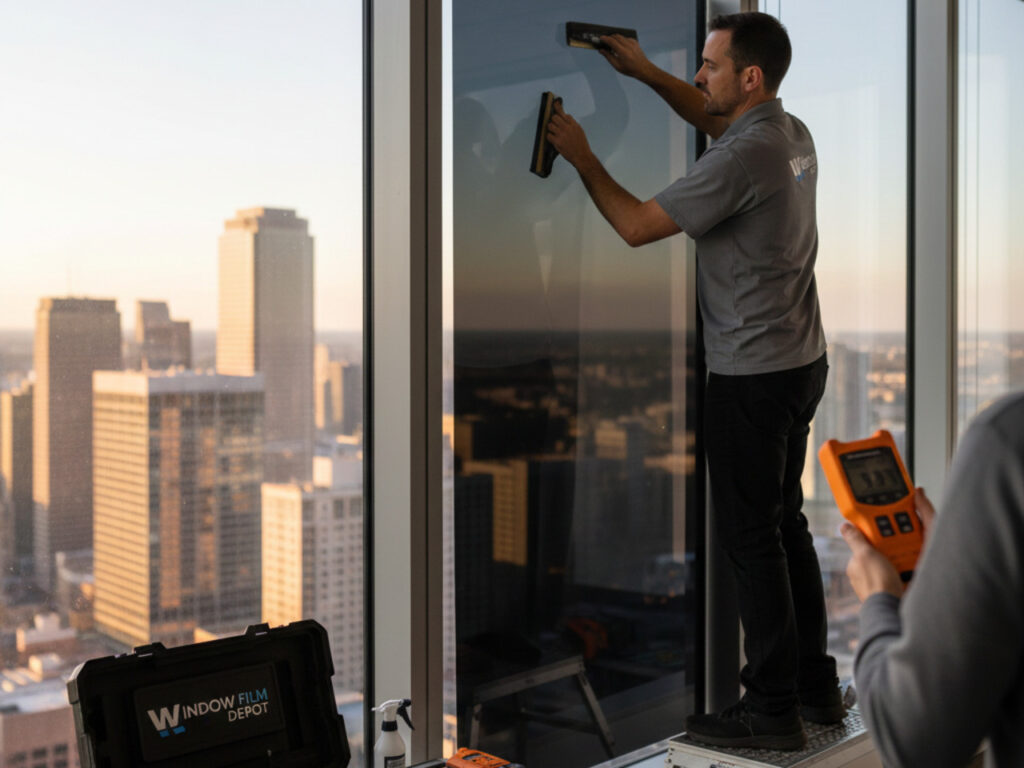
Decoding Technical Specifications: What to Look For When Evaluating UV-Blocking Window Film
When assessing uv blocking window film, a project manager must move beyond general claims of “UV protection.” Detailed technical specifications are non-negotiable for informed decision-making. Always look for the precise percentage of UV-A and UV-B rejection. A film that specifies “99% UV rejection” without differentiating between UV-A and UV-B may not offer comprehensive protection.
Furthermore, consider the film’s spectral selectivity. High-performance films can block significant portions of the solar spectrum, including UV and infrared, while maintaining high visible light transmission. This is achieved through multi-layered construction and nano-technology that specifically targets harmful wavelengths. Request manufacturer data sheets and third-party certifications to verify these claims. This data ensures the chosen film meets or exceeds the necessary performance standards for asset preservation and occupant well-being.
Justifying the Investment: Presenting Data-Driven Value to Building Owners and Stakeholders
Justifying the upfront investment in professional-grade window films requires a data-driven approach that clearly outlines the long-term value for building owners and stakeholders. Presenting the ROI involves more than just energy savings. It encompasses the preservation of valuable interior assets. For instance, demonstrating that a 99.9% UV-blocking film will prevent hundreds of thousands of dollars in premature fading and replacement costs for retail merchandise, office furniture, or flooring provides a compelling economic argument.
Beyond direct cost avoidance, highlight improved occupant comfort and productivity resulting from reduced glare and more stable interior temperatures. These factors contribute to a better working or living environment, which enhances tenant satisfaction and can influence lease rates or property value. Providing quantifiable data on energy savings (derived from SHGC), reduced asset depreciation, and improved indoor environmental quality (IEQ) establishes a robust business case for the film’s integration into the project.
Meeting Client Demands: Ensuring Building Performance and Asset Preservation Objectives are Met
Meeting client demands often involves delivering a building that performs optimally across various parameters, from energy efficiency to occupant comfort and asset longevity. Professional-grade window films are a strategic component in achieving these multifaceted objectives. By specifying films with superior UV protection, project managers directly address asset preservation needs, a critical concern for many commercial clients with valuable interior furnishings, artwork, or merchandise.
Furthermore, integrating these films contributes to overall building performance by enhancing the thermal envelope, reducing reliance on HVAC systems, and creating more consistent indoor temperatures. This holistic approach ensures the building not only meets but often exceeds the client’s expectations for sustainability, operational efficiency, and the long-term protection of their investment. It positions the project to deliver sustained value over its lifecycle.
Beyond UV: Unlocking Comprehensive Building Performance with Advanced Window Films
While unparalleled UV protection is a cornerstone benefit, advanced window films extend their utility far beyond merely blocking harmful rays. These sophisticated solutions offer a suite of comprehensive performance enhancements that contribute significantly to a building’s efficiency, safety, and occupant experience.
Enhanced Energy Efficiency: Reducing HVAC Load and Operational Costs
One of the most immediate and quantifiable benefits of professional-grade window films is their impact on energy efficiency. By significantly reducing the Solar Heat Gain Coefficient (SHGC), these films reject a substantial amount of solar heat before it enters the building. This reduces the load on a building’s heating, ventilation, and air conditioning (HVAC) systems, particularly during peak cooling seasons. The result is a measurable decrease in energy consumption and, consequently, lower utility bills for building owners. This contributes directly to a building’s green credentials and supports sustainability objectives.
Improving Occupant Comfort: Mitigating Glare and Hot Spots for a Better Environment
Occupant comfort is a key driver for tenant satisfaction and productivity in commercial spaces. Advanced window films play a crucial role in creating a more comfortable indoor environment. They effectively mitigate harsh glare, which can cause eye strain and make screen-based work challenging, especially near windows. By reducing the influx of solar radiation, films also eliminate uncomfortable hot spots that often develop close to window areas, leading to more uniform and stable indoor temperatures throughout the space. This fosters a more pleasant and productive environment for all occupants.
Safety and Security Enhancements: Reinforcing Glass Against Breakage and Intruders
The benefits of advanced window films also extend to safety and security. Certain specialized films are designed with increased thickness and tensile strength, transforming ordinary glass into a more resilient barrier. In the event of accidental breakage, severe weather, or even attempted forced entry, these films help hold shattered glass fragments together, significantly reducing the risk of injury from flying shards. This added layer of protection enhances occupant safety and provides a valuable deterrent against intruders, fortifying the building’s perimeter without altering its exterior appearance.
Extending Asset Lifespan: Protecting Interior Furnishings, Merchandise, and Flooring from Fading
The primary driver for specifying superior UV protection remains the extension of interior asset lifespan, a critical consideration for any commercial project. The cumulative effect of constant UV exposure leads to irreversible fading, discoloration, and degradation of virtually all interior materials. This includes expensive office furniture, retail merchandise displays, showroom inventory, carpets, hardwood flooring, draperies, and artwork. Professional-grade films, with their near-total UV-A and UV-B blockage, act as an invisible shield, safeguarding these valuable assets from premature aging. This protection translates into significant long-term savings by deferring costly replacements and preserving the aesthetic and monetary value of the building’s interior. This is the ultimate window film to prevent fading.
The Expert Advantage: Partnering with Window Film Depot for Superior UV Solutions
Unrivaled Expertise: Why Window Film Depot is the #1 U.S. 3M Window Film Installer
Navigating the complexities of commercial construction and renovation demands partnerships built on proven expertise and consistent results. Window Film Depot stands as the nation’s leading 3M Window Film installer, a distinction earned through decades of dedicated service, rigorous training, and adherence to the highest installation standards. This unparalleled experience translates directly into superior outcomes for your projects, ensuring that every film application meets 3M’s stringent performance specifications. Our deep understanding of 3M’s diverse product lines, from advanced solar control to security films, ensures that we recommend solutions optimized not just for UV protection, but for the overall performance demands of your commercial property, providing 3M UV protection film.
Tailored Solutions: Customizing UV Protection Strategies for Diverse Commercial Applications
A singular approach to UV protection often falls short in the varied landscape of commercial projects. Window Film Depot excels in developing tailored strategies, recognizing that a retail storefront protecting delicate merchandise has different requirements than a corporate office safeguarding sensitive equipment or a museum preserving invaluable artifacts. We conduct comprehensive assessments of your project’s specific needs, considering factors such as glass type, solar exposure, aesthetic goals, and budgetary parameters. This allows us to specify the precise 3M window film that delivers optimal UV filtration, often integrating additional benefits like glare reduction, improved energy efficiency, or enhanced privacy, all while ensuring critical assets remain protected from harmful UV radiation.
Illustrative Scenarios: How Professional Window Film Prevents Merchandise and Furniture Fading
The tangible cost of insufficient UV protection becomes evident when interior assets begin to degrade. Standard tinted glass offers only partial defense, leaving valuable investments vulnerable to irreversible damage. Professional-grade 3M window films, however, provide near-total UV-A and UV-B blockage, preserving the integrity and longevity of commercial interiors.
Retail Environments
- Apparel and Textiles: Direct sunlight streaming through windows can quickly fade colors in clothing displays, reducing their appeal and perceived value. Professional film prevents this rapid deterioration, maintaining product vibrancy and reducing markdown frequency.
- Electronics and Packaging: UV exposure can degrade plastics, dyes, and printed materials, impacting the shelf life and presentation of electronic goods and their packaging. Advanced films safeguard these items, ensuring they remain in pristine condition for customers.
Office and Hospitality Interiors
- Furniture and Upholstery: High-quality office furniture, lobby seating, and hotel room furnishings represent significant capital investments. Untreated windows allow UV rays to bleach fabrics, crack leather, and dull wood finishes, necessitating premature replacement. Window film dramatically extends their lifespan and aesthetic appeal.
- Artwork and Displays: Commercial spaces often feature artwork, decorative elements, or informative displays. These can be particularly susceptible to UV-induced fading and material breakdown, requiring professional film to preserve their visual integrity and value.
Seamless Integration: Consulting on Project Specifications, Installation, and Long-Term Performance
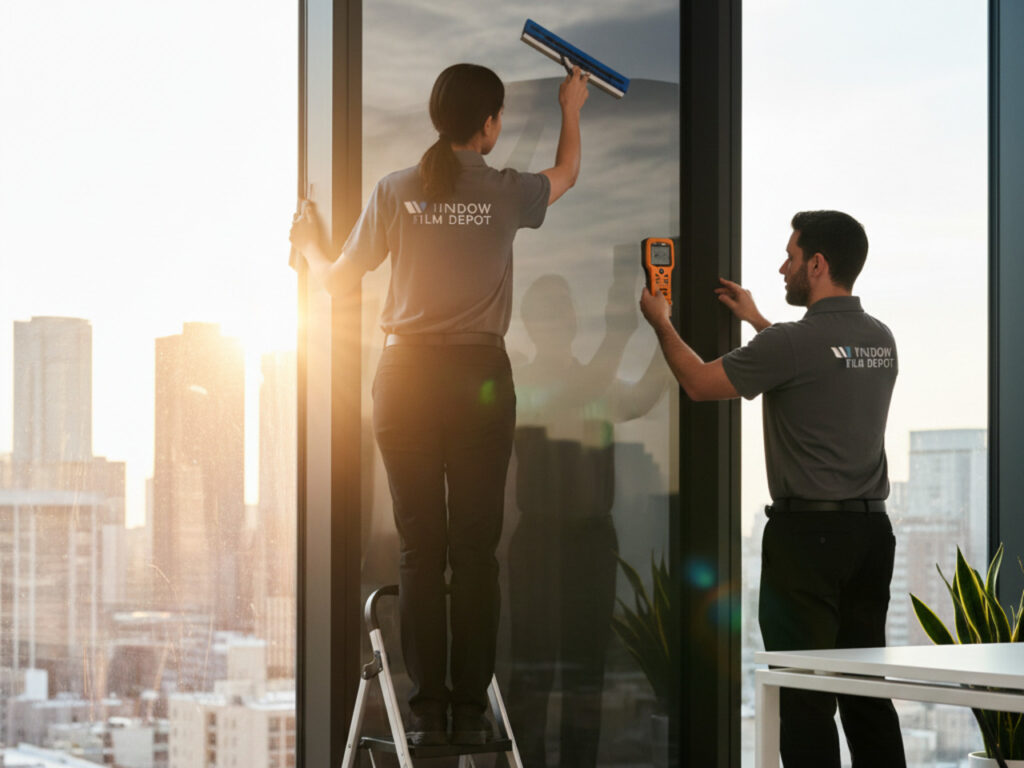
Our commitment to your project extends beyond merely supplying and installing film. Window Film Depot functions as a collaborative consultant, integrating seamlessly into your project workflow. We provide detailed technical specifications, performance data, and budgetary guidance essential for Project Manager Paul to justify the inclusion of advanced window film. Our certified installation teams adhere to strict protocols, ensuring a flawless application that maximizes film performance and validates manufacturer warranties. Post-installation, we offer insights into long-term maintenance and performance expectations, solidifying the enduring protection and value professional 3M window films bring to your commercial assets.
Conclusion: Securing Commercial Assets and Futures with Professional-Grade UV Protection
Reaffirming the Thesis: The Indispensable Value of Advanced Window Film Over Standard Tint
Our analysis consistently reinforces a critical distinction: standard tinted glass provides a rudimentary level of UV reduction, but it pales in comparison to the near-total UV protection offered by professional-grade 3M window films. Relying on basic tinting for commercial assets is not merely an oversight, but a costly decision that undermines the longevity and aesthetic integrity of interior furnishings, merchandise, and structural elements. Only advanced window film, blocking 99.9% of harmful UV-A and UV-B rays, offers the definitive safeguard required for valuable commercial interiors.
Key Takeaways for Project Managers: Empowering Informed Decision-Making
For project managers like Paul, prioritizing true UV protection means understanding the data and making informed choices. Consider these essential points:
- Quantifiable Protection: Demand clear specifications, like the 99.9% UV rejection rate, to compare solutions effectively.
- Asset Preservation: Recognize that fading is not just cosmetic. It signals material degradation that reduces asset lifespan and value.
- Long-Term Savings: Investing in superior UV protection upfront mitigates future costs associated with asset replacement or restoration.
- Client Satisfaction: Delivering a building interior that resists fading and maintains its aesthetic appeal contributes directly to tenant and owner satisfaction.
Protecting Your Investment: The Long-Term Benefits of Near-Total UV Blockage
The decision to specify professional-grade 3M window film is a strategic investment in the enduring value of your commercial property. By virtually eliminating UV radiation, you are actively preserving the vibrancy of interior finishes, extending the life of merchandise displays, and safeguarding the condition of expensive furniture and artwork. This proactive protection minimizes depreciation, sustains visual appeal, and contributes significantly to the overall asset valuation. It ensures that the interior environment remains as intended by design, year after year, protecting not just the physical assets, but the future usability and appeal of the space.
Your Next Step: Consulting with Window Film Depot for Expert Guidance and Specification
When the performance of your commercial project demands uncompromising UV protection, partnering with proven experts is paramount. Window Film Depot is prepared to collaborate with your project team, providing the detailed specifications, product recommendations, and installation expertise necessary to integrate advanced 3M window films seamlessly into your plans. Contact us today to discuss your project’s unique requirements and discover how our tailored solutions can provide the definitive UV protection your commercial assets deserve.
Frequently Asked Questions
Do tinted windows provide UV protection?
Standard tinted windows offer some level of UV reduction, but they typically do not provide comprehensive, near-total UV protection. Many tinted glass products only block 25-50% of harmful UV-A rays, which are a primary cause of fading and material degradation. Professional-grade window films are engineered to block 99.9% of both UV-A and UV-B rays.
How do 3M UV protection films differ from standard tinted glass?
3M UV protection film uses advanced multi-layered, non-metallized optical film technology with specialized UV absorbers, rather than just tinting. This precision engineering allows them to block 99.9% of UV radiation, significantly more than standard tinted glass, while often maintaining high visible light transmission and spectral selectivity.
Why is UV-blocking window film important for commercial buildings?
UV-blocking window film for commercial buildings is crucial for asset preservation, occupant well-being, and economic reasons. It protects valuable interior furnishings, merchandise, and artwork from fading and degradation, extends their lifespan, and reduces replacement costs. It also safeguards occupants from harmful UV exposure, contributing to a healthier indoor environment.
What percentage of UV rays do professional window films block?
Professional-grade window films, such as the 3M Sun Control Window Film Prestige Series, are engineered to block 99.9% of both UV-A and UV-B rays. This near-total UV rejection is a critical metric for protecting interior assets from fading and for ensuring occupant safety.
Does blocking UV also help with energy efficiency or glare?
Yes, advanced window films offer benefits beyond just UV protection. Many films are designed with spectral selectivity to also reduce solar heat gain, which lowers HVAC load and improves energy efficiency. They can also significantly mitigate harsh glare, enhancing occupant comfort and productivity by reducing eye strain and eliminating hot spots.