Table of Contents:
- What Is Home Window Tinting and Why Are So Many Homeowners Choosing It Now?
- Key Benefits of Tinting Your Home Windows
- Types of Window Film for Homes (and How to Choose the Right One)
- How In-Home Window Tinting Works: From Consultation to Installation
- Energy Efficiency, ROI, and Long-Term Savings
- Privacy, Curb Appeal, and Aesthetic Considerations
- DIY vs Professional Installation: What Homeowners Should Know
- Maintenance, Lifespan, and Common Mistakes to Avoid
- Frequently Asked Questions About Home Window Tinting
- Why Choose Our Team for In-Home Window Tinting
- Ready to Improve Comfort and Cut Glare? Next Steps
This guide walks through everything you need to know before investing in home window tinting in 2026 – from the science behind window film to real cost and savings numbers. Click or scroll to the section that matters most to you.
The focus throughout is on real-world comfort, energy efficiency, and how professional installation works right now in 2026.
What Is Home Window Tinting and Why Are So Many Homeowners Choosing It Now?
Home window tinting is the process of applying a thin, nearly invisible window film to existing windows – house windows, sliding doors, skylights – to improve energy efficiency, comfort, and privacy. It is a retrofit solution, not a window replacement. You keep your existing windows and add a performance layer that changes how glass interacts with sunlight.
In-home window tinting uses thin treated polyester laminates to block solar heat. Window tinting films consist of strong polyester embedded with microscopic particles that filter what passes through your glass. These films reject infrared heat rays and ultraviolet light while controlling visible light transmission, meaning they let you see out clearly while blocking the energy that heats your rooms and damages your interiors.
Solar radiation hitting your windows is roughly 3–5% UV rays, 40–45% visible light, and 50–55% infrared heat. Modern films target the IR and UV portions aggressively, leaving natural light largely intact. With rising energy costs, hotter summers, and more people working from home in 2026, demand for glare reduction and cooling solutions through residential window tinting has grown sharply – across condos, single-family homes, and townhouses alike.

Key Benefits of Tinting Your Home Windows
In-home window tinting solves multiple problems at once – energy savings, comfort, protection, and privacy – without heavy remodeling or window replacement.
High-performance window films can reduce solar heat gain by over 75%, which directly lowers air conditioning use during hot months. For a typical 2,000-square-foot home in a warm climate with sun-exposed glass, this can translate to 10–20% lower cooling bills. Window tinting can reduce energy costs by 5 to 15% across a full year when you factor in both summer and shoulder seasons. One well-documented case in Palm Springs showed a 57% drop in electric bills after installing solar control film on west-facing windows.
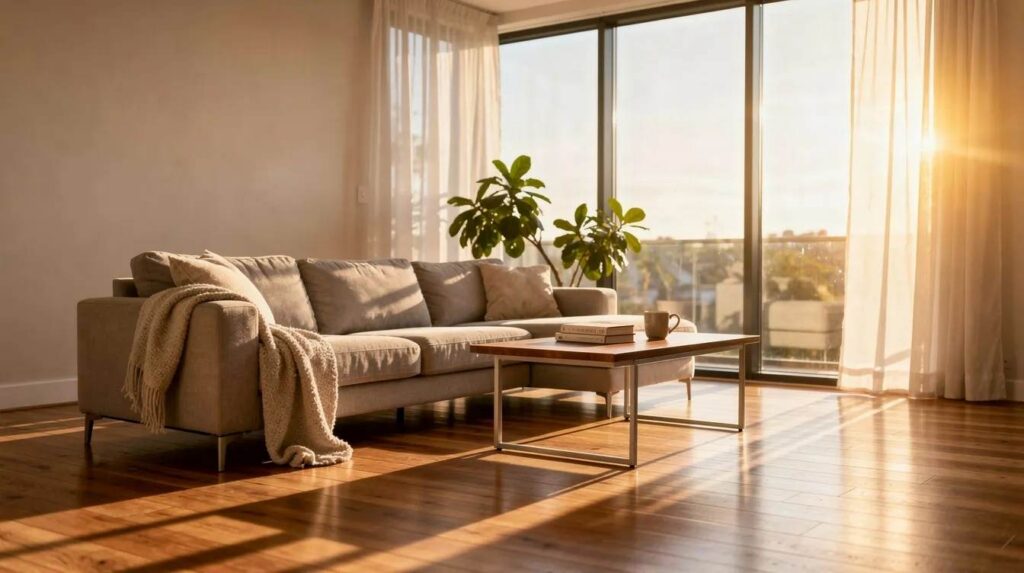
Window tint blocks up to 99% of UV rays, which is the primary cause of fading in hardwood floors, rugs, artwork, and furniture. This UV protection works year-round, even on overcast days. Window films can extend the life of furniture and flooring significantly compared to unprotected glass.
Tinting can reduce glare from sunlight, enhancing visibility on laptop screens, TVs, and phones – especially in east- and west-facing rooms. You stop relying on curtains and blinds just to use your own living room. Tinting also improves comfort by reducing hot spots in homes, evening out temperature swings between rooms so that a south-facing great room no longer feels ten degrees warmer than the rest of the house.
From the street, some films subtly even out the look of your house windows, giving a more uniform, modern appearance that can boost curb appeal.
Types of Window Film for Homes (and How to Choose the Right One)
The best window film for your home depends on climate, glass type, and whether your priority is energy efficiency, privacy, or security. Not all window films perform the same way, and choosing the wrong one wastes money.
Solar control films are the most common choice for heat reduction and glare reduction. Within this category, advanced spectral-select films block undesirable rays while allowing visible light to pass, keeping rooms bright. Ceramic films use nano-ceramic particles instead of metals, offering excellent clarity with no signal interference – ideal if you care about Wi-Fi and cell reception. Reflective layers in metallic films bounce incoming solar heat and visible light back outside, delivering strong performance but a mirror-like exterior look. Specially formulated dyes in basic tinted films absorb specific wavelengths of solar energy, but these are less durable and offer lower heat rejection overall.
Decorative films add style and privacy to windows. Options range from frosted glass effects for bathrooms to patterns that mimic stained glass for sidelights and transoms. Privacy tints limit outside visibility while maintaining indoor views, available in various shades from nearly clear to noticeably dark.
Security films strengthen glass and resist shattering. These thicker films hold glass shards together during impacts, reducing injury risk from break-ins, storms, or accidents. Many can be combined with solar control layers for dual-purpose protection. Security films make glass stronger and more resistant to shattering without changing the window frame.
For colder climates, specialty low-E retrofit films improve insulation and reduce winter heat loss through older home windows. Solar control films reduce heat and save energy in summer, while low-E variants help conserve passive solar heat when you need it.
The compatibility of window tint films with glass type is crucial to avoid thermal stress. Different film types are recommended for single-pane, double-pane, and tempered glass. The effectiveness of window films can depend on glass type and environmental factors, so a professional assessment of your existing windows matters before choosing a film type.
How In-Home Window Tinting Works: From Consultation to Installation
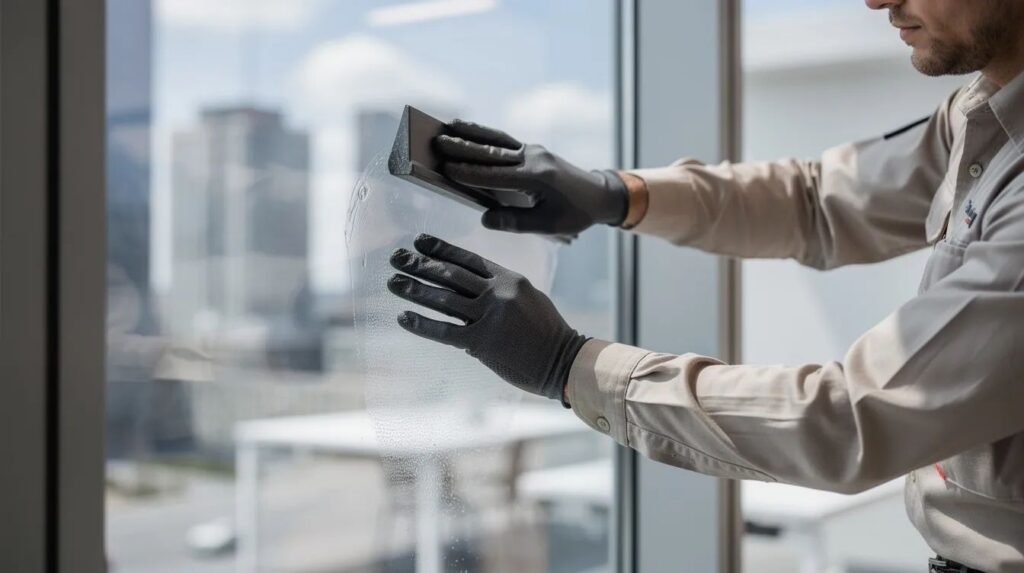
Professional installers follow a clear process: assessment, film selection, prep, install, and quality check.
During the initial consultation, an installer walks through your home to identify problem areas – the living room with afternoon hot spots, the home office where direct sunlight washes out your screen, the street-facing bedroom where you want to increase privacy. They note which way each window faces and discuss your goals for comfort, energy use, and curb appeal.
Film recommendations are based on each window’s orientation, glass type, and your priorities. The installer reviews visible light transmission levels, expected heat rejection, and energy savings for south, west, and east exposures. North-facing glass rarely needs aggressive tinting.
On installation day, furniture is moved a safe distance from the windows, drop cloths are laid, and each pane is cleaned with a non-ammonia solution. Film is cut to precise measurements and applied to the interior side of most home windows, then smoothed to remove trapped air and water. Edges are trimmed for a clean, factory-like finish.
After application, a slightly hazy or cloudy appearance is normal for several days to a few weeks depending on film type and humidity. Full performance – and full clarity – is achieved after the curing period.
Energy Efficiency, ROI, and Long-Term Savings
Home window tinting ties directly to lower energy costs and more stable indoor temperatures across seasons. By blocking the sun’s heat before it enters your rooms, solar film reduces how hard your air conditioning works during peak afternoon hours, extending HVAC equipment life and cutting utility bills.
The U.S. Department of Energy recommends low-SHGC glazing for hot climates, and retrofit window film is one of the fastest ways to lower your glass’s solar heat gain coefficient. In warm metro areas, a family installing ceramic or spectrally selective film on south- and west-facing windows can realistically cut peak summer cooling bills by 15–20%. Window tinting can reduce energy costs by 5 to 15% annually, and tinting can lower air conditioning use during hot months when savings matter most. Window films can also help conserve heat in winter months when paired with low-E options, reducing heating costs.
For 2026, expect installed costs of roughly $5–$10 per square foot for standard solar film and $11–$16 or more for premium ceramic or security options. Professional installation can cost several thousand dollars for a whole-house project. A household might recover installation costs in three to five years in hot, sunny regions, with payback stretching longer in mild climates. Beyond energy bills, the non-energy ROI is real: extended life of interior finishes, reduced dependence on heavy curtains or blinds, and a potential boost in perceived home value.
Privacy, Curb Appeal, and Aesthetic Considerations
Home window tinting is not only about saving money on energy – it also changes how your home looks and feels from both sides of the glass.
Window tinting enhances daytime privacy by limiting outside visibility in street-facing rooms, bathrooms, and entry doors while still allowing natural light inside. Tinted windows create a mirrorlike effect during the day, letting you see out while passersby see a reflection. Frosted and decorative films work well on sidelights and bathroom glass where full privacy matters around the clock.
Consistent tint levels across front-facing windows give a cleaner, more contemporary façade that complements a range of architectural styles and hides cluttered interiors from the street. Modern films come in very light shades – nearly invisible – so dark, heavy-looking tinted house windows are no longer the only option. Tint can make rooms slightly darker, affecting aesthetics, but most residential window films today are engineered to preserve a bright interior.
One important note: most reflective daytime privacy films reverse at night when interior lights are on, so you may still want window treatments for evening privacy. Also check any HOA restrictions on highly reflective or dark films before committing.
DIY vs Professional Installation: What Homeowners Should Know
DIY window tinting kits look affordable at the hardware store, but professional installation typically delivers longer-lasting results, cleaner edges, and real warranty protection.
The challenges with DIY are practical: dust contamination causes visible specks trapped under the film, bubbles form when smoothing is uneven, and mis-cut edges look rough on large or irregularly shaped glass. Covering high or large home windows safely adds ladder risk. Lower-grade films sold at retail may peel or bubble over time, and the savings on materials often disappear when you factor in wasted film and re-dos.
Professional installers bring access to higher-grade films not sold in big-box stores, correct pairing of film type to your specific glass, and experienced techniques that minimize seams and imperfections. Both a manufacturer’s warranty and installer’s workmanship warranty are important for window films – most premium residential window films carry a lifetime limited manufacturer warranty, but only when installed by a certified professional. Insurance coverage for an installation company matters for in-home services, protecting you if anything goes wrong during the project.
A single sidelight or small bathroom window might be manageable as a weekend DIY project. But whole-house window tinting, large sliders, second-story glass, or any window where warranty coverage matters should be left to professionals.
Maintenance, Lifespan, and Common Mistakes to Avoid
Once cured, quality window film is remarkably low-maintenance and can last 15–25 years on residential glass with proper care.
Clean filmed windows with a soft microfiber cloth or squeegee and a mild, ammonia-free cleaner. Avoid abrasive pads, razor blades, and harsh chemicals that can scratch or degrade the film surface. Orientation matters for lifespan – south and west-facing windows absorb more heat and UV over the years, so film on those exposures may age slightly faster than north-facing glass.
The most common mistakes homeowners make: cleaning too aggressively before the film has fully cured (wait at least 30 days), taping holiday decorations directly onto filmed glass, or applying aftermarket stickers that can damage the adhesive layer. If film ever needs to be removed or replaced, a professional can do this without damaging the glass, allowing you to upgrade to newer, more efficient window films down the road.
Frequently Asked Questions About Home Window Tinting
Below are the questions homeowners ask most often before they install window film.
How dark will my home windows look after tinting?
It depends on the visible light transmission (VLT) of the film you choose. Films range from nearly invisible at 70%+ VLT to noticeably shaded below 30% VLT. Many energy-efficient films maintain a bright interior with minimal visible darkening. Your installer can hold samples against your actual glass so you can judge the effect before committing.
Can window film really lower my energy bills?
Yes. By rejecting a large percentage of solar heat before it enters your room, film reduces how often and how hard your air conditioning runs. In warm climates, homeowners commonly see 10–20% reductions in peak summer cooling costs. The many factors that influence exact savings include window orientation, glass type, and local climate.
Will tinting my home windows void my window warranty?
Some films may void window manufacturer warranties, particularly if the film is not tested for compatibility with your specific glass. Review your existing window documentation, choose films designed for double-pane and low-E glass, and work with an installer who uses warrantied, compatible products.
How long does residential window film last?
Quality residential window films typically last 15–25 years. Southern and western exposures may age faster due to sustained sun exposure. Manufacturer warranties – often lifetime for premium residential products – give a reliable indication of expected life.
Can I tint just some of my house windows?
Absolutely. Many homeowners start with the rooms that have the worst heat or glare – typically south, west, and east facing windows. Living rooms, home offices, and upper floors are common starting points. Even a partial project delivers strong energy savings and comfort improvements.
Does window film work in colder climates?
Modern low-E and insulating films help reduce heat loss through glass, cut drafts from cold window surfaces, and still deliver UV protection even when summer cooling needs are lower. That said, tinting may block too much sunlight in colder climates if you choose an overly dark film, so lighter spectrally selective options that allow more passive solar heat are generally the better fit.
Why Choose Our Team for In-Home Window Tinting
Window Film Depot has been installing and supplying high-performance window film since 1992. As a family-owned company with national reach, we bring deep experience across residential and commercial buildings, matching film solutions to specific homeowner goals – whether that means cutting glare in a home office, improving security on ground-floor glass, or reducing energy use across an entire property.
We offer a wide selection of solar, privacy, security, and decorative films, paired with professional installation backed by manufacturer warranties and our own workmanship guarantee. Our team understands different glass types, building codes, and the many benefits of getting the film-to-glass match right the first time. Pricing is clear and up-front, consultations are detailed, and every project – from a single room to a multi-property portfolio – gets the same attention to quality.
Ready to Improve Comfort and Cut Glare? Next Steps
If you are tired of closing blinds every afternoon, dodging hot spots in your living room, or watching your floors fade in direct sunlight, home window tinting is worth a serious look.
Start by making a list of the rooms with the worst heat or glare. Note which direction those windows face. Then reach out to schedule a professional assessment – we will walk through your home, recommend the right film type for each window, and provide a customized quote that covers expected energy savings and installation timeline.
Contact Window Film Depot by phone or through our online form to set up an in-home consultation. Installation is fast, disruption is minimal, and the comfort difference is something you will notice on the very first sunny afternoon.