Table of Contents:
- Understanding Bullet Resistant Glass vs. “Bulletproof Glass”
- How Bullet Resistant Glass Is Built: Materials and Construction
- Performance Levels, Ballistic Ratings, and Industry Standards
- Security Applications: Matching Glass Type to Real-World Threats
- Ballistic Glass vs. Attack-Resistant and Forced Entry Glass
- Environmental and Long-Term Performance Considerations
- Retrofit Options: Upgrading Existing Windows with Security and Ballistic Protection
- What Buyers Should Know Before Choosing Bullet-Resistant Glazing
- FAQs About Bullet Resistant Glass
- Why Choose a Specialist for Bullet Resistant and Security Glass Projects
- Next Steps: Plan Your Bullet Resistant Glass or Security Glazing Upgrade
Understanding Bullet Resistant Glass vs. “Bulletproof Glass”
The term bulletproof glass gets thrown around constantly, but it is technically misleading. No glazing material on the market is immune to every weapon, every caliber, and unlimited shots. That is why professionals use terms like bullet-resistant glass, ballistic glass, armored glass, and transparent armor instead. These names reflect the truth: the product resists specified threats rather than guaranteeing invincibility.
Bullet-resistant glass is a multi-layered material designed to absorb a bullet’s energy, slow or stop rounds, and control spall-the dangerous fragments that fly off the rear surface during impact. Regular glass shatters easily and offers no protection against firearms. Security glass, by contrast, can resist bullet penetrations from firearms and can even mitigate bomb-blast effects and flying shards.
There is a useful hierarchy to keep straight. Safety glass (tempered or basic laminated) handles accidental impact-think storm protection or fall hazards. Security glass addresses deliberate attack: forced entry, ballistic threats, blast events. Ballistic glass is the subset tested specifically against firearms. A school vestibule might prioritize forced entry resistance, while a bank teller window or a courthouse lobby demands rated ballistic protection. Bullet-resistant glass is used in high-security environments like banks and military and private vehicles.
Modern resistant glass solutions can also be retrofitted into existing storefronts, curtain walls, and doors, avoiding full glass replacement where structural conditions allow.
How Bullet Resistant Glass Is Built: Materials and Construction
Bullet-resistant glass is constructed using a process called lamination. Multiple layers of glass and plastic are bonded under controlled heat and pressure to form a single panel. The result is a composite that combines the hardness of glass with the flexibility and energy absorption of polymers.
Layers of bullet-resistant glass include tough plastic interlayers like polycarbonate, polyvinyl butyral (PVB), polyurethane, and acrylic. Common configurations include:
- Laminated glass with PVB or polyurethane interlayers for lower-level handgun threats
- Laminated polycarbonate hybrids for higher-velocity rounds
- Glass-clad polycarbonate structures that maximize the combination of clarity and ballistic performance
The front “strike face” is typically glass-sacrificial laminated glass layers that crack and spread the impact energy across a wide area. The rear polycarbonate layer catches and contains the projectile, controlling spall to protect building occupants. Bullet resistant glass can prevent dangerous fragments from penetrating the protected area. Polycarbonate layers are also protected from UV degradation by the glass layers in front of them.
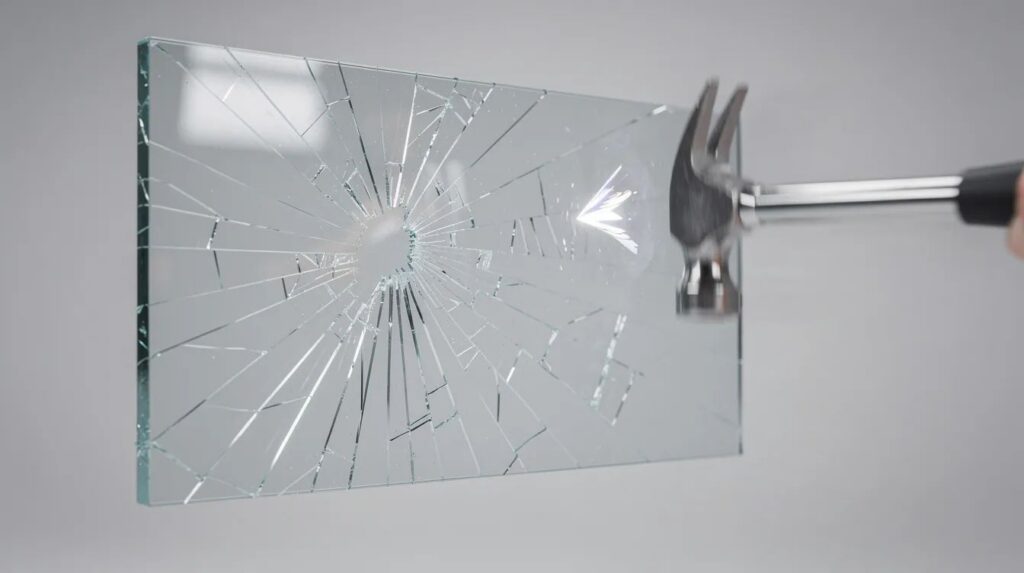
Thickness ranges by threat level vary considerably. Handgun-rated panels typically run ¾″ to 1¼″ thick, while traditional rifle-resistant configurations have historically required 2″ to 3″ or more of armored glass. Newer hybrid designs with advanced materials can achieve reduced thickness for rifle threats. That added thickness increases weight-panels can range from roughly 8 lbs/ft² for thinner handgun-rated hybrids up to 26 lbs/ft² for higher-rated assemblies-which directly affects framing demands and what can realistically fit into existing aluminum storefront, hollow metal, or wood frames.
Performance Levels, Ballistic Ratings, and Industry Standards
Generic marketing phrases like “bank-grade glass” or “Level 3 glass” mean nothing without a reference standard. Ballistic ratings exist precisely to define what a panel can and cannot stop, and specifiers should insist on documented test standards before purchasing.
The UL 752 Standard is the industry benchmark for bullet-resistant glass testing in the United States. Different UL ballistic threat levels range from Level 1 to Level 10 based on protection, progressing from 9mm handgun rounds at Level 1 through high-powered rifle threats at the upper levels. The performance of bullet-resistant glass depends on ammunition type and installation conditions.
The NIJ 0108.01 standard, developed for law enforcement and military applications, classifies transparent armor by type. BRS-15™ specifies rifle-threat resistance for armored glass and requires independent testing by NVLAP-accredited labs, ensuring credible third-party verification.
International standards matter for global projects. EN 1063 classifies bullet resistance with BR ratings and designates whether spall is permitted (S) or not (NS). High-quality bullet-resistant glass configurations are specified as “no-spall,” meaning no fragments exit the rear face during testing. EN 356 covers burglary resistance, and EN 13541 addresses blast. Security glass can mitigate bomb-blast effects and flying shards when rated accordingly.
A critical point: ballistic resistance, forced entry resistance, and blast resistance are separate test protocols. One product rarely optimizes all three without careful engineering. When requesting bullet-resistant glazing, specify the caliber, velocity, number of shots, shot spacing, and attack side.
Security Applications: Matching Glass Type to Real-World Threats
Choosing the right glazing starts with the building’s risk profile, occupancy type, and local threat patterns. Not every window in a facility needs the same level of ballistic protection. Here is how specific applications typically break down:
- Banks and cash-handling counters: UL 752 Level 3 or higher, often with transaction frames and pass-throughs
- Police stations and courthouses: Lobby and evidence windows up to Level 8 for rifle resistance
- Schools and universities: Vestibule entries with attack-resistant or forced entry resistance glazing; full ballistic glass is typically reserved for highest-risk zones
- Retail stores and pharmacies: Security glass to delay smash-and-grab theft; ballistic only in targeted areas like pharmacy counters
- Government buildings and religious facilities: Risk-dependent; may combine ballistic entry doors with lower-rated perimeter windows

Full ballistic glass is heavy, expensive, and typically warranted only where the threat model demands it-24/7 law-enforcement lobbies, for example. For many school vestibules, laminated glass that provides forced entry resistance is the better choice, buying three to ten minutes for lockdown and first responders to arrive. Bullet resistant glass thickness varies by ballistic threat level, so matching glass to threat avoids overbuilding in low-risk zones.
Transparent security glass can protect merchandise while still meeting storefront daylighting and aesthetic requirements. Always verify that glazing integrated into doors and sidelites does not impede egress routes or violate life-safety codes.
Ballistic Glass vs. Attack-Resistant and Forced Entry Glass
Ballistic glass focuses on stopping bullets. Attack-resistant and forced entry resistance glazing prioritize delaying intruders armed with tools, blunt force, or a combination of methods. They solve different problems.
Ballistic glass uses multiple layers of glass and polycarbonate designed to prevent penetration and limit spall for specified calibers. It is typically thicker and heavier. Attack-resistant glass may allow some material damage but self-fortifies around the opening, keeping intruders from reaching through or quickly breaching the window. Forced entry resistant doors and windows are tested against repeated strikes from sledgehammers, pry bars, and similar tools-simulating real burglary and riot conditions.
For security planners working within a budget, the question is whether delaying an intruder three to ten minutes offers more practical value than specifying full ballistic resistance across an entire façade. In many cases, forced entry resistance at primary entry points combined with ballistic glass at a few critical interior windows is the cost-effective solution. Total security solutions come from layering the right protection at the right locations-not from covering every surface with the heaviest product available.
Environmental and Long-Term Performance Considerations
Bullet-resistant glass is a long-term building asset, and it must withstand real-world environmental exposure over decades.
Temperature affects the properties of bullet-resistant glass. At low temperatures-below −7 °C (19 °F)-the polycarbonate layer becomes stiffer, and spall can occur during impacts that would be fully contained at warmer temperatures. The thickness of the laminate affects the size of spall, so designers choose composition and layer count to mitigate cold-climate risks.
UV radiation exposure can make polycarbonate more brittle over time if not properly shielded. In most configurations the glass layers on the exterior absorb the majority of UV before it reaches the plastic interlayers, but edge seals and coatings remain critical. Moisture intrusion, thermal cycling, and harsh cleaning chemicals can accelerate delamination.
Modern transparent armor materials are changing the equation. Advanced ceramics like aluminum oxynitride (ALON) and magnesium aluminate spinel offer superior hardness and optical clarity in thinner profiles. ALON requires 2.3 times less thickness than traditional glass for .50 BMG threats, making it increasingly specified for high-risk government and defense projects, including military and private vehicles. As costs decrease, these materials will see broader architectural adoption.
Facility managers should confirm glazing warranties, establish inspection intervals, and use only manufacturer-approved cleaners to preserve clarity, adhesion, and ballistic performance over the product’s service life.
Retrofit Options: Upgrading Existing Windows with Security and Ballistic Protection
Many building owners prefer retrofit security solutions that keep existing glass and frames in place, reducing downtime and construction costs. A full tear-out is not always necessary.
Common retrofit approaches include:
- Applied security films that improve forced entry resistance for existing windows
- Interior laminated panels or secondary glazing systems that add ballistic resistance without demolishing current openings
- Laminate overlays bonded to existing glass to harden storefronts against smash-and-grab attacks
Typical scenarios include adding attack-resistant glazing at school vestibules after security incidents, reinforcing glass storefronts at retail stores experiencing repeated break-ins, and upgrading interior transaction windows at pharmacies and municipal offices.
Structural considerations are essential. The frame, anchorage, and surrounding wall must be evaluated-the weakest link determines the assembly’s real-world ability to resist an attack. Adding a heavy ballistic panel to an under-rated aluminum frame negates the investment. A qualified specialist verifies mullion strength, anchorage capacity, and wall construction before recommending a path forward.
Retrofit solutions can also be paired with solar control and privacy performance. Combining energy-saving window films with security glass upgrades delivers both effective protection and improved interior comfort in a single project.
What Buyers Should Know Before Choosing Bullet-Resistant Glazing
Before specifying ballistic or security glass, work through this checklist:
- Define the credible threat. Handgun versus rifle, single assailant versus coordinated attack, and which zones are most vulnerable-entry doors, reception areas, cash points, or ground-floor windows.
- Match glass with the whole assembly. Doors, frames, hardware, and surrounding walls must all meet the desired resistance level. A strong panel in a weak frame provides an undistorted view but not real protection.
- Weigh trade-offs. Thickness, weight, clarity, tint options, and budget all interact. Lighter hybrid or laminated polycarbonate configurations can reduce structural upgrades and still deliver the needed ballistic resistance.
- Engage specialists early. Experienced security glazing professionals help avoid over- or under-specifying, coordinate compliance with local building codes, and manage fire and life-safety regulations from the start.
FAQs About Bullet-Resistant Glass
These questions come up most often from schools, retail chains, and public agencies planning security glass projects.
Is bulletproof glass really bulletproof?
No. No glass is 100% bulletproof. Ballistic glass is rated for specific calibers, velocities, shot counts, and impact spacing under controlled testing. Repeated shots to the same spot or weapons above the tested level-such as armor-piercing rounds against a handgun-rated panel-can eventually penetrate even high-performance bullet-resistant glass.
How thick is bullet-resistant glass for common threats?
NIJ Level I–II protection requires approximately ¾″ thickness for lower-level handgun threats. Magnum handgun and shotgun threats push thickness to roughly 1″–1¼″. Traditional rifle-resistant glass thickness is 2″ to 3″ or more, though newer hybrid glazing material systems can achieve reduced thickness. Exact dimensions depend on construction-all-glass versus glass-polycarbonate hybrids-and the chosen test standard (UL, NIJ, or EN).
Can existing windows be upgraded to bullet resistant or forced entry resistant glass?
Yes. Common retrofit methods include adding interior ballistic panels, installing laminated security glass into existing frames, or applying security films that improve forced entry resistance. A site assessment is essential to confirm frame, anchorage, and wall conditions before deciding whether retrofit or full replacement is appropriate.
What is the difference between ballistic glass and attack-resistant glass for schools?
Ballistic glass is designed to stop bullets-typically at higher cost and weight. Attack-resistant glass focuses on delaying entry by an attacker trying to break through doors and sidelites. Many K–12 and higher-education projects prioritize attack-resistant, forced entry resistance glazing at vestibules as a cost effective way to buy time for lockdown and law enforcement response. It remains the gold standard approach for school security budgets.
How long does bullet resistant glass last, and does it require maintenance?
Properly installed bullet resistant glass can last decades. UV-stable interlayers and intact edge seals are critical to longevity. Periodic visual inspections should check for delamination, clouding, or cracking. Use only manufacturer-approved cleaners-solvents and abrasive chemicals can damage the plastic and polycarbonate components.
Can bullet resistant glass also reduce heat and glare or provide privacy?
Absolutely. Ballistic and security glass can be combined with solar control, low-E, or tinted configurations. Applied window films can further improve energy efficiency and comfort. Options include neutral tints, privacy grey, and one-way visual control where allowed by code-addressing both security and daylighting goals in a single system.
Why Choose a Specialist for Bullet Resistant and Security Glass Projects
Ballistic and forced entry resistance design, installation, and code compliance are not commodity services. Working with an experienced glazing and film specialist matters because the consequences of under-specifying or over-spending are real.
Look for a partner with decades of experience in security glass, certified installers, proven work with schools, retail chains, and government clients, and access to two or more types of ballistic and security glazing technologies. The value of turnkey project management-site surveys, threat assessment support, specification assistance, installation scheduling, and post-installation documentation-cannot be overstated for risk management and insurance purposes.
Window Film Depot brings all of this together. Since 1992, we have delivered total security solutions that combine resistant glass with security films, anti-graffiti coatings, privacy films, and decorative graphics in coordinated building envelope upgrades. We help clients protect people and property while balancing security performance, aesthetics, energy savings, and budget.
Next Steps: Plan Your Bullet-Resistant Glass or Security Glazing Upgrade
Bullet-resistant glass, ballistic glass, and attack-resistant glazing are tools that buy time-time for lockdown, time for first responders, time to protect building occupants, and support a broader security strategy.
Start here: conduct a basic risk review of your entrances and vulnerable windows, gather floor plans and photos of critical areas, and schedule a consultation with a security glazing expert. Ask for a site assessment and written recommendations with options at different protection levels-ballistic, forced entry resistance, combined security and solar control-and budget tiers.
Reach out to Window Film Depot to build a customized plan for upgrading your glazing systems without unnecessary disruption to daily operations. Whether you need a single transaction window hardened or an entire facility envelope upgraded, we will help you find the right solution for your threat profile, your building, and your budget.