Table of Contents:
- Introduction: What You Need to Know About Bullet Glass Windows Right Away
- What Are Bullet-Resistant Windows?
- How Bulletproof Glass Windows Actually Work
- Ballistic Ratings and UL 752 Levels
- Residential Bulletproof Windows
- Commercial and Institutional Bullet-Resistant Windows
- Design Options and Styles
- Retrofit and Installation for Existing Buildings
- Bulletproof Glass Cost Per Square Foot in 2026
- Maintenance, Lifespan, and Environmental Effects
- Security Window Film as a Complement
- Common Mistakes to Avoid
- Why Choose Our Team
- FAQs About Bulletproof Glass Windows
Introduction: What You Need to Know About Bullet Glass Windows Right Away
The term bulletproof glass gets thrown around constantly, but it is misleading. No glass product is completely impervious to every firearm threat. The accurate industry terms are bullet-resistant glass, ballistic glass, and bullet-resistant windows- each tested and rated against specific calibers, velocities, and shot counts rather than offering blanket invincibility.
In 2026, bullet-resistant glass windows are used daily in schools, banks, government buildings, pharmacies, cannabis dispensaries, jewelry stores, and an increasing number of higher-risk residences. Bulletproof windows enhance security against ballistic threats by combining tested bullet-resistant glazing with properly engineered frames and hardware to form a complete system. The glass alone is never the full story.
This guide will walk you through realistic protection levels, costs per square foot, retrofit possibilities for existing buildings, and how alternatives like security window film fit into a layered security strategy. Whether you are a facility manager weighing a school vestibule upgrade or a homeowner exploring safe-room options, the goal here is practical decision-making-matching your budget, threat level, and building type to the right solution.
What Are Bullet-Resistant Windows and Ballistic Glass?
Bullet-resistant windows, ballistic windows, and bullet-resistant glazing all describe the same category: window assemblies engineered and tested to stop or slow specific firearm projectiles. The phrase bulletproof windows persists in everyday conversation, but the industry avoids it because it implies a level of protection that does not exist. Every ballistic glass product has defined limits.
Construction starts with multiple layers of laminated glass bonded with tough interlayers such as polyvinyl butyral or polyurethane. Ballistic glass can incorporate polycarbonate layers for added strength, creating a composite that absorbs and redistributes bullet energy while remaining transparent. The result is far thicker and heavier than conventional glass. Regular glass is typically between 0.16 inches and 0.25 inches thick; a Level 3 ballistic glazing unit might measure 1.25 inches or more.
The difference in performance is dramatic. Regular glass shatters easily upon sharp impact, sending dangerous shattered glass fragments flying. Bullet-resistant glass uses multiple layers of laminated glass and polymer to capture those fragments and keep the panel intact in the frame. Critically, bullet-resistant windows require specialized framing to support their weight-true ballistic resistance depends on a rated assembly of glass, frame, anchoring, and hardware working together as a complete system. Common applications include bank teller windows, school vestibules, pharmacy drive-thru windows, police stations, and residential safe-room openings.

How Bulletproof Glass Windows Actually Work
Think of bullet-resistant glass as a series of alternating hard and soft layers. The outer glass plies are the hard layers-they flatten the bullet nose and spread impact across a wider area. The softer polycarbonate layers and interlayer films behind them absorb the remaining energy, capture fragments, and prevent dangerous spall from reaching occupants on the protected side. Together, these protective layers disperse impact energy across the entire panel rather than concentrating it at a single point.
Under fire, ballistic glass cracks visibly. The surface may star and bulge inward, but a properly rated panel stays in its frame and keeps projectile fragments contained. This is fundamentally different from standard glass, which offers zero meaningful resistance. Bulletproof glass windows also provide reliable protection after just a few hammer blows-a sledgehammer or crowbar attack that would breach traditional glass in seconds meets serious forced-entry resistance with ballistic glazing. That said, ballistic resistance, blast resistance, and forced entry resistance are separate performance categories. An active shooter scenario demands ballistic-rated glass; a bomb threat requires blast-rated assemblies; a break-in attempt tests forced entry protection. Some products are tested across more than one standard, but you should never assume one rating covers another.
A typical UL 752 Level 3 bullet-resistant glass build-up might include three glass plies bonded to a polycarbonate core, totaling roughly 1.25 to 1.375 inches thick. The thickness of bulletproof glass varies based on the protection level required-handgun-rated panels start thinner, while rifle-rated systems can exceed two inches.
Ballistic Ratings, UL 752 Levels, and What They Mean in Practice
Bullet-resistant glass is rated by UL 752 standards, the primary benchmark in the United States for ballistic resistance of architectural glazing and equipment. Each level specifies the caliber, bullet type, velocity, and number of rounds the assembly must stop without penetration. UL 752 ratings measure ballistic resistance from Level 1 to Level 8, and bullet-resistant windows can withstand specific ballistic threats corresponding to their certified level.
Here is how the most common levels break down for building projects:
- Level 1: Stops three rounds from a 9mm full metal jacket handgun at roughly 1,175–1,293 ft/s. This is the entry point for office windows, residential applications, and lower-risk commercial spaces.
- Level 2: Stops three rounds from a .357 Magnum-a step up for locations with elevated threat profiles or visible valuables.
- Level 3: Stops three rounds from a .44 Magnum handgun. Frequently specified for bank teller windows, high-value retail, and cash-handling transaction points.
- Levels 4–8: Protect against high-powered rifles. Level 4 handles a single .30-06 rifle round. Level 5 addresses 7.62mm military ball ammunition. Level 6 stops 9mm rounds at higher speeds than Level 1, covering a different threat scenario. Levels 7 and 8 require multi-shot rifle resistance, with Level 8 demanding five hits from 7.62mm rifle rounds.
Matching the level of protection to a credible threat assessment is essential. Over-specifying-say, rifle-rated glass in a low-risk professional office-wastes budget. Under-specifying at a high-risk site creates a false sense of perceived safety. Some projects also reference ASTM F3561 for forced entry resistance or GSA standards for government buildings when designing total security solutions around ballistic systems.
Residential Bulletproof Windows: Where They Make Sense and How They Look
Since around 2020, demand for bullet-resistant windows in homes has climbed noticeably, driven by concerns about neighborhood firearm violence, longer rural law enforcement response times, and homeowners with high-value assets. Bulletproof windows can often be installed in existing homes, making this an accessible upgrade without a full rebuild.
Typical residential locations include ground-floor picture windows, home office glazing, primary bedroom suites, entry doors with sidelites, and dedicated safe rooms. Bullet-resistant glass can be integrated into safe rooms for added security during home invasions, providing a hardened refuge while help arrives. Beyond ballistic protection, bulletproof windows can reduce noise from street traffic thanks to their mass and layered construction, and they can improve insurance benefits for high-risk properties.
Rather than trying to cover an entire house, most homeowners achieve a smart balance by selectively hardening the most vulnerable openings-main entries, street-facing ground-floor windows, and safe-room walls-while leaving upper floors and less-exposed areas with standard windows or security window film. This approach lets you balance security with practical budget limits and preserves natural light and livability throughout the home.
Commercial and Institutional Bullet-Resistant Windows
Bullet-resistant windows are particularly used in financial institutions and government buildings, where the combination of high-value assets and public access creates ongoing security threats. Banks, credit unions, check-cashing centers, courthouses, hospitals, pharmacies, K–12 school vestibules, and utility control rooms all rely on ballistic windows to protect staff and the public.
Integration into commercial spaces has matured significantly. Ballistic windows now fit seamlessly into transaction counters, reception lobbies, drive-thru service windows, and storefronts without making buildings feel like bunkers. Interior transaction windows often include pass-through trays and talk-through devices to maintain customer service flow while providing physical barriers against attack. For schools and public buildings, designs must maintain egress paths, visibility, natural light, and ADA compliance alongside ballistic resistance.
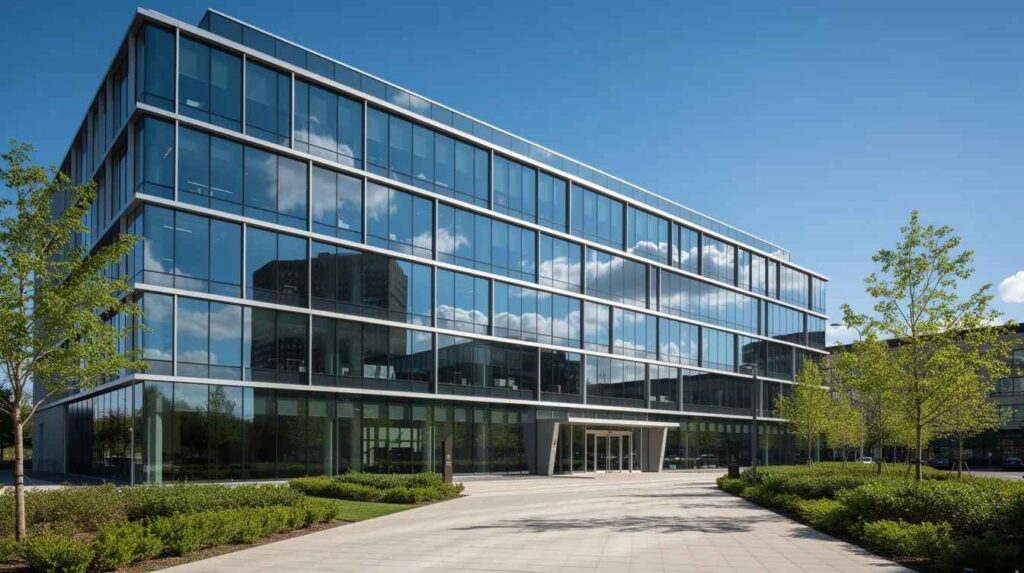
A concrete example: Wendell L. Cross Elementary in Waterbury, CT completed a 2025 renovation that included a ballistic-rated vestibule and transaction window at the main entrance. Architects designed the security features to complement the neighborhood’s residential character, demonstrating that even most standard school windows and entries can be upgraded to resist active shooter incidents without creating an institutional or military appearance.
Design Options and Styles for Bulletproof Glass Windows
Ballistic protection does not have to limit aesthetics. High-quality ballistic windows can appear similar to ordinary windows visually, especially when paired with custom frame profiles and cladding. Bulletproof windows maintain optical clarity and curb appeal even at higher protection levels.
Design options span a wide range:
- Fixed picture windows and large viewing areas maximize glass with minimal mullions. Very large spans may require structural steel or reinforced frames.
- Operable ballistic windows (casement, tilt-and-turn, project-out) are engineered for heavier sashes and require multi-locking window hardware rated for the added weight. They cost more per square foot than fixed units.
- Historic-style and replica windows can mimic divided-lite patterns with wood or aluminum-clad exteriors, satisfying historic district or HOA requirements.
- Custom bulletproof windows can include tints, low-e coatings, integrated blinds, and decorative grids-provided any modification is tested or engineered to maintain its ballistic certification.
Retrofit and Installation: Can Existing Windows Become Bullet Resistant?
Many projects in 2026 are retrofits to existing buildings rather than new construction. Three main approaches dominate: full replacement ballistic window systems, retrofit ballistic glazing inserted into an existing frame system, and over-glaze or back-glaze shield systems that mount a ballistic panel over or behind existing glass.
Structural considerations are critical. Bulletproof windows typically weigh 20 to 50 percent more than standard glass of the same size window, and frames may need reinforcement to support the added weight of bulletproof glass. Wall anchoring, substrate condition, and the depth of the existing opening all determine whether the current frame can be adapted or must be replaced entirely. When the existing frame is robust-such as a commercial aluminum storefront-modified glazing stops and reinforcement may suffice. Lighter residential frames usually need conversion frames or full replacement.
A typical retrofit installation follows this sequence:
- Site survey: Accurate rough opening measurements are essential before production. Detailed shop drawings confirm dimensions and tolerances.
- Engineering and submittals: Structural analysis, product selection, and coordination with architects or general contractors.
- Fabrication: Lead times for bullet-resistant glazing can range from several weeks to months depending on level, size, and complexity.
- On-site installation: Installation requires ensuring the frame is plumb, level, and square. Crews remove existing glazing, prepare openings, set new ballistic units, and apply sealants and trim.
- Inspection: Final verification confirms the assembly meets the protection required.
For occupied spaces like schools, banks, and retail stores, work is often scheduled during nights, weekends, or breaks. Phasing by area and temporary security measures keep the building operational throughout the upgrade.
Bulletproof Glass Cost in 2026: What Drives Price Per Square Foot?
Bulletproof glass cost is one of the first questions every project stakeholder asks. In 2026, bulletproof windows cost between $350 and $800 or more per square foot for handgun-rated (Levels 1–3) installed systems. Rifle-rated assemblies and complex custom shapes push well beyond that-the cost of bulletproof glass can exceed $500 per square foot for glazing alone, and full rifle-rated installed systems routinely exceed $1,000 per square foot.
Major cost drivers include:
- UL 752 level and ballistic resistance: Higher levels require more layers, thicker builds, and heavier frames
- Glazing composition: All-glass vs. glass-clad polycarbonate vs. all-polycarbonate
- Fixed vs. operable: Operable windows range significantly higher due to hardware and engineering
- Custom shapes, curves, and oversized units
- Frame material: Aluminum, steel, or wood-clad options
Installation costs include structural modifications for weight support, interior finishes, and access logistics. Total project costs vary based on design complexity and protection level. As a reference point, a 36-inch by 60-inch UL Level 1 window costs around $5,500 installed. A small bank lobby upgrade with three Level 3 transaction windows might land in the $25,000–$45,000 range. A school front-vestibule retrofit with doors, sidelites, and framing can reach six figures.
The smartest approach: prioritize the most vulnerable openings first-main entrances, reception zones, cashier areas-rather than trying to make every window in the building bullet proof.
Maintenance, Lifespan, and Environmental Effects on Bullet-Resistant Glazing
Bullet-resistant glazing is durable but not permanent. Typical service life falls between 15 and 25 years depending on construction, climate, and UV exposure. Glass-heavy systems tend to hold up longer against sunlight, while polycarbonate-rich assemblies are more susceptible to yellowing and surface degradation over time.
Environmental effects to watch include UV radiation degrading interlayers and polycarbonate, temperature swings causing expansion and contraction stress, and harsh cleaners damaging coatings. Signs of aging include delamination (bubbles or edge lifting), cloudiness, surface scratching on polycarbonate faces, and gasket or sealant failure-all of which can compromise both optical clarity and ballistic performance. On the positive side, thick interlayers in bullet-resistant glass block a large percentage of harmful ultraviolet rays, providing incidental UV protection for interiors and occupants.
Practical maintenance steps for continued safety:
- Use manufacturer-approved cleaners only
- Schedule professional inspections every 3–5 years
- Document any impact events immediately
- Plan proactive replacement when cloudiness, bubbles, or edge defects appear
- Any panel that has taken a ballistic hit should be professionally evaluated and typically replaced to restore full bullet resistance
Security Window Film and Other Complementary Measures
Bullet-resistant windows deliver the strongest glazing-level protection, but they work best as part of a layered security plan. Security window film is a valuable companion in many projects-not as a substitute for ballistic glass, but as a way to extend protection across a broader building envelope at a fraction of the cost.
Most security films, even thick 8–21 mil options, are not bullet-resistant and should not be marketed as resistant glass. What they excel at is forced entry delay, shard retention, and blast mitigation. Applied to standard glass or even to the non-ballistic portions of a building, high-performance security film can slow intruders armed with bats, crowbars, or bricks, turning what would be a 3-second breach into a minutes-long effort that buys time for response.
Other security measures that complement ballistic windows include reinforced doors and access control hardware, existing security cameras and AI-based gun detection systems, intrusion detection, and improved lighting around entries. Intelligent security solutions layer these physical barriers and electronic tools together. The practical approach for many facilities: install bullet-resistant windows at a few critical zones (main entrance, transaction counters) and use security window film on secondary office windows and classroom glazing to stretch the budget while materially improving overall protection against forced entry attempts.
Common Mistakes to Avoid When Choosing Bullet-Resistant Windows
This checklist applies whether you are a facility manager, architect, or homeowner:
- Trusting marketing language over ratings. Demand UL 752 test reports for the complete system-glazing, frame, and anchoring. The term bulletproof glass sells, but only a certified rating tells you what the product actually stops.
- Over-specifying or under-specifying. Expensive rifle-rated glass where only handgun ballistic threats are realistic wastes money. Conversely, basic security glazing where documented high risk exists creates dangerous gaps.
- Ignoring the frame and surrounding structural elements. Installing ballistic glass into non-rated, flexible frames or weak walls is like putting a vault door on a drywall partition. Frame failure is often the weak link that attackers exploit.
- Confusing hurricane glass with ballistic protection. Impact-resistant glazing designed for wind-borne debris does not equal bullet resistance. These are entirely different standards and test protocols.
- Skipping the threat assessment. Without understanding what protection levels your site actually needs, you cannot make cost-effective decisions about where to deploy ballistic glass versus security film versus other measures.
Why Choose Our Team for Bullet-Resistant Glazing and Window Film Upgrades
We have specialized in security glazing and advanced window films since the early 1990s, giving us over three decades of field experience across thousands of commercial, institutional, and residential projects nationwide. That depth means we do not push one-size-fits-all solutions. We evaluate your threat profile, budget, and building conditions to recommend the right combination of bullet-resistant glazing and security window film.
Our services are turnkey: threat-informed consultations, product selection from tested and name-brand ballistic systems, engineering coordination with your architects and general contractors, professional installation by trained crews, and ongoing support. We handle K–12 schools, universities, retail chains, financial institutions, government facilities, and custom homes-including multi-site national roll-outs. Every project is designed to minimize disruption in occupied buildings, with phased scheduling and temporary security measures so your operations continue without gaps.
Frequently Asked Questions About Bulletproof Glass Windows
Below are answers to the questions we hear most often about bulletproof glass cost, performance, installation, and appearance.
Are there truly bulletproof windows that stop every bullet?
No. No window is 100% bulletproof. Even the highest-rated ballistic glass can eventually be defeated with sustained attack, higher-caliber weapons, or enough rounds. Certified bullet-resistant glass is tested for specific caliber, velocity, and number of rounds under controlled conditions. The right approach is choosing a rating aligned with the realistic threats your building faces rather than chasing an impossible standard of being completely impervious to all firearms.
Can I retrofit bullet-resistant glass into the windows I already have?
In many cases, yes. Robust commercial aluminum storefronts can often accept thicker ballistic glazing with modified stops and reinforcement to the existing frame system. When existing frames are too light-common in residential and older commercial buildings-alternatives include over-glaze shields, back-glaze panels, and conversion frames that mount into the existing opening. A professional site survey determines which path makes sense for your building and budget.
How much do bulletproof glass windows cost per square foot?
Handgun-rated, bullet-resistant windows typically fall in the $350 to $800 or more per square foot installed range in 2026. Rifle-rated or highly custom bulletproof windows can exceed $1,000 per square foot. Total project cost also includes frames, labor, structural work, hardware, and complexity factors. For accurate budgeting, a professional assessment and quote based on your specific openings and protection required is essential.
Do bullet-resistant windows look different from regular windows?
From a normal viewing distance, modern ballistic glass and frames can look very similar to standard windows, especially in residential applications with custom profiles and cladding. Subtle differences include increased thickness, deeper frames, heavier hardware, and in some cases slight edge or color variations due to interlayers or polycarbonate cores. These differences are rarely noticeable to casual observers.
How long do bulletproof glass windows last before needing replacement?
Typical lifespans range from 15 to 25 years depending on materials and environmental exposure. Polycarbonate-rich systems tend to show UV aging sooner if outer glass layers do not adequately shield the plastic components. Regular professional inspections and proactive replacement when cloudiness or delamination appears are the best way to ensure continued ballistic performance. Any pane that has taken a ballistic hit should be evaluated and usually replaced to restore full-level ballistic resistance.
Is security window film a cheaper alternative to ballistic glass?
Security window film is a cost-effective way to enhance forced entry resistance and blast resistance on existing glass, but it is generally not rated as bullet-resistant glass and should not be considered a substitute for true ballistic windows where firearms are the primary concern. The most practical strategy for many facilities is a combined approach: ballistic glass at main entrances and cash-handling points, with security film applied to secondary windows throughout the building to increase overall resilience while managing total cost.
Plan Your Bullet Resistant Window or Security Film Project
Bullet-resistant windows, ballistic glass, and security window film each play a distinct role in protecting people and property. The most effective projects combine them strategically-hardened glazing where threats are highest, film and other security measures everywhere else-to deliver meaningful protection without unlimited budgets.
The practical next step is straightforward: schedule a site assessment, share your floor plans or photos, and let our team provide a ballpark budget for bulletproof glass windows or security film upgrades tailored to your facility. Whether you are a school administrator planning a vestibule upgrade, a bank manager hardening transaction windows, or a homeowner considering safe-room glazing, we can help you identify the right protection levels, retrofit options, and phased implementation plan that fits your timeline and budget.
Reach out by phone or through our online form to discuss your specific bullet-resistant window needs and receive a customized proposal. Start with the openings that matter most and build from there.