Table of Contents:
- Types of Security Glass Explained
- Laminated Glass and Everyday Security Glazing
- High Security Glass: Forced Entry, Bullet-Resistant, and Blast-Resistant Systems
- Key Materials and Constructions: Tempered, Laminated, Acrylic, Polycarbonate, and Security Film
- Security Glass Standards and Resistance Classes
- How to Choose the Right Type of Security Glass for Your Building
- FAQs About Security Glass, Bullet Resistance, and Blast Protection
- Why Choose Our Team for Security Glass and Retrofit Glazing Projects
- Get a Security Glass Assessment and Project Quote
Introduction: Why the Right Type of Security Glass Matters
Smash-and-grab thefts, active threat scenarios in schools, and forced entry attacks on commercial storefronts are rising across North America in 2026. For facility managers and building owners, the weakest link in any perimeter is often the window glass or door glass that anyone can shatter with a common tool. Security glass is engineered to resist forced entry, ballistic impacts, blasts, and natural disasters-but not every product labeled “security” delivers the same protection.
Safety glazing minimizes injuries from accidental impacts, while security glazing prevents forced entry-and high security glass goes further with ballistic protection and blast resistance. Understanding the types of security glass available, from laminated glass and tempered glass to bullet-resistant glass, blast-resistant glass, polycarbonate panels, and retrofit security film, is the first step toward making your building well protected. Many properties can upgrade existing glass with retrofit systems and films, avoiding full window replacement.
Types of Security Glass Explained
Security glazing spans a wide range-from basic safety glass that reduces injury risk to high-security glass engineered for ballistic protection and explosions. There are multiple constructions of security glass tailored to resist various threats, and security glass variants are designed for specific residential, commercial, and high-risk environments.
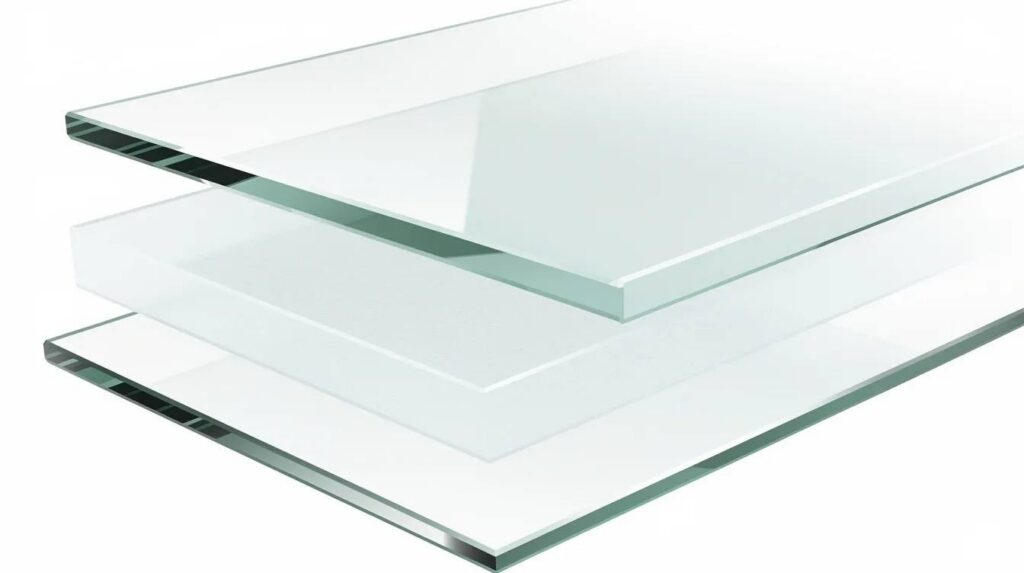
The differences come down to construction. Monolithic glass panes (a single sheet of normal glass, heat-strengthened glass, or tempered glass) can handle human impact and meet building codes, but once broken, they leave an open hole. Laminated glass bonds two panes with a plastic interlayer so that glass shards stay attached after breakage. Composite systems layer glass with polycarbonate or acrylic for superior energy absorption. Security glass includes laminated, tempered, wire, and ballistic glass for varying threats, and each type is purpose-built:
- Tempered or toughened glass resists thermal stress and basic impact, but once it shatters, it offers minimal forced-entry resistance
- Laminated glass delays forced entry and contains broken glass fragments
- Burglar-resistant glass is engineered to withstand physical attacks using blunt tools and blunt objects over sustained periods
- Bullet-resistant glass stops projectiles at certified threat levels
- Blast-resistant glass absorbs blast wave energy and prevents dangerous flying shards
Industry standards prefer the term “bullet resistant” over “bulletproof glass” because no glazing is immune to every caliber, angle, and number of shots. Resistant glass is rated into resistance classes defined by standards like EN 356, UL 752, and ASTM F1233.
Laminated Glass and Everyday Security Glazing
Laminated glass is constructed from two or more glass panes bonded with interlayers of polyvinyl butyral (PVB), ionoplast, or similar materials. This construction creates shatterproof glass behavior: laminated glass holds together when shattered, keeping the opening sealed and denying quick access. It can delay entry by a few minutes, which is often enough time for alarms and response.
Beyond security, laminated glass reduces sound transmission effectively and provides UV protection and glare control-benefits that make it popular in storefronts, office facades, and residential doors. Laminated glass is used in safety glazing applications wherever building codes require protection from accidental breakage, and different interlayer thicknesses allow the same product family to meet various resistance classes, from EN 356 P1A manual attack ratings up to low-level ballistic thresholds when configured with several layers.
Common installations include retail corridors vulnerable to smash-and-grab break-ins, school entry vestibules, residential patio doors, and balcony railings. Consider a ground-floor jewelry store: replacing standard tempered window glass with a laminated unit featuring an ionoplast interlayer transforms the storefront from a five-second breach target into a barrier that requires sustained effort with tools to penetrate. Performance options extend to combining laminated glass with low-E coatings for energy efficiency, acoustic interlayers for sound control, and decorative or privacy films. Note that laminated glass is not automatically high-security glass- its protection level depends entirely on interlayer type, thickness, and test certification.
High Security Glass: Forced Entry, Bullet Resistant, and Blast Resistant Systems
High security glass refers to glazing engineered and tested to resist specific threat types: forced entry by tools, bullets from firearms, and blast pressure from explosions. These systems typically use multiple layers of glass and laminate, often combining glass with polycarbonate plastic for unmatched protection and energy absorption.
Forced entry resistant glass is designed to withstand repeated blows from hammers, crowbars, and similar tools, delaying or preventing an attacker from being able to gain access for several minutes. Typical use cases include pharmacies, electronics retailers, cannabis dispensaries, and vulnerable school entrances.
Bullet-resistant glass can stop bullets from various firearms. It is made of multiple layers of glass and laminate, and bulletproof glass thickness ranges from 30 to 45 mm for security windows in banks. Ballistic glass is designed to resist projectiles and is tested against specific threats defined by UL 752 levels: Level 1 covers 9 mm handgun rounds, Level 3 handles .44 Magnum, and higher levels address rifle calibers. It is commonly used in banks and military areas where bullet-resistant protection is mandatory.
Blast-resistant glass absorbs overpressure from a bomb blast, and blast-resistant glazing prevents flying shards of glass during an explosion. Applications include courthouses, federal buildings, embassies, and chemical plants. Ionoplast interlayers outperform standard PVB under dynamic blast loads by maintaining structural integrity after glass fracture.
The combined system of frame attachment and glass properties determines the overall security; glass alone, installed in a weak frame, will fail regardless of its rating. Many projects in high-risk environments combine forced entry and ballistic protection in one glazing system for demanding applications.
Key Materials and Constructions: Tempered, Laminated, Acrylic, Polycarbonate, and Security Film
Material selection depends on budget, aesthetics, and required security level. Here is how the various types compare:
| Material | Typical Thickness | Primary Use | Security Strength |
|---|---|---|---|
| Tempered glass | 4–6 mm | Standard windows, shower doors | Safety only; limited security |
| Laminated glass | 8–20 mm | Doors, storefronts, railings | Forced entry delay, safety |
| Armored glass | 20–35 mm | High-risk windows | Enhanced ballistic and forced entry |
| Bulletproof glass | 30–45 mm | Bank teller windows, military | Full ballistic protection |
| Polycarbonate panels | Varies | Barriers, high-security windows | Extreme impact and forced entry |
Tempered glass is strengthened glass heat-treated to about four times the strength of annealed float glass. UNI EN 12600 regulates tempered glass performance standards. It breaks into small cubes rather than dangerous glass shards, making it ideal for safety in shower doors and standard windows-but it offers limited resistance against determined forced entry.
Laminated glass serves as the versatile base for both safety and upgraded security, with laminated glass ranging from 8–20 mm and used in doors and storefronts as a starting point for higher resistance classes.
Acrylic glazing is lightweight and clear, typically used for interior barriers like transaction windows and visitor screens. Acrylic can stop up to UL 752 Level 2 threats for interior barriers, though it is prone to scratching over time.
Polycarbonate panels are 250 times stronger than glass and are made from polycarbonate, acrylics, and plastic resins. They resist repeated blunt-force impacts effectively and provide protection against forced entry attempts. Polycarbonate composites provide ballistic resistance and deterrence against forced entry, and some polycarbonate panels are engineered for ballistic protection at rifle levels. Polycarbonate panels are significantly tougher than laminated glass of the same thickness.
Wired glass has steel wire mesh embedded to hold glass together during a fire. Fire-rated glass prevents the spread of fire and can limit heat transfer, and fire-rated safety glass maintains integrity and blocks flames for a specified duration during a fire.
Security window film is a retrofit option applied to existing glass to increase shatter resistance and delay forced entry. Security film enhances safety and basic security but does not convert standard glass into bulletproof or blast-resistant glass.
A school might use laminated glass with security film on interior windows while a bank branch specifies full ballistic glass at teller lines-matching the right security glass to the actual threat is what matters.
Security Glass Standards and Resistance Classes
Independent testing and published standards matter far more than marketing terms like “unbreakable” or “burglar proof.” The security level of glass depends on the glazing methods and complete assembly, not just the glass pane itself.
- UL 752 specifies ballistic protection levels for security glass, defining levels by caliber, bullet velocity, and number of shots. UL 752 outlines the ballistic protection standards for glass used across North America.
- UNI EN 356 outlines standards for laminated and burglarproof glass, covering manual attack resistance classes P1A through P8B.
- EN 1063 classifies bullet resistance from BR1 through BR7 plus shotgun ratings; each standard defines the specific ammunition and conditions.
- ASTM F1233 simulates prolonged tool attacks for forced entry scenarios, measuring whether an attacker can create a body passage under timed conditions.
- ANSI sets health and safety standards for laminated glass in the United States.
- Building codes require safety glazing in specific applications such as doors, sidelights, and glass near floor level. High-security glass must meet official safety standards for reliability before it can be specified to protect people in occupied buildings.
Blast-resistant glazing follows guidance from agencies like the GSA and DoD UFC, which categorize hazard levels from explosions. Always ask suppliers for specific test reports and resistance classes rather than accepting generic “security glass” promises.
How to Choose the Right Type of Security Glass for Your Building
Facility managers, architects, and building owners must balance security, budget, aesthetics, and daily operations when selecting the right security glass. Start with a threat assessment: define whether your primary risks are vandalism, forced entry, firearms, or blast pressure, and identify the tools or weapons you need protection from.
Ground-floor and street-facing windows, entry vestibules, and high-occupancy lobbies typically require higher resistance than upper floors. Retrofit vs. full replacement is a critical decision-many existing storefronts and windows can be upgraded with retrofit security glazing or security film rather than replacing all glass panes and frames, preserving natural light and aesthetics.
Consider operational factors: visibility, daylighting, emergency egress, and compatibility with existing door hardware. Match resistance classes to real risk levels-laminated glass with security film for most offices vs. full ballistic glazing at cash-handling points. An experienced security glazing contractor can walk your site, document current glass types, identify weak points, and propose phased upgrades that protect the most vulnerable areas first, serving as an ideal solution for budget-conscious projects.
FAQs About Security Glass, Bullet Resistance, and Blast Protection
Customers often ask similar questions when comparing types of security glass and resistance levels. Here are the most common.
What is the difference between tempered safety glass and laminated security glass?
Tempered glass is a safety glass designed to reduce injury by shattering into small cubes rather than sharp glass shards, but broken glass falls out completely, leaving the opening exposed. Laminated security glass stays bonded to its interlayer after impact, keeping the opening sealed and providing measurable resistance to break-ins. Both meet safety codes, but laminated glass is preferred where delaying intruders or containing fragments is the priority.
Is there truly bulletproof glass?
No glass is 100% bulletproof. The industry uses “bullet resistant glass” because performance is defined by specific test conditions-caliber, velocity, number of shots. UL 752 and EN 1063 list levels of bullet resistance, and glass is certified only for the threats it has passed. Higher levels of ballistic protection mean thicker, heavier glazing requiring engineered framing.
Can security window film make my existing glass bullet resistant?
Security film greatly improves shatter resistance and can delay forced entry, but it does not turn existing glass into certified bullet-resistant glass. Ballistic protection requires specially designed laminated and composite systems tested as a complete assembly. Film is a cost-effective first step for offices, schools, and shops seeking better protection against break ins and accidental breakage.
Do I need blast-resistant glass for my building?
Blast-resistant glass is typically specified for high-security buildings near courthouses, federal facilities, critical infrastructure, or industrial sites with credible explosion risk. For most commercial and residential properties, forced entry and ballistic threats are more common concerns. Consult a security specialist if your building is near rail lines carrying hazardous materials or in areas with historical bomb-threat activity.
How long does high security glass typically delay a forced entry attempt?
Delay times depend on the resistance classes, tools used, and attacker determination, but tested systems withstand repeated blows for minutes rather than seconds. Even a 60–120 second delay can trigger alarms, allow staff to lock down, and notify responders. Real-world performance also depends on proper installation, secure framing, and how the glass is anchored to the surrounding structure.
Can security glass be added without changing the look of my building?
Modern security glazing, laminated units, and retrofit polycarbonate panels can be installed with minimal visual change. Clear interlayers, low-iron glass, and slim retrofit frames maintain transparency and natural light without a “fortress” appearance. Decorative and privacy films can also be applied over high-security glass where branding, wayfinding graphics, or visual screening are desired.
Why Choose Our Team for Security Glass and Retrofit Glazing Projects
Window Film Depot has specialized in security window films and retrofit glazing systems for commercial, institutional, and residential clients since 1992. With decades of hands-on experience across 3M high-performance films, laminated glazing upgrades, and polycarbonate retrofit systems, our team delivers protection matched to your actual threat profile.
We provide turnkey capabilities: site surveys, threat-focused recommendations, product selection across laminated, polycarbonate, and film-based systems, plus professional installation and project management nationwide. Our portfolio includes sensitive environments-schools, behavioral healthcare facilities, banks, pharmacies, big-box retail, and government buildings across the U.S. and Canada. We coordinate with architects, facility managers, and security integrators to ensure glass quality and performance align with access control, intrusion detection, and building code requirements. Solutions can be phased to fit budgets, focusing first on the highest-risk doors and windows.
Get a Security Glass Assessment and Project Quote
Schedule a security glass assessment for your property and find out exactly where your glazing is vulnerable. Whether you manage a school campus, retail chain, financial branch, or government office, our experts will walk your site to identify at-risk glass, evaluate frame conditions, and recommend tiered solutions.
During the consultation, we review current glass types, frames, and existing film, discuss threats ranging from forced entry to bullet resistance and blast risk, and deliver a detailed proposal with pricing for laminated glass upgrades, high security glass systems, or security window film installation. Contact Window Film Depot by phone or through our online form to get started.
Upgrading to the right type of security glass can be done with minimal disruption while significantly improving safety, security, and peace of mind for everyone inside your building.