Introduction: Why Window Tint Rolls Matter for Pros and Property Managers
Window tint rolls are sheets of specialized film applied to glass surfaces, sold in continuous lengths that let professionals cut exactly what they need for any job. If you run a tint shop, manage a commercial building portfolio, or oversee a vehicle fleet, buying film in roll format gives you material efficiency, project flexibility, and cost control that precut kits or small retail packs simply cannot match. Window tint rolls provide extra material for multiple installations and offer flexibility for installers and DIY users tackling non-standard glass.
The applications extend well beyond car windows. Commercial storefronts, schools, government buildings, healthcare facilities, and corporate offices all use window film in roll format for solar control, security, privacy, and energy savings. This guide covers the film types you need to know, including nano ceramic, along with visible light transmission, UV protection, code compliance, installation basics, and how Window Film Depot supports B2B buyers nationwide.
Table of Contents:
- Window Tint Rolls vs. Precut Kits: When Bulk Film Is the Better Choice
- Types of Window Tint Rolls: Dyed, Carbon, and Nano Ceramic Films
- Understanding Visible Light Transmission (VLT) and Performance Metrics
- Code Compliance, Tint Laws, and Project Planning
- Installation Basics for Window Tint Rolls (Professional and Trade Users)
- Where Window Tint Rolls Deliver the Most Value: Real-World Use Cases
- Why Choose Window Film Depot for Window Tint Rolls and Installation
- FAQs About Window Tint Rolls for Vehicles and Buildings
- Next Steps: Schedule a UV Window Film Consultation
Window Tint Rolls vs. Precut Kits: When Bulk Film Is the Better Choice
A precut kit ships as vehicle- or pane-specific pieces, ready to apply. A window tint roll ships as a continuous sheet-typically 100 feet long-that you cut, shape, and install to fit any glass. The difference matters as soon as the scope of your job grows beyond a single vehicle or a handful of windows.
Why pros prefer rolls:
- Tint rolls allow custom cutting for any window shape, making them ideal for custom patterns and non-standard applications.
- Bulk pricing drops per-square-foot cost significantly-often $2–$6 per square foot on master rolls versus much higher unit cost on precut options.
- A single roll stock covers mixed vehicle fleets (sedan, truck, SUV) without ordering separate kits for each model.
- Rolls are preferred for practice and replacement pieces, reducing waste on training or rework.
- Large commercial glass storefronts, curtain walls, and sidelites demand continuous film that precut kits don’t address.
Consider a mobile tint crew handling 15 police cruisers in a single week. Ordering 15 separate precut kits creates shipping delays, inventory headaches, and higher cost per vehicle. With rolls in the right widths, the crew cuts each piece on-site and maintains consistency across the fleet. The same logic applies to a school district updating interior glass for safety and increased privacy across dozens of buildings.
Window Film Depot sells full rolls and cut lengths to trade partners across North America, with logistics support for multi-site deployments and a broad catalog of security, solar control, and decorative window films. A precut kit has its place for a single-car DIY job, but professional installation on any meaningful scale calls for roll film.
Types of Window Tint Rolls: Dyed, Carbon, and Nano Ceramic Films
Different types of window tint include dyed, carbon, and ceramic films. Each construction delivers a different balance of heat rejection, UV protection, glare reduction, appearance, and longevity. Architects, facility managers, and tint shop owners should specify film type based on performance goals, budget, and warranty expectations rather than defaulting to the cheapest option on the shelf.
Dyed Window Tint Rolls: Entry-Level Shade and Privacy
Dyed window tint is budget-friendly and reduces glare, making it the go-to option where appearance and basic privacy matter more than peak heat performance. Typical use cases include cosmetic tinting on dealer-lot vehicles, interior office partitions, and retail entry doors where mild solar control is acceptable.
Dyed films are economical but can fade over time and provide less heat reduction compared with carbon or ceramic. Infrared rejection on dyed film often lands between 10–25%, and lifespan runs roughly 3–5 years before color shift becomes noticeable. For pros, dyed rolls work well as an entry-level product at an affordable price point or as an upsell starter-but set realistic expectations with customers about durability and heat performance.
Carbon Window Tint Rolls: Better Heat Performance and Color Stability
Carbon window tint blends style with substance. By embedding microscopic carbon particles within the film layers, carbon rolls deliver better heat rejection and far more stable color than dyed alternatives. Carbon nano technology enhances UV ray protection, and carbon window tint offers superior UV protection overall.
Common applications include mid-tier automotive packages, small office suites, and residential projects where customers want cooler interiors without a metallic or highly reflective look. Carbon film typically achieves a Total Solar Energy Rejected (TSER) range of 35–55%, with a non-reflective matte finish that many vehicle owners prefer. Lifespan runs 7–10 years in automotive settings, longer in architectural. Tint shops and glazing contractors should stock carbon rolls in popular VLTs-20%, 35%, and 50% cover most everyday requests.
Nano Ceramic Window Tint Rolls: Premium Heat and UV Protection
Nano ceramic window tint is the top-tier product selection, using microscopic ceramic particles for high visible light transmission with outstanding solar performance. Ceramic films provide high heat rejection while maintaining clarity, and ceramic films are often considered the best all-around choice for performance. Ceramic window tint films offer excellent comfort and performance across both automotive and architectural applications.
Infrared rejection on premium ceramic rolls regularly hits 80–95%. TSER values reach 50–70% depending on shade. And because the film is non-metallic, there is minimal impact on wireless, GPS, and ADAS signals-unlike metalized films, which may interfere with electronic signals in vehicles.
3M films provide maximum heat rejection and UV protection, and 3M™ Sun Control Ceramic Series films for commercial applications offer a complete range of automotive and architectural window films designed for long-term durability and clarity. Window Film Depot carries advanced 3M ceramic and spectrally selective lines that meet many energy codes and are often utility-rebate eligible. For corporate headquarters wanting clear glass with performance, healthcare campuses reducing cooling loads, or premium automotive clients choosing 70% VLT ceramic for comfort without a dark look, ceramic rolls deliver.
Understanding Visible Light Transmission (VLT) and Performance Metrics
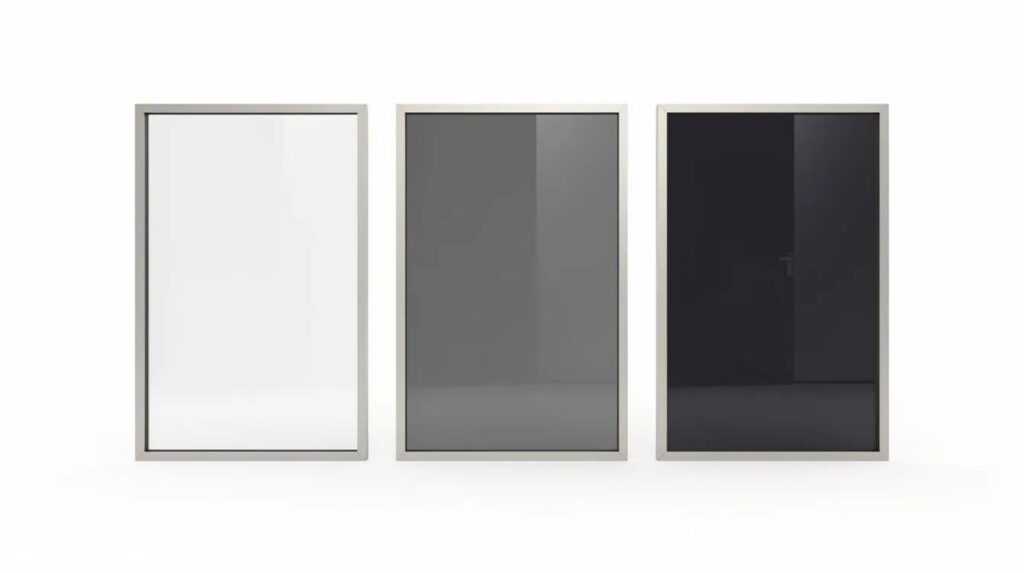
Tint percentage is measured by VLT (Visible Light Transmission), the percentage of visible light that passes through the glass and film combination. Lower VLT percentages result in darker window tints; higher VLT means lighter, clearer glass. This matters differently depending on whether you are tinting car windows for passengers or specifying film for a commercial building where daylighting and sightlines are critical.
Beyond VLT, several metrics shape product selection:
| Metric | What It Measures | Why It Matters |
|---|---|---|
| TSER | Total solar energy rejected (visible + IR + UV) | Overall heat and energy performance |
| IR Rejection | Infrared energy blocked | Directly impacts how much cooler an interior feels |
| UV Rejection | Ultraviolet radiation blocked | Window films protect interiors from UV rays that cause fading |
| Visible Reflectance | Light reflected off the film surface | Affects appearance from outside |
| A practical example: choosing 35% VLT 3M nano ceramic sun control film on office windows in Atlanta can reduce glare while preserving views, keeping occupants comfortable and protecting furnishings from fading. On a fleet vehicle operating in multiple states, you need VLT that satisfies the most restrictive state law your drivers will encounter. |
High-quality films often come with warranties against fading and bubbling, sometimes with lifetime coverage on ceramic lines. Window Film Depot helps specifiers and facility managers read manufacturer data sheets and align VLT choices with both aesthetics and code compliance, ensuring the film you buy actually meets the standard your project demands.
Code Compliance, Tint Laws, and Project Planning
A good tint job is not just about look and comfort-it must meet legal requirements and project standards. Ignoring this step leads to fines, removal costs, and wasted material.
Automotive: Tint laws vary by state and dictate minimum VLT for different windows in vehicles. Front side windows might require 70% VLT in one state and allow 20% in another. Fleet managers operating across state lines should standardize on the most restrictive limit to avoid compliance issues when a truck or car crosses a border. Privacy window tints often block visibility into homes or vehicles during the day, but reflective films provide daytime privacy but not nighttime privacy-an important distinction for both vehicle passengers and building occupants.
Architectural: Building energy codes (IECC, ASHRAE) specify maximum Solar Heat Gain Coefficient (SHGC) and visible transmittance values. Films applied to tempered, laminated, or wired glass must be compatible with the substrate to avoid thermal stress and breakage. Security film on entry doors may need to meet specific mil-thickness requirements for forced entry or blast resistance.
Window Film Depot regularly works with government agencies, school systems, and national retailers to ensure films meet security, privacy, and anti-graffiti requirements alongside energy code mandates, supported by its role as America’s leading 3M window film installation company. Before you purchase bulk rolls, consult with a professional installer to avoid costly rework or non-compliant installations.
Installation Basics for Window Tint Rolls (Professional and Trade Users)
This section is an overview for professionals and skilled trade users, not a substitute for hands-on training.
Key stages of a quality install:
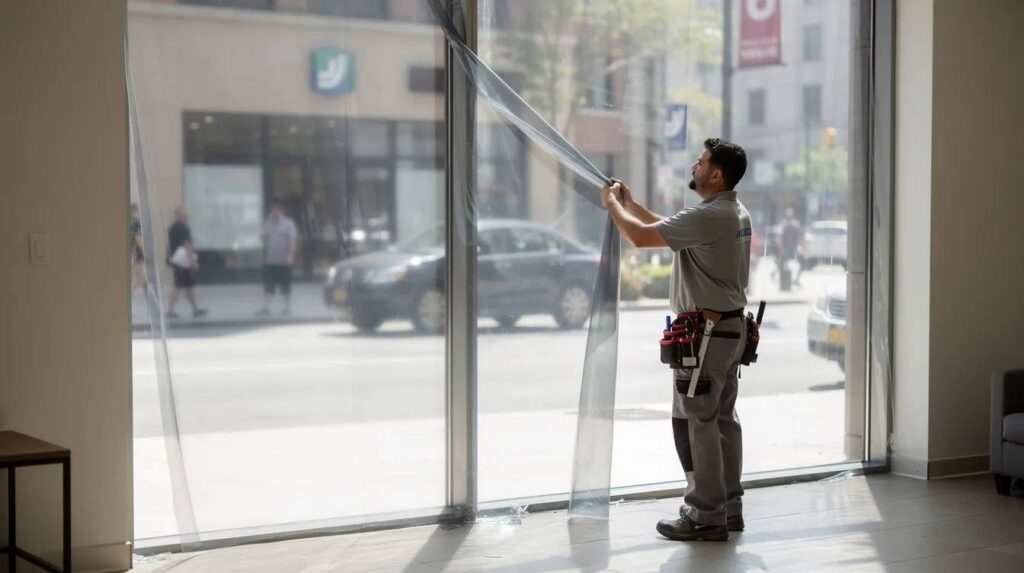
- Glass inspection – Check for chips, scratches, or seal failures that could compromise adhesion or void warranties.
- Deep cleaning – Start with clean glass for best results. Any dust or residue trapped under the film creates permanent defects.
- Measurement and patterning – Measure the glass, then cut from the roll with allowance for trimming. Use a sharp blade for cutting window tint film to get clean edges.
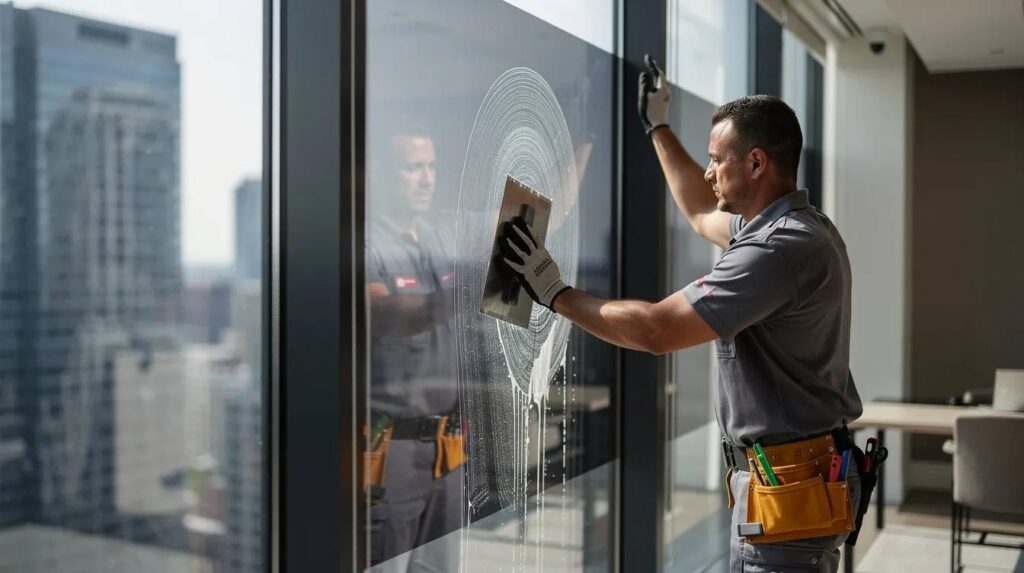
- Application – Apply a slip solution to aid installation and position the film precisely. For curved auto glass like rear windshields, shrink film with heat from a heat gun to conform the material without creases.
- Final finish – Use a squeegee for smooth application, pushing out air and solution from center to edges.
Flat architectural glass is generally easier to handle than curved car windows, but large commercial lites may require scaffolding and multiple hands. Professional installation is recommended for better results than DIY, especially with high-performance or nano ceramic films where adhesive contamination or improper shrinking can ruin expensive material, making experienced 3M window film product and installation specialists a valuable partner. Shops and trade partners new to these films should consider manufacturer or Window Film Depot training to avoid common mistakes.
Where Window Tint Rolls Deliver the Most Value: Real-World Use Cases
Rolls outperform smaller packaged options whenever scale, consistency, or non-standard glass are involved.
- National retail chain storefront retrofit: A chain with hundreds of locations needed retail storefront window film to reduce glare and cooling costs. Ordering master rolls in 60-inch widths minimized seams on large glass panels, kept the appearance uniform across sites, and qualified the project for utility rebates. Window tinting can improve energy efficiency in residential and commercial buildings alike-this chain measured measurable HVAC savings within the first cooling season.
- University campus privacy and safety upgrade: A state university used safety and privacy film rolls on interior sidelites, labs, and dorm partitions. Roll format allowed consistent VLT and film type across buildings, simplified procurement, and reduced waste compared with ordering pane-by-pane.
- Fleet operator driver comfort program: A delivery company tinted dozens of vehicles to enhance comfort for drivers logging long hours. Ceramic rolls in a legal VLT provided heat rejection and UV protection without a dark look that would draw enforcement attention. Branded consistency across the fleet was a side benefit.
- Healthcare facility equipment protection: A regional hospital combined UV protection and privacy film on patient-area windows to shield sensitive equipment and block exterior sightlines, keeping areas cooler and more comfortable.
Window Film Depot provides turnkey services for projects like these: product selection, roll supply, on-site installation crews, and project management for multi-location work, drawing on a broad portfolio of window glass film products and brands.
Why Choose Window Film Depot for Window Tint Rolls and Installation
Window Film Depot is a family-owned window film specialist founded in 1992 and based in Marietta, Georgia. For over three decades, we have served commercial, institutional, and government clients nationwide.
- Experience: Thousands of completed projects across retail, education, healthcare, and government sectors.
- Product range: Solar control, security glazing films, decorative and privacy films, anti-graffiti films, and commercial graphics-all available in roll format built for trade and institutional buyers.
- Vendor partnerships: Access to high-performance 3M window films and other reputable manufacturers, including advanced nano ceramic and spectrally selective lines designed for demanding climates.
- Turnkey execution: Assessment, specification support, logistics, professional installation crews, and post-install service-all managed under one roof.
- Wholesale support: Roll supply, cut lengths, and drop-ship options for shops and regional installers who need reliable stock and competitive pricing.
- National coordination: We manage roll-outs for brands, school systems, and government portfolios, reducing admin time and ensuring consistent tint standards across every site through nationwide window film service locations.
FAQs About Window Tint Rolls for Vehicles and Buildings
These questions come up regularly from facility managers, fleet operators, and tint professionals.
What size window tint rolls should I order for a commercial project?
Common architectural roll widths are 36, 48, 60, and 72 inches. Choose a width that exceeds the largest single pane you need to cover so you can apply film in one piece and avoid seams. For automotive work, 20- to 40-inch widths handle most car and truck windows. A 48-inch by 100-foot roll delivers roughly 400 square feet of coverage-add 10–20% for waste on irregular shapes.
Can I use the same window film roll on car windows and building glass?
Generally, no. Automotive films are engineered for curved glass and heat-shrink application; architectural films are optimized for flat glass, energy code compliance, and sometimes security ratings. Using the wrong category can void warranties and deliver poor results. Choose a film line designed for your specific application.
How long does professional window tint last on vehicles and buildings?
Dyed films typically last 3–5 years before noticeable fading. Carbon films hold up for 7–10 years. Premium ceramic films can last 10–15 years or more, often backed by lifetime warranties against defects. Lifespan depends on climate, sun exposure, and quality of the install.
Do nano ceramic window tint rolls really keep interiors cooler?
Yes. By rejecting 80–95% of infrared energy, ceramic film measurably lowers cabin and interior temperatures. In hot climates like the Southeast, this translates to reduced AC load, lower energy bills, and more comfortable conditions for passengers and building occupants.
Will window tint rolls block all UV light?
Quality films block up to 99% of UV rays-some premium ceramic lines claim 99.9%. This level of UV protection shields furnishings, merchandise, vehicle interiors, and skin from sun damage. Even entry-level dyed films generally achieve 95–99% UV rejection.
How do I know if my project needs security or safety film instead of standard tint?
Standard tint handles solar control, privacy, and glare. Security film is thicker (4 mil to 8 mil or more), engineered for impact resistance, forced entry deterrence, or blast mitigation. If your project involves entry doors, ground-floor storefronts, or high-risk facilities, consult a specialist to determine whether you need safety-rated film in addition to, or instead of, standard window tint.
Have a question not covered here? Contact Window Film Depot for project-specific recommendations or spec reviews.
Next Steps: Get Expert Help with Window Tint Rolls and Large-Scale Projects
Choosing the right type of window tint roll, VLT, and installation partner is what separates a project that performs from one that needs rework. Before you reach out, gather your basic project details: glass measurements, building or vehicle type, location, and goals-whether that is energy savings, privacy, security, or all of the above.
Window Film Depot is ready to help with free consultations, film and roll format selection, nationwide installation scheduling, and wholesale roll supply for trade partners, including window film installation services in Marietta, GA. Reach out by phone, online form, or email to get your project moving. We support jobs across the U.S., from single-building retrofits to multi-site portfolios with hundreds of locations.