Table of Contents:
- The Fundamental Principle: Why Tempered Glass is Categorized as “Safety Glass”
- The Essential Role of Tempered Glass: Safety First, But Not Security
- The Security Blind Spot: Why Tempered Glass Falls Short Against Real-World Threats
- Bridging the Gap: Transforming Tempered Glass into a Robust Security Barrier with Advanced Film Technology
- A Project Manager’s Playbook for True Glazing Security: Beyond Basic Specifications
- Frequently Asked Questions
- Related Posts from Window Film Depot
The Fundamental Principle: Why Tempered Glass is Categorized as “Safety Glass”
Tempered glass is classified as “safety glass” because of its unique breakage characteristics, which significantly reduce the risk of injury upon impact. Unlike standard annealed glass, which fractures into large, jagged shards, tempered glass is engineered to break into small, relatively blunt, cube-like fragments. This distinctive fracture pattern is the primary reason it is specified in areas with a higher potential for human impact, prioritizing occupant safety above all else. This fulfills the core purpose of tempered glass in protecting individuals from sharp debris.
Tempered glass is classified as “safety glass” for its unique breakage characteristics. These features significantly reduce the risk of injury upon impact. Standard annealed glass fractures into large, jagged shards. Tempered glass breaks into small, relatively blunt, cube-like fragments. This pattern is why it is specified for high-impact areas. This fulfills its core purpose of protecting individuals from sharp debris.
The Thermal Tempering Process: How Standard Glass Becomes Safer
The transformation from standard glass to tempered glass is achieved through a controlled thermal tempering process. It begins by heating annealed glass to extremely high temperatures, typically above 1,100 degrees Fahrenheit (600 degrees Celsius), softening it. Immediately after, the glass is rapidly cooled with air blasts on both surfaces. This rapid cooling causes the outer surfaces to cool and contract much faster than the inner core. As the core slowly cools and attempts to contract, it is constrained by the already rigid outer surfaces. This results in the outer surfaces being locked into a state of high compressive stress, while the interior remains in tensile stress. This internal stress differential is precisely what gives tempered glass its increased strength and its characteristic “safe breakage” pattern.
Understanding Glass Types: A Brief Comparison with Annealed and Laminated Glass
For project managers evaluating glazing specifications, understanding the differences between common glass types is crucial. Each type serves a distinct purpose, with tempered glass being the standard choice for applications demanding resistance to injury from breakage.
- Annealed Glass: This is the basic, untreated glass. It is inexpensive and easy to cut and process, but it breaks into large, dangerous shards, making it unsuitable for many high-traffic or impact-prone areas.
- Tempered Glass: As discussed, this glass undergoes a thermal treatment, making it approximately four to five times stronger than annealed glass of the same thickness. Its key advantage is the “safe breakage” into small, harmless fragments, specifically designed to prevent severe lacerations. However, once the surface compression is breached, the entire pane shatters instantly.
- Laminated Glass: Consisting of two or more panes of glass bonded together with a flexible interlayer, typically polyvinyl butyral (PVB). When laminated glass breaks, the fragments adhere to the interlayer, preventing the glass from falling out of the frame and maintaining the integrity of the opening. This provides a different kind of safety, as well as enhanced sound reduction and some level of security, distinguishing laminated glass from tempered glass in terms of its security performance characteristics.
The Essential Role of Tempered Glass: Safety First, But Not Security
Engineered for Injury Prevention: The Mechanics of “Safe Breakage”
The core engineering principle behind tempered glass is injury prevention through its “safe breakage” mechanism. The internal stresses created during the tempering process cause the glass to fragment entirely into small, relatively dull pieces when its surface is compromised. This dramatically reduces the risk of severe cuts and lacerations that typically occur with broken annealed glass. For Project Manager Paul, this means that while a tempered glass door might shatter completely from a sudden impact, the resulting debris is far less hazardous to occupants or bystanders than conventional glass. It is an effective design for mitigating a primary safety concern, aligning with key safety glass requirements.
Common Applications in Commercial and Retail Projects: Where Tempered Glass is a Standard
Given its safety benefits, tempered glass is a ubiquitous material in commercial and retail construction. Project managers routinely find it specified in various “hazardous locations” as defined by building codes. These applications commonly include:
- Doors: Full-lite glass doors, sliding patio doors, and storm doors.
- Storefronts: Large display windows and entrance systems where public interaction is frequent.
- Partitions and Railings: Interior glass partitions, balustrades, and structural glass elements.
- Windows in Impact-Prone Areas: Such as those near walkways, floors, or in large fenestration applications that increase impact risk.
In these environments, the potential for accidental human impact is high, making tempered glass a critical component for occupant safety.
Meeting Compliance: Building Codes and ASTM Standards for Safety Glazing
Adherence to building codes and recognized standards is non-negotiable for project managers. Tempered glass is often a mandatory specification to meet these safety glazing requirements. Key standards and codes include:
- International Building Code (IBC): Specifies locations where safety glazing is required, such as in doors, adjacent to doors, large glazed panels, and in bath and shower enclosures.
- Consumer Product Safety Commission (CPSC) 16 CFR 1201: A federal standard for architectural glazing materials, outlining impact performance requirements for safety glass.
- ANSI Z97.1: An industry standard that also defines the safety performance specifications for glazing materials.
By specifying and installing tempered glass in accordance with these codes and standards, project managers ensure their projects comply with critical safety regulations. However, it is essential to recognize that meeting these safety requirements, while crucial, does not inherently address security concerns such as forced entry resistance or protection against blast events. These codes intend to prevent injury from glass breakage, not to create a robust barrier against external threats.
The Security Blind Spot: Why Tempered Glass Falls Short Against Real-World Threats
The Critical Limitation: When “Safety” Does Not Equal “Security”
As project managers, it is vital to understand the fundamental distinction between glass designed for safety and glass engineered for glass security. While tempered glass excels at preventing injury through its “safe breakage” pattern—shattering into small, relatively harmless pieces rather than large, jagged shards—this very characteristic poses a significant security vulnerability. Its design prioritizes reducing laceration hazards upon impact, not resisting forced entry or containing threats. For a project focused on building resilience and protection, relying solely on tempered glass is a critical oversight that can expose occupants and assets to significant risk.
Vulnerability to Forced Entry: The Ease of Breaching Tempered Glass
The uniform fragmentation of tempered glass, while beneficial for mitigating injury, unfortunately makes it remarkably easy to breach during an attempted forced entry. When struck with sufficient force, the entire pane typically shatters almost instantly. The resulting small, pebble-like pieces then fall out of the frame, creating an immediate, open access point. This process offers virtually no resistance or delay to an intruder, meaning a perpetrator can gain entry in mere seconds. From a security standpoint, this inherent fragility translates directly into a lack of deterrence and minimal stand-off time for response, severely limiting its forced entry resistance.
Insufficient Protection Against Blast Events and Projectile Impact
Beyond everyday security, tempered glass performance during extreme events is critically limited. A blast wave shatters the glass into small pieces. These fragments then become dangerous flying debris inside the building. This creates a severe hazard for anyone located near the windows.
Tempered glass offers negligible resistance to direct projectile impacts. It simply disintegrates rather than deflecting or containing the object. The intended function for safe breakage undermines its blast mitigation potential. It fails to maintain a barrier during these high-stress scenarios.
Tempered Glass vs. Laminated Glass: A Crucial Distinction for Security Performance
Project managers must differentiate between tempered and laminated glass for security specifications. Tempered glass focuses on how the glass breaks. Laminated glass uses a PVB interlayer bonded between glass layers. When it breaks, fragments adhere firmly to this interlayer.
The fragments remain largely within the window frame. This characteristic significantly slows down forced entry attempts. It helps contain glass shards during blast events. Laminated glass offers security that tempered glass alone cannot provide. Tempered glass prioritizes injury prevention during accidental impact. Laminated glass maintains the opening’s integrity after an impact. This comparison is critical for comprehensive security planning.
Bridging the Gap: Transforming Tempered Glass into a Robust Security Barrier with Advanced Film Technology
The Mechanism of Enhanced Protection: How Security Film Reinforces Glass
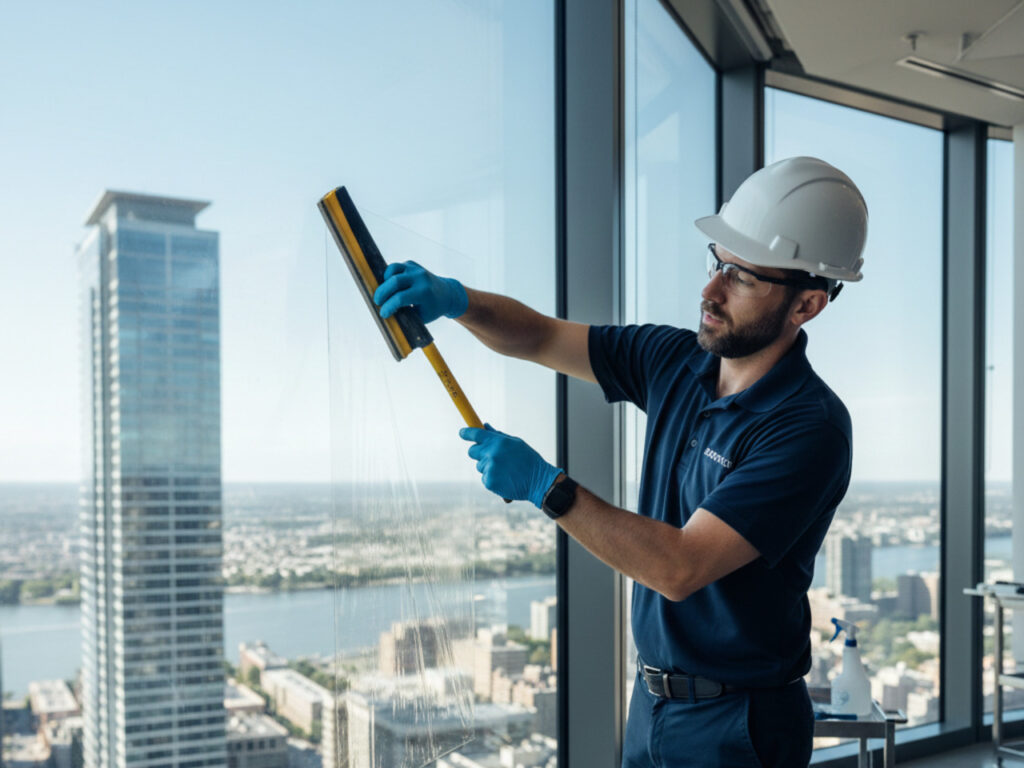
The fundamental principle behind security film’s ability to reinforce glass lies in its advanced adhesive and material composition. When applied to glass, these films form a powerful bond that effectively laminates the entire pane. Upon impact, whether from an attempted forced entry, a projectile, or a blast wave, the glass may still break. However, instead of shattering into individual pieces or falling out of the frame, the fragments remain firmly adhered to the film. This transforms the glass from a brittle material into a flexible, tear-resistant membrane that retains its structural integrity within the window frame. This mechanism significantly slows down intruders, provides critical protection against flying glass, and helps maintain the building’s envelope.

The Strategic Advantage: Turning a Safety Product into a Security Solution
By incorporating advanced security window film, project teams can strategically address the inherent “security blind spot” of tempered glass. This integration fundamentally redefines the glass’s capabilities, evolving it from a product designed solely for injury prevention into a formidable security barrier. The strategic advantage for project managers is multifaceted:
- Extended Deterrence Time: The film makes glass much harder and slower to penetrate, deterring casual attackers and providing crucial minutes for security personnel or law enforcement to respond.
- Protection Against Hazards: It significantly reduces the risk of injury from flying glass shards during forced entry, natural disasters, or blast events.
- Enhanced Building Envelope: The film keeps the shattered glass in the frame, maintaining the building’s seal against weather, theft, and continued threats until repairs can be made.
- Cost-Effective Upgrade: It often provides a more cost-effective and less disruptive alternative to replacing existing tempered glass with specialized security glazing, offering an ideal security window film for commercial buildings.
This approach allows project managers to meet stringent safety codes associated with tempered glass, while simultaneously achieving a robust level of security performance typically associated with much higher-grade, and often more expensive, security glass systems.
Introducing 3M Security Films: Engineered for Superior Performance
3M Security Films are a premier choice for reinforcing glass. They elevate building safety through decades of material science innovation. These films meet or exceed industry standards for impact resistance. They provide reliable deterrence against forced entry and blast events.
3M Scotchshield is designed for specific architectural and security challenges. It offers project managers reliable solutions for new or existing structures. The films integrate seamlessly into building envelopes without structural changes. This technology reflects a deep understanding of modern real-world threats. It addresses the critical need to protect both occupants and assets.
Deep Dive: 3M™ Scotchshield™ Safety & Security Window Film Ultra Series for Unmatched Durability
The 3M™ Scotchshield™ Ultra Series represents the pinnacle of advanced film technology. This product features a unique, multi-layered construction. It utilizes a proprietary micro-layering technology for strength. The Ultra Series does not rely on simple thickness. It achieves superior performance through dozens of micro-thin layers.
Each layer is engineered to enhance tear resistance and elongation. This innovative design allows the film to absorb high-impact energy. The film stretches significantly more than standard security films without tearing. It provides a level of resilience that far exceeds conventional options
The practical benefits for project managers include:
- Exceptional Tear Resistance: Critical for holding glass fragments together under extreme stress from blasts or repeated forced entry attempts.
- Superior Elongation: Allows the film-glass composite to flex and absorb greater energy, maintaining integrity longer.
- Clear Visibility: Despite its strength, the Ultra Series maintains optical clarity, preserving the aesthetic and natural light aspects of the building.
- Proven Performance: Independently tested and certified to meet stringent global standards for blast mitigation and forced entry, providing verifiable assurance for compliance and peace of mind.
By specifying the 3M™ Scotchshield™ Safety & Security Window Film Ultra Series, project managers can confidently transform standard tempered glass installations into robust, high-performance security barriers, effectively bridging the gap between safety compliance and comprehensive threat protection.
A Project Manager’s Playbook for True Glazing Security: Beyond Basic Specifications
Understanding the fundamental characteristics of tempered glass is merely the first step. For project managers, the true challenge lies in translating this knowledge into actionable strategies that genuinely enhance building security. This playbook outlines the proactive measures and considerations necessary to move beyond basic specifications and implement robust glazing solutions that protect assets and personnel.
Proactive Threat Assessment: Tailoring Security Solutions to Project Needs
Effective security begins with a thorough understanding of potential vulnerabilities and specific threats. Before selecting any glazing solution, a project manager must conduct a proactive threat assessment to identify the precise level of protection required. This is not a one-size-fits-all endeavor. The security needs of a retail storefront differ significantly from those of a government facility or a high-end residential complex, especially concerning security window film for commercial buildings.
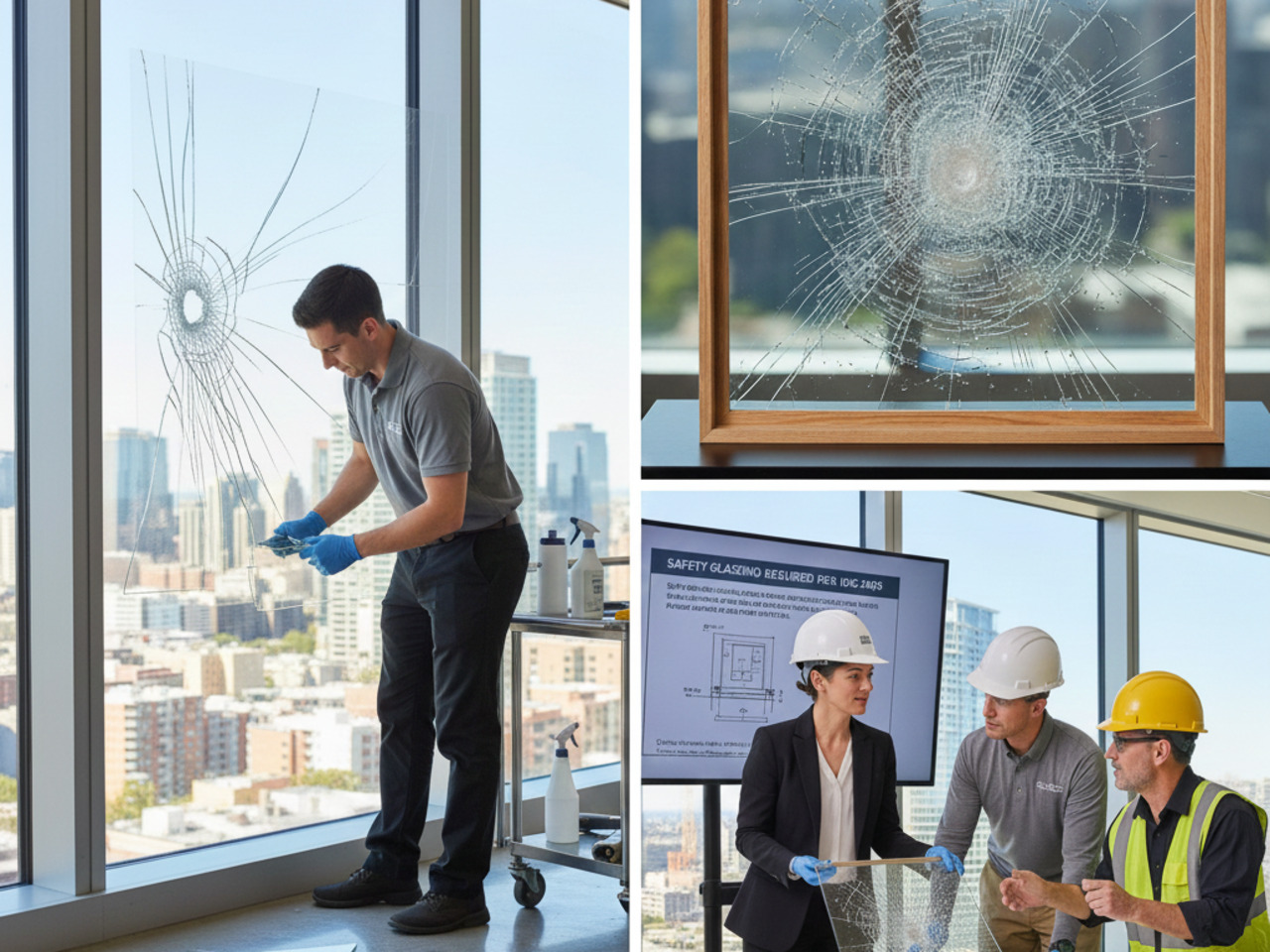
Consider the following factors during your assessment:
- Forced Entry: What is the likelihood and potential impact of an attempted breach? This dictates the required resistance to blunt force, tools, or projectiles.
- Blast Mitigation: Is the project located in an area susceptible to explosive events, whether accidental or intentional? This necessitates solutions designed to contain glass fragments and maintain structural integrity.
- Natural Disasters: What are the prevalent natural disaster risks, such as hurricanes, earthquakes, or severe storms? Glazing must be able to withstand extreme weather conditions without catastrophic failure.
- Looting and Vandalism: For commercial properties, the ability to deter smash-and-grab incidents and resist graffiti or scratching might be a primary concern.
By precisely defining these threats, you can accurately specify security film solutions that meet, and often exceed, the project’s unique requirements, rather than relying solely on the inherent limitations of tempered glass.
Integrating Security Film into Project Plans and Budgeting
To achieve true glazing security, the integration of advanced security film must be considered early in the project lifecycle, ideally during the initial planning and design phases. This proactive approach allows for seamless specification and avoids costly retrofits or compromises later on. Project managers should factor in both the material costs and the specialized labor required for proper application.
Key budgeting and planning considerations include:
- Early Specification: Including security film in the architectural drawings and specification documents from the outset ensures it becomes an integral part of the project. This prevents it from being an afterthought or a value-engineered item that compromises security.
- Lifecycle Costing: While there is an initial investment in security film, it often provides significant long-term savings by mitigating damage, reducing insurance claims, and enhancing occupant safety. Presenting these lifecycle benefits can justify the upfront cost to stakeholders.
- Material Selection: Work with suppliers to understand the performance characteristics of different film technologies. Some films offer superior tear resistance, while others excel in blast mitigation, directly influencing both cost and security outcome.
- Labor and Installation: Proper installation is paramount for performance. Allocate budget for certified installers who possess the expertise and specialized tools required for precise application, especially for edge-retention systems.
Integrating security film effectively into plans and budgets transforms it from an add-on to a foundational component of your project’s overall security strategy.
Navigating Installation Requirements and Performance Guarantees
The effectiveness of any security film is inextricably linked to its professional installation. Even the most advanced film technology will fail to perform to its potential if improperly applied. Project managers must therefore pay close attention to installation requirements and understand the performance guarantees provided by both manufacturers and installers.
Understanding Edge Attachment Systems
For security films to effectively resist forced entry or blast pressure, they must be securely bonded to the window frame. An “edge attachment system” or “wet glaze” technique uses a structural adhesive or silicone sealant to create a continuous bond between the film and the frame. This prevents the glass and film composite from separating from the frame under extreme stress, a critical factor for blast mitigation and prolonged forced entry resistance. Without proper edge retention, even a robust film may allow glass fragments to separate from the frame upon impact.
Manufacturer Warranties and Certifications
Reputable manufacturers offer comprehensive warranties covering film integrity, adhesion, and clarity for extended periods. Beyond material warranties, inquire about certifications and test reports that validate the film’s performance against industry standards, such as GSA, ASTM, or ISO. These documents provide objective evidence of the film’s capabilities under specified threat conditions, offering assurances to both you and your clients.
Partnering with Expertise: Ensuring Professional Application and Long-Term Reliability
The complexity of advanced security film installation necessitates partnering with experienced and certified professionals. This collaboration extends beyond just the initial application; it encompasses product selection, compliance with building codes, and ensuring long-term system reliability. A qualified glazing contractor is essential here.
To ensure success, consider the following:
- Certified Dealers and Installers: Prioritize installers who are factory-trained and certified by the film manufacturer. This ensures they possess the specialized knowledge, tools, and techniques required for optimal film performance, especially for critical applications like blast mitigation or advanced forced entry protection.
- Comprehensive Project Support: A valuable partner offers more than just installation services. They can assist with threat assessments, provide detailed product specifications, help navigate compliance requirements, and offer ongoing maintenance recommendations.
- Manufacturer Direct Support: Engage with manufacturers who stand behind their products with robust support, technical data, and a network of qualified installers. This direct relationship can be invaluable for troubleshooting, product updates, and ensuring the long-term effectiveness of the security solution.
By carefully selecting and collaborating with expert partners, project managers can confidently integrate high-performance security films, ensuring that the glazing system provides reliable, long-term protection and contributes to the overall safety and resilience of the project.
Frequently Asked Questions
What is the purpose of tempered glass in commercial buildings?
The primary purpose of tempered glass is to enhance safety by preventing injury. Through a thermal tempering process, it is engineered to shatter into small, blunt fragments upon impact, significantly reducing the risk of severe cuts compared to standard annealed glass. This makes it ideal for hazardous locations like doors and storefronts where human impact is possible, and it helps meet various safety glass requirements and building codes.
How does tempered glass differ from laminated glass in terms of security?
While tempered glass prioritizes injury prevention through “safe breakage,” laminated glass offers a foundational level of security. Laminated glass consists of multiple glass panes bonded with an interlayer, typically PVB. When broken, the fragments adhere to this interlayer, maintaining the integrity of the opening and significantly slowing down forced entry attempts. Tempered glass, by contrast, shatters completely, creating an immediate access point.
Can tempered glass provide adequate security against forced entry or blasts?
No, tempered glass alone offers minimal security against forced entry or blast events. Its design for “safe breakage” means it shatters instantly and completely when struck with sufficient force, creating an open access point for intruders. In a blast scenario, the fragments become dangerous projectiles. For robust security, additional measures like security window film are required to reinforce tempered glass.
How do security window films like 3M Scotchshield enhance the security of tempered glass?
Security window films, such as 3M Scotchshield, reinforce tempered glass by forming a powerful bond that holds shattered glass fragments together. Upon impact, the film transforms the glass into a flexible, tear-resistant membrane that stays within the window frame. This significantly delays forced entry, mitigates injuries from flying glass during blasts or natural disasters, and maintains the building’s envelope until repairs can be made.
What are the key considerations for a project manager when specifying glass security solutions?
Security window films, such as 3M Scotchshield, reinforce tempered glass by forming a powerful bond that holds shattered glass fragments together. Upon impact, the film transforms the glass into a flexible, tear-resistant membrane that stays within the window frame. This significantly delays forced entry, mitigates injuries from flying glass during blasts or natural disasters, and maintains the building’s envelope until repairs can be made.