Table of Contents:
- When Glass Becomes the Vulnerability: Reframing the Building Envelope Risk
- What Security Window Film Is, and What It Is Not
- Matching Film Type to Threat: A Technical Breakdown for Project Specifications
- Anchoring Systems: The Variable That Determines Real-World Performance
- Commercial, Education, and Retail Applications: Aligning Film Performance to Occupancy Type
- How to Specify Security Window Film Across a Multi-Site or Large-Scale Project
- Evaluating the Specification Decision: Security Film vs. Full Glazing Replacement
- Conclusion: Specifying Security Window Film with Confidence
- Frequently Asked Questions
When Glass Becomes the Vulnerability: Reframing the Building Envelope Risk
Security Window Film has become one of the most important retrofit solutions for commercial buildings with vulnerable glazing systems. Standard glass was never engineered to resist forced entry, blast pressure, or sustained attack, which leaves schools, storefronts, offices, and institutional facilities exposed at the building envelope level. This blog explains how security window film changes glazing failure behavior, extends forced entry timelines, and creates measurable fragment retention and occupant protection benefits when properly specified and installed.
The Forced Entry Scenario Standard Glazing Was Never Designed to Survive
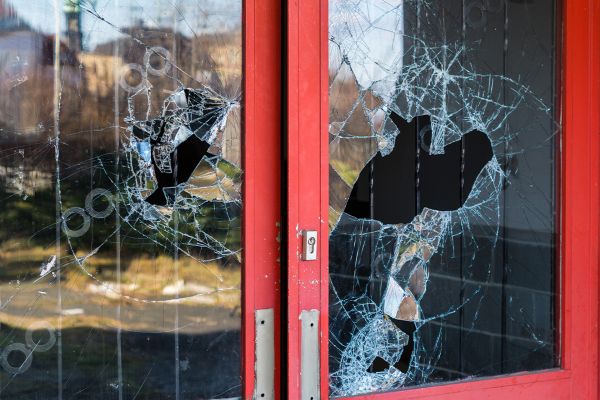
Standard commercial glazing was designed to keep weather out and people in, not to resist a determined attacker with a center-punch or a hammer. A single-pane annealed lite fails in seconds.
Tempered glass, despite its strength under uniform load, shatters explosively when struck at a corner or edge. Neither material was ever tested against an adversarial timeline, and that gap in the design assumption is exactly where building vulnerability begins.
The typical forced entry attempt against a commercial storefront or school vestibule takes 60 to 90 seconds without any resistance. A motivated attacker working against unmodified glass rarely needs more than two strikes to create an opening large enough to reach a door handle or push through entirely. The glass breaks, the fragments fall inward, and the entry point is clear. The building envelope has failed at its most basic security function before any other countermeasure activates.
Why Laminated Glass and Tempered Glazing Fall Short of Modern Security Requirements
Laminated glass is a meaningful improvement over annealed or tempered lites. The interlayer holds fragments together under ordinary conditions and meets building code requirements for hazardous locations. But meeting code and meeting a security threshold are different specifications. Laminated glass is rated for accidental impact, not sustained attack. A standard 1/4-inch laminated unit typically fails a forced entry attempt within two to four minutes under repeated strikes because the interlayer tears rather than holds once the glass matrix fractures completely.
Tempered glass presents a different failure mode. It resists breakage up to a point, then disintegrates into small pebbles, which is the design intent for reducing laceration injuries in accidents. In a security context, that behavior is counterproductive. Once tempered glass fails, the opening is immediate and unobstructed.
Neither product was specified with a forced entry delay requirement. That is not a product deficiency so much as a design category mismatch. Specifying them as a security layer sets expectations that the materials were never engineered to meet.
The Defense-in-Depth Case for Security Film as a Mission-Critical Building Component
Security window film does not create unbreakable glass. What it does is fundamentally change the failure mode of the glass unit, and that distinction is the core of the defense-in-depth argument. Film converts a passive glazing assembly into an active delay mechanism, buying the time that response systems, personnel, and evacuation procedures require.
How Fragment Retention Changes the Threat Calculus
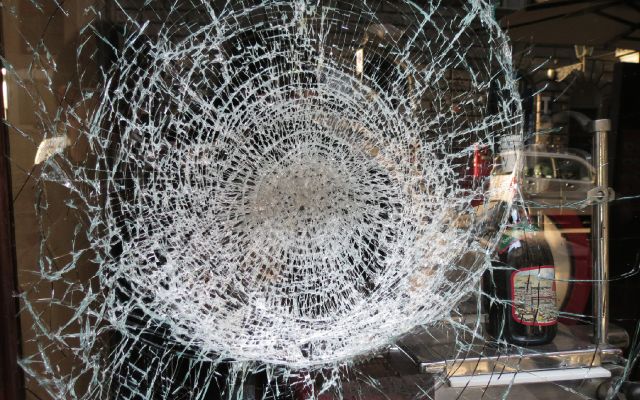
When security film is applied to glass that fractures under impact, the film holds the broken matrix in the frame. The attacker now faces a different problem. Instead of a clear opening, they encounter a flexible, adhered membrane that must be torn, cut, or repeatedly struck to create an entry point. That resistance adds minutes to the attack timeline, minutes that trigger alarms, mobilize response, and deter continuation.
Fragment retention also changes the injury profile in non-adversarial events. Glass fragments traveling at high velocity in a blast or accidental impact are the primary cause of injuries in glazing failures, not the pressure or strike itself. Retaining those fragments eliminates the most dangerous secondary effect.
The Hidden Cost of Glazing Failure in High-Traffic Commercial Environments
A glazing failure in a retail environment, school hallway, or lobby does not end when the threat ends. The direct costs, including glass replacement, emergency boarding, and cleanup, are predictable. The indirect costs are not. A school that goes into lockdown due to a broken entry window loses instructional hours, generates parent communication demands, and may trigger insurance reviews. A retail location with a smash-and-grab event loses not just merchandise but the staff hours spent on incident documentation, insurance claims, and security reviews.
Glazing failures in high-traffic environments also create secondary liability exposure. If fragments injure a bystander during a forced entry attempt or a weather event, the question of whether the glazing assembly met reasonable security standards becomes a legal one. Film specification is part of a defensible answer to that question.
What Security Window Film Is, and What It Is Not
The Core Mechanism: How Polyester Laminate Holds Glass Together Under Stress
Security window film is a multi-layer polyester laminate, typically between 4 and 14 mil thick depending on performance category, bonded to the interior glass surface using a pressure-sensitive adhesive. The adhesive layer is engineered for high tensile strength, not just surface contact. When the glass beneath fractures, the adhesive holds the broken pieces to the film matrix, and the film’s tensile properties resist tearing under continued load.
The polyester substrate itself is oriented during manufacturing to maximize strength in both directions across the film plane. This biaxial orientation is what gives film its puncture and tear resistance once glass has failed. Thickness adds mass and increases tear resistance, but the adhesive bond quality and the film’s tensile modulus are equally critical variables in real-world performance. That point gets lost when specifications focus on mil rating alone.
Clarifying the Safety vs. Security Distinction for Specification Purposes
“Safety film” and “security film” are often used interchangeably in product literature, but they describe different performance tiers. Conflating them in a specification creates a compliance gap that surfaces during post-installation review, or worse, after an incident.
Anti-Shatter and Fragment Retention Film: The Baseline Layer
Anti-shatter film, typically 4 to 8 mil, is the entry-level performance category. Its primary function is fragment retention: holding broken glass in place after impact rather than allowing it to scatter.
It is the appropriate specification for environments where the primary threat is accidental breakage, storm events, or seismic activity. It delays a forced entry attempt but was not engineered to meet a specific attack-resistance timeline. CPSC 16 CFR 1201 governs safety glazing performance in this category.
Security and Forced Entry Delay Film: Raising the Attack Timeline
Security and forced entry delay film, typically 8 to 14 mil and applied with a structural anchoring system, is engineered to resist sustained attack. The film must hold the fractured glass unit in the frame under repeated strikes long enough to exceed the attacker’s patience or trigger an alarm response. ASTM F588 and ASTM F842 provide the attack-resistance test methods for this category. Products tested and certified to these standards carry documented performance timelines, not just thickness ratings.
Blast Mitigation Window Film: Engineering Against Pressure Events
Blast mitigation window film addresses a different physics problem: sudden overpressure that loads an entire glazing unit simultaneously and uniformly. The film must absorb the energy of that pressure wave without allowing the glass to enter the occupied space as a projectile. GSA TS01-2003 and ASTM F1642 define the test protocols, which involve arena or shock-tube blast testing, not impact resistance. Blast-rated film is almost always specified with a wet-glaze or structural silicone anchoring system, because the frame attachment is as critical as the film itself in a pressure event.
What Security Film Cannot Do: Setting Accurate Expectations
Security window film does not make glass bullet-resistant. Even the highest-performance polyester laminate film does not approach the threat resistance of ballistic glazing systems, which use polycarbonate or glass-clad polycarbonate constructions with total thicknesses measured in inches. A project specification that includes security film as a ballistic countermeasure reflects a misunderstanding of the product category.
Film also does not address frame failure. If the frame pulls from the wall under blast pressure or forced attack, the film’s performance becomes irrelevant. The anchoring system and frame condition are part of the security assembly. Film alone is not.
Finally, film does not eliminate the need for other security layers. It extends the attack timeline and changes the injury profile of a glazing failure, but it is not a substitute for access control, alarm systems, or response protocols.
How ASTM F1642, GSA TS01-2003, and CPSC 16 CFR 1201 Define Performance Thresholds
These three standards define performance in different terms, and specifying the right one matters.
CPSC 16 CFR 1201 defines safety glazing performance for accidental human impact. It establishes that the glazing assembly does not produce dangerous fragments when struck by a body form. Anti-shatter film that meets this standard is appropriate for hazardous location code compliance.
ASTM F1642 is the primary blast-resistance test protocol, defining both the test method (shock tube or arena) and the hazard rating scale from “no hazard” to “high hazard” based on fragment penetration depth. GSA TS01-2003 references ASTM F1642 and adds government-specific minimum performance requirements for federal facilities.
ASTM F588 and F842 govern forced entry resistance, covering manual attack resistance for windows and doors, respectively. These are the applicable standards when the threat scenario is an active intruder rather than a pressure event.
Citing the correct standard in a construction document is not a formality. It determines what the installer must demonstrate, what test data must be provided, and what post-installation verification looks like.
Film Type Selection Matrix
| Threat Scenario | Recommended Mil Thickness | Anchoring Requirement | Applicable Standard |
|---|---|---|---|
| Accidental breakage, storm, seismic fragment retention | 4-8 mil | No anchoring required | CPSC 16 CFR 1201 |
| Smash-and-grab, retail forced entry deterrence | 8 mil | Edge-delete or C-Bond adhesion recommended | ASTM F588 |
| Active intruder delay, school/office forced entry | 8-12 mil | Wet-glaze or structural silicone anchoring required | ASTM F588 / F842 |
| Blast mitigation, government or institutional facilities | 12-14 mil or custom | Wet-glaze or structural silicone anchoring required | ASTM F1642 / GSA TS01-2003 |
| High-threat perimeter hardening, multi-threat scenario | 12+ mil, system-specified | Full structural silicone with frame reinforcement | ASTM F1642 + F588, GSA TS01-2003 |
The matrix above is a starting point, not a substitute for a site-specific threat assessment. Two variables that shift the specification significantly are frame condition and glass type. Older aluminum frames with inadequate bite depth may require frame reinforcement before a wet-glaze anchoring system performs as rated. Insulating glass units (IGUs) require film specified for dual-pane application to avoid thermal stress failure, a failure mode unrelated to security performance but capable of voiding both the film warranty and the glass warranty.
Mil thickness should be specified alongside the anchoring requirement and the applicable test standard as a package. A 12 mil film installed without a structural anchor will not meet GSA TS01-2003, regardless of the film’s stand-alone ratings. Film thickness, anchoring system, and test standard form the specification triad that determines whether the installed assembly actually performs to the threat requirement.
Matching Film Type to Threat: A Technical Breakdown for Project Specifications
Understanding Mil Thickness Ratings and Why Thickness Is Not the Only Variable
Mil thickness measures the total depth of the polyester laminate stack, including the adhesive layer. A 12 mil film is physically thicker than an 8 mil film, which means more material for an attacker to tear through and greater energy absorption during a pressure event. But thickness is a proxy metric, not a performance specification. Two 12 mil products from different manufacturers can produce significantly different results under ASTM F588 testing because the adhesive formulation, the number of polyester plies, and the biaxial orientation of each ply all affect real-world tear resistance independently of total thickness.
When a specification lists only mil thickness, it defines the floor, not the performance target. A construction document that requires “12 mil security window film” without citing a test standard and a minimum performance tier gives an installer room to meet the letter of the spec while missing the intent.
When 8 Mil Is Sufficient and When the Specification Demands More
For smash-and-grab deterrence on a retail storefront, 8 mil film applied with edge-delete treatment delivers meaningful resistance against opportunistic attacks, the kind that rely on speed and surprise rather than sustained effort. An attacker who expects glass to clear in two strikes encounters a membrane that holds, and most will abandon the attempt.
The specification moves to 12 mil or higher when the threat scenario involves sustained manual attack, blast overpressure, or a forced entry delay requirement measured in minutes rather than seconds. School vestibule glazing, government lobby windows, and any opening addressed by GSA TS01-2003 belong in this tier. High-performance options above 14 mil are generally system-specified, meaning the film is selected as part of an engineered assembly rather than as a standalone product.
3M Safety Series vs. 3M Ultra Series: Performance Differentiation for Commercial Projects
The 3M Safety Series window film covers fragment retention and basic forced entry deterrence, the product range appropriate for accidental impact protection, storm resilience, and smash-and-grab scenarios where the primary goal is holding glass in place. These films meet CPSC 16 CFR 1201 and provide a documented baseline for code-compliance applications.
The 3M Ultra Series addresses higher threat levels, with products tested to ASTM F1642 and capable of meeting GSA blast mitigation requirements when installed with a compatible anchoring system. The Ultra Series also carries higher tensile strength ratings, which matters in sustained attack scenarios. For a project manager writing a specification, the key distinction is not the series name but the test data behind it. Request the ASTM or GSA test reports, not just the product sheet.
Shatter-Resistant Window Film for Commercial Smash-and-Grab Scenarios
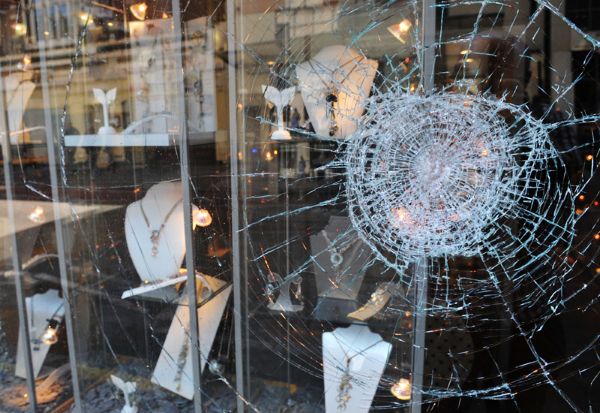
A smash-and-grab attempt against a retail window typically lasts under 30 seconds. The attacker’s objective is a clear opening fast enough to grab merchandise before any alarm response arrives. Shatter-resistant window film for commercial applications defeats that model by denying the clear opening. The glass fractures but stays in the frame, and the film membrane requires additional time and effort to breach that the attacker’s timeline cannot accommodate.
For retail applications, 8 mil film with C-Bond adhesion enhancement at the glass edge covers most threat profiles. Glazing that faces a parking lot or street-level exposure warrants the full specification: 8 mil minimum, edge anchoring, and documented fragment retention testing. The client-facing summary is straightforward: the film does not prevent the break, it prevents the entry.
Blast Mitigation Window Film and GSA Compliance for Government and Institutional Facilities
Blast mitigation is a different physics problem than forced entry. A pressure event loads the entire glazing unit in milliseconds, and the failure mode, glass entering the occupied space at high velocity, is responsible for the majority of blast-related injuries. Blast mitigation window film holds the fractured glass to the film substrate and keeps the assembly in the frame long enough to absorb and redirect the pressure energy.
GSA TS01-2003 compliance requires arena or shock-tube blast testing, not impact testing. A film that passes ASTM F588 for forced entry delay does not automatically qualify as blast-rated. Government and institutional facilities subject to blast standards need film products with documented ASTM F1642 test data at the specified charge weight and standoff distance, combined with a wet-glaze or structural silicone anchoring system. Specifying one without the other produces a non-compliant assembly regardless of the film’s individual ratings.
Ballistic and High-Threat Glazing Contexts: Where Film Fits in the System
Security window film does not provide ballistic resistance. Ballistic glazing systems use glass-clad polycarbonate or laminated glass-polycarbonate composites, with total unit thicknesses that start at 3/4 inch for Level 1 protection under UL 752 and increase significantly from there. Film is not a component of a certified ballistic assembly.
Where film does fit in high-threat contexts is as a secondary layer on non-ballistic glazing adjacent to a hardened perimeter, covering side lights, clerestory windows, or interior glazing where blast mitigation or fragment retention is the requirement rather than ballistic resistance. Specifying film for high-threat perimeters requires a clear threat model. Film is the right answer for some threats in those environments and the wrong answer for others.
What Certifications and Standards Should Security Window Film Meet for Education or Retail Environments
For K-12 facilities, the minimum specification is ASTM F588 manual attack resistance for any glazing in the entry sequence, including vestibule lites, sidelight panels, and any glazing within reach of a door handle. Fragment retention per CPSC 16 CFR 1201 covers interior glazing in occupied areas.
For retail environments, CPSC 16 CFR 1201 covers the code baseline. A smash-and-grab threat profile adds ASTM F588 to the requirement for storefront glazing. Neither environment typically requires blast testing unless the facility is co-located with a government tenant or falls under a specific security assessment requirement.
Anchoring Systems: The Variable That Determines Real-World Performance
Why Unanchored Film Fails When It Matters Most
An unanchored film holds glass fragments together but not in the frame. Under blast pressure or sustained manual attack, the film and the fractured glass can separate from the frame as a unit, entering the occupied space with the film intact but the assembly failed. Fragment retention without frame retention does not meet a blast or forced entry delay specification. The anchoring system is what converts fragment retention into occupant protection.
Wet-Glaze Attachment: Application Method, Substrate Requirements, and Performance Profile
Wet-glaze anchoring bonds the film edge to the window frame using a structural silicone bead applied during film installation. The bead bridges the gap between the film edge and the frame, transferring the load from the film into the frame rather than relying solely on the adhesive bond to the glass surface.
Substrate requirements matter here. The frame surface must be clean, primed, and compatible with the silicone formulation. Painted aluminum frames in older buildings may require mechanical preparation or a primer coat. Frames with inadequate bite depth, less than 3/8 inch of glass captured by the frame, may not provide sufficient surface area for the silicone bead to develop its rated bond strength. Frame condition assessment is a pre-installation step, not a post-installation correction.
C-Bond and Structural Silicone Anchoring: When and Why to Specify Each
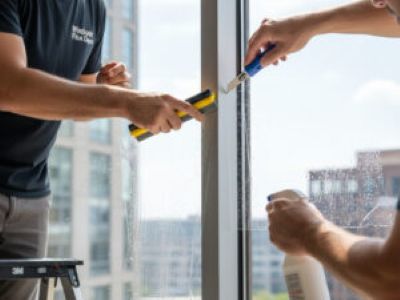
C-Bond is an adhesion primer applied to the glass surface before film installation. It chemically bonds the film adhesive to the glass at a molecular level, significantly increasing peel strength compared to standard mounting solution application. C-Bond is the right specification for smash-and-grab deterrence on retail glazing where a full wet-glaze bead is either impractical due to a narrow frame reveal or outside the project budget, and where the threat scenario does not include blast.
Structural silicone wet-glaze anchoring is the specification for blast mitigation and high-threat forced entry delay applications. It provides the frame attachment that blast testing requires and is the only anchoring method that supports GSA TS01-2003 compliance. The choice between the two is not a cost preference. It is driven by the test standard the installation must meet.
Matching the Anchoring System to Frame Type, Building Age, and Threat Level
Aluminum curtain wall frames in newer construction are generally compatible with wet-glaze anchoring without modification. Wood frames require film specified for the thermal movement differential between wood and glass. Historic masonry buildings with steel frames may require structural assessment before wet-glaze anchoring can be specified, because the frame-to-wall connection needs to be capable of transferring the loads the anchoring system will generate.
Older buildings also present coating and contamination variables, including silicone from previous glazing operations, paint overspray, or oxidation on aluminum frames, all of which affect bond performance. A pre-installation inspection is standard practice on any project where frame age or condition is uncertain.
How Anchoring Specification Affects ASTM and GSA Compliance Outcomes
ASTM F1642 and GSA TS01-2003 test the film-and-anchoring system as an assembly, not the film alone. Test results from an arena blast test apply to the specific combination of film product, adhesive formulation, anchoring method, and frame type used in the test. Installing a GSA-rated film with an unanchored or C-Bond-only system does not produce a GSA-compliant installation, even if the film itself carries the certification.
This has direct implications for construction document language. Specifying “GSA TS01-2003 compliant film” without also specifying the anchoring method creates an ambiguity that an installer can technically satisfy with a non-compliant system. The specification needs to call out film product, anchoring method, and applicable test standard together.
Can Security Window Film Be Installed on Existing Buildings?
Film installs on existing glazing in the vast majority of commercial retrofit scenarios. The installation sequence, clean, mount, trim, and anchor, does not require frame removal or glazing replacement. This is one of the primary cost advantages over full glazing upgrades.
The constraints are substrate specific. Insulating glass units need film specified for dual-pane application to manage thermal stress. Glazing with existing coatings, including low-e, bird-frit, or previous film installations, may not accept new film adhesion without surface preparation or delamination of the prior film. A site survey before bid allows the installer to identify these conditions and adjust the specification accordingly rather than discovering them during installation.
Commercial, Education, and Retail Applications: Aligning Film Performance to Occupancy Type
K-12 School Security: Forced Entry Delay, Code Compliance, and Occupant Protection
School security glazing has a specific operational requirement that distinguishes it from most commercial applications: the film must buy enough time for staff to execute lockdown procedures and for law enforcement to respond. That timeline, typically three to five minutes in documented active threat protocols, defines the performance floor for the specification.
Entry vestibule glazing, sidelight panels adjacent to locked doors, and any glass within arm’s reach of a door handle are the priority openings. These require 8 to 12 mil film with wet-glaze anchoring, tested to ASTM F588. Interior glazing in corridors and classrooms falls under fragment retention requirements rather than forced entry delay, and 4 to 8 mil unanchored film covers that application.
Code compliance for K-12 facilities typically requires CPSC 16 CFR 1201 certification for any glazing in hazardous locations, which most safety film products meet. The security specification layer sits above the code minimum and is driven by the school district’s threat assessment rather than the building code itself.
Retail Loss Prevention: Smash-and-Grab Deterrence and Insurance Implications
Retail smash-and-grab events have a consistent profile: the attack happens in under 30 seconds, targets high-value merchandise near storefront glazing, and exploits the gap between alarm trigger and police response. Film closes that gap not by speeding up the response but by extending the breach timeline past the attacker’s risk tolerance.
Insurance carriers recognize this. Some commercial property insurers offer premium adjustments for verified security film installation on storefronts, particularly in high-theft corridors or for jewelry and electronics retailers. The documentation requirement is typically the installer’s certification of film type and anchoring method, plus the product’s test data under the applicable standard. Specifying film with that documentation trail built in, rather than as an afterthought, positions the client to pursue the insurance benefit without a secondary documentation effort.
Government and Corporate Facilities: Blast Mitigation and GSA Hardening Requirements
Federal facilities subject to GSA security standards are the most specification-intensive application for security window film. The GSA’s Interagency Security Committee (ISC) Physical Security Criteria designates facilities by security level (I through V), with glazing hardening requirements that escalate accordingly. Level III and above facilities typically require blast mitigation film on perimeter glazing, with wet-glaze anchoring and documented ASTM F1642 compliance.
Corporate facilities with blast specifications, including financial institutions, data centers, or headquarters in threat-elevated locations, follow a similar logic without the federal mandate. The specification starts with a threat assessment that defines the design basis threat by standoff distance and charge weight, which then drives the film and anchoring selection from test data.

How Occupancy Type and Threat Profile Drive the Specification Decision
The specification path through film type, thickness, anchoring system, and applicable standard follows directly from two inputs: who occupies the building and what threat scenario the glazing needs to resist. A school and a federal courthouse can both require 12 mil film with wet-glaze anchoring, but for different test standards and different operational reasons.
For a project manager coordinating across multiple building types, the practical approach is to define the threat profile for each occupancy category first, then map it to a specification package that covers film, anchoring, and standard as a unit. That package becomes the specification language for each building type in the project set, eliminating the ad-hoc decisions that produce inconsistent installations across a portfolio.
How to Specify Security Window Film Across a Multi-Site or Large-Scale Project
Writing Film Requirements into Construction Documents That Hold Across Regional Installations
Construction documents for multi-site projects fail at the film specification level when they name a product instead of defining a performance requirement. A spec that reads “install 3M Scotchshield or approved equal” gives regional installers discretion that produces inconsistent results. The document needs to lock three variables: minimum mil thickness, anchoring method, and the applicable test standard the installation must meet. When those three are codified together, any qualified installer in any region can execute to the same performance outcome.
For portfolios that span multiple building types, create a specification matrix in the construction documents that maps each occupancy type to its required film tier. A corporate campus with a lobby, a parking structure entry point, and executive floor glazing may need three different specifications on the same project. Documenting that structure up front prevents the field-level substitutions that generate inconsistency.
Defining Performance Benchmarks, Not Just Product Names, in the Specification
A performance-based specification holds regardless of which installer pulls the contract. Instead of naming a product, cite the minimum test standard and performance tier: “glazing film shall meet ASTM F588 Category C attack resistance, minimum 8 mil, installed with wet-glaze silicone anchoring per manufacturer’s published instructions.” That language is enforceable because it references a documented test, not a brand relationship.
Include a submittal requirement: the installer must provide third-party test reports demonstrating the specified film meets the cited standard at or above the required performance tier. This shifts the burden of proof to the installer before installation begins, not after a post-installation audit surfaces a gap.
Vendor Qualification Criteria: What to Require from an Installer Before Awarding a Contract
For security film contracts above a single-site scale, qualification requirements should cover four areas:
- Documented installation experience with the specified film type and anchoring system on comparable project scales
- Written confirmation of manufacturer authorization, not just product availability
- Proof of insurance that covers installation defects and damage to existing glazing
- References from at least two multi-site or institutional projects completed within the last three years
Manufacturer authorization matters more than it may appear. Authorized installers have access to technical support, warranty registration, and installation training that independent installers sourcing product through distribution do not. A warranty that requires authorized installation is voided by an unauthorized installer regardless of how well the work looks on inspection.
How to Verify Installation Quality and Consistency Across Multiple Job Sites
Verification on a multi-site project requires a defined inspection protocol, not site-by-site judgment calls. At minimum, the protocol should include visual inspection for bubbles, edge lift, and visible contamination under the film, documentation that the anchoring bead was applied and cured per specification, and an adhesion check on a sample of openings at each site.
For blast mitigation or GSA-governed installations, a third-party inspection by a qualified security glazing consultant is the appropriate standard. That inspection generates a written compliance report for each site, which becomes part of the project closeout documentation. On large portfolios, phased inspections tied to payment milestones give the project manager leverage to correct non-conforming work before it compounds across additional sites.
The Single-Vendor Advantage: Standardized Execution Without Regional Coordination Overhead
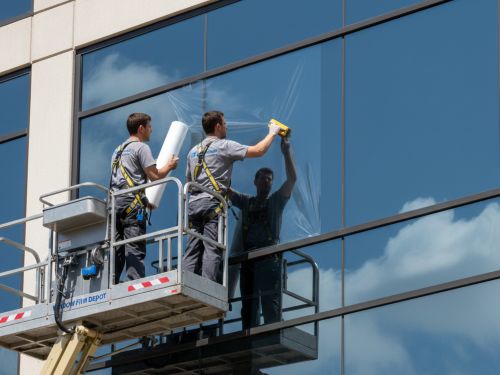
Managing a regional network of subcontractors for a multi-site film project introduces coordination overhead that compounds with project scale. Each subcontractor brings different installation practices, different product sourcing relationships, and different quality control standards. Reconciling those differences across ten or twenty sites consumes project management time that single-vendor execution eliminates.
A single vendor with national installation capability delivers one specification, one point of contact for issue resolution, and one warranty framework across all sites. The project manager communicates the specification once and receives consistent documentation from every location. When an installation defect surfaces at one site, the vendor owns the correction across the portfolio under the same terms.
What Is the Expected Lifespan of Security Window Film and How Installation Quality Affects Durability
Properly installed security window film on interior glazing in a commercial environment has a documented service life of 10 to 15 years before adhesive degradation or visible delamination typically requires replacement. That figure assumes climate-controlled interior conditions, proper surface preparation at installation, and no mechanical damage to the film surface.
Installation quality is the primary variable. Film applied to incompletely cleaned glass develops adhesive voids that grow over time and accelerate edge lift. Anchoring beads applied without adequate surface preparation lose bond strength within two to three years in environments with thermal cycling. A film that looks correct on day one but was installed without proper surface prep will fail at year four, not year twelve. Specifying installation per manufacturer’s published procedures and verifying compliance at installation is the intervention that protects the long-term investment.
Legal and Insurance Considerations for Specifying Security Film in Commercial Buildings
Security film specification creates a documented record of due diligence for glazing vulnerability. In an incident where glazing failure contributes to injury, that documentation matters. The relevant question is whether the building owner took reasonable steps to address a known vulnerability. A specification that matches the threat level to a recognized test standard, with installer certification confirming compliant installation, supports a defensible answer.
Insurance implications are practical and near-term. Property insurers for retail and institutional clients increasingly request documentation of glazing security measures as part of underwriting. Some carriers offer premium reductions for verified installation, while others treat it as a risk factor in coverage decisions. The documentation trail that supports a specification defense is the same documentation the insurance process requires: film type, anchoring method, test standard, and installer certification.
Quick-Pick Specification Reference
| Project Scale / Threat Level | Film Tier | Anchoring System | Applicable Standard |
|---|---|---|---|
| Small retail, smash-and-grab deterrence | 8 mil fragment retention | C-Bond or edge-delete | CPSC 16 CFR 1201 / ASTM F588 |
| Multi-site commercial, forced entry delay | 8-12 mil security film | Wet-glaze structural silicone | ASTM F588 / F842 |
| K-12 entry glazing, active intruder delay | 12 mil forced entry film | Wet-glaze anchoring required | ASTM F588 Category C or higher |
| Government / institutional, blast mitigation | 12-14 mil blast-rated film | Wet-glaze or full structural silicone | ASTM F1642 / GSA TS01-2003 |
| Multi-building portfolio, mixed occupancy | Tiered per occupancy type | System-specified per tier | Standard per tier, documented per site |
Use this table as a reference when building your project brief or RFP. Require installer submittals to confirm product, anchoring method, and test data before award.
Evaluating the Specification Decision: Security Film vs. Full Glazing Replacement
Why Glass Replacement Is Not Always the Higher-Performance Choice
Full glazing replacement is not automatically the higher-performance path. A laminated replacement unit installed without a forced entry delay specification still fails under sustained attack. A tempered-and-laminated IGU with no anchoring system still enters the occupied space as a unit under blast pressure. Performance comes from the specification, not the material category. Film applied with the correct anchoring system to existing glazing frequently delivers higher tested performance than a glazing replacement selected on code compliance rather than threat resistance.
The exception is when the existing frame or glass condition makes film installation non-viable. Glazing with significant delamination, frames with structural damage, or units that have already failed thermally require replacement first. Film on compromised substrates does not perform to its rated specification.
Illustrative Cost Model: Retrofit Film vs. Full Glazing on a Multi-Building Portfolio
On a large corporate campus with multiple buildings, full glazing replacement with laminated security units runs approximately $800 to $1,200 per unit installed, depending on size and frame type, before contingency and with construction disruption at each building during installation.
Security window film for comparable commercial applications runs approximately $25 to $55 per square foot installed for forced entry delay film with wet-glaze anchoring. A typical commercial window at 15 square feet comes to $375 to $825 per opening. The film installation requires no frame replacement, generates no construction waste from glass removal, and can be phased by building without disrupting operations at other sites.
The performance comparison closes the argument. At comparable specification levels, the film assembly delivers equivalent forced entry delay performance at a fraction of the replacement cost. Full glazing replacement becomes the right choice only when the substrate condition demands it or when the threat profile requires full ballistic or blast-rated glazing construction that film cannot match.
How to Present the Film Specification to a Client or Safety Officer With Confidence
The most effective framing for a client or safety officer is performance-first, cost-second. Lead with the threat scenario and the response the specification produces: “This assembly holds the glazing in the frame for a minimum of four minutes under manual attack, as tested under ASTM F588 Category C. That timeline matches your lockdown protocol and gives law enforcement the response window they need.”
Cost enters the conversation as a multiplier, not the primary argument. Once the client understands that the film assembly meets the same test standard as a replacement unit at a substantially lower cost, the decision calculus is clear. Bringing the test data and the cost comparison together in a single document gives a safety officer defending a budget decision to administration exactly the evidence they need to present directly.
What the Project Manager Needs to Know About Window Film Depot’s Multi-Site Execution Model
Window Film Depot operates as a single-vendor solution for multi-site and large-scale security window film projects. That means one specification review, one installation team network under consistent quality standards, and one warranty framework covering every site in the portfolio. The coordination overhead that multiplies across regional subcontractors does not apply.
For projects with tight sequencing requirements, Window Film Depot’s project management infrastructure handles phased deployment across sites, with documentation packages from each location that satisfy both owner closeout requirements and insurer documentation requests. The project manager gets a single point of accountability from specification review through installation completion.
Need More Info?
The Window Film Depot team is happy to help.
Conclusion: Specifying Security Window Film with Confidence
Security Window Film as a Measurable, Mission-Critical Building Envelope Layer
Security window film is a specified performance assembly, not a passive upgrade. When the film tier, anchoring system, and applicable test standard are matched to the actual threat scenario, the installed assembly delivers measurable forced entry delay, fragment retention, or blast mitigation that standard commercial glazing does not provide. The building envelope becomes an active layer in the security system rather than a vulnerability waiting to be exploited.
The specification discipline that produces this outcome is not complex, but it requires precision: film and anchoring and standard as a package, not thickness alone. That precision is what separates installations that perform under incident conditions from installations that look correct but fail when tested.
Pre-Bid Specification Checklist
Before the project goes to bid, verify the following items are documented in the construction package:
- Threat scenario defined for each occupancy type or building in the portfolio
- Film tier (mil thickness and product series) matched to threat scenario
- Anchoring system specified (none, C-Bond, wet-glaze, or structural silicone) with substrate requirements noted
- Applicable test standard cited (CPSC 16 CFR 1201, ASTM F588, ASTM F1642, GSA TS01-2003) per building type
- Submittal requirements: third-party test reports and manufacturer authorization confirmation required before installation
- Inspection protocol defined, covering who inspects, what they check, and when
- Warranty terms documented: duration, conditions, and authorized installer requirement
- Insurance documentation requirements noted for client benefit
Requesting a Project Consultation or Specification Review from Window Film Depot
If any item on that checklist is unresolved, a specification review before bid is the right next step. Window Film Depot offers pre-bid consultation for multi-site and institutional projects, covering threat scenario mapping, specification language, and product selection with supporting test data. The review produces a specification package that holds across regional installations and satisfies both performance and documentation requirements from the first bid document forward.
Contact Window Film Depot to schedule a project consultation. Bring the building count, occupancy types, and the threat scenarios you are designing against. The specification follows from that conversation.
Frequently Asked Questions
What is the difference between security window film thickness ratings (8 mil vs. 12 mil vs. thicker), and which is best for commercial buildings?
Mil thickness measures the total depth of the polyester laminate stack, including the adhesive layer. Eight mil film is appropriate for smash-and-grab deterrence and opportunistic forced entry scenarios, while 12 mil film is specified for sustained manual attack, active intruder delay, and applications governed by ASTM F588. Thicker options above 14 mil are typically system-specified as part of an engineered blast-mitigation assembly. Thickness alone does not define performance; the adhesive formulation, anchoring system, and applicable test standard must be specified together to produce a compliant installation.
How do you specify security window film in construction documents to ensure consistent installation across multiple locations?
The construction document must lock three variables: minimum mil thickness, anchoring method, and the applicable test standard the installation must meet. A performance-based specification, for example, “glazing film shall meet ASTM F588 Category C attack resistance, minimum 8 mil, installed with wet-glaze silicone anchoring per manufacturer’s published instructions,” is enforceable across any region because it references a documented test rather than a brand preference. Requiring installer submittals that include third-party test reports and proof of manufacturer authorization before installation begins is the mechanism that keeps every site on specification.
What certifications or standards should security window film meet for education or retail environments?
For K-12 facilities, entry-sequence glazing should meet ASTM F588 for manual attack resistance, while interior glazing in occupied areas should meet CPSC 16 CFR 1201 for fragment retention. Retail storefronts require CPSC 16 CFR 1201 at minimum, with ASTM F588 added for any glazing facing a smash-and-grab threat profile. Neither environment typically requires blast testing unless a specific security assessment identifies an elevated threat or the facility shares a building with a government tenant.
How much does security window film installation cost for large commercial projects, and what factors affect pricing?
Installed costs for forced entry delay film with wet-glaze anchoring generally range from $25 to $55 per square foot, depending on film specification, anchoring method, and site conditions. Frame condition, glass type, accessibility, and project scale all affect pricing. Compared to full glazing replacement at roughly $800 to $1,200 per unit installed, security window film typically delivers equivalent tested performance at significantly lower cost, with no frame removal, no construction waste, and the ability to phase installation by building without disrupting operations elsewhere.
Can security window film be installed on existing buildings, or does it only work on new construction?
Security window film installs on existing glazing in the vast majority of commercial retrofit scenarios and is, in fact, most commonly deployed as a building upgrade rather than a new construction component. The installation process does not require frame removal or glass replacement. The main constraints involve substrate condition: insulating glass units require film specified for dual-pane application to avoid thermal stress, and glazing with existing coatings or prior film installations may need surface preparation before new film adhesion can be guaranteed. A pre-installation site survey identifies these conditions before bid.
What are the legal or insurance implications of installing security window film in commercial buildings?
A properly documented film installation creates a record of due diligence that matters if a glazing failure ever contributes to injury or loss. The relevant standard in liability situations is whether the building owner took reasonable steps to address a known vulnerability, and a specification matched to a recognized test standard with installer certification on file supports a defensible answer. On the insurance side, some commercial property carriers offer premium adjustments for verified security film installation on storefronts or institutional glazing, and underwriters increasingly request glazing security documentation as part of the coverage review process. The documentation trail required for legal defensibility is the same one the insurance process needs.
How do you verify that a window film installer meets quality standards across multiple job sites?
Verification requires a defined inspection protocol applied consistently at every site, not informal walkthroughs. The protocol should include visual inspection for bubbles, edge lift, and contamination under the film, confirmation that the anchoring bead was applied and cured per specification, and adhesion checks on a representative sample of openings. For blast-mitigation or GSA-governed installations, a third-party inspection by a qualified security glazing consultant is the appropriate standard, producing a written compliance report for each site that becomes part of project closeout documentation. Tying phased inspections to payment milestones gives the project manager leverage to address non-conforming work before it repeats across additional buildings.