Table of Contents:
- What “Shatter Resistant Glass” Actually Means—and Why the Category Is Wider Than You Think
- The Standards That Govern Your Specification Decision
- Evaluating Your Options: Glass Replacement vs. Security Window Film Retrofit
- How 3M Security Window Film Achieves Certified Shatter Resistance on Existing Glazing
- Putting the Framework into Practice: Illustrative Scenarios by Sector
- How to Specify the Right Shatter Resistance Solution for Your Project
- Conclusion: The Specification Decision That Protects Your Project—and Your Client
- Frequently Asked Questions
What “Shatter Resistant Glass” Actually Means—and Why the Category Is Wider Than You Think
Shatter Resistant Glass has become a major consideration for schools, office buildings, retail storefronts, and government facilities facing rising safety and security demands. Many project teams assume shatter resistance automatically requires full glass replacement, but modern retrofit systems can often achieve the same fragment-retention performance without disturbing existing frames. This blog explains how shatter resistant glass works, how security film compares to laminated glazing, and why project scope, schedule, and compliance requirements determine the correct specification path.
The Term That Misleads Project Managers into Defaulting to Glass Replacement
“Shatter resistant glass” reads like a product category. It isn’t. Multiple construction methods can achieve this performance characteristic, but only one requires replacing the glass currently in your frames. That distinction matters enormously on projects with fixed budgets and immovable completion dates.
The default assumption—spec shatter resistance, order new glass, schedule replacement—adds weeks to a timeline and multiplies cost in ways that rarely show up in the initial material quote. Labor, frame disturbance, disposal, temporary boarding, and occupancy disruption all follow glass replacement the way change orders follow scope creep. Before that sequence starts, it’s worth confirming that replacement is actually necessary.
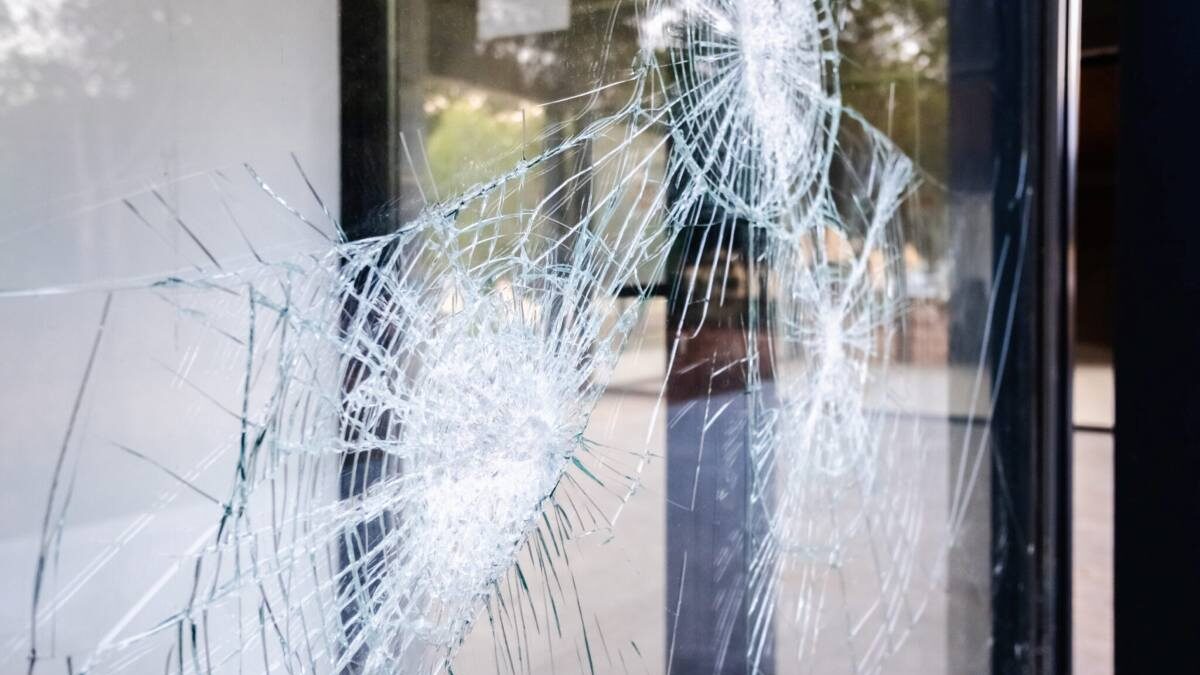
The Four Core Technologies That Qualify as Shatter Resistant Glazing
The building envelope industry recognizes four distinct approaches to shatter resistance. Each delivers the performance through a different mechanism, at a different price point, and with a different set of project constraints.
Tempered Glass: High Break-Force, High-Risk Fragmentation
Tempered glass is manufactured by heating standard annealed glass to roughly 620°C and cooling it rapidly, creating compressive stress at the surface. The result is glass that resists breakage at forces four to five times higher than annealed glass of the same thickness. Under sufficient impact, however, it doesn’t hold. It fractures into thousands of small, relatively blunt cubes across the entire pane simultaneously. That fragmentation pattern reduces laceration risk compared to annealed glass shards, but it provides no fragment retention. The opening is immediately unprotected.
Laminated Glass: Fragment Retention Through Interlayer Bonding
Laminated glass bonds two or more glass lites around a polyvinyl butyral (PVB) or ionoplast interlayer. On impact, the glass breaks but the fragments adhere to the interlayer rather than dispersing. The pane stays nominally intact in the frame, maintaining a barrier even after the glass itself has failed. This is the mechanism behind automotive windshields and the primary construction method used in hurricane-rated and blast-resistant glazing assemblies. Laminated glass is the reference standard against which other shatter resistance solutions are measured.
Polycarbonate and Composite Glazing: Maximum Impact Resistance, Maximum Cost
Polycarbonate and glass-clad polycarbonate assemblies sit at the top of the impact resistance spectrum. These systems absorb and deflect extreme forces, including forced entry attempts, ballistic events, and blast overpressure, without fracturing in the way glass does. The tradeoff comes down to cost and scope. Polycarbonate glazing typically costs five to ten times more than standard glass after installation. It also requires custom framing, so teams generally reserve it for high-security applications where the threat level justifies the investment. For most commercial renovation projects, it creates significant over-specification.
Security Window Film Systems: Retrofit-First Shatter Resistance
Security window film achieves shatter resistance through an adhesive polyester film system applied directly to existing glass. On impact, the film holds glass fragments bonded to its surface, replicating the fragment retention mechanism of laminated glass without altering the glass itself. Thicker film systems, measured in mils and typically running 7 to 14 mil for security applications, combined with a perimeter attachment system that anchors the film assembly to the frame, deliver performance that meets the same safety glazing standards as manufactured laminated glass. The glass doesn’t change. The performance profile does.
Is Shatter Resistant Glass the Same as Tempered Glass?
No, and conflating the two creates real specification errors. Tempered glass breaks safely but doesn’t retain fragments. Once broken, the pane is gone and the opening is exposed. True shatter resistance requires fragment retention, which is the defining performance characteristic of laminated glass and security film systems. Tempered glass meets safety glazing codes in many applications because its fragmentation pattern reduces injury risk under normal impact, but it does not provide the sustained barrier performance that security and blast applications require. If your specification calls for shatter resistance in response to a forced entry, blast, or active threat concern, tempered glass alone does not fulfill that requirement.
What Is the Difference Between Safety Glass and Security Glass?
The distinction comes down to threat level and post-breakage performance. Safety glass, which includes both tempered and laminated glass under CPSC 16 CFR 1201 and ANSI Z97.1, is designed to reduce injury when glass breaks under accidental impact. Think of a person falling into a door or a child running through a sidelight. Safety glass standards test for safe fragmentation patterns and impact resistance at relatively low energy levels.
Security glass addresses intentional, high-energy threats: forced entry, blast overpressure, and ballistic impact. Standards in this category, including ASTM F1233 for forced entry and GSA TS01 for blast, require the glazing assembly to resist penetration or retain fragments under sustained attack, not just a single impact event. A glazing assembly can meet safety glass standards without meeting any security standard, and vice versa. Knowing which standard applies to your project is the first decision in any shatter resistance specification.
The Standards That Govern Your Specification Decision
ANSI Z97.1, ASTM C1349, and ASTM F1233: What Each Standard Tests
These three standards operate at different threat levels and govern different aspects of glazing performance.
ANSI Z97.1 is the baseline safety glazing standard for architectural glass in the U.S. It tests impact resistance using a 100-pound shot bag dropped from specified heights, evaluating whether the glass breaks safely rather than whether it retains fragments. Most building codes reference ANSI Z97.1 or CPSC 16 CFR 1201 as the minimum for safety glazing in hazardous locations, including doors, sidelights, and low-level glazing in schools and retail. Security window film systems that pass ANSI Z97.1 testing qualify as safety glazing under these code requirements.
ASTM C1349 governs the performance of filmed glass assemblies specifically, establishing test protocols for the combined system of glass plus film plus attachment. This is the standard that determines whether a security film product, not just the film in isolation, meets safety glazing criteria. Specifying a film product without confirming its ASTM C1349 test data is specifying blind.
ASTM F1233 raises the bar to forced entry resistance. It tests glazing assemblies against sustained attack using hand tools and classifies performance across multiple attempt levels. This is the applicable standard when the threat profile includes break-in deterrence for schools, government buildings, or high-value retail. Film systems tested under F1233 can achieve Class I or Class II ratings depending on thickness and attachment configuration.
GSA Blast Mitigation Standards: When the Bar Gets Higher
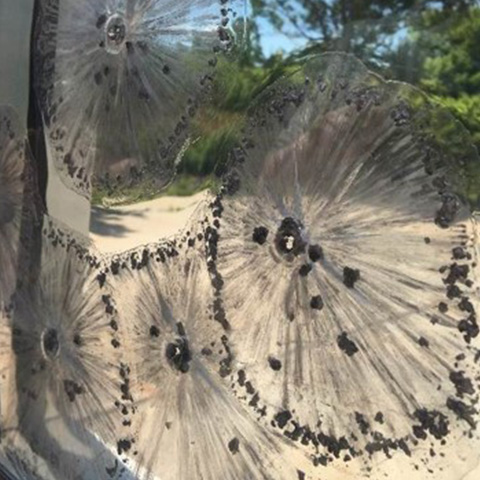
Federal projects and government-adjacent facilities operate under GSA TS01, which establishes blast mitigation performance levels tied to standoff distance and explosive charge weight. The standard focuses on glazing hazard levels, specifically how much glass fragment energy enters the occupied space after a blast event.
Fragment retention is the core metric, and window film systems with perimeter attachment have been tested and certified under GSA TS01 protocols at multiple hazard levels. For project managers working on federal buildings, courthouses, or facilities with blast vulnerability assessments on file, the GSA standard is the governing document, not the model building code.
Does Window Film Meet Building Code for Safety Glazing?
Yes, when the film system carries the appropriate test certifications. Building codes reference performance standards, specifically ANSI Z97.1 and CPSC 16 CFR 1201, not specific materials. A filmed glass assembly that passes ANSI Z97.1 impact testing meets the code requirement for safety glazing in the same way that tempered or laminated glass does. The specification document needs to cite the film product’s test certification data, and the installer should provide documentation linking the installed system to the certified assembly. Inspectors reviewing the installation need that paper trail to make a compliance determination on site.
How OSHA Glazing Requirements Interact With Commercial Renovation Projects
OSHA’s general industry standards (29 CFR 1910.29) address fall protection and walking-working surfaces but do not establish glazing specifications for commercial buildings directly. OSHA’s construction standards (29 CFR 1926) require that glass used in construction meet applicable safety standards, which routes back to ANSI Z97.1 and state-adopted building codes. The practical implication for renovation projects: if work disturbs existing glazing or triggers a building permit, the glazing in affected areas may need to be brought up to current code. That trigger is often what initiates a shatter resistance specification mid-project, and it’s exactly the scenario where a retrofit film solution can resolve the compliance gap without pulling frames.
Building Code Compliance Across Commercial, Education, and Retail Occupancies
The model building codes, including the IBC and its state adoptions, specify safety glazing requirements by location and occupancy type, not by material. Hazardous glazing locations defined in IBC Section 2406 include glazing in doors, adjacent to doors, in railings, in schools below 36 inches from the floor, and in other high-contact or high-traffic areas. Education occupancies face the most prescriptive requirements given the presence of minors and the vulnerability of high-traffic corridors. Retail and commercial office occupancies focus primarily on entry glazing and storefront assemblies. In all cases, the compliance question is whether the glazing assembly in a hazardous location meets the required impact standard, a question that security window film systems are well-positioned to answer without glass replacement in the majority of scenarios.
The Inspection-Readiness Question: What Constitutes First-Pass Approval
Inspectors approve glazing installations based on documentation, not visual inspection alone. For any safety glazing installation, whether new glass or retrofit film, the inspection package should include the product’s test certification (ANSI Z97.1, ASTM C1349, or equivalent), the installer’s certification that the system was installed per the manufacturer’s tested assembly specifications, and any required labeling on the glazing unit itself. Tempered and laminated glass carry permanent corner labels with the certifying body and standard. Security window film systems should be labeled as well, and the installer should provide a certificate of compliance tied to the specific project. Projects that arrive at inspection without this documentation package are the ones that fail first-pass review, not because the product doesn’t perform, but because the paperwork doesn’t support the claim.
Evaluating Your Options: Glass Replacement vs. Security Window Film Retrofit
The Variables That Drive the Specification Decision
The choice between glass replacement and retrofit film is not a product preference. It’s a project management decision with cost, schedule, and compliance dimensions that vary significantly by project type. Three variables consistently separate the right call from the expensive one.
Project Scale: Square Footage, Site Count, and Phased Rollout Complexity
At small scale, the differences between replacement and retrofit are manageable. At large scale, they compound. A single-building retrofit of 200 windows is a fundamentally different project than a district-wide school security upgrade covering 15 facilities and thousands of openings. Glass replacement requires coordinating fabrication lead times, frame preparation, disposal logistics, and temporary protection across every site, work that multiplies linearly with scope. Security window film scales differently. Crews can cover a full floor in a single shift without vacating the space, and film inventory ships quickly rather than waiting on custom-cut glass orders. For multi-site rollouts, that difference in mobilization overhead determines whether a phased schedule is realistic or aspirational.
Need More Info?
The Window Film Depot team is happy to help.
Schedule Constraints: Installation Timelines Compared
Custom laminated glass units typically carry four to eight week lead times from order to delivery, depending on size, specification, and fabricator capacity. Frame preparation, removal of existing glazing, installation, and inspection add further time on top of that. Security window film installs on existing glass with no fabrication lead time. A skilled commercial crew installs roughly 1,000 square feet per day on standard commercial glazing. For projects with fixed completion dates, including school openings, lease commencement dates, and insurance compliance deadlines, the timeline math alone often resolves the decision.
Budget Structure: Material Cost Is Only One Line Item
Material cost comparisons between laminated glass and security film frequently understate the real gap. Glass replacement generates costs across multiple line items that film retrofit does not: removal labor, frame repair or replacement where frames are disturbed, glazing compound and setting materials, temporary boarding during the replacement window, debris disposal, and occupancy disruption that may require after-hours scheduling or temporary space relocation. Security window film generates one primary cost category, installation labor, applied to glass that remains in place. On large commercial projects, the total installed cost of a film retrofit typically runs significantly below full glass replacement for equivalent safety glazing performance.
Decision Matrix: Glass Replacement vs. Security Window Film Retrofit
| Criteria | Glass Replacement | Security Window Film Retrofit |
|---|---|---|
| Material lead time | 4–8 weeks (custom fabrication) | 1–5 days (stock product) |
| Installed cost (relative) | High | Low to moderate |
| Frame disturbance | Yes — removal required | No — applied to existing glass |
| Occupancy disruption | Significant (space closure often required) | Minimal (occupied space installation typical) |
| Multi-site scalability | Limited by fabrication and logistics | High — crews and product scale readily |
| Safety glazing code compliance | Yes (laminated, tempered) | Yes (ANSI Z97.1, ASTM C1349 certified systems) |
| Forced entry rating (ASTM F1233) | Available in specified laminates | Available in 7–14 mil systems with attachment |
| Blast mitigation (GSA TS01) | Available in high-performance laminates | Available with tested attachment systems |
| Aesthetic change | Full replacement appearance | Minimal — near-optical-clarity films available |
| Useful life | 20+ years (glass) | 10–15 years (film, manufacturer-dependent) |
| Rework risk | High (frame damage, sizing errors) | Low (applied to intact frames) |
Total Cost of Ownership: Labor, Downtime, Disruption, and Rework Risk
Rework is the hidden variable in glass replacement projects. Fabricated glass units that arrive with sizing errors, coating damage, or the wrong interlayer specification require reorder cycles that can set a project back weeks. Film installations that fail inspection, typically from incorrect product selection or an improper attachment detail, are correctable in days at a fraction of the cost. For a project manager whose risk exposure is concentrated in schedule variance and change order liability, that asymmetry matters as much as the upfront cost differential.
Downtime cost is real and often unbudgeted. Retail tenants lose revenue during storefront glass replacement. Schools require space closure when crews are pulling frames. Office buildings need after-hours scheduling that multiplies labor cost. Film installation typically proceeds in occupied spaces without closures, converting a disruption event into a routine maintenance activity.
Can You Retrofit Shatter Resistant Film to Existing Windows Without Replacing the Glass?
Yes, and this is the question that most project managers don’t ask early enough. Provided the existing glass is structurally sound, free of significant chips or cracks, and compatible with the film system, security window film applies directly to the interior glass surface. Most standard annealed, tempered, and insulating glass units qualify.
The existing frame stays undisturbed. The glass stays in place. The film system, consisting of film plus adhesive plus perimeter attachment, transforms the assembly’s performance from unrated to safety glazing compliant without touching the surrounding construction.
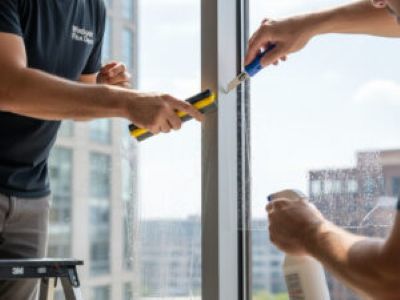
The compatibility check matters. Insulating glass units with low-e coatings require film products tested for that substrate to avoid thermal stress issues. A qualified installer will assess compatibility before specifying the film system, not after.
How 3M Security Window Film Achieves Certified Shatter Resistance on Existing Glazing
The Mechanics of Fragment Retention
When glass breaks under impact, the failure mode determines how dangerous that event is. Unfilmed glass, whether annealed or tempered, releases fragments into the occupied space or leaves the opening immediately exposed. A 3M security film system changes that failure mode. The polyester film, bonded to the interior glass surface with a pressure-sensitive adhesive, holds glass fragments attached to the film matrix on fracture. The pane breaks, but the break is contained. Fragments stay bonded to the film, the film stays bonded to the glass, and the glass stays connected to the frame through the attachment system. The opening is maintained and the hazard is contained.
This is the same mechanism that makes laminated glass effective, specifically interlayer bonding that prevents fragment dispersion. Film achieves it through a different construction, applied to glass that is already in the frame.
Film Thickness, Tensile Strength, and Attachment System Specifications
3M security films are specified in mil thickness, where one mil equals one-thousandth of an inch. Safety-grade film starts at 4 mil and provides basic fragment retention for ANSI Z97.1 compliance. Security-grade systems run from 7 mil to 14 mil, with multi-ply constructions available for higher threat levels. Tensile strength, the force required to tear the film, ranges from approximately 24,000 psi for lighter safety films to over 30,000 psi for heavy security systems. These specifications determine which standards the system can achieve and at what threat level.
Film thickness alone does not determine system performance. The attachment system, the mechanical or adhesive connection between the film edge and the window frame, is what keeps the entire assembly in the frame under blast loading or sustained forced entry.
The Role of the Attachment System in Blast Mitigation and Forced Entry Performance
An unanchored film system will hold glass fragments together but allows the filmed pane to be pushed inward as a unit under blast pressure or repeated impact. The attachment system prevents that failure mode by anchoring the film to the frame perimeter. Two primary methods are used: a wet-glazed perimeter bead that bonds the film edge directly to the frame, and a mechanical attachment rail that captures the film edge mechanically. For blast applications meeting GSA TS01 hazard levels, the attachment system is mandatory. The film certification is specific to the assembly configuration tested, not the film product in isolation. Specifying film without specifying the required attachment system is an incomplete specification.
3M Safety Series vs. 3M Security Series: Matching the Film to the Threat Level
3M’s product line separates into two performance categories that map directly to the safety/security distinction established earlier.
The 3M Safety Series films, typically 4 to 8 mil, are designed for ANSI Z97.1 and CPSC 16 CFR 1201 compliance. They address accidental impact, code upgrades for hazardous glazing locations, and general fragment retention in occupied commercial spaces. These are the right specification for schools upgrading corridor glazing to code, retail spaces addressing storefront code compliance, and office renovations triggered by a building permit.
The 3M Security Series addresses forced entry resistance under ASTM F1233 and blast mitigation under GSA TS01. These systems require the attachment configuration described above and are specified when the threat profile includes intentional attack, break-in deterrence, or blast exposure. The distinction matters for specification accuracy. Over-specifying adds cost without benefit, and under-specifying creates a compliance gap that won’t survive inspection under the applicable security standard.
Performance at Scale: What Large Multi-Site Installations Require
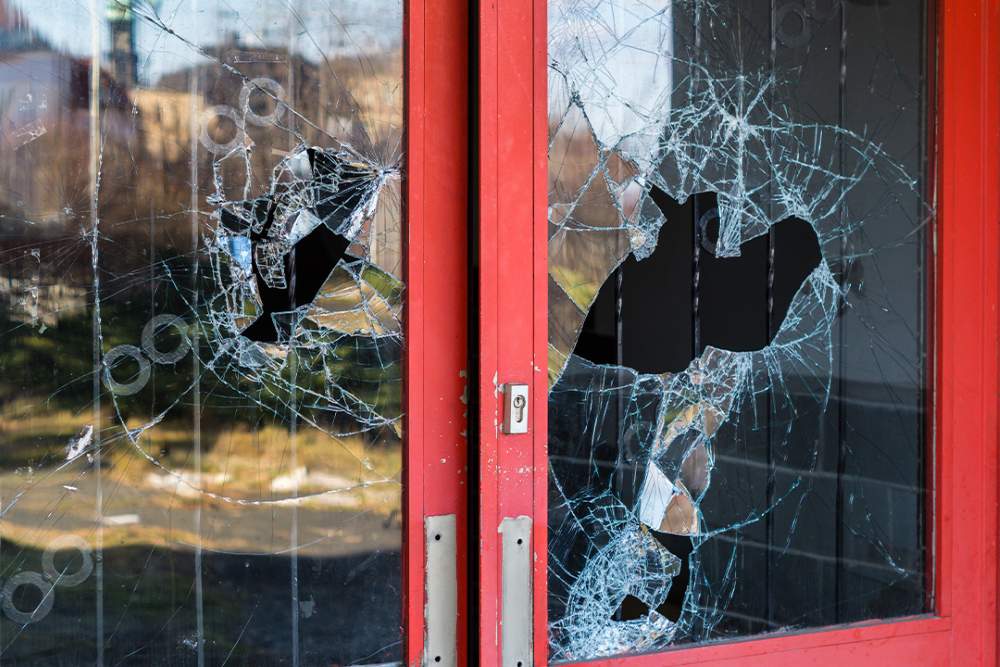
Consistency is the performance requirement that matters most at scale. A film system installed across 15 school buildings must deliver the same certified performance at the last building as the first. That requires product consistency from the manufacturer, installation crews trained and certified to the same standard, and a documentation system that generates a compliant inspection package for every site. 3M’s commercial film program supports this through product certification data that applies uniformly across the product line and installer certification requirements that establish a minimum qualification threshold. For a district-wide or multi-building project, the ability to generate consistent, auditable compliance documentation across all sites is as important as the film’s physical performance.
Putting the Framework into Practice: Illustrative Scenarios by Sector
Education Facilities: School Security Glazing Upgrades Under District-Wide Mandates
Consider a school district managing a state-funded security upgrade across 12 elementary and middle school campuses, with a mandate to bring all corridor glazing and entry vestibule glazing into compliance before the next academic year. Full glass replacement across that scope would require coordinating fabrication orders, scheduling crews at 12 sites during summer break, managing frame disturbance in buildings with aging construction, and completing disposal of thousands of square feet of existing glass, all within a 10-week window. Lead times on laminated glass units alone consume a significant portion of that window before a single pane is installed.
A security film retrofit compresses the active installation period to two to three weeks across all sites, with product available from stock. Entry vestibule glazing receives 8 mil film with wet-glazed attachment for forced entry performance under ASTM F1233. Interior corridor glazing receives 4 mil safety film for ANSI Z97.1 compliance. The inspection package, including product certifications, installer compliance certificates, and site-specific installation records, is generated per building and submitted with the permit closeout. The district meets its mandate, the buildings open on schedule, and the total project cost is a fraction of what replacement would have required.
Large-Scale Commercial Office and Retail: Meeting Insurance and Code Requirements on a Fixed Schedule
A commercial property manager receives an insurance carrier notification requiring safety glazing upgrades across a 20-story office tower’s tenant-occupied floors within 90 days. The existing glazing is standard annealed glass in aluminum curtainwall frames. Replacement at that scale, involving curtainwall frame access, IGU fabrication, and coordinated installation across occupied floors, is not a 90-day project. It’s a multi-year capital program.
Security window film for commercial buildings is the only path to meeting the carrier’s deadline. A commercial film crew works floor by floor during business hours, completing each floor in one to two days without requiring tenant relocation. The film system selected carries ANSI Z97.1 certification. Documentation is packaged per floor and submitted to the carrier as each section is completed. The project closes within deadline, and the property manager avoids the premium penalty that triggered the requirement.
Government and Institutional Buildings: Blast Fragment Retention and Forced Entry Deterrence
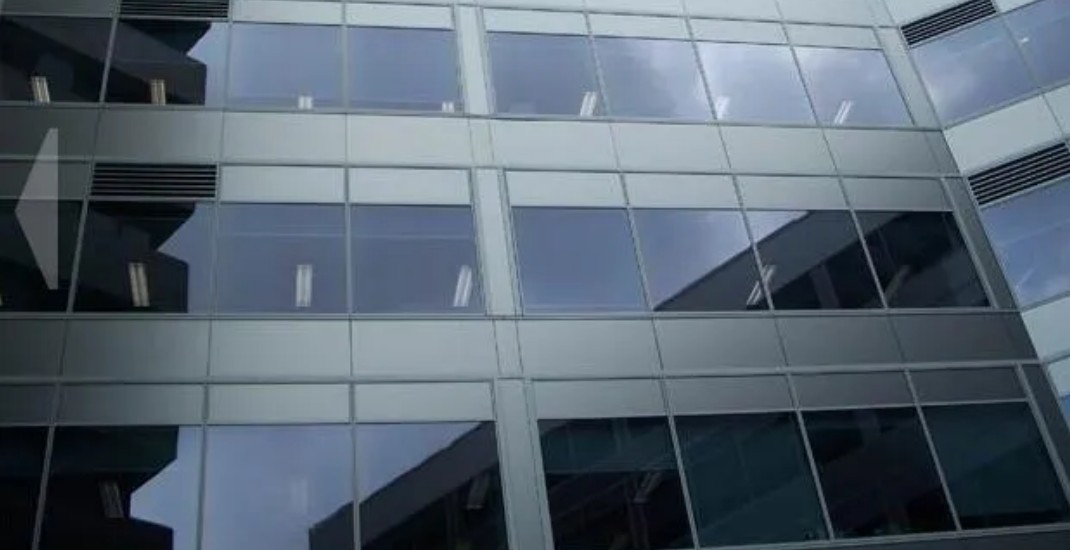
Federal and government-adjacent projects carry a different compliance framework. A courthouse annex undergoing renovation must bring perimeter glazing into compliance with a blast vulnerability assessment that specifies GSA TS01 hazard level ratings for occupied spaces within 100 feet of the building perimeter. Replacement with blast-rated laminated glass is an option, but it requires frame replacement as well. The existing aluminum frames are not rated for the increased dead load of blast glazing assemblies. Total frame and glass replacement becomes a significant scope addition that may not fit the renovation budget.
3M’s blast-rated film systems with mechanical attachment rails anchor to existing frames without replacing them. The tested assembly data supports the GSA hazard level required. The frames stay. The existing glass stays. The attachment system and film are installed in occupied conditions with minimal disruption to the building’s daily operations. The facility’s blast vulnerability assessment is resolved at a cost that fits within the renovation budget rather than consuming it.
Addressing the Objection: Aesthetics and Optical Clarity
The most common pushback on security window film from architects and owners is appearance. The concern is legitimate for decorative or high-visibility applications, but it’s overstated for most commercial and institutional glazing. Current-generation security films, including 3M’s clear safety and security series, are manufactured with optical clarity that meets commercial transparency standards. There is no visible tint, haze, or distortion under normal viewing conditions.
The visible difference between filmed glass and replacement glass is not detectable in standard commercial applications. Where it becomes a concern, such as specialty glass with custom coatings, high-end retail environments with visual merchandising requirements, or historic buildings with preservation constraints, a site assessment identifies whether film is appropriate. In most commercial, education, and institutional settings, the aesthetic question does not override the cost and schedule advantages.
How Long Does Shatter Resistant Film Last and What Does Maintenance Require?
3M security films carry manufacturer warranties ranging from 10 to 15 years depending on the product series and application type. Interior-applied film, the standard installation for security applications, is not exposed to UV degradation, moisture cycling, or abrasion at the same level as exterior applications, which extends practical service life. Maintenance requirements are minimal: standard glass cleaning with non-abrasive, ammonia-free cleaners. No special equipment, no periodic reapplication, and no scheduled servicing beyond visual inspection during routine building maintenance.
At end of warranty or useful life, film removal and replacement is a fraction of the cost of glass replacement. The frames remain undisturbed, and the new film installation follows the same process as the original. For property managers focused on long building lifecycles, the renewal cycle becomes a predictable, budget-friendly line item instead of a major capital expense.
How to Specify the Right Shatter Resistance Solution for Your Project
The Pre-Specification Checklist: Code Requirements, Threat Profile, and Site Conditions
Before a shatter resistant glass specification goes into a project document, three questions need clear answers. Skipping any of them is how projects end up over-specified, under-compliant, or both.
- What standard governs the installation? Identify whether the project requirement is safety glazing (ANSI Z97.1, CPSC 16 CFR 1201), forced entry resistance (ASTM F1233), or blast mitigation (GSA TS01). The standard determines the product, not the other way around.
- What is the threat profile? Accidental impact, break-in deterrence, and blast exposure require different solutions. A school corridor upgrade and a federal building perimeter are not the same specification, even if both call for shatter resistant glazing.
- What are the site conditions? Assess existing glass type (annealed, tempered, IGU with low-e coating), frame condition, occupancy status during installation, and whether any glazing locations require aesthetic matching or preservation review. Compatibility issues identified after product selection generate change orders.
Document the answers before the specification is written. That pre-specification record also becomes the basis for the compliance package at inspection.
When Full Glass Replacement Is the Correct Call
Film retrofit is the right solution in the majority of commercial renovation scenarios, but not all of them. Glass replacement is the correct specification when:
- The existing glass is structurally compromised. Cracked, chipped, or thermally stressed glass is not a suitable film substrate. Film does not repair a failing pane.
- The project requires a rated blast glazing assembly beyond what film and attachment systems can achieve. Extreme standoff conditions with high hazard-level requirements may call for purpose-built blast laminate in reinforced frames.
- New construction is specifying glazing from scratch. When frames are not yet in place, laminated glass may be the straightforward choice for high-security perimeter zones.
- Existing frames cannot support the attachment system required for the applicable standard. If frame condition precludes a code-compliant attachment detail, replacement addresses both the glass and frame deficiency simultaneously.

In each of these cases, glass replacement solves a problem that film cannot. Outside of them, the case for replacement weakens significantly against the cost and schedule profile of a retrofit film solution.
When Retrofit Film Is the Superior Specification—and How to Document It for Approval
Retrofit film earns the specification when the existing glass is sound, the project is renovation or upgrade rather than new construction, schedule is constrained, occupancy must be maintained, or the project spans multiple sites. That covers the majority of commercial, education, and institutional work.
Documenting the specification for approval requires three components. First, cite the applicable performance standard and confirm the film product’s test certification against that standard, including ASTM C1349 for safety glazing, ASTM F1233 for forced entry, and GSA TS01 for blast. Second, specify the complete assembly: film product, mil thickness, and attachment system configuration. Third, require the installer to provide a project-specific certificate of compliance that links the installed assembly to the certified test data. Inspectors approve documentation. Give them a complete package, and first-pass approval is the expected outcome, not a hopeful one.
Working With a Certified Installer at Project Scale
A commercial film installation at scale is not a facilities maintenance task. The installer engagement should function like any other specialty subcontractor relationship on a complex project.
The pre-construction phase should include a site walk covering glass condition assessment, frame compatibility review, and substrate verification across all glazing locations. The installer should deliver a written scope that identifies the film system, attachment configuration, and any locations where site conditions affect the standard installation detail.
During installation, crews document each glazing location as they complete the work, including glass dimensions, film product lot numbers, and attachment methods. That documentation feeds directly into the inspection package and provides a record for warranty claims.
At project closeout, the installer delivers a compliance package organized by building or floor: product certifications, installation records, and certificates of compliance. For multi-site projects, that package should be structured so a single reviewer can confirm compliance across all locations without chasing individual crew members for records after the fact. The right installer brings both the technical qualification and the project management infrastructure to support that process. At commercial and institutional scale, documentation capability is as important as installation quality.
Quick-Pick Recommendation: Matching Solution to Project Type and Constraint
| Project Type | Primary Constraint | Recommended Solution |
|---|---|---|
| School district security upgrade, 10+ campuses | Fixed academic calendar deadline | Security film retrofit, 8 mil with attachment |
| Single-building office renovation, code compliance trigger | Budget, occupied space | Safety film retrofit, 4–8 mil, ANSI Z97.1 certified |
| New construction, high-security perimeter | Ground-up specification | Laminated glass or blast laminate per threat level |
| Retail storefront, insurance mandate, 90-day deadline | Schedule, occupied storefront | Safety film retrofit, ANSI Z97.1 certified |
| Government building, blast vulnerability assessment | GSA TS01 compliance, frame retention | Blast film with mechanical attachment, existing frames |
| Compromised or cracked existing glazing | Substrate condition | Full glass replacement before film consideration |
| Historic building, preservation constraints | Aesthetic and regulatory review | Site assessment required before specifying either option |
Conclusion: The Specification Decision That Protects Your Project—and Your Client
The argument holds across every scenario examined in this article: shatter resistant glass performance is not exclusive to glass replacement. A certified 3M security window film system applied to existing glazing meets the same ANSI Z97.1, ASTM F1233, and GSA TS01 standards as manufactured laminated glass, without fabrication lead times, without frame disturbance, and without the occupancy disruption that glass replacement requires. For construction and renovation managers working within fixed budgets and non-negotiable completion dates, that performance equivalence combined with the practical advantages of retrofit is the specification case, not a workaround.
Window Film Depot is the largest 3M window film installer in the United States, with a commercial and institutional project track record spanning schools, government buildings, office towers, and multi-site retail programs. That scale means crews experienced in the logistical demands of large and multi-site installations, and the documentation infrastructure to generate compliant inspection packages across every location. 3M product certification applies uniformly across Window Film Depot installations, so the compliance case that works for the first building in a district-wide rollout works for the last one too.
The most useful conversation happens before the specification document is written, not after. A Window Film Depot project specialist can review your code requirement, threat profile, and site conditions, confirm the applicable film system and attachment configuration, and provide the product certification data needed to support the specification. That pre-specification consultation costs nothing and eliminates the risk of specifying into a compliance gap that surfaces at inspection. Contact Window Film Depot before the spec is locked.
Frequently Asked Questions
What is shatter resistant glass and how does it work?
Shatter resistant glass is a performance category, not a single material. It refers to any glazing system that either resists breaking under impact or retains fragments in place after breakage, preventing the immediate hazard of an exposed opening or flying glass debris. The two primary mechanisms are interlayer bonding, used in laminated glass and security window film systems, and compressive surface stress, used in tempered glass. Fragment retention is the critical differentiator for most security and code-driven applications.
What is the difference between shatter resistant glass and tempered glass?
Manufacturers produce tempered glass to break safely into small, relatively blunt cubes instead of sharp shards. That fragmentation pattern reduces laceration risk under accidental impact, but it provides no fragment retention. Once broken, the entire pane disintegrates and leaves the opening immediately unprotected. True shatter resistance requires the glazing to hold together after breakage, which is the defining characteristic of laminated glass and security film systems. For forced entry, blast, or sustained threat applications, tempered glass alone does not meet the performance requirement.
Can you retrofit shatter resistant film to existing windows without replacing the glass?
Yes. Provided the existing glass is structurally sound and compatible with the film system, security window film applies directly to the interior glass surface without disturbing the frame or replacing the glass. The film system, including the film, adhesive, and perimeter attachment, transforms the assembly’s performance to meet safety glazing and security standards. Most standard annealed, tempered, and insulating glass units are compatible substrates. A qualified installer will verify compatibility, particularly for low-e coated IGUs, before finalizing the product selection.
What does shatter resistant mean in terms of safety standards and building code compliance?
Building codes define safety glazing requirements by location and occupancy type, referencing performance standards rather than specific materials. The baseline standard for most commercial applications is ANSI Z97.1 or CPSC 16 CFR 1201, which govern impact resistance and safe fragmentation. For forced entry applications, ASTM F1233 is the applicable standard. For blast mitigation on federal and government facilities, GSA TS01 governs. A security window film system that carries the appropriate test certification meets safety glazing code requirements in the same way tempered or laminated glass does, provided installers document the installation correctly for inspection.
How long does shatter resistant film last and what maintenance does it require?
3M security window films carry manufacturer warranties ranging from 10 to 15 years depending on the product and application. Interior-applied film is not subject to the same UV exposure and moisture cycling as exterior applications, which supports performance well within the warranty period. Maintenance is straightforward: clean with standard non-abrasive, ammonia-free glass cleaners. No specialized servicing or periodic reapplication is required. At end of useful life, film removal and re-installation is a predictable, budgetable cost rather than a capital glazing replacement event.
What are the aesthetic and visibility impacts of shatter resistant window film?
For most commercial and institutional applications, the visual impact is negligible.
The practical difference between filmed glass and replacement glass is not detectable in standard commercial settings, including offices, schools, and retail storefronts. In specialized environments, such as high-end retail with precise visual merchandising requirements or historic buildings with preservation constraints, a site assessment is advisable to confirm whether film is the appropriate solution.