Table of Contents:
If you manage a retail chain, oversee a school campus, or specify glazing for commercial buildings, you already know that standard windows are often the weakest point in a building. A single pane of ordinary glass can be breached in under two seconds, giving intruders, weather, or flying debris an open path to people and assets inside.
In 2026, the conversation around security windows has shifted from “nice to have” to “operationally essential.” Organized retail crime now exceeds $100 billion in annual U.S. losses. Federal legislation like the SAFE Schools Act is pushing grant-funded glazing upgrades into K–12 buildings. And extreme weather events along the Gulf and Atlantic coasts are rewriting building codes faster than most facility teams can keep up.
This article breaks down what security windows actually are, which types fit which threats, how retrofit security window films work on existing glass, and what facility managers, architects, and decision-makers need to know before choosing a solution.
What Are Security Windows and Who Needs Them Today?
A security window is any glazing assembly or retrofit solution designed to perform well beyond ordinary glass. This type of window is designed to resist forced entry, impacts, and vandalism, keeping the opening intact and the building envelope secure even after the glass itself cracks. Core solutions fall into three categories: laminated security glazing with polymer interlayers, purpose-built security glazing assemblies, and retrofit security window films applied to existing glass.
Security windows vary by glass composition and frame construction, but they share one goal: holding glass in place under stress so that breaching the opening takes meaningful time and effort. That delay is the piece that changes outcomes, giving alarms time to trigger, responders time to arrive, and occupants time to reach safety.
Why Demand Has Surged Since 2020
Several forces have pushed security windows from a niche specification to a mainstream priority:
- Retail crime escalation. Smash-and-grab incidents have increased sharply since 2020, with organized retail theft now estimated at over $100 billion per year in the U.S. Storefront glass is the primary attack surface.
- School safety mandates. Federal proposals like the SAFE Schools Act (H.R. 8506) seek to fund forced-entry and bullet-resistant glazing upgrades in public schools. State-level programs are following suit.
- Extreme weather. More frequent hurricanes, tornadoes, and severe storms are driving building codes in vulnerable zones to require glazing that retains glass after breakage. High-velocity hurricane standards protect security windows against windborne debris in coastal regions.
- Government and military standards. Federal buildings and military installations increasingly require glazing that meets blast-resistance or forced-entry performance benchmarks.
Typical B2B Use Cases
Installing security windows and screens offers significant protection against intruders, and the range of organizations investing in these upgrades continues to grow:
- K–12 school districts and universities – main entrances, vestibules, sidelites, and classroom-adjacent corridors
- National retail chains – flagship stores, display windows, exterior glass, and doors
- Federal, state, and municipal buildings – courthouses, administrative offices, public lobbies
- Hospitals and healthcare systems – waiting rooms, pharmacy windows, records areas
- Banks and data centers – where forced-entry delay, privacy, and asset protection intersect
- Multifamily residential lobbies and mixed-use developments – public-facing glass exteriors
These windows enhance safety in residential and commercial settings alike, and they improve durability and value of homes and commercial properties over the long term.
Main Threats Security Windows Address
- Forced entry and smash-and-grab theft
- Glass shatter from windstorms, tornadoes, and flying debris
- Vandalism and graffiti on storefront glass
- Privacy and line-of-sight control for sensitive areas
Security windows protect from severe weather and reduce vandalism risk across each of these scenarios.
Full Replacement vs. Retrofit
Not every project requires ripping out existing glass. Understanding the two primary paths helps facility teams choose with the right mind set:
- Full replacement security glazing. New laminated or tempered security glass installed with upgraded frames, hardware, and sometimes structural modifications. Higher material and labor cost, longer lead times, and more disruption. Ideal for new construction or when existing frames cannot support retrofit. Security windows should be paired with strong frame materials and multi-point locking systems to meet the highest performance standards.
- Retrofit solutions. Security window films and attachment systems installed on existing glass. Lower cost, fast implementation, and far less disruption. A practical path for large-scale rollouts across multiple sites, and a strong interim or permanent upgrade depending on threat level.
Anti-vandal security windows are also designed for modular buildings, and many of these products are part of a range of high-security door products that create a unified barrier at every opening.
Types of Security Windows and Where Each Works Best
Security windows is an umbrella term, not a single product. The right solution depends on the threat profile, the building type, the budget, and whether you are specifying for new construction or upgrading existing glass. Below is a buyer’s guide to the major categories, along with window protection film solutions to reinforce glass windows and doors and real-world examples that show how each performs in practice.
Manufactured from high-quality materials for durability, every category below offers a different balance of cost, aesthetics, and protection level. The key is matching the solution to the threat.
Laminated security glazing
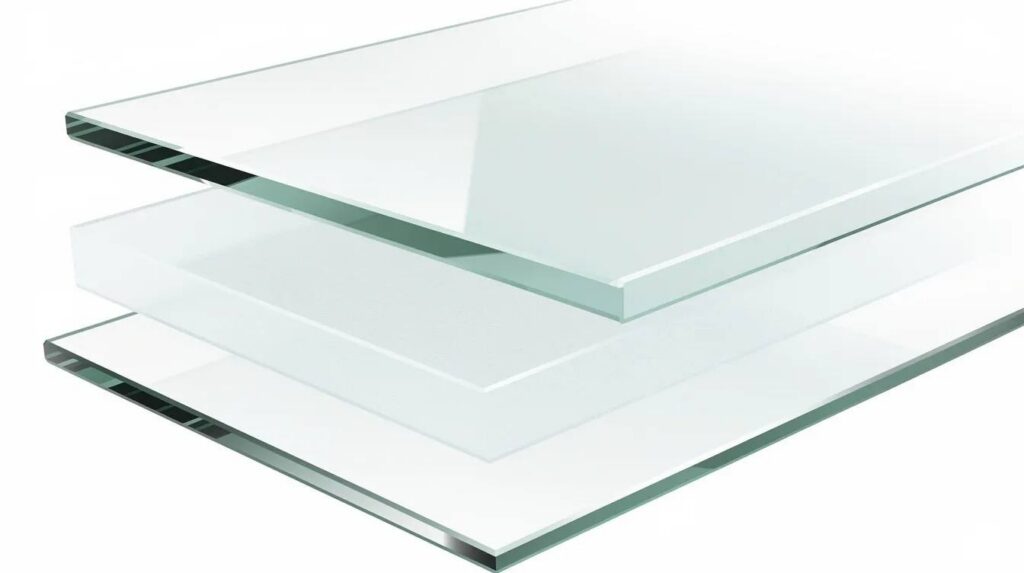
- Laminated security glass consists of two or more glass panes bonded with a plastic interlayer, typically PVB (polyvinyl butyral) or ionoplast. The interlayer holds the glass together after breakage, maintaining the integrity of the opening.
- Laminated security glass enhances safety by remaining intact when cracked, and laminated glass reduces glass shattering during impacts, enhancing safety for building occupants.
- Laminated security glass delays intruders and reduces injury from shattered glass, making it the gold standard for new construction storefronts, curtain walls, and overhead glazing.
- Burglar-resistant glass is classified P6B and P8B for resistance to manual attacks under European test standards, giving specifiers a clear performance tier to reference and helping teams understand the difference between tempered glass and laminated glass when choosing systems.
- Common in high-end retail, government facilities, and secure office environments where code compliance and long-term performance justify the higher cost.
- Tempered glass is four times stronger than standard annealed glass, but tempered glass alone shatters into small cubes and falls away from the frame. Laminated glazing combines tempered or heat-strengthened plies with interlayers to deliver both strength and retention.
Security window films
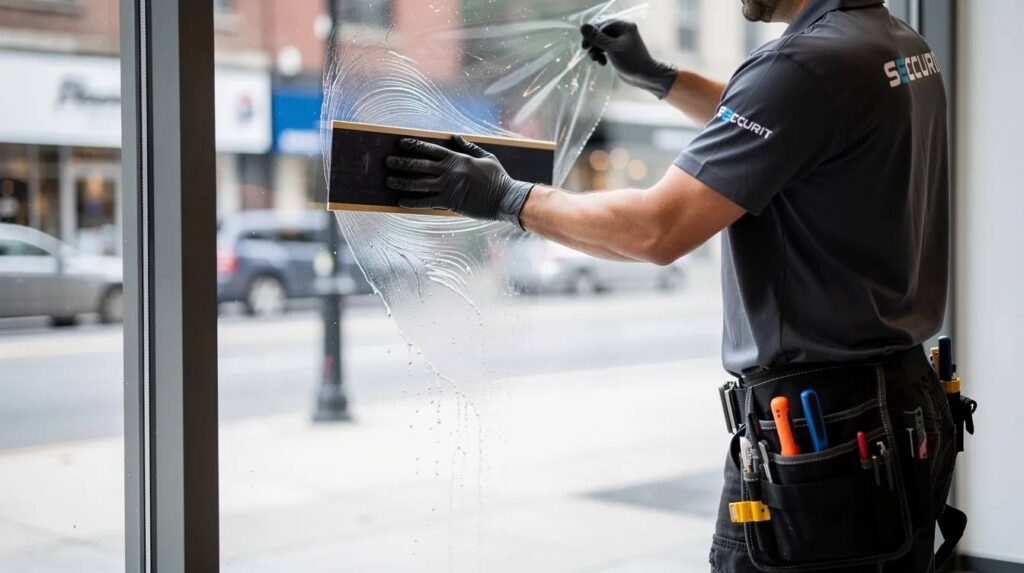
- Thick, clear polyester films – typically in the 4 to 15 mil range – applied to existing glass. These films are designed to hold glass fragments together after impact, and Window Film Depot’s portfolio of window glass film products and brands covers a wide range of performance and aesthetic needs.
- Often paired with mechanical or wet-glaze attachment systems that secure the filmed glass to the frame, preventing the entire pane from being pushed out during a forced-entry attempt.
- Cost-efficient, fast to install, and capable of protecting thousands of square feet without replacing a single window.
Anti-vandal and anti-graffiti films
- Sacrificial surface films that absorb scratching, acid etching, spray paint, and marker tags. When damaged, the film is peeled off and replaced at a fraction of the cost of replacing glass, especially when installed as part of professional 3M window film products and installation services.
- Ideal for retail display windows, transit shelters, elevators, malls, and any high-traffic surface where vandalism is a recurring expense.
One-way privacy and frosted security films
- Combine privacy or line-of-sight control (mirrored, frosted, or gradient finishes) with shard retention.
- Used in pharmacies, exam rooms, financial offices, and security posts where visibility into sensitive areas must be restricted without sacrificing natural light.
Polycarbonate and glass-clad solutions
- Glass-clad polycarbonate combines glass and polycarbonate for high security. Polycarbonate windows are highly impact-resistant and lightweight, and polycarbonate absorbs energy and deforms, making it very difficult to break through. Retrofit ballistic shields such as BulletShield bulletproof window glazing use clear polycarbonate panels mounted over existing glass to achieve UL-rated ballistic performance.
- Used in extreme-threat environments: detention facilities, embassies, critical infrastructure.
Security screens
- Security screens are designed to withstand high-impact attacks from intruders. Security window screens are made of high-tensile stainless steel mesh and are often used in residential and light-commercial applications where airflow matters.
- High-performance screens block up to 60% of UV rays, giving them a dual benefit of security and sun control, and they are often paired with upgraded glazing where teams need to understand the difference between tempered glass and regular glass with security enhancements.
- Many screen assemblies include Shoot/Flush bolts for added security features, tying the screen securely into the surrounding frame.
Real-World Examples
Sam’s Club – 905-store national rollout (2025–2026). Window Film Depot installed 3M 8-mil security film plus structural anchoring caulk across all 905 U.S. Sam’s Club locations in approximately four months. Work was completed after hours to avoid disruption. The objective: protect employees and inventory from smash-and-grab theft without altering the storefront appearance.
Houston retail strip center (2024–2026). A 12-unit property with 86 ground-floor windows suffered four smash-and-grab break-ins over 18 months. After installing 8-mil 3M S600 security film with structural attachment systems on all entry glazing – roughly 4,200 square feet – the property reported zero successful break-ins in 14 months. One attempted break-in cracked the glass, but the film held and the perpetrator abandoned the attempt within approximately 15 seconds.
Hibbett | City Gear – 300+ stores. This retail chain retrofitted over 300 locations with forced-entry protection systems, maintaining storefront branding while adding measurable resistance to break-ins. Employee safety and brand reputation drove the decision.
What Influences the Choice
Building codes, insurance carriers, and corporate risk teams all play a role in which type gets specified. Blast-resistance standards for GSA buildings, burglary-resistance classifications, and wind-borne debris zones along the Gulf and Atlantic coasts each narrow the field. In many cases, upgrading to high-security windows can reduce property insurance premiums, giving the investment a faster payback.
How Security Window Films Strengthen Existing Glass
From Window Film Depot’s perspective, retrofit security films are often the fastest, most cost-effective way to upgrade large quantities of vulnerable glass without full replacement. When a facility manager needs to secure 50 storefronts or 200 school sidelites, tearing out existing glass and installing new assemblies can take months and blow budgets. Film gets the job done in days.
That said, not all films perform the same. The combination of film thickness, adhesive quality, and attachment system determines whether you get a meaningful security upgrade or just a layer of plastic that looks the part but fails under stress, which is why selecting from a proven catalog of window glass film products and brands matters.
How Films Work
- Multi-layer polyester construction. Security window films are built from multiple layers of polyester bonded with strong, optically clear adhesives. The result is a tough, tear-resistant membrane that adheres to the interior surface of existing glass.
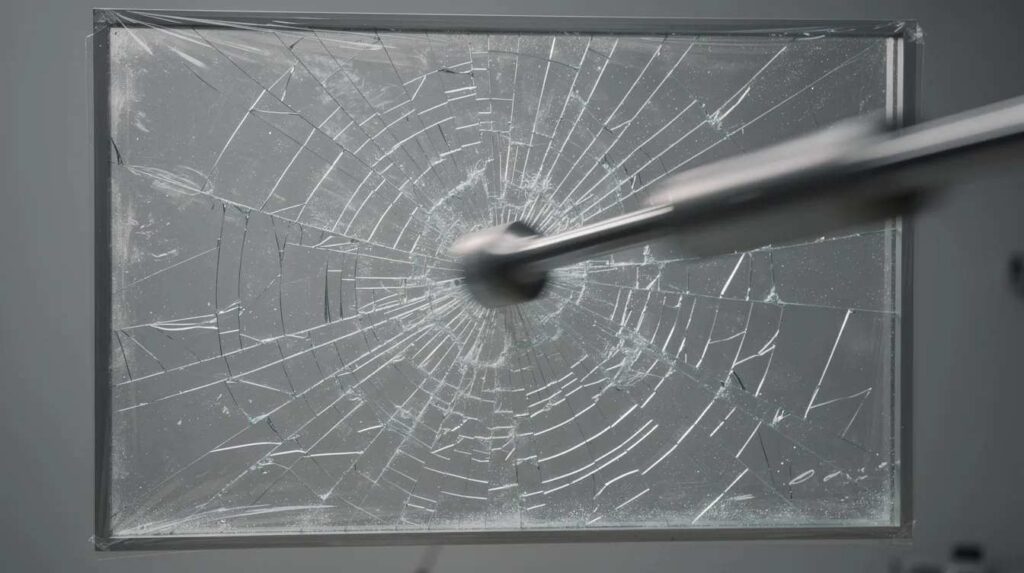
- Fragment retention. When glass breaks, the film keeps shattered pieces attached to the membrane instead of falling inward or outward. The glass cracks, but the opening stays closed. Many security windows block a large percentage of UV rays, preventing fading of interior finishes – a secondary benefit that adds value beyond pure security.
- Attachment systems. For higher performance, mechanical anchors or structural silicone “wet-glaze” systems tie the filmed glass to the frame. Without proper attachment, film can delay breakage but may not prevent the entire pane from being pushed out of the frame. The attachment system is what separates a basic safety film from a true forced-entry deterrent.
Performance Benefits
- Delayed intrusion. An 8-mil security film with proper anchoring can extend breach time from under two seconds (bare glass) to tens of seconds or more. That delay is the window – no pun intended – for alarms and response. In the Houston strip center case, an attacker abandoned the attempt in roughly 15 seconds.
- Injury reduction. Film holds shards together, reducing the risk of flying glass during storms, blasts, or seismic events. This is a critical factor for schools, hospitals, and any occupied space.
- Day-to-day durability. Filmed glass resists minor impacts and abuse in high-traffic areas, extending the service life of existing glazing.
- Optional solar and UV control. Combined security and solar films cut heat gain and glare while providing shard retention. A variety of tint levels and reflective coatings are available to fit the building’s aesthetic.
Modern security windows feature quick escape mechanisms for emergencies, and retrofit film solutions are designed to work alongside existing egress hardware so that occupants can still exit safely when needed, all while keeping budgets aligned with realistic window security film installation cost and price estimates.
The Installation Process
Here is how a typical project works, from first contact to final walkthrough:
- Site walk and glass audit. A technician inventories existing glass types (annealed, tempered, insulated), thicknesses, frame materials, and exposure. Risk levels are assessed based on geography, crime data, and occupancy.
- Product selection. Film thickness and attachment system are matched to the specific threat – forced entry, windstorm, blast mitigation, or a combination. Window Film Depot works with 3M and other major manufacturers to meet required test protocols.
- Surface prep and installation. Glass is cleaned and prepped. Installation can happen during business hours or overnight to reduce disruption. For the Sam’s Club rollout, every location was completed after hours so stores could open normally the next morning.
- Cure times and inspections. Adhesive cure times vary by product and climate. Safety inspections and, where required, post-installation impact testing confirm that the system performs to spec. Documentation is provided for insurance carriers, code compliance, or grant reporting.
Measurable Outcomes Facility Teams Care About
- Loss reduction. The Houston strip center went from four break-ins in 18 months to zero successful breaches over 14 months after film installation.
- Rollout speed. Sam’s Club: 905 locations in approximately four months, managed through a single point of contact with consistent quality nationwide.
- Insurance impact. Upgrading to high-security windows can reduce property insurance premiums, and documented film installations give risk managers tangible evidence of mitigation for underwriting reviews.
FAQs About Security Windows and Security Window Film
These are the questions Window Film Depot hears most often from commercial and institutional clients. Each answer reflects real project experience, not generic advice.
How are security windows different from regular tempered glass?
Tempered glass is four times stronger than standard annealed glass and shatters into small, relatively harmless cubes when broken. That is a safety feature, but it does not keep the opening secure – once broken, the glass falls away and the frame is wide open. Security glazing and security window films are engineered to hold glass together under attack or impact. The glass may crack, but the membrane or interlayer keeps fragments in place, maintaining the barrier and delaying access.
Will security window film make my windows look darker or distorted?
Quality clear security films typically allow over 90 percent visible light transmission. Occupants generally notice little to no change in clarity or brightness after installation. If a tint or reflective finish is desired for solar control or privacy, those options are available, but the default for most security applications is a nearly invisible film. Optical clarity standards are published on manufacturer datasheets, and Window Film Depot can provide samples before any project commitment.
Can security windows stop a bullet?
Most security window films and standard laminated security glazing are not rated as “bulletproof.” Ballistic glazing must meet specific standards such as UL 752 or NIJ ratings and typically involves much thicker, multi-ply constructions. However, security films can reduce spall – the spray of glass fragments on the protected side – and delay access through a broken opening. If your threat assessment includes firearms, solutions like BulletShield bulletproof window glazing as a ballistic window film alternative can provide UL-rated protection, and Window Film Depot can help you find the right ballistic-rated glazing system and connect you with the appropriate manufacturers.
How long does installation take for a typical storefront or school entrance?
A small retail storefront can often be completed in a single day, sometimes overnight. A large campus building with dozens of windows and doors may take several days. Multi-site rollouts are phased based on logistics and scheduling. For context, Window Film Depot completed the Sam’s Club 905-store rollout in about four months, and the Houston strip center project – 86 windows across 12 units – was finished in five overnight sessions.
Do security windows help with energy efficiency?
Yes. Many security films also block up to 99 percent of UV light, reject solar heat, and reduce glare. This can lower HVAC load and improve occupant comfort. Combined security and solar films are increasingly popular because they address two budget line items – security and energy – with a single installation.
How much do security windows or films cost?
Cost depends on several drivers: total square footage, film type and thickness (4, 8, 12+ mil), whether an attachment system is required, frame accessibility, after-hours scheduling, and geographic location. Full replacement laminated glazing costs substantially more than retrofit film. For planning purposes, facility teams can reference typical window security film installation cost and price estimates, and Window Film Depot provides project-specific quotes after a site walk or review of drawings and photos, so teams get accurate numbers rather than ballpark ranges.
What maintenance do security window films require?
Clean filmed glass with non-abrasive, mild cleaners. Avoid harsh chemicals and squeegees with metal parts. Inspect edges periodically for peeling or adhesive failure. Under normal conditions, security films last 10 to 15 years or longer. Replacement is recommended when visible degradation occurs or when a new threat assessment calls for a higher-performing product.
Are there grants or incentives for upgrading to security glazing?
Schools and public agencies may have access to federal and state safety or resilience grant programs. The SAFE Schools Act (H.R. 8506), reintroduced in 2026, proposes federal grants specifically for forced-entry and bullet-resistant glass in public schools. Some state programs also include window security in eligible scope. Window Film Depot can help document scope, specs, and costs for grant applications, giving your team the supporting detail needed to secure funding.
What about digital security for Windows-based systems in the same facility?
Physical security and digital security often overlap in modern buildings. For facility managers running Windows-based access control or surveillance systems, it is worth noting that Windows 11 includes Microsoft Defender Antivirus for real-time protection, Windows Firewall blocks unwanted traffic from entering your PC, and Windows 11 supports secure Wi-Fi with industry-standard encryption. Windows Hello allows sign-in using facial recognition or fingerprints for workstations in secure areas, and Smart App Control predicts safe apps to run on Windows 11 to reduce malware risk. Find My Device helps locate, lock, or erase lost devices that may contain sensitive facility data. A holistic security strategy addresses both the glass and the systems behind it.
Why Choose Window Film Depot for Security Windows and Films
Window Film Depot is a family-owned company founded in 1992 and headquartered in Marietta, Georgia. For over three decades, we have specialized in security window film installation, architectural glazing upgrades, and commercial graphics for facility managers, architects, and building owners nationwide. Our expertise spans every major security film category – forced entry, blast mitigation, anti-graffiti, privacy, and combined security and solar solutions, as detailed in our About Window Film Depot company overview.
Here is what sets us apart in a crowded market:
National footprint
- Ability to manage multi-state rollouts for retailers, banks, healthcare systems, and school districts across North America. The Sam’s Club 905-store project is a built proof point of that capability.
- Single point of contact for specification, logistics, scheduling, and installation. No chasing subcontractors across time zones.
Deep security film expertise
- Long-term partnership with 3M and other leading manufacturers for forced-entry, blast-mitigation, and anti-graffiti films.
- Hands-on experience with schools, federal agencies, high-security office environments, and retail chains in every climate zone.
- We do not just sell film. We help you choose the right product for the right threat, and we install it with the precision the product demands.
Turnkey project management
- Site surveys, product recommendations, installation, and close-out documentation handled in-house.
- Coordination with general contractors, architects, and facility teams to minimize downtime. Work can be scheduled overnight or during off-peak hours to keep operations running.
B2B and wholesale support
- Installation services for end-users plus wholesale window film supply for industry partners across North America.
- Technical guidance for trade partners on film selection, attachment systems, and best practices – giving your team access to our three decades of field knowledge and the same window protection film solutions used to reinforce glass windows and doors.
We do not deal in generic solutions. Every project starts with a clear understanding of your threat profile, your building, and your operational constraints. From a single office entrance to a 900-location national rollout, Window Film Depot delivers consistent quality, on schedule, with documentation your insurance carrier and code authority will accept.
Ready to Secure Your Glass?
Contact Window Film Depot for a security window assessment, specification review, or budget quote. You can reach us by phone, email, or through the quote request form on our website. If you have drawings, photos, or a scope document, share them, and we will return a recommendation fast – often within 48 hours.
Your glass does not have to be your building’s weakest link. Let Window Film Depot help you create a secure, high-performing envelope that protects people, property, and performance for years to come.