Table of Contents:
- Why So Many Homeowners Are Searching for Window Film Help Right Now
- Matching the Right Product to Your Home
- Why a Credentialed Installer and a General Tinting Shop Are Not the Same
- The Questions to Ask Before Anyone Touches Your Windows
- Understanding Home Window Film Installation Cost
- Why Installer Credentials and Brand Partnerships Protect Your Investment
- Choose Credentials Over Convenience and Protect Your Investment
- Frequently Asked Questions
Why So Many Homeowners Are Searching for Window Film Help Right Now
Summer afternoons in a sun-drenched living room tell the story quickly: one wall of glass turns a comfortable space into a heat trap, your furniture fades season by season, and no amount of blinds fully kills the glare on the screen you’re trying to watch. These aren’t minor inconveniences. They’re the lived experience pushing more homeowners toward Residential Window Film as a real, permanent solution.
The problems tend to cluster into four categories:
- Heat buildup from solar gain, especially through south- and west-facing glass
- Glare that makes rooms uncomfortable and screens unusable during peak daylight hours
- UV-driven fading that damages flooring, furniture, and artwork over time
- Safety and security concerns around glass breakage from accidents, storms, or forced entry

Each of these has a film-based answer. But that answer only holds if the right product gets applied correctly by someone qualified to do it.
What Residential Window Film Actually Solves
Window film is a high-performance solution within a defined scope. Understanding that scope before you hire anyone prevents disappointment later.
Solar Heat Gain and What a Real Reduction Looks Like
Solar heat gain coefficient, or SHGC, measures how much solar heat passes through a window on a scale from 0 to 1. Lower is cooler. A standard double-pane window typically carries an SHGC around 0.40. High-performance solar control films can bring that effective number down to 0.25 or lower, reducing heat transmission through the glass by a substantial margin depending on the film and glass type. That’s a meaningful reduction in cooling load and a measurable impact on energy bills.
What film cannot do: it won’t fix a drafty window, eliminate conductive heat loss through the frame, or substitute for proper insulation elsewhere in the building envelope.
UV Rejection, Fade Prevention, and the 99% Benchmark
Quality window films block up to 99 percent of UV-A and UV-B radiation. This matters because UV exposure is the primary driver of fading in flooring, textiles, and artwork. The 99% figure isn’t marketing language. It’s a measurable specification you should request from any installer before you commit. Films that don’t publish UV rejection data are worth a second look.
Glare Reduction, Privacy, and Safety Film Applications
Glare reduction is a function of visible light transmittance (VLT). Films with lower VLT values let in less visible light and reduce glare more aggressively, but also darken the room. Privacy film works differently: reflective or frosted options limit sightlines from outside without blocking daylight entirely. Safety and security film holds glass together on impact, reducing injury risk and slowing forced entry. Each application requires a different product specification, which is why the right installer conversation starts with your problem, not a product name.
The Mistake Hiding Inside a “Near Me” Search
Searching for residential window film installers near me is a reasonable starting point. The mistake is treating proximity as a proxy for qualification. The first result on a map search is the closest shop, not the most capable one. Many general tinting businesses handle automotive work primarily, dabble in residential, and lack the product knowledge or installation protocols that home glass actually requires. A film applied incorrectly to residential windows doesn’t just look bad. It can void your window manufacturer’s warranty, damage the glass itself, or fail within months.
A certified installer two hours away who uses professional-grade film and carries proper liability coverage is a better choice than an unqualified shop ten minutes from your door. The investment in bathroom window film, typically several hundred to several thousand dollars depending on scope, is substantial enough to make that distinction matter. Many qualified regional installers also serve broad service areas, so geographic distance is often less of a barrier than it seems. The filter to apply first isn’t distance. It’s credentials.
Matching the Right Product to Your Home
Solar Control Film: Heat Reduction and Energy Efficiency
Solar control film is the most common residential application, and the performance gap between professional-grade and generic products is significant.
How 3M Prestige Series and Night Vision Films Differ From Generic Options
3M’s Prestige series uses multi-layer optical film technology with nano-layer construction that rejects heat without the heavy tint of older metallized films. The Prestige 70, for example, blocks a substantial portion of solar heat while maintaining 70 percent visible light transmittance. That combination of high heat rejection with minimal darkening isn’t achievable with commodity films. 3M’s Night Vision series takes a similar approach for situations where exterior reflectivity needs to stay low. Generic films typically rely on dyed or single-layer metallized construction that degrades faster and underperforms on heat rejection metrics.
Visible Light Transmittance and Why It Affects More Than Aesthetics
VLT determines how much natural light the film passes. A film at 70% VLT looks nearly clear. A film at 35% VLT noticeably darkens the room. The right choice depends on your glass orientation, how much natural light you want to preserve, and whether glare reduction or heat rejection is the primary goal. An experienced installer walks you through this tradeoff with physical samples, not assumptions.
Safety and Security Film: Protection for High-Value Homes
Safety and security films are thick, tear-resistant polyester laminates, typically 4 to 14 mils, designed to hold glass in place after impact. They’re used in homes with large glass panels, floor-to-ceiling windows, or elevated security concerns. Some products in this category meet the same specifications used in commercial and government installations. Proper installation includes edge attachment systems that anchor the film to the frame, which dramatically increases the film’s ability to resist forced entry. This is not a product category where general automotive tinting experience transfers well.
Decorative and Privacy Film: Functional Design Without Sacrificing Light
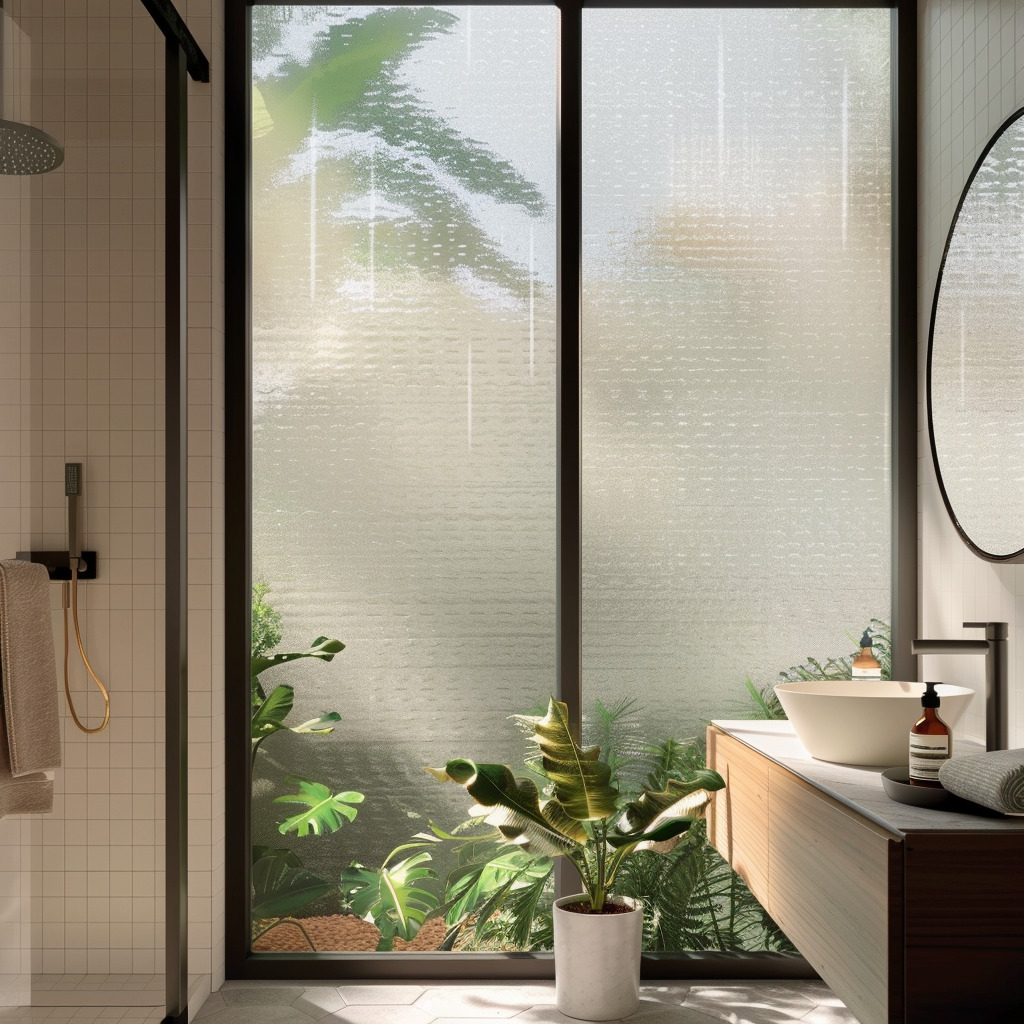
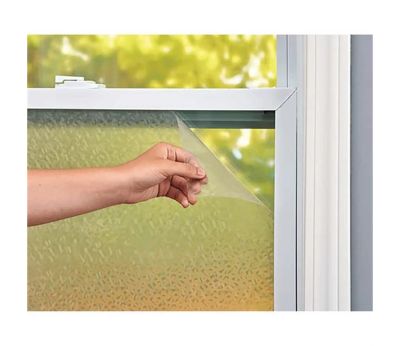
Decorative film serves double duty: it controls privacy in bathrooms, sidelights, and street-facing windows while contributing to the visual character of a space. Frosted, etched, and patterned options replicate the look of custom glass at a fraction of the cost.
Unlike opaque window treatments, most decorative films still admit diffused natural light, preserving brightness while eliminating direct sightlines.
For homeowners who want design flexibility without permanent glass replacement, this is one of the most underused options in the category.
Low-E Window Film and Year-Round Energy Management
Low-emissivity window film addresses a different problem than solar control film. It reduces heat loss in winter by reflecting interior radiant heat back into the room. For homes in climates with cold winters and hot summers, low-E film offers year-round energy management from a single product. It’s particularly effective on older single-pane or early double-pane glass that lacks a factory low-E coating. Some low-E films can improve the insulating performance of single-pane glass to approach double-pane equivalency, which represents a meaningful improvement for older homes.
Film Type Selection Guide
| Homeowner Problem | Recommended Film Category | Key Performance Metric | Minimum Installer Qualification |
|---|---|---|---|
| Excessive heat, high cooling bills | Solar control film | SHGC reduction (target: 0.25 or below) | Brand-authorized residential installer |
| Glare on screens, eye discomfort | Solar control / low-VLT film | VLT matched to room brightness preference | Brand-authorized residential installer |
| Fading of floors, furniture, artwork | UV-rejecting solar or clear film | UV rejection (minimum: 99%) | Certified residential installer |
| Privacy without blocking light | Decorative or privacy film | Light transmittance, sightline blocking | Experienced residential installer |
| Glass breakage, forced entry, safety | Safety and security film | Film thickness (mils), edge attachment system | Certified security film installer |
| Year-round heat and cold management | Low-E window film | Winter U-value improvement | Brand-authorized residential installer |
Why a Credentialed Installer and a General Tinting Shop Are Not the Same
What General Tinting Shops Get Wrong About Residential Glass
Automotive tinting and residential window film installation share a surface-level similarity: both involve applying film to glass. The similarity ends there. Residential glass varies widely in type, age, coating, and construction, including tempered, laminated, low-E coated, and insulated double-pane units. Each variation changes how film must be selected and applied. A shop trained primarily on flat, single-pane car windows has no preparation for the edge-seal sensitivity of an insulated glass unit or the thermal stress risks of applying dark film to a coated residential pane. The failure modes are different, the stakes are higher, and the product knowledge required is more specialized.
What 3M Authorized Installer Certification Actually Requires
Training Standards, Product Knowledge, and Installation Protocols
3M’s authorized installer program requires hands-on training in film application techniques, surface preparation, and product-specific handling requirements. Installers must demonstrate competency across the residential product line, including solar control, safety, and decorative films, and follow documented installation protocols that 3M defines and updates. This isn’t a one-time credential. Authorized status requires maintaining active product knowledge as film technology evolves.
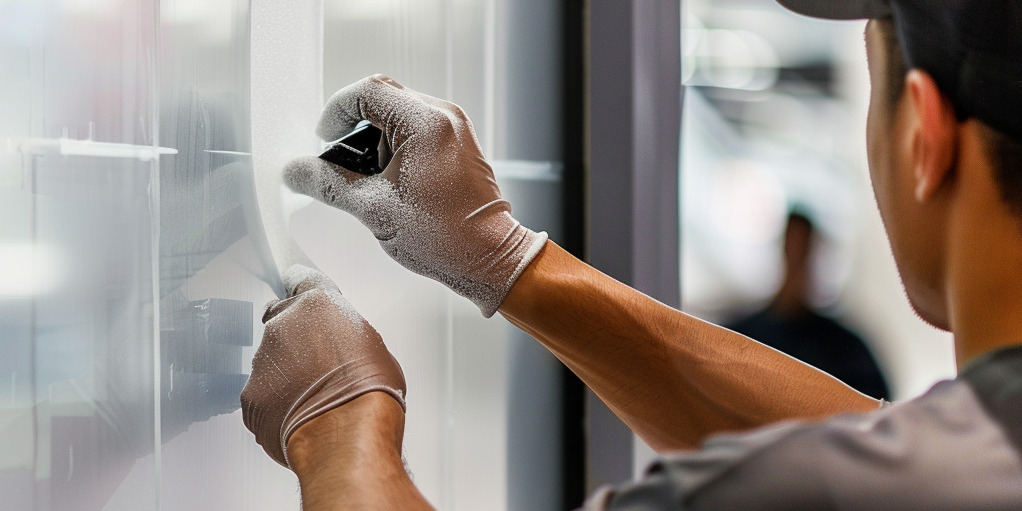
The practical result is an installer who knows which films are compatible with which glass types, how to handle expansion and contraction tolerances in large-pane installations, and what edge treatment a security film requires to perform as specified.
Why Certification Protects the Homeowner, Not Just the Brand
Certification creates accountability in a direction most homeowners don’t consider: toward the manufacturer. When an authorized installer applies 3M film, they’re working with a product they’ve been trained on, using protocols they’ve agreed to follow. If something fails, there’s a documented chain of accountability. A non-certified installer has no such obligation. The homeowner absorbs the risk entirely.
How to Identify a Qualified Installer: Red Flags That Signal Risk
Warning Signs Before the Job Starts
- They can’t name the specific film product they’re proposing or describe its SHGC and VLT specifications
- They don’t ask about your glass type before quoting
- They offer a single flat price without assessing window count, size, or orientation
- They can’t produce proof of manufacturer authorization when asked
- They have no separate residential portfolio, only automotive or commercial references
Any one of these warrants a harder look. Two or more is a clear signal to keep searching.
Warning Signs During and After Installation
Bubbling immediately after installation is normal. Small water bubbles work out within a few weeks as the film cures. Bubbles that persist past 60 days indicate adhesion failure, usually from inadequate surface preparation or incorrect application. Peeling at the edges means the installer didn’t trim the film properly or left moisture trapped at the perimeter. Haze that doesn’t clear means the glass wasn’t cleaned thoroughly before application, and debris is now permanently sealed under the film. Each of these failures is avoidable with proper technique, and each requires full removal and re-application to fix.
The Questions to Ask Before Anyone Touches Your Windows
Starting the Conversation Right
The consultation is your interview. Ask these questions before agreeing to anything:
- Are you an authorized installer for the film brand you’re proposing?
- Can you show me the manufacturer’s spec sheet for the specific product?
- What glass types have you worked with, and how do you assess compatibility?
- What does your installation warranty cover, and for how long?
- Do you carry liability insurance that covers glass damage?
- Can you provide references from residential projects completed in the past 12 months?
Need More Info?
The Window Film Depot team is happy to help.
The answers reveal both competence and accountability. An installer who stumbles on product specifications or deflects the glass damage question is telling you something important.
Verifying Brand Authorization and Product Authenticity
Ask the installer to confirm the product name and SKU, then verify authorization through the manufacturer’s dealer locator. If they’re quoting 3M film but aren’t listed in 3M’s authorized installer network, they’re either using a different product or misrepresenting their status. Both are problems. Genuine product installed without certification still voids the manufacturer warranty. Verify the product and the installer’s status independently before signing anything.
Insurance, Liability Coverage, and Glass Damage Accountability
Glass damage during film application is uncommon with qualified installers, but it happens. Replacing a large, insulated glass unit can run into hundreds or thousands of dollars. Confirm the installer carries general liability insurance that explicitly covers glass breakage and ask for a certificate of insurance rather than a verbal assurance. If they can’t produce one, that risk isn’t worth taking.
Understanding Home Window Film Installation Cost
What Drives Residential Window Film Pricing
Four variables account for most of the cost variation in residential projects:
- Film type and performance tier: solar control, safety, decorative, and low-E films sit at different price points, with security and specialty films at the higher end
- Window count and total square footage: most installers price per square foot, so larger homes or full-house applications scale proportionally
- Glass type and accessibility: difficult-to-reach windows, large-format glass, or specialty glass requiring extra care adds labor time
- Geographic market: installer rates vary by region, reflecting both labor costs and overhead
For planning purposes, residential solar control film from a certified installer typically runs in the range of $8 to $15 per square foot installed, depending on film tier and market. Safety and security film generally runs higher, often $12 to $20 or more per square foot for premium specifications with edge attachment systems. Decorative film varies widely depending on pattern complexity. Get itemized quotes that separate film cost from labor so you can evaluate both.
Quotes significantly below these ranges warrant direct questions about what’s being cut: film quality, installer certification, or warranty backing. Usually, it’s more than one.
The Hidden Costs of Cheap Installation
Early Film Failure and the True Cost of Re-Application
Film removal is not a simple process. Adhesive residue, improper scraping technique, and heat application during removal all create risk for the underlying glass.
When cheap film fails in two years instead of fifteen, you’re paying for removal labor, disposal, new film, and re-application, often more than a quality installation would have cost upfront. The math rarely favors the discount.
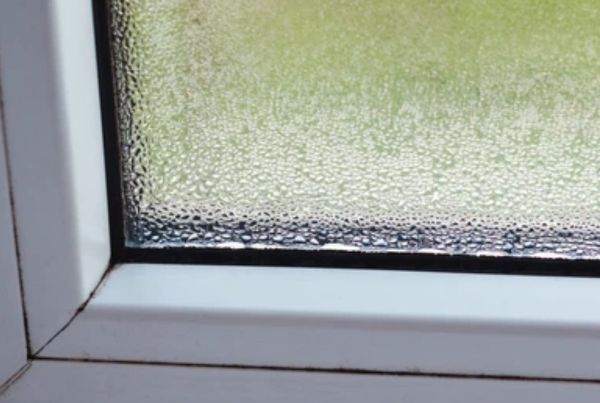
Glass Damage From Improper Technique
Scratches from incorrect tool use during application, or thermal cracking from applying high-rejection film to incompatible coated glass, are real failure modes with real replacement costs. Qualified installers assess glass type before recommending film, use appropriate application tools, and know when a film specification is too aggressive for a particular window. Shops without that training don’t know what they don’t know, and the homeowner pays for the gap.
How Professional Installation Changes the Total Cost of Ownership
A certified installer using manufacturer-warranted film changes the risk profile of the entire project. The film performs as specified, the warranty is enforceable, and installation defects are covered. Over a film lifespan of 15 to 20 years, which quality products routinely achieve, the cost per year of a professional installation is lower than the cost of one failed cheap installation and its replacement. The upfront number is higher. The total number is lower.
Why Installer Credentials and Brand Partnerships Protect Your Investment
How Manufacturer-Backed Warranties Actually Work
The warranty on professional-grade window film is not automatic. It’s conditional. Manufacturers like 3M extend their warranty coverage to homeowners only when the product is installed by an installer in their authorized network. This isn’t bureaucratic fine print. It reflects a real quality control mechanism. Authorized installers have agreed to specific installation standards, use genuine product, and carry the training to apply it correctly.
This means a homeowner can purchase authentic 3M film, have it installed by a capable-seeming shop, and still own a product with zero manufacturer backing from the moment the job is complete. The question to ask before any contract is signed: are you an authorized installer for this specific product, and will this installation be covered by the manufacturer warranty?
What 3M’s Limited Lifetime Warranty Covers
For residential installations performed by a 3M authorized installer, 3M’s limited lifetime warranty covers peeling, bubbling, cracking, and significant color shift for as long as the original homeowner owns the property. That’s meaningful coverage on a product expected to perform for 15 to 20 years.
Conditions that disqualify a claim include:
- Installation by a non-authorized installer, regardless of whether genuine 3M product was used
- Film applied to incompatible glass types outside 3M’s published specifications
- Damage caused by external factors such as scratches, chemical cleaners, or physical impact
- Film applied over existing film or incompatible coatings
The first two are entirely a function of who you hire and whether they completed the pre-installation assessment correctly. Choosing an authorized installer eliminates the most common disqualifiers before the job starts.
Consistent Standards vs. Local Proximity Without Accountability
A certified installer operating under a national brand authorization program follows the same standards in every market. The training, approved product list, and installation protocols are defined at the manufacturer level and applied consistently. A local independent shop has no equivalent accountability structure. Their quality reflects whatever standards they set for themselves.
This is where the proximity-first search instinct breaks down. The closest residential window film installer near you may be excellent. They may also have no structured training, no manufacturer relationship, and no warranty backing to offer. Without verification, distance tells you nothing about either outcome. A nationally authorized installer with a regional service footprint brings documented standards to every job. That consistency is worth more than a shorter drive.
Window Film Depot’s Residential Installation Approach
Window Film Depot operates as a 3M authorized dealer and installer with a residential portfolio spanning solar control, safety and security, decorative, and low-E film applications. Every residential project is completed by trained installers following 3M’s documented protocols, which means each job carries manufacturer warranty coverage and the accountability that comes with authorized status.
For homeowners searching for residential window film installers near me, the relevant question isn’t just who is close. It’s who is qualified and backed. Window Film Depot’s authorized status answers both parts of that question, with a service area covering a broad geography and a residential track record that reflects the full range of glass types, film categories, and project scopes a home can present.
Before You Sign: Five Non-Negotiable Hiring Criteria
Confirm each of these before agreeing to any residential window film installation:
- Manufacturer authorization verified, not self-reported, but confirmed through the manufacturer’s official installer directory
- Specific film product identified, with name, SKU, and spec sheet available before the quote is finalized
- Glass compatibility assessed, meaning the installer has reviewed your glass type and confirmed the proposed film is compatible
- Liability insurance documented with a certificate of insurance covering glass damage, not a verbal assurance
- Warranty terms in writing, covering both the manufacturer warranty and the installer’s workmanship warranty, with coverage terms and claim process clearly spelled out
Choose Credentials Over Convenience and Protect Your Investment
Shifting From Proximity-First to Quality-First Thinking
The search for professional window tinting for homes starts logically enough with location. What this article has laid out is why that filter, applied first, leads to poor decisions. Proximity says nothing about whether an installer is certified, whether the film they use is genuine, whether their work carries manufacturer backing, or whether they have the residential-specific experience your glass requires. It only tells you how far you’d have to drive.
Homeowners who get the best outcomes from window film projects shift the filter order: credentials first, product quality second, then geography. In most markets, that sequence still produces a qualified local or regional installer. When it doesn’t, the added distance to a certified professional is a far smaller cost than rework, re-installation, or a voided warranty.
A Single-Step Evaluation When Time Is Short
If you can only run one check before hiring, make it manufacturer authorization verification. Use the brand’s online installer directory, or ask the installer to show you their authorization documentation directly. Everything else, including product quality, installation standards, and warranty coverage, flows downstream from that single credential.
If you have time for a fuller evaluation, the five criteria above cover every significant risk factor. An installer who clears all five has given you documented evidence of competence and accountability before a single window is touched.
How to Request a Residential Window Film Consultation With Window Film Depot
Window Film Depot offers residential consultations that start with your glass, your problem, and your goals rather than a predetermined product recommendation. A certified installer reviews your windows, discusses the film categories that match your application, and provides a quote that itemizes product and labor separately so you can evaluate both.
To schedule a consultation, contact Window Film Depot directly through the website. Come prepared with your window count, primary concern, whether that’s heat, glare, UV protection, privacy, or security, and any glass documentation you have, including whether your windows are single-pane, double-pane, or low-E coated. The more context you bring, the more precise the recommendation.
Frequently Asked Questions
How do I know if a window film installer is qualified and certified?
Ask the installer directly for proof of manufacturer authorization, then verify it independently through the manufacturer’s official installer directory. Most major film brands, including 3M, maintain searchable online databases of their authorized dealers and installers. Cross-referencing the company name against that directory before scheduling a consultation is the most reliable way to confirm credentials.
What questions should I ask a window film installer before hiring them?
Ask whether they are authorized by the film manufacturer they’re proposing, request the specific product name and spec sheet, and confirm they’ve assessed your glass type for compatibility. You should also ask what their installation and workmanship warranties cover, whether they carry liability insurance for glass damage, and whether they can provide references from residential projects completed in the past year. An installer who can’t answer these questions clearly is not ready for the job.
What is the difference between a 3M certified installer and a regular window tint shop?
A 3M authorized installer has completed hands-on training in 3M’s installation standards, uses genuine 3M products, and follows documented protocols that qualify homeowners for 3M’s manufacturer warranty. A general tinting shop may reference 3M products in their marketing without holding authorized status, which means any film they install carries no manufacturer warranty backing regardless of the product used. The installation may look identical on the window. The protection behind it is not.
How much does residential window film installation cost and what factors affect pricing?
Pricing is driven primarily by film type, total square footage, glass accessibility, and regional labor rates. Solar control film from a certified installer typically falls in the range of $8 to $15 per square foot installed. Safety and security film with edge attachment systems generally runs higher. Decorative film varies based on pattern complexity. Quotes significantly below these ranges are worth questioning, as the discount usually reflects a reduction in film quality, installer certification, or warranty coverage.
What warranty should I expect from a professional residential window film installer?
Professional-grade residential film from a manufacturer like 3M, installed by an authorized dealer, typically comes with a limited lifetime warranty covering defects such as peeling, bubbling, cracking, and significant color shift for the duration of the original homeowner’s ownership. The installer may also offer a separate workmanship warranty covering their labor. Before any work begins, confirm both warranties in writing, including what each covers, what voids each, and how a claim is initiated.
Can poor installation void my window film warranty?
Yes, and this is one of the most consequential outcomes homeowners overlook. Manufacturer warranties are conditional on authorized installation. If an uncertified installer applies the film, the warranty is void from day one, regardless of whether the film itself is genuine. You pay full price for a product that carries no manufacturer backing. If the film fails early, there is no recourse through the manufacturer. Choosing an authorized installer is the single most direct way to ensure your warranty is valid before the job is complete.