Table of Contents:
- Why Standard Residential Glass Is an Active Project Liability
- The Core Types of Residential Window Film and What Each Solves
- Specifying the Right Home Window Protection Film for a Large-Scale Project
- Professional Installation on a Large-Scale Rollout: What to Expect and What to Demand
- Conclusion: From Passive Glass to Engineered Protection
- Frequently Asked Questions
Why Standard Residential Glass Is an Active Project Liability
Standard residential glass does exactly one thing reliably: it lets light in. Home Window Protection addresses the performance gaps that standard glass cannot solve. Every other performance demand placed on a modern building envelope, from thermal control and UV rejection to impact resistance and occupant safety, glass handles poorly on its own. For construction and renovation managers running large-scale or multi-unit projects, that gap is not a cosmetic concern. It is a measurable liability that shows up in energy budgets, warranty claims, and post-occupancy complaints before the punch list is closed.
The Hidden Performance Gap in Modern Residential Glazing
Most residential glazing installed today is double-pane insulated glass, which represents a significant improvement over single-pane construction but still falls well short of what modern building performance standards demand. A standard double-pane unit with a low-emissivity coating has a Solar Heat Gain Coefficient (SHGC) in the range of 0.25 to 0.40 and a U-factor around 0.30.
Those numbers look adequate on a product data sheet. They perform differently when you factor in building orientation, glazing-to-wall ratios across a multi-unit floor plan, and the cumulative solar load across a south- or west-facing facade over a full cooling season.

The performance gap is not in what the glass is rated for in isolation. It is in what the glass actually delivers when it becomes part of a real building, exposed to real conditions, occupied by real tenants.
How Unprotected Glass Drives Up Energy Costs Before Occupancy
Solar gain through unprotected glass is the single largest variable load in residential HVAC design, and it starts accumulating the moment glazing goes in. A unit that faces west in a high-solar climate can experience interior surface temperatures significantly above ambient on clear afternoons. That heat transfers into the living space regardless of how well the walls and roof are insulated, because glass bypasses the thermal envelope.
Solar Heat Gain Coefficient in Project Terms
SHGC measures the fraction of solar radiation that passes through a window and enters the building as heat. A value of 0.40 means 40 percent of incident solar energy becomes interior heat gain. For a project manager, the relevant metric is not the SHGC of any single unit but the aggregate solar load across all glazed surfaces in the building. A 100-unit residential project with west-facing glass averaging 60 square feet per unit represents 6,000 square feet of solar exposure. At an SHGC of 0.40, that translates to a substantial and persistent cooling load that the mechanical system has to overcome every afternoon from April through October.
High-performance solar control window film applied to existing or installed glazing can reduce SHGC to 0.20 or lower, cutting solar heat gain by half or more without glass replacement.
The Compounding Effect on HVAC Sizing and Energy Budgets
When solar load is underestimated at the specification stage, mechanical engineers compensate by oversizing HVAC equipment. Oversized systems short-cycle, which reduces efficiency, increases wear, and drives up both operating costs and maintenance frequency. The energy cost penalty compounds annually across the building’s service life, beginning on day one of occupancy. Specifying home window film during construction or pre-occupancy renovation eliminates this compounding effect by correcting the thermal load before the mechanical system is commissioned to compensate for it.
Interior UV Degradation: Quantifying the Damage Cycle
Ultraviolet radiation is responsible for a significant share of interior fading and material degradation in residential spaces, with visible light contributing additional damage alongside heat and humidity. Standard double-pane glass blocks only UVC radiation, which is largely filtered by the atmosphere anyway. UVA and UVB, the wavelengths that break down dyes, bleach wood finishes, and degrade synthetic fibers, pass through ordinary glass with minimal attenuation.
For a new residential project, this means every unit with south or west exposure begins accumulating UV damage from the first day of sunlight exposure. Flooring, millwork, upholstery, and cabinetry are all affected. In a high-end development, the cost of premature replacement or refinishing across multiple units is a real project liability. Quality UV protection house window tinting, certified to reject 99 percent of UV radiation, stops this damage cycle at the glass rather than addressing it unit by unit after the fact.
Forced Entry Vulnerability and the Liability Exposure It Creates
Glass is the weakest point of entry in any residential structure. A standard residential window can be breached in seconds with minimal force or tools. For renovation managers working on occupied buildings or projects with phased delivery, unprotected glazing creates a security exposure that affects both occupant safety and project liability. Security window film for residential glass does not make glass impenetrable, but it fundamentally changes the breach timeline by holding shattered glass fragments together and requiring sustained, visible effort to penetrate, a deterrent that matters when delay equals detection.
Beyond forced entry, the same film characteristic that resists intrusion also prevents flying glass injuries during accidental impact, seismic events, and severe weather. That occupant safety dimension carries direct liability implications for the building owner.
Why Treating Glass as a Finished Component Is a Specification Error
Glass leaves the factory as a product. It becomes a finished component only when it performs to the full requirements of the building envelope it is part of. In most residential specifications, glass is selected for U-factor and appearance, then signed off.
The thermal, UV, and security performance gaps get addressed reactively, through tenant complaints, energy audits, or incident reports, at a cost far exceeding what a properly specified window film system would have required at the project stage.
Need More Info?
The Window Film Depot team is happy to help.
The correct framing is this: unprotected glass is an incomplete specification, and home window protection film is the finishing layer that closes the performance gap. The sections that follow outline exactly which film type closes which gap, and how to specify the right product for each exposure condition in your project.
Window Film Specification Readiness Checklist
Use this checklist before engaging any window film vendor. It maps the key risk categories to the film specification decisions that follow.
- Step 1: Identify Energy Performance Gaps
- Pull the glazing schedule from the construction documents and note SHGC values by orientation (south, west, east, north).
- Flag any facade where SHGC exceeds 0.30 and glazing-to-wall ratio exceeds 30 percent.
- Note whether HVAC sizing was based on unfilmed glass performance. If so, solar control film should be a first-priority specification.
- Step 2: Map UV Exposure by Unit Type
- Identify units with south or west exposure and premium interior finishes such as hardwood, stone, or high-end cabinetry.
- Flag common areas, lobbies, and amenity spaces with large glazed openings and high-value furnishings.
- Require 99 percent UV rejection minimum for all flagged spaces.
- Step 3: Assess Security Threat Level
- Classify each glazed opening by accessibility: ground floor, parking-level, below-grade, or accessible from shared exterior spaces.
- Identify project phases where glazing is exposed before full security infrastructure is in place.
- Specify minimum mil thickness requirements for safety film based on threat classification (see the film type section for guidance).
- Step 4: Document Aesthetic and HOA Constraints
- Confirm whether the project falls under HOA or architectural review board jurisdiction that restricts visible reflectivity or tint levels.
- Note any visible light transmission (VLT) floors or minimums required by the governing documents.
- Flag units where privacy film may be required by unit layout or proximity to neighboring structures.
- Step 5: Define Installation Scope Variables
- Count total glazed openings by type, including sliding doors, casement windows, fixed lites, and skylights, to establish square footage by film category.
- Identify any access constraints such as high floors, occupied units, or phased delivery schedules that affect installation sequencing.
- Confirm warranty requirements. Manufacturer-backed warranties require certified professional installation on all specified products.
The Core Types of Residential Window Film and What Each Solves
Each film category targets a specific performance failure in residential glazing. Matching the right film to the right exposure condition is the specification decision that determines whether the product delivers measurable results or sits on the glass as an afterthought. Here is how each type performs against the liabilities documented above.
Solar Control Film: Engineering Heat Out of the Building Envelope
Solar control film reduces heat gain at the glass surface before it enters the building envelope. It works by reflecting and absorbing solar infrared energy, lowering the effective SHGC of the installed glazing without replacing the glass unit itself.
SHGC and VLT Ratings That Belong in a Spec Sheet
Two numbers drive every solar control film specification: SHGC and VLT (Visible Light Transmission). SHGC tells you how much solar heat the filmed glass admits. VLT tells you how much daylight passes through. These are not marketing ranges. They are NFRC-rated performance values that belong in your glazing spec the same way U-factor does. A film rated SHGC 0.19 and VLT 40% delivers predictable, documentable performance. A film described as “highly reflective” or “great for hot climates” does not.
When building your spec, require the manufacturer’s NFRC-certified performance data sheet for the specific film and glass substrate combination being specified. Performance values shift depending on whether the base glass is clear, tinted, or low-E coated.
How 3M Prestige Series Solar Film Performs Against Baseline Glass
3M Prestige Series solar film is a non-metallized, multi-layer optical film that rejects up to 97% of infrared heat while maintaining relatively high visible light transmission.
Some products in the series hold VLT above 70%. Applied to a standard double-pane clear unit with a baseline SHGC around 0.40, Prestige film can bring the effective SHGC to 0.21 or lower.
That performance shift is significant enough to affect HVAC load calculations, and 3M provides energy modeling support to document the impact at the project level.

UV Protection Window Film: Blocking the Spectrum That Fades Interiors
UV film addresses a damage mechanism that standard glazing simply does not block. The specification is straightforward because the performance benchmark is well-established.
The 99% UV Rejection Standard and What It Protects
Quality UV-rejecting window film blocks 99% of UVA and UVB radiation across the 300 to 380 nanometer spectrum. That single specification prevents the majority of UV-driven interior degradation: color fade in flooring and textiles, surface breakdown in wood finishes, and dye degradation in upholstery and window treatments. For a multi-unit project with high-finish interiors, specifying 99% UV rejection at the film level is a far more reliable protective measure than relying on furnishing selections or interior blinds.
Most solar control films include 99% UV rejection as a baseline performance feature. If the project requires UV protection without significant tinting or heat rejection, as in north-facing units with premium millwork, specify a clear UV-blocking film to target that damage vector without altering the visible light environment.
Why Low-E Film Serves Double Duty in Mixed-Use Projects
Low-emissivity (low-E) window film adds an insulating dimension to UV and solar control by reducing radiant heat transfer between the glass surface and the interior. In mixed-use residential projects with ground-floor retail or common areas, where HVAC zones often differ from residential units, low-E film helps reduce heating loads in winter while maintaining solar control in summer. That dual-season performance makes it a single-product solution for buildings in climate zones where both heating and cooling efficiency matter.
Safety and Security Film: Reinforcing Glass Against Impact and Intrusion
Safety film does not prevent glass from breaking. What it does is control what happens when glass breaks, and that distinction is the entire value proposition.
Mil Thickness, Tensile Strength, and What the Numbers Mean on Site
Safety film is rated by thickness in mils (thousandths of an inch) and by tensile strength, typically measured in pounds per square inch (PSI). Thicker film holds glass fragments together longer under sustained impact. A 4-mil film is standard for accident and minor impact protection. An 8-mil film provides meaningful resistance to forced entry attempts. A 12-mil or higher film, when properly installed with attachment sealant, is appropriate for high-risk ground-floor or parking-level glazing.
On site, these numbers translate directly to breach time. Higher mil ratings require more sustained, visible effort to penetrate filmed glass, a deterrent that matters in any security context.
Does Window Film Actually Prevent Break-Ins?
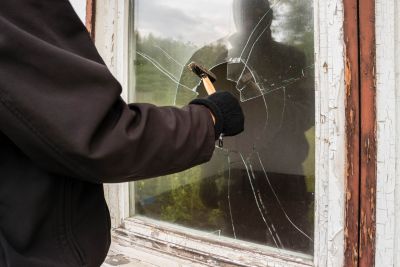
Not by itself, and claiming otherwise sets unrealistic expectations. What security window film for residential glass does is extend the time and effort required to breach a glass opening. Most opportunistic break-ins rely on rapid, quiet entry.
A filmed window that requires repeated, visible strikes to penetrate is a deterrent because it increases detection risk. Compared to security bars, which restrict egress and create fire safety issues, or laminated glass replacement, which costs significantly more per opening, security film delivers meaningful smash-and-grab protection at a fraction of the intervention cost.
Flying Glass Prevention and Occupant Safety During Impact Events
When glass breaks, whether from accidental impact, seismic activity, or severe weather, the hazard is not the break itself but the fragmentation. Unprotected glass shatters into high-velocity shards that cause lacerations and blunt trauma. Safety film holds the fractured glass to the film substrate, dramatically reducing fragment dispersion. This is the same principle behind laminated safety glass, achieved as a retrofit application at significantly lower cost.
3M Safety Series and the Role of Impact Protection Attachment Sealant
3M Safety Series films are available from 4 to 14 mils and carry ANSI Z97.1 and CPSC 16 CFR 1201 compliance when tested with specific glass substrates. The critical installation variable that most vendors underspecify is the Impact Protection Attachment (IPA) sealant. Without edge attachment, a filmed glass pane will hold fragments together but separate from the frame upon impact, allowing the entire filmed sheet to enter the room as a unit. The IPA sealant bonds the film to the frame perimeter, keeping the assembled glass-film panel in place. For any security or seismic protection application, edge attachment is not optional.
Privacy and Decorative Window Film: Aesthetic Control Without Performance Trade-Offs
Security Film vs. Decorative Film: Understanding the Distinction
Security film is engineered for structural performance, covering tensile strength, mil thickness, and fragment retention. Decorative film is engineered for appearance, delivering frosted, etched, patterned, or color-tinted effects that modify the visual environment.
These are distinct product categories with different substrates and testing criteria. A frosted decorative film provides visual privacy but offers no measurable protection against impact or intrusion.
Specifying decorative film in a location that requires safety glazing compliance is a code error, not an aesthetic choice.

Specifying Privacy Film for Multi-Unit and Mixed-Use Residential Projects
Privacy film is a specification tool for managing sight lines without construction modifications. In multi-unit projects, it addresses units where proximity to neighboring buildings, shared corridors, or street-level exposure creates privacy deficits that the original design did not resolve. In mixed-use ground floors, it separates retail or amenity visual zones from residential entry sequences. The specification variable is the degree of privacy required: one-way mirror film maintains outward visibility in daylight but blocks inward views, while frosted or opaque film provides full privacy at the cost of visible light transmission.
Anti-Graffiti Film: Surface Protection as a Maintenance Strategy
Anti-graffiti film is a sacrificial surface layer applied to glass and polished metal in high-exposure locations. When vandalized, the film is removed and replaced rather than the underlying glass surface being cleaned or refinished. For projects with ground-floor glazing in urban environments or high-traffic common areas, anti-graffiti film converts a glass replacement event into a film replacement service call. The cost differential over a building’s maintenance cycle is substantial, and the film is invisible in installation, carrying no visible tint or texture under normal conditions.
Specifying the Right Home Window Protection Film for a Large-Scale Project
Knowing which film type addresses which risk is necessary but not sufficient. The specification work is in matching film categories to actual project conditions across a building with multiple orientations, unit types, and performance requirements.
Building a Film Specification Matrix by Exposure and Use Case
A film specification matrix organizes the project’s glazing schedule into actionable procurement decisions. The columns are film category, performance minimums, and applicable unit types or zones. The rows are the exposure conditions identified in the readiness checklist: south and west solar exposure, UV-sensitive interior finishes, ground-floor security risk, privacy-deficient layouts, and vandalism-prone surfaces.
A typical multi-unit residential matrix might look like this:
- South and west facades, all floors: solar control film, SHGC 0.22 or lower, VLT 40% minimum
- Units with hardwood or premium millwork, all orientations: 99% UV rejection minimum, included in solar film spec or specified as clear UV film for north-facing units
- Ground floor and parking-level glazing: safety film, 8-mil minimum, with IPA sealant edge attachment
- Street-level retail or lobby glazing: anti-graffiti film on exterior surface
- Units with direct sightline exposure to neighboring structures: privacy film, VLT and opacity spec by unit condition
This matrix becomes the procurement document your vendor quotes against. It eliminates ambiguity, prevents substitution, and gives you a clear scope for installation coordination.
How to Evaluate Performance Data: NFRC Ratings, ASTM Standards, and ENERGY STAR Compliance
NFRC (National Fenestration Rating Council) provides standardized performance ratings for window film applied to specific glass substrates. Require NFRC-certified data for any solar control or low-E film going into a project with energy performance specifications. NFRC ratings are substrate-specific, so confirm the rating applies to the glass type in your project, not a generic test substrate.
For safety and security film, the relevant testing standards are ANSI Z97.1 for safety glazing and CPSC 16 CFR 1201 for consumer product safety. Film tested and rated to these standards under professional installation conditions can support building code compliance arguments for safety glazing in applicable locations.
ENERGY STAR compliance for window film is less common than for glazing products, but some solar control films qualify for energy efficiency incentive programs through utility rebate schemes. Check with your local utility program before closing out the specification. There may be project-level rebate opportunities tied to documented SHGC improvements.
Can Window Film Meet Building Code Requirements for Safety Glazing?
In most jurisdictions, building codes require safety glazing in specific locations: within 18 inches of a door, in sidelites, in shower enclosures, and in other high-hazard locations identified by the IBC or IRC. Safety glazing is defined by the glazing product’s compliance with ANSI Z97.1 or CPSC 16 CFR 1201, and glass with professionally installed, certified safety film can meet these standards in certain configurations.
The qualification is code-jurisdiction and AHJ (Authority Having Jurisdiction) dependent. Some jurisdictions accept film-on-glass as meeting safety glazing requirements when the film carries the appropriate certification and installation is documented. Others require the glazing unit itself to be listed as safety glass. Confirm the applicable interpretation with the project’s AHJ before specifying film as a safety glazing solution in code-required locations. Do not assume compliance — verify it in writing.
Navigating HOA Restrictions and Architectural Review for Residential Film
HOA and architectural review board (ARB) restrictions on window film most commonly target exterior reflectivity and visible tint.
Restrictions are typically written as maximum reflectivity percentages, often 20% or lower exterior reflectance, or minimum VLT requirements, often 35% or higher.
Non-metallized films like 3M Prestige Series are specifically useful in HOA-restricted projects because they achieve high solar performance without the mirror-like exterior appearance that most HOA documents prohibit.
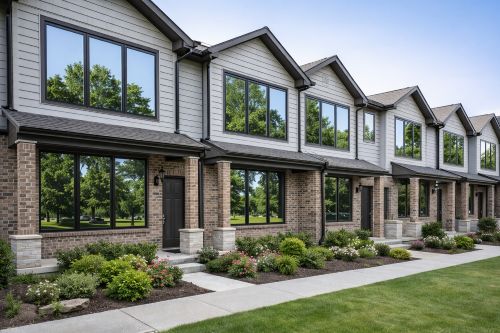
Get the governing documents before specifying. Pull the film manufacturer’s exterior reflectance data from the NFRC data sheet and compare it directly to the HOA restriction language. Document this comparison in the project file. If an ARB review is required, submit the performance data sheet and a physical sample rather than a product brochure. Review boards respond to evidence, not marketing materials.
Coordinating Film Specifications Across Multi-Unit and Mixed-Use Floor Plans
On a multi-unit project, film specification coordination is a sequencing and scope management challenge as much as a product selection exercise. The practical approach is to group units by film type rather than by floor or building wing. All solar control units get installed in one phase, all security film units in another, and common areas and retail last. This reduces material handling complexity and allows the installation crew to maintain consistent technique within each film category.
Establish a unit-by-unit scope log that maps glazing square footage to film type, performance spec, and installation priority. This document serves as both the installation work order and the closeout verification record. Any deviation from the specified film, including substrate changes, product substitutions, or edge attachment omissions, should require documented approval before installation proceeds.
Professional Installation on a Large-Scale Rollout: What to Expect and What to Demand
Product selection is only half the specification. A correctly specified film installed inconsistently across 80 units delivers inconsistent results, and on a multi-unit project, inconsistency is a warranty problem, a performance problem, and a client relationship problem all at once.
Why Professional Installation Is Non-Negotiable on Multi-Unit Projects
Window film installation is a skilled trade. Film must be cut to tolerance, applied without contamination, and allowed to cure under controlled conditions. On a multi-unit rollout, the variables multiply: different installers, different glass substrates by floor or wing, phased access schedules, and occupied units that require coordination with residents. DIY or unqualified installation at this scale introduces defect rates that are difficult to detect at closeout and expensive to remediate after the client has taken occupancy.
Manufacturer-backed warranties, which are the warranties that matter for a project closeout package, are voided by non-certified installation. That single fact makes professional installation a procurement requirement, not a preference.
How to Ensure Consistent Quality Across Multiple Locations or Units
Consistency on a large rollout comes from process, not from supervision alone. The practical controls are:
- Require a single installation crew or a lead installer who oversees all subcontracted labor, so technique and quality standards remain uniform.
- Establish a pre-installation inspection protocol covering glass cleanliness, substrate condition, and ambient temperature, all of which affect adhesion quality and film clarity.
- Use a unit-by-unit installation log that records film product, lot number, installer name, date, and any field deviations. This document is your closeout evidence and your warranty anchor.
- Conduct post-installation inspections at defined milestones, not just at project closeout. Catching installation defects during the rollout, while the crew is still on site, is far less costly than a return mobilization.
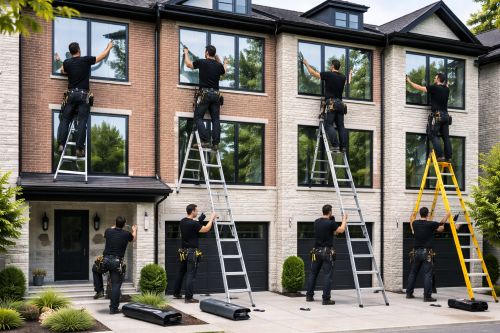
Uniform results across a large project also require sourcing the same film product from the same manufacturing lot wherever possible. Lot variation in tint or reflectance is minor but visible when units are compared side by side.
What 3M Certification and National Installation Capability Mean for Project Risk
3M’s authorized dealer and installation network exists specifically to address the quality consistency problem on large projects. 3M-certified installers are trained on product-specific installation requirements, including edge attachment protocols for safety film and substrate compatibility for low-E and solar control products. Certification is not a marketing designation. It is a condition of the manufacturer warranty, and it gives the project manager a clear chain of accountability from product to installation to warranty claim.
National installation capability matters when the project spans multiple locations, such as a regional multifamily developer with assets in different markets or a renovation manager rolling out a specification across a portfolio. A vendor with national reach can assign certified crews across locations without requiring the project manager to source and vet separate installers in each market.
Vendor Selection Criteria for Large-Scale Residential Film Procurement
Installation Credentials and Manufacturer-Backed Warranties
Require proof of manufacturer certification before executing a procurement agreement. For 3M products, this means verifying authorized dealer status. Manufacturer-backed warranties on residential window film typically run 10 to 15 years for solar control and safety products when installed by a certified professional. Those warranties cover film failure, delamination, and significant color shift, but only when the installation documentation supports the claim. A vendor who cannot provide certification documentation cannot support a warranty claim when it matters.
National Reach, Scheduling Consistency, and Project Documentation
A vendor’s operational capability is as important as their product knowledge on a large rollout. Evaluate vendors on three logistical criteria: their ability to assign crews in your project’s geographic markets, their scheduling flexibility across phased project delivery timelines, and their documentation practices. A vendor who provides scope-to-closeout documentation, including pre-installation assessments, unit-level installation records, and warranty registration by location, is functioning as a project partner, not just a subcontractor.
How Long Does Residential Window Film Last, and What Maintenance Is Required?
Quality residential window film, professionally installed, carries a functional service life of 10 to 20 years depending on film type, sun exposure, and climate. Solar control and UV films on south- and west-facing glass experience more thermal stress and may reach the lower end of that range. Safety and security films, which are not subject to significant thermal cycling, typically last longer.
Maintenance requirements are minimal. Film can be cleaned with standard non-abrasive glass cleaners and a soft cloth. Avoid razor blades or abrasive pads, which will scratch the film surface. During the cure period, typically 30 to 60 days after installation, avoid cleaning the film or applying pressure to the glass surface. After cure, filmed glass is maintained the same way as standard glass.
Key Specification Takeaways
Film Category by Risk Type
- Solar and thermal load: solar control film, SHGC 0.22 or lower, NFRC-certified data required
- UV degradation: 99% UV rejection minimum, clear UV film for north-facing premium interiors
- Forced entry and impact: safety film 8-mil minimum on accessible glazing, IPA sealant edge attachment required
- Privacy deficits: privacy or one-way film, specify VLT and opacity by unit condition
- Surface vandalism: anti-graffiti film on exterior surface, ground floor and high-traffic locations
Performance Metrics to Require in a Spec Sheet
- SHGC and VLT: NFRC-certified values for the specified film on the actual substrate
- UV rejection percentage: 99% minimum for any UV protection application
- Mil thickness and tensile strength: for safety film specifications
- Exterior reflectance: confirm against HOA or ARB restrictions before specifying
Installation Vendor Criteria
- Verified manufacturer certification (3M authorized dealer status for 3M products)
- National or multi-market installation capability
- Unit-level documentation including installation log, lot numbers, and installer records
- Warranty registration process at project closeout
Code Compliance Checkpoints
- Confirm AHJ acceptance of film-on-glass for safety glazing compliance before specifying in code-required locations
- Document ANSI Z97.1 or CPSC 16 CFR 1201 certification for any safety film used in hazard locations
- Verify that edge attachment is specified and installed wherever safety glazing performance is claimed
Conclusion: From Passive Glass to Engineered Protection
Recapping the Liability Case Against Unprotected Residential Glass
Standard residential glazing, left unmodified, fails on four measurable dimensions: it admits excess solar heat that inflates HVAC loads, it transmits UV radiation that degrades interior finishes, it offers minimal resistance to forced entry, and it shatters into hazardous fragments on impact.
None of these are hypothetical risks. They are quantifiable performance gaps that show up as energy overruns, maintenance costs, tenant complaints, and liability exposure over the building’s service life.

The Specification Path from Problem Identification to Installed Performance
The specification path is sequential and manageable. Identify the risk profile by facade orientation, unit type, and occupancy condition. Map each risk to the correct film category using performance minimums: SHGC for solar control, UV rejection percentage for interior protection, mil thickness and edge attachment for safety applications. Build a film specification matrix that your vendor quotes against directly. Require NFRC-certified performance data, verify installer credentials, and establish a unit-level documentation standard before installation begins. The complexity is in the upfront coordination, not in the technology itself.
How Window Film Depot Supports Project Managers from Scope to Closeout
Window Film Depot operates as a specification partner for construction and renovation managers running large-scale and multi-unit residential projects. That means technical support at the specification stage, including film selection, performance data review, and HOA compliance documentation, alongside national installation capability through a network of certified professionals to execute the specification consistently across locations. Project documentation from pre-installation scope assessment through warranty registration at closeout is part of every engagement.
If your next project has an unresolved glazing performance gap in energy load, UV protection, security, or any combination, the right time to address it is before occupancy, not after. Contact Window Film Depot to review your glazing schedule and build a specification that closes the gap before it becomes a cost.
Frequently Asked Questions
What is the difference between security window film and decorative window film, and which should I specify?
Security film and decorative film are distinct product categories engineered for entirely different purposes. Security film is built for structural performance, rated by mil thickness and tensile strength, and designed to hold glass fragments together under impact. Decorative film is designed for appearance, delivering frosted, etched, or patterned effects that manage privacy and aesthetics. If a location requires protection against forced entry, flying glass, or safety glazing compliance, specify security film. If the requirement is visual privacy or a design finish with no structural demand, decorative film is the appropriate choice. Specifying decorative film in a code-required safety glazing location is a compliance error, so confirm the application before selecting a product.
How effective is window film at preventing break-ins compared to security bars or reinforced glass?
Window film does not prevent glass from breaking, but it significantly extends the time and effort required to breach a filmed window. Most opportunistic break-ins depend on speed and minimal noise. A filmed window that requires repeated, visible strikes to penetrate increases detection risk enough to deter the attempt. Compared to security bars, which create fire egress hazards and require structural modifications, security window film delivers meaningful protection without those trade-offs. Compared to laminated glass replacement, film achieves a similar fragment-retention principle at a substantially lower per-opening cost, making it the most practical deterrent for large-scale residential projects.
What is 3M Impact Protection Attachment (IPA) sealant, and why does it matter for window film performance?
IPA sealant is an edge-bonding compound applied between the window film and the frame perimeter during installation. Without it, a filmed glass pane will hold fragments together on impact but can separate from the frame as a unit, effectively allowing the entire glass-film assembly to enter the room. The IPA sealant anchors the filmed glass to the frame, keeping the panel in place even after a severe impact. For any security, seismic, or safety glazing application, edge attachment with IPA sealant is not an optional upgrade. It is a required component of the installation, and its omission invalidates the safety performance claim of the film.
Can window film meet building code requirements for safety glazing?
In certain configurations and jurisdictions, yes. Safety glazing compliance under the IBC and IRC is defined by performance against ANSI Z97.1 or CPSC 16 CFR 1201, and professionally installed, certified safety film can meet these standards when applied to compatible glass substrates. However, acceptance is AHJ-dependent. Some jurisdictions recognize film-on-glass as compliant when the film carries the appropriate certification and installation is documented by a certified professional. Others require the glazing unit itself to carry a factory safety rating. Always confirm the local interpretation with the Authority Having Jurisdiction before specifying film as a safety glazing solution in code-required locations, and get that confirmation in writing.
How do I ensure consistent quality and installation across multiple units or locations?
Consistency at scale comes from documented process controls, not from on-site supervision alone. Require a single lead installer or crew supervisor responsible for quality across all subcontracted labor. Implement a pre-installation inspection protocol that checks glass cleanliness, substrate condition, and ambient temperature before any film goes down. Maintain a unit-by-unit installation log recording the film product, lot number, installer name, installation date, and any field deviations. Source film from the same manufacturing lot across the project wherever possible, since minor lot variation in tint or reflectance becomes visible when adjacent units are compared. Conduct milestone inspections during the rollout rather than waiting for final closeout.
Are there HOA or zoning restrictions on window film installation in residential settings?
HOA and architectural review board restrictions on window film are common and typically address two variables: exterior reflectivity and visible tint level. Most governing documents specify a maximum exterior reflectance, often 20% or lower, and a minimum VLT, often 35% or higher. Non-metallized solar control films such as 3M Prestige Series are well-suited to HOA-restricted projects because they achieve strong solar performance without the high exterior reflectance associated with traditional metallized films. Before specifying any film on an HOA-governed project, pull the relevant governing documents, compare the film’s NFRC-certified exterior reflectance data against the restriction language, and document the comparison in the project file. If an ARB review is required, submit the manufacturer’s performance data sheet and a physical sample.
How long does residential window film last, and what maintenance does it require?
Quality residential window film professionally installed carries a service life of 10 to 20 years, depending on film type, orientation, and climate. Solar control and UV films on south- and west-facing exposures experience more thermal stress and tend toward the lower end of that range. Safety and security films, which are not subject to the same thermal cycling, typically last longer. Maintenance is straightforward: clean with a non-abrasive glass cleaner and a soft cloth. Avoid razor blades, abrasive pads, or concentrated solvents, which will damage the film surface. During the cure period, typically 30 to 60 days post-installation, avoid cleaning the film or applying pressure to the glass. After full cure, filmed glass requires no specialized maintenance beyond standard window cleaning.