Table of Contents:
- What Is One Way Privacy Window Film (and What Problem Does It Solve)?
- How One Way Window Film Works: Daytime Privacy, Mirror Effect & Lighting Conditions
- Types of One Way Privacy Films vs. Other Window Privacy Options
- Benefits of One Way Window Film for Commercial & Institutional Buildings
- One Way Privacy Film vs. Standard Window Tint: What Customers Should Know Before Choosing
- Installation: How One Way Privacy Window Film Is Applied (and Why Pro Install Matters)
- Common Mistakes & Myths About One Way Window Films
- FAQs: How Does One Way Privacy Film Work in Real Buildings?
- Why Choose Window Film Depot for One Way Privacy Film Projects?
- Frequently Asked Questions
- Next Steps: Get a Site Assessment or Quote for One Way Window Film
If you manage a commercial building, school, or retail location with street-facing glass, you already know the tension: you want natural light inside, but you don’t want outside people staring into your space all day. Privacy window film one way solves that tension by creating a mirror effect on the exterior surface of your glass during daylight hours, letting occupants see out while blocking inward visibility. This guide covers how the technology actually performs in real buildings, what to watch out for, and why professional installation matters more than most buyers expect.
What Is One Way Privacy Window Film (and What Problem Does It Solve)?
A one-way window film is a thin, retrofit film applied directly to existing glass that makes the exterior surface reflective, like a mirror, while preserving outward visibility from inside. One-way window film provides daytime privacy by exploiting the brightness difference between the sunny exterior and the shaded interior. One-way privacy films are often used in residential and commercial buildings for enhanced privacy, and the applications range well beyond standard office towers.
Here are three scenarios where this solution delivers immediate value:
- A retail storefront on Atlanta’s Peachtree Street uses reflective film to shield merchandise displays from foot traffic, keeping natural light flooding the sales floor without giving passersby a clear line of sight inside.
- A glass-walled conference room in a Dallas office where meetings were fully visible from the lobby. After film installation, participants enjoy skyline views while the room appears as a mirror surface from the corridor.
- A school administrative office near a busy hallway where staff need to monitor foot traffic but maintain privacy from students walking past.
This is not a window replacement project. It is a thin film applied to the surface of your current glass, whether single-pane or double-pane, on commercial or residential buildings. Typical use cases include office buildings, government facilities, healthcare environments, banks, home offices, and street-level retail that want daytime privacy without resorting to blinds or blackout shades.
One important point up front: the one-way privacy effect depends on lighting conditions. It works during daylight hours when the sun is brighter on one side of the glass. How it behaves at night is a different story, which we’ll describe in the next section.
How One Way Window Film Works: Daytime Privacy, Mirror Effect & Lighting Conditions
The physics behind reflective window privacy film is straightforward. The film contains a metallized layer, typically aluminum or silver, that reflects visible light back toward the brighter side of the glass. The effectiveness of one-way privacy window film is highly dependent on light imbalance between the two sides.
During the day, the exterior is flooded with sunlight while the interior stays comparatively dark. The film creates a mirror effect on sunny days, so outside viewers see their own reflection instead of your interior. Meanwhile, it allows visibility from the inside while blocking outside views, giving occupants a slightly tinted but clear view of the world outside.
The strength of this mirror effect fluctuates with conditions. On a bright July afternoon in Phoenix, the reflection is intense and nearly opaque from the outside. On an overcast winter day in Chicago, the reduced sun means the exterior may appear semi-translucent rather than a perfect mirror. Snow cover and heavy cloud layers reduce the contrast that powers the effect.

Here is the critical limitation: the mirror effect of the film reverses at night, requiring additional privacy measures. Once the sun sets and interior lights come on, the inside becomes the brighter side. Indoor lights at night can compromise privacy because outside viewers now see through the film while interior occupants see their own reflection. For applications that demand consistent nighttime window privacy solutions, alternative films such as frosted or decorative options are often a better fit than standard reflective products. The solution is simple: close curtains or lower blinds in the evening to maintain night time privacy.
Regarding glass types, single-pane glass works well with reflective film, but double-pane and low-E insulating units require careful film matching to avoid thermal stress. Window Film Depot uses 3M and other tier-one manufacturer specifications to match film reflectivity and shading coefficients to glass type, building orientation, and climate exposure, preventing issues like thermal stress cracking.
Types of One Way Privacy Films vs. Other Window Privacy Options
Not every privacy window situation calls for the same film. Here is a quick comparison to help buyers evaluate their options:
Reflective one-way window film delivers strong daytime privacy with a visible mirror effect on the exterior. It excels at solar heat control and glare reduction but provides limited privacy at night without supplemental window treatments. One-way window film is suitable for various surfaces like shower doors, sidelights, and standard glazing. Many films are designed to facilitate installation without adhesive, particularly static cling versions that can be easily repositioned and removed for temporary applications.
Neutral or dual-reflective solar control window tint offers a subtler appearance, less obvious mirror finish from outside, and somewhat better outward clarity at night compared to high-reflective films. These are popular when building codes or landlord rules restrict highly reflective exteriors.
Frosted or translucent day and night privacy window film provides 24/7 privacy in both directions but sacrifices clear views entirely. Light diffuses through the glass, making it ideal for bathrooms, partition walls, and spaces where you want light without any line of sight.
Blackout film blocks all light and visibility. It’s typically reserved for server rooms, AV rooms, storage areas, and back-of-house zones where total darkness and complete privacy are the goal.
Many projects mix solutions across a single building. For example, a retail location might use reflective one-way film on the street-facing storefront, frosted bands on interior conference room glass, and blackout film on a server room door, all within the same complex. Decorative privacy films with patterns, gradients, or 3D effects can also be combined with innovative privacy and decorative window films on different elevations for branding and wayfinding.
Window Film Depot helps architects and facility managers evaluate privacy goals, code requirements for schools and healthcare environments, and aesthetic appearance before recommending a specific film type.
Benefits of One Way Window Film for Commercial & Institutional Buildings
One-way window films deliver more than just privacy. They simultaneously affect energy performance, occupant comfort, and long-term asset protection across an entire building envelope.
Key benefits include:
- Daytime privacy and visual security. Reduce sightlines into cash wraps, patient waiting rooms, school offices, and sensitive storage areas. It provides daytime privacy while allowing outside views, so staff maintain situational awareness without sacrificing security.
- Solar heat reduction and glare control. High-performance reflective films reject 60–80% or more of solar energy, translating into real comfort improvements in south- and west-facing offices. It reduces glare on screens by blocking harsh light, which is a direct quality of life upgrade for anyone working at a computer or in an open-plan space.
- UV protection. One way window film blocks 93% of harmful UV rays, with many premium products reaching 99%. This helps reduce fading of flooring, merchandise, furniture, and artwork. A retail clothing store with large display windows, for instance, can protect inventory color from sun damage without closing off the storefront.
- Occupant comfort and productivity. Fewer hot and cold spots, less need to constantly adjust blinds, and reduced screen glare all translate to fewer complaints for facility managers and a more productive environment in the room.
- Aesthetic upgrade. A uniform reflective finish can dramatically improve the appearance of older glass façades without a full curtain wall replacement.

Window Film Depot commonly serves national retail chains, banks, federal and state buildings, K–12 schools, universities, and hospitals across the U.S. These commercial window tinting and film installations contribute to energy-saving initiatives and support broader building envelope upgrades in existing properties without disruptive construction. Case studies show energy savings in the range of 6–10% annually for commercial buildings in moderate climates, with some projects documenting payback periods under three years.
One Way Privacy Film vs. Standard Window Tint: What Customers Should Know Before Choosing
Think of this section as a “before you buy” checklist. Window tint is a broad term, but not all tints produce a strong one-way mirror effect. Some tints offer gentle glare reduction or subtle aesthetics without meaningful reflective privacy. Here is what to evaluate:
Visible light transmission (VLT). Lower VLT means more privacy and stronger reflection, but also a darker interior. A film with 1–5% VLT will be nearly opaque from outside but may make your space feel like a cave. Films in the 15–35% VLT range offer a better balance for most offices and retail environments. The point is to match VLT to the function of the space and the power of ambient light sources on each façade.
Interior vs. exterior reflectivity. A high level of exterior reflectivity creates the mirror look from outside. But interior reflectivity matters too: at night, high interior reflectance means occupants see their own reflection instead of the view. Dual-reflective or neutral films reduce this effect. Viewers from either side will have a different experience depending on which side is brighter.
Impact on views. A reflective one-way film slightly alters color balance, often giving a cooler, silver tone when looking out. Most users adapt quickly, but it is worth reviewing samples from the opposite side of the glass before committing to a film across an entire façade. This is especially true at an angle, where distortion can be a bit more noticeable.
Window Film Depot performs on-site assessments, including measuring glass, evaluating shading patterns, and understanding tenant comfort issues before recommending a product. This includes helping clients understand how one-way mirror and reflective films work in real projects so performance expectations match actual lighting conditions. We also advise clients to check building codes, landlord requirements, and historical façade restrictions. Some municipalities limit exterior mirror finishes, particularly in historic districts or areas where reflected glare could affect drivers or neighbors.
Installation: How One Way Privacy Window Film Is Applied (and Why Pro Install Matters)
Professional installation for a commercial or institutional project is a fundamentally different process from pressing a static cling film onto a bathroom window at home. Here is how a Window Film Depot crew handles it:
- Site assessment and measurement. Every glass lite is measured, including doors, sidelights, and transoms. Glass type is identified to ensure film compatibility.
- Surface preparation. Existing decals are removed, glass is deep-cleaned, and edges and frames are inspected for damage. The film is effective only on flat, clean surfaces, so prep work is non-negotiable.
- Film application. Adhesive-backed architectural film is applied using a slip solution, then carefully squeegeed to remove air and water. Edges are precisely trimmed for a clean line.
- Final inspection and curing. The crew inspects every lite for bubbles or contamination, explains the 1–2 week cure time, and provides maintenance directions, including using only non-abrasive cleaners.
For large rollouts covering 500 or more windows across multiple locations nationwide, Window Film Depot coordinates phased installation schedules to minimize disruption to tenants and customers. A small branch bank can be completed in a single day. A mid-rise office façade may take several days. A school installation is typically scheduled during a break to avoid student disruption.
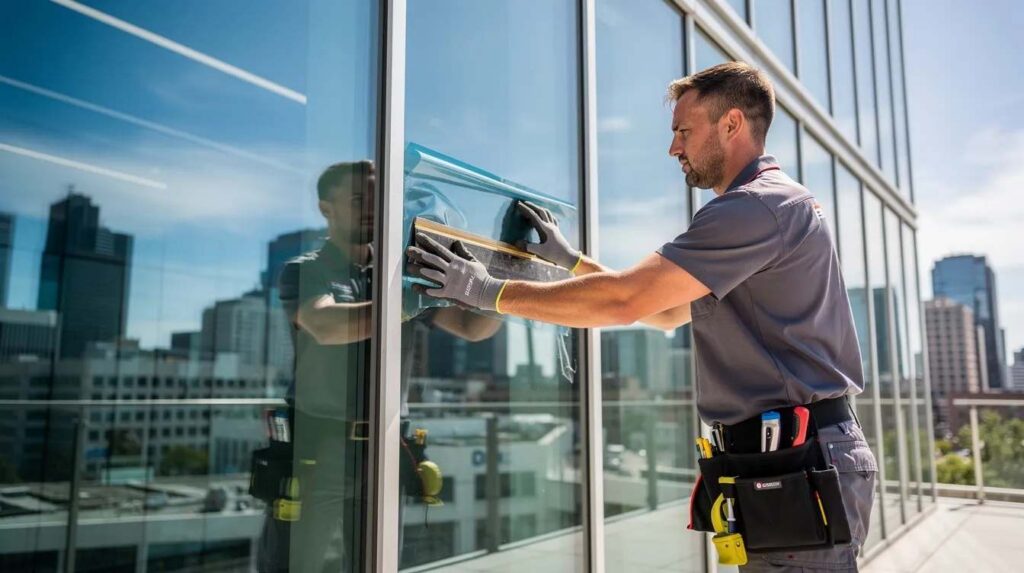
It is worth understanding the difference between adhesive-backed architectural films and removable static cling products. Static cling technology allows adhesive-free application on glass and leaves no residue upon removal, making it super easy to reposition for do-it-yourself window film installations. Static cling window films require a smooth, clean surface for application and are best for temporary or light-duty situations. Long-term commercial installations almost always use high-performance adhesive films because they deliver superior durability, consistent reflectivity, and manufacturer-backed warranties that typically cover 10 years or more.
Trained installers reduce risks like bubbles, contamination, and thermal glass breakage. Window Film Depot follows manufacturer guidelines on every install to maintain product warranties.
Common Mistakes & Myths About One Way Window Films
Unrealistic expectations are the number one source of frustration with one-way film. Let’s correct the most common myths:
Myth: One way privacy works 24/7. The one-way effect depends entirely on which side of the glass is brighter. During the day, it works as expected. At night, you need to close curtains or blinds to maintain privacy. Film alone will not do the stuff you hope it will after dark.
Myth: Any dark tint equals privacy. A dark window tint with low visible light transmission but minimal exterior reflectivity may still reveal interior details when interior light sources are on. Reflectivity, not just darkness, is what creates the privacy function.
Myth: Film will damage or weaken my glass. Professionally specified films are matched to glass type to avoid thermal stress. Tempered, laminated, and insulated units each have compatibility requirements, and manufacturer warranties back up correct use.
Myth: Cheap DIY film performs the same as professional-grade products. Low-cost films often have uneven adhesive, color shift, and a shorter life. They are not engineered for high-traffic commercial settings where appearance and durability matter.
Myth: All mirror films look the same. There are different shades, including silver, bronze, and neutral, each with different exterior aesthetics and inside-nighttime clarity tradeoffs.
A regional school district initially tried a budget DIY reflective film on front-facing administrative windows. Within two years, edges began to peel, and on cloudy days the mirror effect was barely noticeable. Window Film Depot was brought in to retrofit with code-compliant, durable adhesive film matched to the double-glazed units. The difference in performance and appearance was immediate, and the new film carried a full manufacturer warranty.
FAQs: How Does One Way Privacy Film Work in Real Buildings?
Does one-way window film work at night?
One-way mirror or reflective privacy film depends on a light imbalance between the two sides of the glass. At night, once interior lights are on and it is dark outside, the effect reverses, and people outside can see in. To maintain privacy after dark, blinds or curtains are required. Film alone does not provide nighttime privacy.
Can I still see outside clearly through one-way window films?
Yes. During daytime, visibility from inside remains quite good. You will notice a slight tint and possibly reduced color saturation, but most occupants adapt quickly. Choosing a neutral or higher-VLT film helps maintain clarity.
Will one-way privacy window film make my building too dark inside?
It depends on VLT selection. Extremely low-VLT films (1–5%) will significantly dim a room. Window Film Depot helps clients select the right VLT for each façade orientation so interiors stay comfortable and well-lit. Balancing privacy with natural light is a core part of the specification process.
Is one way window film legal for storefronts and offices?
In most cases, yes. However, some municipalities restrict exterior visible light reflectance, especially in historic districts or areas where reflected glare could affect drivers. Safety glazing and tempered glass regulations may also apply. Always verify local ordinances and landlord requirements before committing.
Do distributors provide training for new installers?
With quality film and professional installation, expect a lifespan of 10–15 years or more. Factors that shorten life include extreme UV exposure, harsh cleaning chemicals, and substandard products. Warranties from top manufacturers typically cover peeling, discoloration, and loss of reflective finish.
Can Window Film Depot handle multi-location or national rollouts?
Absolutely. Window Film Depot maintains a national installer network and offers turnkey project management, from specification and sample approval through scheduling and final punch-list. This allows clients, whether retail chains, banks, government agencies, or school districts, to get consistent quality and pricing across every location without managing multiple vendors.
Can I get both automotive and architectural films from the same distributor?
Yes, and doing so simplifies your supply chain. Window Film Depot stocks a complete line of both, along with installation tools and application solutions, so you can consolidate vendors and reduce shipping costs.
Have a project-specific question not covered here? Contact Window Film Depot directly with your details.
Why Choose Window Film Depot for One Way Privacy Film Projects?
Window Film Depot is a family-owned window film company founded in 1992 in Marietta, Georgia, with over three decades of experience in commercial and institutional window film projects. We are not a sell-and-forget supplier. Our team manages every project from initial survey and specification through installation and punch-list.
What sets us apart:
- Product expertise. We specify and install a wide range of window glass film products and brands, including 3M solar control, security, and privacy films alongside other leading manufacturers, selecting based on performance data, building orientation, and glass type rather than just price or appearance.
- Turnkey project management. From measurement and film selection to coordinating phased installations across hundreds of windows, our parties handle the logistics so facility managers and architects don’t have to.
- Nationwide reach. Our nationwide window film service locations and national installer network support rollouts for banks, retailers, government agencies, and school districts across the country, delivering consistent quality at every location.
- Wholesale supply. Through Window Film Depot’s wholesale window film offerings, we also sell window film rolls wholesale to glazing and film trade partners across North America, so contractors and glaziers can source one way window films and related privacy products directly.
With thousands of completed projects spanning retail chains, higher education campuses, healthcare systems, and public sector clients, we bring real-world experience to every engagement. We protect your building, your money, and your occupants’ comfort with solutions backed by manufacturer warranties and professional accountability.
Next Steps: Get a Site Assessment or Quote for One Way Window Film
Whether you are managing a single storefront or coordinating a multi-location national rollout, the right one way privacy film solution starts with understanding your building, your glass, and your environment. Here is how to get started:
- Request a free, no-obligation site assessment for your building or campus.
- Send floor plans or glass schedules for preliminary budgeting on large projects.
- Call or email Window Film Depot to discuss specific privacy, energy, or security objectives.
- Ask about combining one-way privacy film with security glazing, decorative film, or anti-graffiti solutions for a comprehensive upgrade.
We work with facility managers, building owners, school administrators, architects, and trade partners alike. If you are looking to improve comfort, privacy, and building performance in 2026 and beyond, professional-grade window film is one of the highest-impact, lowest-disruption upgrades available. Reach out to Window Film Depot and let’s find the right film for your project.