Table of Contents:
- Unveiling the Physics of Privacy: The Critical Role of Light Differential
- The True 24/7 Solution: Harnessing Advanced Dual-Reflective Window Films
- Beyond Reflection: Exploring Opaque and Decorative Films for Ultimate Privacy
- Masterminding Your Project: Key Considerations for Film Specification
- Elevating Project Success: Partnering with an Expert Film Provider
- Conclusion: Safeguarding Your Project’s Privacy and Reputation
- Frequently Asked Questions
- Related Posts from Window Film Depot
The Promise vs. The Reality: Day vs. Night Performance
Many commercial projects begin with a client request for “one-way mirror” privacy, a common term that often sets an expectation for uninterrupted invisibility. During daylight hours, standard reflective window films perform exactly as anticipated. They leverage the brighter exterior light to create a reflective surface, preventing outsiders from seeing into the building while maintaining a clear view from the inside out. This daytime performance aligns perfectly with the initial promise, making the film seem like an ideal solution for visual security and aesthetic uniformity.
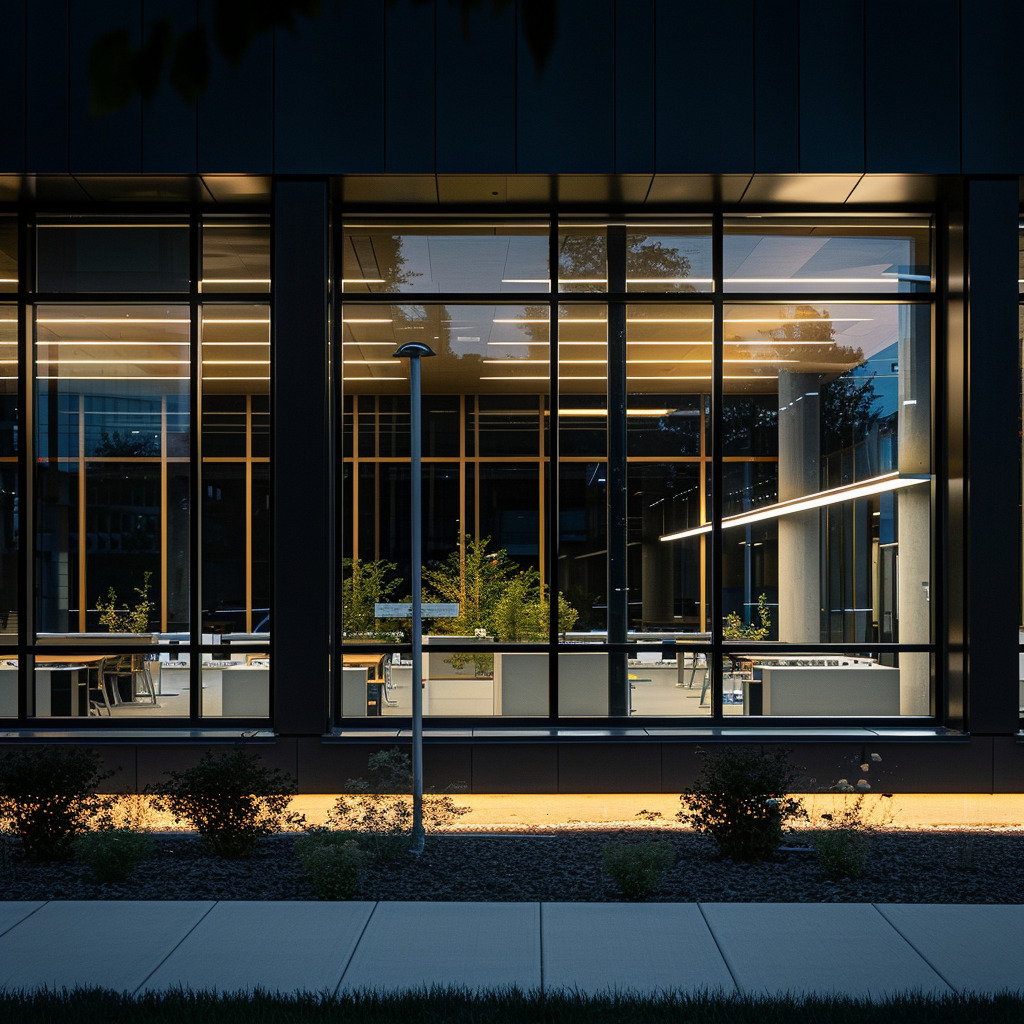
However, the reality of these films shifts dramatically once evening arrives and interior lighting becomes dominant. What was once a privacy barrier transforms into a transparent pane, revealing the building’s interior. This significant discrepancy between daytime efficacy and nighttime failure often catches project managers and clients off guard, leading to immediate dissatisfaction and compromising the initial project goals. The expectation of consistent, all-hours privacy simply does not align with the physical limitations of these standard products.
The Hidden Costs of Misinformation: Rework, Delays, and Dissatisfied Clients
The consequences of specifying standard “one-way” films without a complete understanding of their nocturnal limitations extend far beyond a mere aesthetic inconvenience. Misinformation at the specification stage can quickly escalate into tangible project setbacks. When clients discover that their privacy is compromised after dark, it often necessitates a costly and disruptive re-evaluation of the installed solution.
These post-installation revelations frequently result in:
- Rework and Material Costs: The original film must be removed, incurring labor and disposal fees, followed by the purchase and installation of an entirely new, more appropriate film solution. This doubles material expenses and adds significant labor hours.
- Project Delays: The need for replacement films and re-installation pushes back project completion dates, impacting other scheduled trades and potentially delaying building occupancy or operational readiness.
- Security Vulnerabilities: For properties requiring consistent privacy, such as data centers, executive offices, or secure facilities, the nighttime transparency of standard films creates unacceptable security breaches, exposing sensitive operations or personnel.
- Client Dissatisfaction and Reputational Damage: Failing to deliver on a core client requirement, especially concerning privacy and security, can severely damage client relationships and undermine a project manager’s reputation for delivering effective, durable solutions.
Unveiling the Physics of Privacy: The Critical Role of Light Differential
To truly understand why standard reflective films fall short at night, we must delve into the fundamental physics. The “one-way” effect is a direct result of light intensity differences on either side of the glass.
Deconstructing Reflectivity: How Standard “One-Way” Films Work (and Don’t)
Standard reflective films operate on a simple principle: they reflect light from the brighter side more intensely than they allow light to pass through from the dimmer side. During the day, the exterior environment is significantly brighter than the interior of a building. This substantial light differential causes the film to reflect a high percentage of outdoor light, creating the mirror-like effect that obscures the interior view. Concurrently, enough light from the outside is still transmitted inward, allowing occupants to see out.
The “don’t” part of this equation becomes evident when this light differential diminishes or reverses. These films are engineered to maximize exterior reflectivity under high-ambient-light conditions. Standard films cannot dynamically adjust reflective properties based on interior illumination or defy the laws of physics. They fail to maintain privacy when the brighter light source inevitably shifts from outdoors to indoors.
The Inverse Effect: When Interior Light Becomes the Problem for Commercial Properties
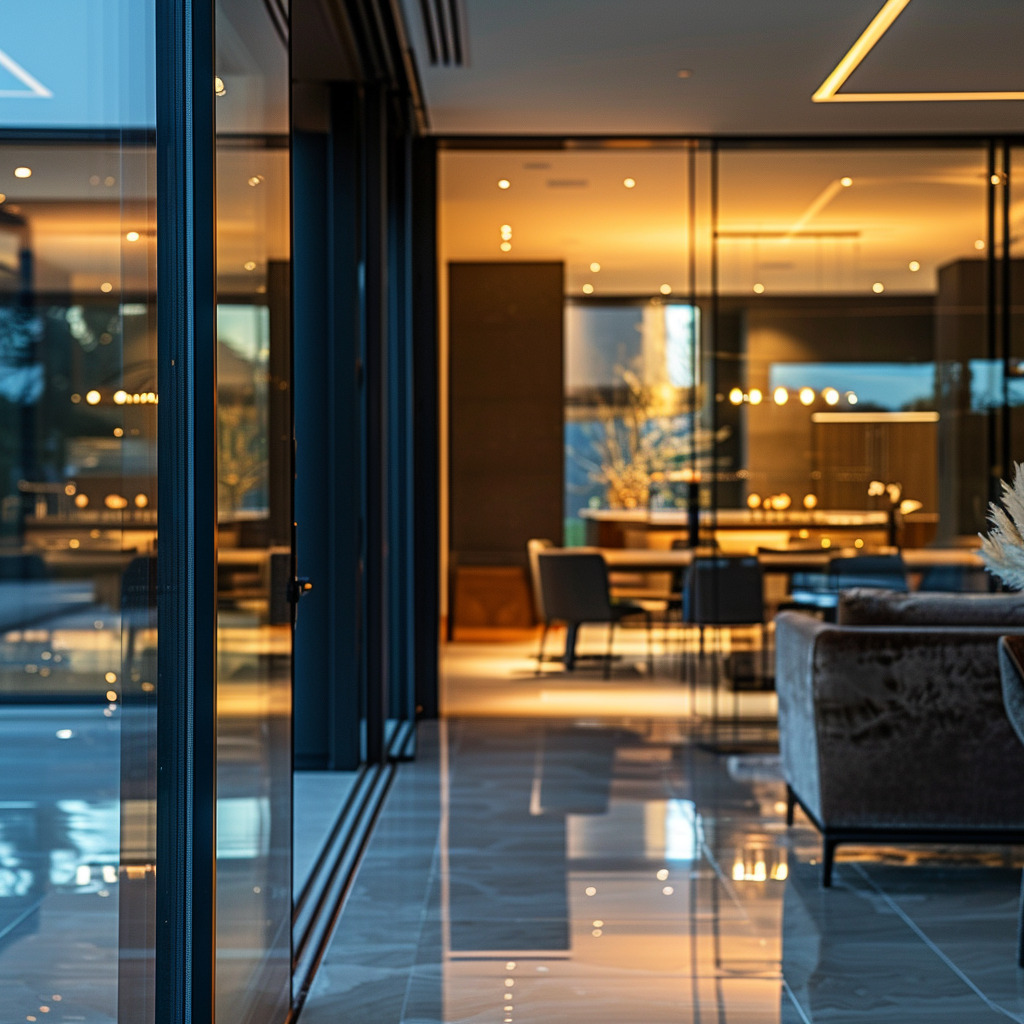
At night, particularly in commercial settings where interior lights are typically on, the light differential completely reverses. The interior of the building becomes brighter than the exterior environment. With the light source now originating from inside, the film begins to reflect interior light into the room, creating an unwanted reflective surface inside the building. Simultaneously, the film allows a much clearer view outward from the brighter interior.
Anyone outside can now see directly into illuminated interior spaces, effectively turning windows into transparent panes for observation. For commercial properties, this transparency poses significant challenges to both privacy and overall site security at night. What was intended as a privacy feature transforms into an invitation for observation, undermining the original project objectives.
Key Performance Indicators: Understanding VLT and Reflectivity Ratings for True Privacy
When evaluating window film specifications, a precise understanding of key performance indicators (KPIs) is critical for ensuring the desired privacy and performance outcomes. Relying solely on marketing terminology like “one-way” without analyzing these metrics can lead to incorrect product selection.
Key performance indicators to consider include:
- Visible Light Transmittance (VLT): This metric indicates the percentage of visible light that passes directly through the film. A lower VLT means less light enters the building, contributing to higher internal reflection during the day and making it harder for outsiders to see in (assuming sufficient exterior brightness). At night, however, a lower VLT still allows light to transmit outward if the interior is brighter.
- Exterior Reflectivity: This figure quantifies the percentage of visible light reflected outward by the film. A higher exterior reflectivity rating is what primarily creates the daytime mirror effect, blocking views into the building.
- Interior Reflectivity: This metric measures the percentage of visible light reflected inward by the film. While often overlooked, a high interior reflectivity can be problematic at night, as it creates an internal mirror effect for occupants, potentially diminishing their view out and even amplifying interior light to be seen from outside.
For true nighttime privacy, understanding these ratings in conjunction with the light differential principle is paramount. High exterior reflectivity provides daytime privacy, but it is the careful management of light transmission and interior reflectivity that dictates evening performance, pointing towards the need for more specialized film solutions.
The True 24/7 Solution: Harnessing Advanced Dual-Reflective Window Films
Moving beyond the inherent limitations of standard reflective films, achieving consistent, reliable privacy in commercial settings—day and night—requires a more sophisticated approach. This is where advanced dual-reflective window films become the indispensable solution for project managers. These films are engineered to manage light dynamics proactively, ensuring privacy without compromising interior comfort or exterior aesthetics.
Engineering for All Conditions: How Dual-Reflective Technology Works
Dual-reflective films are fundamentally different from their single-reflective counterparts because they are designed with varying levels of reflectivity on each side. The exterior-facing layer boasts a high reflectivity, effectively deterring outward visibility during daylight hours and minimizing solar heat gain. Crucially, the interior-facing layer is crafted with significantly lower reflectivity. This thoughtful engineering prevents the internal reflection that plagues standard films at night, allowing occupants to see out clearly while maintaining privacy from the exterior. This balanced reflectivity ensures that the film performs effectively regardless of internal or external light levels, offering a true 24/7 privacy solution.
Need More Info?
The Window Film Depot team is happy to help.
Introducing the Gold Standard: The 3M™ Night Vision™ Series for Consistent Privacy
For projects demanding uncompromised performance and reliability, specialized products like the 3M™ Night Vision™ series represent the gold standard in dual-reflective technology. These films are specifically engineered to address the very challenge of maintaining outward visibility at night while still providing privacy from the outside. Their unique construction reduces interior reflectivity, mitigating the mirror effect that typically occurs when internal lighting exceeds external light. Specifying films like 3M™ Night Vision™ ensures that your project delivers consistent privacy performance, protecting sensitive areas and enhancing occupant comfort around the clock.
Beyond Privacy: Additional Benefits for Commercial Environments
While enhanced privacy is the primary driver for selecting advanced dual-reflective films, their benefits extend well beyond visual security. Integrating these films into a commercial design offers a host of practical advantages that contribute to a more comfortable, energy-efficient, and productive environment.
- Glare Reduction: The reflective exterior surface significantly reduces harsh glare from direct sunlight, improving screen visibility and occupant comfort.
- Energy Efficiency: By blocking a substantial portion of solar heat, these films reduce the workload on HVAC systems, leading to measurable energy savings.
- UV Protection: They filter out up to 99% of harmful UV rays, protecting interior furnishings, artwork, and occupants from sun damage and fading.
These combined benefits reinforce the value proposition for discerning project managers, making dual-reflective films a smart investment in building performance.
Addressing Aesthetic Concerns: Maintaining Desired Exterior Appearance with 24-Hour Privacy Window Film
Aesthetics are a critical consideration for any commercial façade. Project managers often worry that privacy films or blackout window film might impart an undesirable mirrored look or alter a building’s architectural integrity. Advanced dual-reflective films, however, are designed to integrate seamlessly. They typically come in a range of subtle hues, such as neutral grays or bronzes, which provide their performance characteristics without creating an overtly reflective or distracting exterior appearance during the day. This allows for effective privacy and performance solutions that complement, rather than detract from, the building’s intended design and curb appeal.
Beyond Reflection: Exploring Opaque and Decorative Films for Ultimate Privacy
While dual-reflective films offer excellent 24/7 privacy with outward visibility, there are specific scenarios where absolute visual obscurity is paramount. In these instances, moving beyond reflection to completely opaque or decorative films becomes the most appropriate and secure choice. These solutions are invaluable for spaces demanding total visual blockage or for areas where privacy can be creatively integrated with design elements.
Frosted Window Films: Absolute Obscurity with Diffused Natural Light
Frosted window films offer a comprehensive solution for complete visual privacy. Once applied, they transform clear glass into a translucent surface that fully obscures views from both sides. Crucially, unlike solid barriers, frosted films allow for the diffusion of natural light, maintaining a bright and open feel within the space without sacrificing privacy. This makes them ideal for environments such as:
- Conference rooms and private offices
- Restrooms and changing areas
- Medical clinics and examination rooms
- Server rooms or data centers requiring visual security
The uniform texture and appearance of frosted films also provide a clean, professional aesthetic that can enhance interior design.
Decorative and Specialty Films: Combining Privacy with Brand Aesthetics
For applications where privacy integrates with architectural design or brand identity, decorative and specialty films offer unparalleled flexibility. These films come in vast patterns, textures, colors, and opacities, from subtle gradients to custom-cut logos. They provide the necessary level of visual obscurity while simultaneously:
- Enhancing interior aesthetics and ambiance.
- Reinforcing corporate branding or wayfinding.
- Creating dynamic and engaging architectural features.
This category allows project managers to achieve specific privacy requirements without resorting to dull or utilitarian solutions, ensuring that functionality and design go hand-in-hand.
Strategic Applications: When to Choose Opaque Over Reflective Solutions
The decision between reflective and opaque solutions hinges on the specific privacy requirements, desired light transmission, and aesthetic goals of each space.
- Choose reflective (dual-reflective) films when: Outward visibility is desired, some natural light penetration is beneficial, and solar control/energy efficiency are priorities. These are suitable for perimeter offices, lobbies, or residential-style commercial spaces.
- Choose opaque (frosted, decorative) films when: Absolute visual privacy is non-negotiable, outward views are not required or are undesirable, and diffused natural light (for frosted) or specific design elements are preferred. These are best for interior glass partitions, sensitive data rooms, or areas where visual distractions must be eliminated.
Understanding these distinctions allows project managers to strategically select the correct film technology from the outset, ensuring the project delivers the intended privacy and security without costly remediation or client dissatisfaction.
Masterminding Your Project: Key Considerations for Film Specification
Successfully integrating advanced window film technology into a commercial project demands a meticulous approach, moving beyond surface-level aesthetics to consider the intricate interplay of performance, site conditions, and regulatory compliance. As project managers, your ability to foresee and mitigate potential issues begins with a comprehensive specification process.
Defining Project Requirements: Privacy Levels, Aesthetic Goals, and Budget for Commercial Window Film
Successful window film integration begins with a clear, unambiguous definition of all specific project requirements. For privacy, move past misconceptions by specifying the exact level of daytime and nighttime performance required. Genuine nighttime privacy with interior lights on necessitates dual-reflective or opaque solutions for optimal results. Clearly articulate aesthetic goals, including reflectivity, color, and views, to ensure architectural harmony and satisfaction. Finally, establishing a realistic budget from the outset is crucial for long-term project success. Consider how energy savings and enhanced security justify investing in higher-performance film solutions.

Assessing Site-Specific Variables: Lighting, Orientation, and Building Codes
The performance of any window film is intrinsically linked to its environment. A thorough assessment of site-specific variables is indispensable.
- Lighting Conditions: Analyze both natural and artificial light. For one-way privacy window film, understanding the light differential between interior and exterior spaces, particularly at night, is paramount. Internal lighting, the very factor that compromises standard reflective films after dark, dictates the need for specialized film types.
- Building Orientation: The cardinal direction of glass facades significantly impacts solar heat gain, glare, and UV exposure. South and west-facing windows, for instance, often require films with superior solar control properties, while north-facing windows might prioritize light transmission.
- Building Codes and Regulations: Compliance is non-negotiable. This includes local fire codes, egress requirements, glass safety standards (e.g., shatter resistance), and manufacturer warranty requirements for specific glass types. Neglecting these can lead to costly rework or, worse, safety hazards and legal complications.
Preventing Common Pitfalls: Essential Questions to Ask Before Installation
Proactive inquiry is your strongest defense against costly errors and client dissatisfaction. Before finalizing any film specification or commencing installation, ensure you have clear answers to these critical questions:
- “What is the film’s Visible Light Transmittance (VLT), and how will it impact interior brightness and exterior visibility?”
- “Specifically for nighttime, how will this film perform in terms of privacy with interior lights on? Can you provide detailed performance data or a physical sample for evaluation under relevant lighting conditions?”
- “Does this film comply with all local building codes, including fire safety and glass type compatibility for our specific project?”
- “What is the expected lifespan of the film, and what are the warranty specifics, including coverage for bubbling, peeling, or demetallization?”
- “What are the precise maintenance requirements for this film to ensure its longevity and performance?”
- “How does this film impact the manufacturer’s warranty on the existing glass units?”
Asking these questions upfront ensures that expectations are aligned with reality, particularly regarding nighttime privacy, and that the chosen solution is both effective and compliant.
Integrating Security: Combining Privacy Solutions with Enhanced Protection
Beyond aesthetics and light management, advanced window films offer a critical layer of security. Modern security films are engineered to hold shattered glass together upon impact, significantly enhancing resistance to forced entry, blast mitigation, and protection against natural disasters. These films can be clear or combined with solar control and privacy tints. When project requirements include both privacy and security, it’s essential to explore multi-functional films or complementary layering strategies. A film specified for privacy should ideally contribute to the overall building envelope’s integrity, providing not just visual deterrence but physical protection against threats.
Elevating Project Success: Partnering with an Expert Film Provider
The complexity of modern window film technology and its specific application demands more than just product procurement; it requires a strategic partnership. Engaging with a truly expert film provider transforms potential challenges into guaranteed successes.
The Advantage of Deep Product Knowledge and Technical Acumen
The window film industry offers a vast array of products, each with unique properties, performance metrics, and application nuances. A general understanding is insufficient when precise outcomes are required. An expert film provider possesses deep product knowledge, understanding not just what each film does, but why it performs that way. This technical acumen allows them to navigate the specific physics of light, heat transfer, and material science, recommending solutions that genuinely meet project demands—whether it’s overcoming the “one-way mirror” myth or achieving complex solar control targets—rather than simply matching general specifications.
From Consultation to Installation: A Seamless Project Experience for Project Managers
A true expert partner offers a comprehensive, end-to-end service, streamlining the entire project experience for project managers. This typically includes:
- Detailed Site Assessments: Accurately measuring and analyzing existing conditions.
- Performance-Based Recommendations: Proposing films with clear data to support expected outcomes.
- Precise Quotations: Eliminating hidden costs and ensuring budget adherence.
- Professional Project Management: Coordinating logistics, timelines, and personnel efficiently.
- Certified Installation: Ensuring flawless application by highly trained technicians.
- Post-Installation Support: Addressing any follow-up questions and warranty claims.
This seamless approach reduces administrative burdens, mitigates risks, and ensures that the film application integrates flawlessly with the broader construction or renovation timeline.
The Unmatched Expertise of the #1 U.S. 3M Window Film Installer
Partnering with the #1 U.S. 3M Window Film Installer offers unparalleled advantages for commercial projects. This designation signifies a proven track record and direct access to 3M’s cutting-edge material science technology. It guarantees high-performance 3M films, backed by comprehensive warranties and installed to the highest industry standards. This expertise ensures innovative solutions, precise application, and reliable performance, reinforcing confidence in every project specification.
Illustrative Scenarios: How Expert Guidance Prevents Costly Errors in Commercial Projects
Consider these common scenarios where expert guidance proves invaluable:
- The Misguided Privacy Request: A client demands a “one-way mirror” effect for their office building that functions equally well day and night. An expert film provider would immediately identify this as a physical impossibility with standard reflective films, educating the client on the physics of light and guiding them toward a dual-reflective or switchable smart film solution that genuinely meets their 24/7 privacy needs, preventing post-installation disappointment and costly removal.
- Overlooking Building Code Compliance: A project manager selects a highly reflective film primarily for solar control. An expert, through their detailed site assessment and knowledge of local codes, identifies that the chosen film’s reflectivity exceeds local aesthetic or egress regulations, or is incompatible with the existing glass type. Their intervention steers the project towards a compliant, yet equally effective, alternative, avoiding fines and reinstallation expenses.
- Failure to Integrate Security: A renovation project focuses on aesthetics and basic privacy. An expert consultant recognizes the building’s vulnerability in a high-traffic area and proactively recommends integrating security film, perhaps combined with a subtle tint, to provide shatter resistance and deter break-ins, thus enhancing the building’s overall safety without compromising its design.
Conclusion: Safeguarding Your Project’s Privacy and Reputation
The fundamental takeaway for any project manager is that the concept of “one-way” film for nighttime privacy, as commonly understood, is a physical impossibility under standard reflective film applications. Relying on these films for after-dark privacy creates a significant vulnerability, fundamentally compromising security objectives and inevitably leading to client dissatisfaction. This common misconception often arises from observing daytime performance and incorrectly extrapolating that to nighttime conditions without considering the immutable laws of light transmission and reflection.
Project success, especially when addressing sensitive client requirements like privacy and security, hinges on accurate material specification. A misstep here not only jeopardizes the immediate project’s integrity but can also incur significant re-work costs and damage professional reputation. We aim to prevent such scenarios by providing the technical clarity needed to specify solutions correctly the first time, ensuring your projects meet their intended performance criteria without compromise.
The correct approach to achieving genuine nighttime privacy requires a clear understanding of optical physics and the application of purpose-built solutions. This means moving beyond standard reflective films and considering advanced alternatives such as dual-reflective films or, where absolute opacity is required, specialized opaque films. These solutions are engineered to manage light transmission and reflection under varying internal and external lighting conditions, offering predictable and reliable privacy performance around the clock.
As a trusted partner, our role is to collaborate with project teams from the outset, providing expert consultation to navigate these complex material selections. By engaging early, we can help anticipate potential privacy challenges, specify appropriate advanced film technologies, and ensure that your project’s aesthetic and security demands are met with professional-grade, verifiable solutions. This proactive stance safeguards both your project’s objectives and your client’s long-term satisfaction.
Frequently Asked Questions
Why does my “one-way” mirror film turn into a window at night?
The “one-way” effect is a result of light differential, not an inherent property of the film itself. Standard reflective films reflect light from the brighter side. During the day, the sun makes the exterior brighter than the interior, creating a mirror. At night, when you turn on interior lights, the interior becomes brighter. The film then reflects your interior light back at you and allows people outside to see in clearly.
Can any window film provide privacy at night with the lights on?
Standard reflective films cannot. To achieve nighttime privacy, you must use dual-reflective films (like the 3M™ Night Vision™ Series), which have a lower interior reflectivity to help maintain a view out while hindering the view in. For absolute privacy where no one can see in, regardless of lighting, opaque or frosted films are required, though these will also block your view of the outside.
What is VLT, and how does it affect my project?
Visible Light Transmittance (VLT) measures the percentage of light that passes through the film. A lower VLT (e.g., 15%) means the window will be darker, which helps with daytime privacy and glare reduction. However, even a low VLT film will still transmit interior light outward at night, meaning VLT alone does not guarantee nighttime privacy if the light differential is reversed.
How do I choose between a reflective film and a frosted film?
The choice depends on your need for outward visibility:
Choose Dual-Reflective films if you want to see outside and need solar heat control/energy efficiency.
Choose Frosted or Opaque films for interior glass partitions, restrooms, or data centers where absolute visual security is required and seeing outside is not a priority.
Are there building codes I need to worry about when specifying privacy film?
Yes. Reflectivity levels are often regulated by local aesthetic or egress codes. Additionally, certain films are not compatible with specific types of glass (like triple-pane or certain tinted glass) and can cause thermal stress fractures if specified incorrectly. Partnering with a certified 3M installer ensures the film meets fire safety standards and does not void your existing glass manufacturer’s warranty.