Table of Contents:
- Why Graffiti Is a Strategic Facility Management Problem, Not Just a Nuisance
- Building the First Line of Defense: Environmental Design and Physical Barriers
- Lighting, Visibility, and Surveillance: Honest Performance Expectations
- Anti-Graffiti Coatings vs. Protective Window Film: A Direct Comparison for Decision-Makers
- Why Professional-Grade Anti-Graffiti Window Film Is the Cornerstone of Any Serious Prevention Strategy
- Sector-Specific Graffiti Prevention Strategies: Commercial, Retail, and Educational Properties
- Rapid Response and Maintenance: What to Do When Prevention Isn’t Enough
- Conclusion: Building a Graffiti-Proof Property Strategy With a Partner Who Can Scale With You
- Frequently Asked Questions
Why Graffiti Is a Strategic Facility Management Problem, Not Just a Nuisance
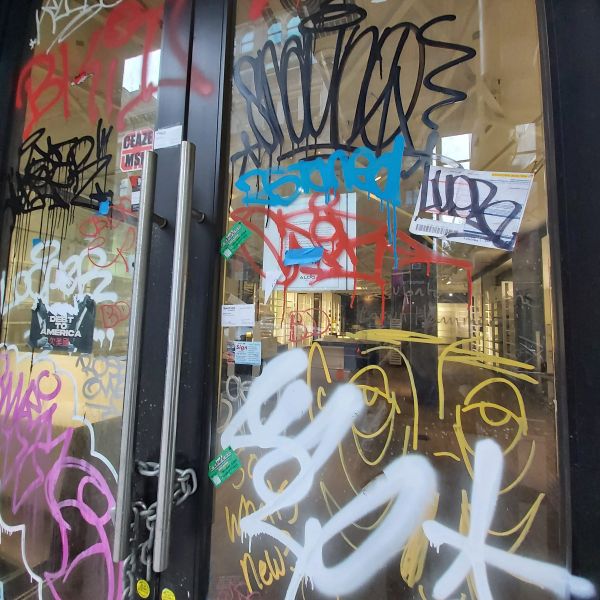
Graffiti doesn’t announce itself with a maintenance ticket. It shows up at 6 a.m. on a Monday, carved into lobby glass or spray-painted across a freshly installed facade, and it immediately becomes your problem to solve before tenants arrive, clients visit, or the school opens its doors.
Knowing how to prevent graffiti effectively means moving beyond reactive thinking. The most resilient commercial properties treat vandalism as a systems problem, not an isolated cleanup event, and they build prevention infrastructure accordingly.
The Cascading Cost of a Single Tagging Incident
Emergency Remediation Expenses
The surface damage is rarely the expensive part. Emergency remediation, including same-day or next-day contractor dispatch, specialty solvents, glass replacement, and surface repainting, routinely runs $800 to $3,000 per incident for a single affected surface on a commercial property.
Glass etching is the worst-case scenario. Acid or scratch-based vandalism on storefront glazing typically requires full pane replacement, which can exceed $1,500 per panel once labor and glazing materials are factored in.
Multiply that across a multi-site retail portfolio and you’re looking at a recurring line item that compounds faster than any budgeting model predicts.

Client Dissatisfaction, Liability Exposure, and Schedule Disruption
Beyond the direct cost, a tagging incident creates a queue of secondary problems. Tenants escalate. Property owners question whether the facility management team is on top of security. If graffiti sits unaddressed for more than 24 to 48 hours, documented patterns of vandalism recidivism show it signals low oversight to other would-be vandals, inviting repeat incidents on the same surface. In educational settings, visible vandalism triggers parent complaints and, in some jurisdictions, reporting obligations tied to safe school designations. The operational disruption from a single incident frequently costs more in staff time and stakeholder management than the remediation itself.
Why Conventional Prevention Programs Keep Failing
The Limits of Cameras-and-Coatings Thinking
Most graffiti prevention programs follow a predictable template: install cameras, apply a coating, add signage. It’s a reasonable starting point and not without value, but when that’s the entire strategy, it consistently underperforms. Coatings degrade, especially on high-UV exterior surfaces. They require reapplication cycles that get deferred during budget crunches. And they do nothing to address the conditions that make a surface attractive to vandals in the first place.
The cameras-and-coatings approach treats graffiti as an event to document and clean up rather than a vulnerability to eliminate. That distinction matters when you’re managing costs across a portfolio.
What Surveillance Actually Does, and Doesn’t Do, for Deterrence
The honest answer is that cameras primarily document incidents rather than prevent them. A visible camera may deter an opportunistic tagger who notices it, but determined vandals, particularly those motivated by the visibility of their work rather than fear of consequence, often proceed anyway. Research on CPTED (Crime Prevention Through Environmental Design) consistently shows that environmental conditions like lighting, sightlines, and access difficulty have a stronger deterrent effect on opportunistic vandalism than surveillance alone.
Cameras are a documentation tool and a component of a response protocol. Treating them as a primary deterrent inflates their expected performance and leads to under-investment in the environmental and surface-level controls that actually reduce incident frequency.
The Case for a Layered, Integrated Prevention Framework
CPTED Principles as the Conceptual Foundation
CPTED reframes the question from “how do we catch vandals?” to “how do we design conditions where vandalism is harder, riskier, and less rewarding?” The four core principles, natural surveillance, natural access control, territorial reinforcement, and maintenance, map directly onto graffiti prevention. Natural surveillance means lighting and sightlines that eliminate concealment. Natural access control means fencing, landscaping, and surface placement that remove easy reach. Territorial reinforcement signals that a property is actively managed. Maintenance, including rapid graffiti removal, signals that defacement will not be tolerated and will not persist as a calling card.
CPTED isn’t a product you install. It’s a design logic that governs how all the other components of a prevention program work together.
How a Multi-Layer Strategy Reduces Total Cost of Ownership Across a Portfolio
Each individual deterrent has a ceiling. Lighting alone doesn’t stop a tagger who works quickly in a moderately lit area. A coating alone doesn’t stop etching. Access control alone doesn’t address surfaces visible from public areas. But when these layers compound, when a would-be vandal faces difficult access, high visibility, and a surface that resists marking, the probability of an attempt drops sharply. The cost of any incident that does occur drops further because surfaces are protected.
For a portfolio manager overseeing ten or twenty properties, the math is straightforward. Preventing three incidents per year per site at an average remediation cost of $1,500 each generates $45,000 in annual cost avoidance. A well-structured prevention program across that same portfolio costs a fraction of that figure in annualized infrastructure investment.
Building the First Line of Defense: Environmental Design and Physical Barriers
Environmental design is where graffiti prevention starts, not because it’s the most technically sophisticated layer, but because it determines whether higher-cost interventions are necessary at all.
Using the Built Environment to Remove Opportunity
Perimeter Fencing, Gates, and Access Control as Passive Deterrents
Fencing and gates work by increasing the time and visibility exposure required to reach a surface. A tagger who has to climb a fence in a well-lit area faces a substantially higher perceived risk than one who can walk directly up to a building wall from a public sidewalk. For commercial properties with accessible rear facades, loading docks, or utility corridors, perimeter access control is one of the highest-ROI investments in the prevention stack because it eliminates a class of opportunity rather than just responding to it.
Need More Info?
The Window Film Depot team is happy to help.
Anti-climb fencing with a minimum height of 8 feet, combined with motion-activated lighting at entry points, effectively removes most rear-of-building surfaces from the risk equation. This is particularly relevant for mixed-use developments where retail faces the street but adjacent walls face alleys or parking structures with low foot traffic.
Strategic Dumpster Placement and Surface Accessibility
Dumpsters and utility enclosures are among the most overlooked access enablers in commercial site design. A dumpster positioned adjacent to a building wall provides a standing platform that puts an otherwise out-of-reach surface within easy arm’s reach. Relocating dumpsters even 4 to 6 feet away from walls, or repositioning them perpendicular to the surface they adjoin, eliminates that accessibility without any additional hardware investment.
The same logic applies to exterior mechanical equipment, loading dock stairs, and landscaping berms. A surface audit that maps every structure within 6 feet of a building wall will consistently reveal two or three access points that a quick repositioning resolves permanently.
Landscaping as a Deterrent: What Works and What Doesn’t
Thorny Plants, Dense Hedgerows, and Climbing Vines
Thorny shrubs, hawthorn, pyracantha, and rugosa rose are the most commonly specified, and they work as a physical barrier when planted densely along a building’s base. They’re slow to establish, typically requiring two to three growing seasons before they’re effective, but require minimal maintenance once mature. Dense hedgerows achieve a similar result with faster coverage but need more consistent trimming to avoid becoming a concealment problem rather than solving one.
Climbing vines present a trade-off. They cover surfaces effectively and make painting or etching impractical, but they create moisture retention issues on masonry and can accelerate deterioration of certain facade materials. On concrete block or brick structures with good drainage details, climbing vines are a proven long-term solution. On EIFS or stucco systems, the moisture risk typically outweighs the deterrent benefit.
Authorized Murals and Surface Activation as Graffiti Displacement Tactics
An authorized mural, one that’s professionally commissioned and visually intentional, substantially reduces the probability of unsolicited tagging on the same surface. This is a well-documented displacement effect. Vandals motivated by visibility seek blank, neutral surfaces. A surface already covered with high-quality artwork offers no visibility gain for a tag and signals that the property is actively managed.

Surface activation through murals is particularly effective in high-foot-traffic retail corridors and on the exposed walls of educational facilities. It requires upfront investment in commission and installation, but its useful life measured against avoided remediation costs typically shows a strong return within 18 to 24 months in high-incident areas.
Applying Anti-Graffiti Coatings to Existing Surfaces
Coatings can be applied to virtually any existing surface, including masonry, concrete, metal, painted drywall, and wood, as long as the surface is clean, dry, and structurally sound. The preparation requirements are more demanding than most facility managers expect. Existing graffiti must be fully removed, porous surfaces often require a primer coat, and ambient temperature and humidity must fall within the manufacturer’s application window. On rough or textured masonry, achieving full coverage requires more product volume than the per-square-foot spec sheet suggests.
The more relevant constraint is adhesion compatibility. Anti-graffiti coatings bond differently to different substrates, and selecting the wrong chemistry for a given surface type produces a coating that fails early or peels under cleaning pressure. A qualified applicator will conduct a substrate assessment before specifying a product. That step is not optional on high-value facades.
Layered Graffiti Prevention Readiness Checklist
Use this checklist to audit a single site or standardize assessments across a multi-property portfolio. Work through each category before specifying any prevention product or contracting any installation work.
1. Access Control and Perimeter
- Identify all points where the building perimeter can be accessed without crossing a controlled entry point.
- Flag any structures within 6 feet of building walls that could serve as a climbing platform, including dumpsters, HVAC equipment, loading dock stairs, and berms.
- Confirm that all gates and access control points have functioning hardware and are included in a regular inspection cycle.
- Note any sections of perimeter fencing below 8 feet in height adjacent to low-traffic areas.
2. Lighting Zone Mapping
- Walk the property at night and identify all surfaces in shadow or below 2 foot-candles of illumination.
- Confirm motion-activated lighting coverage at all perimeter access points and building corners.
- Flag any lighting fixtures that are non-functional or aimed incorrectly.
- Note surfaces where existing lighting creates glare that could reduce camera effectiveness.
3. Surface Vulnerability Inventory
- List all exterior surfaces by material type: glass, masonry, metal, painted concrete, EIFS.
- Identify high-risk surfaces: those facing low-traffic areas, adjacent to access points, or previously tagged.
- Note any glass surfaces that have been etched or scratched, as replacement may be required before film installation.
- Flag surfaces showing existing coating failure such as peeling, chalking, or discoloration.
4. Film and Coating Specification Criteria
- For glass surfaces, determine whether anti-graffiti window film is the appropriate specification based on traffic level, incident history, and dual-use security requirements.
- For masonry and metal, determine coating type, sacrificial vs. permanent, based on surface porosity, expected incident frequency, and reapplication budget tolerance.
- Confirm installer certifications for any film product being specified. Manufacturer-certified installation is required to validate performance warranties.
- Establish a baseline incident log to measure prevention program effectiveness post-installation.
5. Multi-Site Standardization
- Confirm that specification criteria are consistent across all properties in the portfolio.
- Identify whether a single installation partner can service all sites to avoid vendor fragmentation.
- Set a maintenance and inspection schedule that covers all properties on a standardized cycle.
Lighting, Visibility, and Surveillance: Honest Performance Expectations
Lighting and surveillance are the most commonly specified deterrents in commercial graffiti prevention programs and the most commonly oversold. Both work within specific conditions. Neither works reliably as a standalone measure, and the gap between expected and actual performance is where prevention budgets quietly drain.
Motion-Activated Lighting: High ROI Within Real Limits
Where Lighting Works Well
Motion-activated lighting is the highest-ROI deterrent investment for most commercial properties. The cost is low, installation is straightforward, and the behavioral effect on opportunistic vandals is well-documented.
Sudden illumination increases perceived risk and disrupts the concealment that low-visibility areas provide. For rear facades, loading docks, and utility corridors, motion-activated fixtures eliminate the cover that makes those areas attractive targets.
The plateau comes quickly, though. Lighting does not deter vandals who operate in public-facing areas where ambient illumination is already high. It doesn’t address surfaces accessible from the street during daylight hours. And it has no effect on acid etching or scratch vandalism, which requires no darkness and takes less than ten seconds to execute.
Lighting Zone Strategy for Large Commercial Perimeters
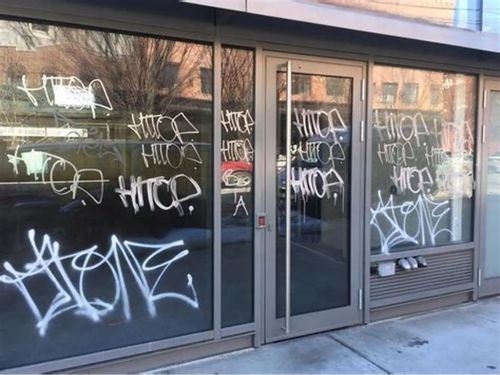
On large commercial perimeters, the goal is not uniform illumination. It’s eliminating dark pockets. A surface-by-surface lighting audit will consistently identify two or three specific zones where a single fixture repositioned or added produces disproportionate coverage improvement. Prioritize building corners, dumpster enclosure surrounds, and any surface within 20 feet of a perimeter access point.
Specify a minimum of 2 foot-candles at grade level across all high-risk zones. Motion-activated LED fixtures with a 180-degree detection angle cover the widest perimeter with the lowest fixture count. Connecting them to a central monitoring panel rather than standalone timers ensures that fixture failures appear on a dashboard rather than waiting for a site walk to be discovered.
Surveillance Systems in a Layered Prevention Strategy
CCTV as Documentation vs. Active Deterrence
CCTV is primarily a documentation tool, not a prevention mechanism. That’s not a reason to skip it. Documentation is genuinely valuable for insurance claims, police reports, and identifying repeat offenders. A well-archived incident log can reduce the time and cost of processing a claim meaningfully.
What cameras do not do is change the behavior of a vandal who has already decided to proceed. Visible camera housings deter a segment of opportunistic taggers, but vandals most likely to target high-value commercial properties often operate with enough confidence in low-consequence outcomes that camera presence registers as a marginal deterrent at best.
Integrating Surveillance Data Into Rapid Response Protocols
The real value of a surveillance system in a graffiti prevention program is in what happens after an incident. Camera footage that captures a time-stamped event with facial or vehicle detail accelerates police response, supports an insurance claim, and creates a record that enables pattern recognition across a portfolio. If three incidents occur at the same property within 60 days, all between 2 and 4 a.m. from the same access point, that pattern drives a targeted infrastructure response.
Build a rapid response protocol that connects surveillance data to a same-day remediation trigger. The speed of removal matters more than most managers expect. Graffiti that persists past 24 to 48 hours consistently generates follow-on incidents on the same surface.
How to Implement a Graffiti Prevention Program Across Multiple Commercial Properties
Standardizing Deterrent Infrastructure Across a Multi-Site Portfolio
The core challenge in multi-site prevention programs isn’t specifying the right products. It’s maintaining consistent standards across properties with different physical configurations, ownership structures, and local risk profiles. Start with a standardized site audit template and apply it uniformly before specifying any product or contracting any installation.
From that audit, develop a tiered specification matrix: a baseline package for lower-risk properties covering lighting upgrades, access control hardening, and surface coatings on masonry, and an enhanced package for high-traffic, high-visibility locations that adds professional anti-graffiti film on all glass surfaces, upgraded perimeter lighting, and a structured rapid-response protocol. Applying the same two-tier framework across 15 properties is far more manageable than 15 individually negotiated scope documents.
Avoiding Vendor Fragmentation When Scaling Across Locations
Managing a different subcontractor for lighting, coatings, and film installation at each site is the fastest way to lose control of quality, warranty coverage, and response time. When a film delamination occurs at a site where the installation was done by a local one-off contractor rather than a certified installer, there’s often no warranty to call on and no accountability chain.
Select installation partners who hold manufacturer certifications and can service multiple sites under a single master service agreement. A certified installer working under a national or regional agreement provides consistent installation quality, documented warranty coverage, and a single point of contact when a rapid response is needed. The administrative efficiency alone justifies the vendor consolidation.
Anti-Graffiti Coatings vs. Protective Window Film: A Direct Comparison for Decision-Makers
For non-glass surfaces, coatings are often the right answer. For glass, they are almost never the right answer. Understanding why requires a clear look at how each system actually works.
How Anti-Graffiti Coatings Work, and Where They Fall Short
Sacrificial vs. Permanent Coating Chemistry
Anti-graffiti coatings fall into two categories. Sacrificial coatings create a wax-based or polyurethane barrier that graffiti bonds to rather than the substrate. When the surface is cleaned, the coating comes off with the graffiti and must be reapplied. Permanent coatings use fluoropolymer chemistry to create a non-stick surface that resists bonding. Graffiti can be cleaned off without removing the coating, but the coating itself degrades over time from UV exposure and cleaning chemical contact.
The distinction matters for specification. Sacrificial coatings are lower cost per application but generate recurring labor costs. Permanent coatings cost more upfront but are designed to last several years before reapplication is needed. In practice, the service life depends heavily on sun exposure, surface porosity, and cleaning frequency.
Lifespan and Maintenance Burden Over Time
On exterior masonry in moderate climates, a quality permanent fluoropolymer coating typically performs for 3 to 7 years before visible degradation. In high-UV environments or on south-facing facades, expect the lower end of that range. Sacrificial coatings have no fixed lifespan. They are consumed with each removal cycle.
The maintenance burden of coatings is easy to underestimate at the budgeting stage. Each reapplication cycle requires surface cleaning, full removal of any residual old coating, and reapplication within a narrow temperature and humidity window. On a 1,000-square-foot masonry wall, that’s a half-day minimum for a two-person crew. On a portfolio of 20 properties, reapplication schedules become a logistics problem that frequently slips, leaving surfaces unprotected between cycles.
How Anti-Graffiti Window Film Works on Glass Surfaces
The Core Protection Mechanism
Anti-graffiti window film does not prevent a vandal from attempting to scratch or etch glass. What it does is intercept the damage. The vandalism marks the film, not the glass beneath it. The film absorbs scratches, acid etching, and paint. The glass itself remains undamaged. This distinction is what makes film a fundamentally different protection mechanism than a coating. It eliminates glass replacement as an outcome, which is where the real cost in glass vandalism incidents originates.
Sacrificial Film Architecture: Damaged Layers Replaced Without Glass Replacement
Installers apply professional anti-graffiti film as a sacrificial layer with a defined removal workflow. When damage occurs, a trained technician removes the affected film and installs a new layer in 20 to 40 minutes per pane, at a fraction of glass replacement cost. The process never touches the glass. On a storefront that absorbs three to four etching incidents per year, the film replacement cost over five years is typically less than the cost of a single glass panel replacement.
Is Anti-Graffiti Film Removable or Permanent?
Film is removable by design. A professional-grade product uses a pressure-sensitive adhesive that bonds firmly during service but releases cleanly without adhesive residue when removed.
This matters for tenants with specific aesthetic requirements, for lease-end scenarios, and for situations where a building undergoes facade renovation.
It also means that a specification error or a change in building use can be corrected without any permanent impact on the glass.

Head-to-Head Comparison: Coatings vs. Professional-Grade Film
Performance Matrix: Cost, Durability, Aesthetic Impact, and Dual-Use Security Value
| Factor | Anti-Graffiti Coating | Professional Anti-Graffiti Film |
|---|---|---|
| Best substrate | Masonry, concrete, metal | Glass |
| Upfront cost | Low to moderate | Moderate |
| Maintenance cycle | Recurring reapplication | Film replacement per incident |
| Lifespan | 3-7 years (permanent); consumed per event (sacrificial) | 10+ years on glass substrate |
| Aesthetic impact | Minimal on opaque surfaces | Optically clear, near-invisible |
| Dual-use security value | None | Break-in resistance, blast mitigation available |
| Warranty coverage | Product-dependent | Manufacturer-certified installation required |
How Much Does Anti-Graffiti Coating Cost Versus Anti-Graffiti Film?
Sacrificial coatings run approximately $0.50 to $1.50 per square foot in materials, with labor adding $1.00 to $2.50 per square foot depending on surface complexity. Permanent fluoropolymer coatings cost $2 to $5 per square foot installed. Anti-graffiti window film from a certified professional installer typically runs $8 to $15 per square foot installed, depending on film specification and site conditions.
The upfront cost difference is real, but it only tells part of the story. A storefront with 200 square feet of glazing that averages two etching incidents per year faces $3,000 to $6,000 in annual glass replacement costs without protection. Film installed at $12 per square foot represents a $2,400 investment that eliminates that exposure for a decade or more. Coatings have no meaningful application on glass surfaces. The chemistry doesn’t provide the same protection against physical etching, and adhesion to glass is poor compared to masonry substrates.
Why Professional-Grade Anti-Graffiti Window Film Is the Cornerstone of Any Serious Prevention Strategy
Every other layer in a graffiti prevention program reduces the probability of an incident. Professional-grade anti-graffiti window film is the only layer that eliminates the cost of glass damage when an incident occurs anyway, and that distinction changes the entire economics of a prevention program.
The Technical Specifications That Separate Professional Film from Consumer Alternatives
Film Thickness, Adhesion Ratings, and Scratch Resistance Standards
Consumer-grade anti-graffiti films are typically 2 to 4 mil thick. Professional-grade products start at 4 mil and extend to 8 mil or beyond for combined security applications. Thickness correlates directly with scratch resistance. A 4-mil film resists casual scratch vandalism but can be penetrated by repeated or forceful etching. An 8-mil security-grade film resists both and provides meaningful resistance to glass penetration.
Adhesion ratings matter equally. A film that peels at edges under cleaning solvent exposure or thermal cycling produces visible degradation within months and voids warranty coverage. Professional-grade products specify peel adhesion in ounces per inch width. For exterior-exposed applications, look for minimum ratings of 45 oz/in.
UV-Blocking Performance and Interior Protection
Most professional anti-graffiti films block 99% of UV-A and UV-B radiation as a standard specification. For a facility manager, this is a secondary benefit that adds measurable value. UV blocking reduces fading on interior furnishings, flooring, and displayed merchandise, a real operating cost reduction for retail tenants that makes film installation easier to justify to building owners.
3M Window Film Performance Data: What the Specifications Mean in Practice
3M’s commercial anti-graffiti film products publish performance specifications including optical clarity ratings, with visible light transmission above 90% for clear films, adhesion test results, and scratch resistance data from standardized testing. When a certified installer specifies and installs a product to manufacturer standards, those specifications translate into warranty coverage, typically a 10-year product warranty on the film itself.
For a facility manager presenting a prevention program to a property owner or risk committee, manufacturer-certified performance data converts a subjective recommendation into a documented, warranted specification. That documentation also creates the audit trail required for insurance purposes.
The Dual-Protection Advantage: Graffiti Prevention and Building Security in One System
How Security Window Film Addresses Break-In Risk Simultaneously
A professional anti-graffiti film at 8 mil or above provides meaningful resistance to glass penetration from forced entry attempts. Standard glass breaks immediately under impact. A laminated security film holds the glass in place after fracture, requiring sustained force to breach. This dramatically extends the time required for a smash-and-grab entry and, in many cases, causes the attempt to be abandoned. The same film specification that protects against graffiti is simultaneously hardening the building envelope against a second threat category.
Blast Mitigation Film and Glazing Systems as a Unified Building Envelope Strategy
For properties in higher-risk environments, including government-adjacent office buildings, transit facilities, and urban mixed-use developments in high-footfall areas, blast mitigation film adds a third protection layer within the same glass surface specification. Blast-rated glazing systems use a combination of thick security film and attachment systems that anchor the glass assembly to the frame, preventing glass fragmentation from becoming a secondary injury hazard. Specifying a unified glazing system that addresses graffiti, forced entry, and blast risk simultaneously eliminates the need for separate products on the same surface.
The Most Effective Graffiti Prevention Method for Commercial Buildings
Why Film Outperforms Coatings on High-Traffic Glass Surfaces
Glass is the highest-cost graffiti target on any commercial property. It’s also the surface where coatings perform worst, with poor adhesion, no protection against physical etching, and no dual-use security value. Film, by contrast, was engineered specifically for glass surfaces. The protection mechanism aligns with the actual damage mode. Physical etching and chemical attack are absorbed by the film, not the substrate. No coating system can replicate this outcome on glass.
Vandalism Prevention for Storefronts: The Glass Surface Protection Imperative
Storefronts accumulate graffiti incidents at higher rates than any other commercial surface category because they’re visible, accessible, and face public areas with high foot traffic and low overnight oversight.
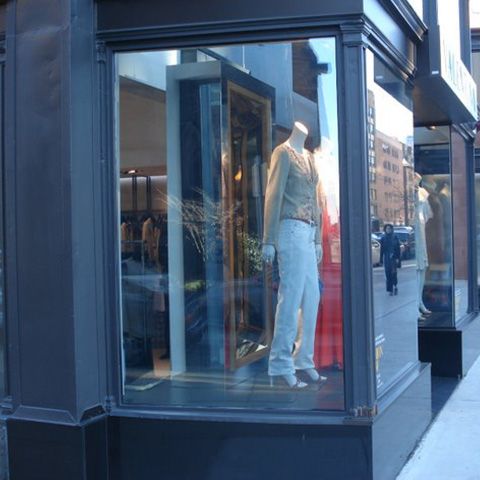
A storefront without glass protection is essentially absorbing the full replacement cost of every etching incident.
At $1,500 or more per panel, a store that experiences four incidents over three years has already spent more on reactive remediation than a film installation would have cost at the outset.
Lifecycle Cost Advantage: Prevention vs. Remediation
Total Cost of Ownership Model: Multi-Site Glass Remediation vs. Film Installation
Consider a retail portfolio with 10 locations, each with approximately 300 square feet of storefront glazing. Without protection, assume an average of two etching incidents per year per location, a conservative figure for urban or high-foot-traffic suburban retail. At $1,500 per panel replacement, that’s $30,000 per year in reactive glass remediation across the portfolio, plus staff time and contractor dispatch overhead.
Film installation at $12 per square foot across all 10 locations totals $36,000, a single capital investment. In year two, the portfolio is generating $30,000 in annual cost avoidance. The film pays for itself within 18 months and continues generating savings for the remaining eight-plus years of its service life. Over a 10-year period, the protected portfolio spends roughly $36,000 on film plus periodic film replacement on damaged panels. The unprotected portfolio spends $300,000 on glass replacement alone.
How Anti-Graffiti Film Affects Insurance Premiums and Liability Posture
Several commercial property insurers recognize anti-graffiti film installation as a risk mitigation measure and adjust premiums accordingly, especially when the installation includes manufacturer certification and warranty documentation. The documentation is the key variable. An undocumented consumer-grade film installation produces no insurance benefit. A certified professional installation with a 10-year warranty creates a paper trail that underwriters can price into the policy.
Beyond premiums, film installation reduces liability exposure in a specific way. It demonstrates that the property owner took affirmative steps to protect the building envelope. In premises liability contexts where a graffiti-related security failure is alleged, documented prevention infrastructure strengthens the property owner’s position materially.
Sector-Specific Graffiti Prevention Strategies: Commercial, Retail, and Educational Properties
The same layered prevention framework applies across property types, but the specification priorities shift significantly depending on who uses the building, when they use it, and what a graffiti incident actually costs in that context. Applying a generic program without adjusting for sector-specific risk profiles is how prevention budgets get wasted.
Commercial Office Buildings and Mixed-Use Developments
High-Value Facade Protection and Tenant Expectation Management
In Class A office buildings and mixed-use developments, graffiti is not just a remediation cost. It creates a tenant relations problem. A tagged facade on a property where tenants pay premium rents triggers immediate escalation, and the perception of negligence lingers long after teams clean the surface. Facade protection at these properties needs to meet a higher aesthetic standard. Anti-graffiti film on lobby glass and ground-floor glazing must be optically clear with no visible distortion, and masonry coatings on exposed facade elements need to maintain the original surface appearance without sheen or discoloration.
The practical implication is that specification decisions at commercial office properties should involve the property’s exterior envelope consultant or facade engineer, not just the facilities team. Selecting a film with visible light transmission above 90% and a neutral color rendering index ensures that glazing aesthetics are preserved, a non-negotiable for tenant-facing lobbies and retail plinths in mixed-use buildings.
Multi-Site Rollout Considerations for Portfolio-Level Facility Managers
Office portfolios often include buildings at different life stages: some newly constructed, some mid-cycle, some approaching major renovation. A rollout strategy that treats all sites identically wastes resources. The approach that works at scale is a tiered deployment. Teams specify film and coatings during projects for new construction and recently renovated properties. They prioritize existing properties based on incident history and surface vulnerability scores from the site audit.
Consolidating installation under a single certified partner across all sites eliminates the quality and warranty consistency issues that come with using local contractors market by market. It also allows for bulk pricing on film materials and a standardized removal-and-replacement workflow that facilities teams can execute without retraining at each location.
Retail Storefronts: The Highest-Risk, Highest-Visibility Challenge
Graffiti Protection for Storefronts
Retail storefronts are the most frequently targeted commercial surface category. They’re publicly visible, glass-heavy, lightly monitored overnight, and often located in high-pedestrian corridors where tagging carries maximum visibility for the vandal. The cost calculus is straightforward: glass etching on a retail storefront is not an occasional risk. It’s a recurring operational expense without protection.
Anti-graffiti window film is the primary protection mechanism for storefront glazing, and there is no coating-based equivalent for glass surfaces. The film intercepts etching and paint, the damaged layer is replaced in under an hour, and the glass itself is never touched. For retailers managing their own fit-out costs, film installation is typically recoverable as a tenant improvement, and its presence in the lease documentation can reduce security deposit exposure tied to glass damage liability.
Balancing Aesthetic Transparency Requirements with Surface Protection
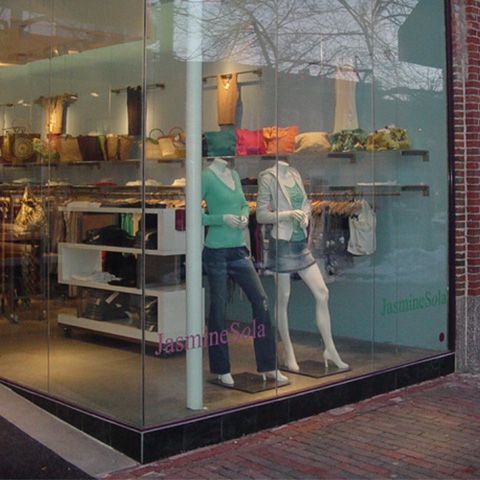
Retailers are legitimately concerned about anything that compromises visual merchandising. A film that introduces haze, color shift, or reflectivity reduces the effectiveness of window displays and can affect foot traffic conversion. This is a real constraint, not a theoretical one, and it needs to be addressed at specification rather than after installation.
Professional-grade clear anti-graffiti film with high optical clarity ratings resolves this tension directly.
Specify visible light transmission at 90% or above, verify the film’s haze value (below 1% is achievable with quality products), and require the installer to provide a sample installation on a non-primary pane before committing the full storefront.
Retailers who have seen a quality film installation on comparable glazing typically have no aesthetic objection. The concern is usually based on experience with lower-grade products.
Educational Facilities: Unique Risk Profiles and Compliance Considerations
Prevention Priorities for Schools and Campuses
Schools present a specific risk profile that differs meaningfully from commercial properties: high daytime foot traffic from a population that includes individuals with known vandalism motivation, followed by extended overnight and weekend periods with minimal surveillance. Graffiti incidents at schools also tend to cluster. A single event that goes unaddressed over a weekend generates follow-on incidents before the school week begins.
The prevention priorities at educational facilities are perimeter access control for evening and weekend hours, motion-activated lighting on all exterior facades and entry points, and anti-graffiti film on all ground-floor glazing. Murals and surface activation are particularly effective on large blank wall surfaces in recreational areas, where unsolicited tagging rates are highest.
Liability Implications When Prevention Measures Are in Place
A property owner does not face automatic liability for a graffiti incident simply because one occurred. Liability exposure becomes relevant when a plaintiff can demonstrate that the owner failed to take reasonable protective measures and that failure contributed to a harm.In schools, documented prevention infrastructure—including site audits, installed film with manufacturer warranties, lighting upgrades, and perimeter access control—demonstrates that teams took reasonable precautions. This documentation protects the property in regulatory reviews tied to safe school designations and in any premises liability proceeding.
The absence of documentation is the real liability risk. A property that has experienced repeated incidents with no documented prevention response is in a much weaker position than one that can show a structured, multi-layer program.
Window Film as a Dual-Use Safety Asset in School Security Programs
Anti-graffiti film at 8 mil thickness or above provides the same forced-entry resistance that makes it valuable at retail and office properties. In a school context, that benefit takes on additional weight. School security programs increasingly address active threat scenarios, and glazing that holds in place under impact rather than shattering immediately changes the response time calculation meaningfully. A single film specification addresses graffiti protection, forced-entry delay, and glass fragmentation reduction simultaneously. For administrators presenting a security investment to a school board, the multi-benefit case for film is substantially more compelling than graffiti protection alone.
Rapid Response and Maintenance: What to Do When Prevention Isn’t Enough
Building a Rapid Removal Protocol That Limits Secondary Tagging
Why Speed of Remediation Is the Most Important Response Variable
No prevention program eliminates every incident. When one occurs, the speed of removal is more important than any other response variable. Graffiti that remains visible past 48 hours signals low oversight to subsequent vandals and functions as an invitation for follow-on tagging. Properties that respond within 24 hours consistently experience lower repeat-incident rates than those on a weekly inspection cycle, regardless of what other prevention measures are in place.
Build the rapid response protocol before an incident occurs, not after. That means a designated contractor on a service agreement with a guaranteed response window, a surface material inventory that ensures the right removal product is available without sourcing delay, and a staff notification chain that gets the right person making decisions within the first hour of discovery.
Maintenance Requirements for Anti-Graffiti Film vs. Coatings Post-Incident
Film and coatings respond to incidents differently, and the post-incident workflow drives a meaningful difference in operational burden. With coatings on masonry, a vandalism event requires teams to remove graffiti from the coating surface using chemicals. They must assess whether the coating was damaged and reapply it if needed. Depending on the coating type and vandalism method, that sequence can take two to four hours per surface.
With anti-graffiti film, the workflow is simpler. Remove the damaged film layer, clean the glass beneath it, and install a new film panel. You don’t need to assess substrate damage, wait for a reapplication window, or question whether protection has been restored. A trained technician completes the process in 20 to 40 minutes per pane.
Ongoing Maintenance Requirements for Anti-Graffiti Solutions
Sacrificial Film Replacement Workflow for Facilities Teams
Film replacement does not require a specialized contractor on every call, but it does require trained personnel. The removal process uses a heat gun and scoring tool to release the adhesive bond without scratching the glass. Improper removal technique is the most common cause of glass damage during film maintenance, and it voids warranty coverage. The practical recommendation is to train one or two facilities staff members at each site on the manufacturer’s removal protocol and maintain a small inventory of replacement film panels cut to the standard sizes used across the property.
For high-incident properties, a service agreement with a certified installer that covers film replacement at a fixed per-pane rate eliminates the need for in-house training and maintains warranty continuity.
Documentation and Incident Logging as a Portfolio Management Tool
Every graffiti incident should generate a structured log entry: date, time of discovery, surface affected, method of vandalism, estimated time of occurrence from camera footage if available, response time, and remediation cost. Across a portfolio, that data identifies patterns, specific surfaces, specific time windows, specific sites, that drive targeted infrastructure improvements.
An incident log also creates the audit trail that supports insurance claims, demonstrates due diligence in liability contexts, and provides the performance baseline needed to measure whether a prevention program is actually reducing incident frequency over time. A prevention program without a measurement mechanism is a cost center. One with consistent documentation becomes a case for continued investment.
Key Takeaways
- Layer the defense. Environmental design, access control, lighting, and surveillance reduce incident probability. Anti-graffiti film eliminates glass replacement costs when incidents occur anyway.
- Glass requires film, not coatings. Coatings perform on masonry and metal. Only film provides effective protection against physical etching on glass surfaces.
- Sector priorities differ. Office properties prioritize aesthetic standards and tenant expectation management. Retail requires maximum optical clarity with full glass protection. Schools benefit from film’s dual-use value across graffiti, forced entry, and glass fragmentation risk.
- Speed of removal matters. A 24-hour response protocol reduces repeat incidents more reliably than any single prevention product.
- Document everything. Incident logs, installation warranties, and site audits create the paper trail that supports insurance claims, liability defense, and portfolio-level investment justification.
- Certified installation is non-negotiable. Manufacturer warranties and insurance recognition both require documented professional installation.
Conclusion: Building a Graffiti-Proof Property Strategy With a Partner Who Can Scale With You
Synthesizing the Layered Framework: From Environmental Design to Professional Film
Every section of this guide has built toward the same conclusion. Graffiti prevention works when it operates as a system, not a checklist of standalone products. Environmental design removes opportunity. Lighting and access control increase perceived risk. Surveillance feeds rapid response protocols. Anti-graffiti coatings protect masonry and metal. And professional anti-graffiti window film protects the surface category that generates the highest remediation costs, glass, while simultaneously addressing forced entry and, where specified, blast risk.
No single layer in that stack delivers adequate protection on its own. But when they’re specified and maintained together, the cumulative effect is a property that’s genuinely harder to vandalize, faster to restore when incidents occur, and cheaper to protect over a 10-year horizon than a reactive remediation program ever will be.
Why Certified Window Film Installation Is the Cornerstone of Any High-Performance Strategy
The case for professional-grade anti-graffiti window film comes down to three things. It is the only protection mechanism engineered specifically for glass surfaces.. It provides dual-use value against break-in and blast risk that no other graffiti product offers. And its lifecycle economics are demonstrably superior to reactive glass replacement across any multi-site portfolio with meaningful glass exposure.
The word “certified” carries real weight here. A manufacturer-certified installation produces a documented, warranted product that insurers recognize, that holds up in liability proceedings, and that performs to specification for a decade or more. A consumer-grade film applied by an unqualified installer produces none of those outcomes. The gap between the two isn’t subtle. It’s the difference between a protection asset on your balance sheet and a cost that didn’t solve the problem.
How Window Film Depot Delivers Integrated, Multi-Site Anti-Graffiti Solutions at Scale
Window Film Depot operates as a certified installer and project partner for commercial, retail, and educational property managers who need consistent results across multiple locations without managing a fragmented vendor network. That means a single point of contact from site audit through installation and ongoing maintenance, manufacturer-certified installation on every project, and the multi-site experience to identify the specification that fits your property type, risk profile, and budget constraints.
If you’re managing a portfolio where graffiti remediation is a recurring line item rather than a solved problem, the conversation starts with a site audit. Window Film Depot provides portfolio-level assessments that produce a tiered specification matrix, not a sales proposal, so you can see exactly what a structured prevention program would cost and what it would recover before committing to a single square foot of installation.
Frequently Asked Questions
What is the most effective graffiti prevention method?
The most effective approach combines environmental design, physical access controls, lighting, and professional-grade anti-graffiti window film into a layered system. For glass surfaces specifically, sacrificial window film is the only protection mechanism that prevents glass replacement costs entirely. When an incident occurs, the damaged film is removed and replaced in under an hour, leaving the glass undamaged and the building envelope fully restored.
How much does anti-graffiti coating cost versus anti-graffiti film?
Sacrificial anti-graffiti coatings typically run $1.50 to $4.00 per square foot installed, while permanent fluoropolymer coatings range from $2 to $5 per square foot. Professional anti-graffiti window film from a certified installer costs $8 to $15 per square foot installed. The film’s 10-plus-year service life on glass offsets its higher upfront cost. It protects against physical etching, which coatings cannot provide on glass. It also eliminates recurring glass replacement costs that can exceed $1,500 per panel.
Do security cameras actually prevent graffiti, or do they just catch vandals?
Cameras primarily document incidents rather than prevent them. Visible camera housings deter a segment of opportunistic taggers, but vandals motivated by the visibility of their work often proceed regardless. Research on CPTED principles consistently shows that environmental factors like lighting, limited access, and clear sightlines have a stronger deterrent effect than surveillance alone. Cameras deliver the most value when they’re integrated into a rapid response protocol that triggers same-day remediation and supports insurance claims.
Can graffiti-resistant coatings be applied to existing surfaces, or only new construction?
Teams can apply coatings to virtually any existing surface, including masonry, concrete, metal, and painted concrete, provided the surface is clean, dry, and structurally sound. They must fully remove existing graffiti first. Porous surfaces often require a primer coat, and installers must apply coatings within the manufacturer’s specified temperature and humidity range. A qualified applicator performs a substrate compatibility assessment before recommending a product, which is essential for high-value or complex facades.
What is the lifespan of anti-graffiti protective films?
Professional-grade anti-graffiti window film typically carries a 10-year manufacturer warranty when installed by a certified applicator. Permanent anti-graffiti coatings on exterior masonry generally perform for 3 to 7 years before visible degradation, with high-UV environments reducing that range. Sacrificial coatings have no fixed lifespan since they are consumed with each cleaning cycle and must be reapplied after every graffiti removal event.
What maintenance or reapplication is required for anti-graffiti solutions?
Anti-graffiti film requires no scheduled maintenance during normal service. When etching or paint damages a panel, a trained technician removes the affected film and installs a replacement layer in 20 to 40 minutes per pane, without impacting the underlying glass. UV exposure and cleaning frequency drive permanent coating reapplication every 3 to 7 years, while teams must reapply sacrificial coatings after each graffiti removal event. For high-incident properties, a service agreement with a certified film installer that covers replacement at a fixed per-pane rate provides the most operationally efficient option.