Table of Contents:
- Home Window Tinting Pros: Is Tinting House Windows Worth It?
- Curb Appeal and Home Value with Window Tint
- Privacy Benefits of Tint for House Windows
- Security & Safety: How Window Film Reinforces Home Glass
- Saving Money: Energy Efficiency and Comfort Gains
- Reduce Glare Without Losing Natural Light
- Solar & UV Protection for Furnishings and Health
- Limitations, Warranty Issues & Climate Considerations
- Types of Window Film for Houses & Available Options
- Professional vs DIY: How to Install Window Film the Right Way
- How to Know It’s Time to Tint Your House Windows
- Why Choose Window Film Depot for Residential Window Tint
- FAQs About Tint for House Windows
- Next Steps: Talk to Window Film Depot About Tint for Your House Windows
Home Window Tinting Pros: Is Tinting House Windows Worth It?
Yes, tint for house windows is usually worth it – and in 2026, the technology behind residential window film has gotten significantly better than what most homeowners expect. Modern films can block up to 99.9% of UV rays and reject 50–80% of solar heat while still letting comfortable natural light into your room. That combination of comfort, protection, and energy efficiency is hard to match with curtains, blinds, or shades alone.
Residential window tinting enhances comfort in ways that go beyond temperature control. In hot-climate homes across the southern U.S., homeowners using quality solar control film often see 10–15% reductions in HVAC cooling costs, with ballpark payback windows of three to five years. Window films can be a cost-effective solution for improving comfort without replacing windows entirely – especially in homes built before 2010 that lack advanced Low-E glass. Older windows benefit most from tinting house windows and its pros and cons because they let in the most unwanted heat and UV.
Here are the key pros at a glance:
- Blocks up to 99.9% of harmful UV rays, protecting skin and furnishings
- Cuts solar heat gain by 50–80%, keeping your home cool in summer
- Reduces glare on screens and in bright rooms
- Adds daytime privacy without sacrificing outward views
- Lowers energy costs by insulating windows against heat transfer
- Professional installation preserves glass warranties and avoids DIY mistakes
Curb Appeal and Home Value with Window Tint
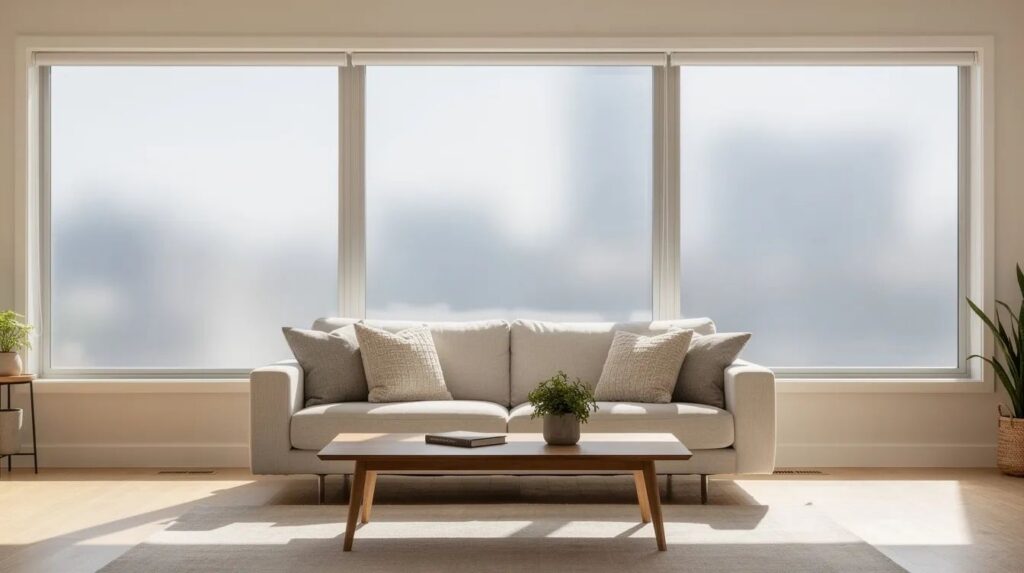
One benefit homeowners tend to overlook is how window tinting enhances curb appeal and home value. A uniform, neutral tint across all your glass creates a clean, modern look – especially on older homes where mismatched window styles or aging frames break up the façade. Window films can improve the aesthetic appeal of a home without the cost or disruption of a full window replacement.
Neutral, low-reflective films work well for most neighborhoods. Darker solar tints and reflective films can give a more contemporary, high-end appearance, though you’ll want to check HOA or historic district guidelines before choosing anything highly reflective on street-facing glass. Decorative and frosted privacy films are popular on entry doors, sidelites around the front door, and bathroom windows – they add design interest and create a polished look from the porch to the back door.
In real estate terms, window film isn’t usually called out in MLS listings. But the downstream effects – lower energy bills, protected furnishings, and rooms that stay comfortable year-round – support perceived value and can contribute to a faster resale. A home where every room is usable in every season simply shows better.
Privacy Benefits of Tint for House Windows
Different window films deliver different types of privacy, and understanding the available options helps you choose the right solution for each room. Some films provide daytime one-way privacy, others create 24/7 obscured views, and decorative varieties add interior design interest while diffusing light.
Reflective window films can achieve a one-way mirror effect during daylight. Daytime privacy is provided by reflective films while allowing visibility outdoors – so you can still see out, but people on the street cannot easily see in. Tinted windows create a mirrorlike effect for privacy, making it harder for intruders to see valuables inside. This is especially useful for ground-floor living areas, home offices, and any glass facing a busy street or neighbors’ homes.
Here’s an important note about nighttime privacy: when interior lights are on after dark, these films lose most of their privacy effect because the light balance reverses. For bedrooms and street-facing rooms where you need coverage around the clock, layering film with shades or curtains is the practical answer.
Frosted films provide privacy while allowing natural light to enter, which makes them ideal for bathrooms, home offices, and sidelites beside entry doors. A typical installation example: frosted film on a ground-floor bathroom window in a dense urban neighborhood prevents direct views from sidewalks and cars on the street while still flooding the room with soft, diffused sunlight. No blinds needed, no dark corners, and the film enhances the look of the glass from both sides.
Security & Safety: How Window Film Reinforces Home Glass
Security window film is a clear or lightly tinted layer that helps hold glass together under impact. It’s not the same as a standard solar tint – these are purpose-built multi-ply films, typically 8–15 mil thick, designed to delay forced entry through doors and windows.
Security films enhance break-in resistance and can reduce shattering injuries from glass. When someone tries to gain entry by breaking a window, the film holds the shards in place, slowing down access and creating a noisy deterrent. Safety and security window films compared with so‑called shatterproof films hold broken glass together in accidents or break-ins, and security film helps hold glass together during natural disasters – a meaningful benefit in hurricane-prone coastal states. That said, film does not replace code-required storm shutters or impact glass; it works best as part of a broader storm-preparedness strategy.
Key performance expectations and limitations:
- Film holds shattered glass in the frame, delaying entry by several critical minutes
- Proper attachment systems (anchoring film to the frame) significantly improve performance
- Security film is not bulletproof and doesn’t make glass unbreakable – it makes it harder and slower to penetrate
- Tinting makes it harder for intruders to see valuables inside, adding a visual deterrent layer
- Not every “tint” is security film – always ask for properly tested and rated safety and security glazing film
Window Film Depot installs 3M safety and security films in schools, government buildings, and retail locations across the country, and applies the same standards and process to residential projects.
Saving Money: Energy Efficiency and Comfort Gains
Solar control window film reduces heat gain in summer and helps keep heat inside during winter months. The science behind it is straightforward: the film reflects or absorbs a large portion of the sun’s heat before it passes through your glass, so your air conditioning doesn’t have to work as hard. Installing window tint improves energy efficiency in a measurable way.
Two metrics matter most here. Total Solar Energy Rejected (TSER) tells you what percentage of incoming solar energy the film blocks – higher is better for heat control. Visible Light Transmission (VLT) tells you how much light still gets through. The best modern films score high on both: rejecting 50–75% of solar energy while maintaining enough daylight to keep rooms bright.
Here’s a realistic example: in a south-facing living room in Atlanta or Phoenix, solar film can cut incoming solar heat by 50–75%, reducing A/C run times and eliminating those hot spots near glass that make furniture uncomfortable to sit on. Residential window tints can block up to 80% of solar heat. According to DOE research, interior-applied window film can reduce cooling energy by roughly 18–23% during peak summer season. Installing window films can lower utility bills by reducing cooling costs, and tinting can reduce air conditioning needs in summer.
In colder months, the equation shifts. Low-reflective, spectrally selective films retain more passive solar warmth while still blocking UV and cutting glare. Window films help keep heat inside during winter months by adding a low-emissivity layer to existing glass. For homes in northern climates, careful film selection by orientation is critical – you don’t want to block the winter sun’s rays that actually help warm your rooms for free.
A few more points worth noting:
- Many utility companies across the U.S. periodically offer rebates for professionally installed energy-saving window films – check your local programs
- For homes with older single-pane or basic double-pane glass, film acts as a cost-effective retrofit compared with full window replacement
- Window tinting can reduce energy costs significantly, especially in homes where cooling represents 30–40% of total energy use
- Window films can reduce energy costs by insulating windows against radiant heat transfer in both directions
Reduce Glare Without Losing Natural Light
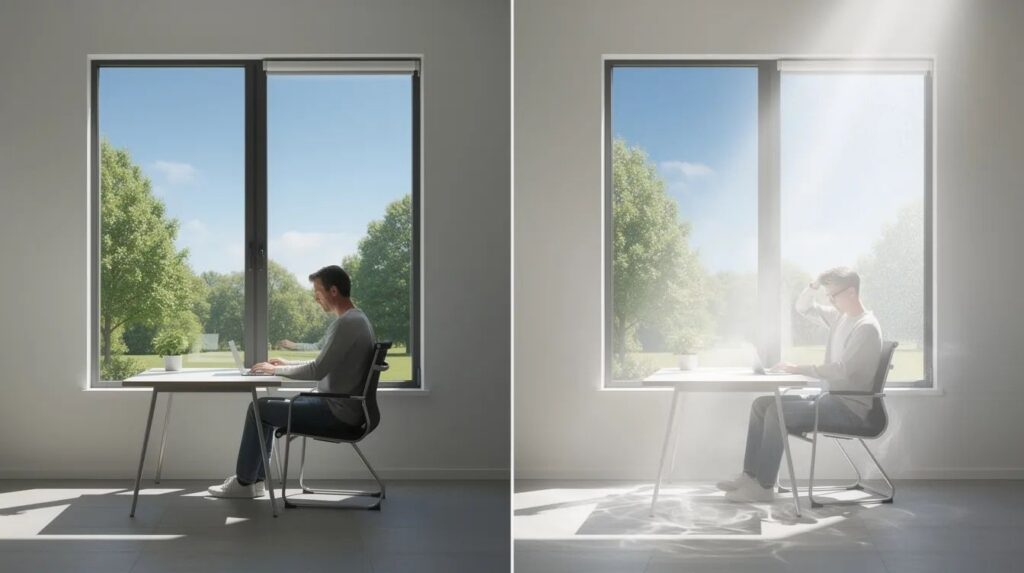
Glare is one of those problems you don’t fully appreciate until you try to watch afternoon sports with direct sunlight hitting the TV, or your kid can’t see their homework because the west-facing window turns the kitchen table into a spotlight. Tinted windows reduce glare, making activities like watching TV easier, and tinting reduces glare from sunlight indoors across every room in the house.
Spectrally selective and ceramic window films reduce glare while still allowing a comfortable level of daylight. A film like 3M’s CA-80, with roughly 77% VLT, is nearly invisible on the glass but still provides meaningful glare reduction – enough to make a room with a large window usable all day without closing the blinds. For home offices born out of the remote-work era, this is a game changer: sunrooms, lofts, and corners that get direct afternoon sun become workable spaces with clear visibility on screens.
Key benefits of glare-reducing film:
- Makes screens (TVs, monitors, tablets) visible without repositioning furniture or closing shades
- Reduces eye strain during long work or reading sessions near bright windows
- Keeps rooms bright enough to feel open and connected to the outdoors
- Eliminates the need to choose between dark rooms and blinding light
- A professional installer can help test different VLT levels, so you reduce glare without making a room feel too dark
Solar & UV Protection for Furnishings and Health
Window films address both UV radiation and solar infrared energy, protecting people, furniture, flooring, and artwork from cumulative damage. Most high-quality residential films block 99% or more of UVA and UVB rays – the primary cause of fading and skin damage indoors. If you’ve ever wondered whether darker glass automatically blocks UV, it doesn’t; purpose-built films are engineered specifically for tinted windows with true UV protection. Window tint blocks up to 99.9% of UV rays, and that level of uv protection makes a real difference over time.
Items that benefit most from UV-blocking film:
- Hardwood floors and luxury vinyl plank (which can discolor and warp with prolonged sun exposure)
- Leather sofas, fabric upholstery, and area rugs
- Draperies and window treatments themselves
- Framed photos, prints, and artwork near sunny windows
- Wood furnishings and cabinetry in direct sunlight paths
Window films can protect furniture from sun damage – and the protection compounds over years. A film that rejects UV can reduce fading of hardwood floors by roughly 80% or more over multi-year exposure, depending on location and orientation. Homeowners who choose UV protection film for house windows also reduce their personal skin risk with proper film, since UV exposure is cumulative for people as well as furnishings.
Spectrally selective films are the current standard for protection without compromise. They block infrared heat and UV while maintaining a neutral appearance, a significant upgrade over the very dark tints of previous decades. The result is a great product that protects your life and your furnishings without changing the way your home feels inside.
Limitations, Warranty Issues & Climate Considerations
Tint for house windows is not a one-size-fits-all solution. Understanding the trade-offs between solar heat rejection and glare reduction is critical when choosing window film, and several factors need attention before you purchase and install.
Potential Warranty Restrictions:
- Some window manufacturers limit or void warranties if non-approved films are applied. Always check your glass manufacturer’s documentation before installation.
- Selecting window tint should consider existing glass types to prevent thermal stress. High-absorbing film on large, untreated annealed glass with partial shading (from trees, awnings, or adjacent structures) can create differential heating that risks cracking, which is why working with a full‑service window film provider and installer is so important.
- Leading brands like 3M, installed by authorized dealers such as Window Film Depot, often provide their own robust warranties – including coverage for bubbling, peeling, discoloration, and even glass failure from thermal shock when the right film is paired with the right glass.
Climate Tradeoffs:
- In cold or low-sun regions, too much solar heat rejection can reduce helpful winter heat gain, increasing heating costs. Choose based on orientation: darker on west-facing windows where summer sun is harshest, lighter on north and east faces.
- In hot climates, aggressive solar control on south and west glass pays for itself fastest.
- Glass compatibility matters across all climates. Tempered, annealed, laminated, and insulated units each have different tolerances. A professional glass assessment prevents thermal stress or seal failure.
Some films are specifically designed for compatibility with various low-energy or double-pane windows, so the right installer will always start with identifying what glass you have before recommending a product.
Types of Window Film for Houses & Available Options
“Window tint” is a broad term covering several film families, each designed for different goals. Choosing the right window tint involves determining goals such as heat reduction, privacy, or uv protection – and then matching those goals to the right technology.
Here are the main categories:
| Film Type | Best For | Key Benefit | Trade-off |
|---|---|---|---|
| Solar control (tinted, reflective, spectrally selective) | Heat and glare reduction on south/west glass | High TSER, strong sun protection | Darker appearance or higher reflectivity |
| Privacy film (one-way, frosted, patterned) | Bathrooms, street-facing rooms, entry doors | Blocks views without blocking all light | One-way films lose effect at night |
| Security & safety film | Impact resistance, intrusion delay | Holds glass on breakage, delays forced entry | Higher cost, thicker feel |
| Decorative & architectural film | Interior design, glass partitions, door panels | Adds visual interest, easy way to update look | Less heat or UV control |
| Specialty film (anti-graffiti, clear multi-layer) | Exterior glass protection, retail | Protects against scratching, etching | Narrow use cases |
| Within these categories, the underlying technology matters. Dyed films are the cheapest but tend to fade and lose color over a few years. Metalized and reflective films provide strong heat control but can create a pronounced mirror effect and may interfere with WiFi or 5G signals. Ceramic and nano-ceramic films represent the current standard: they reject heat effectively, maintain color stability over the life of the film, and don’t interfere with wireless signals. |
Ceramic films reduce solar heat gain while maintaining a clear view – which is why they’ve become the default recommendation for most residential projects. 3M offers numerous residential film lines across all these categories, and Window Film Depot helps match the right product to each room’s orientation, use, and glass type. Choose window film based on your specific glass type and your goals for each window, and you’ll avoid the most common mistakes.
Custom window film kits are available in widths from 24″ to 72″, but for whole-home projects, professional specification and installation consistently outperforms off-the-shelf solutions.
Professional vs DIY: How to Install Window Film the Right Way
DIY film kits exist – static cling films, small decorative panels, and budget solar films you can find at any home improvement store. For a single small bathroom window or a narrow decorative panel, DIY can be an easy way to test the concept. But for whole-home projects, professional installation is worth every dollar.
The professional installation process:
- On-site assessment – An installer evaluates your glass types, takes precise measurements, and discusses your energy, privacy, and security goals for each room.
- Product selection – Based on the assessment, you receive a proposal with specific film series, shades, and performance data. You can often see physical samples held against your glass before making a final decision.
- Surface prep – Deep cleaning of all glass surfaces, dust control, and protection of surrounding interiors and edges.
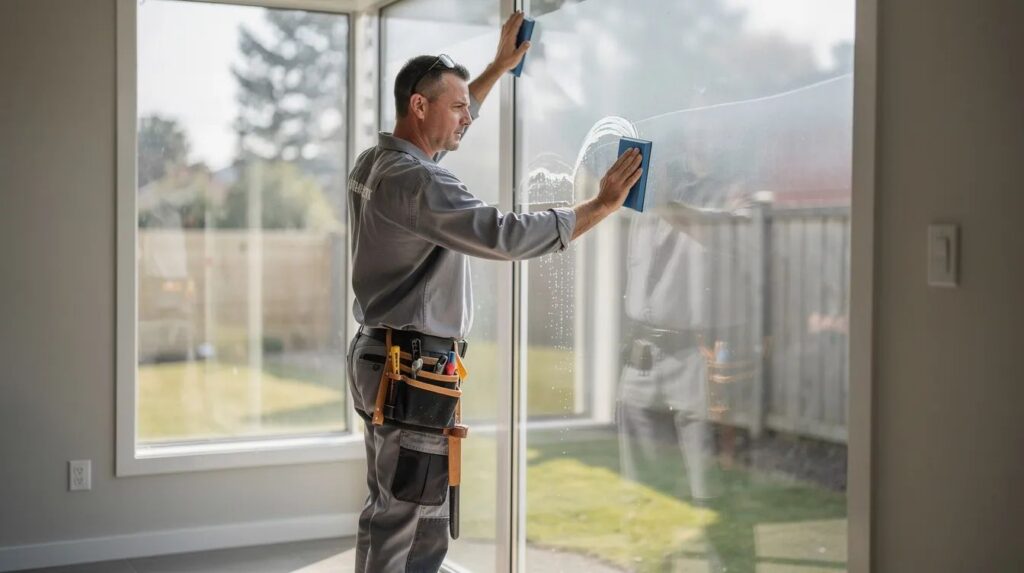
- Application – The installer uses a spray bottle with slip solution, positions the film precisely, trims to exact dimensions with tools designed for clean edges, and uses squeegee techniques to remove air and solution from beneath the film.
- Final inspection and cure – A walkthrough confirms quality, and the installer explains the cure period (often 30 days for full clarity as remaining moisture evaporates). Follow their directions for initial care.
Common DIY issues to avoid:
- Trapped dust and bubbles that never go away
- Miscuts and light gaps at corners and edges that look amateurish and reduce performance
- Choosing the wrong film for your glass type, creating thermal stress risk
- Voided glass warranties from using non-approved products
- Wasted material from poor measurement – measure window dimensions accurately for proper film fitting, and even then, expect a learning curve with each roll
Window Film Depot operates nationwide, handling both one-off residential jobs and large multi-property portfolios for landlords and investors, with window film installation locations across all 50 states. The same commercial-grade expertise they bring to government and institutional projects applies to every home. If you’re leaning toward DIY, at minimum consult a professional for glass compatibility and product selection before you start – that conversation alone can save you from an expensive mistake.
How to Know It’s Time to Tint Your House Windows
Most homeowners don’t think about window film until a specific problem becomes impossible to ignore. Here are the trigger signals:
- You’re closing blinds and curtains most of the day just to stay comfortable, cutting yourself off from sunlight and outdoor views
- Certain rooms run 3–5°F warmer than your thermostat setting because of solar gain through unprotected glass
- Furniture, hardwood floors, or artwork near windows show noticeable fading within just a few years
- Neighbors, pedestrians, or cars passing on the street can easily see into your living areas and bedrooms
- Energy bills in peak summer or winter have climbed noticeably, and your HVAC system runs constantly
- You’ve considered full window replacement, but the cost feels prohibitive
A typical homeowner timeline looks like this: you notice the issues after a few seasonal cycles, try rearranging furniture or adding shades, and eventually realize those are band-aids. Film addresses the root cause – the glass itself – without the five-figure price tag of new windows.
An in-home assessment from Window Film Depot can often quantify expected comfort improvements and utility savings using simple tools and your past energy bills. That data helps you decide whether film is the right solution or whether your building envelope needs other upgrades first.
Why Choose Window Film Depot for Residential Window Tint
Window Film Depot is a family-owned window film business founded in 1992 and headquartered in Marietta, Georgia, with nationwide service capability. For over three decades, we’ve installed window film in settings that demand precision – federal buildings, school campuses, retail chains, hospitals – and we bring that same standard to every residential project.
Here’s what sets Window Film Depot apart:
- Deep 3M specialization – We work extensively with 3M solar control films, safety and security glazing, decorative privacy film, and architectural finishes. We know these products inside and out.
- Turnkey service – From consultation and product selection through installation and post-install support, including help with warranties, maintenance questions, and any permission documentation your HOA may require.
- National reach, local quality – Our network of installers delivers consistent results whether your home is in Atlanta, Dallas, Chicago, or smaller surrounding communities.
- Multi-property coordination – Landlords and investors can count on consistent specs across all units, with centralized project management.
- Wholesale expertise – We also supply wholesale film rolls to trade partners across North America, which means our product knowledge runs deeper than a typical installer’s.
When you work with Window Film Depot, you get the quality and accountability of a company that has built its life around this industry – not a side business or a franchise with high turnover.
FAQs About Tint for House Windows
How long does home window film last?
Quality residential films can last 10–20 years or more, depending on exposure, orientation, and product type. 3M films installed by authorized dealers like Window Film Depot often carry long-term or lifetime residential warranties against peeling, bubbling, and discoloration. South- and west-facing glass in hot climates may age slightly faster than shaded or north-facing orientations, but even those installations typically last well over a decade.
Will tint for house windows make my rooms too dark?
Not if the correct film is chosen. Visible Light Transmission (VLT) determines how much light passes through tinted windows. A film at 70–80% VLT is nearly invisible and still cuts heat and UV significantly. At 50% VLT, the effect is similar to wearing a light pair of sunglasses. At 20% VLT, rooms are noticeably darker – which may be desirable for media rooms but not for kitchens. Ask your installer to show physical samples on the glass before making a final decision.
Is home window tint safe for double-pane and Low-E glass?
Yes, when the right manufacturer-approved window film is used. Some films are specifically designed for compatibility with various low-energy or double-pane windows. The key is a professional survey to identify your glass type and choose films with compatible solar absorption levels, preventing thermal stress. Window Film Depot routinely works on complex glazing systems in commercial buildings and applies the same standards to residential projects.
Can I remove window film later if I change my mind?
Professionally installed film can be removed using heat and specialized tools, though the process is time-consuming on large projects. Removal is common during remodels or when upgrading to newer-technology films, and it’s typically done without damaging the underlying glass. Static cling films are especially easy to remove but usually offer lower performance and durability.
How much does it cost to tint house windows?
Professional installation generally runs $7–$15 per square foot for standard solar control film. High-end ceramic or security films can reach $20–$30 per square foot. Total project costs for a mid-sized home with multiple windows typically fall between $400 and $1,200, depending on film category, number of windows, access difficulty, and regional labor rates. Window Film Depot can price multiple options to fit different budgets – request a customized quote for the most accurate estimate.
What maintenance do tinted windows need?
Wait the recommended cure time – often 30 days – before your first cleaning, to allow the mounting solution to evaporate completely. After that, use a soft microfiber cloth with mild soap or ammonia-free glass cleaner. Avoid razor blades, abrasive pads, or harsh chemicals on the film surface. Properly maintained films retain clarity and performance for many years with no special upkeep beyond normal window cleaning. It’s a low-maintenance enhancement to your home that pays for itself quietly.
Next Steps: Talk to Window Film Depot About Tint for Your House Windows
Now that you understand how tint for house windows works – the benefits, the available options, the limitations, and what professional installation actually looks like – the next step is a conversation with someone who does this every day.
Contact Window Film Depot for:
- A no-obligation consultation and site assessment at your home
- Help choosing the right combination of solar, privacy, and security films for each room and orientation
- Professional installation scheduled at convenient times, with minimal disruption to your daily life
You can call us directly, submit an online quote request, or email a photo of your problem windows for preliminary recommendations. Whether you need film on a single sunroom or across an entire multi-unit property, Window Film Depot has the experience, the product knowledge, and the nationwide reach to get it done right.