Table of Contents:
- Introduction: Why Office Window Tinting Matters in 2026
- Core Benefits of Office Window Tinting for Modern Workplaces
- Types of Office Window Films and Where They Work Best
- Choosing the Right Tint for Different Office Spaces
- Professional Installation vs DIY: What Businesses Should Expect
- Cost, Energy Savings & ROI of Office Window Tinting
- FAQs About Office Window Tinting
- Why Choose Window Film Depot for Office Window Tinting
- Next Steps: Schedule Your Office Window Tinting Consultation
Introduction: Why Office Window Tinting Matters in 2026
Walk through most commercial offices, and you will find the same complaints: glare washing out monitors in open work areas, hot spots that make perimeter desks unbearable by 2 pm, conference rooms where anyone on the street can watch your presentation, and cooling costs that spike every summer. Curtains and blinds are band-aids. They block the view, trap dust, and do little to reduce solar heat gain.
Modern office window tinting solves these problems at the glass itself. Solar control films, privacy film, and security films let you block heat, cut glare, and create daytime privacy without sacrificing natural light or office aesthetics. The technology has advanced significantly – ceramic and spectrally selective coatings now reject the majority of infrared energy while keeping interiors bright and comfortable.
Window Film Depot has been delivering these different solutions for commercial, institutional, and government clients since 1992. In this guide, we cover how office window tint works, which film type fits which space, realistic energy savings ranges, and what to expect from professional installation.
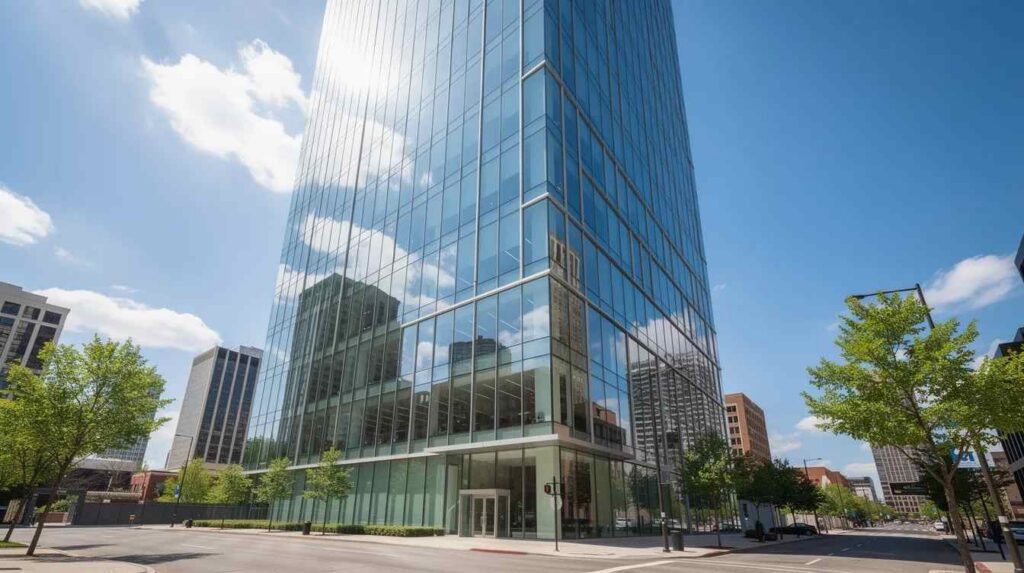
Core Benefits of Office Window Tinting for Modern Workplaces
The business case for tinting office windows goes well beyond appearance. Here is what professionally installed window film actually delivers.
Heat protection and comfort. Solar control films dramatically reduce HVAC costs and glare by rejecting infrared radiation before it enters the space. Window films can reflect up to 71% of solar energy and heat, cutting solar heat gain on south and west façades by 40–75%. Heat control films lower indoor temperatures and HVAC load, eliminating the hot-cold spots that drive complaints. A consistent indoor temperature contributes to a pleasant atmosphere, and modern films block heat without significantly reducing natural light.
Glare reduction. Tinting helps reduce glare on computer screens – a persistent issue in open-plan offices with dual monitors, reception desks facing direct sun, and conference rooms used for presentations. In one Houston case study, screen glare complaints dropped from 8–12 per month to zero within 60 days of installation.
UV protection. High-performance window films with UV protection block up to 99% of harmful uv rays, protecting employees from skin damage and extending the life of flooring, furniture, artwork, and electronics. Without film, UV exposure can noticeably fade interiors within a few years of a buildout.
Energy efficiency. Window tinting can reduce energy costs by 15–30%, depending on glass type, climate, and exposure. Modern window films maintain natural light while blocking heat, helping buildings pursue LEED credits and ESG targets. Whole-building energy savings of 5–15% are documented across multiple commercial retrofit studies.
Privacy and security. Tinted windows block outside views during daylight hours, making privacy film ideal for ground-floor offices and glass-walled meeting rooms. Thicker security window films hold tinted glass together during impacts, deterring break ins and protecting occupants from flying shards.
Office aesthetics. Matching film shades across a façade creates a cleaner, more consistent appearance than mismatched blinds or curtains. Applying window tint to an office enhances employee comfort, and well-lit, comfortable offices can increase productivity by up to 23%.
Types of Office Window Films and Where They Work Best
There is no single “best” tint. The right window tint depends on whether you need heat control, privacy, security, or branding – and most offices need a combination.
Solar control films (including 3M Prestige and ceramic options) are the workhorses. Solar control films reduce heat and glare while allowing natural light. Ceramic films have excellent heat rejection properties without interfering with wireless signals, making them ideal for tech-heavy environments. Visible light transmission typically ranges from 35–65%, so you can choose between a barely noticeable tint and a noticeably darker finish for south-facing glass, perimeter offices, or lobbies.
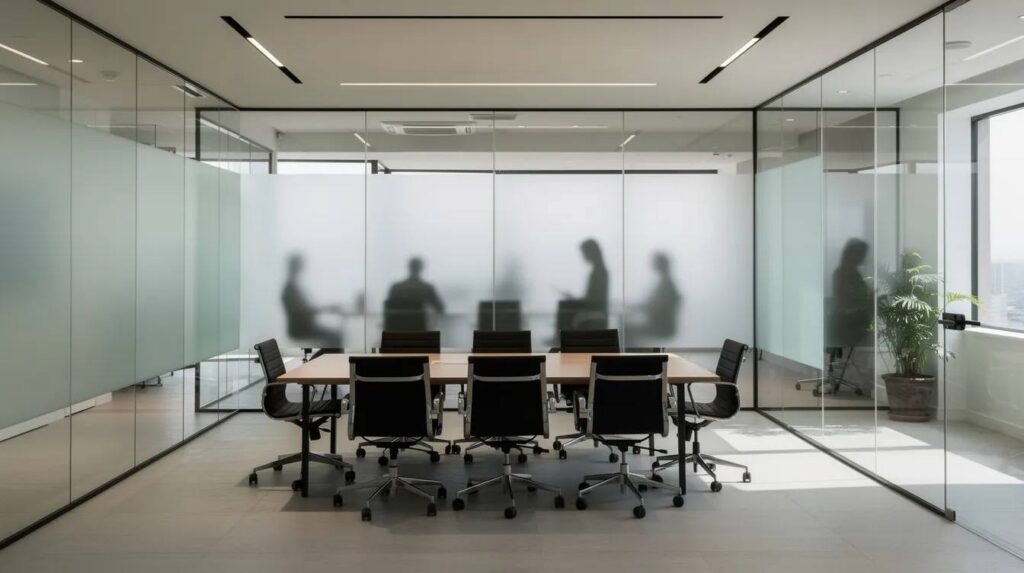
Privacy and frosted films. Privacy films obscure visibility while still allowing light to pass through, which makes them practical for conference rooms, HR offices, and medical consult rooms. Frosted films provide an elegant, etched-glass appearance that obscures visibility while allowing natural light. For spaces that need partial screening, banded stripes or gradient designs maintain openness at standing height while blocking eye-level views. Window films enhance privacy in conference rooms and offices without turning them into dark rooms.
One-way reflective films give you daytime privacy – people outside see a mirror-like surface while occupants enjoy clear outward views. The limitation: at night, when interior lights are brighter than outside light, the effect reverses, increasing visibility into the space.
Decorative films enhance interiors with various patterns and textures, from geometric frosting to full custom designs. They work well on glass partitions and meeting rooms for wayfinding and branding. Smart films can even switch from clear to frosted with the flip of a switch for on-demand access control.
Safety and security window films range from 4 mil for basic fragment retention to 12–14 mil for forced-entry resistance. Security films strengthen glass against break ins and impacts, and specialized safety films can protect against forced entries in schools, government buildings, retail stores, and street-level offices. Structural attachment to the frame is critical for full performance.
Low-E films help regulate indoor temperatures year-round by reflecting infrared heat in summer and retaining warmth in winter – especially valuable in climates with large seasonal temperature swings. Commercial window tinting and Low-E office films have shown average perimeter HVAC savings of 29% on single-pane glass with Low-E retrofit film.
Choosing the Right Tint for Different Office Spaces
Selecting window film should consider sun exposure and layout. East and west façades get low-angle sun that causes the worst glare; south-facing glass absorbs the most midday heat; north-facing windows need less solar control but may still benefit from UV protection or privacy.
Here is how to match film to function across different areas of an office:
- Executive and perimeter offices needing views: lighter, spectrally selective films that block heat while preserving daylight and visibility.
- Conference rooms and focus rooms: higher privacy or frosted films that create a smooth, professional look without dark interiors.
- Ground-floor or street-facing glass: more robust 3M security and sun control films paired with attachment systems to deter forced entry.
- AV and training rooms: darker tint or blackout films that eliminate ambient light for projectors and screens.
- Server rooms and finance offices: privacy film combined with heat control to protect sensitive equipment and data.
- Glass-fronted huddle rooms: partial frosting at eye level to reduce distractions while keeping the space connected to the open floor.
Decorative films can incorporate branding without compromising privacy, and custom designs on window films can reinforce brand identity – whether that means bold graphics for a creative agency or subtle frosting stripes for a tech company. Decorative films enhance office aesthetics with various patterns and textures that turn plain glass partitions into design features. Window tinting can transform plain glass into a design feature that matches your environment.
Window Film Depot performs on-site surveys and, as a leading 3M window film installation company, can recommend matching film solutions tailored to multi-site portfolios or national roll-outs.
Professional Installation vs DIY: What Businesses Should Expect
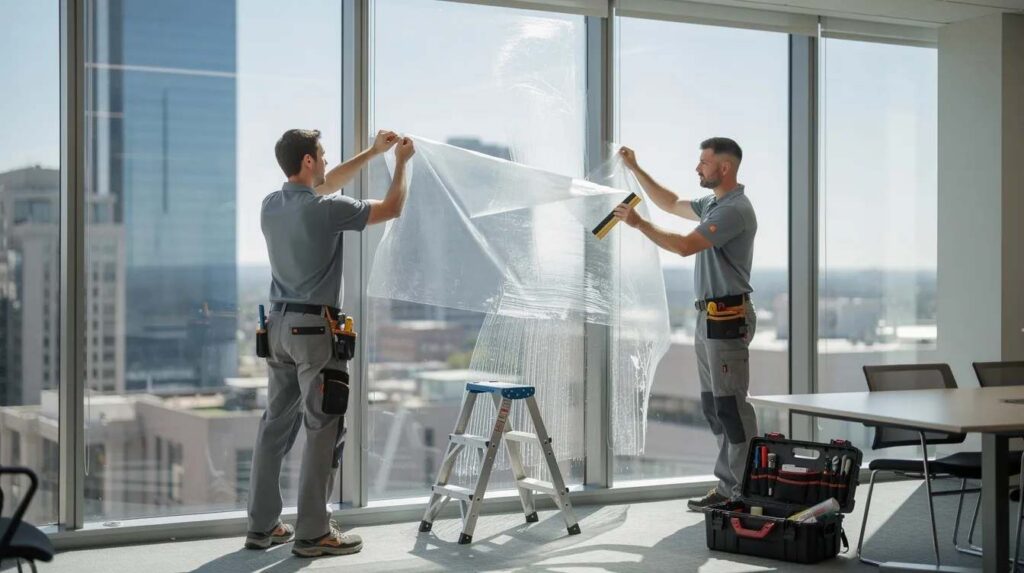
Commercial-scale office window tinting is fundamentally different from a DIY auto or home kit. Professional window tinting on a busy floor requires coordination, precision, and the right materials for each glass type.
The professional process typically includes:
- Site walk and glass assessment (single-pane, double-pane, low-E, tempered)
- Film recommendations with samples applied to actual office windows
- Proposal with performance data (SHGC, VLT, UV rejection)
- Scheduling – often phased across floors or done after hours to minimize disruption
- Installation day: surface preparation, dust control, and precise application
Professional installation ensures a smooth, bubble-free finish across every pane. Working with an experienced commercial 3M window film installer means installation typically takes one day, depending on window size and the number of windows involved. Crews coordinate around staff schedules and conference room bookings so your office keeps running.
Choosing a certified, insured installer like Window Film Depot matters for warranty compliance on 3M and other high quality films. Many manufacturers void coverage if film is applied by uncertified companies or to incompatible glass.
DIY risks include: air bubbles, contamination under the film, light gaps at edges, misalignment on large panes, and potential damage to tempered or insulated glass units that voids the glass warranty entirely.
After installation: window films last 10–15 years with proper care. Wait for the adhesive to fully cure before the first cleaning (typically a few days to two weeks). Clean window films with a soft cloth and mild soap – avoid ammonia-based cleaners. An annual inspection of edges and seals keeps everything performing. Films can be safely removed and replaced if needed when you update your space. Professionally installed window tint enhances the building’s aesthetic appeal for many years.
Cost, Energy Savings & ROI of Office Window Tinting
Costs vary by film type, glass size, access requirements, and building location. Here are realistic commercial ranges:
| Film Category | Typical Cost per Sq Ft (Installed) |
|---|---|
| Basic solar control film | $7–$10 |
| Advanced spectrally selective / ceramic | $10–$14 |
| Security film (8–14 mil with attachment) | $12–$16+ |
| Decorative / privacy / frosted | $8–$14 |
Energy savings: most well-exposed offices see cooling costs drop 20–30% after solar control film is applied to south and west façades. For a 5,000 sq ft office spending $15,000 a year on energy, that translates to $3,000–$4,500 in annual savings. Simple payback periods typically fall between 2–4 years, with some high-exposure projects recovering cost in as little as 18 months.
High-performance films provide higher ROI through reduced air conditioning usage, and the benefits compound: lower HVAC run time extends equipment life, fewer employee complaints about heat and glare reduce facility management burden, and UV protection means less frequent replacement of flooring and furniture.
Some utility companies and state programs offer rebates for energy efficiency upgrades that include window film retrofits. For example, commercial window film installation services in Washington, DC and other regions can help document performance metrics using manufacturer data to support your budget and incentive applications.
Real-world example: A 4,200 sq ft Houston office applied ceramic solar control film on south and west exposures. Monthly cooling costs dropped from $1,850 to $1,340 – a 28% reduction – and the $9,200 project paid for itself in 18 months.
FAQs About Office Window Tinting
Will office window tint make our space too dark?
Not with the right film type. Spectrally selective and ceramic films block infrared heat while transmitting 50–65% of visible light. Most occupants notice reduced glare and eye strain without any loss of daylight. The goal is to preserve natural light while controlling heat.
How long do commercial window films last in typical office conditions?
Most solar control and privacy films are warranted for 10–15 years, and many perform well beyond that with proper maintenance. Security films and Low-E films often carry similar or longer warranties.
Can window tinting be applied to existing double-pane, low-E, or tempered glass safely?
Yes, but compatibility matters. Some absorbing films can trap heat between panes, stressing seals on insulated glass units. A qualified installer evaluates your glass before recommending a compatible film. Window Film Depot checks every pane during the site survey.
What is the difference between privacy film and one-way mirror film for daytime privacy?
Frosted privacy film blocks visibility from both sides while letting diffused light through. One-way reflective film allows occupants to see out while blocking the view from outside during daylight hours – but the effect reverses at night when interior lights are on.
Do window films really help with energy efficiency and HVAC costs in offices?
Yes. Verified studies show whole-building energy savings of 5–15% and cooling-specific reductions of 20–30% in sun-exposed offices. The data is consistent across GSA, LBNL, and independent IPMVP-verified projects.
How disruptive is professional installation for a busy office, and can it be done after hours?
Most projects are completed in a single day for typical floors. Window Film Depot routinely schedules after-hours or weekend installations and phases work across floors to keep your office running. Furniture rarely needs to move.
How should we clean and maintain tinted office windows?
Use a soft cloth and mild soap solution. Avoid abrasive pads and ammonia-based cleaners. Wait until the film has fully cured before the first cleaning. An annual visual check of edges and seals is all that is needed for long-term performance. Window Film Depot provides maintenance documentation with every project.
Why Choose Window Film Depot for Office Window Tinting
Window Film Depot is a family-owned company founded in 1992 and headquartered in Marietta, Georgia. We are a 3M Authorized Dealer with access to a full range of high quality films – solar control, security, privacy, decorative films, and specialty coatings – backed by turnkey project management for single locations or national roll-outs.
Our team has completed projects for corporate offices, schools, government agencies, healthcare facilities, and retail stores, handling everything from a single conference room to entire high-rise façades. One partner manages specification and professional installation, ensuring consistent matching film across markets, unified warranties, and standardized appearance.
We also serve glass and glazing trade partners through wholesale window film supply across North America, providing rolls, technical guidance, and focus on your business needs. Every project starts with a site assessment, clear performance data, realistic timelines, and coordination with property managers, architects, and GC teams.
Next Steps: Schedule Your Office Window Tinting Consultation
If rising cooling costs, persistent glare, or lack of privacy in your office space sounds familiar, contact Window Film Depot for a no-obligation assessment of your office windows.
When you reach out, share your building type, location, primary concerns (heat, glare, privacy, security), and any energy savings or sustainability targets. We offer on-site evaluations and virtual consultations for multi-location portfolios, with fast turnaround on quotes and project timelines.
The result: more comfortable employees, improved office aesthetics, stronger daytime privacy, and measurable energy savings from professionally installed UV-protective office window tinting – delivered by a team that has been doing this for over three decades.