With 2026 bringing another round of record-setting summer heat, climbing electricity rates, and screen glare in every office and home, sun blocking window film has become one of the most practical upgrades a building owner can make. Here’s what this guide covers:
Table of Contents:
- What Is Sun Blocking Window Film & Why It Matters Now
- How Sun Blocking Window Film Works for Heat Reduction & Energy Savings
- Types of Sun Blocking Window Films & What They’re Best For
- How to Choose the Right Window Film for Your Building
- Professional Installation Process & What to Expect
- FAQs About Sun Blocking Window Film
- Why Choose Window Film Depot for Sun Blocking Window Film
- Next Steps: Schedule a Sun Blocking Window Film Assessment
What Is Sun Blocking Window Film & Why It Matters Now
Sun blocking window film is a thin, multi-layered laminate material made of polyester or advanced ceramic layers, applied directly to existing glass. It cuts the sun’s heat, blocks harmful UV rays, and reduces glare-without forcing you to sacrifice natural light or clear views. Sun blocking films are a retrofit option for upgrading existing windows, making them far more cost-effective than full glass replacement.
There’s an important distinction worth knowing. UV-only films focus narrowly on ultraviolet protection, while broader solar control films also manage infrared heat and visible light-the combination that actually drives indoor temperature up. Since solar heat comes from infrared light (which carries more than half of all solar energy hitting your glass), a film that only handles UV misses the biggest comfort and energy problem.
The timing matters. U.S. summers keep getting hotter, national residential electricity rates have climbed roughly 6.5% in the past year alone, and modern buildings use more glass than ever. The result: higher cooling loads, bigger energy costs, and uncomfortable hot spots near windows. Sun-blocking window films help improve a building’s comfort and efficiency by addressing all three issues at once. Rooms often measure 5–10°F cooler near treated glass. Quality solar films protect furnishings from UV exposure indoors, and window films protect furniture from fading caused by UV exposure, saving replacement costs on flooring, upholstery, and artwork. Some window films help keep rooms warmer in winter too, adding year-round value. Unlike blackout curtains or blinds, the right film preserves daylight and outward views.
Window Film Depot works nationwide with commercial, institutional, and residential clients, bringing over three decades of installer and supplier experience to every project.
How Sun Blocking Window Film Works for Heat Reduction & Energy Savings
Sunlight reaching your glass contains three components: UV (causes fading and skin damage), visible light (illumination plus some heat and glare), and infrared (the main driver of heat gain). Window films manage solar energy through reflection and absorption, selectively filtering each band so your space stays bright but cool.
Modern films deliver impressive performance across all three bands:
- UV rejection: Premium products block 99–99.9% of UV rays. The 3M Prestige Series blocks up to 99.9% of UV rays, while the 3M Affinity Series filters out up to 99% of UV rays.
- Infrared rejection: Sun blocking films can reflect or absorb up to 78% of infrared heat. 3M Prestige films reject up to 97% of infrared heat, and 3M window films can reduce solar heat by up to 79%. High-performance films can reflect over 40% of solar radiation. Certain films can block up to 70% to 80% of total solar heat.
- Visible light options: Films range from nearly clear (60–80% VLT) to dark tints (10–30% VLT), depending on your glare and privacy needs. Films reduce glare by filtering visible light through the glass, and window films offer glare control, reducing eye strain from sunlight.
Sun blocking window film can reduce solar heat gain significantly. Window film can help reduce hot spots near sunny windows, and films create a more uniform indoor temperature, eliminating hot spots. Window films stabilize indoor temperatures, eliminating hot spots across open-plan offices, classrooms, and lobbies. Window films help keep indoor temperatures steady throughout the day.
Reducing heat entering the room lowers energy bills. Commercial projects typically see 5–15% annual cooling energy reduction, with payback periods of 3–5 years for buildings with high window-to-wall ratios. Solar control films can significantly lower energy costs and help HVAC systems work more efficiently, supporting ESG goals, ENERGY STAR recognition, and LEED credits where applicable.

Types of Sun Blocking Window Films & What They’re Best For
There is no single “best” product. The right window film depends on glass type, climate, orientation, and whether the building is commercial, institutional, or residential. Here are the major categories:
- Spectrally selective / prestige-style films: Nearly clear with high infrared rejection and strong UV blocking. The 3M Prestige Series blocks up to 99.9% of UV rays while preserving daylight. Many films block high levels of heat while preserving views outside, making these an excellent choice for executive offices, street-level retail, and museums where natural light and clear views matter most.
- Tinted / dual-reflective films: Combine interior tint with exterior reflectivity for strong heat reduction and daytime privacy. The 3M Night Vision Series can reject up to 71% of solar heat. Reflective films provide daytime privacy, creating a mirror-like effect. Ideal for office towers, schools, and healthcare waiting rooms. Note that dark or reflective films can reduce natural daylight.
- Highly reflective films: Silver or mirrored appearance with very high solar rejection. R-20 Silver reflects 80% of the sun’s heat. Reflective window films block up to 99% of UV rays. Best for older commercial buildings or back-of-house glazing where aesthetics are less critical.
- Neutral / low-reflective films: Moderate heat reduction with minimal change to glass color or appearance. Useful where mirrored glass is not allowed by design guidelines or local ordinances-think historic districts or residential neighborhoods.
- Safety and security sun control films: Thicker, laminated layers that add forced-entry resistance and blast mitigation while also blocking UV and solar heat. BDF S2M blocks 99% of harmful UV rays, and BDF S2M blocks 99% of UV rays without tint. Ideal for schools, government buildings, and street-facing retail where safety and security window film products and performance both matter.
- UV-clear options: Products like Llumar solar control films block up to 99% of UV rays while maintaining clarity. Static cling designs allow for easy installation of window films in temporary or apartment settings where permanent adhesive isn’t ideal.
Exterior-applied films work well for hard-to-reach or laminated glass, while interior films suit typical office and residential settings. Window Film Depot primarily installs 3M Sun Control Prestige Exterior films, safety, and decorative films, and can combine sun blocking with branding or privacy graphics on commercial storefronts.
How to Choose the Right Window Film for Your Building
Selecting the right film is a balance of heat reduction, natural light, appearance, privacy, and budget-especially for facility managers and architects managing multiple buildings.
- Glass type and condition: Single-pane, double pane, triple pane windows, low-E, tempered, or laminated-each responds differently to film. Manufacturer compatibility guidelines (like 3M’s) matter because incompatible film can cause thermal stress or void your window warranty.
- Orientation and climate: South- and west-facing glass in hot markets like Phoenix, Dallas, or Atlanta needs stronger solar rejection. North-facing glass in cooler climates may only need glare and UV control without heavy tinting.
- Desired appearance and privacy: Mirrored films change a building’s look significantly. Spectrally selective options are nearly invisible from inside and outside, preserving storefront aesthetics and residential curb appeal.
- Daylight and occupant comfort: Maintaining natural light for wellness and productivity vs. reducing glare on monitors matters. In an open office with a glass curtain wall, a spectrally selective film from a full range of 3M window film products and installation services can make a big difference without darkening the space.
- Code, warranty, and building standards: Use manufacturer-backed products with NFRC ratings and commercial warranties of 10–15 years to protect your investment and meet building performance requirements.
A professional site assessment includes on-site light and heat readings, review of existing mechanical systems, energy modeling to estimate savings and payback, and sample installations on select panes for stakeholders to review. Window Film Depot can also work from architectural drawings and glazing schedules during design or renovation to recommend the right film before construction is complete.
Professional Installation Process & What to Expect
Quality film plus poor installation equals poor results. For commercial and institutional projects, professional installation is essential. Here’s what the process looks like:
- Site walk and prep: Installers protect your floor and furniture, confirm access points, and coordinate with building security and facility teams. For active buildings like a school or office, work is often scheduled after hours or on weekends.
- Glass cleaning: Every pane is thoroughly cleaned and scraped to remove contamination that would cause bubbles or adhesion failures.
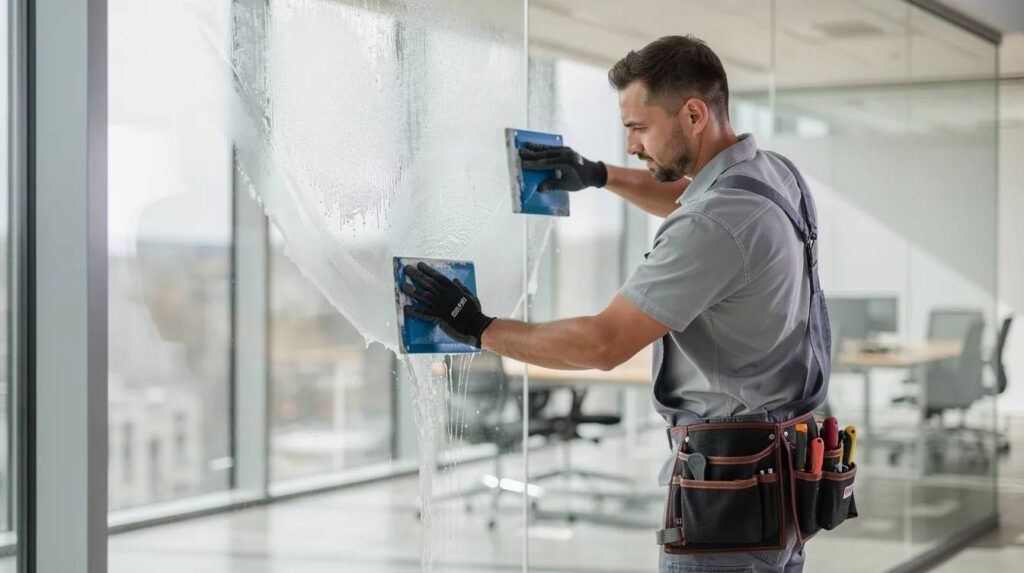
- Film application: Installers use a slip solution (water and positioning fluid), align the film precisely, trim edges, and use a squeegee to eliminate trapped water and air.
- Curing and inspection: Films typically need 7–30 days to fully cure depending on climate and film type. Temporary haze or small water pockets are normal during this period and disappear as the film dries.
For multi-site roll-outs, Window Film Depot coordinates phased schedules with property managers and general contractors to minimize disruption. Every project includes manufacturer warranty documentation, product data sheets, and cleaning guidelines for facilities staff.
If you’re considering DIY for a small home or apartment project, know that professional installation of 3M Night Vision residential sun control films makes a measurable difference in performance and longevity-especially on larger or complex glazing systems.
FAQs About Sun Blocking Window Film
These are the questions facility managers, building owners, and homeowners ask most often.
How much heat can sun blocking window film really stop?
Most premium films reject 30–80% of solar heat gain, depending on type. In practical terms, that translates to room temperature drops of 5–10°F near treated glass. A commercial building with premium film on south and west facades can discover annual cooling savings in the range of $10,000–$70,000+, with some projects seeing payback in as little as 1.3 years.
Will window film make my rooms too dark or change the view?
Not if you choose correctly. Spectrally selective and neutral films maintain 50–80% visible light transmission-enough that most people can’t tell the film is there. You keep the view, enjoy the daylight, and tap into serious heat and glare reduction. Only heavily tinted or mirrored options noticeably darken a room or bedroom.
Can window film damage my glass or void my window warranty?
It can, if the wrong film is installed on incompatible glass. That’s why manufacturer-tested films and professional installers who follow film-to-glass compatibility guidelines matter. Proper selection avoids thermal stress, seal failure, and warranty issues on double-pane or insulated units.
How long does sun blocking window film last?
High-quality solar control films typically last 10–15 years in commercial settings; safety films often longer. Signs it’s time to replace include peeling, bubbling, discoloration, or visible haze. Orientation and climate affect lifespan-west-facing film in a desert climate works harder than north-facing film in the Pacific Northwest.
What maintenance does window film require?
Clean with soft cloths and mild, pH-neutral cleaners. Avoid ammonia, bleach, and abrasive pads. For commercial janitorial routines, make sure cleaning companies know which products are safe. You don’t need to peel and remove the film for routine care-just treat it like you would clean glass.
Is sun blocking film worth it if I already have low-E glass?
Yes. Low-E glass helps, but it often doesn’t block enough infrared from direct sunlight on south and west elevations. Adding the right film further reduces SHGC, cuts glare, and improves UV protection. The incremental energy savings and comfort improvement can be substantial, especially in sun-intense climates where you live and work.
Why Choose Window Film Depot for Sun Blocking Window Film
Window Film Depot is a family-owned company founded in 1992, offering over three decades of expertise in window film products and architectural surface solutions across the U.S.
- Deep 3M partnership: Access to the full range of 3M solar control, safety and security, privacy, decorative, and anti-graffiti films-selected and tailored to each project’s needs.
- National reach, local execution: Whether you manage a single office or a portfolio of buildings across multiple states, WFD delivers consistent standards with centralized project management and nationwide window film service locations with local installers who understand regional climate and code requirements.
- Proven commercial and institutional experience: Schools, government buildings, healthcare facilities, retailers, and office towers-including commercial window film installation services in Washington, DC and beyond for complex security glazing upgrades where both protection and performance are non-negotiable.
- Turnkey service: Consultation, energy analysis, product selection, installation, and warranty support handled by one team. No juggling multiple companies.
- Wholesale supply for trade partners: Glass shops, tint dealers, and contractors can source window film rolls and technical support through WFD’s wholesale channel.
Decades in business, trained installers, and strict adherence to manufacturer specifications mean you get documented performance, backed by real warranties-not guesswork.
Next Steps: Schedule a Sun Blocking Window Film Assessment
Cooler interiors, better natural light, lower energy bills, and protected furnishings-all without replacing a single pane of glass. That’s what the right sun blocking window film delivers, and it’s an ideal upgrade for any building dealing with heat, glare, or fading inside.
Contact Window Film Depot today for a site visit, virtual consultation, or quote. Facility managers and architects are welcome to share floor plans or glazing schedules for an initial review. Whether you need one location or a national roll-out, WFD will help you choose the right film, handle installation with minimal disruption, and stand behind the work for years.