Table of Contents:
- Why Window Film Is a Building Envelope Decision, Not a Finish-Work Line Item
- Understanding Commercial Window Film Performance Tiers
- Evaluating 3M Commercial Window Film Technology Against Your Project Requirements
- Vetting a Commercial Window Film Installer: A Vendor Due-Diligence Framework
- What a Commercial Window Film Project Timeline Actually Looks Like
- Code Compliance, Warranty Structures, and Long-Term Performance Accountability
- Conclusion: Building a Defensible Window Film Specification Your Client Can Approve
- Frequently Asked Questions
Why Window Film Is a Building Envelope Decision, Not a Finish-Work Line Item
Commercial building window tinting is an effective way to boost the performance of modern spaces, especially when energy efficiency and comfort matter most. It cuts down solar heat gain, reduces glare, and helps meet energy codes, making it more than just a simple upgrade—it’s an important part of the overall building design. For offices, shops, and large facilities, it’s a smart solution to improve functionality without major renovations.
The Specification Risk No One Talks About Until It’s Too Late
Most commercial building window tinting projects go sideways the same way: the film gets treated as a late-stage finish item, specified loosely, sourced on price, and handed off to whoever the glazing sub recommends. Then the energy model doesn’t hit its targets, the warranty is unenforceable because the installer wasn’t factory-authorized, or the film delaminates on a south-facing curtainwall eighteen months after punch list. By that point, the project manager has moved on and the building owner is holding the problem.
The risk isn’t the product. Commercial window film technology is mature, well-tested, and reliably effective when specified correctly. The risk is the decision framework, or the absence of one. Treating film selection as a commodity procurement rather than a building envelope specification creates gaps that compound across the project lifecycle.
How Window Film Directly Affects Energy Code Compliance and Occupant Safety
Window film directly influences two compliance domains that your authority having jurisdiction (AHJ) will scrutinize: energy performance and occupant safety.
On the energy side, the solar heat gain coefficient (SHGC) and visible light transmittance (VLT) values of the installed film affect whether the building’s fenestration assembly meets ASHRAE 90.1 thresholds or local energy code requirements. Specify a film with the wrong SHGC for your climate zone and orientation, and you either miss the energy model baseline or overcorrect and create a daylighting problem that drives up artificial lighting loads. Neither outcome is acceptable on a project with energy performance deliverables.
Safety film adds a second compliance layer. Depending on building type, occupancy classification, and jurisdiction, glazing reinforcement may be required by code, by the insurer, or by a federal security standard. Film that isn’t tested and rated to the applicable ASTM standard isn’t a compliant installation. It’s a liability.
Where Window Film Lives in the CSI MasterFormat and Why It Matters for Procurement
This is where a lot of specification errors originate. Window film doesn’t have a single obvious home in the CSI MasterFormat, and different firms handle it differently. You’ll find it under Division 08 (Openings), sometimes under 08 87 13 (Solar Control Film), and occasionally misclassified under Division 09 as a finish item. The classification you choose determines which subcontractor trades own it, which CSI section your performance specs live in, and how substitution requests get evaluated during bidding.
When film ends up in Division 09, it tends to get value-engineered alongside paint and flooring. When it’s properly scoped under Division 08 with a performance specification that references ASTM test methods and manufacturer certification requirements, it gets treated with the technical rigor it requires. The classification isn’t administrative housekeeping. It determines the quality of the bids you receive.
The Cost of Treating Film Selection as a Commodity
The downstream costs of under-specified window film fall into three categories: performance gaps, warranty voids, and coordination failures. A film specified by reflectance appearance rather than SHGC and infrared rejection data may look right on the glass and still fail to deliver the cooling load reduction the mechanical engineer assumed. That gap doesn’t show up until the first full cooling season, and by then it’s a change order conversation nobody wants to have.
Warranty voids are more predictable and more preventable. Most manufacturer warranties, including 3M’s commercial film warranties, require installation by a certified, factory-authorized applicator. If your subcontractor isn’t on that list, the warranty is functionally worthless regardless of what the bid documents say. This is a vendor qualification issue, not a product issue, and it needs to be resolved before award, not after installation.
Need More Info?
The Window Film Depot team is happy to help.
Understanding Commercial Window Film Performance Tiers
Solar Control Film: SHGC, VLT, and Spectrally Selective Technology
Solar control or sun control window film is the most commonly specified performance tier in commercial construction, and it’s also where the most consequential specification errors occur. The two metrics that matter for energy performance are SHGC and VLT, and they don’t move in tandem. Understanding their relationship is what separates a useful film specification from a vague one.
How Solar Heat Gain Coefficient Translates to HVAC Load Reduction
SHGC measures the fraction of solar radiation that passes through a glazing assembly as heat. A lower SHGC means less solar heat enters the building, which directly reduces peak cooling loads. On a south- or west-facing curtainwall in a hot climate, the difference between a film with an SHGC of 0.25 versus 0.40 can translate to a measurable reduction in mechanical system sizing, which carries capital cost implications, not just operating cost implications. Your mechanical engineer should be involved in film selection on any project where the energy model is a deliverable.
Visible Light Transmittance Trade-offs for Daylighting and Glare Control
VLT measures how much visible light the film allows through. High solar rejection and high VLT used to be mutually exclusive. Spectrally selective film technology largely resolves that trade-off by targeting infrared wavelengths while preserving visible light transmission. The practical implication: a spectrally selective film can reject a significant portion of solar heat while maintaining a VLT above 50%, preserving the daylighting strategy without compromising the energy model.
The specification risk with VLT is on the low end. Highly reflective or very dark films that push VLT below 20 to 25% in open-plan office environments tend to create glare problems of a different kind. High contrast between the window and the interior creates visual fatigue even when overall brightness is reduced. This is a human factors issue that shows up in occupant complaints, not in energy audits.
Where 3M Prestige Series and Low-Emissivity Films Fit in Energy-Driven Specifications
3M Prestige Series films are a relevant benchmark for high-performance solar control applications because they use non-metallized, multi-layer optical film technology to achieve high infrared rejection without the reflective appearance of traditional metalized films. This matters aesthetically on glass-heavy facades and matters technically on buildings where metallic films would interfere with cellular signals or electronic equipment.
Low-emissivity window films serve a complementary function in heating-dominated climates, reducing radiative heat loss through the glazing during winter months. In mixed climates, the energy modeling should determine which performance priority governs the specification.
Safety and Security Film: Glazing Reinforcement Beyond the Basics
Safety and security film occupies a different specification logic than solar control. The primary performance criteria aren’t thermal. They’re structural.
The film is engineered to hold glass fragments together on impact, slowing forced entry, reducing injury from breakage, and in blast-rated applications, containing the hazard envelope of a pressure event.

ASTM Performance Standards for Impact Resistance and Blast Mitigation
The governing test standards for safety film in commercial applications include ASTM F1642 (glazing and glazing systems subject to airblast loadings), ASTM F2912 (blast resistance of glazing), and ASTM F3561 for impact resistance. These standards define test protocols, not product ratings. A film must be tested as part of a complete glazing assembly to carry a compliant rating.
This distinction matters when writing specifications. Requiring “ASTM-compliant film” without specifying the test standard and assembly configuration is not an enforceable requirement.
3M Scotchshield Safety Film Grades and How to Differentiate Them
3M Scotchshield safety films are differentiated by thickness, measured in mils, and by the assembly configuration in which they’ve been tested. Thicker films provide greater fragment retention and higher forced-entry resistance. The film grades range from lighter safety applications, such as protection from accidental window breakage, to heavy security configurations designed to delay forced entry or mitigate blast pressure. Selecting the appropriate grade requires matching the threat profile to a tested assembly, not just selecting by thickness.
When Blast Mitigation Film Becomes a Code or Insurance Requirement
Blast mitigation film moves from a value-add to a requirement in a specific set of scenarios: federal facilities subject to GSA or DoD security standards, buildings in jurisdictions that have adopted UFC 4-010-01 (the DoD minimum antiterrorism standards), and increasingly, commercial properties where the insurer requires demonstrable glazing hazard mitigation as a condition of coverage. On mixed-use projects with government tenants, this requirement can apply to a subset of floors or zones rather than the full building, which creates a specification coordination challenge that needs to be resolved in the glazing scope before bidding.
Decorative and Anti-Graffiti Film: Functional Applications in Commercial Contexts
Decorative and anti-graffiti film is frequently underspecified because it looks like a finish decision. On high-traffic commercial glazing, it’s a maintenance and asset protection decision.
Surface Protection on High-Traffic Glazing and Curtainwall Systems
Anti-graffiti film creates a sacrificial surface layer on glass and polished metal. When the surface is vandalized, you replace the film rather than the substrate. On a curtainwall system where glass replacement requires scaffolding, a swing stage, or interior disruption, the cost differential between film replacement and glass replacement is significant. The specification should address film thickness, adhesion method, and replacement protocol, particularly on exterior-facing applications where UV stability and temperature cycling affect film longevity.
Privacy and Branding Applications Without Sacrificing Natural Light
Frosted, patterned, and gradient decorative films serve legitimate functional purposes in commercial interiors: conference room privacy, building code compliance for glazed corridor walls, and wayfinding or branding applications on lobby glass. The specification consideration here is light transmission. A frosted film that diffuses rather than blocks light can maintain daylighting levels in interior spaces while providing the required visual separation. Coordinate with the interior designer and the lighting designer before finalizing film specifications in daylit interior zones.
Film Selection Decision Matrix
Performance Tier by Building Type, Use Case, and Primary Specification Goal
| Film Type | Primary Use Case | Key Performance Metric | Typical Building Type | Specification Driver |
|---|---|---|---|---|
| Solar control (standard) | Cooling load reduction | SHGC, VLT | Office, retail, multifamily | Energy code, HVAC sizing |
| Solar control (spectrally selective) | High daylight + heat rejection | SHGC + VLT balance | Class A office, glass curtainwall | Daylighting + energy model |
| Low-emissivity | Heating load reduction | U-factor, emissivity | Northern climates, mixed-use | Heating-season energy model |
| Safety film (light) | Fragment retention, accidental impact | ASTM F3561 | Schools, retail, healthcare | Insurance, safety code |
| Safety film (security grade) | Forced entry delay, smash-and-grab | ASTM F3561, attack resistance | Retail, financial, government | Security assessment |
| Blast mitigation film | Pressure event glazing hazard | ASTM F1642, F2912 | Federal, high-risk commercial | UFC 4-010-01, GSA standards |
| Anti-graffiti | Substrate protection, maintenance cost | UV stability, film thickness | Transit, retail, high-traffic lobbies | Lifecycle cost, maintenance |
| Decorative/privacy | Visual separation, branding | VLT, diffusion | Corporate interiors, healthcare | Code compliance, design intent |
Use this matrix as a starting point for aligning film type to specification goal. The primary driver column is where most specification errors originate. Projects that default to solar control film when the actual requirement is safety, or that specify decorative film without considering its effect on the energy model’s fenestration assumptions, are the ones that generate downstream problems.
Evaluating 3M Commercial Window Film Technology Against Your Project Requirements
What Certified 3M Product Nomenclature Tells You That Marketing Copy Does Not
Product nomenclature in 3M’s commercial film lineup is a specification tool, not a marketing label. Each product name encodes performance data: series designation, visible light transmittance value, and sometimes the substrate technology. A 3M Prestige 40, for example, indicates a Prestige-series non-metallized film with approximately 40% VLT. When a distributor substitutes a “comparable product” during procurement, checking whether the nomenclature maps to the same performance tier takes thirty seconds and prevents a material substitution that your energy model won’t accommodate.
The practical value here is in bid review. When you receive submittals, the product name should match the performance specification exactly. If a subcontractor submits a different series at the same VLT, that’s not necessarily equivalent. Series differences affect infrared rejection, glare control, and warranty terms in ways that VLT alone doesn’t capture.
Infrared Rejection, UV Blocking, and the Metrics That Appear in Energy Audits
SHGC and VLT are the metrics that govern energy code compliance, but infrared rejection (IRR) and UV blocking are the metrics that show up in post-occupancy energy audits and occupant satisfaction reports. IRR measures how much near-infrared solar radiation the film blocks before it enters the building as heat. A film with high IRR but moderate SHGC improvement still delivers meaningful comfort benefits in perimeter zones, which affects plug load assumptions and workstation density near glazing.
UV blocking is nearly universal across commercial film products, with most rejecting 99% of UV radiation, but it’s worth verifying in the submittal because it directly affects furniture and flooring warranty claims in tenant spaces. If a tenant’s lease includes landlord responsibility for UV damage to finishes, the film specification becomes a liability document as much as a performance document.

Window Film, LEED Certification, and ASHRAE 90.1 Compliance
Window film can contribute to LEED certification, but the pathway matters. Solar control film applied to existing glazing can improve a fenestration assembly’s effective SHGC, which feeds into Energy and Atmosphere credit calculations. The key word is “effective.” The film must be modeled as part of the glazing assembly, not as a standalone product, and the modeling methodology needs to align with what your energy modeler and AHJ will accept.
For ASHRAE 90.1 compliance, film is evaluated as part of the overall fenestration performance, not separately. This means the compliance path requires documented testing data for the film-plus-glass assembly, not just the film in isolation. NFRC-rated assemblies provide the clearest compliance documentation. If your project is in a jurisdiction with a prescriptive fenestration compliance path, confirm early whether the AHJ will accept post-installed film as a compliance upgrade or requires the original glazing to meet the threshold.
Warranty and Durability of Commercial Window Film
Commercial window film warranties from major manufacturers like 3M typically cover film defects including peeling, bubbling, cracking, and significant color change, for periods ranging from ten years to lifetime on specific product lines. The coverage terms vary by product series, application type (interior versus exterior), and building use. What most warranty documents don’t highlight: coverage is conditional on installation by a certified, factory-authorized applicator and on the substrate meeting manufacturer specifications at the time of installation.
Durability in practice depends heavily on substrate condition, cleaning protocol, and climate exposure. Exterior-applied films face greater UV and thermal cycling stress than interior-applied films and typically carry shorter warranty terms. In high-humidity climates, adhesion performance on improperly prepped glass is a real failure mode. These aren’t theoretical risks. They’re the conditions that generate warranty claims and, when the installer isn’t authorized, uncovered remediation costs.
Applying Window Film to Existing Buildings
In most cases, window film installs on the interior surface of existing glazing without modification to the frame, glazing system, or building envelope. This is one of the primary advantages of film over glazing replacement as a retrofit strategy: no structural work, no weather barrier disruption, and no requirement for a building permit in most jurisdictions, though permit requirements vary by location and scope.
The exception involves tempered or heat-strengthened glass on solar-exposed facades. Certain high-absorption films can increase thermal stress in these assemblies enough to risk thermal fracture. Before specifying any film on an existing building, a glazing survey should confirm glass type, coating status, and any existing damage. This is not a formality. It’s the step that prevents a significant glass replacement claim that no one’s warranty will cover.
Vetting a Commercial Window Film Installer: A Vendor Due-Diligence Framework
Why Installer Credentials Are as Critical as Film Specification
A correctly specified film installed by an unqualified applicator creates the same downstream risk as a poorly specified film installed correctly. The difference is that film specification errors are visible in submittals. Installer qualification failures are invisible until they become warranty claims or performance disputes.
Certifications, Licensing, and Insurance Requirements to Demand Before Shortlisting
Before a window film subcontractor reaches your shortlist, require documentation of three things: manufacturer factory authorization (not just “authorized dealer” status, but factory-authorized applicator status for the specific product line), general liability and workers’ compensation insurance certificates naming your entity as additional insured, and licensing that meets the requirements of the jurisdiction where work will be performed. In states where contractor licensing applies to specialty trades, an unlicensed applicator creates a compliance exposure that extends to the general contractor.
Factory authorization is the non-negotiable item. It’s the only mechanism that keeps the manufacturer warranty intact, and it’s verifiable directly with the manufacturer before award.
What ASTM Compliance Verification and Factory Authorization Actually Look Like
ASTM compliance on safety or blast-rated film means the installer can produce test reports showing the specific film-plus-glass assembly was tested to the applicable standard, not that the film itself has been tested in isolation. Ask for the test report, not just a compliance claim. The report will identify the tested assembly configuration, the testing laboratory, and the pass/fail result. If the assembly configuration in the report doesn’t match your project’s glazing type, the compliance claim doesn’t apply.
Factory authorization documentation should come directly from the manufacturer, not from the installer. A letter from 3M confirming authorized applicator status for the specific product line is the standard form. Some manufacturers provide online verification portals. Either is acceptable. A certificate printed by the installer is not sufficient verification.
The Questions Your Vendor RFP Should Include but Probably Doesn’t
Most commercial window film installation RFPs ask for product submittals and pricing. The questions that actually differentiate qualified from unqualified vendors:
- How many square feet of commercial window film has your firm installed in the past 24 months, and can you provide three references from projects over 20,000 square feet?
- Identify the specific individuals who will perform installation on this project and confirm their factory-authorized applicator status.
- Describe your glazing survey and substrate assessment process, and provide a sample survey report.
- What is your protocol for identifying and documenting pre-existing glazing conditions that affect film compatibility?
- How do you handle a substrate non-conformance discovered during installation?
These questions separate firms with real commercial project experience from firms that do primarily residential work and take occasional commercial jobs.
How to Evaluate Window Film Vendors for Commercial Projects
Reference Project Scope: Scale, Building Type, and Multi-Site Experience
A vendor’s reference list should reflect projects comparable to yours in scale and complexity, not just in film type. An installer with primarily residential projects and a handful of small retail locations is not a peer reference for a large office tower.
Ask for references that match your building type (office, healthcare, government, mixed-use), your square footage range, and your project conditions (occupied building, phased schedule, multi-floor coordination).
Call the references. Ask specifically about schedule adherence, on-site coordination quality, and how the installer handled problems, not whether the project went well overall.

National Logistics Capability and What It Means for Multi-Location Rollouts
For multi-site commercial programs, including retail rollouts, corporate campus upgrades, and healthcare network renovations, national logistics capability determines whether your program runs on a single coordinated schedule or devolves into a patchwork of regional subcontractors with inconsistent quality and no unified accountability. A national installer maintains trained crews in multiple markets, sources product from a single supply chain, and manages the program under one contract with one point of contact.
The alternative is a general contractor assembling regional subs market by market. That approach works until one market runs behind, a product substitution gets made without authorization, or a warranty question arises and no single party owns the answer.
On-Time Delivery Accountability: How to Assess a Subcontractor’s Track Record
Ask each vendor for their on-time completion rate across commercial projects in the past year, defined as completion within the contracted schedule before any approved extensions. Follow up by asking what percentage of their projects required schedule extensions and what the primary causes were. A vendor who can answer these questions with specifics has the project tracking infrastructure to manage your job. A vendor who gives a vague answer about “always completing on time” almost certainly doesn’t.
What Separates a National Installer From a Regional Subcontractor on Large Projects
Workforce Scalability Across Simultaneous Floors, Wings, or Buildings
On a large commercial project, the ability to deploy multiple crews simultaneously is what keeps film installation off the critical path. A regional subcontractor typically runs one or two crews. A national installer can staff a project with crews working parallel floors or zones, compressing the installation schedule without sacrificing quality. For a large building, the difference between a two-crew and a six-crew deployment can be the difference between a three-week and a nine-week installation window.
Single-Point-of-Contact Project Management vs. Fragmented Regional Coordination
A national installer assigns a dedicated project manager who owns the schedule, coordinates with your site superintendent, manages crew logistics, and is accountable for the punch list. Regional subcontractors on multi-site programs often have no cross-site visibility. Each location is managed independently, and coordination between sites falls to the general contractor, which is scope creep into your project management bandwidth.
How to Evaluate Phased Installation Experience for Occupied Commercial Buildings
Phased installation in occupied buildings requires more than scheduling competence. It requires documented protocols for containing dust and debris, coordinating with building management on access and elevator use, communicating with tenants on affected areas, and sequencing work to avoid disrupting occupied zones. Ask vendors to describe their occupied-building installation process in detail and request a sample phasing plan from a comparable project. A vendor who has done this consistently will have standard protocols. A vendor who hasn’t will improvise, and the improvisation will show up in tenant complaints and coordination failures.
What a Commercial Window Film Project Timeline Actually Looks Like
Pre-Installation Phase: Glazing Surveys, Substrate Assessment, and Shop Drawings
The pre-installation phase is where schedule risk is identified or missed. A thorough glazing survey documents glass type, condition, existing coatings, frame conditions, and any thermal or structural concerns that affect film compatibility. This survey should produce a written report, not just verbal confirmation that “the glass looks fine.”
Shop drawings for commercial window film installation projects define the film type and grade by zone, identify areas requiring special handling (spandrel glass, structural silicone glazing, tempered lites with visible roller wave), and establish the cutting and installation sequence. On complex curtainwall systems or buildings with multiple glass types, shop drawings prevent field improvisation that generates non-conformance issues. A vendor who doesn’t produce shop drawings on a project above a certain scale, typically anything over 10,000 square feet or involving more than one film type, is operating without adequate project documentation.
Sequencing Window Film Within the Broader Construction or Renovation Schedule
Window film installation requires clean, accessible glass surfaces, which means it follows HVAC rough-in, drywall, and most painting, but it needs to precede final cleaning, furniture installation, and occupancy. In new construction, the installation window typically falls in the final weeks of construction activity, which is exactly when schedule compression is highest. Coordinate the film scope into the master schedule with a defined float buffer, not as a follow-on activity that happens “after everything else is done.”
In renovation projects on occupied buildings, sequencing is more complex. Film installation in tenant spaces typically requires after-hours or weekend work, which affects labor costs and crew availability. Establish the access schedule before award, not after.
How Long Does Commercial Window Film Installation Take?
A trained two-person crew installs approximately 500 to 1,000 square feet of window film per day on commercial glazing, depending on glass size, accessibility, film type, and building conditions. A 100,000-square-foot building with a 15% window-to-wall ratio has roughly 15,000 square feet of glazing. A single two-person crew would need three to six weeks to complete it. Adding crews compresses that proportionally.
These are working estimates, not guarantees. Factors that reduce daily output include high-rise access (swing stage or aerial lift work is slower than interior ladder work), complex cutting patterns, existing glazing damage that requires documentation and field decisions, and occupied-space protocols that limit working hours. Get a project-specific crew plan from your installer, not a generic square-footage rate.
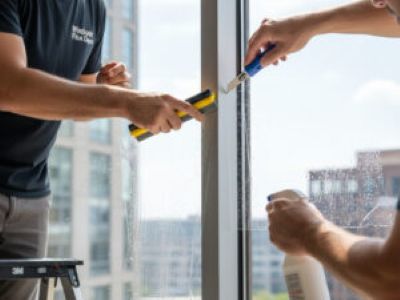
OSHA Compliance Considerations for Occupied Buildings and Active Work Zones
Window film installation in occupied commercial buildings creates OSHA compliance obligations that both the installer and the general contractor share. The primary concerns are fall protection on elevated work, hazard communication for adhesive solvents, and site access control in active construction zones. The installer’s safety plan should address each of these specifically for your project conditions.
In partially occupied buildings, the contractor must coordinate with building management on chemical storage and application in occupied areas, particularly in buildings with sensitive populations such as healthcare facilities. Solvent-based installation solutions require ventilation protocols that may affect HVAC operation during installation. Confirm these requirements with the installer before mobilization, not after a tenant complaint triggers a stop-work.
Scope Creep, Change Orders, and the Site Conditions That Derail Film Timelines
The most common sources of window film change orders on commercial projects are discovered glazing defects not identified in the pre-installation survey, film specification changes driven by late-stage design revisions, and access conflicts with other trades working in the same zones. The first is a vendor qualification issue. A thorough glazing survey catches most defects before mobilization. The second is a procurement timing issue. Film specification changes after award almost always cost more than getting the spec right before bidding.
Access conflicts are a site coordination issue. Window film installation requires unobstructed access to the glass surface, which puts it in direct competition with glazing subcontractors, millwork installers, and cleaning crews working in the same spaces. Map the access requirements into the master schedule and identify the specific zones where conflicts are most likely before work begins.
Code Compliance, Warranty Structures, and Long-Term Performance Accountability
Energy Code Alignment: What Your AHJ Will and Won’t Accept
AHJs vary significantly in how they treat post-installed window film as a compliance pathway, and assuming yours will accept film documentation the same way the last jurisdiction did is a common and avoidable mistake.
In jurisdictions following ASHRAE 90.1, film applied to existing glazing must be documented as part of the fenestration assembly performance, not as a standalone product. That means NFRC-rated assembly data for the specific film-plus-glass combination, not just the film’s published SHGC. Some AHJs will accept manufacturer-provided simulation data generated to NFRC 200 procedures as an equivalent. Others require tested assembly data from an accredited laboratory. Confirm which documentation pathway your AHJ accepts before the specification is finalized, because the answer changes what you require in the submittal.
For new construction projects using prescriptive compliance, film typically cannot retroactively bring a glazing assembly into compliance after the fact unless the original permit documents included film as part of the fenestration system design. On energy model-based compliance paths, film can be modeled as an assembly improvement, but the modeling methodology needs AHJ sign-off. Get that confirmation in writing before the energy model is locked.
Reading a Commercial Window Film Warranty: What the Fine Print Actually Covers
Most commercial window film warranties are product warranties, not performance warranties. That distinction is worth reading carefully. The manufacturer warrants against film defects (peeling, bubbling, excessive fading) but does not warrant that the film will achieve a specific SHGC reduction or deliver the energy savings your mechanical engineer projected.
The conditions that void coverage follow a predictable pattern:
- Installation by an applicator not factory-authorized for the specific product line
- Application to glass types excluded by the warranty (some warranties exclude heat-strengthened glass in high-solar-exposure orientations)
- Cleaning with products or methods not approved by the manufacturer
- Damage resulting from pre-existing glazing defects not documented before installation
The last point has direct implications for the glazing survey. If your installer doesn’t document substrate condition before mobilization and a warranty claim arises later, the manufacturer has grounds to attribute failure to pre-existing damage. A well-documented pre-installation survey isn’t administrative overhead. It’s the evidentiary record that supports a warranty claim.
Warranty term lengths also vary by product series and application type. Interior-applied solar control films on commercial buildings typically carry longer terms than exterior-applied films. Safety film warranties may be structured differently than solar control warranties even within the same manufacturer’s product line. Read each warranty against the specific product specified, not the manufacturer’s headline warranty claim.
Spandrel Glass, Curtainwall Glazing, and Film Compatibility Requirements
Spandrel glass and curtainwall systems present film compatibility challenges that don’t appear on standard office buildings with conventional punched windows, and they require explicit attention during specification. Curtainwall systems use spandrel glass panels to conceal floor slabs and structural elements, and these opaque panels, typically heat-strengthened or tempered, absorb more solar energy than vision glass because insulation backs them instead of conditioned air.
Adding solar control film to spandrel panels increases thermal stress in the glass by trapping absorbed heat. Manufacturers publish maximum allowable thermal stress values for their films on different glass types. If the calculated thermal stress in the spandrel assembly exceeds that threshold, the film specification creates a fracture risk that no warranty covers.
The compatibility analysis is not complex, but it requires glass type documentation (obtainable from the curtainwall shop drawings or the glazing subcontractor) and a manufacturer thermal stress calculation for each unique assembly condition. Specifying film on a curtainwall system without this analysis is a liability exposure, not just a performance risk. Require the installer to provide the thermal stress calculations as part of the submittal package before any film is applied to spandrel or heat-strengthened lites.
Structural silicone glazing systems present a different issue: film installation requires surface access and cleaning protocols that can affect the sealant perimeter. Confirm with the curtainwall manufacturer that your proposed installation method won’t compromise the structural silicone bond or the weather seal.
Selecting the Best Window Film for Large Commercial Buildings: How to Frame the Answer for Clients
When a client or CFO asks for “the best window film,” the question reveals a framing problem worth correcting early. There is no single best film for large commercial buildings. There is the best film for a specific building’s orientation, climate zone, glazing type, occupancy profile, and primary specification goal.
The answer your client actually needs is a matrix of decisions, not a product recommendation. For a glass-heavy office tower in a hot climate with a daylighting strategy, a spectrally selective solar control film with high VLT and low SHGC governs. A ground-floor retail tenant in a high-crime corridor, security-grade safety film takes priority over solar performance. For a federal facility with blast risk requirements, the specification is driven by UFC 4-010-01 compliance, not energy efficiency.
Framing this correctly accomplishes two things: it moves the conversation from price comparison to performance specification, and it positions you as the advisor who understands the building rather than the vendor selling a product. When you present a film recommendation backed by climate data, energy model inputs, and glazing survey findings, the decision is defensible. When you recommend “the best film on the market,” you’ve handed the CFO a price-comparison framework that will route the job to the lowest bidder.
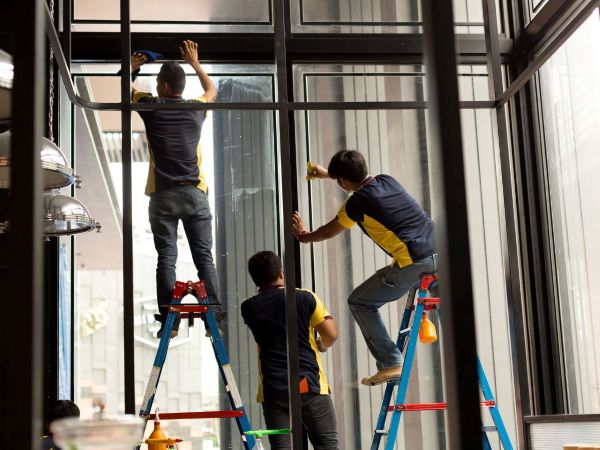
Quick-Reference Installer Qualification Checklist for Vendor RFP Submissions
Verify each item before shortlisting. Documentation must come from the issuing party, not from the installer.
Credentials
- Factory-authorized applicator status for the specified product line, confirmed directly with the manufacturer
- General liability insurance (minimum $2M per occurrence) with your entity named as additional insured
- Workers’ compensation coverage for all crew members performing on-site work
- State or local contractor licensing applicable to specialty trade work in the project jurisdiction
Technical Capability
- ASTM test reports for safety or blast-rated applications showing the tested assembly configuration, not just the film product
- Documented glazing survey process with a sample pre-installation report
- Thermal stress calculations for any spandrel or heat-strengthened glass in scope
- Shop drawing capability for projects over 10,000 square feet or involving multiple film types
Project Experience
- Minimum three references from commercial projects of comparable scale (square footage and building type)
- Documented experience with occupied-building phased installation, including a sample phasing plan
- On-time completion rate on commercial projects in the past 24 months with supporting reference contact
Program Capability (for multi-site projects)
- Evidence of national or regional workforce deployment across simultaneous project locations
- Single-point-of-contact project management structure with named project manager
- Unified supply chain and product sourcing documentation confirming no unauthorized substitution
Conclusion: Building a Defensible Window Film Specification Your Client Can Approve
Synthesizing Film Selection, Installer Qualification, and Project Logistics Into One Recommendation
A defensible commercial building window tinting specification has three components that must align: the right film for the performance goal, an installer qualified to deliver it, and a project execution plan that fits the construction schedule. A gap in any one of those three areas creates risk that the other two can’t compensate for.
Film selection without installer qualification means your performance spec is only as good as the applicator who executes it. Installer qualification without a project execution plan means you have a capable vendor and no schedule accountability framework. And a project execution plan built around an underspecified film means the building performs differently than the energy model projected, leaving you without clean answers when the client starts asking questions.
The recommendation your client needs is a single document that connects film type to performance rationale, installer credentials to project requirements, and installation sequencing to the master schedule. That document, whether it lives in the specification section, the subcontractor RFP, or a separate scope narrative, is what separates a defensible procurement decision from a vendor-recommended product.
How to Present the Window Film Scope to a Skeptical Client or CFO
The CFO’s objection to commercial window film is almost always framed as a cost question. The productive response reframes it as a risk question.
The cost of a properly specified and installed window film scope is knowable and bounded. The cost of an under-specified installation, including warranty-voided remediation, re-glazing from thermal fracture, an energy model that doesn’t close, and tenant complaints that generate lease disputes, is neither knowable nor bounded. Presenting the specification decision in those terms shifts the conversation from “why does this cost X?” to “what are we accepting if we value-engineer this?”
Highlight three key data points for the presentation: show the dollar value of the energy model difference between the base case and the film-enhanced fenestration assembly, outline the warranty risk from using a non-authorized installer, and reference a comparable project where the film scope produced proven results. These points directly address the CFO’s main concern—whether the spend is justified.
Next Steps: Scoping and Budgeting a Commercial Window Film Project With the Right Partner
Accurate budgeting for a commercial window film project requires a glazing survey before numbers go into the estimate. Square footage alone doesn’t produce a reliable budget. Glass type, building height, access conditions, film type mix, and occupied-building requirements all affect cost in ways that a square-foot multiplier won’t capture.
The sequence that produces a reliable scope and budget:
- Complete a glazing survey documenting glass type, condition, orientation, and access requirements for every zone in scope.
- Align film specification to the primary performance goal by zone, using the energy model and security requirements as inputs.
- Issue a qualified RFP using the installer qualification checklist to shortlist vendors with documented experience on comparable projects.
- Require a project-specific crew plan and phasing schedule from shortlisted vendors, not a generic installation rate.
- Evaluate bids against the specification, not against each other’s price per square foot. A lower unit cost from an unqualified installer is not a lower-cost option.
The right partner for this scope is a national installer with factory authorization, a documented track record on projects of comparable scale, and the project management infrastructure to own the schedule and the punch list. That combination exists in the market. The evaluation framework in this article is designed to help you find it and make the case for it to your client.
Frequently Asked Questions
How do I evaluate window film vendors for commercial projects?
Start by requiring factory-authorized applicator status for the specific product line, verified directly with the manufacturer, not through documentation the installer produces themselves. From there, evaluate reference projects that match your building type and square footage range, and ask vendors to provide their on-time completion rate on commercial projects with supporting references. The questions that separate qualified from unqualified vendors focus on project scale, glazing survey process, and occupied-building experience, not product knowledge alone.
What are the ASTM performance standards for commercial security film?
The primary standards governing safety and security film in commercial applications are ASTM F1642 (glazing systems subject to airblast loadings), ASTM F2912 (blast resistance of glazing), and ASTM F3561 (impact resistance). These standards define test protocols for complete glazing assemblies, not individual film products. When reviewing submittals, require the actual test report showing the tested assembly configuration and the accredited laboratory that performed the test. A compliance claim without a supporting test report tied to your specific glazing assembly is not an enforceable specification.
How long does commercial window film installation take?
A trained two-person crew typically installs 500 to 1,000 square feet per day on commercial glazing, depending on glass size, film type, building height, and access conditions. A building with 15,000 square feet of glazing could require three to six weeks with a single crew, though adding crews compresses that schedule proportionally. High-rise access, occupied-space protocols, and complex cutting patterns all reduce daily output. Request a project-specific crew plan from any shortlisted installer rather than relying on a generic square-footage estimate.
What certifications and insurance should a window film installer have?
At minimum, require factory-authorized applicator certification for the specified product line (confirmed with the manufacturer directly), general liability insurance at $2 million per occurrence or higher with your entity named as additional insured, workers’ compensation coverage for all on-site crew members, and any state or local contractor licensing applicable to specialty trade work in the project jurisdiction. For safety or blast-rated applications, also require ASTM test reports for the specific film-plus-glass assembly configuration, not just general product certifications.
Can window film be applied to existing buildings without structural changes?
In most cases, yes. Window film installs on the interior surface of existing glazing without modifying the frame, glazing system, or building envelope, and most jurisdictions do not require a building permit for standard interior film applications. The critical exception is tempered or heat-strengthened glass on solar-exposed facades, where certain high-absorption films can increase thermal stress enough to risk glass fracture. A glazing survey confirming glass type, condition, and any existing coatings is a required step before specifying film on any existing building, not an optional one.
What is the warranty and durability of commercial window film?
Commercial window film warranties from major manufacturers typically cover defects such as peeling, bubbling, cracking, and color change, with terms ranging from ten years to lifetime depending on the product series and application type. Interior-applied films generally carry longer warranty terms than exterior-applied films. Coverage is conditional on installation by a factory-authorized applicator and on the substrate meeting manufacturer specifications at the time of installation. A thorough pre-installation glazing survey that documents substrate condition is the evidentiary record that supports any future warranty claim, making it a contractual protection, not just a quality step.