Table of Contents:
- Why the Wrong Film Specification Is a Project Risk, Not Just a Product Mistake
- Understanding 3M Sun Control Window Film Technology: The Foundation for Smarter Specification
- Breaking Down the 3M Sun Control Series: A Commercial Specification Framework
- Matching Series to Project Requirements: Building Type, Climate, and Orientation
- Performance Standards, Certifications, and Verifiable Benchmarks
- Total Cost of Ownership: Building the Commercial ROI Case by Building Type
- The Commercial Installation Process: Managing a Large-Scale or Multi-Site Rollout
- Warranties, Durability, and Long-Term Performance in High-Traffic Commercial Environments
- Conclusion: De-Risking Your Next Window Film Specification with the Right Partner
- Frequently Asked Questions
Choosing the right 3M sun control window film is about far more than reducing glare or darkening glass. On commercial projects, the correct specification can lower cooling costs, improve occupant comfort, protect interiors, and reduce long-term project risk. The wrong choice can create change orders, performance complaints, and missed energy targets after handover. This guide explains how the major 3M film series differ, what performance metrics matter most, and how to match the right product to your building, climate, and operational goals.
Why the Wrong Film Specification Is a Project Risk, Not Just a Product Mistake
The Hidden Cost of Misspecification on Multi-Site Commercial Projects
A misspecified window film on a single-tenant office is a nuisance. Across a 20-location retail rollout, it becomes a budget crisis. The direct costs, including rework labor, film removal, and reorder lead times, are visible. The indirect costs are worse: delayed certificates of occupancy, tenant move-in disruptions, and HVAC commissioning failures traced back to a solar heat gain value that was never right for the glazing system installed.
Multi-site projects amplify every specification error by the number of locations. If a film with a solar heat gain coefficient of 0.35 gets specified for west-facing glazing in Phoenix when the mechanical engineer’s model assumed 0.19, you don’t have one building running hot. You have a systemic performance shortfall across your entire portfolio, and every facilities manager on the client side will surface it simultaneously.
How Film Selection Failures Surface Post-Handover
Film specification failures rarely announce themselves during installation. They show up three months after handover, when summer solar loads peak and tenants start calling facilities management about hot spots near the perimeter. By then, the construction manager has closed out the project, the installer has moved on, and the client is absorbing the operational cost of an HVAC system working overtime against a solar load it was never designed to handle.
The failure pattern is consistent: film was selected on visible light transmission alone to preserve views or meet aesthetic requirements, heat rejection and infrared rejection performance were treated as secondary, and nobody modeled the actual facade orientation against the building’s mechanical capacity. The result is a conflict between what the film looks like and what it needs to do. In commercial construction, that conflict always resolves in favor of physics, not aesthetics.
Framing the Decision: Film Specification as Risk Management
The right frame for film selection on a commercial project is not “which product performs best in a lab.” It is “which specification eliminates the most project risk given this building’s glazing type, orientation, climate zone, occupancy profile, and mechanical design assumptions.” Those are engineering inputs, not product preferences.
This reframe matters practically. It shifts the specification conversation away from catalog comparisons and toward a structured matching process: what does the building actually need to perform correctly post-handover, and which 3M sun control window film series delivers that performance reliably at scale? That question has a specific, defensible answer for most commercial building types, but only if the selection process starts with the building, not the brochure.
What This Guide Delivers for Construction and Renovation Managers
This guide covers the full sun blocking window film product ecosystem, five distinct series each engineered for different performance priorities, and gives you the technical vocabulary and decision framework to specify the first time correctly. It also addresses what most product-focused guides omit: how to manage the installation side of large-scale rollouts, what certifications and warranties actually protect you contractually, and how to build a defensible ROI case for a building owner who needs numbers, not claims.
Understanding 3M Sun Control Window Film Technology: The Foundation for Smarter Specification
How Solar Control Films Work
Every solar control film manages incoming solar energy through some combination of three mechanisms: reflection, absorption, and transmission. Reflective films bounce solar energy back before it enters the glass. Absorptive films capture solar energy within the film layer itself, then dissipate it as heat. Transmission describes the portion of energy, both visible light and near-infrared, that passes through to the interior.
No film operates through a single mechanism exclusively. The performance profile of any given product is determined by how those three mechanisms are balanced, and that balance determines suitability for different glazing systems, orientations, and occupancy types.
Spectrally Selective vs. Reflective Film Technology
Spectrally selective window film targets specific wavelengths of the solar spectrum, blocking near-infrared radiation (which drives heat gain) while allowing visible light to pass through at high rates. The result is a film that delivers significant heat rejection without the mirror-like exterior appearance of traditional metallic films. For commercial facades where aesthetics, daylighting, or exterior reflectivity restrictions apply, this distinction is often the deciding factor.
Reflective metallic films reject solar energy by bouncing it back from a metalized layer. They are effective and cost-efficient, but they reduce visible light transmission and create an exterior mirror effect that some building codes, HOA covenants, or tenant lease requirements prohibit. On a multi-site rollout, discovering this constraint after film selection adds a change order to every affected location.
Key Performance Metrics Every Project Manager Must Understand
Solar Heat Gain Coefficient (SHGC)
SHGC measures the fraction of solar energy that passes through a window system and becomes heat inside the building. A lower SHGC means less heat transferred. An unfilmed single-pane window typically has an SHGC around 0.86. Adding a high-performance spectrally selective film can bring that value to 0.19 or lower, a reduction that directly decreases the cooling load your HVAC system must handle during peak solar hours.
For a project manager, SHGC is the number to verify against the mechanical engineer’s design assumptions before specifying any film.
Infrared (IR) Rejection
IR rejection percentages describe how much near-infrared radiation the film blocks. Near-infrared is invisible to the eye but responsible for the radiant heat sensation occupants feel near glazing on sunny days. A film with 97% IR rejection eliminates nearly all of that radiant heat sensation, which matters in perimeter office zones where complaints about thermal discomfort are most common.
UV Blockage and Fade Resistance
Most 3M sun control films block approximately 99% of UV radiation below 380nm. In commercial interiors, UV blockage protects flooring, furnishings, merchandise, and artwork from accelerated fading. For retail clients, this is a direct asset protection argument. For office tenants, it reduces furniture replacement cycles and supports occupant health considerations.
Visible Light Transmission (VLT)
VLT is the percentage of visible light a film allows through. Lower VLT means more glare control but less natural light. Selecting a film primarily to maximize heat rejection without checking VLT against the client’s daylighting requirements is a common specification error, particularly in educational and office environments where daylighting targets are embedded in the design or lease terms.
Breaking Down the 3M Sun Control Series: A Commercial Specification Framework
The Five Series and Their Commercial Design Intent
3M Prestige Series: Spectrally Selective Performance at Maximum Clarity
The 3M Prestige Series is 3M’s highest-performance spectrally selective film line. It uses multi-layer optical film technology with no metals to reject up to 97% of infrared radiation and up to 60% of total solar energy while maintaining visible light transmission in the 40 to 70% range depending on the specific product. It is the right specification for projects where heat rejection performance must be maximized without altering facade appearance or reducing daylight meaningfully.
3M Traditional Series: Cost-Effective Solar Control for Standard Commercial Glazing
The Traditional Series uses metalized or dyed film technology to deliver solid heat rejection at a lower material cost than spectrally selective products. SHGC values typically range from 0.25 to 0.45. It is appropriate for budget-sensitive projects, interior-facing glazing, or locations where exterior reflectivity is not restricted. For large square footage rollouts with straightforward solar control requirements, the Traditional Series often delivers the best cost-to-performance ratio.
3M Ceramic Architectural Series: Non-Reflective Performance for Aesthetic-Sensitive Facades
The 3M Ceramic Architectural Series delivers high heat rejection through ceramic nano-particle technology rather than metallic layers. The result is a non-reflective film with neutral aesthetics where exterior appearance is virtually unchanged, while achieving meaningful solar control performance. This series fits premium commercial buildings where facade aesthetics are contractually specified or where reflective film is prohibited.
3M Night Vision Series: Low-Interior-Reflection Film for Perimeter Visibility After Dark
The 3M Night Vision Series is engineered to minimize interior reflections at night, solving a specific problem that standard solar control films create: films that perform well during daylight can produce a mirror effect on the interior surface after dark, obstructing perimeter visibility and degrading the occupant experience. For hospitality, high-rise residential, or any occupancy type where nighttime views matter to tenants, Night Vision addresses a complaint category that other series simply do not.
3M Exterior Solar Series: Retrofit Solutions for Inaccessible or Sealed Glazing Systems
The 3M Exterior Solar Series is applied to the outside of the glass rather than the interior surface. This matters on sealed glazing units, curtain wall systems, or insulated glass units (IGUs) where interior installation would void the glass warranty or is physically inaccessible without major disassembly. It is the correct specification path for post-construction retrofits on modern commercial facades where interior access is not viable.
What Is the Difference Between 3M Prestige and Traditional Series for Commercial Projects?
The performance gap is real and measurable. The Prestige Series rejects up to 97% of IR radiation. Traditional Series products typically reach 40 to 60% IR rejection. Prestige maintains higher VLT at equivalent heat rejection levels because it selectively targets the infrared spectrum rather than blocking broad-spectrum solar energy. Traditional films reduce both infrared and visible light proportionally, which means reaching the same SHGC target requires accepting lower VLT.
For a commercial office project where the design specification requires both heat rejection and daylight preservation, Prestige delivers both. Traditional films require a trade-off. The cost differential between the two series is real, but over a 10-year operating period, the energy and comfort performance of the Prestige Series typically justifies the premium on south- and west-facing facades in solar-intensive climates.
How to Choose Between Reflective and Non-Reflective 3M Films
Start with constraints, not preferences. Check whether local codes, building regulations, or lease terms restrict exterior reflectivity. Review whether the building’s property management agreement limits facade changes. Then assess whether the client or tenant has expressed any requirement about maintaining the building’s exterior appearance.
If none of those constraints apply, the decision shifts to performance and budget. Reflective films deliver strong heat rejection at lower material cost. Non-reflective options, including Prestige, Ceramic Architectural, and Night Vision, cost more but eliminate aesthetic concerns and, in the case of Prestige, deliver superior spectrally selective performance. On a multi-site rollout where buildings have different local restrictions, specifying a single non-reflective series across all locations often reduces procurement complexity and eliminates site-by-site compliance review.
Does 3M Prestige Series Work on All Window Types?
Prestige Series films are compatible with most commercial glazing types, including clear single-pane, clear double-pane, and low-E glass, with important qualifications. Installing solar control film on existing low-E glass requires compatibility verification because the combined solar energy absorption of film plus low-E coating can exceed the thermal stress tolerance of some glass types, risking seal failure or spontaneous breakage. Always verify glass type and manufacturer specifications before specifying Prestige on any glazing unit that may already carry a solar control coating.
Laminated and tempered glass are generally compatible. Wired glass and some specialty glazing types require case-by-case evaluation. On a multi-site project, conducting a glazing audit at the outset before film selection is finalized eliminates compatibility-driven change orders mid-installation.
Series Comparison Matrix
| Series | Total Solar Rejection | IR Rejection | UV Blockage | VLT Range | SHGC Range | Ideal Building Type | Climate Suitability | Facade Orientation | Price Tier |
|---|---|---|---|---|---|---|---|---|---|
| Prestige | Up to 60% | Up to 97% | ~99% | 40–70% | 0.19–0.35 | Premium office, high-rise, healthcare | All climates, high value in solar-intensive zones | South, west, east | Premium |
| Traditional | 30–50% | 40–60% | ~99% | 15–50% | 0.25–0.45 | Standard commercial, budget-sensitive retrofits | Moderate solar load climates | All orientations | Entry–Mid |
| Ceramic Architectural | Up to 55% | Up to 90% | ~99% | 35–65% | 0.22–0.38 | Aesthetic-sensitive facades, luxury retail, hospitality | All climates | South, west | Mid–Premium |
| Night Vision | 30–50% | 40–70% | ~99% | 35–55% | 0.28–0.42 | Hospitality, high-rise residential, perimeter-view offices | Moderate climates | All orientations | Mid |
| Exterior Solar | Up to 55% | Up to 80% | ~99% | 20–50% | 0.23–0.40 | Curtain wall, sealed IGU retrofits, inaccessible glazing | All climates | Any inaccessible facade | Mid–Premium |
The matrix above maps each series across its core performance envelope, but the right selection depends on building-specific inputs, not the table alone. Total solar rejection percentages describe whole-window system performance when film is applied to clear single-pane glass. Adding film to an existing double-pane or low-E system will produce different combined values. SHGC ranges reflect performance across each series’ product variants, not a single-product specification. Use certified NFRC ratings for any specification that will be submitted for energy code compliance or LEED documentation.
On the question of price tier: material cost is one variable in the total cost of ownership model. The energy savings difference between a Traditional and Prestige specification on south-facing glazing in a high-solar-load climate typically closes the initial cost gap within three to five years. The section on total cost of ownership later in this guide builds that model in detail.
Matching Series to Project Requirements: Building Type, Climate, and Orientation
Which 3M Sun Control Series Is Best for Commercial Office Buildings?
For most commercial office buildings, the Prestige Series is the defensible default on south- and west-facing perimeter glazing. But the right answer depends on what the mechanical engineer assumed about solar heat gain when sizing the HVAC system, and what the tenant’s lease terms say about daylight and views.
Office tenants are sensitive to two things that film directly affects: thermal comfort near the glass and glare on screens. Prestige addresses both without significantly reducing visible light, which makes it the specification that generates the fewest post-occupancy complaints. On a multi-tenant building where one floor’s perimeter zones are running significantly hotter than the core, you will hear about it from every facilities manager on that tenant’s account.
For budget-sensitive office retrofits with moderate solar exposure, the Traditional Series delivers adequate heat rejection at a lower material cost. The trade-off is higher reflectivity and lower VLT at equivalent SHGC values. On north-facing facades or in climates with limited peak solar hours, that trade-off is often acceptable.
Specification Logic for Educational Facilities
Educational facilities add three specification inputs that most commercial office projects do not carry: state energy code requirements for glazing systems, glare control requirements in instructional spaces, and in K-12 settings, considerations around safety glazing and film tear resistance.
Glare is the primary complaint driver in classrooms and computer labs. A film with VLT in the 40 to 55% range typically reduces glare to functional levels without making the space feel artificially dim. For gymnasiums and corridors where solar control is needed but daylighting is less critical, the Traditional Series handles the load at lower cost.
Energy code compliance is a non-negotiable input. Many states now require documented window performance values for renovation projects above certain square footage thresholds. Specifying a film with certified NFRC data and matching the combined window-plus-film SHGC to the code requirement is the only way to close out energy compliance documentation cleanly.
Retail Environments: Merchandise Protection and Storefront Visibility
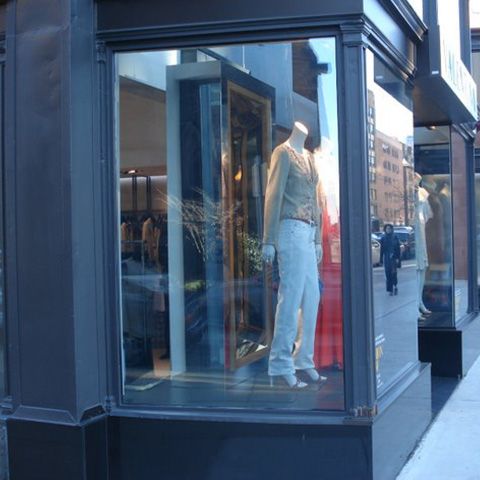
Retail specification is driven by two competing requirements: protecting merchandise from UV-induced fading and maintaining storefront visibility that drives foot traffic. Films that score high on one often compromise the other.
The Ceramic Architectural Series resolves this tension better than most. It delivers strong UV blockage at approximately 99% and meaningful IR rejection without the reflective exterior appearance that obscures window displays. For high-end retail where both merchandise protection and storefront presentation are non-negotiable, Ceramic Architectural is the right specification.
For retailers in high-solar-load climates where cooling costs are significant, the HVAC savings argument also applies. A film that reduces solar heat gain through large south-facing storefronts cuts the mechanical load during peak retail hours, directly reducing operating costs. That is a total cost of ownership argument, not just a product feature.
How Building Orientation and Climate Zone Shift the Specification Decision
South- and West-Facing Facades in High-Solar-Load Climates
South and west facades in climates like Phoenix, Dallas, Miami, or Los Angeles carry the highest peak solar loads and drive the strongest specification case for premium performance film. On west-facing glazing specifically, solar angles in the late afternoon create the worst combination of direct glare and radiant heat gain, exactly when office occupancy is highest.
For these facades, the Prestige Series delivers the largest performance delta over budget alternatives. The SHGC difference between a Prestige 40 (approximately 0.19 to 0.21) and a Traditional film at equivalent VLT (approximately 0.30 to 0.35) translates directly into measurable cooling load reduction. On a large west-facing curtain wall in a Sunbelt market, that difference is not marginal.
North-Facing and Low-Solar-Load Scenarios: When Premium IR Rejection Is Unnecessary
North-facing facades in temperate climates receive minimal direct solar radiation for most of the year. Specifying the Prestige Series on north glazing in Seattle or Minneapolis is over-specification. You are paying a premium for IR rejection performance that the building’s solar geometry rarely activates.
For these conditions, Traditional Series films handle glare control and UV blockage at a fraction of the cost, and the energy performance gap between series closes to the point where it does not influence payback period meaningfully. Part of disciplined specification is knowing when the premium product does not justify the premium price.
The Specification Matching Workflow: From Building Inputs to the Right Series
Guesswork in film specification costs money. A structured matching process eliminates most misspecification risk before the first roll is cut. It involves five practical steps.
- Collect mechanical assumptions. Pull the HVAC design documentation and identify the SHGC value the engineer used for each facade orientation. That number is your performance floor. The film you specify must meet or beat it.
- Map facade orientations. Note which elevations face south, west, east, and north. High-load orientations need higher-performance products. Low-load orientations open budget flexibility.
- Confirm glazing inventory. Single-pane, double-pane, low-E, laminated, tempered. Each type constrains which films are compatible, particularly on IGUs where thermal stress risk is a factor.
- Check aesthetic and code constraints. Reflectivity restrictions, energy code glazing requirements, and tenant lease terms eliminate options before performance comparison begins.
- Apply the series matrix. With constraints established, map remaining options to the performance requirements. This is where the comparison shifts from product preference to verified fit.
This process takes hours, not weeks, when a qualified installer drives it. The risk of skipping it is a specification that looks right on paper and underperforms in operation.
Performance Standards, Certifications, and Verifiable Benchmarks
NFRC Ratings: Reading and Comparing Certified Performance Data
NFRC (National Fenestration Rating Council) certification is the credibility anchor for any film specification that will be used in energy code compliance documentation, owner submittals, or client performance guarantees. These NFRC ratings are independently tested and standardized, which means they are comparable across manufacturers and defensible in a dispute.
The key values to extract from an NFRC rating are whole-window SHGC, visible light transmittance (VLT), and U-factor. NFRC rates the combined window-plus-film system, not the film in isolation, which means the ratings vary depending on the base glass type. Always match the NFRC rating to the glazing system actually installed, not to clear single-pane reference glass if your project uses double-pane or low-E units.
ENERGY STAR Qualification and What It Signals for Commercial Projects
ENERGY STAR qualification for window films signals that the product meets EPA-defined thresholds for solar heat gain and visible light transmittance in specific climate zones. For commercial projects, ENERGY STAR qualification is a procurement shortcut: it narrows the field to products that meet baseline performance standards without requiring independent analysis of every specification option.
Several 3M sun control window film products carry ENERGY STAR qualification for northern, north-central, south-central, and southern climate zones. Confirming zone-specific qualification before specification prevents a situation where a film qualifies in one climate region but not another on a multi-site rollout spanning different geographies.
LEED Contribution: How 3M Sun Control Films Support Credit Documentation
Window films can contribute to LEED credits primarily under Energy and Atmosphere (EA) and Indoor Environmental Quality (EQ) categories. EA credits require documented reductions in energy use intensity, which means the film specification must be supported by energy modeling data showing post-film SHGC values and projected cooling load reduction. EQ credits for glare control and thermal comfort require documented performance metrics including VLT, SHGC, and in some cases daylight analysis.
NFRC-certified products simplify this documentation because the performance values are third-party verified. Submitting certified data to a LEED reviewer is a cleaner process than relying on manufacturer-reported values alone, which can be questioned during review.
Why Certified Performance Data Protects the Project Manager
Post-handover disputes about film performance almost always come down to one question: can you prove the product you installed performs as specified? Certified NFRC data answers that question cleanly. It also establishes that the specification decision was based on verified, standardized performance values rather than marketing claims, which is important if a client attributes an HVAC performance problem to the film after occupancy.
If a building owner claims the film is not delivering the energy savings modeled at project approval, certified data lets you isolate whether the gap is a specification error, a glazing compatibility issue, or an HVAC commissioning problem. Without certified data, every party in that dispute can point fingers indefinitely.
Total Cost of Ownership: Building the Commercial ROI Case by Building Type
Is Sun Control Film Worth the Investment for Commercial Buildings?
Film delivers measurable ROI in buildings where solar heat gain is a significant contributor to cooling loads, which covers most commercial buildings with substantial west, south, or east glazing in climates with meaningful cooling seasons. The honest answer to whether it is worth the investment depends on four variables: cooling degree days at the project location, the ratio of glazing to floor area, the current SHGC of the existing glazing, and energy cost per kWh. In buildings where those variables align, payback periods of three to seven years are achievable. In buildings with minimal glazing or negligible solar exposure, the numbers do not support the investment.
The mistake is applying either blanket optimism or blanket skepticism. Each project needs its own model.
Energy Savings and Payback Period Models by Building Category
Office Buildings: Mechanical Load Reduction and Operational Cost Impact
Commercial office buildings in Sunbelt markets with significant west-facing glazing represent the clearest ROI case. Energy savings for solar control film in these conditions can vary considerably depending on baseline SHGC, climate, and operating hours. At typical commercial electricity rates, the annual cooling cost reduction from a well-specified installation can produce payback periods in the three-to-six-year range for a Prestige Series specification.
The mechanical load reduction also carries a secondary value: it reduces peak demand charges, which in many commercial electricity tariffs are assessed monthly based on peak consumption. Shaving peak solar loads can reduce demand charges independently of energy consumption reduction.
Educational Facilities: Energy Budget Alignment and Occupant Productivity
School districts and universities operate on constrained energy budgets and often carry deferred maintenance backlogs that make building upgrades difficult to fund. Film offers a lower capital cost per square foot than glazing replacement while delivering a meaningful portion of the energy performance improvement.
For a school with aging single-pane glazing in a hot climate, moving from an unfilmed SHGC of 0.86 to a filmed SHGC of 0.30 produces cooling load reductions substantial enough to ease mechanical system strain without a full HVAC replacement.
Research on thermal comfort and cognitive performance supports a connection between classroom temperature control and student focus, giving facilities managers an argument for film investment that extends beyond energy line items.

Retail Environments: Merchandise Protection and HVAC Savings
For retail clients, the ROI model includes two revenue-side inputs that office buildings lack: merchandise protection value and customer comfort impact on dwell time. UV-induced fading of displayed merchandise is a quantifiable loss. Clothing, flooring samples, furniture, and food products all degrade faster under direct solar exposure. A retailer who replaces sun-damaged floor displays on a seasonal cycle has a direct cost that film eliminates.
Combining energy savings and merchandise protection value typically produces shorter payback periods for well-specified retail installations in high-solar-load climates compared to office applications.
Material Cost, Installation Labor, and Maintenance: The Full TCO Model
A realistic total cost of ownership model for commercial window film includes four components.
- Material cost: varies by series, typically $2.50 to $8.00 per square foot for commercial-grade 3M sun control window film products depending on series and product variant.
- Installation labor: $2.00 to $5.00 per square foot for commercial installation, with complexity premiums for high-access glazing, large lite sizes, or occupied-building scheduling constraints.
- Maintenance: minimal under normal conditions. Standard commercial cleaning protocols are compatible with cured film and no periodic retreatment is required.
- Warranty coverage: typically 10 to 15 years for commercial installations through authorized installers, with prorated coverage in some product lines.
Total installed cost for a typical commercial project ranges from $5.00 to $12.00 per square foot. Measured against annual energy savings for a well-specified installation, the payback math is straightforward, but only when the savings projection is based on certified performance data, not optimistic assumptions.
What ROI Metrics to Present to a Building Owner
Building owners respond to three numbers: annual operating cost reduction, simple payback period, and projected savings over the warranty life of the product. Present them in that order.
Annual operating cost reduction is the most credible number because it is tied to a utility bill the owner already pays. Payback period converts the investment into a timeline that is easy to compare against alternative capital uses. Ten-year or fifteen-year cumulative savings put the investment in the context of the product’s actual useful life.
For LEED-pursuing clients, add credit contribution documentation as a separate deliverable. For clients with stated carbon reduction commitments, the kWh reduction translates directly into avoided emissions, which many organizations report as part of ESG metrics. Both arguments extend the value conversation beyond pure cost recovery.
The Commercial Installation Process: Managing a Large-Scale or Multi-Site Rollout
Can 3M Sun Control Film Be Installed on Existing Windows in Occupied Buildings?
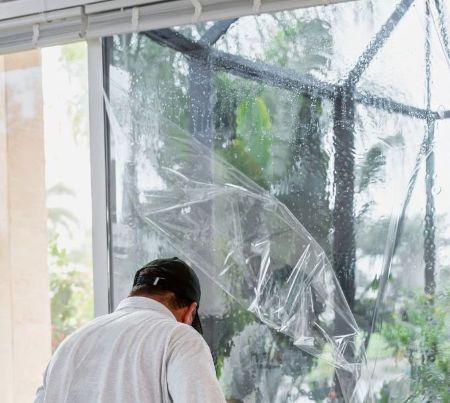
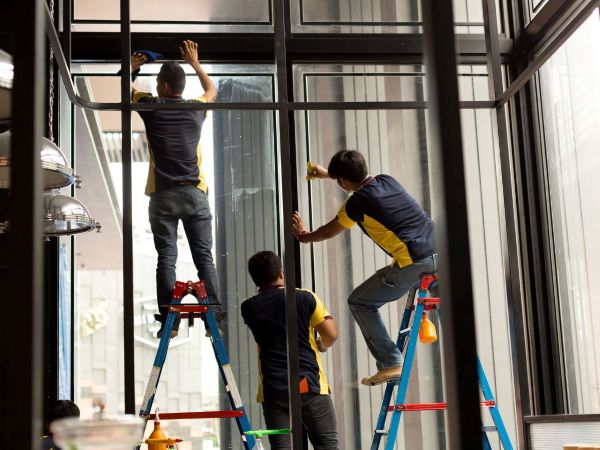
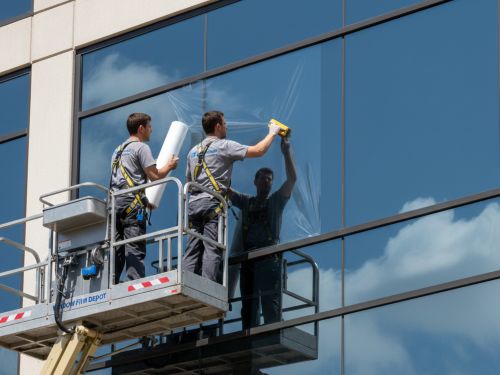
Yes, and it is the standard operating condition for most commercial retrofits. Film installation on occupied commercial buildings is low-disruption relative to other envelope upgrades. There is no demolition, no structural work, and no extended work windows required. A typical interior installation crew works one room or zone at a time, applying film to each window using water-based application solution, trimming edges, and clearing work areas before moving to the next zone.
The practical constraints are access and scheduling. Installers need access to window surfaces, which means furniture moved away from perimeter zones, window treatments removed, and in some cases access panels opened for high glazing. Coordinating this in an occupied building requires advance notification to tenants and facilities management, but it does not require building evacuation or operational shutdown.
How Long Does 3M Window Film Installation Take on a Large Commercial Project?
A trained two-person commercial crew can typically install 500 to 1,000 square feet of film per day, depending on glazing complexity, access conditions, and lite size. With multiple crews deployed simultaneously, a large project can compress to a manageable calendar timeline.
Cure time adds a scheduling consideration. Freshly applied film takes 30 to 60 days to fully cure, during which some haze or moisture pockets may be visible between the film and glass.
This is normal and resolves as the adhesive cures. Tenants in occupied buildings need to be informed of this in advance to prevent unnecessary service calls during the curing period.
Phased Installation Planning: Sequencing Work to Avoid Operational Disruption
On large commercial projects, phasing the installation by building zone, floor, or tenant space is the standard approach to managing operational impact. The sequencing logic follows two principles: work in the zones with highest solar gain first to deliver the most comfort improvement earliest, and align installation schedules with tenant availability and operational patterns.
For multi-tenant office buildings, scheduling installation floor by floor during off-peak hours or on a rolling weekly basis gives each tenant a defined installation window and minimizes simultaneous disruption across the building. For retail environments, installation during pre-opening hours or in sections of the store that can be temporarily closed is typically the most practical approach.
Multi-Location Rollout Coordination: Consistency Across Sites
A national or regional rollout across 20 or more locations introduces a coordination problem that single-site projects do not have: maintaining consistent installation quality and schedule adherence across geographically dispersed sites with different local conditions, building access protocols, and glazing configurations.
The failure mode for multi-site rollouts is fragmented vendor structures, where a general contractor subcontracts film installation to the lowest regional bidder at each location, producing inconsistent workmanship, variable product sourcing, and no single point of accountability when quality issues arise. The solution is a national installer with the crew depth, logistics infrastructure, and project management capacity to coordinate multi-site work under a single contract.
Consistency across sites requires standardized installation protocols, centralized product procurement to ensure the same film specification is applied at every location, and site-level quality inspection against a defined standard. Without those elements, a 50-location rollout will produce 50 different installation outcomes.
Installation Compatibility Considerations: Glazing Types and Building-Specific Constraints
Glazing type is the primary compatibility variable. Clear single-pane and clear double-pane glass accept most 3M sun control window film products without restriction. Existing low-E coatings require compatibility review because combined film-plus-coating absorption can generate thermal stress that exceeds the glass manufacturer’s tolerance, risking seal failure on IGUs or spontaneous breakage on tempered units.
Tempered glass is generally compatible with solar control film but is more sensitive to thermal stress than annealed glass, which means film selection on tempered units requires confirming that the product’s solar absorptance does not push total thermal stress above the glass manufacturer’s limit. Laminated glass and spandrel glass require case-by-case review.
On curtain wall systems and sealed IGUs where interior installation is not viable, the Exterior Solar Series is the correct specification path. Confirming this during the pre-installation glazing audit prevents mid-project scope changes.
What to Expect from a 3M Authorized Installer vs. a General Contractor Subcontracting the Work
A 3M Authorized installer has completed 3M’s product and installation training, uses 3M application tools and materials, and is qualified to activate 3M’s manufacturer warranty on behalf of the building owner. That authorization is not ceremonial. It is the mechanism by which the warranty becomes enforceable.
A general contractor subcontracting film work to an unlicensed or non-authorized installer may deliver a completed installation that looks acceptable initially. But if a warranty claim arises, such as film delamination, edge seal failure, or performance degradation, the building owner has no direct recourse to the manufacturer. The warranty chain breaks at the unauthorized installer, and the claim lands on the GC’s general liability policy rather than the product manufacturer’s warranty program.
On a project where the film specification is part of energy compliance documentation or tenant lease commitments, that warranty gap is a real contractual liability.
Single-Point-of-Accountability: Why Vendor Structure Determines Project Outcome on National Rollouts
The operational argument for a single-vendor structure on multi-site rollouts is straightforward: when something goes wrong, and on large projects something always does, a fragmented vendor structure produces finger-pointing while a single-vendor structure produces a solution.
A national installer who owns the specification, procurement, installation, and warranty activation across every location in a rollout has every incentive to resolve issues quickly, because the entire project relationship depends on performance at every site. A GC managing a patchwork of regional subcontractors has no equivalent accountability structure. Each subcontractor’s incentive ends at their location’s sign-off.
For a construction manager running a 20-location retail rollout, the vendor structure question is not administrative detail. It determines whether the project closes out on schedule with consistent quality documentation across all sites, or whether you spend the last month of the project chasing down location-by-location warranty registrations and correcting inconsistent installation records.
Warranties, Durability, and Long-Term Performance in High-Traffic Commercial Environments
How Long Does 3M Sun Control Window Film Last in Commercial Applications?
Commercial-grade 3M sun control window film installed by an authorized applicator on interior glass surfaces has a rated service life of 10 to 15 years under normal commercial conditions. That range reflects real variation based on solar exposure intensity, cleaning frequency, and glazing type. A south-facing window in Phoenix experiences significantly more cumulative UV and thermal stress than a north-facing window in Minneapolis, and film longevity reflects that difference.
For project planning purposes, 10 years is the conservative planning horizon for warranty coverage, and 12 to 15 years is realistic for well-maintained installations in moderate climates. The Exterior Solar Series, applied to the outside of glass, carries a shorter expected service life due to direct weathering exposure, typically seven to ten years depending on climate and maintenance protocols.
What the 3M Warranty Covers and What Project Managers Must Verify
3M’s commercial warranty covers defects in materials and workmanship, specifically film delamination, bubbling, cracking, peeling, and color change beyond defined tolerances. What it does not automatically cover is consequential damage from improper specification, installation on incompatible glazing, or cleaning with abrasive or solvent-based products that violate care guidelines.
Before specification, verify three things. First, confirm the warranty term for the specific product you are specifying, as terms vary across series and some products carry prorated coverage after year five or seven. Second, confirm that warranty activation requires installation by a 3M Authorized installer and that the installer will complete warranty registration at project close. Third, confirm that the warranty is transferable to the building owner, not held by the installing contractor. This matters on projects where the construction manager hands the building to a facilities team post-occupancy. A warranty that cannot be transferred to the end user is a gap in your project close-out documentation.
Durability Variables in High-Traffic Environments
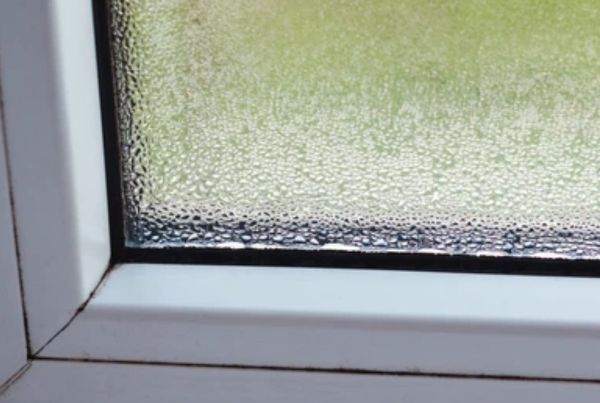
High-traffic commercial environments introduce durability stresses that low-occupancy buildings do not. In lobbies, retail storefronts, and school corridors, window surfaces are touched, cleaned more frequently, and exposed to cleaning chemicals that vary by janitorial vendor. Each of those variables affects film longevity if protocols are not established at handover.
The primary durability risks are:
- Abrasive cleaning tools such as scrub pads or nicked squeegee blades that create micro-scratches accumulating over time and degrading optical clarity.
- Solvent-based cleaning products, particularly ammonia-based glass cleaners that attack the adhesive layer and accelerate edge seal failure.
- Edge seal damage from film that is not trimmed cleanly or is exposed to pooling water, which can lift at the perimeter and create a visible delamination channel.
The fix is straightforward: provide facilities management with a one-page care protocol at project handover specifying approved cleaning methods, acceptable non-ammonia and non-abrasive cleaning products, and a note on the curing period during the first 60 days. That documentation also protects the project manager if a warranty claim is filed for damage caused by improper maintenance post-handover.
What Warranty and Support Does a 3M Window Film Installer Provide Beyond Manufacturer Coverage?
The manufacturer warranty covers the product. An authorized installer’s workmanship warranty covers the installation, including adhesion quality, edge trim precision, and absence of contamination or bubbling from the application process. These are separate coverages, and both matter on a commercial project.
A qualified commercial installer will typically provide a one- to two-year workmanship warranty on top of the 3M product warranty. More practically, a national installer with an ongoing service relationship can dispatch a technician to address warranty claims or early-life defects without routing through the manufacturer’s claim process, which moves faster and creates less disruption for the building owner.
Need More Info?
The Window Film Depot team is happy to help.
For multi-site rollouts, the installer’s post-installation support structure is as relevant as their installation capacity. A vendor who completes the work and disappears creates a warranty management problem across every location. A vendor who maintains a service relationship, tracking warranty registrations, responding to site-level issues, and coordinating with 3M on material claims, functions as a long-term project partner rather than a one-time subcontractor.
Quick-Pick Series Selector
| Building Type | Primary Priority | Budget Tier | Recommended Series |
|---|---|---|---|
| Premium office, healthcare, high-rise | Max heat rejection + daylight preservation | Premium | Prestige |
| Standard commercial office, retrofit | Cost-effective solar control | Entry–Mid | Traditional |
| Luxury retail, hospitality, aesthetic-sensitive facade | Non-reflective performance | Mid–Premium | Ceramic Architectural |
| Hospitality, high-rise residential | Nighttime view quality + solar control | Mid | Night Vision |
| Curtain wall, sealed IGU, inaccessible glazing | Exterior retrofit access | Mid–Premium | Exterior Solar |
| Budget-sensitive educational, north-facing glazing | Glare control + UV protection | Entry | Traditional |
Use this table to narrow the field quickly. Final specification should always be validated against NFRC performance data for the specific glazing system in play.
Conclusion: De-Risking Your Next Window Film Specification with the Right Partner
Recapping the Specification-as-Risk-Management Framework
Every section of this guide has returned to the same principle: film selection is an engineering decision with project risk consequences, not a product preference with aesthetic implications. An incorrect SHGC value on west-facing glazing creates an HVAC performance gap that surfaces after occupancy. The wrong series on a facade with reflectivity restrictions triggers a change order. Hiring the wrong installer on a multi-site rollout produces inconsistent quality documentation and no single point of accountability when issues arise.
The risk management frame matters because it changes the sequence of the decision. You start with building inputs, including orientation, glazing type, mechanical assumptions, and code requirements, and work toward the product. You do not start with a product and try to justify it against building conditions.
The Five Series at a Glance
Each 3M series solves a distinct commercial problem.
- The Prestige Series eliminates the trade-off between heat rejection and daylight on premium facades where both matter.
- The Traditional Series delivers adequate solar control at the lowest material cost for standard or budget-sensitive applications.
- The Ceramic Architectural Series removes aesthetic risk on facades where reflectivity is restricted or exterior appearance is contractually specified.
- The Night Vision Series solves the nighttime interior mirror effect that generates tenant complaints in hospitality and high-rise occupancies.
- The Exterior Solar Series provides a specification path for curtain wall and sealed glazing systems where interior installation is not viable.
The right specification is the one that matches the building’s constraints and performance requirements, not the highest-performing product in the catalog.
Why Installation Expertise and Project Accountability Are as Critical as Film Performance
A correct specification installed poorly delivers wrong outcomes. Film performance data describes what the product can do under ideal conditions. What it actually does in your building depends on whether the adhesive was applied without contamination, the edges were trimmed cleanly, the glazing compatibility was verified before the first roll was cut, and the warranty was registered under the correct building address and owner name.
On a national rollout, these execution details multiply by the number of locations. A vendor who treats each location as an independent job produces independent outcomes at every site. A vendor who treats the rollout as a single coordinated project, with centralized procurement, standardized protocols, and unified warranty documentation, produces a consistent and auditable result across every site.
That capability is not common in the window film market. Most regional installers have the product knowledge and the tools. Few have the logistics infrastructure and project management depth to execute a multi-location rollout under a single contract with consistent quality documentation.
Request a Commercial Project Consultation with Window Film Depot
Window Film Depot combines 3M product expertise with national installation capacity to manage multi-site commercial projects from specification through warranty close-out. If you are in the evaluation phase for a commercial film project, whether it is a single building or a portfolio rollout, a consultation with our commercial team will give you a specification recommendation tied to your building’s actual performance requirements, an installation plan that accounts for your operational constraints, and a single point of accountability through every phase of the work.
Contact Window Film Depot to schedule a commercial project consultation and get a specification-level recommendation for your project.
Frequently Asked Questions
Which 3M Sun Control Series Is Best for Commercial Office Buildings?
For most commercial office buildings, the Prestige Series is the strongest specification on south- and west-facing perimeter glazing because it maximizes heat rejection while preserving visible light transmission, which directly addresses the two most common tenant complaints: thermal discomfort near the glass and glare on screens. For budget-sensitive retrofits or north-facing facades with limited solar exposure, the Traditional Series delivers adequate performance at a lower material cost. The right answer in every case starts with the mechanical engineer’s SHGC assumptions and the building’s facade orientation, not the product catalog.
What Is the Difference Between 3M Prestige and Traditional Series Performance?
The core difference is how each film achieves solar control. The Prestige Series uses spectrally selective technology to target and block near-infrared radiation while maintaining high visible light transmission, achieving up to 97% IR rejection without a metallic layer or significant reduction in daylight. The Traditional Series uses metalized or dyed film technology that reduces both infrared and visible light together, meaning that reaching a lower SHGC target requires accepting lower VLT. On solar-intensive facades where both heat rejection and daylight matter, Prestige delivers both without compromise. On lower-load applications or tighter budgets, Traditional is often the practical choice.
How Long Does 3M Window Film Installation Take and Can It Be Done During Business Hours?
Yes, installers routinely perform commercial window film installation in occupied buildings during normal business hours. Crews work zone by zone with minimal disruption, and they do not require building evacuation or operational shutdown. Installation pace depends on glazing complexity and access conditions, but a trained commercial crew can typically cover 500 to 1,000 square feet per day. For large projects, deploying multiple crews simultaneously compresses the overall calendar timeline significantly. Plan for a 30 to 60 day curing period after installation during which some temporary haze may be visible and inform tenants in advance to avoid unnecessary service calls.
What Is the ROI on 3M Sun Control Window Film for Energy Savings?
ROI depends on four building-specific variables: cooling degree days at the project location, the glazing-to-floor-area ratio, the existing SHGC of the unfilmed glazing, and local energy cost per kWh. In commercial buildings with substantial south- or west-facing glazing in high-solar-load climates, payback periods of three to six years are achievable with a well-specified installation. Buildings with minimal glazing or limited solar exposure will see a longer payback horizon. The most credible ROI models use certified NFRC performance data and actual utility rates rather than generic estimates, and the mechanical load reduction may also lower peak demand charges independently of energy consumption savings.
Does 3M Prestige Series Work on All Window Types?
The Prestige Series is compatible with most commercial glazing types including clear single-pane and clear double-pane glass. Installation on existing low-E glass requires compatibility verification because the combined solar absorptance of film plus coating can exceed the thermal stress tolerance of some units, creating a risk of seal failure or spontaneous breakage. Tempered and laminated glass are generally compatible but require confirmation that the film’s solar absorptance does not push thermal stress above the glass manufacturer’s published limit. Wired glass and specialty substrates require case-by-case evaluation. Conducting a glazing audit before finalizing the specification on any multi-site project eliminates compatibility-driven change orders once work is underway.
What Warranty and Support Does a 3M Window Film Installer Provide?
3M’s commercial product warranty covers defects in materials and workmanship, including delamination, bubbling, peeling, and color change beyond defined tolerances, typically for 10 to 15 years on installations performed by a 3M Authorized installer. A qualified commercial installer adds a separate workmanship warranty, typically one to two years, covering the quality of the installation itself. Beyond warranty terms, the practical value of a national authorized installer is post-installation support: the ability to dispatch a technician directly to address site-level issues, track warranty registrations across multiple locations, and coordinate with 3M on material claims without routing through a slow third-party process. For multi-site rollouts, that service infrastructure is as important as installation capacity.