Table of Contents:
- Why “Bulletproof” Is the Wrong Word—and Why It Matters for Your Budget
- The Real Cost Drivers Behind 3M Security Window Film Projects
- What Installed Cost Actually Looks Like: A Realistic Price Framework
- Security Film vs. Full Glass Replacement: Building a Defensible ROI Case
- What a Qualified 3M Installer Looks Like, and How Qualification Affects Your Cost
- How to Request a Project Scope Consultation That Produces a Real Number
- From Cost Confusion to a Budget You Can Defend
- Frequently Asked Questions
Why “Bulletproof” Is the Wrong Word—and Why It Matters for Your Budget
The phrase “bulletproof window film” circulates widely in search results and vendor conversations, but it is technically inaccurate in ways that directly affect how you scope and budget a project. No window film stops a bullet. The correct term is bullet resistant, and understanding that distinction in specification language is the first step to building a cost estimate that holds up to scrutiny.
What “Bullet Resistant” Actually Means in Window Film Technology
Bullet resistance is a rated, graduated performance characteristic, not a binary state. When security film is applied to glass with appropriate anchoring, the assembly is designed to slow penetration, contain fragmentation, and delay forced entry. The degree to which it accomplishes any of those things depends on which standard governs the rating.
UL 752 Ballistic Ratings: What Each Level Protects Against
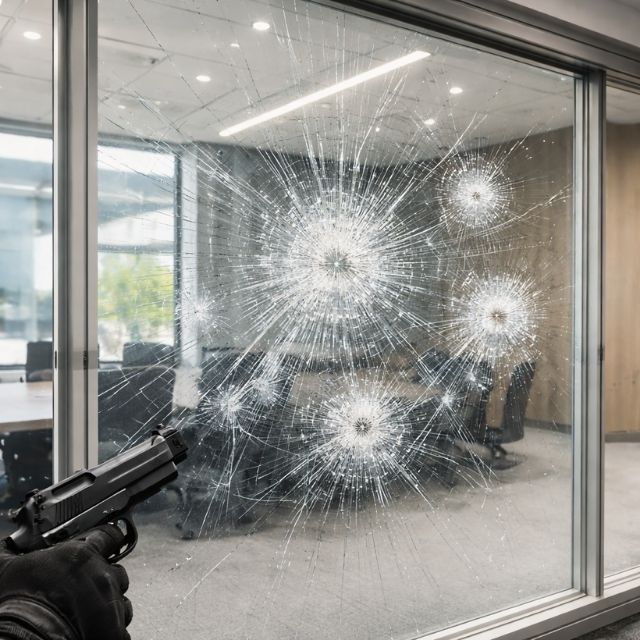
UL 752 is the standard most people mean when they say “bulletproof.” It tests glazing assemblies against specific calibers and shot counts across eight levels. Level 1 covers three shots from a 9mm handgun. Level 3 increases both shot count and velocity. And Level 8 covers 5.56mm rifle rounds. Each level represents a materially different assembly specification and a materially different cost.
Film-plus-anchoring systems can achieve lower UL 752 ratings when the correct substrate and installation method are used. They are not rated substitutes for purpose-built ballistic glass at higher levels. Specifying a UL 752 Level 3 assembly versus a Level 1 assembly changes every cost variable in a project.
ASTM F1233 Forced Entry Testing: A Separate Standard With a Separate Specification Path
ASTM F1233 tests resistance to forced manual entry using tools such as hammers, picks, and pry bars. It measures how long an assembly delays penetration across multiple attack grades. This standard governs a completely different threat scenario than UL 752 and drives a different specification path. Many institutional projects, particularly K-12 schools, require ASTM F1233 compliance without any ballistic requirement. Conflating the two standards in a scope document is one of the most common causes of mismatched quotes from different installers.
The Performance Spectrum: From Safety Film to GSA-Compliant Security Systems
Security window film is not a single product. It spans a wide performance range, and product selection drives a significant portion of installed cost.
3M Safety Series vs. 3M Scotchshield Ultra Series: Where Each Belongs
3M Safety Series films are designed primarily for glass fragmentation control. They hold broken glass in place during impact, reducing injury risk, and are appropriate for interior retail, general commercial, and low-threat applications. The 3M Scotchshield Ultra Series represents the upper end of the film performance spectrum, engineered for forced entry resistance and blast mitigation with documented test results. For GSA-compliant government facilities or high-threat institutional applications, the specification will almost always land in the Scotchshield Ultra category.
Blast Mitigation vs. Forced Entry: Two Distinct Performance Goals
Blast mitigation addresses overpressure from an explosion. The primary objective is preventing glass shards from becoming projectiles. Forced entry resistance addresses sustained manual attack.
An assembly optimized for blast mitigation may use a different film thickness, different edge detailing, and a different anchoring profile than one rated for forced entry. Projects with dual requirements need systems tested to both standards, which affects both product selection and installation cost.
Why Misunderstanding the Technology Leads to Misbudgeted Projects
When a project owner requests “bulletproof window film” without a defined performance standard, every installer quotes something different. One quotes a 4-mil safety film. Another quotes a 14-mil Scotchshield Ultra with C-Bond anchoring. A third quotes a film-plus-wet-glaze system engineered to ASTM F1233 Grade D. The square footage is identical. The quotes range from $8 to $45 per square foot installed. This is not installer inconsistency. It is specification ambiguity producing correct answers to different questions.
The Honest Limits of Film-Only Systems, and When Anchoring Changes the Equation
Film alone does not constitute a security system. Security window film applied without mechanical or structural attachment to the frame will hold glass fragments together on impact, but the entire glazing unit will still displace from the opening under sufficient force. Anchoring systems, whether C-Bond structural adhesive, mechanical edge attachment, or wet-glaze silicone, transfer load from the glass to the frame. That load transfer is what allows a film assembly to pass ASTM F1233 testing.
For any institutional application where code compliance or documented performance is required, anchoring is not an optional add-on. It is a functional component of the system, and it carries its own material and labor cost.
The Real Cost Drivers Behind 3M Security Window Film Projects
The gap between a $10-per-square-foot quote and a $45-per-square-foot quote for 3M security window film is not markup variance. It reflects real differences in five cost categories that most online pricing guides never address.
Film Specification: How Thickness, Rating Tier, and Series Affect Material Cost
Entry-Level Safety Film vs. Scotchshield Ultra Series: Cost Implications by Grade
Film thickness runs from 4 mil for basic safety applications to 14 mil and above for high-performance security. Material cost scales with thickness and series designation. A 4-mil 3M safety film costs a fraction of 3M Scotchshield Ultra Series film on a per-square-foot basis. Ultra Series products also carry tighter installation tolerances and require certified applicators, which affects labor cost independently of the material price difference. Specifying the wrong grade in either direction creates real project problems: over-specifying wastes budget, and under-specifying fails code review or performance requirements.
Glazing Anchoring Systems: The Line Item Most Budgets Miss
Anchoring is consistently the cost line that surprises project managers who received a material-only quote or a film-only installed price.
C-Bond Anchoring vs. Safety Attachment Systems: Performance and Price Differences
C-Bond is a structural adhesive applied to the film edge that bonds glass to the frame perimeter. Safety attachment systems use mechanical fasteners or wet-glaze silicone at the frame edge to create a continuous connection. C-Bond anchoring adds material cost and requires precision application, but it integrates visually and works on most standard frame types. Mechanical safety attachment systems cost more in both material and labor but may be required on high-threat or GSA projects. The installed cost difference between a film-only application and a film-plus-anchoring system on the same opening can be 40 to 80 percent.
Why ASTM F1233-Tested Anchoring Is Non-Negotiable for Institutional Applications
ASTM F1233 tests the complete assembly: film, glass, frame, and attachment method. A film product that passed F1233 testing in a lab using C-Bond anchoring has not passed that testing without it. If a school district’s security upgrade specification references ASTM F1233 compliance, any installer quoting film without tested anchoring is not quoting a compliant system. Accepting that quote and discovering the gap at the inspection stage means rework.
Glass Type, Age, and Condition: The Site Variables That Change Everything
Tempered, Laminated, and Annealed Glass: How Substrate Affects Preparation Cost
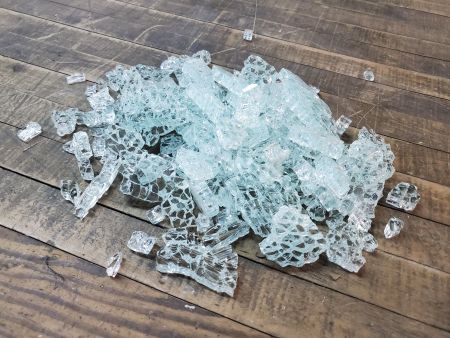
Tempered glass is the most common substrate in commercial buildings built after the 1980s. It accepts film well under standard conditions, but any surface contamination, scratch, or edge chip creates a stress point that can cause spontaneous breakage during or after installation.
Annealed glass is more forgiving during application but offers less inherent strength. Laminated glass already contains an interlayer and may require consultation before adding film, particularly for projects involving blast mitigation loads. Each substrate type carries different preparation requirements and different risk profiles.
What a Pre-Installation Glass Assessment Uncovers, and Why Skipping It Costs More
A professional glass assessment before installation identifies surface condition, glazing system type, seal integrity, and any existing damage. On a 50-opening school project, finding that a dozen of those openings have compromised seals or surface scratches after installation has started is an expensive problem. A pre-installation assessment that costs a few hundred dollars prevents glass replacement line items that cost several thousand.
Site Accessibility, Opening Count, and Facility Type
How Building Height, Interior Layout, and Access Restrictions Drive Labor Hours
Ground-floor retail with standard-height storefront glass and unrestricted access is the simplest installation scenario. A five-story government building with secured floors, limited elevator access, and hundreds of openings of varying sizes is not. Scissor lifts, man-lifts, and extended setup time for upper floors add equipment cost and reduce daily output per crew member. Both factors increase total labor cost independently of square footage.
School vs. Government Facility vs. Retail Chain: How Threat Level Shapes Specification
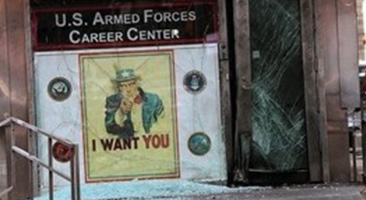
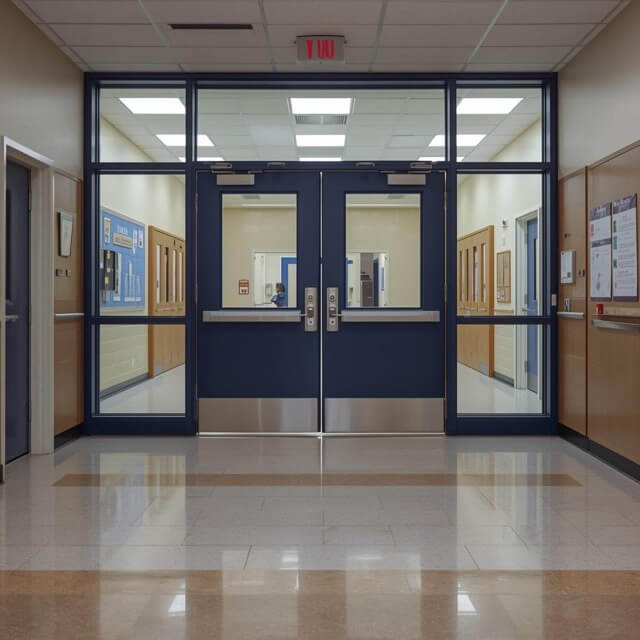
Threat level is a specification input, not just a security consideration. A school security upgrade typically targets ASTM F1233 forced entry resistance, because the primary threat scenario is an armed intruder attempting rapid entry. A government facility may layer ASTM F1233 and blast mitigation requirements under GSA or ISC guidelines. A retail chain may prioritize smash-and-grab deterrence with a mid-tier Scotchshield product and no anchoring requirement. Each profile produces a different bill of materials and a different labor scope.
Geographic Labor Markets and Project Scale
Why the Same Scope Quotes Differently Across Regions
Certified window film labor rates in high-cost metro markets run materially higher than rates in mid-tier cities. A 500-square-foot government lobby in San Francisco and an identical scope in a mid-sized Midwest city will produce different installed totals even with the same film specification. Regional labor market differences of 25 to 40 percent on the labor component are not unusual.
How Multi-Location Rollouts Change the Pricing Dynamic
Multi-location projects create volume leverage on materials but require coordination infrastructure that single-site projects do not. A 40-school district rollout benefits from standardized specs, bulk film pricing, and scheduled crew deployment. It also requires centralized project management, site sequencing, and quality control documentation across every location. Experienced national installers price this work differently than local shops, and the difference in execution reliability is significant.
Cost Driver Matrix: Building Type, Threat Level, and Estimated Installed Cost Range
The table below maps common building types against typical threat profiles, film grade requirements, anchoring system needs, and a realistic installed cost range per square foot. These ranges reflect complete installed systems, including film, anchoring where required, and standard labor. They assume standard accessibility and typical glass conditions.
| Building Type | Threat Profile | Film Grade | Anchoring Required | Installed Cost Range (per sq ft) |
|---|---|---|---|---|
| Retail storefront | Smash-and-grab deterrence | 3M Safety Series or entry Scotchshield | Typically not required | $8 – $15 |
| K-12 school | Forced entry / active intruder | Scotchshield mid-tier | ASTM F1233 tested system required | $18 – $32 |
| Commercial office | General safety / fragment control | 3M Safety Series | Optional, spec-dependent | $6 – $14 |
| Government facility (standard) | Forced entry plus blast mitigation | Scotchshield Ultra Series | Required, tested anchoring system | $28 – $50 |
| High-security government / embassy | Ballistic plus blast, ISC/GSA compliant | Ultra Series or higher | Mandatory, engineered system | $45 – $80+ |
| Multi-location retail chain | Smash-and-grab, standardized spec | Mid-tier Scotchshield | Not typically required | $10 – $18 (volume-adjusted) |
A few important notes on how to read these ranges. The lower end of each range assumes favorable site conditions: accessible openings, clean glass, single-story or easy interior access, and no custom frame work. The upper end reflects complex conditions such as upper-floor access, aged glass requiring assessment, custom frame profiles, or phased installation around occupied spaces. Anchoring system cost adds $4 to $12 per square foot on top of the film installation cost, depending on system type. Any project requiring post-installation performance documentation, such as GSA compliance certification, adds scope that is priced separately.
These figures are a planning framework, not a quote. The only accurate number for a specific project comes from a site-informed scope, and the variables above explain exactly why.
What Installed Cost Actually Looks Like: A Realistic Price Framework
Why “Per Square Foot” Is a Starting Point, Not an Answer
Per-square-foot pricing is a useful shorthand for early budget framing, but it collapses the moment you treat it as a planning number. The variance in security window film quotes is not random. It reflects what is and is not included in the figure being quoted.
Installed Cost vs. Material-Only Quote: What the Difference Actually Means
A material-only quote covers film and adhesive. A complete installed cost covers film, surface preparation, anchoring system components, labor, equipment, site coordination, and any post-installation documentation required by spec. On a typical school project with ASTM F1233 requirements, the installed cost runs two to three times the material-only cost. Comparing those two figures as if they represent the same scope is how budget shortfalls start.
A legitimate installed quote for a commercial or institutional project should include:
- Film material at the specified grade and thickness
- Surface cleaning and preparation per opening
- Anchoring system components where required
- Edge detailing and frame integration labor
- Equipment costs for elevated or restricted access areas
- Project management and quality documentation
Anything priced below those components is a partial quote. The missing line items will appear as change orders.
Realistic Installed Price Ranges by Project Type and Scope
The cost matrix in the previous section establishes ranges by building type. What follows is the reasoning behind those ranges, organized by application tier.
Light-Duty Safety Applications: Retail and Commercial Interiors
Ground-floor retail and standard commercial interior applications represent the most straightforward scope in security window film. Film grade is typically 3M Safety Series or entry-level Scotchshield. Anchoring is not usually required. Access is unrestricted and openings are standard height. Installed cost for these projects runs $8 to $15 per square foot under normal conditions. The main variables at this tier are opening count, glass condition, and any after-hours installation requirements for occupied retail.
Mid-Tier Forced Entry and Blast Mitigation: School and Institutional Projects
School security upgrades are the most common mid-tier application, and they consistently produce the widest range of quotes because specification clarity varies so much at the district level. A correctly specified K-12 project targeting ASTM F1233 forced entry resistance with tested anchoring runs $18 to $32 per square foot installed. Projects with legacy single-pane glass, irregular frame profiles, or phased installation around occupied classrooms land at the upper end.
The critical variable at this tier is whether the anchoring system is included and which system is specified. A mid-tier Scotchshield film installed without anchoring costs less but does not constitute an ASTM F1233 compliant assembly. That distinction matters when the project goes to code review or an insurance underwriter.
High-Specification Ballistic-Rated Systems: Government and High-Security Facilities
GSA and ISC-compliant projects at the upper end of the performance spectrum involve engineered systems, documented test results, and installation methods that must match the tested assembly exactly. Film is typically 3M Scotchshield Ultra Series. Anchoring is mandatory and must match the tested system specification. Installed costs run $28 to $80 per square foot for standard government facilities, with high-security or embassy-class applications exceeding that range when the threat profile requires layered performance standards.
At this tier, the installer’s credentials and documentation capabilities are as important as the installation itself. GSA-compliant projects require certification that the installed system matches tested performance parameters. An installer without that documentation history cannot close out the project.
Does Window Film Actually Stop Bullets?
This is the question behind most searches for 3M bulletproof window film cost, and the honest answer is no. Window film does not stop bullets on its own, and no responsible manufacturer claims it does. Film increases the energy required to penetrate glass and contains fragmentation, which reduces injury risk and delays forced entry.
At lower UL 752 ballistic ratings, film-plus-anchoring assemblies on appropriate glass substrates can achieve tested resistance to handgun calibers. At higher threat levels, purpose-built ballistic glazing systems are the correct specification, not film. The practical implication for budgeting: any scope framed around “bulletproof film” needs to be requalified against an actual performance standard before a credible cost estimate is possible.
The Hidden Costs That Inflate Final Invoices
Site Survey and Glass Preparation Fees
Professional site surveys are typically priced as a separate line item on commercial projects, not bundled into the installed cost per square foot. On a 200-opening institutional project, a thorough pre-installation assessment covers glass condition, frame type, substrate verification, and access logistics. That work directly reduces the risk of glass breakage during installation and prevents scope surprises mid-project. Expect $300 to $1,200 for a professional assessment depending on facility size and location.
Surface preparation for aged or contaminated glass adds labor time per opening. Hard water deposits, paint overspray, and construction adhesive residue all require chemical or mechanical removal before film application. A project manager who reviews a quote and does not see a preparation line item should ask what happens if the glass requires cleaning beyond standard conditions.
Frame Reinforcement, Edge Detailing, and Post-Installation Testing
Older frame profiles, particularly aluminum storefronts installed before current standards, may require reinforcement before anchoring systems can be applied effectively. Edge detailing on irregular frames, curved glass, or multi-lite window walls adds labor hours that flat per-square-foot pricing does not capture. Post-installation testing, where required by spec, adds scope and cost that must be contracted separately.
Equipment, Insurance, and Mobilization for Large or Multi-Story Projects
Upper-floor work on multi-story facilities requires lifts, scaffolding, or specialty access equipment. That equipment carries daily rental costs plus operator time, fuel, and logistics. On a five-story government building, equipment costs can represent 10 to 20 percent of total project cost on upper floors. Multi-site projects also carry mobilization costs for crew travel, lodging, and equipment transport that do not appear in a simple per-square-foot figure.
How to Interpret Wildly Different Quotes for the Same Square Footage
When two quotes for identical square footage differ by 50 percent or more, the difference is almost never markup. It is scope. One installer quoted a film-only system. Another quoted a tested film-plus-anchoring assembly with site assessment included. A third quoted a product tier below the specification requirement. Before treating the lowest quote as the most competitive, confirm that every quote includes the same scope: identical film grade, identical anchoring specification, identical documentation requirements, and identical access assumptions. Scope-equivalent quotes from qualified installers will be far closer than the initial spread suggests.
Security Film vs. Full Glass Replacement: Building a Defensible ROI Case
The Honest Comparison: What Film Can Match and Where It Falls Short
Laminated Safety Glass vs. Film-Plus-Anchoring: Performance and Code Parity
Laminated safety glass contains a PVB or ionoplast interlayer bonded between glass lites during manufacturing. Film-plus-anchoring systems bond a polyester film to the surface of existing glass and attach it structurally to the frame. For fragment retention and moderate forced entry resistance, a properly installed film-plus-anchoring assembly on annealed glass performs comparably to laminated safety glass at a fraction of the replacement cost.
The gap between the two options widens at higher performance tiers. For blast overpressure above certain thresholds or UL 752 ratings above Level 3, purpose-built laminated or polycarbonate composite glazing outperforms any film system. The right recommendation depends entirely on the required performance rating, not on a preference for one product category.
Need More Info?
The Window Film Depot team is happy to help.
Total Cost of Ownership: Installation Cost, Maintenance, and Longevity
Film systems carry a significantly lower upfront cost than full glazing replacement. For a 200-opening K-12 project, full laminated glass replacement can run four to eight times the installed cost of a film-plus-anchoring system at equivalent forced entry performance levels. The tradeoff is longevity and maintenance profile.
Film Warranty Terms and What They Cover Over a 10-to-15-Year Horizon
3M commercial security film warranties typically cover manufacturing defects, adhesion failure, and significant optical changes such as bubbling, delamination, or discoloration over a 10 to 15-year term. Warranty coverage applies to film installed by authorized dealers using documented methods. It does not cover glass breakage, frame damage, or performance degradation caused by improper installation.
Over that warranty horizon, film systems require periodic inspection for edge seal integrity, particularly on exterior applications, and occasional cleaning with non-abrasive solutions. The maintenance burden is low. At end of warranty life, film can be removed and replaced at a fraction of the original installation cost, which is not an option with bonded laminated glass.
How to Frame the Investment for a Facilities Director or Project Owner
When Security Film Is the Fiscally Responsible Specification Choice
Film-plus-anchoring is the correct specification when existing glass substrates are structurally sound, the required performance rating falls within what tested film systems can achieve, and the project budget cannot support full glazing replacement. For a school district upgrading multiple buildings to ASTM F1233 forced entry compliance, the cost differential between film and full replacement is frequently measured in millions. When the performance requirement is achievable with film, there is no credible argument for the more expensive alternative.
When Full Glazing Replacement Is the Correct Recommendation
Full replacement is the right call when existing glass is tempered in a configuration that cannot accept film safely, when the threat profile requires UL 752 performance above Level 3, when the glazing system is at end of life for other reasons, or when blast mitigation requirements exceed what any film system has been tested to achieve. An experienced installer will tell you this directly rather than spec a film system that cannot meet your performance requirement. If an installer is not asking about your performance standard before quoting, that is a qualification concern worth taking seriously.
What a Qualified 3M Installer Looks Like, and How Qualification Affects Your Cost
Why 3M Authorization Matters Beyond the Brand Name
3M authorization is not a marketing designation. It governs product access, warranty backing, and installation method requirements.
How Authorized Dealer Status Affects Warranty Backing and Product Access
3M’s commercial security film warranty is backed only when the product is installed by an authorized dealer using approved methods. An unauthorized installer may source 3M film through distribution channels, but any warranty claim runs through the installer rather than 3M, and coverage terms differ. On a government or institutional project where the owner requires manufacturer warranty backing as a contract deliverable, authorized dealer status is a requirement, not a preference. It also affects which products are available, as Scotchshield Ultra Series products and certain high-performance assemblies are not available through general distribution.
The Credentials That Signal Real Commercial Project Experience
For commercial and institutional projects, the credentials that matter are practical and documented: demonstrated knowledge of UL 752 and ASTM F1233 testing standards, experience installing assemblies to match tested system specifications, GSA project history where applicable, and commercial general liability coverage scaled to the project size. Request project references by building type. A credentialed residential installer with limited commercial experience will misprice and misspecify a government facility project, even with 3M authorization in hand.
Is 3M Scotchshield Worth the Cost Compared to Generic Security Film?
On any project where performance documentation matters, yes. 3M Scotchshield Ultra Series products carry independently tested performance data, documented installation protocols, and manufacturer warranty backing that generic security films typically do not provide. For GSA-compliant projects, the specification will reference tested systems explicitly, which eliminates generic alternatives. For school or government projects where code review or insurance underwriting requires documented performance, generic film without third-party test data creates a compliance gap that no amount of low pricing offsets.
Meanwhile, for basic commercial safety applications where fragment retention is the only goal and no compliance documentation is required, the cost difference between Scotchshield and a quality generic film warrants evaluation on a project-by-project basis.
Why Installer Experience Directly Affects Your Final Project Cost
Under-Specified Systems, Rework Risk, and What They Cost in Change Orders
An under-specified system costs less to install and more to correct. If an installer applies a film-only system to a school project that requires ASTM F1233 anchoring, the project fails compliance review. Removing and replacing film with anchoring on completed openings costs more than installing the correct system the first time, and the delay carries its own schedule cost.
On a multi-school district rollout, one specification error replicated across hundreds of openings is a significant rework exposure. Installer experience is directly reflected in whether the initial specification is correct and whether the project closes without change orders.
National Installer Partnerships for Multi-Location or Large-Scale Projects
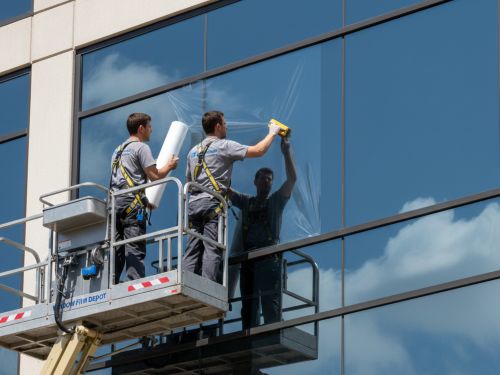
Multi-location projects managed through a national installer partnership produce pricing consistency that regional bidding does not. A national partner applies a standardized specification across every site, coordinates crew scheduling to match the project timeline, and provides single-source accountability for quality documentation and warranty coverage. Local installers may be more competitive on a single-site basis, but the coordination overhead of managing multiple regional vendors on a synchronized rollout erodes that cost advantage quickly. For a project owner or facilities director approving a multi-site upgrade, single-source accountability also simplifies the contract structure and reduces the risk of specification drift across locations.
How to Request a Project Scope Consultation That Produces a Real Number
Can You Get an Accurate Estimate Online?
An online estimate can give you a planning range. It cannot give you a project number. The gap between those two things is exactly what this article has been mapping: film grade, anchoring requirements, glass condition, access complexity, and geographic labor costs all vary by site, and none of them are visible from a zip code and a square footage figure.
An accurate estimate requires a defined scope: a known film specification, a documented opening count and size, a glass substrate assessment, an anchoring determination, and a clear picture of site access. Without those inputs, any number you receive online is a placeholder, not a budget figure. It may be useful for a rough feasibility check, but it will not hold up in a project budget meeting.
The Five Questions Every Quote Request Should Answer Before a Scope Call
Coming to a consultation with answers to these five questions compresses the scoping process and gets you to a real number faster.
Building Type and Threat Level
The facility type and the defined threat scenario determine the performance specification. A school targeting forced entry deterrence, a government facility with blast mitigation requirements, and a retail location addressing smash-and-grab represent three different specs. Without this input, an installer cannot select the correct film grade or determine anchoring requirements.
Number and Size of Openings
Total square footage matters less than opening inventory. A 5,000-square-foot project spread across 200 small openings requires significantly more labor than the same square footage in 20 large lites. Know your opening count and have approximate dimensions for the largest and smallest openings before the call.
Existing Glass Specification and Condition
Tempered, annealed, and laminated glass respond differently to film installation and anchoring. Aged glass with surface contamination, scratches, or compromised seals adds preparation cost and risk. If you have facility drawings with glazing specs, bring them. If not, an honest “unknown” is more useful than a guess, because it triggers the right conversation about pre-installation assessment.
Anchoring System Requirement and Code Constraints
If the project references ASTM F1233 compliance, GSA guidelines, or a specific school safety code, state that explicitly. The anchoring system requirement flows from the performance standard, and the performance standard is what determines whether a film-only quote is even a valid comparison for your scope.
Project Timeline and Geographic Scope
Installation timeline affects crew scheduling, material procurement, and whether a phased approach is needed for occupied facilities. Geographic scope determines whether a national deployment strategy or regional coordination applies. Multi-site rollouts with tight sequencing require more planning infrastructure, and that cost needs to be scoped from the start.
Desktop Estimate vs. Professional Site Survey: Knowing Which One You Need
A desktop estimate uses the information you provide to apply known cost parameters to your scope. It is a calibrated range based on building type, opening count, and specification tier. It is useful for early budget approval and feasibility comparison, and it can be produced without a site visit.
A professional site survey is a physical inspection of the facility. It covers glass condition opening by opening, frame profiles, access logistics, and any substrate issues that would change the installation approach. It produces a line-item scope, not a range. On any project above a few hundred square feet, or any project with ASTM F1233 or GSA requirements, a site survey is the only basis for a contract-ready number. The cost of the survey is marginal relative to the change order exposure it eliminates.
Project Readiness Quick-Check
Before requesting a project quote, confirm you can answer the following:
- What type of facility is this, and what is the defined threat scenario?
- How many openings require film, and what are the approximate dimensions?
- Do you know the existing glass type, age, and current condition?
- Does the project reference a performance standard such as ASTM F1233 or a GSA guideline?
- What is your target installation timeline, and does the facility need phased scheduling around occupancy?

If you can answer all five, you are ready for a scoping call that produces a real number. If two or more are unknown, a site survey should be the first step.
How Window Film Depot Structures a Commercial Project Consultation
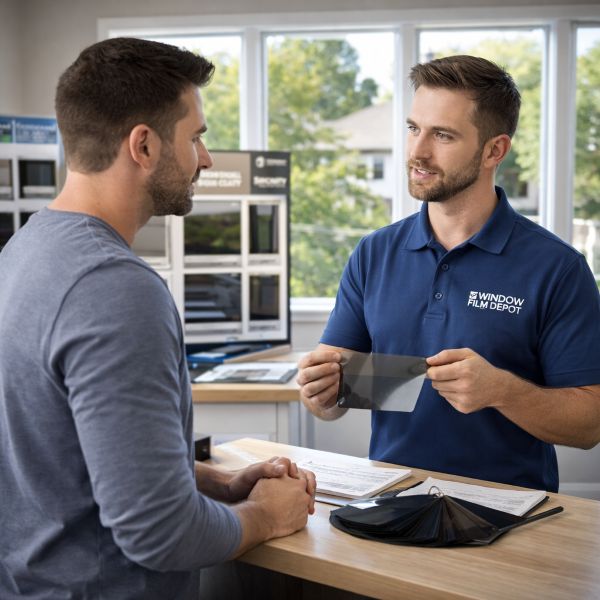
Window Film Depot’s commercial consultation starts with those five scope inputs and moves directly to specification. The process is built around producing a defensible project number, not a range that requires a dozen follow-up questions to become useful.
For projects with defined performance requirements, the consultation covers film grade selection, anchoring system determination, and documentation requirements in the first conversation. For projects where the threat level or performance standard is not yet defined, the consultation includes a threat scenario review to arrive at the correct specification before pricing begins. Site surveys are coordinated for projects where glass condition or access complexity is unknown.
The output is a scope-specific installed cost estimate that breaks out film material, anchoring system, labor, access equipment if required, and any assessment or documentation fees as separate line items. That structure lets you defend each component to a project owner or facilities director independently, rather than presenting a single total with no supporting detail.
From Cost Confusion to a Budget You Can Defend
Why Generic Price Ranges Fail Project Managers
Generic per-square-foot ranges for 3M bulletproof window film cost fail because they answer a simpler question than the one you are actually asking. They tell you what film costs in favorable conditions on standard substrates with unrestricted access. They do not tell you what your project costs with your glass, your building, your anchoring requirement, and your timeline. What replaces them is a scope-informed estimate built on the actual variables of your facility.
The Variables That Matter Most When Scoping a 3M Security Film Project
The variables that drive the most cost variance, in order of impact, are performance specification and anchoring requirement, glass condition and substrate type, site accessibility and opening complexity, and geographic labor market. Film grade is significant but more predictable once the specification is defined. The hidden costs, anchoring, preparation, equipment, and documentation, are what separate a planning range from a project budget.
Why an Experienced National 3M Installer Is the Only Reliable Source for Accurate Numbers
A qualified national installer has reference data from enough similar projects to calibrate estimates against real outcomes. They know where costs run high on government facilities, where school projects produce surprises, and what multi-site rollouts actually cost to coordinate. That pattern recognition does not exist in an online estimator or a residential installer quoting their first institutional job. The accuracy of your budget depends directly on the experience depth of the source providing the numbers.
Your Next Step: Request a Project-Specific Scope Consultation with Window Film Depot
If you have a project in scoping, bring the five inputs from the readiness check above to a consultation with Window Film Depot. If you are still at the feasibility stage, a desktop estimate based on building type and opening count will give you a defensible planning range for initial budget approval. Either way, the path to a number you can stand behind starts with a conversation structured around your specific project, not a generic price guide.
Frequently Asked Questions
What factors cause the biggest price differences between 3M security film quotes?
The largest driver of quote variance is specification scope, specifically whether the quote includes a tested anchoring system or covers film only. Film grade, glass substrate condition, site accessibility, and geographic labor rates each contribute additional variance. Two quotes for identical square footage can legitimately differ by 50 percent or more when one includes ASTM F1233-compliant anchoring and site assessment while the other covers film and basic labor alone.
What is included in the installation cost, and what are common add-ons?
A complete installed cost should include film material at the specified grade, surface preparation per opening, anchoring system components where required, edge detailing and frame integration labor, and equipment costs for elevated or restricted access. Common add-ons that appear as separate line items include professional site surveys, post-installation performance documentation for GSA or code compliance, frame reinforcement on older aluminum profiles, and mobilization costs for multi-site projects.
How does threat level affect the total cost of a security film project?
Threat level is the primary specification input, and it cascades through every cost variable. A retail smash-and-grab deterrence application using 3M Safety Series film without anchoring runs $8 to $15 per square foot installed. A K-12 school project requiring ASTM F1233 forced entry compliance with tested anchoring runs $18 to $32. A GSA-compliant government facility with blast mitigation requirements and engineered anchoring systems runs $28 to $80 or more. Moving up the threat spectrum changes film grade, anchoring requirements, documentation scope, and labor complexity simultaneously.
Is 3M Scotchshield worth the cost compared to generic security film brands?
For any project requiring documented performance, code compliance, or manufacturer warranty backing, yes. 3M Scotchshield Ultra Series carries independently tested performance data and documented installation protocols that generic security films typically cannot match. On GSA-compliant projects, specifications frequently reference tested systems by designation, which eliminates generic alternatives entirely. For basic commercial applications where fragment retention is the sole objective and no compliance documentation is required, the cost difference warrants a project-by-project evaluation.
Can I get an accurate cost estimate online, or do I need an in-person survey?
An online or desktop estimate can produce a useful planning range for early budget framing and feasibility review. It cannot produce a contract-ready number. Accurate project pricing requires known film specification, verified opening inventory and dimensions, glass substrate assessment, anchoring determination, and site access information. For any project with ASTM F1233, GSA, or code compliance requirements, a professional site survey is the only basis for a number you can defend in a project budget meeting.
What is the typical payback period or ROI for security window film in a school or retail setting?
The ROI case for security window film is most compelling when compared against full glazing replacement, where film-plus-anchoring systems at equivalent forced entry performance levels typically cost a fraction of the glass replacement alternative. For retail applications, documented reductions in smash-and-grab loss and lower insurance premiums contribute to payback calculations, though timelines vary by location and incident history. For schools and government facilities, the investment is more accurately framed as a code compliance and risk mitigation cost than a traditional ROI calculation, with the financial justification built on avoided liability and verified performance documentation rather than revenue recovery.