Table of Contents:
- Window Film vs. Window Tint: Why This Distinction Is Critical for Your Project’s ROI
- Beyond Color: The Key Metrics Defining Professional Window Film
- Why Expert Installation is Non-Negotiable for Commercial Window Film
- A Checklist for Specifying the Right Window Film Tint
- A Strategic Approach to Window Film and Project Success
- Frequently Asked Questions
- Related Posts from Window Film Depot
Window Film vs. Window Tint: Why This Distinction Is Critical for Your Project’s ROI
On any commercial project, precision is a prerequisite for success. Failing to distinguish between basic window tint and engineered window film is a common but costly oversight. One is a generic term for a simple colored layer, while the other is a technical specification for a multi-layered, performance-driven product. Understanding this difference is fundamental to achieving project goals for energy efficiency, occupant comfort, and long-term asset value.
From a Generic Term to a Professional Specification
In casual conversation, “window tint” is understood to mean a product that darkens glass. In the context of a commercial build-out or renovation, this term is dangerously imprecise. It focuses on a single aesthetic attribute, color, while ignoring the critical performance metrics that deliver tangible returns.
Specifying “window film” elevates the conversation to a professional requirement. It signals a shift in focus toward measurable outcomes. An engineered film is not chosen for its color alone but for its specific, lab-tested ability to reject solar energy, reduce glare, block ultraviolet radiation, and improve the safety of the glass itself. This level of specification is how project managers mitigate risk and ensure the final installation aligns with a client’s strategic objectives.

The Costly Oversight of Treating Film as a Commodity
When window film is treated as a commodity, the primary decision driver becomes price per square foot. This approach inevitably leads to sourcing lower-quality materials and, just as critically, less experienced installers. This is a classic value-engineering trap. A substandard film may look acceptable on day one, but its performance degrades quickly. Adhesives fail, colors shift, and promised energy savings never materialize, undermining the entire business case for the project.
For a project manager, the consequences extend beyond a disappointed client. They manifest as budget-consuming callbacks, schedule disruptions, and significant risk from partnering with vendors who lack the national reach and specialized expertise to execute a commercial project correctly. A high-performance film is only as good as its installation, making the choice of a qualified, national partner an integral part of the specification process.
How Engineered Film Functions as a Building Asset
The most effective way to view professional window film is as a functional component of the building envelope, similar to high-performance insulation or low-emissivity glass. When properly specified and installed, it becomes a permanent asset that works to improve the building’s operational efficiency and preserve the value of its interior.
By reducing solar heat gain, the film lowers the strain on HVAC systems, extending their service life and cutting utility costs. By blocking nearly all UV radiation, it protects valuable interior assets like flooring, furniture, and merchandise from fading. This moves the investment from a simple expense to a capital improvement that delivers a clear and measurable return year after year.
Beyond Color: The Key Metrics Defining Professional Window Film
To properly specify an engineered film, project managers must look beyond aesthetics and understand the data on the manufacturer’s spec sheet. These metrics define the film’s performance and are the key to unlocking its ROI. A professional vendor will lead with this data, providing the exact specifications needed to model energy savings and ensure project goals are met.
Total Solar Energy Rejected (TSER) for Energy Savings
Total Solar Energy Rejected is a critical metric for any project focused on energy efficiency. TSER measures a film’s ability to block solar energy, which includes visible light, ultraviolet light, and infrared heat. A higher TSER value indicates better heat rejection and, therefore, greater potential for energy savings. A basic heat control window film may have a low TSER, only blocking energy by being dark. In contrast, modern spectrally-selective architectural window films can have a very high TSER while remaining virtually clear, rejecting invisible infrared heat without sacrificing natural light.
Visible Light Transmission (VLT) and Glare Reduction
Visible Light Transmission measures the percentage of visible light that passes through the glass once the film is applied. This metric is directly tied to preserving natural light and reducing glare.
- High VLT (e.g., 70%): These films are ideal for retail storefronts or lobbies where maintaining a bright, welcoming environment is paramount. They can still offer excellent heat and UV rejection without noticeably changing the appearance of the glass.
- Low VLT (e.g., 20%): These films provide significant glare reduction, making them perfect for office spaces and conference rooms where screen visibility and occupant comfort are a priority.
The project manager’s task is to work with stakeholders to define the ideal balance. The goal is to reduce unwanted glare and heat without creating a space that feels dark or requires more artificial lighting.
UV Rejection and Asset Preservation
Ultraviolet radiation is the primary driver of fading for interior furnishings, flooring, artwork, and merchandise. It contributes little to visible light but causes significant, irreversible damage over time. For any professional-grade UV protection film, a rejection rate of over 99% is the industry standard and a non-negotiable specification. This feature acts as a powerful insurance policy for a building’s interior assets, often justifying the entire project cost by protecting thousands of dollars in inventory and furnishings.
Solar Heat Gain Coefficient (SHGC) in HVAC Load Reduction
While TSER provides an excellent overall rating, the Solar Heat Gain Coefficient is the technical metric used by architects and energy modelers to calculate cooling loads. The SHGC measures the fraction of solar radiation that is admitted through a window and released as heat inside the building. The lower the SHGC, the less solar heat the window transmits and the less work your HVAC system has to do. In cooling-dominated climates, specifying a film to achieve a target SHGC is the most precise way to engineer a reduction in energy consumption.
Why Expert Installation is Non-Negotiable for Commercial Window Film
The advanced engineering within 3M window films is only half of the performance equation. The other half is the expertise of the installation team. For a project manager, selecting a vendor is not just about sourcing a material, it is about engaging a specialized partner whose skill directly protects your budget, timeline, and the client’s long-term satisfaction.
Mitigating Project Risk with Proper Film Installation
On a large-scale commercial project, the financial and reputational risks of poor installation are magnified. Improper film application fundamentally compromises the product’s function and the building’s integrity. The result is a cascade of costly problems that land squarely on the project manager’s desk.
Common consequences of inexpert installation include:
- Aesthetic Failure: Visible defects such as bubbling, peeling, edge gaps, and trapped contamination create an unprofessional appearance, often leading to client rejection and costly replacement.
- Performance Compromise: An improperly sealed film will not deliver the specified solar control film or security film benefits. The promised energy savings will not materialize and security ratings will be invalid.
- Glass Damage: Inexperienced installers can fail to account for a building’s specific glass type and frame conditions. This can lead to incorrect film selection and thermal stress that results in cracked glass, creating a significant liability.
Need More Info?
The Window Film Depot team is happy to help.
The Value of a National Partner for Consistency and Scheduling
For projects spanning multiple sites or regions, managing a patchwork of local installers introduces significant risk and inefficiency. A national installation partner provides a single point of contact, streamlining logistics and ensuring a uniform standard of quality across an entire portfolio. This approach offers a powerful advantage. Instead of vetting multiple vendors, you coordinate with one trusted team that understands your master schedule. This centralized control is essential for staying on schedule and on budget during a building renovation or multi-site rollout.
How Certified Installation Guarantees Warranty and Performance
Manufacturers of high-performance materials, like 3M, require that their products be installed by certified professionals to protect their investment and guarantee results. Using a non-certified crew is a critical error that almost always voids the comprehensive manufacturer’s warranty.
A 3M Certified Installer completes rigorous training on the specific chemical compositions, curing processes, and handling techniques for each unique film. This certification assures you that installers will apply the film correctly and lock in both the warranty and the product’s engineered performance for its full service life. Without it, you have no warranty, no performance guarantee, and no recourse.
From Specification to Installation: The Role of an Expert Consultant
The most effective window film partners act as expert consultants long before installation begins. Their role is to de-risk the project by ensuring the right product is chosen and a clear plan is in place.
An expert team begins with a site analysis, assessing glass types, frame conditions, and client objectives.
They can identify potential challenges, such as the risk of thermal stress, and recommend the precise film to meet project goals without introducing new problems.

A Checklist for Specifying the Right Window Film Tint
Selecting the correct window film is about engineering a solution. An incorrect specification can lead to underperformance, budget overruns, or even damage to the glazing system. For a project manager, a systematic approach is the best tool to mitigate these risks.
Define Project Objectives
Before evaluating any product, define the primary problem the film needs to solve. While many films offer combined benefits, the primary driver will guide every subsequent decision. Are you trying to:
- Reduce energy consumption by lowering solar heat gain?
- Enhance occupant safety and mitigate hazards from blast or severe weather?
- Deter forced entry with glass security systems?
- Preserve interiors by blocking UV radiation?
- Improve privacy or add branding with decorative window film?
Assess the Glazing System and Environment
Window film is not a one-size-fits-all product. A professional film consultant will conduct a thorough site survey, but project managers should be aware of key variables. Critical factors include the existing glazing, such as single-pane, dual-pane, or laminated glass. Applying a high heat-absorption film to certain types of dual-pane glass can create thermal stress. You must also consider building orientation and local climate.
Evaluate Film Specifications and Data Sheets
Moving from marketing claims to technical data sheets is where professional specification begins. Focus on these key performance metrics:
- Total Solar Energy Rejected (TSER): The most comprehensive metric for energy efficiency.
- Visible Light Transmittance (VLT): Percentage of visible light that passes through the filmed glass.
- Solar Heat Gain Coefficient (SHGC): The fraction of solar radiation admitted. A lower SHGC is better for reducing cooling loads.
- Film Thickness: Measured in mils, this is a critical specification for safety and security films.
- UV Rejection: This should be over 99% for any professional-grade film.
Qualify Your Installation Partner
Installers will fail the highest-performing film if they do not install it correctly. A capable national partner reduces project friction by guaranteeing consistency, managing logistics, and ensuring teams do the work right the first time.
Use this checklist to qualify potential partners:
- National Network: Can they handle projects across multiple locations with a single point of contact?
- Manufacturer Certifications: Are they certified by leading manufacturers like 3M?
- Dedicated Project Management: Do they provide a dedicated project manager?
- Safety Record and Insurance: Do they have a comprehensive safety program and sufficient liability insurance?
- Relevant Project Experience: Can they provide case studies for projects of a similar scale?
- Comprehensive Warranty: Do they offer a warranty covering both material and labor, backed by the manufacturer?
A Strategic Approach to Window Film and Project Success
The decision to specify window film is a strategic investment in a building’s performance, safety, and long-term value. Failing to distinguish between basic window tint and engineered window film is a costly oversight. The latter is a critical building asset that directly impacts project ROI, client satisfaction, and risk mitigation. Viewing window film as a high-performance architectural component is the first step toward unlocking its true value. Where a basic tint offers a generic solution, an engineered film delivers measurable returns, from financial performance via energy efficiency to asset preservation via UV protection.
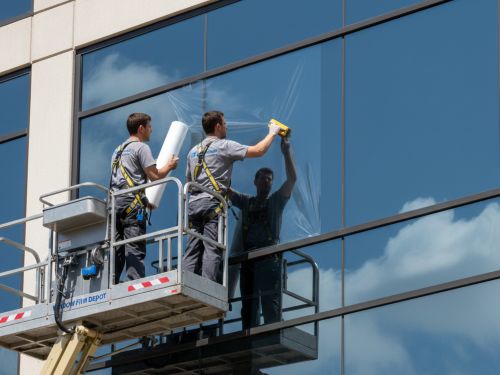
Precise, professional installation realizes the advanced technology in performance films.For a project manager overseeing a large-scale facility or a portfolio of properties, sourcing a reliable specialty contractor is a significant point of project risk.
Partnering with a certified national installer eliminates these variables. It provides a single point of accountability, ensuring every installation meets exacting manufacturer standards, regardless of location.
This approach de-risks your project by guaranteeing not only the film’s performance but also adherence to your schedule and budget. It transforms a logistical challenge into a streamlined, predictable, and successful project component.
For expert guidance and professional installation, contact Window Film Depot to ensure your Window FilmTint solution delivers maximum performance and long-term value.
Frequently Asked Questions
What is the real difference between window tint and window film?
“Window tint” is a casual term that usually refers to a basic, colored product that darkens glass for privacy or shade. “Window film” is a professional specification for an engineered, multi-layered product designed for performance. Architectural window films are defined by technical metrics like TSER and SHGC and provide specific benefits such as solar heat rejection, UV protection, and enhanced security.
How does commercial window film save money?
Commercial window film delivers a strong return on investment primarily through energy savings. By rejecting a significant amount of solar heat (measured by TSER), solar control film reduces the workload on a building’s HVAC system, leading to lower cooling costs. It also saves money by protecting valuable interior assets like furniture, flooring, and merchandise from fading caused by UV radiation, which extends their life and reduces replacement costs.
Can I use any installer for 3M window films?
No. To ensure performance and maintain the manufacturer’s warranty, high-performance products like 3M window films must be installed by a certified professional. A 3M Certified Installer has been trained on the specific techniques required for a proper application, which guarantees the film will perform as specified and that the comprehensive warranty remains valid. Using an uncertified installer will void the warranty.
What are the most important specs to look for in a window film?
The most important specifications depend on your project goals. For energy efficiency, look at Total Solar Energy Rejected (TSER) and Solar Heat Gain Coefficient (SHGC). For glare control and natural light, check Visible Light Transmission (VLT). For protecting interiors, ensure the film blocks at least 99% of UV rays. For security applications, film thickness (measured in mils) is the most critical metric.