Table of Contents:
- Bullet Resistant Window Film Cost: The Critical Flaw of Simple Per-Square-Foot Budgeting
- Deconstructing the Core Cost Factors of Bullet-Resistant Film Systems
- Bullet-Resistant Window Film Cost: Anchoring Systems and Their Impact on Total Price Cost
- Installation Expertise: The Non-Negotiable Factor for System Effectiveness
- Project Scope, Logistics, and Unforeseen Variables: Shaping Your Final Quote
- Calculating the Return on Investment (ROI): Justifying Advanced Security Expenditures
- Securing a Reliable, Itemized Quote: Your Blueprint for Budget Accuracy
- Conclusion: Mastering the Investment in a Bullet-Resistant Window Film System
- Frequently Asked Questions
- Related Posts from Window Film Depot
Bullet Resistant Window Film Cost: The Critical Flaw of Simple Per-Square-Foot Budgeting
Relying solely on a per-square-foot price is a common and costly budgeting error. This narrow focus overlooks the foundational components that define a system’s efficacy and longevity. Such an approach inevitably leads to unforeseen expenses and project delays. Critically, a compromised level of security may fail to meet threat mitigation objectives. A material price alone accounts for only a fraction of the total investment. Comprehensive budgeting must include engineering, anchoring, and expert installation.
This initial, simplified cost estimate often omits the specialized labor, the crucial anchoring systems, and the necessary preparatory work. These hidden variables can quickly inflate the project budget well beyond original projections, creating significant financial strain and reputational risk for the project manager. An accurate budget requires a comprehensive understanding of all contributing factors from the outset.
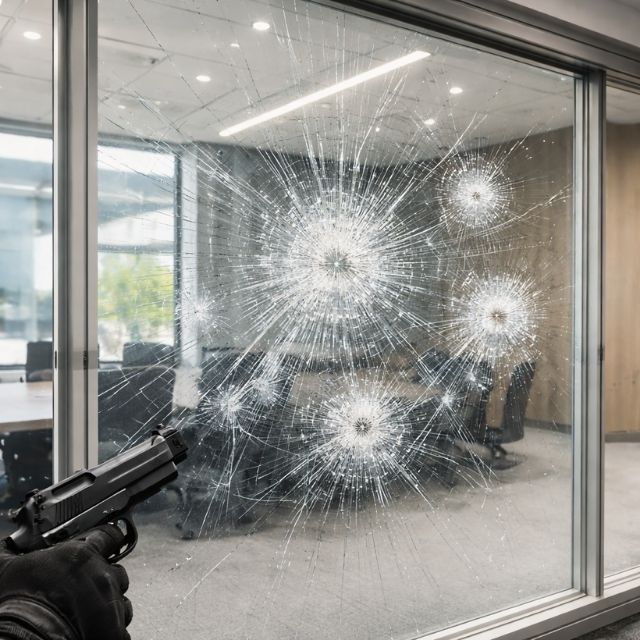
Why Ballistic Protection is a System, Not Just a Product
True bullet-resistant windows are never achieved with film alone. It is the result of a specialized, engineered security system. Think of it as a complete assembly where each component plays a vital role. The film itself is merely one part of this integrated solution. It acts in concert with its adhesive and the existing glazing. Most critically, the attachment system anchors the film directly to the building frame.
- Film: The multi-layered polyester or polycarbonate material is designed to resist penetration and hold glass fragments together.
- Adhesive: The proprietary bonding agent that secures the film to the glass, crucial for impact resistance.
- Anchoring System: A mechanical or structural attachment that bonds the filmed glass system directly to the window frame. This prevents the entire glazed unit from dislodging under extreme force, whether from ballistic impact, forced entry, or blast pressure.
Without a robust anchoring system, even the highest-grade ballistic film becomes a mere patch, susceptible to being pushed inward, allowing the threat to pass through the breached opening. The weakest link in this chain determines the overall protective capability.
Empowering Project Managers: Navigating Complex Security Investments
For project managers, navigating these complex security investments requires a shift in perspective. It means moving beyond a commodity-based procurement mindset to one that values integrated engineering and specialized expertise. Your role transforms from simply purchasing a product to investing in a complete, tested security solution.
This empowers you to ask critical questions of vendors and challenge rudimentary quotes. Ultimately, you secure a system that genuinely delivers the promised protection. Understanding the system as a whole helps you build a defensible budget. This accounts for all necessary elements and prevents unexpected budget surprises. It ensures the client receives a truly resilient security upgrade. This strategic approach minimizes rework and maximizes the return on a significant investment.
Deconstructing the Core Bullet-Resistant Window Film Cost
Understanding Film Technology: Thickness, Performance, and Material Costs
The intrinsic cost of ballistic glass begins with its fundamental characteristics: thickness, layered construction, and base material composition. These elements directly correlate to a film’s performance capabilities and, consequently, its price point. Thicker films, typically measured in mils (thousandths of an inch), inherently use more material and are engineered with more robust layering, contributing to higher material costs.
- Thickness: Generally, thicker films offer greater resistance to impact and penetration. A standard safety film might be 4-7 mil, while ballistic-grade films can range from 14 mil to 21 mil or more, often consisting of multiple laminated layers. Each additional mil signifies more raw material and a more complex manufacturing process.
- Layered Construction: High-performance films are not monolithic; they are sophisticated laminates comprising multiple layers of polyester or advanced polycarbonates, often bonded with specialized adhesives. This multi-ply construction enhances energy absorption and tear resistance, which is critical for containment under attack.
The Spectrum of Threat Levels: From Forced Entry to Ballistic Resistance (UL 752)
The required threat mitigation level is the primary determinant of film selection and its associated cost. Not all “security films” are created equal, and their pricing reflects their engineered performance. Understanding the distinction is crucial for proper budgeting and specification.
- Forced Entry Films: These films are designed to significantly increase the time it takes for an intruder to breach a window, acting as a deterrent and providing valuable response time. They are typically thicker than standard safety films but do not offer ballistic protection.
- Blast Mitigation Films: Engineered to hold glass fragments together and within the frame during an explosive event, these films protect occupants from flying debris, which is the leading cause of injury in blasts. They often require specialized attachment systems to manage the extreme pressures.
- Ballistic Resistant Films (UL 752): This is the highest tier of protection. Films certified under UL 752 have undergone rigorous testing to resist specific ballistic threats, categorized by firearm type and ammunition. Achieving UL 752 compliance necessitates a complete system—film, adhesive, and frame attachment—to withstand multiple bullet impacts without penetration. The cost for these systems is substantially higher due to advanced material science, complex lamination, and the demanding certification process.
Material Innovations: Exploring Film Types and Their Impact on Price
The material composition of a security film significantly influences its performance and overall cost. While most films are polyester-based, advanced formulations and innovative laminates bring enhanced capabilities and, therefore, higher prices.
- Polyester Films: Standard security films are typically constructed from clear, high-tensile polyester. Variations in polymer density, manufacturing processes, and the number of layers contribute to varying performance levels and costs.
- Polycarbonate Laminates: For higher levels of ballistic resistance, multi-layered polycarbonate or hybrid film-polycarbonate laminates are often employed. Polycarbonate is a much more impact-resistant material than polyester, but it is also more expensive to produce and process. These specialized laminates offer superior protection but come with a premium price tag due to the material cost and complex bonding requirements.
- Specialized Coatings: Additional coatings applied during manufacturing can impart properties like UV rejection, anti-graffiti, or anti-scratch, enhancing the film’s longevity and functionality. While beneficial, these features add to the base material cost.
“Ballistic Window Film Price” Explained: What Drives the Base Material Cost
When discussing the “ballistic window film price,” we are specifically referring to the cost of the engineered film material itself, before installation or system integration. This base material cost is influenced by several critical factors:
- Raw Material Sourcing: The quality and type of base polymers, adhesives, and UV inhibitors used directly impact the material cost. High-performance materials are more expensive to source.
- Manufacturing Complexity: The multi-ply construction of ballistic films requires specialized lamination processes, controlled environments, and precision cutting. These intricate manufacturing steps add significantly to production expenses.
- Research and Development (R&D): The ongoing investment in R&D to develop new film technologies, improve performance, and achieve stringent certifications like UL 752 is built into the product’s price. This ensures the film meets evolving security threats.
- Testing and Certification: The extensive independent testing required for ballistic certification is a substantial cost factor. Achieving and maintaining compliance with standards like UL 752 involves rigorous, often destructive, testing that guarantees the product’s stated performance.
It is crucial to remember that this “ballistic window film price” represents only the initial material component. The true investment extends far beyond this figure, encompassing the entire integrated system and its expert deployment.
Bullet-Resistant Window Film Cost: Anchoring Systems and Their Impact on Total Price
The Indispensable Role of Anchoring: Securing the System’s Integrity
While the bullet-resistant film itself is a critical component, its ability to mitigate threats is profoundly dependent on how securely the entire glass-film composite is retained within the existing window frame. The film prevents the glass from shattering into dangerous shards, but without a robust anchoring system, the entire pane, even if unbroken, can be dislodged and pushed inward under significant impact. This is where anchoring transitions from an optional add-on to an indispensable element of a truly effective security system. It ensures that the engineered integrity of the film-glass bond extends to the structural perimeter of the opening, effectively containing the threat.
Exploring Anchoring Methodologies: Wet Glaze vs. Mechanical Attachment Systems
Two primary methodologies dominate the field for anchoring bullet-resistant window film: wet glaze systems and mechanical attachment systems. Each offers distinct advantages and comes with specific cost implications.
- Wet Glaze Systems: This method involves creating a structural bond between the security film, the existing glass, and the window frame using specialized, high-strength structural silicone or an approved adhesive. It provides a seamless, aesthetically pleasing finish with no visible hardware, making it a preferred choice for many architectural specifications. However, wet glaze applications are often more labor-intensive due to the precision required for bead application, tooling, and cleanup. They also typically have a curing period during which the bond strengthens, which can impact project timelines depending on environmental conditions. The material cost of specialized sealants can also be significant.
- Mechanical Attachment Systems: These systems use physical hardware, such as aluminum battens, clips, or bolt-through mechanisms, to secure the film-glass composite directly to the window frame. They are highly visible and can even serve as a deterrent. Mechanical systems offer immediate security upon installation, as no curing time is required. Their installation can sometimes be quicker than wet glaze, though they require precise measurements and often drilling into existing window frames, which demands skilled technicians. The material costs for engineered aluminum or steel components are factored into their overall price. The choice between these systems is not merely aesthetic; it’s a performance decision directly influencing the overall investment.
Engineering for Performance: How Specific Threat Levels Dictate Anchoring Requirements
The level of protection required—whether against forced entry, ballistic threats, or blast events—directly dictates the specific anchoring system design and its associated costs. A low-level forced entry deterrent might utilize a simpler mechanical attachment, while a ballistic-rated system demands rigorous engineering. High-performance anchoring systems for severe threats are often custom-engineered solutions. This involves:
- Structural Assessments: Analyzing the existing window frames and surrounding structure to ensure they can withstand the anticipated loads transferred by the anchoring system.
- Material Specification: Selecting high-grade metals, fasteners, and sealants that meet stringent performance criteria.
- Detailed Schematics: Generating precise installation plans that account for every aspect of the window opening and the threat vector.
This engineering phase is a non-negotiable step for validated performance. While it adds to the overall project cost, it is essential for system reliability. It ensures the anchoring does not become the weakest link in the security chain. This prevents costly failures during a critical incident. Proper engineering guarantees the entire system functions as a single, cohesive unit.
Preventing Glass Spall: The Integrated Role of Film and Anchoring
Glass spall, the dangerous phenomenon where glass fragments on the non-attack side of a window become projectiles upon impact, is a primary concern in security applications. Bullet-resistant window film excels at containing these shards, holding them firmly to the film layer. However, the anchoring system plays an equally vital, integrated role. If the entire film-glass composite were to be dislodged from the frame, even if the film prevents individual spall, the sheer mass of the pane itself becomes a formidable projectile.
The anchoring system ensures that the entire pane, with the film holding its fragments, remains securely within the window opening. This integrated defense prevents both the small, sharp spall from penetrating the protected space and the large-scale breach caused by a dislodged window. It is a dual-layered protection strategy, where the film manages the glass integrity and the anchoring manages the structural integrity of the opening, reinforcing the concept of a holistic security system rather than disparate components.
Installation Expertise: The Non-Negotiable Factor for System Effectiveness
Why “Commercial Security Film Installation” Demands Specialist Skill
Installing commercial security film, especially bullet-resistant variants, is a highly specialized trade distinct from general window tinting or decorative film application. The thickness, weight, and rigidity of security films, combined with the stringent performance requirements, demand an entirely different skill set and methodology. Key reasons for this specialization include:
- Precision Application: Security films must be applied with meticulous precision, ensuring edge-to-edge coverage and proper adhesion to the glass, especially crucial when interfacing with anchoring systems. Air bubbles, creases, or poor edge seals can compromise the film’s protective capabilities.
- Material Handling: These films are significantly thicker and heavier than standard films, requiring specialized tools and techniques for handling large panes without damage.
- Substrate Knowledge: Understanding different glass types, coatings, and their thermal properties is vital to prevent thermal stress fractures or adhesion issues.
- Interface with Anchoring: The installation process must seamlessly integrate the film with the chosen anchoring system, whether it’s a wet glaze silicone application or mechanical frame attachments, ensuring a continuous and robust perimeter bond.
The Impact of Certified Installers on System Performance and Warranty
Engaging installers certified by the film manufacturer is not merely a preference; it is a critical investment in the system’s performance and longevity, often directly impacting warranty validity. Certified installers undergo rigorous training that covers:
- Manufacturer Specifications: They are intimately familiar with the film’s unique properties, optimal application techniques, and approved adhesives or anchoring methods.
- Quality Control: They adhere to stringent quality control protocols, minimizing defects that could compromise the film’s protective capabilities under stress.
- Problem Resolution: Their expertise enables them to identify and effectively address unforeseen challenges that may arise during installation, preventing costly rework.
Without certified installation, even the highest quality bullet-resistant film may not perform to its rated specifications. Furthermore, manufacturers typically stipulate that their products must be installed by certified professionals for the warranty to remain valid. This protects your investment and ensures that the system provides the intended level of security for its operational lifetime.
Labor Costs: Factors Influencing Installation Pricing
The labor component of a bullet-resistant film installation is a significant and variable cost. It’s influenced by a confluence of factors beyond a simple “per-square-foot” calculation:
- Project Complexity:
- Window Size and Type: Larger, irregularly shaped, or hard-to-access windows increase labor time and specialized equipment needs.
- Access Requirements: Projects requiring scaffolding, scissor lifts, or boom lifts to reach high windows will incur substantial additional costs for equipment rental and certified operators.
- Architectural Features: Intricate window frames, mullions, or historical preservation requirements can add significant complexity.
- Installation Methodology: Wet glaze systems, while aesthetically clean, are often more labor-intensive due to the meticulous application, tooling, and clean-up of structural silicone. Mechanical systems, while faster to apply the film, require precise measurement, drilling, and secure fastening of hardware.
- Site Conditions: Difficult working conditions, limited staging areas, or projects requiring after-hours work due to operational constraints will impact labor rates.
- Geographic Location: Prevailing labor rates vary significantly by region, directly influencing the overall installation cost.
- Preparation and Cleanup: Thorough surface preparation is crucial for adhesion, and meticulous post-installation cleanup is necessary, especially with wet glaze systems.
These factors demonstrate that the labor cost is a tailored estimate, reflecting the specific demands of each project rather than a generic rate.
Ensuring Adherence to Manufacturer Specifications and Industry Standards
For a bullet-resistant window film system to provide its intended protection, strict adherence to both manufacturer specifications and relevant industry standards is paramount. This ensures that the installed system has been tested, validated, and will perform as advertised under threat.
- Manufacturer Specifications: These detail everything from acceptable ambient temperatures for installation, specific cleaning agents, and recommended application tools, to the exact method of integrating the film with the chosen anchoring system. Deviations can compromise adhesion, film integrity, and ultimately, protective performance.
- Industry Standards: Compliance with recognized industry standards (e.g., specific test methods for ballistic resistance, blast mitigation, or forced entry) provides an objective benchmark for performance. A professional installer will be familiar with these standards and ensure their work contributes to the system’s compliance.
A project manager’s due diligence should always include verifying an installer’s familiarity with and commitment to these crucial guidelines. This adherence is a non-negotiable requirement for ensuring the system delivers on its promise of enhanced security, safeguarding both personnel and assets, and preventing expensive rework or, worse, failure during a critical event.
Project Scope, Logistics, and Unforeseen Variables: Shaping Your Final Quote
While the material and its direct application form the core of a bullet-resistant film system, a comprehensive budget must account for the extensive logistical and operational variables that define the true cost. These elements are not incidental; they are fundamental drivers of the overall investment and, critically, impact the project’s timeline and success. Ignoring them means underestimating the true financial commitment required for a robust security upgrade.
Assessing Project Complexity: Number of Windows, Size, and Accessibility
The sheer quantity of glazing surfaces requiring treatment naturally influences material volume, but more critically, it dictates labor hours. Each window represents a discrete surface preparation, film cutting, and application task. Beyond the count, the dimensions of these windows significantly impact costs. Larger windows demand more material and often require specialized handling equipment to manage sizable film rolls without damage. Irregularly shaped windows, such as arched or trapezoidal designs, necessitate meticulous custom cutting and can slow the installation process, increasing labor expenses.
Accessibility is another primary cost driver. A ground-floor window facing a clear exterior path presents a straightforward installation. Conversely, a window on the fifth floor of a multi-story building, set back from the facade, may necessitate:
- Specialized Access Equipment: Scaffolding, boom lifts, or scissor lifts.
- Fall Protection Measures: Harnesses and safety lines for installers.
- Additional Personnel: Spotters and safety managers.
- Traffic Management: Cones, signage, and personnel to secure the perimeter if the work impacts public access.
These requirements introduce equipment rental fees, additional labor hours, and specific safety protocols, all of which must be factored into the project quote.
Geographic Considerations: The Influence of Location and National Reach on Logistics
Project location introduces a range of cost implications. The physical distance installers must travel to the site impacts per diem expenses, fuel costs, and non-productive travel time. For projects in remote areas, these logistical burdens can be substantial. Similarly, shipping specialized film rolls and anchoring materials over long distances adds to freight costs, especially for expedited deliveries.
Furthermore, local regulations and prevailing wage requirements vary significantly by region. Unionized labor markets, for instance, often entail higher hourly rates and specific benefit packages for skilled installers. A vendor with national reach might leverage a distributed network of certified installers, which can mitigate travel costs for a single site. However, for multi-site deployments across diverse geographies, coordinating different local teams and ensuring consistent quality assurance becomes a key project management challenge and a cost factor. A vendor’s ability to streamline this coordination offers significant value.
Scheduling and Business Interruption: Minimizing Impact During Installation
The timing of installation directly influences project cost and operational impact. Performing work during standard business hours might seem straightforward, but it often entails significant business interruption, potentially leading to lost productivity or revenue for the client. To avoid this, many projects opt for off-hours installation, such as nights, weekends, or scheduled facility shutdowns. While minimizing disruption, this scheduling strategy invariably incurs premium labor rates for installers.
Effective project scheduling requires a collaborative approach between the client and the installation team. A detailed plan identifies critical operational areas, establishes clear work zones, and outlines a phased approach to minimize disturbance. The cost associated with efficient scheduling is not just about labor premiums; it also includes the value of maintaining business continuity. A trusted partner will prioritize this through meticulous planning, aiming to complete the project efficiently without compromising security or daily operations.
Multi-Site Rollouts and Economies of Scale: A Comprehensive Project Perspective
For organizations requiring bullet-resistant film across multiple locations, a multi-site rollout presents both complexities and opportunities for cost optimization. While each site will have its unique logistical challenges, a centralized procurement strategy for materials can often yield economies of scale, leading to better pricing on bulk film and anchoring components.
However, the primary benefits in a multi-site scenario often lie in standardizing the installation process and leveraging a consistent, highly trained installation team. This approach ensures uniform quality, reduces training costs across sites, and allows for more efficient project management. A national provider capable of managing a complex rollout can streamline scheduling, logistics, and quality control, potentially reducing the overall project management burden and mitigating risks associated with using disparate local contractors. The initial investment in a well-defined, scalable plan for multi-site deployments typically pays dividends in consistency, efficiency, and long-term performance.
Calculating the Return on Investment (ROI): Justifying Advanced Security Expenditures
Project managers must articulate the tangible and intangible return on investment for security film. This advanced measure represents a significant capital expenditure for any organization. Justification extends far beyond a simple comparison of initial costs versus perceived threats.
It involves a holistic assessment of risk mitigation and long-term savings. The investment protects critical organizational assets, both human and financial. This strategic view helps stakeholders understand the comprehensive value of the system.
Beyond Dollar Figures: Quantifying the Value of Enhanced Safety and Security
While direct monetary benefits are often the focus, security film value transcends simple dollar figures. The primary objective is the protection of life and the prevention of injury. Assigning a monetary value to these outcomes is ethically complex and often impossible. However, the importance of life safety remains paramount in every project. Project managers must communicate that this investment creates a safer environment for everyone. This proactive measure quantifiably reduces the probability of severe injury during a ballistic event. Such an outcome is invaluable for any organization.
Enhanced security directly contributes to operational resilience for any organization. Hardening the perimeter buys critical time during an active threat. This allows for better response coordination and safer evacuation efforts. A protective interval can prevent a minor incident from becoming catastrophic. Such outcomes cannot be reduced to a simple financial cost-benefit analysis. The value of safety and stability remains a top priority.
Mitigating Risk: Understanding the Long-Term Cost Savings of Proactive Protection
Implementing a bullet-resistant film system is a strategic risk mitigation exercise with significant long-term cost-saving implications. In the event of a ballistic attack, the direct costs associated with a compromised facility are staggering. These include:
- Repair and Reconstruction: Extensive property damage.
- Legal Fees and Liabilities: Potential lawsuits from injured parties or their families.
- Insurance Premium Increases: Significantly higher costs following a claim.
- Crisis Management and Public Relations: Managing reputational damage and communicating effectively post-incident.
By proactively investing in enhanced security, organizations can significantly reduce the likelihood and severity of these post-incident costs. The protective film acts as a barrier, containing threats and minimizing property damage, thereby reducing immediate repair expenses. More importantly, by preventing injuries or fatalities, it drastically lowers the potential for multi-million dollar legal settlements and punitive damages. This shift from reactive, expensive crisis response to proactive, preventative security is a core component of the long-term ROI.
The Intangible Benefits: Peace of Mind, Reputation, and Business Continuity
Beyond direct financial and safety metrics, a robust security posture delivers crucial intangible benefits that underpin organizational stability and success.
- Peace of Mind: For employees and clients, knowing that advanced security measures are in place fosters a sense of safety and well-being. This can lead to increased productivity, reduced absenteeism, and improved morale within the workforce.
- Reputation and Trust: An organization that visibly prioritizes the safety of its occupants builds a strong, trustworthy reputation. This can enhance brand loyalty, attract and retain talent, and differentiate it from competitors. In an age of heightened security concerns, a proactive stance on safety is a significant positive differentiator.
- Business Continuity: By mitigating the impact of potential security breaches, the film system contributes directly to maintaining operational continuity. Avoiding prolonged shutdowns due to a security incident means less lost revenue, fewer supply chain disruptions, and a quicker return to normal business operations. This resilience is a strategic asset, ensuring that the organization can weather unforeseen challenges with minimal long-term impact.
These benefits, while difficult to quantify financially, are critical for long-term organizational health and are powerful arguments for justifying the investment in advanced security systems.
Budgeting for Future Needs: Scalability and System Upgrades
A truly strategic investment in security considers not just immediate needs but also future adaptability. A well-engineered bullet-resistant film system is not a static solution; it should be integrated into a broader security strategy that accounts for scalability and potential upgrades. When evaluating proposals, consider vendors who offer systems designed for future-proofing. This means:
- Modularity: Can additional security layers or technologies be integrated with the existing film and anchoring system?
- Upgrade Paths: Are there clear pathways to enhance the system’s performance if threat landscapes evolve, without requiring a complete and costly replacement of all components?
- Maintenance and Longevity: What is the expected lifespan of the film and anchoring components, and what are the recommended maintenance schedules to ensure optimal performance over time?
By selecting a system with inherent scalability and a clear upgrade path, project managers can ensure that their initial investment provides lasting value, protecting against obsolescence and avoiding more significant expenditures down the line for entirely new installations. This foresight reinforces the film system as a long-term asset rather than a one-time expense.
Securing a Reliable, Itemized Quote: Your Blueprint for Budget Accuracy
Successfully integrating a bullet-resistant window film system into your project demands a clear understanding of its financial implications. This begins not with a quick price check, but with securing a reliable, itemized quote that reflects the true scope and necessary protective value. Your ability to budget accurately and prevent costly surprises hinges on a meticulous evaluation process.
The Importance of a Detailed Threat Assessment for Accurate Pricing
Any truly reliable quote for a bullet-resistant window film system must originate from a thorough threat assessment. This isn’t an optional step; it’s the foundational analysis that dictates the appropriate level of protection and, consequently, the system’s cost. Without a clear understanding of the specific threats your facility faces—be it forced entry, ballistic impact, or blast mitigation—any pricing is merely speculative.
A comprehensive assessment considers various factors:
Need More Info?
The Window Film Depot team is happy to help.
- Vulnerability Points: Identifying specific windows or glass panels that are most susceptible to attack.
- Threat Level: Differentiating between high-level ballistic threats, active shooter scenarios, or general vandalism and forced entry. Each requires a different film thickness, composition, and often a more robust anchoring system.
- Building Code Requirements: Local building codes and safety regulations often dictate minimum performance standards, influencing product selection.
- Existing Glazing Conditions: The type, thickness, and condition of your current glass impact how the film adheres and performs, potentially requiring specific preparatory work or system adjustments.
These variables directly influence the selection of the film, the complexity of the anchoring system, and the specialized installation techniques required. A vendor who provides a quote without first engaging in such an assessment is likely providing an inadequate and ultimately inaccurate estimate.
What to Look for in a Comprehensive Proposal: Beyond the Bottom Line
When evaluating proposals for bullet-resistant window film, resist the urge to focus solely on the final cost figure. A comprehensive proposal goes far beyond a simple per-square-foot price for film; it details every component and service contributing to a fully operational security system. Treat the proposal as your blueprint for project success and budget accuracy.
A truly robust proposal should itemize and explain:
- Film Specifications:
- Manufacturer and specific product model.
- Film thickness and construction.
- Performance certifications (e.g., UL 752 Level, GSA, ASTM).
- Warranty details for the film itself.
- Anchoring System Details:
- Specific type of anchoring system proposed (e.g., wet glaze, structural attachment).
- Manufacturer and material of the anchoring components.
- Detailed methodology for how it will be integrated with your existing window frames.
- Any necessary frame modifications or reinforcements.
- Installation Scope:
- Preparatory work is required for glass surfaces and frames.
- Detailed installation methodology for both film and anchoring.
- Projected timelines and phases of work.
- Disposal of waste materials.
- Labor Costs:
- Breakdown of labor hours and rates for specialized, certified installers.
- Any additional costs for challenging access or specific site conditions.
- System Warranty:
- A clear, comprehensive warranty covering both the film and its installation as an integrated system, not just individual components. This is critical for long-term assurance.
- Testing and Compliance:
- Confirmation that the proposed system meets or exceeds relevant industry standards and any specified threat levels.
- Post-Installation Support:
- Information on maintenance recommendations and available support services.
A proposal lacking these granular details leaves too much to interpretation and exposes your project to unforeseen costs, delays, and compromised security performance.
Navigating “3M Security Window Film Cost”: Ensuring Authentic Product and Expertise
The phrase “3M Security Window Film Cost” is a common starting point for many inquiries, and for good reason—3M is a recognized leader in advanced film technology. However, focusing solely on the brand name or its perceived cost can be misleading. The actual “cost” isn’t just about procuring a roll of 3M film; it’s about integrating an authentic, high-performance product into a validated security system.
To genuinely navigate this, you must:
- Verify Product Authenticity: Ensure the vendor is providing genuine 3M Security Window Film, or other reputable brands, specified for the determined threat level. Be wary of generic claims or unbranded alternatives that might not meet performance standards.
- Confirm Installer Certification: The efficacy of even the best film is entirely dependent on expert installation. For high-performance films, especially those from manufacturers like 3M, installers must be factory-trained and certified in specific application techniques, including adhesion and proper integration with anchoring systems. Unauthorized or inexperienced installers can compromise the film’s structural integrity and void warranties.
- Understand System Integration: Remember, the film is just one component. The “3M security window film cost” must inherently include the complementary anchoring system. A certified provider will explain how the chosen film integrates with a specified anchoring method to form a cohesive, protective barrier, outlining the cost implications of each.
Entrusting your project to a provider who understands this nuanced relationship ensures you are investing in a verified product, installed to manufacturer specifications, leading to a reliable protective system rather than just a film application. This approach prevents the false economy of cheaper, uncertified solutions that fail when protection is most needed.
Partnering with Experienced Providers: The Value of Proven Track Record and National Reach
The selection of your installation partner is as critical as the film and anchoring system itself. An experienced provider offers more than just a competitive quote; they bring a proven track record, specialized expertise, and often the logistical capability of national reach, all of which contribute significantly to project success and risk mitigation.
Here’s why partnering with such a provider offers substantial value:
- Technical Authority: They possess deep knowledge of various film technologies, anchoring systems, and the specific application challenges across diverse building types and climates. This ensures the correct system is specified for your unique needs.
- Certified Professionals: Experienced providers employ highly trained, certified installers who adhere to manufacturer protocols and best practices. This guarantees optimal performance and preserves product warranties, avoiding costly re-work or system failures down the line.
- Regulatory Compliance: They are well-versed in local building codes, safety regulations, and industry standards, ensuring your installation is compliant and defensible.
- Project Management Expertise: Large-scale or multi-site projects benefit immensely from providers with robust project management capabilities, ensuring seamless execution, adherence to timelines, and minimal disruption to your operations.
- Supply Chain Reliability: Established providers often have strong relationships with manufacturers, ensuring access to authentic products and reliable supply, which is crucial for staying on schedule.
- Post-Installation Support and Warranty Fulfillment: A reputable partner stands behind their work, offering clear warranties on both materials and labor, and providing ongoing support or maintenance as needed.
- National Reach (for multi-location projects): For organizations with multiple facilities across different regions, a provider with national reach can standardize installations, streamline procurement, and ensure consistent quality and performance regardless of location. This simplifies logistics and provides a single point of accountability.
Choosing a provider based purely on the lowest bid without evaluating their experience, certifications, and track record is a critical oversight. The investment in a trusted, experienced partner ultimately safeguards your project budget, timeline, and, most importantly, the integrity of your security solution.
Conclusion: Mastering Investment in a Bullet-Resistant Window Film Cost System
Key Takeaways for Project Managers: From Product to Protective Solution
For project managers navigating the complexities of modern security, understanding bullet-resistant window film must evolve beyond a simple product acquisition. It represents an investment in a meticulously engineered protective solution. Here are the essential takeaways for your strategic planning:
- The System is Paramount: Bullet-resistant film is merely one component. Its protective efficacy is inextricably linked to the anchoring system and the quality of its installation.
- “Per-Square-Foot” is a Misleading Metric: Relying on simple per-square-foot pricing for film is a critical budgeting error. The true cost encapsulates specialized labor, complex anchoring hardware, and comprehensive project management.
- Threat Assessment is Fundamental: An accurate threat assessment is the indispensable starting point for determining the correct protective solution and, subsequently, a realistic budget.
- Demand Detailed Proposals: Insist on comprehensive, itemized proposals that clearly outline all components, labor, warranties, and certifications, providing full transparency.
- Expert Installation is Non-Negotiable: The value of the system is directly proportional to the expertise of its installers. Always prioritize certified, experienced professionals who adhere to manufacturer specifications.
- Partner Wisely: Aligning with a reputable, experienced provider mitigates project risk, ensures compliance, and provides long-term assurance for your security investment.
The Mandate for System-Level Thinking in Security Planning
The core principle underpinning any effective security measure, especially with advanced technologies like bullet-resistant window film, is system-level thinking. A security breach rarely exploits the strongest link in a chain; it targets the weakest. In the context of window film, this means that an inadequately anchored film or a poorly executed installation renders even the highest-grade film ineffective, turning a significant investment into a false sense of security.
Your mandate as a project manager is to champion this holistic perspective. Recognize that every dollar allocated to the anchoring system, to certified labor, or to a robust project warranty is not an added expense but a critical component of the overall protective value. This approach moves the conversation from a commodity purchase to a strategic infrastructure investment, ensuring genuine threat mitigation and long-term asset protection.
Next Steps: Strategic Planning for Your Project’s Advanced Security Needs
To effectively integrate a bullet-resistant window film system into your next project, strategic planning is essential. Move beyond conceptual understanding to actionable steps that secure both your facility and your budget.
Consider these immediate next steps:
- Initiate a Formal Threat Assessment: Engage with security experts to conduct a thorough analysis of your facility’s vulnerabilities and specific threat profiles. This will inform the exact specifications of your protective system.
- Solicit Comprehensive, Itemized Proposals: Leverage the insights gained from your threat assessment to request detailed quotes from multiple reputable providers. Critically evaluate each proposal based on system components, installation methodology, certifications, and warranty, not just the bottom line.
- Validate Provider Credentials: Verify installer certifications, review case studies, and check references to ensure your chosen partner possesses the necessary expertise and a proven track record.
- Allocate for the Full System: Ensure your project budget accounts for all elements of the protective system—film, anchoring, specialized labor, and project management—not just a generic film cost.
- Integrate Early in Project Lifecycle: Incorporate advanced security planning, including bullet-resistant film systems, as an upfront consideration in your project’s design and budgeting phases. This proactive approach minimizes future conflicts, delays, and expensive rework.
By adopting this disciplined, system-oriented approach, you empower yourself to make informed decisions that deliver not just a product, but a complete, high-performance security solution.
Frequently Asked Questions
Why is a “price-per-square-foot” quote for window film often misleading?
A simple square-foot price usually only covers the base material cost of the film itself. It frequently omits the most expensive and critical variables: specialized labor, access equipment (like lifts or scaffolding), and—most importantly—the anchoring system. Without itemizing these “hidden” costs, a project manager may face budget overruns of 30% to 50% once the actual engineering requirements are finalized.
Can I achieve ballistic resistance without an anchoring system if I use a thicker film?
No. Even a 21-mil ballistic-grade film will fail if it is not anchored. While the film may stop a bullet from penetrating the glass, the kinetic energy of the impact can blow the entire “blanket” of filmed glass out of the frame and into the room. The anchoring system (wet glaze or mechanical) is what transfers that energy to the building’s structure, keeping the protective barrier in place.
What is the difference between “Wet Glaze” and “Mechanical” anchoring in terms of cost and performance?
Wet Glaze: Uses a high-strength structural silicone (like Dow 995) to bond the film to the frame. It is aesthetically seamless but labor-intensive due to the precision required for “tooling” the bead and the necessary curing time.
Mechanical: Uses metal battens or clips to bolt the film directly to the frame. It provides immediate security with no curing time and is often used for higher blast or ballistic threat levels, but it is more visible and carries a higher material cost for the engineered hardware.
How does the UL 752 standard impact the total project investment?
The UL 752 standard rates a complete assembly, not just the film. To achieve a specific Level (e.g., Level 1 or Level 2), you aren’t just buying a product; you are paying for an engineered solution that has been destructively tested. The higher the UL level, the more complex the film lamination and the more robust the anchoring requirements, which significantly drives up both material and specialized labor costs.
Why does “Certified Installation” cost more than standard window tinting?
Ballistic-resistant films are much thicker, heavier, and more rigid than standard films. They require specialized handling, precision cutting, and expert knowledge of adhesion science to ensure they interface correctly with anchoring systems. Manufacturers like 3M require certified installers to maintain the product warranty; using a non-certified general tinter can result in system failure and the loss of your long-term investment.