Table of Contents:
- Beyond the “99% UV Block”: Unpacking Common Misconceptions in Film Performance
- Decoding the Spec Sheet: Critical Performance Metrics for High-Quality UV Film
- Advanced Film Technology: The 3M Advantage in Superior UV Protection Elevates Protection
- The Imperative of Professional Installation: Protecting Your Investment and Warranty
- From Single Panes to High-Rise Projects: Scaling Quality UV Protection Principles
- A Project Manager’s Blueprint: Specifying and Verifying High-Performance UV Protection Film
- Conclusion: Key Takeaways for Proactive Asset Management
- Frequently Asked Questions
- Related Posts from Window Film Depot
Beyond the “99% UV Block”: Unpacking Common Misconceptions in Film Performance
Project managers often encounter product specifications that tout “99% UV block.” While this figure may seem reassuring, it can be a misleading simplification that masks critical performance gaps. A generic UV rejection claim often refers only to a narrow light spectrum. These claims frequently neglect the differences between UV-A and UV-B rays. Both ray types have distinct impacts on materials and health. Simple claims rarely account for a film’s long-term performance stability. Optical clarity can degrade significantly after years of sun exposure. Maintaining adhesive integrity is vital for sustained protection from harmful rays. High-quality specifications ensure protection remains effective over the entire product lifespan.
The True Cost of Inadequate Protection: Asset Depreciation, Fading, and Health Implications

Failing to specify a high-performance quality UV protection film for house windows carries significant, often hidden, costs for building owners and occupants. Inadequate protection leads to accelerated asset depreciation, as interior furnishings, flooring, artwork, and retail merchandise fade and degrade prematurely. This necessitates costly replacements or refurbishments far sooner than anticipated, directly impacting the project’s long-term value proposition. Beyond material damage, prolonged exposure to unfiltered UV radiation through glazing can pose health risks to occupants, contributing to skin and eye damage over time, which introduces potential liability concerns. The perceived initial saving from selecting a cheaper, lower-performing film can quickly be overshadowed by these extensive and avoidable expenses.
Setting a Higher Standard: A Commercial Expert’s Guide to Superior UV Film Specification
To mitigate these risks and deliver genuine, lasting value, project managers must move beyond superficial product claims. A superior UV film specification demands a detailed understanding of key performance metrics and the underlying material science. This approach ensures that the chosen film not only blocks harmful UV radiation effectively but also contributes positively to energy efficiency, occupant comfort, and the aesthetic integrity of the building. Specifying quality means evaluating a film’s complete technical profile, not just a single, isolated percentage.
Decoding the Spec Sheet: Critical Performance Metrics for High-Quality UV Film
Understanding UV Rejection: Differentiating Harmful UV-A and UV-B Rays
Effective UV protection requires a comprehensive block of both UV-A and UV-B wavelengths. UV-B rays are largely responsible for sunburn and skin cancer. UV-A rays penetrate deeper, contributing to skin aging and material fading. High-performance films specify rejection percentages across both critical ranges. They often achieve near 100% block for both types of radiation. This detailed specification provides a clear indication of total protective capabilities. It ensures your property is shielded from the full spectrum of ultraviolet light.
Total Solar Energy Rejected (TSER): The Benchmark for Energy Efficiency and Comfort
Total Solar Energy Rejected (TSER) is a comprehensive metric that quantifies the total percentage of solar energy (visible light, infrared, and ultraviolet) that is prevented from passing through the glass. Unlike a simple UV block, TSER directly correlates with a building’s energy efficiency and internal comfort. A higher TSER value indicates a greater reduction in heat gain, which directly translates into lower air conditioning loads and associated energy consumption, offering substantial operational savings over the building’s lifespan. This solar window film performance data is critical for assessing energy savings.
Visible Light Transmission (VLT): Balancing Natural Light with Glare Reduction
Visible Light Transmission (VLT) measures the percentage of visible light that passes through the film and glass system. This metric is crucial for balancing the desire for natural illumination with the need to control glare and maintain optical clarity. For many commercial and residential applications, a VLT between 50% and 70% is often ideal, allowing ample natural light while effectively reducing eye strain from excessive brightness. Specifying VLT ensures that interior spaces remain bright and inviting without compromising visual comfort.
Solar Heat Gain Coefficient (SHGC): Managing Internal Temperatures and HVAC Load
The Solar Heat Gain Coefficient (SHGC) measures the fraction of solar radiation entering through a window. This includes directly transmitted heat and energy absorbed then released inward. A lower SHGC value indicates less solar heat gain for the building. This metric is vital for managing internal temperatures and reducing HVAC workloads. It is particularly important in warm climates with high cooling demands. SHGC directly impacts energy consumption, carbon footprints, and overall efficiency. It remains a key factor in a building’s climate control strategy.
The Science of Durability: Material Composition, Adhesive Systems, and Optical Clarity
The long-term performance and aesthetic integrity of a UV protection window film are rooted in its fundamental design and engineering.
- Material Composition: Premium films are typically constructed from multiple layers of optical-grade polyester film, often incorporating advanced materials like ceramics or precious metals through nanotechnology. These sophisticated compositions provide superior solar rejection, durability, and color stability, preventing the film from discoloring or degrading over time.
- Adhesive Systems: The quality of the adhesive systems is paramount for both installation and longevity. High-grade adhesives ensure a strong, bubble-free bond to the glass, resist peeling or cracking, and maintain their optical clarity for decades. A robust adhesive also facilitates clean removal should the film ever need replacing, minimizing damage to the glazing.
- Optical Clarity: High-performance films are engineered to maintain exceptional optical clarity, ensuring no distortion, haze, or rainbow effects when looking through the glass. This is critical for preserving outward views and ensuring the film remains virtually invisible, contributing to a seamless aesthetic integration with the building’s design.
Advanced Film Technology: The 3M Advantage in Superior UV Protection
Engineering for Excellence: The Core Principles Behind 3M Window Films
Achieving superior UV protection in architectural window film is not merely about applying a tinted layer. It is the culmination of decades of material science research and precision engineering. 3M’s approach to window film development is rooted in a deep understanding of polymer chemistry, adhesive technology, and optical physics. This involves creating multi-layered constructions that selectively block harmful UV radiation without compromising visible light transmission or clarity. The films are designed for durability, resisting delamination, bubbling, and color change over extended periods, which is crucial for long-term asset protection.
Patented Technologies and Their Impact on Measurable Performance
3M leads the film industry through patented technologies that offer measurable performance advantages. Their proprietary spectrally selective films use microscopic layers to reflect heat while maintaining transparency. Regarding UV protection, 3M Window Films are engineered to block a verified 99.9% of rays. This leap from 99% to 99.9% provides a significant increase in total protection. This critical difference reduces cumulative damage to interiors and occupants over time. It prevents premature fading of artwork, flooring, and expensive custom furnishings. The Skin Cancer Foundation even recognizes specific 3M products for their enhanced skin protection.
Data-Backed Performance: Why 3M Exceeds Industry Standards for Solar Window Film
Generic film products often cite broad performance statistics that lack specific test data or adherence to recognized industry standards. In contrast, 3M films are rigorously tested and validated by independent third parties, providing project managers with verifiable solar window film performance data. Beyond exceptional UV rejection, these films also deliver superior Total Solar Energy Rejected (TSER), glare reduction, and emissivity ratings. These comprehensive data points allow for precise energy modeling and cost-benefit analyses, ensuring that the specified film delivers on its promise for both energy efficiency and occupant comfort. This commitment to data-backed performance sets a higher benchmark than many conventional alternatives.
Leveraging Best 3M UV Window Film for Unparalleled Asset and Occupant Protection
Selecting the appropriate best 3M UV window film for a project requires careful consideration of specific building needs and performance objectives. It involves understanding the differences between films designed for maximum heat rejection, those optimized for optical clarity, and specialized products offering enhanced security or privacy. For project managers, this means moving beyond a simple “UV block” percentage and evaluating the film’s full technical specification sheet, including:
Need More Info?
The Window Film Depot team is happy to help.
- UV Rejection: Verifying the actual percentage, such as 99.9%.
- Total Solar Energy Rejected (TSER): Indicating overall heat reduction.
- Visible Light Transmitted (VLT): Ensuring desired daylighting levels.
- Glare Reduction: Quantifying reduction in visual discomfort.
- Shading Coefficient (SC) and Solar Heat Gain Coefficient (SHGC): Essential for energy performance calculations.
- Warranty: Understanding the film’s expected lifespan and coverage.
By focusing on these comprehensive metrics, project managers can specify a 3M solution that precisely matches their project’s requirements, guaranteeing unparalleled protection for both building assets and occupants.
The Imperative of Professional Installation: Protecting Your Investment and Warranty
Beyond the Product: How Expert Installation Impacts Film Longevity and Efficacy
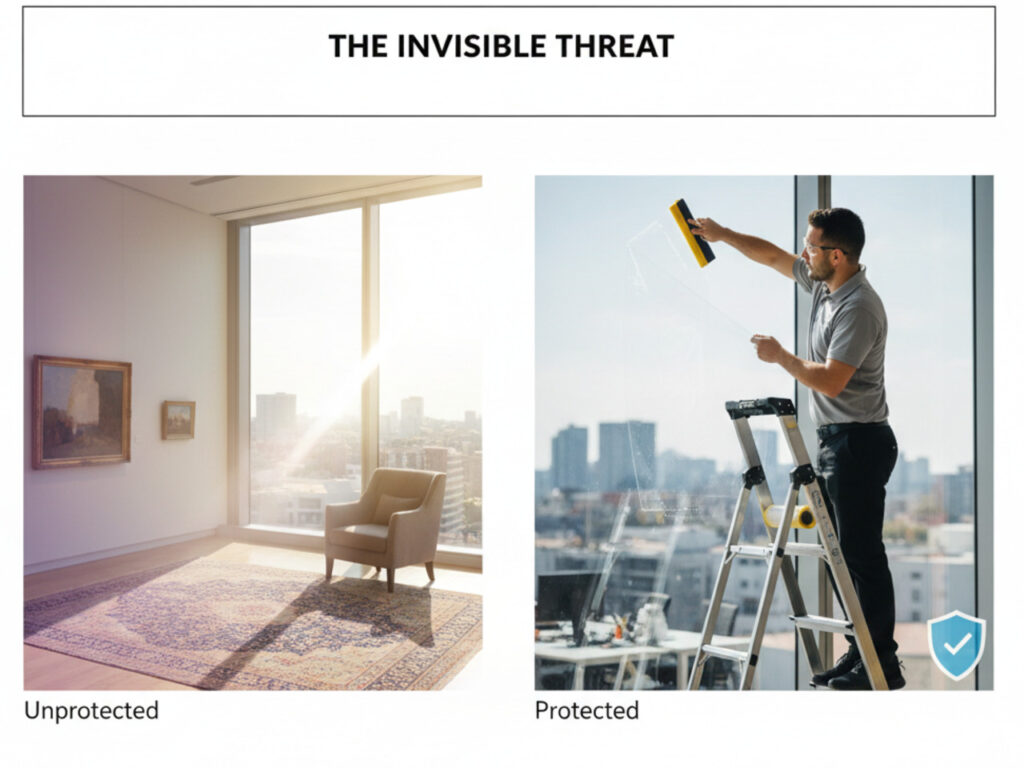
Technologically advanced window film will fail prematurely if not installed correctly. Professional installation is a critical component that influences film longevity. Expert installers ensure proper surface preparation and precise cutting for every window. This flawless application prevents trapped air bubbles, dust contamination, or uneven adhesion. These elements are fundamental to maintaining optical clarity and preventing premature peeling. Professional standards maximize the film’s lifespan and safeguard the client’s investment. This expertise makes professional installation a non-negotiable standard for any project.
Common Pitfalls and Risks Associated with Substandard or Inexperienced Application
Opting for an inexperienced or uncertified installer introduces a range of significant risks that can lead to costly rework and project delays. Project managers should be acutely aware of pitfalls such as:
- Inconsistent Adhesion: Leading to bubbling, peeling, or cracking over time, particularly at edges.
- Contamination: Dust, lint, or other particulates trapped beneath the film, creating permanent visual defects.
- Improper Sizing and Cutting: Resulting in gaps, overlaps, or unsightly trim lines that compromise both aesthetics and performance.
- Damage to Glass or Frames: Inexperienced installers can inadvertently scratch glass or damage window seals during application.
- Premature Film Failure: Substandard installation often voids manufacturer warranty, leaving the project owner responsible for replacement costs.
These issues not only diminish the aesthetic appeal and performance of the film but can also necessitate expensive remediation, negating any initial cost savings from choosing a less qualified installer.
The Role of Certified Installers in Guaranteeing Performance and Honoring Warranties
A certified installer brings a level of expertise and accountability that is invaluable to any large-scale project. Certification typically involves comprehensive training programs directly from the film manufacturer, ensuring installers are proficient in the latest techniques, product specifications, and troubleshooting. Crucially, manufacturer warranties for high-performance films often stipulate that installation must be performed by a certified professional. Engaging a certified installer guarantees:
- Adherence to Manufacturer Guidelines: Ensuring the film is applied precisely as intended.
- Proper Tools and Techniques: Utilizing specialized equipment and best practices for a flawless finish.
- Warranty Validation: Protecting the client’s investment by ensuring the warranty remains intact.
- Reduced Risk of Rework: Minimizing post-installation issues and associated costs.
- Consistent Quality: Delivering uniform results across all windows in a building.
Window Film Depot: Establishing Authority as the #1 U.S. 3M Window Film Installer
For project managers seeking the highest standard of product and installation, partnering with a proven leader is essential. Window Film Depot stands as the #1 U.S. 3M Window Film Installer, a distinction earned through consistent quality, extensive experience, and unwavering commitment to client satisfaction. This authority is not just a title, it reflects a deep understanding of 3M’s diverse product lines, rigorous adherence to their installation protocols, and a track record of successful, large-scale project implementations. Their expertise ensures that every installation meets 3M’s stringent performance criteria, providing project managers with confidence that their investment is fully protected and will deliver its intended benefits for decades to come.
From Single Panes to High-Rise Projects: Scaling Quality UV Protection Principles
Tailoring Solutions for Diverse Architectural Needs: Commercial, Education, and Retail
The application of UV protection film extends far beyond simple residential windows. It forms a critical component of asset protection across diverse architectural landscapes. Each sector—commercial offices, educational institutions, and retail spaces—presents unique requirements and performance priorities that necessitate a tailored approach. For example, a high-rise commercial building might prioritize energy efficiency, occupant comfort to attract tenants, and a subtle aesthetic, demanding films with high TSER (Total Solar Energy Rejected) and neutral visible light transmittance.
A retail environment requires protection for valuable merchandise displays from fading, often balancing UV rejection with maintaining a vibrant storefront and natural light. Educational facilities, such as schools and universities, might focus on glare reduction for learning environments, safety features against glass breakage, and robust UV protection to safeguard interior furnishings and reduce heat load, creating a more conducive study environment. Understanding these nuanced demands is fundamental to specifying a solution that delivers optimal performance and long-term value, rather than a generic application.
Strategic Planning for Large-Scale Deployments: Ensuring Consistency and Efficiency
Deploying UV protection film across hundreds or thousands of windows, common in large commercial or institutional projects, requires meticulous strategic planning. This is where the difference between a high-quality product and expert installation becomes most apparent. A comprehensive plan accounts for detailed site assessments, precise measurement protocols, and phased installation strategies designed to minimize disruption to building occupants or operations.
Ensuring consistency across an entire facade or campus is paramount. This involves standardized installation techniques, rigorous quality control checks at every stage, and efficient logistical coordination for material delivery and waste management. Such a systematic approach prevents variations in film application that could compromise performance or aesthetic uniformity, ensuring the specified technical benchmarks are met consistently across every pane.
The Long-Term Value Proposition: Enhancing Building Performance and Occupant Well-being
Investing in superior UV protection film is not merely a short-term upgrade, it is a strategic enhancement to a building’s long-term performance and the well-being of its occupants. Beyond the immediate benefit of preventing UV-induced fading of interior assets like flooring, artwork, and furnishings, high-performance films contribute significantly to a building’s overall operational efficiency. By rejecting solar heat, these films reduce the load on HVAC systems, leading to measurable energy savings and a reduced carbon footprint.
Improved occupant comfort, stemming from reduced glare and more stable indoor temperatures, translates into enhanced productivity in commercial settings and better learning environments in educational institutions. This holistic approach positions UV protection film as a foundational element in modern asset management, contributing to both environmental sustainability and human comfort, which directly impacts tenant satisfaction and property value over its lifecycle.
Integrating Fading Protection Window Film into Comprehensive Asset Management Strategies
For project managers, integrating high-performance fading protection window film into comprehensive asset management strategies is a non-negotiable step toward proactive building stewardship. This film acts as a critical, often underestimated, barrier against environmental degradation, preserving the integrity and aesthetic appeal of interior spaces. It moves beyond a simple aesthetic consideration to become a protective layer that extends the life of capital investments within the building envelope.
Consider the replacement cycles of carpets, furniture, and internal finishes. Exposure to unfiltered UV radiation significantly accelerates their deterioration. By proactively applying advanced film technology, these assets retain their quality and appearance for longer, deferring costly replacement cycles and reducing operational expenditures. This strategic integration reinforces the film’s role as a durable, value-adding component of a resilient and well-maintained property portfolio.
A Project Manager’s Blueprint: Specifying and Verifying High-Performance UV Protection Film
Developing a Comprehensive Specification Checklist for Superior Film Solutions
To move beyond generic claims and truly specify high-performance UV protection film, project managers need a detailed checklist that addresses critical technical and performance metrics. This ensures that the chosen film aligns precisely with project goals and long-term expectations.
- UV Rejection (UVR): While 99% is a common claim, verify the spectral range blocked (e.g., UVA and UVB up to 380nm or 400nm) and request independent third-party test data conforming to industry standards.
- Total Solar Energy Rejected (TSER): This is a crucial metric for energy efficiency, indicating how much total solar energy (UV, visible light, and infrared) is rejected. Higher TSER values contribute to reduced cooling costs.
- Visible Light Transmittance (VLT): Specify the desired VLT percentage to balance natural light entry with glare reduction and privacy requirements.
- Shading Coefficient (SC) / Solar Heat Gain Coefficient (SHGC): These metrics quantify the film’s ability to block solar heat gain, directly impacting HVAC load. Lower values indicate better performance.
- Adhesive Technology: Inquire about the adhesive systems type (e.g., pressure-sensitive, dry adhesive, clear distortion-free) and its expected lifespan and bond strength under varying environmental conditions.
- Scratch Resistance: Verify the film’s surface hard coat technology (e.g., SR coating) to ensure durability against everyday wear and cleaning.
- Warranty: Detail requirements for both product and labor warranty, including duration, coverage specifics (e.g., peeling, bubbling, delamination, discoloration), and the issuing entity (manufacturer and installer).
Evaluating Proposals and Understanding Performance Guarantees for Transparency
The evaluation of proposals for UV protection film must extend beyond the quoted price. Project managers must scrutinize the technical specifications, performance guarantees, and supporting documentation to ensure transparency and prevent future discrepancies. Request full performance data sheets, not just marketing summaries, along with third-party certification of these figures.
A critical aspect is understanding the nuances of performance guarantees. What specific failures are covered by the warranty? For how long? Is it a pro-rata warranty or a full replacement? Clarity on these points mitigates risk. Comparing proposals should involve a thorough review of how each vendor substantiates their claims with verifiable data and a clear, unambiguous warranty statement that outlines the responsibilities of both the manufacturer and the installer.
Partnering for Success: What to Look for in a Trusted Film Provider and Installer
The integrity of a UV protection film installation is as critical as the film technology itself. Partnering with a reputable and experienced film provider and installer is paramount to achieving the specified performance and long-term durability.
- Manufacturer Certifications: Confirm that installers are certified by the film manufacturer, ensuring they possess the specific training and expertise for the chosen product.
- Project Experience: Assess their track record with projects of similar scale and complexity, particularly within the commercial sector.
- Insurance and Bonding: Verify comprehensive liability insurance and bonding, which provides crucial protection against unforeseen issues during installation.
- Installation Protocols: Inquire about their detailed installation plan, including surface preparation, application techniques, quality control measures, and waste disposal.
- Post-Installation Support: Understand their warranty claim process and availability for post-installation inspections or maintenance.
- References: Request and diligently check references from other project managers or property owners who have utilized their services for large-scale applications.
Leveraging Experience from Unmatched National Commercial Project Expertise
For projects requiring high standards, a national provider with commercial expertise offers distinct advantages. These partners manage complex logistics while adhering to stringent project timelines. They ensure consistent quality across multiple sites or large-scale glazing installations. An extensive portfolio proves their ability to scale operations and navigate diverse architectural challenges. This expertise ensures reliable delivery and strict adherence to technical specifications. Specified UV protection films will perform as intended for their entire warranted lifespan. This professionalism safeguards long-term value and avoids the need for costly rework.
Conclusion: Key Takeaways for Proactive Asset Management
Reaffirming the Value of Technical Due Diligence in UV Film Selection
The performance of UV protection film extends far beyond a singular percentage claim. Our exploration into the nuanced technical specifications has underscored that true asset protection and occupant well-being are rooted in the film’s foundational material science, its measurable optical properties, and its proven durability. Relying solely on a generic “99% UV block” claim, without scrutinizing the underlying data for UV-A, UV-B, Total Solar Energy Rejected (TSER), and visible light transmission (VLT), introduces a significant, avoidable project risk. Specifying a quality UV protection film for house windows demands this level of detail.
Due diligence in this domain means understanding that films are not interchangeable commodities. It demands a critical evaluation of manufacturer specifications, independent testing certifications, and the specific application requirements of a given project. The financial and reputational costs associated with premature film degradation, inadequate protection, or optical distortion far outweigh the initial effort required for a thorough technical review. This proactive approach ensures that the specified film delivers on its promise of sustained protection and performance.
Empowering Project Managers to Demand Superior Protection and Performance
Project managers are now equipped with the technical lexicon and critical understanding necessary to specify high-performance UV protection films with confidence. This knowledge empowers you to move beyond superficial claims and engage with suppliers and installers from a position of informed authority. You can now articulate precise performance requirements and validate proposed solutions against quantifiable metrics, not marketing jargon.
To ensure superior protection and performance, consider the following:
- Request Detailed Specifications: Always ask for data sheets that clearly delineate UV-A and UV-B rejection rates, TSER, VLT, and optical clarity measurements.
- Verify Independent Certifications: Look for proof of compliance with industry standards and certifications from reputable third-party testing agencies.
- Prioritize Material Longevity: Inquire about the film’s construction, adhesive systems, and expected service life, especially concerning resistance to yellowing or delamination.
- Mandate Professional Installation: Recognize that even the most advanced film technology will underperform without expert, certified professional installation. This is a critical component of the overall solution.
By applying these principles, project managers can safeguard against costly rework and ensure that the film chosen truly meets the project’s long-term objectives for asset protection and environmental control.
The Future of Building Performance, Occupant Safety, and Sustainable Asset Value
The strategic selection of high-performance UV protection film is not merely a reactive measure against sun damage, it is a proactive investment in the future of building performance, occupant safety, and sustainable asset value. Superior films contribute significantly to energy efficiency by reducing solar heat gain, which in turn lowers HVAC demands and operational costs. This directly aligns with modern sustainability goals and green building certifications.
The comprehensive UV protection offered by advanced films creates healthier indoor environments. By mitigating UV radiation, they protect sensitive interior furnishings, artwork, and equipment from fading and degradation. More importantly, they provide an invisible shield for occupants, reducing exposure to harmful UV rays without compromising natural light or views. This dual benefit of preserving assets and enhancing occupant well-being solidifies UV protection film as an indispensable component of contemporary, high-value building design and maintenance strategies.
Frequently Asked Questions
What’s the real difference between generic “99% UV block” claims and advanced UV films?
Generic “99% UV block” often refers only to a narrow spectrum of UV light, potentially neglecting harmful UV-A and UV-B rays. Advanced films, such as those from 3M, offer a verified 99.9% block across both UV-A and UV-B, providing comprehensive protection against fading and health risks.
Why is professional installation crucial for quality UV protection film for house windows?
Professional installation ensures the film’s longevity, aesthetic integrity, and performance. Expert installers prevent issues like bubbling, peeling, contamination, and improper sizing, which can void the warranty and lead to premature film failure, ultimately safeguarding your investment.
How do I evaluate solar window film performance data effectively?
Look beyond simple UV block percentages. Key metrics include Total Solar Energy Rejected (TSER) for overall heat reduction, Visible Light Transmission (VLT) for balancing light and glare, and Solar Heat Gain Coefficient (SHGC) for managing internal temperatures and HVAC load. Request independent third-party test data for verification.
What are the long-term benefits of installing quality UV protection film?
Installing quality UV protection film offers multiple long-term benefits. It prevents premature fading and degradation of interior assets, reduces energy costs by lowering HVAC demand, improves occupant comfort and well-being by reducing glare and harmful UV exposure, and contributes to the building’s overall sustainability and asset value.
What are the long-term benefits of installing quality UV protection film?
Installing quality UV protection film offers multiple long-term benefits. It prevents premature fading and degradation of interior assets, reduces energy costs by lowering HVAC demand, improves occupant comfort and well-being by reducing glare and harmful UV exposure, and contributes to the building’s overall sustainability and asset value.