Tempered glass is a heat-treated safety glass engineered to break into small, relatively harmless fragments instead of dangerous shards. In 2026, updated building codes, rising security concerns, and a growing range of glazing alternatives make it more important than ever for building owners and facility managers to understand where tempered glass windows are required-and where they fall short.
Table of Contents:
- What Is Tempered Glass and How Is It Different from Regular Glass?
- Where and When Are Tempered Glass Windows Required by Code?
- Tempered Glass vs Regular Glass vs Laminated Glass
- Pros and Cons of Tempered Glass Windows
- Can You Cut Tempered Glass? Understanding the Glass Tempering Process
- Safer, Stronger Alternatives: Films, Laminated Glass, and Polycarbonate Shields
- FAQs About Tempered Glass Windows
- Why Choose Our Team for Tempered Glass and Window Safety Upgrades
- Next Steps: Upgrade Your Windows with the Right Tempered Glass Solution
What Is Tempered Glass and How Is It Different from Regular Glass?
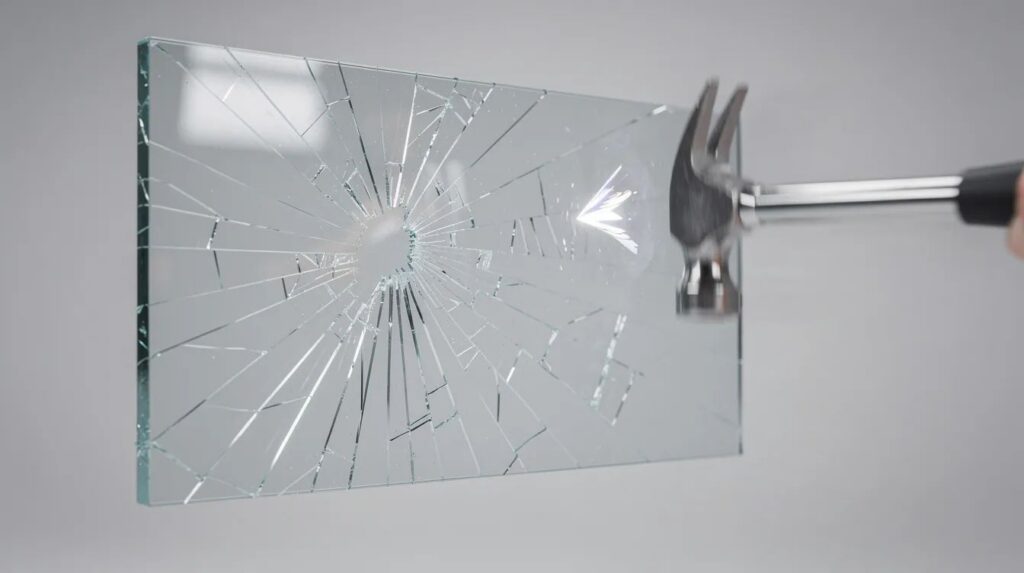
Tempered glass-sometimes called toughened glass-is a type of safety glass used in glass windows, doors, and dozens of everyday applications. The critical difference from standard glass comes down to how it breaks. Regular glass fractures into large, jagged shards with sharp edges that can cause serious injury on human impact. Tempered glass, by contrast, shatters into small, dull cubes that are far less likely to cut skin.
The glass tempering process starts with annealed glass that has already been cut, drilled, and polished to its final shape. The pane enters a furnace and is heated above 1,000 degrees Fahrenheit-typically around 620–650 °C. It is then quenched by rapidly cooling the surfaces with high-pressure air jets. This creates powerful surface compression and internal tension throughout the glass. The result: tempered glass is 4–5 times stronger than regular glass and can withstand about 10,000 psi of compressive stress.
You encounter tempered safety glass more often than you might realize. It is commonly used in shower doors, frameless shower doors, glass tabletops, glass shelves, storefronts, bus shelters, skylights, office partitions, fireplace doors, vehicle windows, and even kitchen appliances. It is one of several safety glass options available alongside laminated glass and wired glass, each serving different performance goals.
Where and When Are Tempered Glass Windows Required by Code?
Modern building codes in the U.S.-including the 2024 IBC and IRC-require tempered glass or equivalent safety glazing in locations where people face elevated risk of contact, fall, or impact injury. These are formally called “hazardous locations,” and local inspectors enforce them during permits and inspections.
Common locations that require tempered glass or other safety glazing include:
- Doors and sidelites adjacent to doors
- Glass near stairways and stair landings
- Large windows with bottom edges less than 18 inches above the floor
- Wet areas such as tub and shower enclosures
- Glass near swimming pools
- Windows next to walking surfaces within 36 inches of the glazing plane
Typical trigger thresholds under the 2024 IBC (Section 2406.4.3) require safety glazing when the exposed area exceeds 9 square feet, the bottom edge sits below 18 inches from the floor, the top edge rises above 36 inches, and a walking surface is within 36 inches horizontally. These numbers are examples for guidance-not legal advice.
Consider a scenario: in 2026, a homeowner replaces a large living-room window in a house built in 1985. Under current code, that entire window may now need tempered safety glass because its size and sill height meet hazardous-location criteria. If the original pane was just annealed glass, installing regular glass again could fail inspection.
Requirements differ between residential and commercial settings, and some jurisdictions do not accept aftermarket products to “convert” standard glass into tempered glass. However, many accept tested safety glazing systems-such as certain security window films or laminated units-that meet ANSI Z97.1 or CPSC 16 CFR 1201. Always verify with a local inspector or glazing professional before ordering.
Tempered Glass vs Regular Glass vs Laminated Glass
“Safety” and “security” are not the same thing when it comes to glass. Tempered glass is engineered to reduce injury risk. It is not designed to resist forced entry after breakage. Understanding other types of glazing helps you protect both people and property.
Regular glass (annealed glass) is the cheapest option. It can be cut on site, which makes installation flexible. But when it breaks, it forms large, sharp pieces that are dangerous-and it generally does not meet building codes in hazardous locations.
Tempered glass windows offer improved impact resistance, a safer break pattern of small cube-like pieces, and better thermal stress tolerance for sun-exposed edges or dark films. However, damage to any part of tempered glass causes it to completely shatter, leaving an open frame rather than a barrier.
Laminated glass bonds two or more panes with a plastic interlayer such as PVB. When broken, shards adhere to that interlayer, keeping the opening partially sealed. It provides stronger security against forced entry
, better sound reduction, and storm resistance, making it the standard in hurricane zones, schools, and banks.
A common misconception is that tempered glass is “shatterproof.” It is not. It is engineered to fail safely, not to withstand all breakage. Compare a basic patio door from 2005-often tempered only-with a 2026 upgrade using tempered laminated glass plus a security film. The newer assembly addresses both injury risk and burglary delay, which tempered glass alone cannot accomplish.

Pros and Cons of Tempered Glass Windows
Choosing the right glazing for your house or commercial property starts with understanding the real trade-offs-not just the marketing claims.
Key advantages:
- About 4–5 times stronger than annealed glass in bending and impact
- Breaks into small, dull cubes instead of sharp shards, reducing injury risk
- Meets many safety glazing code requirements for hazardous locations
- Resists thermal stress cracks from solar gain, dark coatings, or temperature swings that can exceed 1,000 °F exposure scenarios
- Widely available from most glass manufacturers and shops
Key disadvantages:
- Tempered glass is often more expensive than regular glass due to the manufacturing process
- It cannot be resized or reshaped after tempering-precision in measurement is non-negotiable
- Optical clarity may be affected by roller wave distortion introduced during furnace processing
- Vulnerable to edge damage or installation stress; impurities such as nickel sulfide inclusions can cause tempered glass to spontaneously explode months or years after installation
- Tempered glass can be costly to replace after damage since a new pane must be fabricated from scratch
- It offers limited security against forced entry-once broken, tempered glass shatters completely upon impact, leaving a clear opening
A real-world example drives this home. After a 2023 smash-and-grab incident, a retail store owner discovered that the tempered storefront glass offered zero resistance once shattered. The fix: adding security film and polycarbonate shields over the existing tempered glass windows. Higher upfront cost, but subsequent vandal attempts failed to penetrate.
When code, heat, or impact risk demand it, tempered glass is a must. For high-security or high-value locations, consider pairing it with materials that protect against forced entry.
Can You Cut Tempered Glass? Understanding the Glass Tempering Process
The short answer: you cannot cut tempered glass after the tempering process. Attempting to cut, grind, or drill it will cause it to shatter into small pieces instantly.
The manufacturing process requires all fabrication-cutting to shape, drilling holes, polishing edges-to happen on the annealed glass before it enters the furnace for heating and quenching. Once the glass exits that process, its dimensions and form are permanent.
Practical examples make this clear. Want to add a pet door cutout to an existing tempered pane? You need a new pane. Need to move a lock hole by half an inch? New pane. Trying to trim a tempered glass window to fit an existing window frame? New pane. Each reorder adds cost and lead time.
Laminated glass can sometimes be carefully cut, and individual panes within an insulated glass unit can be replaced. But a fully tempered single lite cannot be modified in any way. Building owners and contractors should consult a glass professional early in the design phase and use templates to avoid costly mis-measurements.
Safer, Stronger Alternatives: Films, Laminated Glass, and Polycarbonate Shields
Tempered glass solves the injury-risk problem, but it does not address every safety, security, or performance concern-including energy efficiency, privacy, and vandalism resistance.
Security and safety window films are applied directly to existing regular or tempered glass. They hold broken pieces together, reduce the risk from flying glass, and can delay forced entry. When tested as a complete system (glass plus film), certain products help existing openings meet safety glazing standards. Films also offer solar control, UV reduction, and privacy benefits.
Laminated glass is the preferred upgrade path for new windows or storefront systems in schools, government buildings, banks, and street-level retail where both impact safety and burglary resistance matter. It combines well with tempered outer layers for maximum performance.
Retrofit polycarbonate or acrylic shields mount over existing glass windows to create a clear protective barrier. These absorb blows and dramatically reduce smash-and-grab success rates on high-risk doors and display windows.
These solutions align with common 2020–2026 concerns: school safety mandates, downtown retail crime, critical infrastructure hardening, and coastal storm debris. All should be installed by certified glazing and film specialists to meet required test standards and protect warranties.

FAQs About Tempered Glass Windows
Below are answers to the most common questions from homeowners, facility managers, and architects about tempered glass windows.
Is tempered glass always required for home windows?
No. Most wall windows outside defined hazardous locations can use regular glass or laminated glass. Building codes typically require tempered or other safety glass near doors, stairs, tubs, bars, and low-sill openings. Requirements vary by jurisdiction, and the edition of the building code your area has adopted, so confirm with your local building department before ordering.
How can I tell if my existing window glass is tempered?
Look for a small permanent stamp-sometimes called a “bug”-etched into a corner of the pane. It usually shows the manufacturer’s name, the word “Tempered” or “Safety Glass,” and a reference to standards like ANSI Z97.1. Older panes may not be clearly labeled. A glazing professional can help confirm; avoid trying to break or tap-test the glass yourself.
Why did my tempered glass window shatter on its own?
Spontaneous breakage can result from edge damage sustained during handling or installation, frame misalignment that creates binding, thermal stress from dark coatings or intense solar exposure, or rare nickel sulfide inclusions introduced during manufacturing. If multiple panes have failed in the same opening, inspect the window frame for hard contact points and consult a professional.
Does tempered glass stop burglars or forced entry attempts?
While tempered glass is harder to break than standard glass, it offers limited security once it fails. Because it shatters completely, it leaves a clear opening with no sharp pieces to impede intruders. Combining tempered glass with security window films, laminated glass, or exterior polycarbonate shields is the recommended approach when burglary resistance is a priority.
Can I add window film to tempered glass windows?
Yes. Many solar control, safety, and security films are designed to bond to tempered glass windows when installed by trained professionals. Benefits include improved impact performance, protection from flying glass, UV reduction, energy savings, and added privacy. Products should be tested as a system and applied by specialists to ensure proper adhesion and edge sealing.
How long does it take to replace a broken tempered glass window?
For standard residential sizes, a professional typically measures on one visit, sends the order for fabrication and tempering at the factory, and installs on a second visit-often within several business days. Custom shapes, very large windows, or specialized coatings extend lead time. Emergency board-up service is common while the new tempered glass is being fabricated.
Why Choose Our Team for Tempered Glass and Window Safety Upgrades
Since 1992, our team has helped commercial, institutional, and residential clients across the country navigate the decision between tempered glass, laminated glass, and security film solutions. We specialize in window films, safety glazing retrofits, and architectural surface solutions-not just selling materials, but managing complete projects.
Our turnkey approach covers site assessments, code and risk review, product recommendations, installation scheduling, and final inspection support. We serve schools, government facilities, retail chains, offices, and multifamily properties nationwide, ensuring consistent standards across every location.
We install high-performance products including solar control films, safety and security window films, anti-graffiti and privacy films, and decorative architectural finishes-all of which can be combined with tempered glass windows for layered protection. Every project is handled by certified installers, backed by manufacturer warranties, and planned to minimize disruption in occupied buildings.
Next Steps: Upgrade Your Windows with the Right Tempered Glass Solution
Tempered glass is essential in many code-required locations, but it is only one piece of a complete safety and security strategy for glass windows and doors. The strongest results come from pairing tempered glass with the right films, laminates, or shields for your specific risks.
Before reaching out, gather a few basics: your building type, approximate window sizes, existing glass type if known, and your primary concerns-whether that is injury risk, forced entry, heat, glare, or privacy. Then contact our team by phone, email, or online form for a consultation, site survey, or quote. We support both single-location owners and multi-site facility managers with the same level of precision and care.