Table of Contents:
- What Is Ceramic Window Film? (Fast Answer)
- How Ceramic Window Film Works (The Technology Explained)
- Key Benefits: Heat Control, Glare Reduction & UV Protection
- Ceramic vs. Other Types of Window Film
- Architectural Applications: Homes, Offices & Specialty Spaces
- Glass Compatibility, Safety & Warranty Considerations
- Installation Process: What to Expect on a Professional Project
- How to Choose the Right Ceramic Window Film for Your Building
- FAQs About Ceramic Window Film
- Why Choose a Professional Window Film Specialist for Ceramic Installations
This guide covers everything facility managers, architects, homeowners, and building owners need to know about ceramic window film, nano ceramic window tint, and modern window film solutions for heat, glare, and UV control.
What Is Ceramic Window Film? (Fast Answer)
Ceramic window film is a high-performance window retrofit solution that uses nano ceramic particles embedded in a polymer matrix to block infrared heat, glare, and harmful UV rays without darkening glass or creating a mirror-like appearance. In 2026, with worsening heat waves and rising energy bills, it has become the go-to upgrade for buildings that need comfort and efficiency without sacrificing natural light or aesthetics.
Ceramic tint is engineered with non-conductive ceramic particles and utilizes advanced nanotechnology, making it fundamentally different from older dyed or metallic films. The terms “ceramic window film,” “nano ceramic window tint,” and “nano ceramic clear architectural film” all describe the same core technology. The difference comes down to visible light transmission levels (shades) and whether the product is designed for residential, commercial, or vehicle use. Ceramic films are suitable for both home and vehicle applications.
Typical use cases include house windows, schools, hospitals, office towers, retail storefronts, and government buildings.
- In one sentence: Ceramic window film is a non-metallic, nano-ceramic-infused window retrofit that maximizes UV and infrared blocking with minimal darkening or reflectivity, ideal for reducing energy costs and improving comfort in modern buildings.
How Ceramic Window Film Works (The Technology Explained)
Modern ceramic films rely on nano ceramic particles instead of the dyes or metals found in older generations of tint film. Advanced ceramic tints use concentrated nano-ceramic particles dispersed throughout the film’s layers to selectively filter infrared heat and block UV rays while remaining optically clear.
Here is how the three main film technologies compare:
- Dyed film: Absorbs heat and visible light using organic dyes. It is inexpensive but fades quickly, shifts color over time, and offers limited heat rejection. Ceramic window film does not degrade over time like dyed films, and ceramic films achieve effective UV protection without using dyes.
- Metallic/reflective film: Uses metal layers to reflect solar energy. While effective at heat rejection, metallic films create a mirror-like appearance, can violate building design standards, and interfere with cell, Wi-Fi, and radio signals.
- Nano ceramic film: Uses stable, non-metallic ceramic particles (such as titanium dioxide or silicon nitride) for heat absorption and UV blocking. Ceramic films outperform traditional dyed or metallic films on durability, clarity, and signal transparency. Ceramic window films maintain high optical clarity across all shade levels.
Key performance metrics to investigate when reviewing any ceramic product:
- Visible light transmission (VLT): Percentage of light passing through. Ranges from 15% (dark) to 80%+ (nearly clear). A 70% VLT film can deliver roughly 55% TSER and 99%+ UV blocking.
- TSER (Total Solar Energy Rejected): The most honest measure of overall heat rejection. Architectural ceramic films typically achieve 40–60% TSER at lighter VLT and 70–80% at darker shades.
- Infrared rejection (IRR): Often stated as peak IR (900–1000 nm), which can reach 90–98%. Full-band IR rejection across the entire spectrum is usually somewhat lower.
- UV protection: Routinely 99%+ for both UVA and UVB.
Advanced ceramic tints use nano-ceramic particles for better heat rejection than any dyed or hybrid alternative, and many manufacturers now market these products as “infrared” or “IR-blocking” films. Always review full-band IR data rather than relying on peak-wavelength claims alone.
Key Benefits: Heat Control, Glare Reduction & UV Protection
Ceramic films are chosen primarily for comfort, energy savings, and protection of interiors and occupants. Here is what the performance numbers actually mean for your building.
Heat reduction. Ceramic window tint can reduce infrared heat by up to 99% at peak wavelengths, and ceramic window film blocks up to 85% to 96% of infrared heat depending on shade and product line. The Evolve Series offers up to 94% selective infrared heat rejection, while the CIR™ Series enhances solar performance with ceramic non-metal construction. In practical terms, a lighter film (50–70% VLT) rejecting 40–60% of total solar energy translates to noticeably cooler interiors, less HVAC runtime, and lower energy bills through the hottest months. Ceramic films provide maximum thermal comfort without dark shades, so you do not have to sacrifice your view for a cooler space.
Glare reduction. Ceramic window tint offers glare reduction while preserving natural light. At 15% VLT, glare reduction can reach roughly 77%, while a 49% VLT film reduces glare by about 29%. This makes a measurable difference for monitors, POS screens, whiteboards, and TVs in offices, classrooms, and retail environments. Ceramic film reduces glare from sunlight and high-beam headlights, making it valuable for both architectural and vehicle glass.
UV protection. Nano ceramic tint blocks up to 99% of UV rays, including both UVA and UVB wavelengths. Ceramic window film blocks up to 99% of harmful UVA and UVB rays, which protects occupants from skin damage and prevents fading of flooring, furniture, artwork, and retail merchandise.
Comfort, productivity & efficiency. Nano ceramic tint enhances energy efficiency by blocking heat before it enters the building, reducing peak cooling loads and hot spots near south- and west-facing glass. Ceramic films improve energy efficiency in homes and commercial spaces alike, translating reduced HVAC strain into real energy savings over each cooling season.
Quick-scan benefit highlights:
- Up to 70–80% TSER for darker ceramic films; 40–60% for lighter, near-clear types
- Peak IR rejection frequently above 90%
- Glare reduction from 30–70% depending on VLT
- UV blocking at 99–100%
- Enhanced privacy options with lower VLT shades
Ceramic vs. Other Types of Window Film
Ceramic sits at the top of the performance hierarchy among solar control films. Here is how it stacks up against the alternatives.
- Dyed film: Lowest cost, but limited lifespan (5–10 years), noticeable color shift and fading, and modest heat rejection. Suitable for budget-conscious, non-critical applications, but not ideal for demanding commercial or institutional use where longevity and performance matter.
- Metallic/reflective film: Strong heat rejection and good SHGC numbers, but the mirrored exterior appearance can clash with design standards or storefront visibility requirements. Signal interference with cell phones, Wi-Fi, and building access systems is a common issue that ceramic film eliminates entirely.
- Spectrally selective and dual-reflective films: Many modern spectrally selective products are nano ceramic-based or hybrid constructions, combining ceramic particles with selective coatings. These are often specified when regulatory or aesthetic constraints limit exterior reflectance.
When ceramic window film is worth the upgrade: Buildings with large glass façades, high cooling costs, premium interiors, museums, healthcare facilities, architect-led projects, and any space where occupant comfort and UV protection justify a higher-performing product. Specifiers should evaluate both performance data sheets and aesthetic mockups, not just the regular price per square foot.
Architectural Applications: Homes, Offices & Specialty Spaces
Ceramic tint is no longer just for cars. It is now standard for high-performance architectural glazing retrofits across every building type.
Residential. The most common problem areas in a home are south- and west-facing living rooms, bedrooms, home offices, and large sliding doors. A higher VLT nano ceramic tint (70–80%) preserves your view and lets in natural light while cutting heat and UV. For homeowners who want enhanced privacy during daytime hours, lower VLT shades add that layer without external treatments. Ceramic tint on house windows is one of the most cost-effective ways to cut summer energy bills without replacing glass.
Commercial offices. Open-plan offices, conference rooms, and perimeter workstations suffer from hot spots and screen glare. Ceramic film balances daylight with thermal comfort, reducing complaints and improving productivity. It also helps older buildings with single-pane or clear double-pane glass meet workplace comfort guidelines without a full glazing upgrade.
Retail and hospitality. Storefronts need visibility and merchandise protection. High-VLT ceramic films keep display areas bright and inviting while blocking the UV rays that cause fading. Hotels, restaurants, and atriums benefit from heat and glare control that does not darken the style or appearance of the space.
Specialty spaces. Museums and galleries rely on UV blocking to protect exhibits. Schools need glare reduction for screens and whiteboards. Healthcare facilities require consistent temperatures across patient areas. In each case, ceramic film delivers measurable protection and comfort without altering the building’s outside appearance.

Glass Compatibility, Safety & Warranty Considerations
Glass type matters when choosing any window film, and higher-performance ceramic options require careful evaluation.
- Single-pane glass: Generally the most straightforward for film application, with the widest product compatibility.
- Double-pane (IGU) glass: Film can increase thermal stress between panes, potentially accelerating seal failure. Manufacturer film-to-glass compatibility guidelines are essential. Not every ceramic film is suitable for every IGU.
- Tempered and laminated glass: Often compatible, but specific products may require manufacturer approval, especially on large panes or glass with edge defects.
- Low-E coated glass: Some low-E coatings interact with film adhesives or alter heat absorption. A professional dealer will review glass manufacturer labels before recommending a product.
Beyond compatibility, ceramic window films enhance shatter resistance and safety by holding glass fragments together on impact. Ceramic films have outstanding long-term durability, with premium products warranting lifetime coverage for residential use and 10–15 years for commercial installations. For example, some major manufacturers offer 12-year limited commercial warranties when film is installed and maintained per spec.
DIY application on complex glazing systems can void warranties and is generally not advisable for commercial or institutional buildings. The risk of bubbles, cracking, misalignment, or thermal stress from improper installation far outweighs any potential savings.
Installation Process: What to Expect on a Professional Project
There is a significant difference between a small DIY residential project and a professionally managed installation for an office, school, or multi-site portfolio. Here is a typical workflow for a professional job.
Pre-install:
- Site assessment – evaluate glass type, thickness, coatings, sun exposure, and accessibility
- Film selection – choose VLT, TSER, and UV performance targets; review mockups if needed
- Measurement and proposal – measure glass areas, estimate labor and materials, deliver a detailed quote
On-site work:
- Protect floors, furnishings, and frames
- Clean glass thoroughly to remove dirt and residue
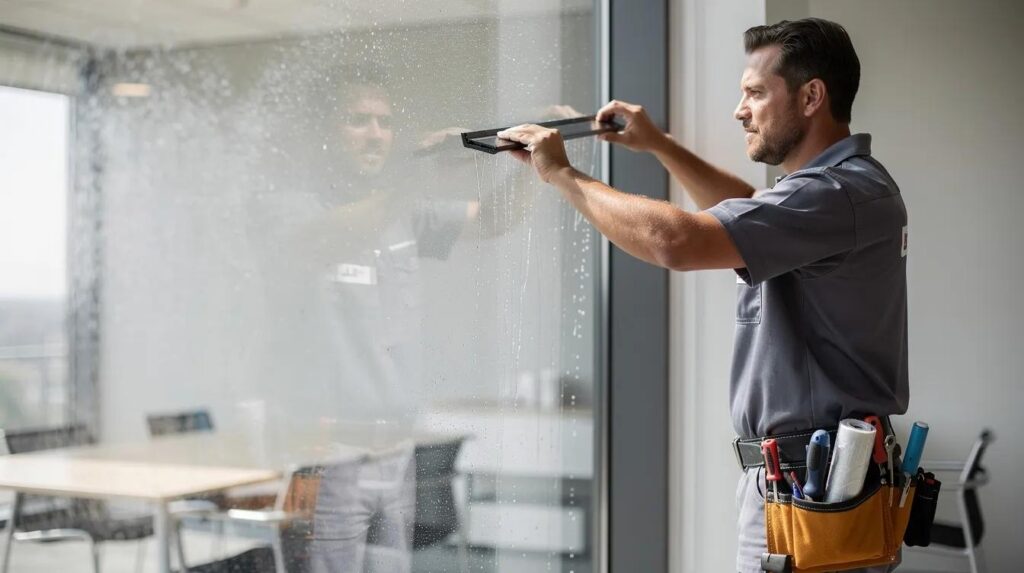
- Applying window film requires a lot of water for positioning – a spray solution is used to slide the tint film into place
- Squeegee out moisture and trapped air, then trim edges for a clean fit
- Two people are often needed for easier installation, especially on large commercial panes
Installation takes about 30–45 minutes per window on standard residential glass. Larger commercial elevations or multi-story work may require lifts and can add time. Film installation can be difficult and may require practice, which is why professionals deliver far better results than first-time DIY attempts.
Post-install expectations: Small air bubbles may disappear over time after installation, typically within a few weeks. Initial haziness or small water pockets behind the film are normal. Full cure usually takes 30–60 days depending on climate, humidity, and glass type. During this period, avoid cleaning or disturbing the film surface.

How to Choose the Right Ceramic Window Film for Your Building
Choosing the right film is a perfect balance between performance, appearance, budget, and code or lease requirements. Here are the decision steps:
- Define your goals. Maximum heat reduction? Glare control on screens? UV protection for interiors? Daytime privacy? A clear glass look? Your priority shapes every other choice.
- Select a VLT level. A 70% nano ceramic film gives a nearly clear appearance with meaningful heat and UV control. A 35% film delivers stronger glare reduction and more heat rejection. Go below 20% only when privacy or heavy shading is essential, and understand it may require more artificial lighting.
- Review manufacturer data sheets. Look at TSER, full-band infrared rejection, and UV blocking numbers. Do not rely solely on marketing terms like “infrared tint” or “premium ceramic.” The difference between products can be significant.
- Request mockups. Install samples on a few panes so stakeholders can discover real light levels and aesthetics at different times of day before committing to a full rollout.
- Consider lifecycle cost. A higher upfront investment in nano ceramic tint often pays back through lower energy bills, reduced HVAC maintenance, and longer film life – especially on large glass areas in hot climates like Texas, Florida, or the Southeast.
FAQs About Ceramic Window Film
Common questions from building owners, homeowners, and facility managers about ceramic tint and nano ceramic window film.
How much heat can ceramic window film really block?
Ceramic window tint can reduce infrared heat by up to 99% at peak wavelengths, but realistic whole-window performance is better expressed as TSER. Many architectural nano ceramic films achieve around 40–60% TSER, which significantly cuts solar heat gain. Exact results depend on glass type, film model, and orientation – south and west exposures typically see the biggest comfort improvement.
Will ceramic tint make my windows too dark?
No. Nano ceramic clear and high-VLT films (70–80% VLT) maintain a nearly clear appearance while still providing UV protection and meaningful heat reduction. Darker shades are available when stronger glare reduction or enhanced privacy is a priority, but they are not mandatory for strong performance.
Does ceramic window film interfere with Wi-Fi, cell phones, or building systems?
Ceramic film does not interfere with electronic signals. Non-metallic nano ceramic and ceramic IR films are specifically engineered not to block RF signals, unlike older metalized reflective films. Mobile devices, Wi-Fi, access control readers, and IoT sensors continue to function normally.
Can ceramic film be installed on all my existing windows?
Most standard clear and tinted glass is compatible, but certain low-E coatings, newly installed IGUs, and specialty glazing require professional evaluation. A site survey to review glass type, manufacturer labels, and warranty considerations is always recommended before final film selection. Professionals will measure and assess each pane to confirm what is suitable.
How long does ceramic window film last?
Premium ceramic films professionally installed can last 15+ years in commercial settings and decades in residential applications. Ceramic window film does not degrade over time like dyed films, and advanced nano ceramic constructions resist peeling, bubbles, and discoloration. Leading manufacturers offer lifetime residential warranties and 10–15-year commercial coverage.
Is ceramic window film worth the cost compared to standard tint?
The upfront cost is higher, but the return is clear: better performance, longer life, and superior appearance. Energy savings from reduced HVAC strain can pay back the investment over just a few cooling seasons. Decision-makers should review life-cycle cost rather than initial price per ft, especially on large glass areas or in hot, sunny climates. Many specifiers who investigate the numbers find ceramic outperforms every other category on a cost-per-year basis.
Why Choose a Professional Window Film Specialist for Ceramic Installations
High-performance nano ceramic tint and architectural window film deliver the best results when specified and installed by experienced specialists. At Window Film Depot, that means over three decades of project management across government, commercial, retail, education, and institutional clients nationwide.
What sets a specialist apart:
- Product expertise: Matching film type and VLT to building orientation, occupancy type, and local climate conditions based on real project feedback, not guesswork.
- National project management: Corporate rollouts, multi-campus institutions, and government facilities need a single point of contact who can coordinate installation, stock, and quality control across locations.
- Certified installers and manufacturer-backed warranties: Professional installation ensures compliance with fire, safety, and glazing codes, and keeps warranties intact.
- Value-added services: Combining solar control film with security glazing, privacy film, decorative film, anti-graffiti film, or commercial graphics as part of a broader building envelope upgrade – all from one provider.
Next Steps: Plan Your Ceramic Window Film Project
Whether you are upgrading a single home or managing a multi-building portfolio, the path from research to results starts with a few simple steps.
- Gather basic information: building type, approximate glass square footage, key problem areas (rooms or elevations with maximum heat or glare), and recent utility data to quantify your energy concerns.
- Schedule a professional assessment to discuss your goals – heat control, glare reduction, UV protection, privacy, or aesthetics – and to review suitable ceramic or nano ceramic film options in person.
- Request a detailed proposal that includes product specs, an installation plan, warranty terms, and an estimated timeline designed to minimize disruption to occupants.
Contact Window Film Depot today to schedule a consultation, request samples, or receive a tailored quote. Whether the message is about a single residential add-on or a national rollout, our professionals are ready to help you discover the right solution. Reach out in August or any month – we keep film in stock year-round and can install on your schedule.