Table of Contents:
- Why Storefront Window Tinting Matters Right Now
- What Is Storefront Window Tinting and How Does It Work?
- Energy Savings and Comfort: How Storefront Tinting Pays for Itself
- Protecting Merchandise, Furnishings, and Branding from Sun Damage
- Glare Control and Natural Light: Creating a Better Customer Experience
- Security, Safety, and Vandalism Protection with Storefront Films
- Storefront Aesthetics, Branding, and Privacy Options
- How the Commercial Window Tinting Process Works
- Key Factors to Consider When Choosing Storefront Window Films
- Common Mistakes to Avoid with Storefront Window Tinting
- FAQs About Storefront Window Tinting
- Why Choose Our Team for Storefront Window Tinting
- Next Steps: Schedule a Storefront Window Tinting Consultation
Why Storefront Window Tinting Matters Right Now
If you manage a street-level retail shop, restaurant, or commercial space with large glass windows, you already know what afternoon sun does to your interior: temperatures spike, displays fade, customers squint, and your energy bill climbs. Storefront window tinting is a retrofit upgrade that addresses all of these problems at once by applying high-performance window films directly to existing glass-no costly glass replacement required.
Modern films balance natural light with solar heat, glare, and UV control, giving you lower energy bills, a more comfortable environment for customers and employees, protected inventory, improved security, and a sharper-looking façade. Consider a street-level boutique where mannequin displays bleach within months, or a national bank branch network that replaced broken blinds across 800 locations with solar control film to unify aesthetics and cut interior temperatures. These are real scenarios where storefront tinting delivers measurable, year-over-year returns.
This guide walks facility managers, franchise owners, and property managers through everything worth knowing before investing-from how film works and what it costs to common mistakes that waste budget.
What Is Storefront Window Tinting and How Does It Work?
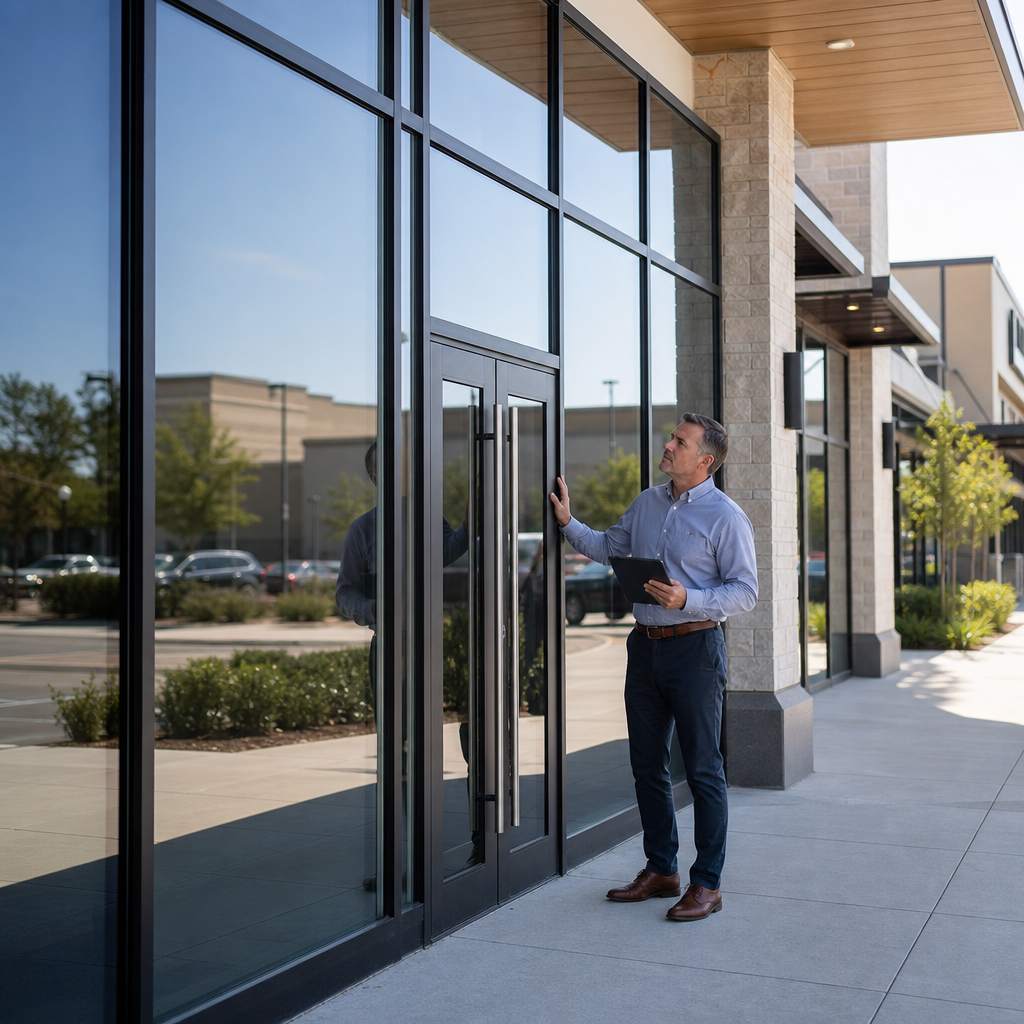
Storefront window tinting is the application of high-performance film to the interior (or sometimes exterior) surface of commercial storefront windows. Unlike automotive window tinting, commercial films must meet building code requirements for safety glazing, fire resistance, and compatibility with insulated glass units, and they typically carry 10–15-year warranties.
Modern films are constructed from multiple polyester (PET) layers with either metalized coatings (thin layers of aluminum or silver) or nano-ceramic particles that reject infrared heat without interfering with WiFi or cell signals. A scratch-resistant top coat and pressure-sensitive adhesive complete the stack. Once installed, the film reflects and absorbs solar energy, filters UV rays, and reduces visible light transmission to manage glare-all while preserving outward visibility through the glass.
Because it is a retrofit solution, storefront tinting works on older buildings, historic districts, and leased retail spaces where replacing glass is impractical or prohibited.
Energy Savings and Comfort: How Storefront Tinting Pays for Itself
Since 2022, peak electricity rates have climbed 10–30% in hot-summer markets across the Southwest, Southeast, and Texas. For any store or restaurant with large glass fronts, solar radiation through untreated glass increases air conditioning costs significantly-especially on west- or south-facing exposures where afternoon sun turns windows into thermal radiators.
Choose high-performance films that reduce solar heat gain, and the difference is immediate. Quality solar control films reject 40–75% of total solar energy, and window tinting can reduce cooling costs by up to 30% in high-exposure retail spaces. High-quality window films reflect thermal energy away from buildings, helping maintain stable indoor temperatures year-round rather than swinging with each cloud break. In a realistic scenario, a 2,000-square-foot street-facing shop in Phoenix or Houston with west-facing glass could see summer electricity usage drop 15–35% after film installation, often paying back the investment within two to five years.
Beyond the utility bill, window films regulate heat distribution in retail spaces, eliminating hot spots near windows and creating more even temperatures between front-of-house and back-of-house. Employees standing near display windows work in noticeably better conditions, and the overall comfort across the space improves without HVAC upgrades.
Protecting Merchandise, Furnishings, and Branding from Sun Damage
Direct sunlight through storefront windows quietly destroys product value. UV rays can fade and degrade merchandise over time-fabrics, packaging, printed signage, wood flooring, and leather goods all show visible damage within 12–24 months of sustained exposure. UV is the primary culprit, but visible light and infrared heat accelerate the breakdown.
Window tinting absorbs and reflects harmful UV radiation before it reaches your displays. Premium commercial films can block up to 99% of UV rays while still allowing attractive natural light on products. For apparel boutiques with front-window mannequins, furniture showrooms with upholstery samples, salons with hardwood floors, and electronics retailers with sensitive packaging, that level of protection translates directly into less product rotation, fewer markdowns on sun-damaged goods, and consistent brand presentation.
If you notice patchy carpet near the glass line, uneven color on display fabrics, or washed-out posters that looked sharp three months ago, those are clear signs it is time to act. The cost of replacing or discounting damaged inventory year after year almost always exceeds the one-time investment in quality storefront tinting.
Glare Control and Natural Light: Creating a Better Customer Experience
Walk into any untreated storefront at midday, and the pain points are obvious: customers shielding their eyes, staff struggling with glare on POS screens, digital signage washed out, and window-side seating abandoned. High-performance window films reduce blinding solar glare while keeping the space bright and open. The tint diffuses harsh sunlight while maintaining natural daylight for visibility-softening light rather than blocking it.
Film selection matters here. Light films (50–70% visible light transmission) barely change the feel of a space; neutral films in the 30–50% range noticeably cut glare without dimming displays; and reflective or medium-tint options go further for extreme exposures. Neutral, non-reflective films help preserve merchandise visibility while still cutting glare enough that POS screens and price tags stay readable all day. Restaurants, cafés, and banks benefit especially-patrons can sit by the window at midday without squinting, and teller zones stay functional without blinds.
The business case is straightforward: comfortable environments encourage customers to linger longer, and improved comfort levels can increase purchase conversions. When the space feels inviting from open to close, dwell time goes up, and walk-out rates go down.
Security, Safety, and Vandalism Protection with Storefront Films
Large storefront windows are a security vulnerability. Smash-and-grab thefts, storm-driven debris, and accidental impacts can shatter glass in seconds, creating dangerous exposure for people and property. Window tinting adds structural protection to glass surfaces through thicker safety and security films (typically 8–14 mil) designed to hold the glazing together after impact.
Tinted windows hold shattered glass fragments together during impacts, keeping flying glass shards contained rather than spraying into the store. This shard retention buys critical time: window films delay intruders’ entry during break-ins, turning what would be a quick grab into a prolonged, noisy effort that increases the chance of detection and response. Tinting also protects against vandalism and accidental impacts-a meaningful benefit for jewelers, convenience stores, dispensaries, and street-facing pharmacies.
For areas with frequent tagging or scratching, anti-graffiti films act as a sacrificial layer on the exterior glass. When damaged, the film is peeled off and replaced at a fraction of the cost of new glass, keeping the storefront looking clean without a major repair bill. The core benefits break down into three priorities: deterrence of opportunistic attacks, delay of forced entry, and shard retention that keeps the space safe until glass is fully replaced.
Storefront Aesthetics, Branding, and Privacy Options
Beyond performance, storefront window tinting creates a sleek, modern appearance that can transform an aging façade. Tinting masks interior clutter for a polished look-storage racks, back-of-house equipment, and transition zones disappear behind a clean glass line. Reflective films enhance the architectural character of buildings, while lighter ceramic options keep the look subtle and professional.
You can balance privacy with visibility by checking the Visible Light Transmission percentage of any film you consider. Films can provide privacy or reinforce branding without darkening the storefront. Most reflective or dual-reflective tints provide daytime privacy, allowing people inside to see out while limiting views in from the sidewalk. Decorative and frosted options work well on sidelites, doors, and lower glass bands-keeping upper windows clear for daylighting while adding etched-look logos, subtle banding, or patterned privacy that aligns with an existing brand guide.
Aesthetic enhancements build trust and curiosity in customers walking past. A unified look across multiple locations reinforces brand identity, while mirrored or tinted glass gives even modest retail spaces a premium feel. Just be sure to check local sign ordinances and visibility requirements, since some jurisdictions limit exterior reflectivity or require clear sightlines into certain occupancy types.
How the Commercial Window Tinting Process Works
From a buyer’s perspective, the process follows a predictable path:
- Consultation and goals discussion – You outline priorities (heat, glare, UV, security, branding) and the installer asks about building orientation, occupancy schedule, and aesthetic preferences.
- On-site measurement and glass assessment – The installer measures every lite, identifies glass type (annealed, tempered, insulated, low-e), and documents frame conditions.
- Film recommendation and proposal – You receive a written proposal with specific film selections, pricing per square foot, prep work details, labor, timeline, and warranty terms.
- Scheduled installation – On installation day, surfaces are cleaned, film is cut to size, applied with a slip solution, squeegeed to remove air and water, edge-trimmed, and the site is cleaned up.
- Curing and aftercare – Expect minor haziness or small water bubbles for up to 30–60 days as adhesive cures. Avoid abrasive cleaning during this time.
A small boutique with a few window panes can be completed in a few hours. A large multi-bay storefront typically takes one business day. Multi-location rollouts are phased over weeks or months depending on scope.
Key Factors to Consider When Choosing Storefront Window Films
Not all window films are the same, and storefront windows have unique performance, safety, and code requirements. Start with your primary goal-whether that is heat rejection, glare control, privacy, security, or a combination-and factor in your building’s orientation and local climate.
When reviewing options, evaluate the Total Solar Energy Rejected (TSER) rating to manage indoor temperatures, visible light transmission (VLT) to ensure brightness fits your space, UV rejection percentage, and exterior reflectivity. Check municipal codes and commercial leasing rules before buying tint films, since some districts cap reflectivity or mandate minimum transparency.
Glass type matters: single-pane annealed glass handles most films well, but insulated glass units and low-e coatings are more sensitive to thermal stress. A certified installer should survey your glass and confirm compatibility before recommending any product. Finally, compare warranty terms-both film and labor-expected lifespan (typically 10–15 years for quality interior films), and whether the installer provides documented data sheets and installation records for future reference.
Common Mistakes to Avoid with Storefront Window Tinting
A few avoidable pitfalls can save you significant time and budget.
Choosing film on price alone. Low-cost dyed films often fade, bubble, or lose performance within a few years. Investing in spectrally selective or ceramic films upfront delivers far better lifetime value.
Using automotive-style dark tint. A tint that is too dark can make a retail store look closed or uninviting, and may violate local building codes or lease requirements. Commercial films are purpose-built for storefronts.
DIY or unlicensed installation. Improper cleaning, trapped dust, or poor edge trimming leads to bubbles, delamination, and voided warranties. Commercial glass demands professional, certified installers with manufacturer backing.
Ignoring security needs. In high-risk areas, solar-only film does nothing to slow a break-in. If smash-and-grab or spontaneous glass breakage is a concern, specify security-grade film with proper anchoring.
Overlooking brand and signage visibility. Film that looks great on a swatch may obscure window graphics or clash with exterior signage. Always test samples on your actual glass before committing.
FAQs About Storefront Window Tinting
These questions come up frequently in commercial and retail projects. Each answer below gives a straightforward, decision-focused response.
How long does storefront window tinting typically last?
Commercial-grade window films installed on interior vertical glass typically last 10–15 years under warranty, with premium ceramic films often performing well for 15–20+ years in moderate climates. Longevity depends on sun exposure, glass type, and maintenance. Proper aftercare-gentle cleaning, no abrasive tools-helps the film reach its full service life.
Will window film make my store too dark for product displays?
Not if you choose the right selection. Films are available with VLT ratings from 20% up to 70%+, allowing you to discover the balance between heat control and brightness that suits your space. A professional installer can apply sample swatches to your actual glass so you see the real impact before making a decision.
Can I apply storefront tint to existing insulated or low-e glass?
In many cases, yes. However, film choice must be compatible with the glass type to avoid thermal stress issues. A site visit and glass survey are standard practice so the installer can recommend safe options backed by the film manufacturer’s warranty.
Does storefront window film help in colder climates too?
Modern films can reduce winter heat loss through glass by adding a slight insulating effect and cutting the radiant chill that makes window-side areas feel drafty. The biggest energy savings typically occur on the cooling side, but comfort improvements are year-round.
How much does commercial storefront window tinting cost?
Fully installed commercial solar control film typically ranges from about $6 to $18 per square foot, depending on film type (solar, security, decorative), project size, and site complexity. Request a written quote that includes film specs, prep work, any after-hours labor premiums, and warranty details so you can compare proposals accurately.
Will window tinting affect customers’ ability to see into my store from the sidewalk?
It depends on the film shade and exterior reflectivity. Lighter, neutral films preserve strong visibility into display windows during the day, while darker or reflective options reduce it. At night, when interior lights are on, visibility into the store increases regardless of film type. If walk-in traffic matters, stay with higher VLT and low reflectivity, and use decorative bands or partial coverage only where privacy is needed.
Why Choose Our Team for Storefront Window Tinting
Window Film Depot has been in the window film industry since 1992-over three decades of hands-on work with solar control, security glazing, decorative, and specialty films for commercial and institutional clients nationwide. We are not just installers; we supply, project-manage, and execute multi-site rollouts with the same precision whether the scope is a single boutique or hundreds of retail branches.
Our team coordinates directly with facility managers, general contractors, and property teams to keep occupied spaces running smoothly during installation. Every project follows manufacturer-recommended procedures, and we provide full documentation-film data sheets, warranty records, and maintenance guidance-so your investment is protected long after the work is done.
What sets us apart is a combination of national reach and local expertise: we understand regional climate demands, municipal code requirements, and the logistical realities of phased commercial rollouts. When your community of stakeholders needs a single point of contact for storefront tinting across multiple locations, we deliver.
Next Steps: Schedule a Storefront Window Tinting Consultation
Ready to see what storefront window tint can do for your space? Reach out for a no-obligation consultation. Have these details handy: approximate glass dimensions or photos, a description of current issues (heat, glare, fading, privacy, security), and any branding or style requirements.
Multi-location owners and facility managers-ask about standardized film packages and phased installation plans designed to minimize disruption across your portfolio. We offer on-site surveys, virtual walk-throughs using your photos, and plan reviews for new builds or renovations.
The right storefront window film delivers measurable returns in comfort, energy savings, product protection, and curb appeal-starting from the first season after installation. Drop us a line with your questions, and let’s get started.