Table of Contents:
- What Is Window Perf Vinyl and How Does It Work?
- Key Benefits of Perforated Window Decals for Businesses
- Common Window Perf Specs: Materials, Thickness, and Perforation Ratios
- Optimizing Print Quality on Perforated Vinyl
- Indoor vs. Outdoor Durability: UV, Weather, and Lifespan
- Lamination and Safety: When and Why to Laminate Window Perf
- Applications: Where Window Perf Works Best
- Measuring, Designing, and Ordering Window Perf
- Installation and Maintenance of Perforated Window Film
- Choosing Between Window Perf and Solid Window Film
- FAQs About Window Perf, Perforated Vinyl, and One Way Vision Film
- Why Choose Our Team for Window Perf Vinyl Installation
- Next Steps: Get a Quote for Perforated Window Film
What Is Window Perf Vinyl and How Does It Work?
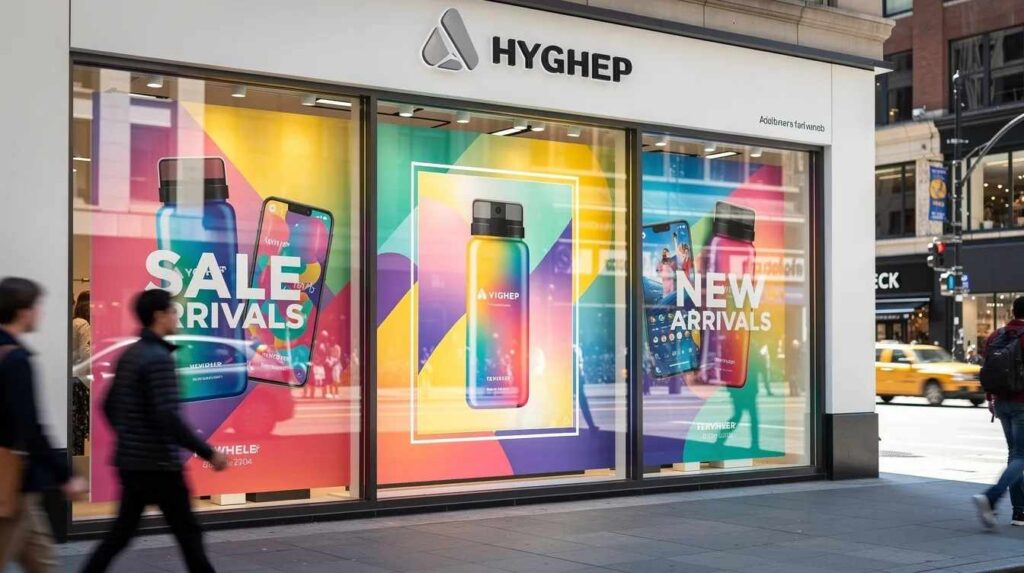
If you have ever walked past a storefront and seen a vivid, full-color graphic on the glass yet noticed that people inside could clearly see you walking by, you were looking at window perf vinyl. This perforated window film is a composite vinyl sheet punched with thousands of tiny holes that creates one-way visibility- a printed image dominates one side while the other side remains see-through from inside.
The outside face of the material is typically a white stock printed with full-color graphics. The adhesive side facing inward uses a black backing, which absorbs light passing through the perforations and sharpens the image contrast from the exterior. From inside, the unprinted side of perforated vinyl remains see-through, allowing occupants to look out through those same holes. The trick works because the human eye, at typical viewing distances, blends the printed dots together into a continuous image on one side while reading the open areas as a transparent view from the other.
Perforation ratios define the balance between printable surface and open area. A 50/50 pattern means half the film is solid and half is open-great for clear visibility out, but softer graphics. A 60/40 ratio increases the printable area to 60 percent while keeping 40 percent open, which is a popular middle ground. Perforated vinyl features a 70/30 perforation ratio that pushes image density higher while still allowing light to pass through, and some installations go as aggressive as 80/20 for maximum branding impact. Different perforation patterns affect visibility and print quality, so the choice comes down to how much interior daylight and outward view your space needs versus how bold the exterior graphic should appear.
In a real-world example, a family entertainment center in Michigan used an 80/20 perforated window decal across its storefront in a recent branding refresh-delivering vibrant outdoor signage while preserving enough natural light for guests inside. Most retailers in 2026 settle on 60/40 or 70/30 for the best trade-off between shade, view, and image quality.
Key Benefits of Perforated Window Decals for Businesses
For facility managers, retailers, schools, and offices, perforated window decals solve a problem that solid signs cannot: they transform glass into a high-impact branding surface without creating a dark room behind it. Perforated window vinyl allows one-way visibility, meaning employees and customers inside maintain an outward view and natural daylight while passersby outside see bold, personalized graphics.
The visual impact is significant. A national sporting goods chain once rolled out 50/50 perf vinyl across hundreds of locations for a co-branded campaign, turning ordinary glass doors and windows into uniform, eye-catching advertisements overnight. That kind of scalable, rollout-consistent branding across a market of storefronts is exactly what makes perforated window film ideal for chains and institutions that need to maintain a cohesive look.
Beyond branding, the film offers practical comfort features. It reduces glare and provides mild solar heat control while still allowing natural light into the space. Glass covered in perforated film also becomes more visible to foot traffic, preventing accidental walk-through impacts-a small but meaningful safety item for schools, lobbies, and retail doors.
Top benefits at a glance:
- One-way vision branding without sacrificing the inside view
- Daytime privacy plus a marketing surface on otherwise blank glass
- Glare and light control that keeps interiors comfortable
- High ROI per square foot on vehicles, storefronts, and interior partitions
Common Window Perf Specs: Materials, Thickness, and Perforation Ratios
When suppliers reference something like “4.7-oz perforated vinyl,” they are describing the film weight per square foot-a shorthand for stiffness, durability, and handling ease during installation. Heavier stock is more durable and resists wind flutter on large panes; lighter stock is easier to cut and suitable for small or temporary signs.
Typical film thickness runs between 4 and 7 mil (roughly 100–180 microns). Thicker films hold up better in outdoor environments and resist tearing during application, while thinner films conform more easily to curved glass on vehicles. Hole diameters are usually around 1.5 mm, and the typical perforation ratio is 70/30 for optimal visibility and graphic punch. Perforated vinyl is made from durable, waterproof materials-most commonly calendered PVC with a white gloss face and black adhesive back.
| Spec | Typical Range |
|---|---|
| Film thickness | 4–7 mil (100–180 µm) |
| Hole diameter | 1.5–1.7 mm |
| Perforation ratios | 50/50, 60/40, 70/30, 80/20 |
| Outdoor lifespan (no laminate) | 1–3 years |
| Roll widths | 54–60 inches |
| Service temperature range | 0 °F to 140 °F |
The black adhesive back is what makes the one-way vision effect work. It absorbs light through the holes so the printed graphic appears solid from outside. A white-back film would wash out the image and reduce privacy. Vinyl as a material is less rigid than aluminum or fiberglass, which makes it flexible enough to conform to glass of varying sizes yet simple to trim during installation. Perforated window films are scratch-resistant and durable enough for multi-year exterior use. Note that vinyl never needs painting, staining, or sealing-the printed face is your finished surface from day one.
Optimizing Print Quality on Perforated Vinyl
Designing for window perf is not the same as designing for solid vinyl. Because the perforations break up the printable area, fine detail, thin lines, and small text can disappear into noise. Artwork preparation needs to account for the fact that 30 to 50 percent of your image surface is open air.
Key guidelines for creating files that look great on a perforated window:
- Print at 600–720 DPI output for walk-by storefronts; lower DPI is acceptable for highway-distance vehicle graphics
- Use bold, sans-serif typography and strong color blocks-avoid thin serifs and low-contrast color combinations
- Over-saturate colors slightly in your proof to compensate for light diffusion through the holes
- Keep critical information (phone numbers, logos) in solid areas of the image where perforation density is consistent
- Lamination can slightly darken or soften the printed image, so adjust artwork brightness upward if overlaminate will be applied
Modern printing technologies-UV-gel, LED UV, and eco-solvent systems-have dramatically improved color density and edge sharpness on perforated stock compared to even a few years ago. The result is that a well-prepared file printed on quality material can look nearly photographic from a normal viewing distance.
Indoor vs. Outdoor Durability: UV, Weather, and Lifespan
Outdoors, perforated window decals typically last one to three years on a standard storefront before fading, edge lifting, or adhesive degradation becomes noticeable. On vehicles, that lifespan can be shorter due to vibration, road grime, and frequent washing. These films are UV-resistant to prevent color fading, and pairing UV-stable inks with a clear overlaminate can extend outdoor life to four or five years under optimal conditions.
Perforated window decals are waterproof and resist stains, and they can withstand outdoor conditions like sun and rain without delaminating under normal circumstances. However, vinyl can expand and contract significantly with extreme temperature fluctuations, which is why edges are the most vulnerable point-especially in coastal environments with salt spray or regions with heavy freeze-thaw cycles.
Indoor applications-lobby glass, conference room partitions, interior doors-see far less stress. Without direct UV and weather exposure, graphics on interior glass often look good for four to five years or longer.
Maximize service life with these do’s and don’ts:
- Do install in moderate weather and on clean, dry glass
- Do use UV-stable films and inks for sun-facing windows
- Don’t power-wash near edges or use abrasive pads
- Don’t apply harsh chemicals, ammonia-based cleaners, or bleach to the film surface
Lamination and Safety: When and Why to Laminate Window Perf
Overlaminate is a clear film layer applied over the printed side of window perf to protect the ink from abrasion, moisture, and vandalism. For perforated car window film and high-traffic storefronts, lamination is nearly always worth the added cost. It keeps dust and road grime out of perforations, improves cleanability, and adds measurable life to the graphic.
The laminate must be optically clear. A hazy or matte laminate will reduce visibility through the film and degrade the one-way vision effect-particularly problematic on vehicle rear windows where a driver depends on clear visibility. Safety codes matter here, too: federal regulations require glazing on certain vehicle windows to transmit at least 70 percent visible light, and many states impose additional restrictions on front side windows and windshields. Always review local vehicle code requirements before covering any glass on a car, van, or bus.
Situations where you should always laminate:
- Rear and side windows on vehicles exposed to road debris
- Low windows, glass doors, and entry panels in high foot-traffic zones
- Storefronts in areas prone to vandalism or heavy weather
Lamination is optional for high window banks out of reach, short-term seasonal campaigns, or interior partitions with minimal contact.
Applications: Where Window Perf Works Best
These decals can be used for both indoor and outdoor applications, which is part of what makes them so versatile.
Storefronts and retail: Large exterior glass is the most common canvas. Seasonal campaigns swap in and out cleanly, and coverage can range from a single door panel to a full facade wrap. The film is suitable for creating privacy over storage areas while still allowing staff inside to monitor the sales floor.
Offices and institutions: Conference room glass, public-facing lobbies, school entry doors, and transit shelters all benefit from one-way vision film that balances branding with daylight. Vinyl windows are predominantly available in white, beige, or light pastels, so perforated graphics add color and identity that the frame itself cannot provide-and since vinyl frames cannot be easily repainted to match new color schemes, the film becomes your primary design tool.
Vehicles: Rear and side windows on vans, buses, and service fleet vehicles are ideal for perforated vinyl wraps. A 50/50 or 60/40 ratio keeps driver and passenger visibility intact while turning every trip into a moving billboard.
Residential and small business: Home offices, street-facing windows, and small shops use window perf for daytime privacy and a personalized look without sacrificing natural light. Vinyl is a popular framing material for residential windows, and the smooth glass surface makes film application straightforward.

Measuring, Designing, and Ordering Window Perf
Start by measuring each window’s width and height to the nearest 1/16 inch. Note frame edges, mullions, gaskets, and any hardware that the film should not overlap. For curved vehicle glass, measure the widest and tallest points and note the curvature.
Order your decal 1 inch wider and 1 inch higher than the window so installers have material to work with and can trim to a perfect edge. For multi-panel storefronts, design a single continuous image and split it at the mullions so the graphic aligns seamlessly across the facade.
File preparation basics:
- Supply vector files for logos and text; high-resolution rasters (300+ DPI at print size) for photographic backgrounds
- Include 0.125–0.25 inch bleed around all edges and keep critical items inside a safe zone
- Specify color profiles matched to the printing method (UV, eco-solvent, latex)
Artwork options range from client-uploaded print-ready files to working with an in-house designer for complex layouts. Either way, review a proof under lighting conditions similar to the final install environment before approving production.
Installation and Maintenance of Perforated Window Film
Professional installation is strongly recommended for large panes, multi-window designs, and vehicle glass. Small, flat, accessible panels can be a DIY project with patience and the right tools. Remember that even a superb window can perform poorly if installed incorrectly-the same principle applies to film.
Basic installation sequence:
- Clean glass thoroughly with mild soap and water; remove all dirt, oil, and residue
- Dry the surface completely
- Position the film and peel the release liner carefully
- Apply using a squeegee from the center outward, using a slip solution to remove air bubbles
- Trim edges with a sharp blade for a clean finish
Install on dry glass in moderate temperatures (above roughly 40 °F) and avoid direct rain or washing for at least 24 hours after application. For maintenance, use a damp cloth to clean the window decal and avoid using harsh chemicals on the surface. Ammonia-based cleaners, abrasive pads, and high-pressure washes can degrade the print and lift edges.
For removal, peel gently to remove the window decal without damage-pull slowly at a low angle. Use soapy water to remove any residue after decal removal, and finish with a glass-safe cleaner if needed.
Choosing Between Window Perf and Solid Window Film
Solid printed vinyl or non-perforated privacy film is the right choice when you need complete opacity, maximum energy savings, or no visibility in either direction. Window perf is the better option when branding and advertising are the priority, but occupants still need to see out.
The whole window system affects energy performance and longevity. Vinyl provides excellent thermal performance and reduces heat transfer as a framing material, and double- or triple-pane glass units filled with argon or krypton gases improve insulation further. Adding perforated film provides mild solar control, but it does not replace dedicated solar or Low-E window film. Low-E coatings reflect infrared light to improve thermal performance, and a lower Solar Heat Gain Coefficient (SHGC) is ideal for hot climates-items that solid solar films address more directly.
Multi-chambered extruded vinyl frames improve structural rigidity and thermal performance. Fusion-welded corners provide stronger seals than mechanically fastened corners, and a lower U-factor indicates better heat retention in cold weather. Low air leakage ratings should ideally be 0.3 or lower. The energy performance of windows is dictated by the interaction between glass and frame, so it is important to compare identical configurations when evaluating windows. The National Fenestration Rating Council (NFRC) Label is essential for comparing window products side by side. Vinyl is typically one of the most budget-friendly framing options available, though it can appear plasticky compared to wood or metal. Vinyl frames feature hollow chambers that can be filled with insulating foam for improved performance.
Quick decision framework:
- Do I need people inside to see through this glass? → Yes = window perf
- Is exterior branding or advertising the primary goal? → Yes = window perf
- Do I need maximum solar control or full privacy? → Yes = solid film
FAQs About Window Perf, Perforated Vinyl, and One Way Vision Film
Below are the questions facility managers, retailers, and vehicle owners ask most often about window perf and perforated window decals.
How private is window perf during the day and at night?
One-way vision works best when the outside is brighter than the inside-during a typical day, privacy is strong, and passersby see only the graphic. At night, with interior lights on, the effect reverses, and people outside can see in. If nighttime privacy matters, pair the film with blinds, curtains, or a secondary window treatment.
How long do perforated window decals typically last?
Expect about one to three years outdoors depending on sun exposure, climate, preference of film grade, and cleaning habits. Indoor graphics on lobby or room glass often last four to five years or more. Short-term promotional campaigns are frequently swapped out on a seasonal basis regardless of film condition.
Can window perf vinyl damage my glass or leave residue?
Quality perforated window film uses removable pressure-sensitive adhesive designed for clean removal. When you peel the decal correctly-slowly, at a low angle-it should not damage the glass. Some adhesive residue is normal on older installations and can be cleaned with a glass-safe remover.
Is perforated window film legal on vehicle windows?
Regulations vary by state. Generally, rear and rear-side windows are permitted, but front side windows and windshields have strict visible light transmittance limits. Customers should review local vehicle code requirements before scheduling installation on any car, van, or bus.
Will perforated vinyl make my space darker inside?
Window perf does reduce some light compared to clear glass, but it still allows substantial daylight. A 50/50 ratio lets in more light; a 70/30 or 80/20 pattern trades some brightness for a stronger exterior image. The effect is more like a comfortable shade than a blackout.
Can I install perforated window film myself?
Small pieces on simple, accessible, flat windows can be a DIY project if you have a squeegee, sharp blade, and patience. Large storefronts, high glass, and vehicle applications are difficult to execute without professional tools and experience-misalignment, trapped bubbles, and uneven edges are common when items of that scale are attempted without training.
Why Choose Our Team for Window Perf Vinyl Installation
Window Film Depot has been in the window film business since 1992-over three decades of hands-on experience with commercial, institutional, and multi-site projects across the United States. We deliver turnkey service from initial consultation through design review, production, professional installation, and ongoing support.
Our team helps you select the right perforation ratio, ink system, and lamination approach for your specific glass conditions and project goals. Whether you need a single storefront wrapped or a national rollout covering hundreds of locations, we bring the same quality standards and stock of proven film products from trusted manufacturers.
- Family-owned with 30+ years of industry expertise
- National installation capabilities for multi-location programs
- Trained installers who follow building and vehicle visibility guidelines
- Full-service support: measuring, design, print, install, and removal
Next Steps: Get a Quote for Perforated Window Film
Ready to apply window perf vinyl to your storefront, office, or fleet? Request a custom quote by reaching out with the following:
- Window measurements (width and height to the nearest 1/16 inch) and photos of the glass
- Project goals: branding, privacy, wayfinding, seasonal promotion
- Timeline and number of locations
We will provide straightforward recommendations, pricing options, and a realistic schedule for design and installation. Schedule a site visit or virtual consultation so we can evaluate glass conditions, sun exposure, and the perfect film choice for your space.