Table of Contents:
- The Science Behind Enhanced Glass Strength: A Deep Dive into Tempered Glass
- The Paradox of Protection: How Toughened Glass Breaks and Its Security Implications
- The Critical Security Gap: Why Toughened Glass Offers a False Sense of Protection
- The Advanced Solution: Elevating Existing Glass with 3M™ Security Window Film
- Strategic Decision-Making: Retrofit Film vs. Full Glass Replacement for Project Managers
- Navigating Standards and Specifications: Partnering for Optimal Security Outcomes
- Conclusion: Strategic Insights for Enhancing Building Security and Project Success
- Frequently Asked Questions
- Related Posts from Window Film Depot
The Science Behind Enhanced Glass Strength: A Deep Dive into Tempered Glass
Project managers evaluating glazing options must fundamentally understand what is toughened safety glass is, often called tempered glass. Modern construction uses this staple material for its safety properties, yet people frequently misunderstand its security capabilities.
Toughened safety glass achieves its distinctive strength and fracture pattern through a precise thermal treatment process. Unlike standard annealed glass, tempered glass is engineered to have a balanced stress profile. Its outer surfaces are in a state of high compression, while the inner core remains in tension. This pre-stressing dramatically increases the glass’s resistance to impact, thermal shock, and bending stresses. It can typically withstand impacts that would shatter annealed glass and is approximately four to five times stronger. However, once the surface compression is compromised, the stored energy is released, causing the entire pane to fracture instantly.
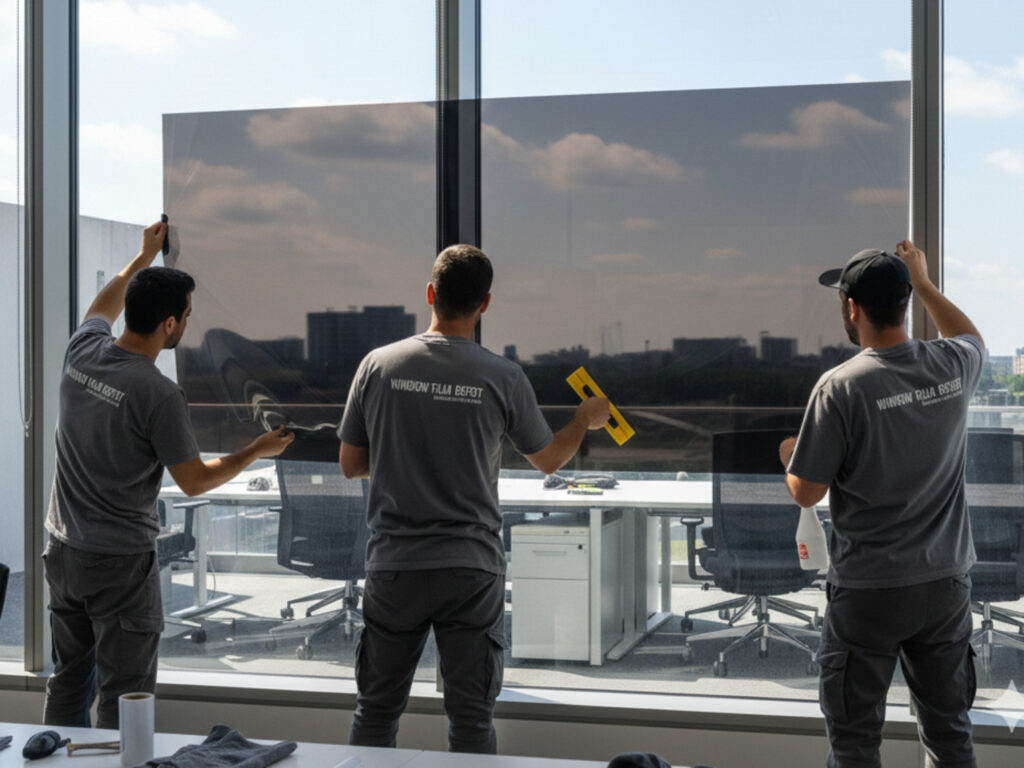
From Annealed to Tempered: The Precise Manufacturing Process
The transformation from ordinary annealed glass to toughened safety glass involves a sophisticated manufacturing sequence:
- Cutting and Edge Work: Manufacturers first cut annealed glass to the exact required size and shape. Technicians must complete any drilling or edge grinding at this stage because they cannot modify the glass after tempering.
- Heating: The cut glass sheets are then conveyed through a specialized tempering furnace, where they are heated uniformly to temperatures exceeding 1,100°F (about 600°C). This temperature is just below the glass’s softening point.
- Quenching: After heating, high-pressure air jets rapidly cool the glass. Technicians direct these powerful air jets at both surfaces simultaneously in a process known as “quenching.” This rapid cooling forces the outer surfaces to contract much faster than the interior.
- Stress Induction: As the outer layers solidify, the still-molten interior continues to cool and contract. This differential cooling creates the permanent state of compression in the outer layers and tension in the core that defines toughened glass.
This controlled thermal treatment results in a product with significantly different performance characteristics than its annealed predecessor.
Meeting Fundamental Safety Glazing Codes: Its Primary Purpose
Toughened safety glass was developed to meet fundamental safety glazing codes. Codes like CPSC 16 CFR 1201 minimize injury from human impact. Toughened glass shatters into thousands of small, blunt, cube-like fragments. This fracture pattern reduces the risk of severe lacerations.
This fragmentation is a superior safety feature, but not a security feature. Toughened glass offers minimal resistance against forced entry attempts. Its design prioritizes reducing harm after breakage occurs. It does not prevent the breakage or maintain the opening’s integrity. This distinction is paramount when evaluating commercial security applications.
The Paradox of Protection: How Toughened Glass Breaks and Its Security Implications
Understanding the ‘Dicing’ Phenomenon: Why It’s Safe but Not Secure
Toughened safety glass undergoes specific thermal or chemical treatments to increase its strength. When it reaches its breaking point, it shatters into small, blunt fragments. This behavior is known as the “dicing” phenomenon.
This fragmentation pattern makes toughened glass a safety standard for preventing injuries. However, it renders the glass ineffective as a security barrier. The entire pane fails instantly upon impact. This creates an immediate and unhindered opening for intruders.
Safety Through Fragmentation: How Toughened Glass Reduces Injury Risk
Toughened glass primarily aims to mitigate the risk of injury. In impact scenarios, annealed glass breaks into large, jagged, razor-sharp pieces. Toughened glass instead disperses energy by breaking into hundreds of small, dull fragments. These pieces are less likely to cause serious harm, aligning with building codes for occupant safety.
The Moment of Failure: Instantaneous Breach and Loss of Barrier Integrity
Despite its enhanced strength against certain types of impact, toughened glass reaches an ultimate breaking point. Once this threshold is exceeded, the entire panel disintegrates almost instantaneously. There is no gradual cracking or partial failure. The barrier integrity is lost in its entirety within a fraction of a second. From a security standpoint, an intruder can eliminate the glass barrier with a single, well-placed strike. This allows immediate access without encountering significant resistance or delay.
The Critical Security Gap: Why Toughened Glass Offers a False Sense of Protection
Vulnerability to Forced Entry: No Remaining Barrier Post-Impact
For a commercial property, the complete disintegration of toughened glass upon impact presents a critical security vulnerability. Unlike a material that might crack or deform while remaining largely intact, toughened glass leaves no residual barrier once shattered. An intruder, after breaking a toughened glass panel, faces no further obstacle to entry. This lack of a post-impact barrier means there is no delay to intrusion attempts, leaving valuable assets and personnel exposed.
Mitigating Blast Impact: A Non-Starter for Toughened Glass
When considering threats like blast events, toughened glass provides virtually no protective benefit. While it might be stronger than annealed glass against localized impact, it still shatters under the pressure wave of an explosion. The ‘dicing’ phenomenon, intended for safety in everyday breaks, becomes a liability in a blast scenario. The small fragments, propelled inward at high velocity, can become secondary projectiles, causing significant injury or damage. Toughened glass does not absorb or dissipate blast energy effectively. It merely fails in a way that is less likely to produce large, sharp shards, but it offers no resistance to the blast itself or the accompanying forced entry.
Beyond Basic Safety: A Comparison with Laminated Glass for Enhanced Retention
To understand the security limitations of toughened glass, it is useful to briefly consider laminated glass. Laminated glass consists of two or more panes of glass bonded together with an interlayer of plastic, typically polyvinyl butyral (PVB). When laminated glass breaks, the glass fragments adhere to the interlayer, which largely maintains the integrity of the opening. This retention capability means:
- Maintained Barrier: Even when broken, laminated glass remains largely in its frame, creating a significant impediment to forced entry.
- Reduced Spall: The interlayer helps prevent glass fragments from flying inward, offering a degree of protection against flying debris in a blast.
Laminated glass offers retention but has limitations regarding blast mitigation and sustained forced entry. This distinction, crucial for tempered glass vs laminated glass comparisons, helps project managers assess facility security needs.
Implications for Commercial Buildings: Unmet Security Demands
Relying solely on toughened glass in commercial buildings leaves significant security demands unmet. Project managers must recognize that while it addresses basic safety codes related to laceration injury, it does not provide:
- Intrusion Resistance: No meaningful delay or deterrence against forced entry.
- Blast Mitigation: No capacity to withstand or significantly reduce the effects of explosive forces.
- Asset Protection: A complete and immediate failure mode that compromises the security perimeter.
For properties requiring genuine protection against sophisticated threats or where business continuity is paramount, the inherent limitations of toughened glass necessitate a more robust security solution.
The Advanced Solution: Elevating Existing Glass with 3M™ Security Window Film
While traditional toughened safety glass addresses basic injury mitigation by fragmenting upon impact, it often leaves a critical vulnerability: the immediate breach of the building envelope. This is precisely where advanced security window film, particularly solutions engineered by 3M, provides a superior and proactive layer of protection. These films fundamentally alter how glass performs under duress, transforming a brittle, easily penetrable surface into a robust, resilient barrier. This makes security window film for commercial buildings an essential consideration.
How Security Film Transforms Glass Performance: Holding Fragments in Place
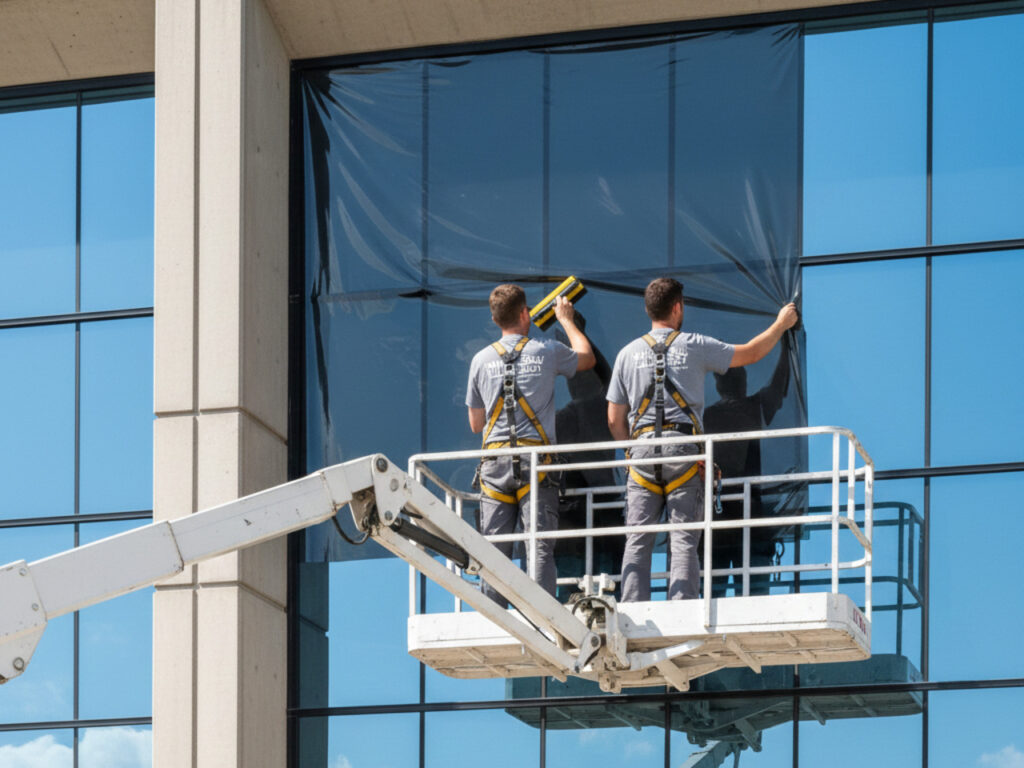
Security window film is an optically clear, multi-layered polyester film that adheres directly to the interior surface of existing glass. Unlike toughened glass which shatters into small, blunt pieces and falls out of the frame, security film holds these shattered fragments firmly together within the window frame. This critical difference prevents an immediate opening, maintaining the integrity of the glass pane even after severe impact. The film’s strong adhesive and impressive tensile strength work in concert to create a composite system with the glass, dramatically improving its resistance to various forms of attack.
Holding the Line: Dramatically Delayed Entry and Fragment Retention
The primary benefit of security window film in a threat scenario is its ability to delay forced entry protection. When an intruder attempts to break through glass protected by film, the glass may still crack or shatter, but the film prevents it from falling out. This forces the perpetrator to expend significant additional time and effort to create an opening large enough for entry, thereby increasing the chances of detection and apprehension.
Fragment retention is a crucial safety aspect in situations involving:
- Intrusion attempts: The glass shatters but remains in the frame, preventing flying shards from injuring occupants.
- Extreme weather: Windborne debris impacts are absorbed, keeping the building envelope intact and minimizing interior damage.
- Blast events: The film helps to absorb and dissipate the shockwave, preventing large, deadly fragments from becoming airborne projectiles, offering effective blast mitigation.
Addressing Diverse Threats: From Intrusion Attempts to Blast Mitigation
The versatility of security window film extends its utility beyond just deterring common break-ins. Its ability to reinforce glass makes it a powerful deterrent and protective measure against a wide spectrum of threats.
- Smash-and-Grab Theft: The delay created by the film significantly reduces the likelihood of successful quick entry, discouraging opportunistic thieves.
- Vandalism: While glass may still break, the film prevents it from collapsing, minimizing immediate damage and maintaining a secure perimeter.
- Active Threat Scenarios: By denying or significantly delaying entry through glass, the film provides critical time for occupants to seek shelter, escape, or for security personnel to respond.
- Accidental Impact: In high-traffic areas or facilities with specific safety requirements, the film mitigates injury risk from accidental human impact or objects striking the glass.
- Blast Mitigation: Specialized security films are engineered and tested to absorb and contain the shockwaves and fragmentation from explosive devices, protecting occupants from primary and secondary blast effects. This is a critical consideration for high-risk commercial or government facilities.
The 3M™ Advantage: Performance Data, Tear Resistance, and Tested Durability
3M, as a pioneer in advanced materials science, brings an unparalleled level of engineering and testing to its 3M™ Safety & Security Window Films products. Their films are not simply thick polyester. They are complex, multi-layered constructions designed for maximum performance. Key advantages include:
- Proprietary Micro-Layering Technology: Certain 3M Ultra Series films feature multiple micro-layers that increase the film’s tear resistance without significantly increasing its overall thickness. This provides superior protection against tearing and penetration compared to standard films of equivalent thickness.
- Robust Adhesive Systems: 3M’s adhesives are specifically engineered for strong, long-lasting bonding to glass, ensuring the film remains attached even under severe stress.
- Extensive Testing and Certification: 3M security films undergo rigorous testing to meet or exceed international glass security standards for impact resistance, forced entry, and blast mitigation, including GSA, ASTM standards, and EN standards. This data-backed performance provides a quantifiable assurance of protection.
- Clarity and Longevity: Despite their strength, 3M films maintain optical clarity, preserving natural light and views without noticeable distortion. They are also designed for long-term durability, resisting yellowing and delamination.
Understanding Different Film Types: From Standard Safety to Ultra Security Glazing Systems
Not all security films offer the same level of protection. Selecting the appropriate product is crucial for effective project planning. The range of options allows for tailored solutions based on specific threat assessments, budget constraints, and client requirements.
- Standard Safety Films (e.g., 3M Safety Series): These films range in thickness from 4 mil to 15 mil and are primarily designed to hold shattered glass together, preventing injury from flying shards and providing basic impact resistance. They are effective for mitigating risks from accidental impact, natural disasters, and minor intrusion attempts.
- Security Films (e.g., 3M Scotchshield™ Safety & Security Series): These films are generally thicker and incorporate advanced adhesives to provide enhanced resistance against forced entry and more significant blast events. They are a common choice for commercial properties seeking robust protection.
- Ultra Security Glazing Systems (e.g., 3M Ultra Series with Attachment Systems): Representing the pinnacle of glass security, these glazing systems combine 3M’s patented micro-layered films (e.g., Ultra S600, S800, S1400) with specialized anchoring or “attachment” systems that mechanically bond the film and glass to the window frame. This prevents the entire glazed unit from being dislodged, offering maximum protection against high-energy impacts, ballistic threats, and extreme blast forces. These solutions are often used in government buildings, critical infrastructure, and high-security commercial facilities.
Strategic Decision-Making: Retrofit Film vs. Full Glass Replacement for Project Managers
For Project Manager Paul, balancing client needs, budget, and project timelines is paramount. The decision to upgrade existing fenestration for security requires a comprehensive understanding of the options, with retrofit security window film often presenting a more advantageous solution than full glass replacement.
Cost-Effectiveness and Budgetary Control: A Practical Project Manager’s Perspective
From a project management standpoint, the financial implications of any security upgrade are a primary concern. Full replacement of existing windows with security glazing or specialized impact-resistant glass can be prohibitively expensive due to several factors:
- Material Costs: Specialized security glass itself is significantly more expensive than standard glass.
- Labor Costs: Removing and installing entire window units is labor-intensive and requires skilled trades.
- Disposal Costs: Old window units, especially large commercial ones, incur substantial disposal fees.
- Ancillary Costs: These can include scaffolding, specialized lifting equipment, potential facade disruption, and interior finishing repairs.
Retrofitting existing glass with high-performance security film offers a substantially more cost-effective solution. Film costs are a fraction of new security glass, and installation is faster and less complex. This direct saving allows for higher security levels within tight budgets, delivering significant client value.
Minimizing Disruption: Faster Installation and Operational Continuity
Time is a critical resource on any project. Replacing entire window systems involves extensive disruption, which can impact a client’s operations, particularly in commercial or retail environments. This often necessitates:
- Extended Project Timelines: Window replacement is a multi-step process that can take weeks or months.
- Business Interruption: Scaffolding, noise, debris, and restricted access can halt or severely impede normal business activities.
- Interior Impact: Disruption often extends to internal offices or retail spaces, requiring furniture movement, temporary closures, and cleaning.
Security window film installation, conversely, is a much faster and less disruptive process. It can often be completed with minimal impact on daily operations, as the work is performed on the existing glass from the interior. This means:
- Rapid Deployment: Installation can often be completed in days or weeks, depending on the scale, rather than months.
- Maintained Operations: Businesses can often remain open and functional during installation, avoiding costly downtime.
- Reduced Footprint: Minimal equipment and personnel are required, leading to a smaller on-site footprint and less interference.
For projects where operational continuity is paramount, such as hospitals, schools, government buildings, or active commercial spaces, retrofit film provides a pragmatic advantage.
Enhancing Project Value and Client Satisfaction with Proactive Solutions
By opting for advanced security film, project managers provide a proactive and forward-thinking solution that elevates the value proposition for the client. This approach goes beyond simply meeting minimum code requirements, delivering tangible benefits that improve safety, security, and potentially, even energy efficiency. Clients appreciate solutions that are:
- Future-Proof: Security film addresses current and evolving threats without requiring a complete overhaul of the building’s facade.
- Versatile: It offers protection against multiple hazards, from intrusion to blast, providing comprehensive security.
- Aesthetically Pleasing: The film is virtually invisible once installed, preserving the architectural integrity and appearance of the building.
- Energy Efficient: Many security films also incorporate solar control properties, contributing to reduced HVAC costs and improved interior comfort, further enhancing building value.
Demonstrating a detailed understanding of these benefits and offering a tailored, expert-backed recommendation positions the project manager as a trusted advisor, leading to higher client satisfaction and stronger professional relationships.
Long-Term Performance, Warranty, and Maintenance Considerations for Fenestration
Durability and longevity are crucial for any building material investment. High-quality 3M security window films are engineered for long-term performance and are backed by robust warranties, typically covering defects such as peeling, bubbling, cracking, or delamination for periods ranging from 10 to 15 years, or even longer for certain applications.
Maintenance requirements for security film are minimal, generally involving standard glass cleaning practices. The film itself forms a durable, scratch-resistant surface. This contrasts with the more complex considerations for full window replacement, which might involve ongoing seal inspections, frame maintenance, and the potential for premature failure of new units if not installed correctly. For Project Manager Paul, understanding the long-term implications, including warranty details and minimal upkeep, reinforces the overall value and reliability of integrating security film into a project’s fenestration strategy.
Navigating Standards and Specifications: Partnering for Optimal Security Outcomes
Understanding Security Glazing Standards: ASTM and Other Relevant Building Codes
For any project manager, navigating the complex landscape of building codes and performance standards is crucial. When it comes to glazing, particularly for security applications, understanding these benchmarks ensures compliance and dictates the actual level of protection achieved. Key glass security standards like ASTM F1642 for blast mitigation and ASTM F1233/F1915 for forced entry provide quantifiable criteria for how glass and film systems must perform under various threats. Unlike basic safety glass that meets minimum fragmentation standards, these security specifications demand resistance against significant impact, pressure, and penetration attempts. Selecting a solution that demonstrably meets or exceeds these rigorous standards is paramount for effective risk mitigation.
Assessing Project-Specific Risk and Vulnerabilities for Targeted Solutions
Effective security planning extends far beyond merely meeting code. It requires a granular assessment of project-specific risks and vulnerabilities. A commercial property in a high-traffic urban center will have different security concerns than a remote government facility or a suburban retail store. Factors such as the type of business, asset value, potential threat vectors (e.g., smash-and-grab, active threat, blast risk), local crime statistics, and even adjacent infrastructure all influence the optimal security strategy. A generic approach to glass security is rarely sufficient, often leading to either overspending on unnecessary features or, more critically, under-protecting against genuine threats.
The Role of an Expert Advisor: Beyond Product Sales to True Project Partnership
In a field as specialized as glass security, the value of an expert advisor cannot be overstated. A true project partner moves beyond simply selling a product. They engage in a collaborative process to understand the project’s unique constraints, budget realities, and overarching security objectives. This involves detailed site assessments, comprehensive risk analysis, and providing data-driven recommendations that align with specific performance standards. Such a partner functions as an extension of your project team, helping you navigate technical complexities, evaluate cost-benefit scenarios, and ensure the chosen solution seamlessly integrates into the broader project scope, thereby minimizing unforeseen challenges and maximizing return on investment.
Customizing Solutions for Diverse Commercial Applications: Education, Retail, Government
The versatility of advanced security window film allows for highly customized solutions across a wide array of commercial applications, each with distinct security profiles.
- Education Campuses: Schools and universities prioritize student and staff safety from active threats and accidental breakage. Security film enhances the integrity of existing windows, delaying forced entry and containing shattered glass shards that could become dangerous projectiles.
- Retail Environments: From boutique storefronts to large department stores, retail properties face constant threats of theft, vandalism, and smash-and-grab incidents. Security films deter rapid entry, holding glass together to delay intruders and protect valuable merchandise.
- Government and Critical Infrastructure: These facilities often require robust protection against sophisticated forced entry, blast events, and even ballistic threats. High-performance security films, often integrated into multi-layer systems, provide significant resistance, contributing to force protection and mitigating hazards from explosive devices.
This adaptability ensures that security investments are precisely targeted to the most pressing threats for each building type.
Leveraging Expertise: Window Film Depot as the #1 U.S. 3M Window Film Installer
When your project demands proven performance and meticulous execution, partnering with a highly experienced and credentialed installer is essential. Window Film Depot stands as the nation’s largest and most experienced installer of 3M™ Window Film, a distinction that reflects deep technical expertise and a consistent track record of successful project delivery. This expertise ensures that product specifications translate into real-world performance, adhering to rigorous installation protocols that are critical for meeting security standards like those from ASTM. Our team acts as an invaluable resource, providing the insight and hands-on capability needed to transform complex security challenges into fully realized, high-performance solutions for your clients.
Conclusion: Strategic Insights for Enhancing Building Security and Project Success
Key Takeaways: Redefining Glass Security for Modern Commercial Properties
The landscape of building security has evolved, and with it, the definition of true glass protection. While what is toughened safety glass effectively reduces injury from accidental breakage, its inherent design means it offers a limited barrier against forced entry or blast events. Security window film, conversely, transforms existing glass into a formidable, resilient barrier, holding shattered panes intact to delay intruders and mitigate hazards. This distinction is critical for project managers delivering comprehensive security solutions that address modern threats effectively and cost-efficiently.
Empowering Project Managers: Making Informed Decisions for Client Needs
Understanding glazing capabilities empowers project managers to make informed, strategic decisions. You can confidently advise clients on solutions that meet budgets while enhancing building and occupant safety. This knowledge allows for proactive risk management, ensuring investments yield tangible protection and solidifying your expert reputation.
Next Steps: Collaborating with Security Film Specialists for Comprehensive Protection
Commercial properties looking to upgrade glass security should engage with a specialized film expert. Early collaboration allows for thorough site assessments and precise risk analysis. Partnering with a leading installer like Window Film Depot ensures advanced technologies integrate seamlessly. This process delivers optimal protection and lasting value for all clients.
Frequently Asked Questions
What is toughened safety glass, and why is it not considered a security solution?
Toughened safety glass, also known as tempered glass, is a type of glass that undergoes a thermal treatment process to increase its strength and cause it to shatter into small, relatively blunt fragments upon impact. While this “dicing” phenomenon is excellent for reducing injury risk from accidental human impact, it provides minimal resistance against forced entry or blast events because the entire pane disintegrates almost instantly, leaving an immediate, unhindered opening.
How does security window film enhance glass protection compared to standard toughened or even laminated glass?
Security window film, such as 3M™ Safety & Security Window Films, adheres to existing glass and holds shattered fragments together within the window frame. This prevents the glass from falling out, significantly delaying forced entry attempts and providing blast mitigation by containing dangerous flying shards. Unlike toughened glass, which offers no post-impact barrier, and even laminated glass, which can deform, high-performance security films maintain the integrity of the opening more effectively against severe threats, especially when combined with attachment systems.
What are the main benefits of retrofitting existing commercial windows with security film over full glass replacement?
Retrofitting existing windows with security window film offers significant advantages for project managers. It is substantially more cost-effective than full glass replacement, avoiding high material, labor, and disposal costs associated with new windows. Installation is also faster and causes minimal disruption to ongoing operations, ensuring business continuity. Furthermore, films can enhance building value by offering combined security and energy efficiency benefits without altering the building’s aesthetic.
Do 3M security window films meet industry standards for forced entry and blast mitigation?
Yes, 3M security films undergo rigorous testing to meet or exceed international glass security standards, including ASTM standards (like ASTM F1642 for blast mitigation and ASTM F1233/F1915 for forced entry), GSA, and EN standards. This data-backed performance ensures that 3M™ Safety & Security Window Films provide quantifiable protection against a wide range of threats, aligning with industry-specific requirements for various commercial and governmental applications.
How can Project Manager Paul determine the best security film solution for a specific commercial building?
To determine the best security film solution, Project Manager Paul should partner with an expert advisor, like Window Film Depot. This involves conducting a comprehensive site assessment, analyzing project-specific risks and vulnerabilities, and defining security objectives. An expert partner will provide data-driven recommendations that align with performance standards and budget constraints, ensuring a customized glazing system solution that seamlessly integrates into the broader project scope.