Navigating Ambiguity: The Project Manager’s Challenge with Vague Security Demands
The term “full safety glass coverage” frequently arises in commercial projects as a client request, yet its broad nature can significantly challenge project managers. Without a precise definition, it risks becoming a moving target, potentially leading to misinterpretations, scope creep, and budget overruns. Clients naturally seek comprehensive protection. However, the specific threats they aim to mitigate and the level of protection they envision are rarely articulated with the necessary technical detail at the outset. Translating this qualitative request into concrete, actionable specifications requires an expert understanding of glass performance and available solutions.
Beyond Basic Safety: Understanding Client Expectations for Comprehensive Glass Protection
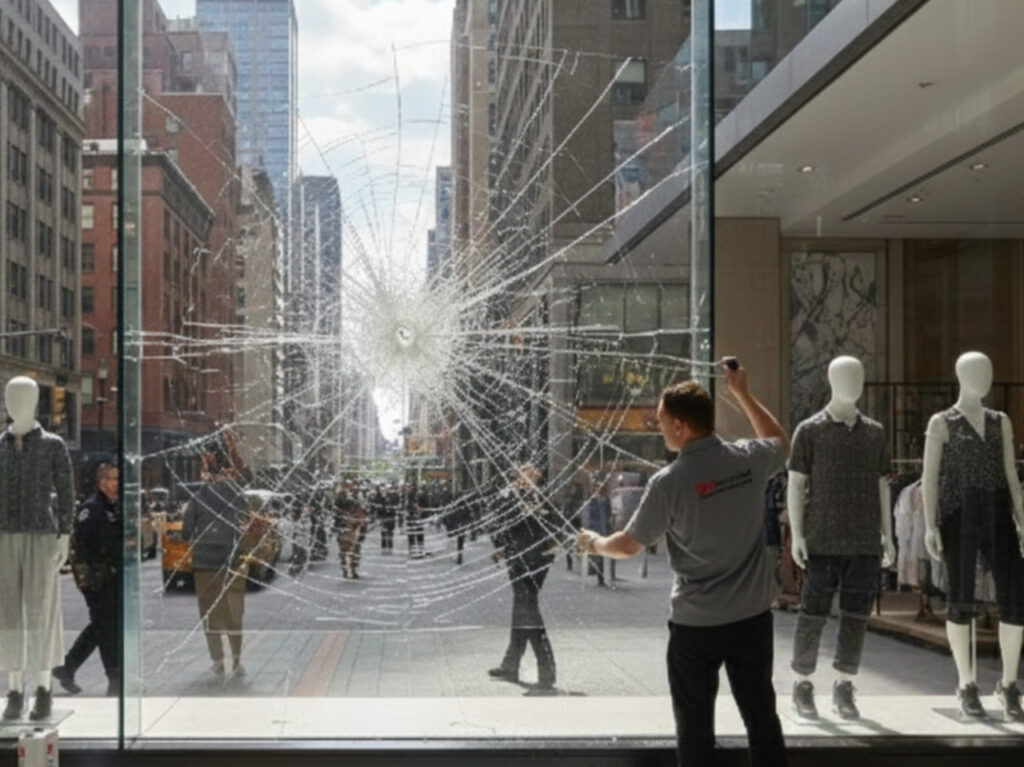
While “safety glazing” often suggests basic human impact protection, a client’s request usually implies much broader needs. Such requests typically suggest a desire for a layered defense against a diverse spectrum of risks. This includes protection against intentional acts such as forced entry or dangerous blast events. It also covers enhanced resilience against natural disasters like hurricanes or severe earthquakes. Understanding these unspoken expectations is crucial for developing a comprehensive commercial building security plan. This strategic approach ensures the final project genuinely meets the client’s safety and protection objectives.
Setting the Expert Baseline: Why a Precise Definition is Critical for Project Success
Establishing a clear, expert-defined baseline for what is full safety glass coverage is not merely an exercise in semantics. It is fundamental to the successful execution of any commercial project. A precise definition allows for accurate risk assessment, informed material selection, and realistic budget allocation. It helps align all stakeholders on the project’s security objectives, preventing costly changes and ensuring that the installed solutions deliver the expected level of protection. By providing a structured framework, an expert partner can demystify this vague request, transforming it into a measurable and achievable project goal.
The Spectrum of Glass Safety: From Everyday Impact to Advanced Threat Mitigation
True glass safety extends across a wide spectrum, addressing various potential threats with targeted solutions. Understanding these different levels of protection is key to achieving comprehensive security.
Human Impact and Accidental Breakage: Fundamental Safety Glazing Requirements
The most basic level of glass safety addresses the risk of injury from accidental human impact. Building codes mandate safety glazing in specific areas like doors, sidelites, and bath enclosures. These standards minimize the danger of severe injury if glass breaks unexpectedly. Products meeting specific safety standards are designed to resist breakage or to break safely. Tempered glass breaks into small, dull pieces to prevent deep lacerations. Laminated glass remains largely intact with fragments adhering to a flexible interlayer. Applying security window film can upgrade ordinary annealed glass to meet these fundamental safety requirements. This approach avoids the high expense and logistical burden of full glass replacement.
Forced Entry Resistance: Deterring Intrusion and Protecting Occupants
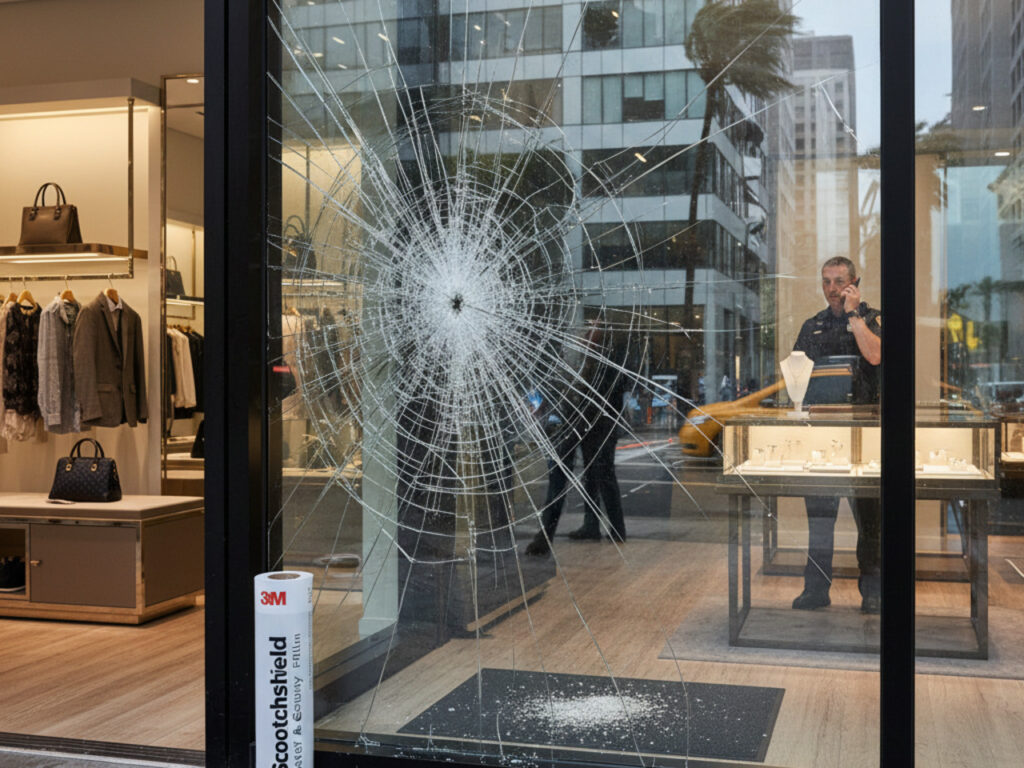
Moving beyond accidental breakage, forced entry resistance focuses on deterring and delaying unauthorized access through glass. This level of protection aims to reinforce the building’s envelope, making it more difficult and time-consuming for intruders to breach. High-performance security window films, often coupled with robust attachment systems, significantly strengthen glass, absorbing impact energy from blunt force attacks and holding shattered glass firmly within the frame. This extended resistance provides precious additional time for occupants to respond and for security personnel to arrive, effectively turning a vulnerable entry point into a formidable barrier. Testing standards such as UL 972 and ASTM F1233 measure the effectiveness of these systems against various forced entry attempts.
Blast Mitigation: Safeguarding Against Explosive Threats
In environments where explosive threats are a concern, blast mitigation becomes a critical aspect of glass safety. The primary danger often comes from glass fragmentation rather than the explosion itself. These flying shards can become deadly projectiles throughout the interior space.
Blast mitigation film is engineered to absorb extreme shockwaves generated by an explosion. This technology prevents glass from shattering inward and contains fragments within the window frame. These films are typically thicker and more robust than standard security films. They are often integrated with advanced anchoring systems to ensure the entire glazing system remains intact. Compliance with rigorous standards from the GSA and DoD guides the selection of effective solutions. Following these federal guidelines ensures the installation meets necessary protective requirements for high-risk buildings.
Natural Disasters and Extreme Weather: Resiliency Through Enhanced Glass Strength
Natural disasters present unique challenges to building integrity, with glass often being the most vulnerable component. In high-wind events, flying debris can easily breach unprotected windows. This leads to rapid pressure changes that compromise the entire building structure. During earthquakes, severe shaking can cause glass to fracture and fall. Security window films enhance resiliency by increasing impact resistance and maintaining integrity after breakage. By holding fragments together, these films help preserve the building envelope and minimize water intrusion. They also significantly reduce the risk of injury from flying or falling glass during such events
The Role of Glass Fragment Retention Film in Mitigating Injury
Across the entire spectrum of glass safety, a consistent and critical factor is glass fragment retention. Whether addressing impacts or disasters, the primary goal is holding shattered fragments within the window frame. This prevents shards from becoming dangerous projectiles that cause severe lacerations or fatalities.
This fragment retention capability is fundamental to mitigating injury during a glass failure event. It is the core mechanism through which advanced film technologies provide comprehensive safety coverage. This technology ensures that even when glass breaks, it does so safely for all building occupants.
Key Building Safety Codes and Standards Project Managers Should Know
When clients articulate a need for “full safety glass coverage,” they are often seeking protection that goes beyond the basic regulatory requirements. Understanding the foundational codes is the first step in clarifying their request and building a robust solution.
Understanding Minimum Safety Standards: ANSI Z97.1 and CPSC 16 CFR 1201
The primary standards for safety glazing in the United States are ANSI Z97.1 and CPSC 16 CFR 1201. These codes establish minimum performance criteria for glass used in hazardous locations, such as doors, sidelites, and large windows close to pedestrian traffic. Their core purpose is to reduce the risk of injury from accidental human impact.
- ANSI Z97.1 (American National Standards Institute): This standard specifies the impact requirements for various glazing materials used in buildings. It categorizes materials based on their ability to withstand impact without creating large, dangerous shards.
- CPSC 16 CFR 1201 (Consumer Product Safety Commission): This federal regulation details the performance specifications for glazing materials used in hazardous locations. It primarily focuses on preventing injuries from glass breakage due to human impact, mandating that glass either withstand significant impact or break safely. Examples include tempered glass shattering into small, blunt pieces or laminated glass retaining fragments.
While essential for public safety, it is critical to recognize that these are minimum standards. They address a very specific type of risk, accidental human impact, and typically do not account for more complex security threats or natural disasters.
Beyond Compliance: Bridging the Gap Between Code and ‘Full Safety Coverage’
The distinction between merely meeting code and achieving true “full safety coverage” is significant for any commercial project. Compliance typically satisfies legal and liability baselines for accidental impact. However, a client’s request for comprehensive safety often encompasses a much broader spectrum of risks.
- Forced Entry: Protection against criminal intrusion and vandalism.
- Blast Mitigation: Reducing injuries from flying glass fragments in the event of an explosion.
- Active Threat Response: Enhancing security during active shooter events by delaying entry.
- Natural Disasters: Minimizing damage and injury from windstorms, earthquakes, or other severe weather.
- Spontaneous Glass Breakage: Containing fragments from thermal stress or nickel sulfide inclusions.
Bridging this gap requires moving beyond a “check-the-box” approach to code compliance and adopting a strategic mindset focused on holistic risk mitigation. True safety involves assessing a building’s unique vulnerabilities and deploying solutions that address these specific threats, rather than just the generic risks covered by minimum standards.
Legal and Liability Considerations for Commercial Glass Specifications
Navigating glass specifications involves significant legal and liability implications for project managers. Failing to meet even the minimum safety codes can lead to substantial fines, legal action, and reputational damage in the event of an incident. However, when a client explicitly requests “full safety coverage,” the bar for due diligence rises considerably.
Defining “full safety” for a specific project and documenting agreed-upon protective measures is paramount. Misinterpretations or inadequate solutions can expose project managers, contractors, and owners to increased liability. This risk grows if an incident occurs that the safety measures were expected to prevent. Collaborating with experts who can translate ambiguous demands into concrete specifications is essential. This practice is a critical component of project success and effective liability management. Following code-compliant and risk-mitigating specifications ensures the building remains secure for all occupants.
The Retrofit Solution: How 3M Security Film Achieves Comprehensive Coverage
Achieving comprehensive glass safety and security in existing commercial buildings presents a unique set of challenges, often constrained by budget, timelines, and the desire to preserve architectural aesthetics. This is where high-performance retrofit solutions, particularly 3M Safety & Security Window Film, offer a distinct advantage.
Why Retrofit is the Smart Choice: Cost-Effectiveness and Minimal Disruption
Replacing existing glazing with new, specialized safety glass can be prohibitively expensive and highly disruptive, impacting project budgets and timelines significantly. A retrofit solution using security window film offers a strategic alternative that delivers superior performance without the associated headaches.
- Significant Cost Savings: Retrofitting with film can be a fraction of the cost of replacing entire window systems, which involves demolition, new framing, and installation.
- Minimal Operational Disruption: Installation is typically much faster and less invasive. Businesses can often continue operations with little to no downtime, avoiding costly interruptions.
- Preserves Building Aesthetics: High-performance films are optically clear and are applied to existing glass, maintaining the original appearance of the building’s facade and interior views.
- Flexible and Scalable: Film can be applied selectively to specific vulnerable areas or across an entire building, allowing for phased implementation and tailored protection levels.
For project managers, choosing a retrofit security glazing solution means meeting demanding client security needs within practical financial and logistical constraints.
Unpacking 3M Safety & Security Window Film Technology: Strength, Adhesion, and Performance
3M Safety & Security Window Film is engineered with advanced material science to significantly upgrade the performance of standard glass. The technology hinges on a combination of high-strength polyester and proprietary adhesive systems.
- Multi-Layer Polyester Construction: These films consist of multiple layers of clear, strong polyester that are stretched and laminated together. This creates a flexible yet incredibly tough barrier.
- Superior Adhesion: The unique, pressure-sensitive acrylic adhesive system is designed for maximum bond strength to glass. This adhesive is crucial for holding shattered glass fragments securely in place upon impact.
- Enhanced Tear Resistance: The film’s construction provides exceptional tear resistance, preventing glass from ripping away from the frame or fragmenting into large, dangerous pieces.
- Increased Elongation: The film is designed to stretch significantly under stress, absorbing impact energy rather than allowing the glass to immediately break apart. This “stretch-and-tear” resistance is key to its security performance.
This sophisticated engineering ensures that when glass is impacted, it deforms and flexes, but the film keeps the shards from flying inward, forming a formidable protective shield, effectively creating a shatterproof window film.
Advanced Fragment Retention Capabilities: A Core Benefit of 3M Film
One of the most critical safety benefits of 3M Safety & Security Window Film is its advanced glass fragment retention film capability. Upon impact, whether from an accidental collision, a natural disaster, or an attempted break-in, the film holds the shattered glass firmly within the window frame.
- Mitigates Laceration Injuries: By preventing glass from becoming airborne shrapnel, the film dramatically reduces the risk of severe cuts and lacerations, which are common in glass breakage incidents.
- Maintains Building Envelope: In severe weather or blast events, the film helps maintain the integrity of the building envelope, preventing wind, water, and debris from entering the structure.
- Enhances Safety During Disasters: During earthquakes or hurricanes, windows can spontaneously break. The film ensures that the glass remains in the frame, protecting occupants from falling or flying shards.
- Reduces Post-Breakage Cleanup: The contained glass fragments simplify cleanup and expedite recovery efforts after an incident.
This capability transforms ordinary glass into a far safer component, protecting occupants from both direct impact and secondary injuries caused by flying debris.
Enhancing Forced Entry Resistance: Layering Protection Against Intruders
For commercial properties, enhancing forced entry resistance is a critical security concern. 3M Safety & Security Window Film is a highly effective component in a layered security strategy, significantly delaying and deterring intruders.
When applied to glass, the film creates a much more resilient barrier. Attempting to break through film-protected glass becomes:
- More Difficult: The film holds the glass together, preventing it from shattering cleanly. Repeated, forceful impacts are required to create an opening large enough to pass through.
- Noisier: The prolonged effort generates significant noise, drawing attention to the intrusion attempt.
- Time-Consuming: The film buys crucial time, often several minutes, for security personnel to respond, alarms to trigger, or building occupants to seek safety.
This delay is often sufficient to deter criminals who prioritize quick, quiet access. When combined with other commercial building security measures like alarm systems and surveillance, 3M security film drastically increases the effort and risk for would-be intruders, making the building a much less attractive target.
Mitigating Blast Effects: 3M Film’s Proven Performance in High-Risk Environments
In high-risk environments where the threat of explosions exists, 3M Safety & Security Window Film offers a proven solution for blast mitigation. While no film can prevent an explosion, the primary objective in blast protection is to prevent serious injury and death caused by flying glass fragments.
- Fragment Control: In a blast event, extreme pressure waves shatter glass. 3M films are designed to hold these fragmented pieces together, preventing them from becoming lethal projectiles.
- Energy Absorption: The films absorb and dissipate a significant amount of the blast energy, reducing the overall impact on the building’s occupants.
- Tested to Industry Standards: 3M films, particularly those combined with structural silicone or mechanical attachment systems, have been rigorously tested to meet and exceed various governmental and military blast mitigation standards.
- Reduces Primary Injury Cause: According to government studies, flying glass is the leading cause of injury and death in conventional bomb blasts. By containing glass, 3M films directly address this critical hazard.
For facilities requiring robust protection against explosive threats, 3M’s specialized security films provide a vital layer of defense, often without the need for costly and complex window replacement.
The Invisible Upgrade: Preserving Aesthetics While Maximizing Protection
One of the most compelling advantages of 3M Safety & Security Window Film is its ability to deliver powerful protection without compromising a building’s architectural integrity or visual appeal. This “invisible upgrade” ensures that enhanced safety does not come at the cost of aesthetics.
- Optically Clear: The films are designed to be virtually imperceptible once installed, maintaining the natural clarity of the glass. They do not alter the appearance of the building’s exterior or the views from within.
- No Design Compromise: Architects and designers can maintain their original vision, knowing that the safety and security enhancements will not introduce visual clutter or obstruct natural light.
- Seamless Integration: The film applies smoothly to existing glass surfaces, blending seamlessly with the window system. There are no bulky frames or intrusive additions.
This combination of discreet aesthetics and robust protection makes 3M security films an ideal solution for projects where both design integrity and comprehensive safety are paramount. It allows project managers to deliver high-level security solutions that are seen only in their performance, not in their appearance.
Specifying Your Project: When to Choose Film Over Total Glass Replacement
The decision to enhance glass security within an existing commercial building often presents a critical fork in the road: total glass replacement or the strategic application of high-performance security films. While new laminated glass or tempered glass offers inherent strength, it comes with a significantly different set of implications for project managers seeking comprehensive, budget-conscious solutions.
Strategic Cost-Benefit Analysis: Film vs. New Laminated or Tempered Glass
A direct comparison reveals substantial differences in both upfront and indirect costs. Replacing existing glazing with new laminated or tempered glass involves extensive demolition, removal of old frames, installation of new units, and often significant operational disruption. This process incurs high material costs, substantial labor expenses, and potentially long lead times for custom glass orders.
In contrast, security film installation is a retrofit solution. It leverages the existing glass infrastructure, drastically reducing material and labor costs. The installation process is far less intrusive, allowing businesses to maintain operations with minimal interruption. This approach avoids the need for structural modifications to window frames or building facades, further streamlining the project and keeping expenses under control. For projects where the client demands enhanced glass safety and security but requires fiscal prudence, film presents a compelling economic advantage.
Assessing Risk vs. Investment: Tailoring Solutions to Specific Threat Levels
Understanding the specific threats a building faces is paramount to making an informed investment. Not all “full safety glass coverage” needs are equal. They range from basic human impact protection to advanced blast mitigation or forced entry resistance. Security films offer a granular approach to risk mitigation, allowing for tailored solutions without over-investing in unnecessary capabilities.
- Human Impact Protection: Films can upgrade standard annealed glass to meet safety glazing codes, preventing dangerous shards from scattering upon breakage.
- Forced Entry Deterrence: Thicker, multi-layered films significantly increase the time it takes to breach a window, acting as a crucial deterrent and delaying intruders.
- Blast Mitigation: Specialized films, often integrated with robust anchoring systems, can hold glass fragments together in the event of an explosion, minimizing injuries from flying debris.
This tiered approach ensures that resources are allocated precisely where they are most needed, providing optimal protection without exceeding the project budget. It allows project managers to select a performance level that directly correlates with the identified threat, rather than adopting a one-size-fits-all, often cost-prohibitive, replacement strategy.
Project Timelines and Logistical Advantages of Retrofit Security Glazing
Project timelines and logistical complexities are often underestimated when considering glass upgrades. Full glass replacement projects are notorious for extended schedules, requiring careful coordination with multiple trades, managing debris, and navigating potential building closures. Permitting processes for structural changes can also introduce delays.
Retrofit security glazing offers distinct advantages in this regard. Installation is typically quicker and less disruptive. There is no need for structural alterations, eliminating much of the associated permitting and inspection overhead. Work can often be performed in stages, outside of business hours, or in occupied spaces with minimal inconvenience to occupants. This logistical flexibility is invaluable for project managers, enabling them to meet aggressive deadlines and minimize the impact on a client’s daily operations, directly addressing the pain point of keeping projects on schedule and budget.
The Value of a Comprehensive Security Audit: Identifying Vulnerabilities and Needs
Defining “full safety glass coverage” begins not with a product, but with a thorough understanding of the specific vulnerabilities and security objectives of the building. A comprehensive security audit, conducted by experienced professionals, is an indispensable first step. This audit goes beyond code compliance to evaluate genuine threats, operational needs, and the client’s risk tolerance.
Key aspects of an audit include:
- Threat Assessment: Identifying potential hazards such as vandalism, break-ins, active shooter scenarios, natural disasters, or industrial accidents.
- Vulnerability Analysis: Examining existing glass types, framing systems, and attachment methods to understand current weak points.
- Operational Impact: Considering how security enhancements might affect daily operations, emergency egress, and aesthetic preferences.
- Budgetary Constraints: Establishing realistic financial parameters for the project.
This detailed analysis provides the foundational data needed to specify the appropriate security film solutions, ensuring that the chosen technology directly addresses the identified needs rather than implementing generic, potentially insufficient, or excessive measures. It transforms the vague concept of “full safety glass coverage” into an actionable, data-driven security strategy.
Partnering for Success: Ensuring Your Glass Security Project Stays on Schedule and Budget
Executing a commercial glass security upgrade requires more than just selecting the right product. It demands a collaborative partnership with a team possessing specialized expertise. From initial assessment to final installation, every phase contributes to the overall success, ensuring the project aligns with both performance expectations and financial constraints.
The Critical Role of Expert Installation: Why Professional Application Matters
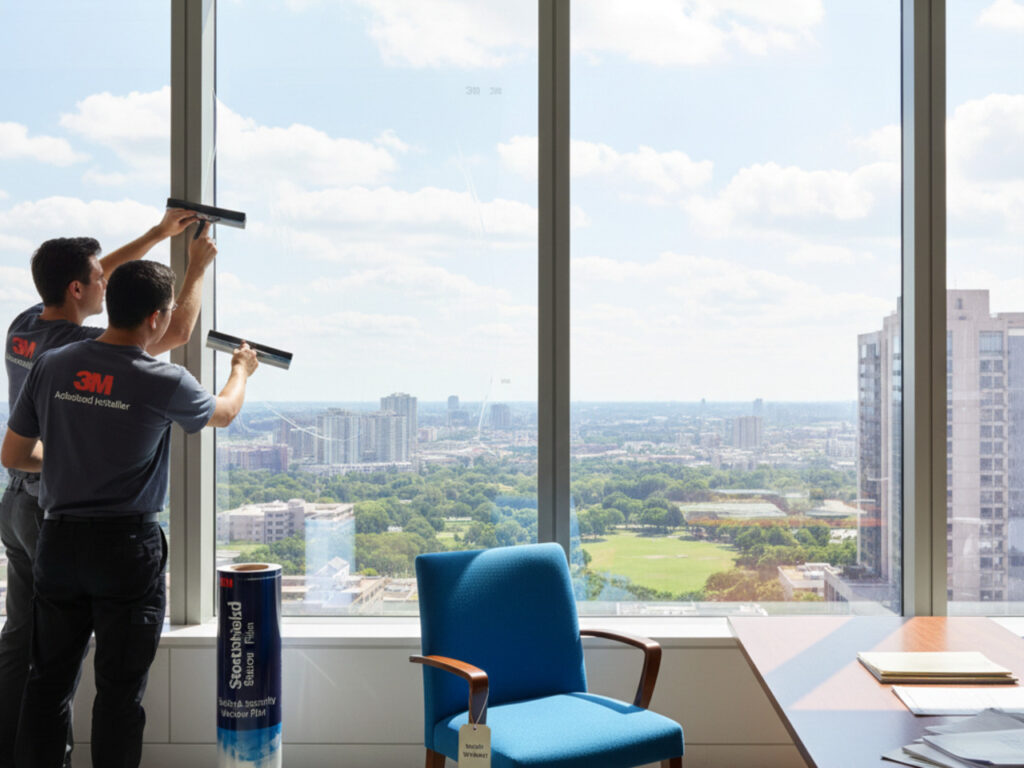
The performance of security window film is inextricably linked to the quality of its installation. Even the most advanced film will underperform if applied incorrectly. Expert installation involves precise cutting, meticulous surface preparation, and the use of specialized tools and techniques to ensure proper adhesion and a seamless finish.
Professional installers are trained to address challenges such as:
- Contaminant-free application to prevent bubbles and defects.
- Edge sealing techniques to maximize the film’s tear resistance and blast mitigation properties.
- Working with various glass types and framing systems.
- Adherence to manufacturer specifications for optimal product longevity and warranty coverage.
This expertise guarantees that the film achieves its intended performance characteristics, providing the designed level of protection and maintaining the building’s aesthetic integrity.
Leveraging National Installation Capabilities for Seamless Project Execution
For large-scale projects, or those spanning multiple locations, the ability to coordinate installations across different regions is a significant advantage. A national network of certified installers ensures consistent quality, standardized procedures, and reliable project management regardless of geographic dispersion. This eliminates the logistical complexities of vetting multiple local contractors and streamlines communication, reporting, and scheduling. Leveraging such capabilities allows project managers to implement cohesive security strategies across an entire portfolio of properties efficiently and effectively.
Project Management Excellence: Navigating Complex Commercial Security Upgrades
Commercial security upgrades are intricate undertakings, often involving coordination with building occupants, adherence to strict safety protocols, and management of various project stakeholders. Excellence in project management becomes paramount. This includes detailed planning, proactive communication, rigorous quality control, and adaptive problem-solving. A seasoned project management team anticipates challenges, mitigates risks, and ensures that the project progresses smoothly, adhering to the established timeline and budget. Their ability to translate complex technical requirements into practical, on-site execution is critical for avoiding delays and cost overruns.
Long-Term Performance and Warranties: Protecting Your Investment
A critical consideration for any long-term investment is its durability and the assurance of its performance. High-quality security films are designed for lasting protection, but their longevity is backed by robust warranties. These warranties typically cover against defects like bubbling, peeling, or demetallization, offering peace of mind for property owners and managers. Understanding the terms of these warranties is crucial, as they underscore the manufacturer’s confidence in their product and provide a safeguard for the investment, ensuring the “full safety glass coverage” remains effective for years to come.
Illustrative Scenarios: Real-World Applications of 3M Security Film for Diverse Demands
The versatility of security films is best demonstrated through real-world applications addressing a spectrum of security needs.
Retail Spaces: Protecting Against Smash-and-Grab Theft
A high-end jewelry store, vulnerable to quick smash-and-grab attempts, installed 3M Ultra Series film. The film significantly delayed forced entry, allowing security personnel and law enforcement additional response time, ultimately deterring the thieves and preventing substantial loss.
Schools and Universities: Enhancing Active Shooter Preparedness
Following a comprehensive vulnerability assessment, a school district applied safety and security film to ground-level and easily accessible windows across its campuses. This enhancement created a critical barrier, slowing down potential intruders and providing precious minutes for occupants to shelter in place or evacuate, aligning with their emergency response protocols.
Government Buildings: Mitigating Blast Threat
A federal office building, situated in a high-risk urban area, integrated specialized blast mitigation film with an attachment system into its glazing. This upgrade was a cost-effective alternative to full window replacement, designed to contain glass fragments in the event of an explosion, thus protecting occupants from severe injury and minimizing post-event clean-up.
Corporate Offices: Deterring Vandalism and Forced Entry
A multi-story corporate headquarters experienced recurring issues with vandalism and attempted break-ins on its lower floors. By applying a robust security film, the company not only reduced the frequency of these incidents due to the increased difficulty of entry but also significantly minimized the damage when attempts did occur, saving on repair costs and maintaining operational continuity.
Redefining ‘Full Safety’: A Layered, Strategic Approach to Glass Security
The concept of ‘full safety glass coverage’ is often misconstrued as meeting a singular, minimal code requirement. However, true glass protection in commercial and institutional projects demands a far more nuanced and comprehensive perspective. It is not about a baseline compliance, but rather about a strategic layering of protective measures designed to mitigate a full spectrum of risks. This proactive approach acknowledges that vulnerabilities can range from accidental human impact and everyday vandalism to severe threats like forced entry, blast events, and natural disasters.
Achieving genuine ‘full safety’ means moving beyond a reactive, checklist mentality. It necessitates a thorough understanding of the building’s specific risk profile, its occupancy, and the potential consequences of glass failure. By adopting a layered strategy, project managers can ensure that the installed solutions address diverse threats simultaneously, creating a robust and resilient building envelope. This perspective transforms a vague client request into a clear framework for comprehensive security.
The Unmatched Value of 3M Security Film as the Definitive Retrofit Solution
When evaluating options for enhancing glass safety in existing structures, the benefits of 3M Safety & Security Window Film become unequivocally clear. Total glass replacement, while offering new glass, is often cost-prohibitive, time-consuming, and highly disruptive to ongoing operations. In contrast, 3M films provide an efficient, high-performance retrofit solution that seamlessly integrates into existing infrastructure without demanding extensive downtime or significant capital investment.
The value proposition of 3M security film extends beyond mere cost-effectiveness. These films are engineered with advanced technology to:
- Mitigate Human Impact: Significantly reduce the risk of injury from broken glass by holding shards together upon impact.
- Deter Forced Entry: Create a barrier that makes it harder and more time-consuming for intruders to breach glass, buying critical response time.
- Contain Blast Events: Help contain dangerous glass fragments in the event of an explosion, minimizing injuries and property damage.
- Protect Against Natural Disasters: Reinforce glass against windborne debris and seismic activity, maintaining the building envelope’s integrity.
- Offer Integrated Solutions: Many films also provide additional benefits like UV protection, energy savings, and glare reduction, enhancing overall building performance.
This multi-faceted capability positions 3M security film as the most practical and effective method to upgrade existing glass to meet a broad array of safety and security demands. It provides a definitive solution for achieving true comprehensive glass protection.
Your Action Plan: Translating Ambiguity into a Concrete Security Strategy
For project managers, translating a client’s request for what is full safety glass coverage from an ambiguous desire into a concrete, actionable project plan is paramount. This process requires a structured approach that leverages expert knowledge and proven technology.
Here are the key steps to develop a robust glass security strategy:
- Conduct a Comprehensive Risk Assessment: Partner with security consultants and film specialists to evaluate the specific threats and vulnerabilities of the building. This assessment should consider factors like location, building usage, asset value, and potential attack vectors.
- Define Performance Objectives: Based on the risk assessment, clearly articulate what specific threats the glass protection needs to address. Is it primarily human impact, forced entry, blast mitigation, or a combination? Quantify desired performance where possible, for example, delay time for forced entry.
- Specify Appropriate 3M Film Solutions: Consult with authorized 3M dealers and certified installers. They can recommend the precise film series and attachment systems, for example, Impact Protection Adhesive, that align with your defined performance objectives and budget, ensuring optimal protection without over-engineering.
- Plan for Professional Installation: The effectiveness of any security film is highly dependent on expert installation. Ensure that the chosen installer is 3M certified and has a proven track record with complex commercial projects.
- Educate Stakeholders: Clearly communicate the benefits and limitations of the proposed film solution to all relevant stakeholders. Demystify the concept of ‘full safety’ by explaining how the layered approach with 3M film addresses specific risks.
By following these steps, project managers can confidently translate vague security demands into a tangible, cost-effective, and highly effective protection strategy, securing both the building and the project’s success.
Frequently Asked Questions
What does “full safety glass coverage” mean for a commercial building?
“Full safety glass coverage” for a commercial building goes beyond basic code requirements for human impact. It typically implies a comprehensive, layered approach to mitigate a wide range of threats, including forced entry, blast events, natural disasters, and accidental breakage. It focuses on keeping occupants safe and preserving the building’s integrity.
How can existing glass be upgraded to meet advanced security demands?
Existing glass can be significantly upgraded using high-performance retrofit security glazing, such as 3M Safety & Security Window Film. This technology strengthens glass, provides glass fragment retention film capabilities, and enhances resistance against various threats without the prohibitive cost and disruption of full glass replacement.
What are the key benefits of using 3M Safety & Security Window Film for commercial properties?
3M Safety & Security Window Film offers multiple benefits, including superior glass fragment retention, increased forced entry resistance, proven blast mitigation capabilities, enhanced protection against natural disasters, and the ability to maintain the building’s aesthetic appeal due to its optical clarity. It’s a cost-effective, non-disruptive solution.
Does security film meet building safety codes for windows?
Yes, certain safety and security window films can upgrade ordinary annealed glass to meet minimum building safety codes for windows, such as ANSI Z97.1 and CPSC 16 CFR 1201, which primarily address human impact protection. This allows buildings to comply with foundational safety requirements without replacing existing glass.
Is retrofit security glazing a cost-effective alternative to new safety glass?
Retrofit security glazing is significantly more cost-effective than replacing entire window systems with new laminated glass or tempered glass. It involves lower material and labor costs, minimal operational disruption during installation, and avoids the need for structural modifications, making it an economically prudent choice for enhancing commercial building security.