Constant sun through your windows can make a house feel hotter than it should. South-facing living rooms, bright home offices, nurseries, and patio doors often deal with the same problems: heat, glare, fading furniture, and floors that change color over time.
That is why many homeowners search for uv window film near me when they are ready to find a trusted local installer, not just general information. They want a practical solution that can protect their home quickly, without replacing every pane of glass.
Window film is a thin transparent or tinted layer applied to existing glass. It can add uv protection, reduce uv rays, improve privacy, and lower heat while still allowing natural light to pass through.
Below, you will learn the benefits, film types, pricing, installation steps, maintenance tips, and FAQ answers you need to decide with confidence this week.
Table of Contents:
- What Is UV Window Film and How Does It Work?
- Key Benefits of UV Window Film for Homes and Offices
- Types of UV Window Film Available in 2026
- How to Choose a Trusted “UV Window Film Near Me” Installer
- Cost of UV Window Film in 2026: What Impacts the Price?
- FAQs About UV Window Film and UV Protection
- Conclusion: Take the Next Step Toward UV Protection and Comfort
What Is UV Window Film and How Does It Work?
UV window film is a thin polyester, multi-layer, or nano-ceramic film bonded to glass. Multi-layer films combine UV-absorbing and nano-ceramic technologies to block harmful rays, manage solar energy, and improve indoor comfort.
The film usually includes adhesive, a UV-absorbing layer, optional color or tinted material, and a scratch-resistant top coat. This combination helps reduce sun damage without making every room feel dark.
Modern residential films in 2026 can block 99% of UVA and UVB rays while keeping a bright, comfortable view. Visible Light Transmission is measured in percentages to indicate daylight passage. High VLT means more daylight enters a space while low VLT means a darker room.
For example, a clear film on kitchen sliding doors in Phoenix can protect furniture and hardwood without changing the look of the room. Bay windows in Chicago may need a different product because winter comfort, glass type, and visibility matter too.
The biggest misconception is that film means new windows or a mirrored look. In fact, window films can be transparent and still provide significant UV protection. UV window film provides protection without blocking natural light or views.
Key Benefits of UV Window Film for Homes and Offices
Most homeowners and business owners want three outcomes: protect interiors, improve comfort, and spend less money on cooling. Quality films can help with all three when the right product is matched to the glass.
- UV protection and fade reduction: UV window film blocks 99% of UVA and UVB rays, which significantly lowers indoor UV exposure. Some films can block up to 98% of UV rays, helping prevent sun damage and fading of furniture, rugs, artwork, and floors.
- Skin protection: UV window film protects skin from DNA damage and premature aging by reducing UVA exposure inside the home or office. This matters in rooms where kids, family members, or employees sit near exposed glass for a lot of time.
- Heat reduction and comfort: Window films can reduce heat by up to 88%, depending on film type, glass, and sun exposure. 3M Prestige 60 blocks 53% of heat, while UV window film helps maintain a comfortable indoor temperature by optimizing light entry.
- Glare control: UV window film reduces harsh reflections on screens, making computers and TVs easier to use. Window films can reduce glare by up to 94%, and some films block 98% of UV rays and glare.
- Energy savings: UV window film lowers cooling energy bills by blocking infrared heat. Many homeowners see better comfort in July and August, though results vary by window orientation, existing glass, climate, and HVAC use.
- Privacy and view: Reflective or darker films can add daytime privacy while preserving the view from inside. That can be useful for a street-facing office, bathroom, storefront, or front room.
One 2025 west-facing home office project saw afternoon temperatures drop about 5–7°F after premium ceramic film was installed. That kind of change can make a room usable again without relying on blackout curtains or blinds.
Types of UV Window Film Available in 2026
Not all films are the same. Choosing the right product matters more than simply buying dark tint from a cart at a big-box store.
Clear UV Protection Film
Clear UV protection film is nearly invisible and ideal for living rooms, nurseries, storefront windows, and historic homes. It helps block uv rays and limit sun damage while keeping the same style and view.
Dyed and Tinted Solar Control Film
Dyed and tinted solar control film uses soft gray, bronze, or smoke tones to reduce glare and heat. It can be a good fit for bedrooms, media rooms, and offices where lower brightness is a benefit.
Reflective / Mirror Films
Reflective films offer stronger daytime privacy and heat control. They work well on commercial glass and some residential windows, but homeowners should check HOA rules or get permission before choosing a mirror appearance.
Nano-Ceramic and Spectrally Selective Films
Nano-ceramic and spectrally selective films are popular 2024–2026 options because they reject infrared heat while staying relatively clear. 3M Prestige 60 blocks 53% of heat and 32% of glare, making it a strong example of how modern technology can balance comfort and light.
Decorative UV Films
Decorative UV films include frosted, patterned, and stained-glass looks. They add privacy and style to bathrooms, entry doors, conference rooms, or medical office spaces while still offering meaningful protection.
A professional can measure your glass, review your local sun exposure, and recommend the right film series. Solar Heat Gain Coefficient measures solar heat entering a room, and a lower Solar Heat Gain Coefficient rating means better heat rejection.
How to Choose a Trusted “UV Window Film Near Me” Installer
Film performance depends on product quality, glass compatibility, and installation skill. Poor prep can lead to bubbles, peeling, dirt under the film, and shortened lifespan.
Look for a company that can explain the work clearly and make the process stress free.
Key criteria include:
- Experience and certifications: Ask about years in business, factory training, and residential plus commercial projects. Johnson Window Films has been in business since 1973, which shows how long-established film manufacturing standards have shaped the industry.
- Product quality and warranties: Good installers use manufactured products with written coverage for peeling, bubbling, adhesive failure, and discoloration.
- Local portfolio: Ask for recent photos from homes, apartments, offices, or storefronts in your area.
- Reviews and service: Look for comments about punctuality, cleanliness, fast communication, and post-install support.
- Transparent quote: A good installer should offer a written quote, explain options side by side, and help you select based on needs, not pressure.
Useful questions include: “What UV and heat numbers does this film provide?” “Will it work on my double-pane or low-E glass?” “How long will installation take?” and “What should be removed from the window area before you arrive?”
3M Authorized Dealer Installers provide professional installation services, and American Window Film provides free quotes for UV window film installation. Kepler offers home window tinting services in Gilbert, Arizona, and Kepler’s Gilbert location showcases a variety of window film options.
Cost of UV Window Film in 2026: What Impacts the Price?
Pricing is usually based on square footage, film type, window access, and region. Homes in high-labor markets like California may cost more than the same project in a lower-cost area.
Basic UV-only or lightly tinted films often fall around $7–$12 per square foot installed. Premium nano-ceramic or spectrally selective films often range from $10–$24 per square foot because they offer better heat rejection, clarity, and durability.
Decorative, safety, or specialty films may cost more due to thickness, design complexity, or edge work. Old film removal, second-story access, unusual shapes, travel distance, and damaged frames can also add to the total.
For a 2–3 bedroom home with 150–200 square feet of sun-exposed glass, standard film may land around $1,200–$2,400. Premium film may reach $2,500–$4,500 or more, depending on the products and installation conditions.
DIY kits can look easy, but they are often less durable and less precise. Professional installation includes prep, cutting, application, cleanup, and a cleaner finish at the edges.
What to Expect During Professional UV Window Film Installation
Most residential installation projects are completed in one day, and smaller jobs may take 2–4 hours. You can usually stay home and keep access to most rooms while the crew works.
The process starts with a consultation and measurement. The installer checks glass type, existing damage, sun direction, privacy goals, and uv protection needs.
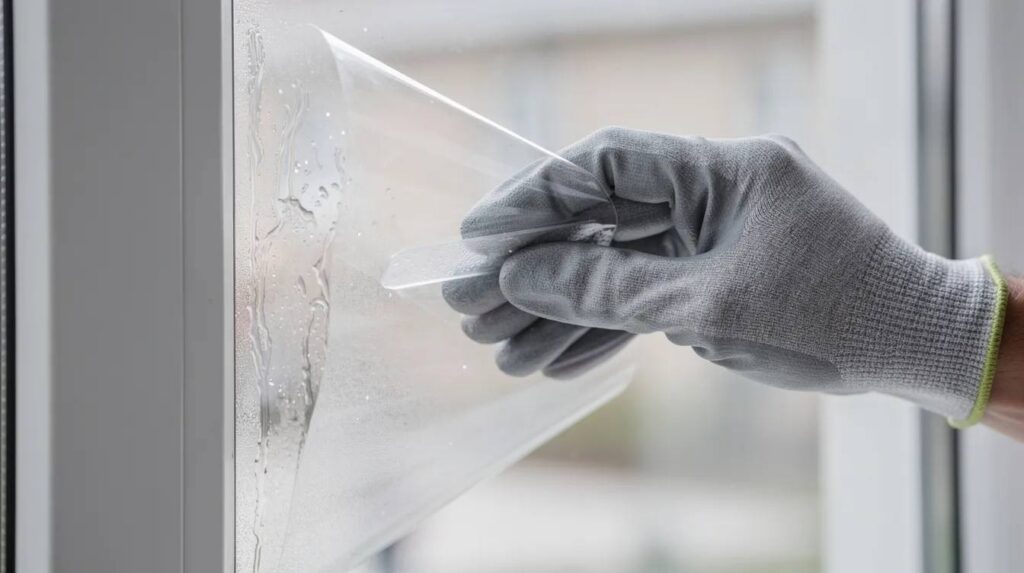
On installation day, furniture is moved a few feet from the windows, floors are covered, and the glass and frames are thoroughly cleaned. If old film exists, it may be removed before the new film is installed.
The installer cuts the film, applies a slip solution, positions the material, and squeegees out water and air. Final inspection checks alignment, edges, contamination, and overall appearance.
A slight haze or tiny moisture pockets are normal during curing. Depending on humidity, film thickness, and weather, curing can take days to several weeks.
Maintenance, Longevity, and Warranty
Quality UV window film is a long-term investment. Many residential films last 10–20 years when installed properly and maintained with care.
Wait about 30 days before the first cleaning, or follow the manufacturer’s information. Use soft microfiber cloths and mild ammonia-free cleaner. Avoid razor blades, abrasive pads, and harsh tools on the film surface.
Typical warranties may cover peeling, bubbling, adhesive failure, significant discoloration, and sometimes glass breakage or seal failure when specified. Keep your warranty paperwork and contractor contact information in an easy place for future questions.
After many years, replacement may be needed if the film shows fading, fine scratches, edge lifting, or reduced performance compared with newer products. Static cling window films leave no residue upon removal, but professionally bonded films should usually be removed by a trained installer.
Why Choose Our Local Window Film Services
If you searched for “uv window film near me,” you probably want a local team that can look at your actual windows and give a practical recommendation. Our approach is built around local expertise, clear options, and careful workmanship.
We understand common house styles, bright exposures, patio doors, upstairs bedrooms, offices, and storefront layouts in nearby neighborhoods. That local experience helps us recommend films that stand up to your sun patterns and comfort goals.
We offer quality products with strong UV blocking, heat rejection, and manufacturer-backed warranties. UV window film allows visible light to pass through while rejecting harmful rays, so your home stays bright and comfortable.
Our installers focus on clean prep, precise edges, respect for your home, and punctual scheduling. We also eliminate guesswork with side-by-side options, written quotes, and clear explanations before work begins.
We provide residential and commercial services for homes, apartments, offices, storefronts, and educational or medical buildings. If you are ready to start, request a consultation and we will help you find the best film solution for your space.
FAQs About UV Window Film and UV Protection
These answers are based on common calls and emails received from homeowners in 2024–2026.
How much UV protection does window film really provide compared to standard glass?
Standard glass blocks much UVB but can allow a significant amount of UVA inside. UV window films block 99% of UVA and UVB rays, and UV films significantly lower indoor UV exposure.
Will UV window film make my rooms too dark or change the look of my home from the street?
Not necessarily. High-VLT films can be very clear, while low-VLT films create a darker room; you can decide based on daylight, privacy, and visibility goals.
Can UV window film be installed on double-pane or low-E windows without damaging them?
Yes, but the right film must be chosen. A trained installer checks glass type because too much heat absorption can stress certain windows.
How long does UV window film last before it needs to be replaced?
Many quality residential films last 10–20 years. Longevity depends on product grade, sun exposure, installation quality, cleaning habits, and climate.
Is there a difference between automotive tint and home window film?
Yes. Home window film is designed for architectural glass, larger panes, different heat loads, and indoor visibility needs, while automotive tint is made for vehicle glass.
Can I install UV window film myself, or should I always hire a professional?
You can install some DIY products, especially static cling film. But for large panes, high heat control, clean edges, and warranty protection, professional installation is usually the better recommendation.
Does film help in winter as well as summer for comfort and energy savings?
Yes, although the biggest savings often come from reducing cooling load in warm months. Window film eliminates the cleaning and mechanical upkeep of traditional blinds while still helping manage light and comfort year-round.
Will window film void my window manufacturer’s warranty?
It can if the wrong film is used, so ask before installation. Reputable installers can provide compatibility details, warranty documents, and product data from sources such as the National Fenestration Rating Council.
Can window film be removed without damaging the glass?
Yes, most films can be professionally removed from glass. If your browser ever shows an outdated quote, cart, or http page from a server or edgesuite cache, call the office so the current product information is confirmed before work is sold.
Conclusion: Take the Next Step Toward UV Protection and Comfort
UV window film can reduce sun damage, lower heat, cut glare, and make bright rooms easier to enjoy. It can also extend the life of hardwood floors, furniture, artwork, and other finishes that take daily sun exposure.
Modern films in 2026 provide strong protection without sacrificing natural light or aesthetics. Window films can reduce heat by up to 88%, and the right product can make your home feel noticeably more comfortable.
If you would love a cooler, brighter, better-protected space, request a no-obligation quote this week. Call, fill out the online form, or schedule an in-home assessment so we can help you choose the best window film for your specific windows.