Table of Contents:
- Unseen Costs of UV Exposure in Commercial Spaces
- Understanding the Spectrum: The Science of Effective UV Light Protection for Windows
- Comparing Solutions: Why Professional-Grade Window Film Outperforms Standard Glazing
- The 3M Advantage: Technical Breakdown of 99.9% UV Rejection for Asset Preservation
- A Project Manager’s Checklist for Specifying UV Light Protection for Windows Film
- Strategic Deployment: Achieving Consistent UV Protection Across National Portfolios
- Conclusion: Key Takeaways and Next Step
- Frequently Asked Questions
- Related Posts from Window Film Depot
Unseen Costs of UV Exposure in Commercial Spaces
Project managers often focus on immediate deliverables and visible quality. Yet, a silent, insidious threat to long-term asset value lurks within every sun-drenched commercial space: ultraviolet (UV) radiation. While not always immediately apparent, the cumulative effect of UV exposure constitutes a significant financial liability. It directly impacts project budgets, client satisfaction, and the overall longevity of commercial properties.
Ultraviolet radiation causes gradual, unceasing degradation in commercial interiors over months or years. This silent deterioration impacts high-end merchandise, artwork, and everyday furnishings. Textile fading and material embrittlement represent premature wear and tangible value loss. These issues lead to increased maintenance and accelerated replacement cycles. Such unexpected expenses strain operational budgets and reduce overall asset longevity. Protecting interiors is essential to maintaining aesthetic standards and financial efficiency.

Understanding the True Cost: Beyond Aesthetic Damage to Structural Integrity
The true cost of UV damage extends far beyond mere cosmetic deterioration. While faded carpets or discolored drapes are visible signs, UV radiation systematically attacks the molecular structure of materials. This can lead to:
- Material Breakdown: Polymers become brittle, natural fibers weaken, and pigments degrade, compromising the structural integrity of fabrics, plastics, and composites.
- Adhesive Failure: Prolonged UV exposure can break down the chemical bonds in adhesives and sealants. This potentially leads to delamination of finishes, failure of window seals, or loosening of fixtures.
- Reduced Lifespan: Assets that should last for decades, such as flooring, wall coverings, and display cases, experience significantly shortened lifespans, necessitating costly early replacement.
- Compromised Resale Value: A commercial space showing signs of widespread UV damage can deter prospective tenants or buyers, directly devaluing the property asset itself.
These hidden damages translate into higher lifecycle costs for the building and its contents. This represents an underestimated financial drain that impacts project profitability and client investment.
The Urgency of Action: Why Proactive UV Protection is a Smart Financial Move for Project Managers
Recognizing UV radiation as a significant financial risk transforms proactive UV light protection for windows from an optional amenity into a critical, strategic investment. For project managers, integrating professional-grade UV blocking solutions offers a clear return on investment by:
- Extending Asset Lifespans: Protecting interior finishes, furniture, and critical equipment significantly delays replacement cycles, reducing capital expenditure over time.
- Preserving Property Value: Maintaining pristine interiors and preventing material degradation helps uphold the aesthetic appeal and structural integrity of the property, safeguarding its market value.
- Reducing Operational Costs: Minimizing repairs and replacements lowers ongoing maintenance expenses and avoids operational disruptions.
- Enhancing Client Satisfaction: Delivering a building that actively protects their investments and preserves their assets translates directly into higher client satisfaction and long-term partnerships.
For national projects, using a single expert vendor simplifies procurement and guarantees uniform protection standards. This centralized approach eliminates the difficulty of sourcing reliable, specialized vendors for every individual site. It ensures consistent quality and leads to predictable project outcomes across all locations.
Understanding the Spectrum: The Science of Effective UV Light Protection for Windows
Effective UV protection hinges on a clear understanding of what ultraviolet radiation is and how it interacts with materials. Simply stating “UV protection” without specific performance metrics can lead to inadequate solutions and continued asset degradation.
Demystifying Ultraviolet Radiation: UVA, UVB, and Their Destructive Power
Ultraviolet radiation is a segment of the electromagnetic spectrum invisible to the human eye, categorized into UVA, UVB, and UVC. While UVC rays are largely absorbed by Earth’s atmosphere, both UVA and UVB reach ground level and pose significant threats to commercial interiors.
- UVA (320-400 nm): These are longer wavelength rays that penetrate deep into materials, contributing significantly to fading, discoloration, and the breakdown of molecular bonds in fabrics, plastics, and wood finishes. UVA is present consistently throughout the day and year, even on cloudy days.
- UVB (280-320 nm): These shorter, higher-energy rays cause more surface-level damage and are a primary factor in material embrittlement and degradation. While often associated with human sunburn, UVB also contributes to the decay of interior components.
Both UVA and UVB rays are relentless in their destructive potential, systematically deteriorating assets over time. A comprehensive UV protection strategy must effectively block both types of radiation.
The Science of Fading: How UV Accelerates Degradation of Interior Finishes and Furnishings
The process of fading and degradation initiated by UV radiation is a photochemical reaction. When UV photons strike materials, they possess sufficient energy to break the molecular bonds within dyes, pigments, polymers, and natural fibers. This molecular damage leads to:
- Color Fading: Dyes lose their chemical structure, resulting in a visible loss of color intensity. This effect is a primary driver for the need for anti-fade window film.
- Material Weakening: The structural integrity of materials like textiles and plastics is compromised, making them brittle, prone to cracking, and reducing their tensile strength.
- Chemical Alteration: The chemical composition of surfaces can change, leading to discoloration, yellowing, or chalking, particularly in plastics and paints.
While visible light and heat also contribute to degradation, UV radiation acts as the primary catalyst, dramatically accelerating these destructive processes and shortening the functional lifespan of interior assets.
Beyond Fading: Exploring UV’s Impact on Material Longevity and Indoor Environmental Quality
Beyond the visible signs of fading, UV radiation systematically erodes the long-term longevity of materials within a commercial space. This includes:
- Structural Material Integrity: UV can degrade components like sealants, adhesives, and even some composite materials, leading to premature failure and costly repairs. Over time, this can affect the performance and safety of building elements.
- Reduced Performance of Functional Materials: Performance fabrics might lose their stain-resistant or fire-retardant properties as their chemical structure is altered by UV exposure. Similarly, the functional lifespan of window coverings, floorings, and upholstery is directly curtailed.
- Indoor Environmental Quality (IEQ) Considerations: The degradation of materials can sometimes contribute to off-gassing or particulate release. Professional-grade films, however, primarily focus on asset preservation by protecting the longevity and value of the physical assets within the space.
The continuous exposure to UV accelerates material breakdown, necessitating more frequent replacements and generating waste, increasing the overall environmental footprint and lifecycle costs of a property.
Quantifying the Threat: Performance Metrics and Industry Standards for UV Exposure
Effective UV protection is not an arbitrary claim. It is a measurable performance metric that demands precise specification. Industry standards and rigorous testing quantify a film’s ability to block UV radiation. Standard glass, while effective at blocking most UVB, typically allows a significant portion of harmful UVA rays to penetrate.
Professional-grade window films are engineered to block virtually all, typically 99.9%, of both UVA and UVB rays. This near-total blockage is a critical specification for projects where asset preservation is paramount. When evaluating solutions, project managers should look for:
- Specific UV Rejection Percentages: Films should clearly state their rejection rates for UVA and UVB, often presented as a single “UV Rejection” figure.
- Third-Party Certifications: Reputable manufacturers provide data backed by independent laboratory testing, adhering to standards from organizations such as the National Fenestration Rating Council (NFRC) or the American Society for Testing and Materials (ASTM).
- Long-Term Performance Guarantees: The film’s ability to maintain its UV blocking performance over its warranted lifespan is essential.
By understanding and specifying these quantifiable metrics, project managers can ensure they are implementing a genuinely protective solution, transforming a potential financial liability into a safeguarded asset.
Comparing Solutions: Why Professional-Grade Window Film Outperforms Standard Glazing
The Limitations of Standard Glass and Low-E Coatings for Comprehensive UV Blockage
Modern architectural glass provides only partial protection against the full spectrum of Ultraviolet radiation. Standard glass blocks some UVB but is largely ineffective against deep-penetrating UVA rays. Low-E coatings primarily improve thermal performance but only reject 50% to 70% of UV. This level of protection is insufficient for comprehensive asset preservation in commercial settings. Unchecked UVA exposure leads to accelerated fading of furnishings, artwork, and retail merchandise. Standard glazing solutions fail to mitigate these tangible financial losses over time.
Evaluating Alternatives: From Blinds to Specialized Coatings and Their Inefficiencies
When considering solutions for solar control and UV protection, project managers often review a range of options. Mechanical solutions like blinds, shades, and drapes offer immediate privacy and light obstruction. These come with significant drawbacks: they block natural light and views, require manual operation or costly automation, collect dust, and contribute to ongoing maintenance expenses. Critically, they do not address solar heat gain at the glass surface, meaning heat still penetrates the building envelope.
Factory-applied specialized coatings present another alternative. However, they lack the flexibility and performance metrics of advanced film solutions. These coatings are an integral part of the glass unit, meaning any damage or desire for an upgrade necessitates full window replacement, incurring substantial costs and project disruption. Their performance, particularly in terms of high UV rejection combined with optical clarity, often falls short of post-applied, professional-grade films.
The Core Advantage of Advanced Window Films: Superior Performance and Versatility
Professional-grade commercial uv window film offers a distinct advantage by providing a proactive, comprehensive solution directly at the point of entry for solar radiation, the glass surface. Unlike alternatives, these films deliver a multi-faceted approach to building performance: they block nearly 100% of harmful UV rays, significantly reduce solar heat gain, control glare, and, in some cases, enhance safety and security. Their post-application nature allows for flexible specification and installation without disrupting existing structural components, making them an ideal retrofit solution for both new constructions and large-scale renovations. This “set and forget” characteristic, once installed by certified professionals, provides consistent, year-round protection with minimal ongoing maintenance requirements.
Distinguishing Professional-Grade Film from Consumer-Level Solutions
Project managers must understand the fundamental differences between professional-grade window films and consumer-level products readily available. Consumer films are typically single-ply, often dyed for color, and possess inferior adhesive systems. These characteristics make them prone to bubbling, peeling, rapid fading, and a significantly shorter lifespan, often exhibiting poor optical clarity and compromised UV rejection over time.
In contrast, professional-grade films are engineered solutions. They feature:
- Multi-layer Construction: Often involving dozens to hundreds of micro-layers for precise spectral control.
- Advanced Adhesives: Designed for strong, long-lasting adhesion and optical clarity without degradation.
- Scratch-Resistant Coatings: Enhancing durability and maintaining pristine aesthetics.
- Performance Longevity: Engineered for decades of consistent performance without visible changes.
- Comprehensive Warranties: Backed by manufacturers for extended periods, covering performance and material defects.
Specifying professional-grade solutions, installed by certified technicians, ensures consistent quality across all project locations, directly addressing the need for reliable, specialized vendors in national rollouts.
The 3M Advantage: Technical Breakdown of 99.9% UV Rejection for Asset Preservation
Engineering Excellence: The Proprietary Technology Behind 3M’s Superior UV Filtration
The superior performance of 3M window films is rooted in decades of material science innovation and proprietary engineering. Unlike conventional films that use dyes or metalized layers, 3M’s advanced solutions, particularly their spectrally selective films, leverage multi-layer optical film technology. This involves stacking hundreds of ultra-thin, non-metallic layers, each designed to reflect or absorb specific wavelengths of the solar spectrum. This intricate construction allows for precise management of light and energy, enabling the film to effectively block harmful UV radiation without significantly altering visible light transmission or interior aesthetics. This is not simply a tint. It is an optically engineered building component.
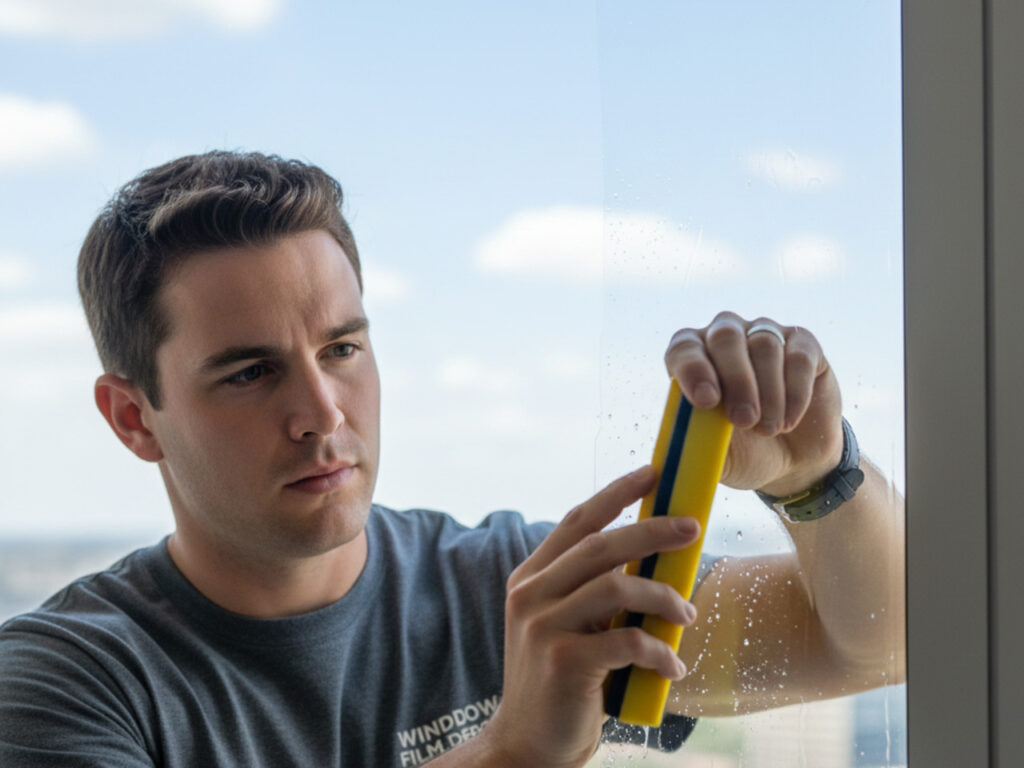
Spectrally Selective Performance: How 3M Films Target Harmful UV Without Sacrificing Light
Spectrally selective films represent a significant leap in solar control technology. Their core innovation lies in their ability to selectively filter specific wavelengths of the solar spectrum. This means they are highly effective at rejecting invisible components like UV radiation and infrared heat, while allowing a high percentage of visible light to pass through. For commercial properties, this translates into brighter, more natural interior environments without the drawbacks of excessive solar heat gain, glare, or damaging UV exposure. It enables daylight harvesting benefits while preserving outdoor views, a critical consideration for occupant comfort and productivity.
Spotlight on Specifics: Understanding the Performance of 3M Prestige Series and Other Commercial Films
The 3M Prestige Series stands as a prime example of this engineering prowess. These films are non-metalized, eliminating concerns about corrosion in coastal environments or interference with cellular and GPS signals. They achieve exceptional solar performance, including significant heat rejection and up to 99.9% UV blockage, while maintaining remarkable optical clarity and low interior/exterior reflectivity. Beyond Prestige, 3M offers a comprehensive portfolio of commercial films, including:
- Night Vision Series: Designed to reduce glare and enhance daytime privacy while offering strong UV protection.
- Ceramic Series: Incorporates ceramic particles for durable, non-metalized heat and UV rejection.
- Safety & Security Films: Provide an added layer of protection against breakage, forced entry, and blast mitigation, all while offering UV benefits.
Each series is engineered for specific performance targets, allowing for precise specification based on project requirements. This includes options for 3m sun control window film tailored to diverse needs.
Quantifiable Benefits: Achieving 99.9% UV Blockage and Enhanced Sun Protection Factor (SPF)
The most compelling quantifiable benefit of professional-grade 3M window films is their verified ability to block up to 99.9% of the sun’s harmful UVA and UVB rays. This near-total blockage is a critical performance metric for asset preservation, drastically slowing the Fading and deterioration of interior finishes, merchandise, and sensitive equipment. From a health perspective, this level of UV protection translates to a Sun Protection Factor (SPF) of 1000 or greater, providing significant skin and eye protection for occupants. This is a robust, data-backed claim that underscores the film’s role as a vital component in modern building performance and occupant well-being.
Long-Term Reliability: Durability, Warranty, and Maintaining Performance Over Time
The long-term reliability of a building material is paramount for any project manager. 3M window films are designed for exceptional durability, incorporating scratch-resistant coatings and advanced adhesive systems that ensure sustained performance without degradation. They resist bubbling, peeling, and delamination, maintaining their optical clarity and protective properties for decades. A key factor in their specification is the comprehensive warranty offered by 3M, which typically covers peeling, bubbling, cracking, crazing, and discoloration for an extended period, often 10 to 15 years for commercial applications. This warranty provides invaluable peace of mind, assuring clients of the investment’s longevity and consistency. Partnering with an authorized dealer and installer like Window Film Depot further guarantees that products are correctly specified and installed, ensuring the warranty remains valid and the film performs as engineered throughout its service life.
A Project Manager’s Checklist for Specifying UV Light Protection for Windows Film
Identifying Project Needs: Assessing Commercial Interior Vulnerabilities and Client Expectations
Before specifying any UV light protection for windows film, a thorough assessment of interior vulnerabilities is paramount. This involves identifying which assets are most susceptible to UV degradation, such as retail merchandise, artwork, flooring, or office furnishings in commercial interiors. Understanding the material composition of these items, their exposure levels, and their replacement costs provides a data-driven basis for justifying the investment. Concurrently, it is crucial to align with client expectations regarding asset preservation, energy efficiency goals, and desired aesthetic outcomes. A clear understanding of these parameters informs the selection process, ensuring the chosen film addresses specific risks and delivers tangible value.
Budgeting and ROI: Calculating the Financial Benefits of Proactive UV Protection
From a project management perspective, the initial cost of professional-grade UV protection film must be weighed against the significant financial liabilities of accelerated asset depreciation. Calculating the Return on Investment (ROI) involves quantifying potential savings from reduced furniture replacement cycles, diminished energy consumption due to solar heat gain rejection, and avoided costs associated with faded merchandise or damaged interior finishes. While the upfront investment is a line item, failing to implement 99.9% UV-blocking film incurs ongoing, often unbudgeted, expenses related to premature asset wear and tear. Proactive protection becomes a strategic financial decision, safeguarding client investments and ensuring the long-term integrity of the building’s interior.
Technical Specification Requirements: Key Performance Indicators for High-Performance Film
When specifying UV light protection for windows films, focusing on objective technical specifications is essential. Beyond the critical 99.9% UV rejection rate, project managers should evaluate several key performance indicators to ensure optimal film selection.
- UV Rejection: A minimum of 99.9% UV-A and UV-B rejection is the gold standard for comprehensive protection.
- Visible Light Transmission (VLT): This metric dictates how much natural light passes through, impacting interior brightness and glare. Solutions range from virtually clear films to those with moderate tint.
- Solar Heat Gain Coefficient (SHGC): A lower SHGC indicates superior solar heat gain rejection, directly contributing to energy efficiency and reduced HVAC load.
- Glare Reduction: Films can significantly reduce uncomfortable glare without compromising natural light, enhancing occupant comfort and productivity.
- Warranty: A robust manufacturer’s warranty, covering both the film and its installation, provides long-term assurance of performance and durability.
These specifications ensure the chosen film delivers maximum asset preservation, energy savings, and occupant comfort without compromising the building’s aesthetic or functionality.
Navigating Procurement: Streamlining the Selection and Sourcing Process
Efficient procurement for UV protection film involves more than just selecting a product. It requires streamlining the entire sourcing process, especially for large-scale or national projects. Identifying a single, reliable vendor capable of handling comprehensive needs, from initial consultation and product specification to installation and warranty management, significantly reduces administrative overhead and project complexity. This approach mitigates risks associated with inconsistent product quality, varied installation standards, and fragmented communication that can arise from engaging multiple suppliers across different project sites.
Integration with Existing Systems: Compatibility with Glazing, HVAC, and Building Management
Successful implementation of UV protection film necessitates careful consideration of its integration with existing building systems. Compatibility with various Glazing types, including single-pane, double-pane, and low-e glass, is crucial to prevent issues such as thermal stress fractures. The film’s impact on a building’s Heating, Ventilation, and Air Conditioning (HVAC) system is equally important, as reduced solar heat gain can decrease cooling loads, leading to energy savings and potentially allowing for optimized HVAC system operation. For projects with sophisticated Building Management Systems (BMS), understanding how film application contributes to overall energy performance metrics and reporting can be an added benefit.
Embracing Sustainability: How UV Film Contributes to LEED and Green Building Initiatives
Specifying high-performance UV protection film aligns directly with modern sustainability objectives and green building initiatives like LEED certification. By significantly reducing solar heat gain, these films contribute to improved energy efficiency, decreasing the carbon footprint associated with heating and cooling. Furthermore, preserving interior assets extends their lifespan, reducing material waste and the demand for new resources. Films that offer glare reduction and improved occupant comfort also contribute to indoor environmental quality, a key component of sustainable design. Incorporating professional-grade UV film is not merely a protective measure. It is a strategic element in achieving a building’s environmental and operational sustainability goals.
Strategic Deployment: Achieving Consistent UV Protection Across National Portfolios
The Challenge of Scale: Ensuring Uniform Quality and Performance in Large-Scale Projects
Deploying UV protection film across multiple locations or a national portfolio presents unique challenges regarding consistency and quality control. Varying environmental conditions, local building codes, and the logistical complexities of managing numerous installation teams can lead to disparities in product application and overall performance. The risk of inconsistent UV protection levels or substandard installations across a large project can undermine the intended benefits and create potential liabilities for asset depreciation in specific locations. Maintaining a uniform standard of 99.9% UV block and installation quality is paramount for safeguarding a client’s entire asset base.
The Single-Source Advantage: Simplifying Logistics and Coordination for National Rollouts
For project managers overseeing national or large-scale rollouts, the single-source advantage is a critical factor in simplifying procurement and ensuring project success. Engaging one expert partner capable of managing all facets of a multi-site project, from initial site assessments and material procurement to standardized installation and post-completion oversight, significantly streamlines logistics and coordination. This approach eliminates the complexities of vetting multiple vendors, negotiating disparate contracts, and managing varied installation schedules, thereby reducing administrative burden and minimizing project risks. A single, dedicated partner ensures uniform application quality, consistent product performance, and a consolidated point of contact for all project-related communications.
Expertise in Execution: Partnering with the #1 U.S. 3M Window Film Installer
The selection of an installation partner is as critical as the film itself. Partnering with the #1 U.S. 3M Window Film Installer provides an unparalleled level of expertise in execution. This designation signifies not only extensive experience with 3M’s advanced film technologies but also adherence to the highest standards of installation practices and technical proficiency. Such a partner brings a deep understanding of product specifications, application nuances for various glazing types, and proven methodologies for achieving flawless, durable installations. Their expertise translates directly into reliable 99.9% UV protection, consistent across all project sites, and a minimization of common installation issues.
Project Management Support: From Site Assessments to Installation and Post-Completion Oversight
Comprehensive project management support is essential for successful, large-scale window film deployments. A leading partner offers end-to-end services designed to facilitate a smooth and efficient project lifecycle.
- Site Assessments: Detailed evaluations of existing glazing, light exposure, and interior vulnerabilities at each location.
- Specification Development: Collaborative process to select the optimal film type and technical parameters for each specific need.
- Logistics Management: Coordinated scheduling and material delivery to ensure timely execution across all sites.
- Professional Installation: Execution by certified, experienced teams adhering to stringent quality protocols.
- Post-Completion Oversight: Verification of proper application, performance checks, and addressing any post-installation concerns.
This structured support system ensures consistent quality and adherence to project timelines and budget.
Maintaining Standards: Guaranteeing Consistent Application and Adherence to Specifications
Maintaining rigorous standards across all project locations is vital for achieving the intended long-term benefits of UV protection film. This involves a commitment to consistent application techniques, utilizing manufacturer-recommended tools and processes, and strictly adhering to film specifications. A single-source partner with a national presence typically employs standardized training programs and quality control protocols for all installation teams. This ensures that whether the installation is in New York or Los Angeles, the 99.9% UV-blocking film is applied with the same precision, meeting the exact technical requirements specified in the project brief and delivering uniform performance across the entire portfolio.
Long-Term Partnership: Ongoing Support and Maintenance for Enduring Protection
The value of professional-grade UV protection film extends far beyond its initial installation. A true long-term partnership includes ongoing support and maintenance, ensuring the film’s enduring protection and maximizing its operational lifespan. This can involve providing clear guidelines for cleaning and care, addressing any warranty-related issues that may arise over time, and offering proactive consultations for future building modifications or expansions. Such a partnership guarantees that the initial investment in comprehensive UV protection continues to deliver its benefits for years to come, preserving assets and contributing to the sustained performance of the building.
Conclusion: Key Takeaways and Next Steps
The detailed analysis of UV radiation’s impact and the performance characteristics of professional-grade window films leads to clear, actionable conclusions for project managers. Integrating 3M 99.9% UV-blocking window film is not merely a design choice. It is a critical specification that directly impacts the long-term financial health and operational integrity of commercial assets. Failing to account for this protection constitutes a significant financial liability, risking accelerated depreciation of interiors and compromising the client’s investment.
Key Takeaways for Project Planning
The data unequivocally supports the strategic imperative of professional UV protection. By proactively specifying high-performance window films, project managers secure multiple benefits that extend far beyond initial installation costs.
- Asset Preservation: A 99.9% UV block rate directly translates to dramatically extended lifespans for furnishings, flooring, artwork, and valuable merchandise. This prevents premature fading and material degradation, safeguarding the client’s capital investments.
- Mitigation of Financial Liability: The cost of replacing sun-damaged assets far outweighs the proactive investment in professional window film. This makes specifying robust UV protection an essential risk management strategy, directly addressing potential future claims or renovation expenses.
- Enhanced Building Performance: Beyond UV, professional films contribute to improved energy efficiency by reducing solar heat gain, maintaining comfortable interior temperatures, and often qualifying projects for sustainability certifications. This creates a superior indoor environment without sacrificing natural light.
- Meeting Modern Standards: Today’s commercial projects demand solutions that are not only aesthetically pleasing but also functionally superior and sustainable. Professional window film aligns with these modern standards, delivering tangible, measurable value.
Strategic Partnership for Project Success
For project managers navigating the complexities of national or large-scale rollouts, sourcing reliable and specialized vendors across diverse geographic locations presents a significant logistical and quality control challenge. Disparate suppliers can lead to inconsistent application quality, varying product performance, and unforeseen project delays.
Partnering with a single, expert provider like Window Film Depot addresses this critical pain point directly. Our established national network ensures standardized product delivery and installation protocols across all project sites. This streamlines procurement, guarantees consistent quality and performance metrics (e.g., the specified 99.9% UV block), and simplifies project oversight. Such a partnership mitigates execution risks, keeps projects on budget and on schedule, and ultimately delivers a unified, high-quality solution to the end client.
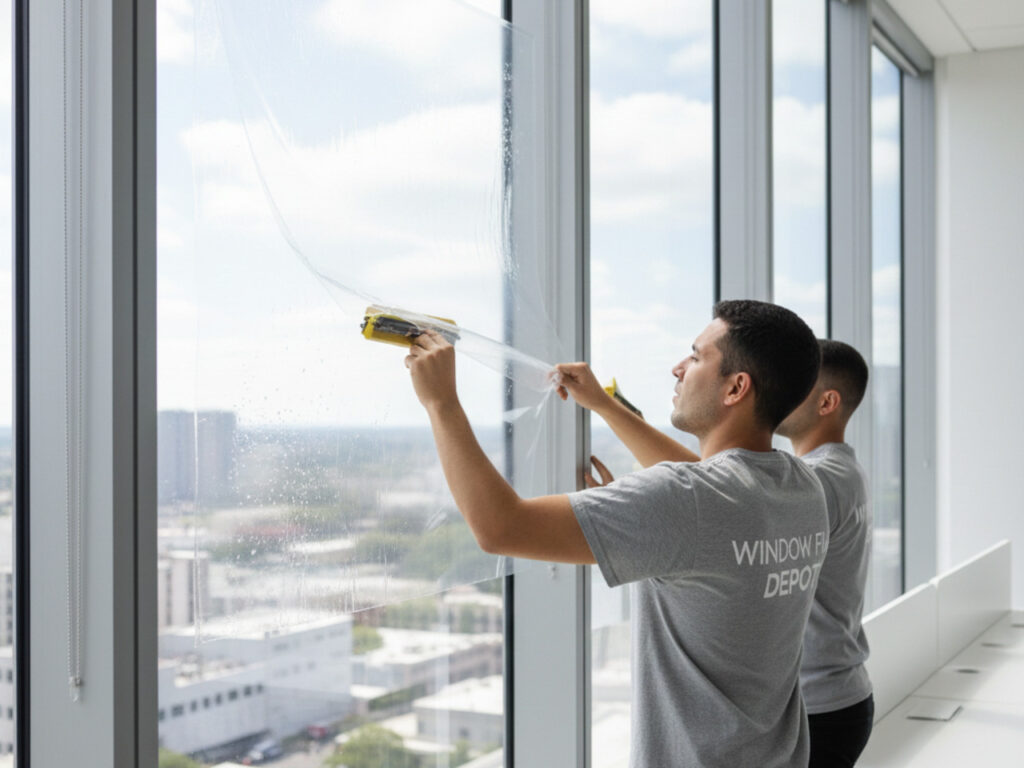
Next Steps for Proactive Specification
The path forward involves integrating advanced UV protection into your project’s foundational specifications from the outset.
- Proactive Consultation: Engage with window film specialists early in the project lifecycle. This allows for a thorough assessment of specific needs, solar exposure, and interior assets, leading to the most effective and cost-efficient film selection for UV light protection for windows.
- Performance-Based Specifications: Insist on detailed specifications that highlight key performance indicators, particularly the UV rejection rate (e.g., 99.9% UV block), solar heat gain coefficient (SHGC), and visible light transmission (VLT).
- Strategic Partner Selection: Prioritize partners with a proven track record in large-scale commercial projects, offering comprehensive technical support, standardized installation practices, and a robust product warranty. This ensures long-term performance and accountability.
By taking these decisive steps, project managers can ensure their developments are not just visually appealing but also technically superior, financially sound, and sustainably resilient against the persistent threat of UV radiation.
Frequently Asked Questions
Why is UV light protection for windows considered a financial necessity, not just an aesthetic choice, for commercial projects?
Unchecked UV exposure causes accelerated asset depreciation, leading to premature fading of furnishings, degradation of materials, and reduced lifespan of interiors. This results in significant financial liabilities through increased maintenance, repair bills, and early replacement costs, directly impacting project profitability.
How do professional-grade window films differ from standard glass or consumer-level UV protection products?
Professional-grade films, such as 3m sun control window film, offer a near-total block (typically 99.9%) of both UVA and UVB rays, unlike standard glass or Low-E coatings that provide only partial protection. They feature multi-layer construction, advanced adhesives, scratch-resistant coatings, and come with comprehensive warranties, ensuring long-term performance and optical clarity that consumer films cannot match.
What are spectrally selective films, and how do they benefit commercial interiors?
Spectrally selective films, like the 3M Prestige Series, use advanced multi-layer optical technology to selectively filter the solar spectrum. This means they efficiently block harmful UV radiation and infrared heat while allowing a high percentage of visible light to pass through. This provides superior UV light protection for windows, reduces solar heat gain, and maintains bright, natural interiors without significant tint or glare.
How does partnering with a single, expert vendor simplify national or large-scale window film rollouts for project managers?
For national projects, a single-source partner, such as the #1 U.S. 3M Window Film Installer, streamlines logistics, ensures consistent quality, and provides standardized installation across all locations. This approach simplifies procurement, mitigates risks of inconsistent product application, and provides comprehensive project management support from site assessment to post-completion oversight, guaranteeing uniform UV light protection for windows and performance.
Can commercial UV window film contribute to green building initiatives like LEED certification?
Yes, high-performance commercial uv window film significantly reduces solar heat gain, which improves energy efficiency by lowering HVAC loads and decreasing a building’s carbon footprint. By extending the lifespan of interior assets, it also reduces material waste. These benefits align with sustainable design principles and can contribute positively to achieving LEED certification and other green building goals.