Table of Contents:
- Introduction: When It’s Time to Remove Old Window Film
- How Professional Window Film Removal Works
- Window Film Removal Cost in 2026
- Signs Your Building Needs Window Film Removal (Not Just “Touch-Ups”)
- From Old Window Film to New Performance: Replacement Options After Removal
- Why Choose Window Film Depot for Window Film Removal & Replacement
- FAQs: Window Film Removal, Tint Removal Services & Next Steps
- Schedule Your Window Film Removal & Upgrade
Introduction: When It’s Time to Remove Old Window Film
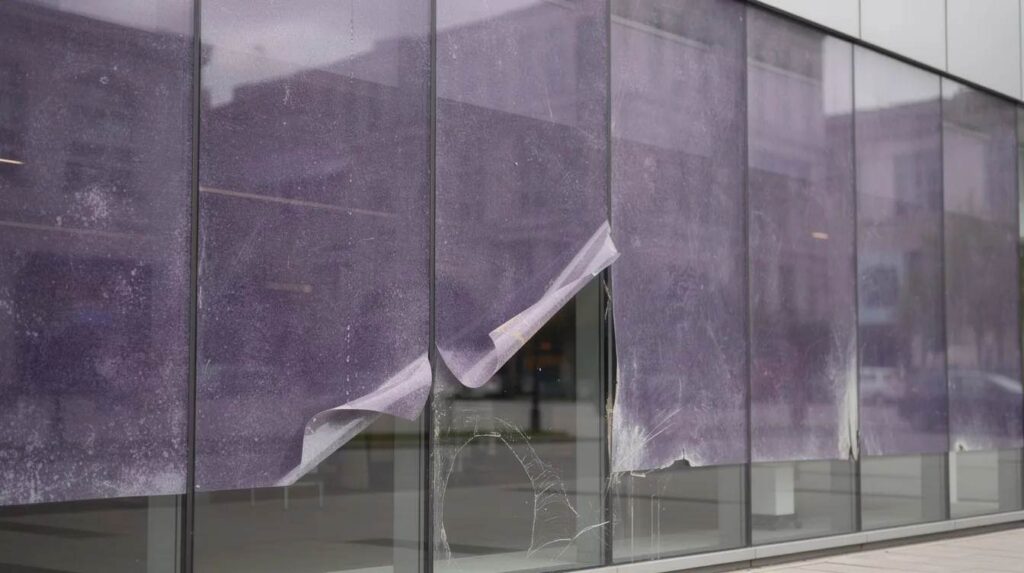
If you’ve noticed bubbling, purple discoloration, or edges that start peeling on your office or house windows, your old window film has likely reached the end of its useful life. Old film may bubble, fade, or turn purple over time, requiring removal. Films installed in the early 2000s and 2010s-especially dyed and metallized products on south- and west-facing glass receiving heavy sunlight from that direction-often show visible failure by 2026.
A window film removal service involves safely stripping old film from glass surfaces so you can restore views, reclaim natural light, and prepare clean glass for new film with modern UV protection and energy savings. This guide covers how professional window film removal works, what it costs, when DIY makes sense versus calling a pro, and how Window Film Depot handles removal and new window film installation as a single turnkey project.
How Professional Window Film Removal Works
Removal of window film often requires a methodical approach to ensure quality, and professionals should use a detailed and structured approach for every job. Here is how the process unfolds on architectural glass.
Site assessment. Inspecting the type and condition of the film is an important first step in the removal process. Technicians evaluate whether the material is standard solar film, thick security film, anti-graffiti film, or decorative window film on interior glass walls. They also note glass type (tempered, laminated, low-E), exterior versus interior access, and the condition of mullions, gaskets, and frames that must be protected.
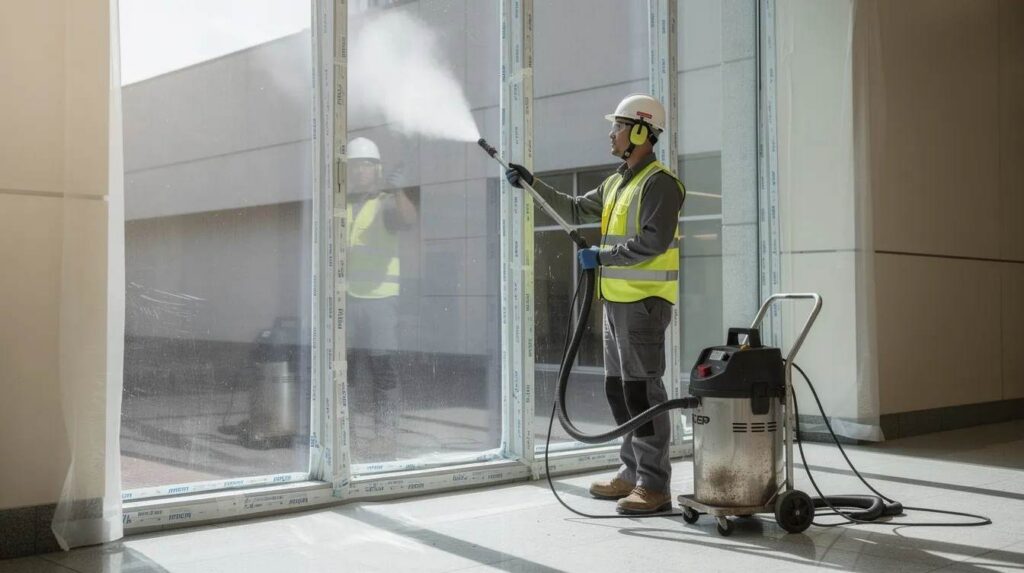
Film removal. Professional removal uses steam and solvents to dissolve tint adhesive evenly. Window Film Depot crews apply commercial steamers and controlled heat to soften the glue without creating hot spots. Soapy water can make window film easier to peel off once the adhesive begins melting. A razor blade or specialized scraper lifts the corner, and the film is pulled carefully to avoid tears or fragmentation. Specialty films often require specific removal protocols to prevent damage to security layers; for example, they demand more labor because of aggressive adhesive and thicker material.
Adhesive cleanup and inspection. Adhesive removal expertise is necessary for effective film removal. Technicians scrape remaining residue with wet blades, apply solvent or soap solution, let it sit briefly on the surface, then wipe the glass clean. Experts ensure thorough cleaning after tint removal so no dirt, glue, or adhesive residue remains. Professionals use specialized tools to avoid window damage, including plastic scrapers on tempered glass and careful blade-angle control to prevent scratches or cracking.
Real-world example. In 2025, a 15-story office building in Atlanta had brittle, purple-tinted film across the south and west facades that had lost its UV-ray rejection. The removal crew worked floor by floor during off-hours, using steam and solvent methods, to keep tenants operational. Each floor was cleaned, inspected, and prepped for new 3M window film products and installation within a single business day per level.
Professional vs. DIY Film Removal
Popular DIY methods-heat gun, hair dryer, ammonia, soapy water, a razor blade-can be acceptable for a small residential house with a few panes. Heat methods like hair dryers help soften adhesive for removal on manageable surfaces. But for commercial and institutional buildings, DIY carries serious risks:
- Glass damage. DIY film removal can leave residue and may scratch the glass or damage embedded features like low-E coatings. Professional removal prevents scratches and cracks in windows because trained crews use the right tools and blade angles.
- Incomplete cleanup. Improper removal can leave sticky residue on windows, producing a cloudy or hazy surface that’s difficult to repair afterward.
- Chemical hazards. Removing window tint can create ammonia fumes that irritate occupants in an enclosed room-a real concern inside occupied office or school buildings.
- Safety. Exterior access on multi-story facades requires lifts, scaffolding, and fall protection that maintenance staff rarely have.
- Automotive crossover confusion. Many online guides focus on car and vehicle tint. DIY removal can damage defroster lines and antennas on a vehicle’s rear glass, which is why automotive shop methods don’t translate to architectural glass. Building windows have no defroster lines, but they do have gaskets and frame seals that need equally careful protection.
On large projects-200-plus windows in a school or retail chain-professional window tint removal is faster, safer, and more affordable overall. Window Film Depot crews are trained, insured, and equipped for complex access, including union sites, secure facilities, and after-hours scheduling around business operations, and can seamlessly transition from removal to commercial 3M window film installation services when the glass is ready.
Window Film Removal Cost in 2026
Window film removal costs $2–$3 per square foot for most architectural projects in 2026, with the exact cost depending on film type, condition, and access difficulty.
| Film Type / Condition | Estimated Cost per Sq Ft |
|---|---|
| Standard solar film (bubbling, scratched) | ~$2.00 |
| Brittle or purple-degraded film that flakes | ~$2.50 |
| Security or anti-graffiti film with aggressive adhesive | ~$3.00+ |
| Multiple layers or severe adhesive curing | $3.00–$8.00 |
| Example estimate: Removing old solar film from 3,000 sq ft of office glass in Dallas in March 2026 might range from $2.00–$2.40/sq ft-roughly $6,000–$7,200-assuming standard access and moderately aged film. |
For comparison, professional tint removal for a full vehicle at an automotive shop costs $100–$400, illustrating how different commercial-scale and car tint removal pricing can be.
Key factors that move cost higher: total square footage, interior vs. exterior access, height (ground floor vs. multi-story), presence of multiple film layers, and schedule constraints like nights or weekends. Facility managers should request a site visit or provide detailed photos so Window Film Depot can deliver an accurate quote and realistic timeline for both removal and window film installation in Dallas/Fort Worth or other markets nationwide.
Signs Your Building Needs Window Film Removal (Not Just “Touch-Ups”)
Visible damage is only one signal. Performance loss-hot spots, increased glare, and uv rays penetrating where film once blocked them-also point toward full film removal and replacement. Here are the clearest indicators:
- Bubbling and warping. Experiencing bubbling or peeling in film indicates the need for immediate removal. Bubbling indicates failing adhesive in window film that won’t smooth out on its own.
- Purple or faded tint. A purple tint indicates degradation of window film quality. Fading window films lose uv blocking ability, leaving interiors exposed.
- Cloudy glass or adhesive streaks. Hazy, streaked glass means the adhesive layer has broken down beneath the surface.
- Edges lifting. Once corners start peeling and won’t lie flat, spot repair won’t hold.
- Warped window tint. Warped window tint can obstruct visibility and reduce the beauty of your facade.
- Interior fading. If flooring, merchandise, or furniture in the room is fading, your old window tint has stopped doing its job.
- Incorrect installation. The film removal service can be needed when the film is incorrectly installed; poor application from the start accelerates every problem above.
Scratches on window films reduce aesthetic appeal, and at this stage, patching rarely works. A Chicago retail store with faded merchandise displays and warped front-facing film from 2010 chose full removal and replacement in 2024, restoring product visibility and cutting cooling costs with 3M anti-glare and sun control window films. Full window film removal followed by new film is the long-term solution.
Why Re-Applying New Film Over Old Film Is a Bad Idea
Stacking new window film over old window film traps moisture and creates unpredictable adhesive interaction that shortens lifespan. Old glue may have degraded or absorbed contaminants, and new adhesive simply won’t bond reliably to that surface. Replacing outdated window film can enhance visibility and aesthetic appeal-but only when the old film is removed down to clean glass first. Most major manufacturers, including 3M, will not honor warranties if new film is applied over deteriorated layers. Proper removal is required to protect your investment.
From Old Window Film to New Performance: Replacement Options After Removal
Film removal is often the first step in a broader building upgrade that makes a huge difference in energy efficiency, comfort, and appearance. Once old window tint is gone and glass is prepped, Window Film Depot installs a range of window glass film products and brands nationwide:
- 3M solar control films – solar window films that reject up to 80–90% of solar heat energy while maintaining higher visible light transmission than older dyed products.
- Security and safety films – thick polyester layers that hold glass on impact, delay forced entry, and meet blast-mitigation standards.
- Privacy and decorative films – frosted, etched, and branded decorative window films for offices, lobbies, and glass partitions, similar to the solutions we provide for window film installation in Columbus, OH.
- Anti-graffiti and specialty films – sacrificial surface layers for schools, transit hubs, and retail storefronts you can replace without touching the glass itself, frequently used in commercial window film projects in Washington, DC.
Modern ceramic and spectrally selective films outperform products from 10–20 years ago: up to 99.9% UV protection, better heat rejection, and less reflective appearance. A 2025 project in Charlotte, NC, removed outdated mirrored film from a hospital and installed neutral solar film that met updated patient privacy standards. A 2023 university library upgrade swapped amber-tinted film for spectrally selective new film-preserving daylight while cutting cooling loads. Coordinating removal and installation in one project reduces mobilization cost and minimizes the window of time your building sits exposed without protection.
Why Choose Window Film Depot for Window Film Removal & Replacement
Window Film Depot is a family-owned company founded in 1992, headquartered in Marietta, GA, where we also provide window film installation services, providing window tint removal services and installation for commercial, institutional, and residential clients nationwide.
- Deep manufacturer expertise with 3M window films and other high-performance solutions
- Nationwide coverage with trained crews suited to multi-site rollouts for retail chains, banks, schools, and government agencies
- Turnkey service: assessment, film removal, glass prep, new installation, and warranty documentation-one point of contact from start to finish
- Secure-environment experience in federal buildings, hospitals, and K–12 campuses
- Project management that schedules around your business hours and coordinates with facilities teams
- Wholesale supply for trade partners who need material but want Window Film Depot to handle the removal job
- Warranty support: residential lifetime and commercial warranties up to 10–15 years, contingent on a properly cleaned substrate and certified installation
Contact our team to request references or project examples matching your property type.
FAQs: Window Film Removal, Tint Removal Services & Next Steps
How long does professional window film removal take for a typical office floor?
For a few thousand square feet of standard solar film, most crews complete tint removal in a single business day. High-rise facades or severely degraded film may require a phased, multi-day approach to safely remove everything without disrupting tenants.
Will window film removal damage my glass or window seals?
When done professionally. Trained technicians use blade-angle control, wet scraping, and careful heat application to prevent scratches, cracking, or seal damage. Frames and gaskets are masked before work begins.
Can you remove security window film from storefronts and schools?
Yes. Security film is thicker with stronger adhesive, so removing window tint of this type takes more labor and may cost closer to $3.00 per square foot. Window Film Depot crews use the right tools and protocols for these heavier materials.
Do I have to install new film after removal?
No glass can be left bare. But most commercial clients replace film for glare control, UV protection, energy savings, and privacy. Leaving glass unprotected may increase cooling loads and accelerate interior fading from sunlight.
Is there a lot of mess during film removal?
Crews use drop cloths, solution capture trays, and solvent containment to keep your space clean. After the film and adhesive residue are gone, technicians wipe the glass and scrape any remaining dirt so the surface is ready for immediate use or new film application.
Do you offer window film removal services near me?
Window Film Depot provides tint removal services across the United States. Contact us with your city, state, and approximate square footage, and we’ll confirm availability, timeline, and an affordable estimate for your project.
Schedule Your Window Film Removal & Upgrade
If your building’s window tint has started to bubble, peel, or fade, waiting only increases the cost and interior damage. Contact Window Film Depot to request a site evaluation-or upload photos and approximate window square footage-so we can scope the job accurately.
Whether your goal is better UV protection, lower cooling costs, updated privacy, or simply restoring the beauty and clarity of your glass, we can plan both film removal and new window film installation as a single coordinated project. Call us, fill out our online form, or email your project details. We serve clients nationwide and manage multi-location rollouts from a single point of contact. Clean glass, modern performance, and restored comfort are one project away.