Table of Contents:
- Balancing Privacy and Daylight
- Key 3M Film Types for Balancing Privacy and Light
- Your Guide to Visible Light Transmission (VLT)
- Application Spotlight: A Light Filtering Privacy Film in Practice
- Why Expert Installation is Non-Negotiable
- Conclusion: Elevating Your Projects with Strategic Film Selection
- Frequently Asked Questions
- Related Posts from Window Film Depot
Balancing Privacy and Daylight
For project managers overseeing commercial renovations and new builds, the client brief is often a paradox. They envision bright, open environments flooded with natural light, yet they also require secure, private spaces for focused work and confidential meetings. For decades, achieving privacy meant sacrificing the daylight that makes a space feel vibrant. This forced a choice between an open, well-lit space with no privacy or a private space that felt dim and isolated.
Conventional methods come with functional and financial compromises. Blinds and shades collect dust, break easily, and create an all-or-nothing scenario. Curtains can feel dated and require costly cleaning.
Permanent solutions like etched or sandblasted glass are expensive, inflexible, and require complete replacement if damaged. These solutions force you into a corner, fulfilling the privacy requirement at the direct expense of the design aesthetic and the well-being of the occupants.

The consequences of sacrificing natural light extend beyond aesthetics. Depriving occupants of daylight has measurable negative impacts on mood, focus, and productivity. It also increases reliance on artificial lighting, driving up energy consumption and the total cost of ownership. Today’s clients demand a better solution. They want the look of expensive etched glass without the cost, and privacy without the light-blocking effects of blinds. This is the precise challenge where a project manager’s expertise is tested and where advanced material selection becomes critical.
Key 3M Film Types for Balancing Privacy and Light
As a project manager, specifying the right material is crucial for meeting client expectations. When it comes to decorative films, 3M offers a comprehensive portfolio designed to solve specific challenges of privacy, light management, and design. Understanding the core product lines is the first step in moving from a general client request to a precise, functional specification.
An Introduction to 3M Fasara Glass Finishes
The 3M Fasara Glass Finishes collection is the industry benchmark for transforming plain glass into a distinctive design element. These are durable, high-performance polyester films engineered to simulate the appearance of etched, cut, sandblasted, and textured glass. With over 100 unique designs, the Fasara line provides an unparalleled palette for achieving specific aesthetic goals.
For renovation projects, these films offer a significant advantage. They can be applied to existing glazing, eliminating the cost, disruption, and lead time associated with replacing entire glass panels. This makes them an ideal solution for retrofits and tenant improvements where budget and schedule are primary concerns.
Exploring Frosted and Etched Looks: 3M Dusted and Frosted Crystal Films
Within the broader 3M portfolio, the Dusted and Frosted Crystal films are essential tools for creating classic privacy effects. While they sound similar, their optical properties serve different functional goals.
- 3M Dusted Crystal Film: This film provides a subtle, matte finish that suggests the look of lightly sandblasted glass. Its higher light transmission and lower opacity make it ideal for creating a sense of separation in open-plan offices or along corridors where you want to define a space without making it feel enclosed. It gently obscures direct views while maximizing the flow of natural light.
- 3M Frosted Crystal Film: This option delivers a higher level of privacy, closely replicating the appearance of traditional acid-etched glass. Its finish is more uniform and dense, effectively blocking direct sightlines. This makes it a go-to specification for conference rooms, medical offices, and any area where confidentiality is a priority but a dark, fully opaque barrier is undesirable.
Gradient and Patterned Films: Achieving Custom Levels of Opacity
Modern office design often calls for nuanced privacy solutions that block views at eye level while maintaining a connection to the larger space. Gradient and patterned films are engineered precisely for this purpose.
Gradient films feature a smooth transition from opaque to clear. When applied to glass-walled offices, a typical installation places the frosted portion at the bottom and center of the pane, providing seated privacy. The clear portion at the top allows unimpeded light to pour into the space.
Patterned films, which range from simple stripes to complex designs, use the pattern itself to create visual noise. This breaks up a direct line of sight without making the glass fully opaque. The level of privacy can be tailored by selecting a denser or more open pattern.
Your Guide to Visible Light Transmission (VLT)
While aesthetics are often the starting point, technical performance is what ensures the final installation meets the project’s functional goals. The most important metric for any privacy window film that lets light in is Visible Light Transmission, or VLT.
What is VLT and Why It Matters
Visible Light Transmission is a measurement, expressed as a percentage, that quantifies the amount of visible light passing through a glazing system. A higher VLT percentage means more daylight enters the space, while a lower percentage indicates that more light is blocked.
For a project manager, VLT is the key technical specification that translates a client’s desire for a “bright but private” space into a measurable outcome. It directly impacts occupant experience, energy efficiency, and design integrity. Using VLT as a guide ensures the chosen film will perform as expected, preventing situations where a beautiful film sample results in a space that is unexpectedly dark or insufficiently private.
Matching VLT to Space Function
The ideal VLT is entirely dependent on the intended use of the space. By matching the technical specification to the room’s function, you can ensure a successful outcome.
- Open Lobbies and Corridors: Maintain a bright, welcoming atmosphere with high VLT films (60-85%). Light patterns or Dusted Crystal can add a design element without significantly impacting light levels.
- Collaborative Workspaces: Strike a balance with mid-range VLT films (40-60%). These can reduce visual distractions and define zones without creating a sense of isolation. Gradient films are particularly effective here.
- Private Offices and Conference Rooms: Ensure confidentiality with lower VLT films (20-50%). A solid Frosted Crystal or a dense pattern film would be a suitable choice for creating the necessary conference room privacy.
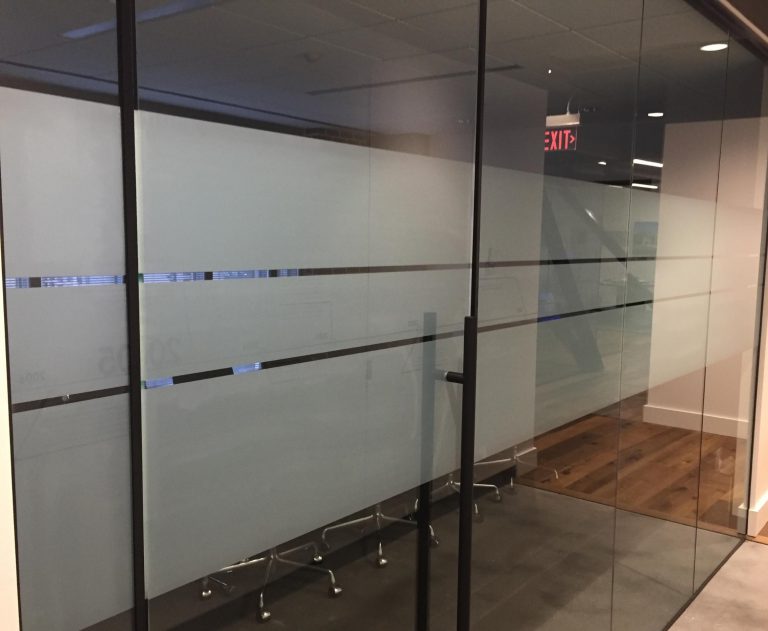
When communicating with clients, frame the VLT specification in terms of its benefit. Instead of just stating a number, explain, “This option provides the visual privacy we need for focused work, but it still allows more than half of the natural light to flow through, keeping the entire area feeling bright and connected.” Always use a physical mock-up on site. This simple step manages expectations and secures confident client buy-in.
Application Spotlight: A Light Filtering Privacy Film in Practice
Understanding the specifications is one part of the equation. The other is visualizing the transformative potential in real-world environments. Specifying the right film for the right application is key to delivering a space that works.
Transforming Conference Rooms and Glass Partitions
The modern glass conference room presents a classic dilemma: the need for confidentiality clashes with the desire for an open aesthetic. A common solution is to apply a frosted film, such as 3M Fasara’s “Milky White,” to the central portion of the glass panels. This placement effectively obscures documents and screens from outside view while leaving the top clear, preserving sightlines and the feeling of an integrated space.
Enhancing Open-Plan Offices Without Building Walls
The open-plan office trend often comes at the cost of individual focus. A decorative window film for office partitions offers a flexible and cost-effective alternative to drywall. Applying patterned or textured films to glass dividers between teams or workstations creates visual separation, reduces distractions, and gives employees a sense of personal territory. Unlike permanent construction, these applications are easily updated as office needs evolve.
Creating Welcoming yet Private Entrances
A building’s entrance must be welcoming, reinforce branding, and manage views into secure areas. Custom-cut films featuring a company logo can be applied to entrance doors to make a strong first impression. For adjacent glass walls that overlook sensitive reception or security desks, a more opaque decorative film can provide necessary privacy. The result is a cohesive entry sequence that guides visitors while controlling sightlines.
Why Expert Installation is Non-Negotiable
The full value of a premium material like 3M Fasara film is only realized through flawless execution. For a project manager, the decision of who installs the film is as critical as the film selection itself.
Attempting a large-scale film installation with an inexperienced team is a significant project risk. Common failures include trapped dust, bubbles, and peeling edges, all of which undermine the high-end aesthetic you and your client invested in. These issues lead to an unprofessional appearance, budget overruns, and timeline extensions.
A certified, professional installer follows a meticulous process. They use computer-aided plotters for precision cutting, employ proven techniques to eliminate air and moisture, and finish by micro-trimming edges for a seamless appearance.
This level of precision ensures the installation will perform as intended for its entire service life. Crucially, a professional installation is backed by a manufacturer’s warranty, protecting your client’s investment.
On large-scale projects, a certified partner brings project management expertise. They understand how to work alongside other trades, adhere to construction schedules, and manage logistics.
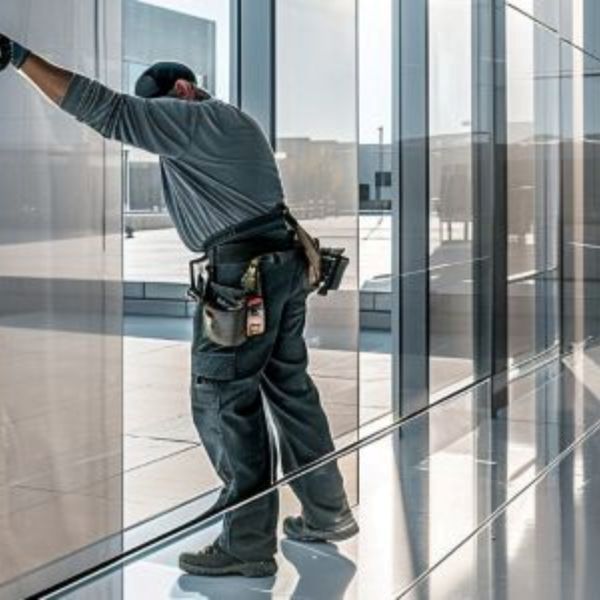
Choosing a partner is about mitigating risk and ensuring a successful outcome. As the nation’s leading installer of 3M window films, Window Film Depot provides a single point of contact and accountability for projects of any scale, anywhere in the country. Partnering with us means you are leveraging a proven system for consultation, specification, and execution that guarantees the final product meets the highest standards.
Conclusion: Elevating Your Projects with Strategic Film Selection
The successful integration of privacy and natural light is no longer a design compromise. For the construction or renovation manager, mastering the use of modern materials like 3M decorative films is key to delivering projects that are not only aesthetically pleasing but also functionally superior.
The selection of window film has evolved into a strategic design decision with direct impacts on a building’s performance. By treating film as an integral architectural component early in the planning phases, you can use it to define spaces, control light, and solve complex privacy issues. This proactive approach transforms the material from a decorative afterthought into a fundamental tool for executing a project’s core design intent.
To begin the process for your next project, we recommend a simple approach:
- Gather Project Details: Collect floor plans, elevations, and photos, and note the primary goals for each area.
- Schedule an Initial Discussion: Contact our team to review your objectives and discuss potential solutions.
- Receive a Tailored Recommendation: Our specialists will propose a specific film solution, complete with technical specifications, mock-up options, and a clear project estimate. This provides you with the detailed information needed to present a confident and well-researched recommendation to your client.
Work with Window Film Depot to install privacy window film that lets light in and achieve the ideal balance of daylight, privacy, and performance.
Frequently Asked Questions
Can you get full privacy with a window film that still lets in light?
Yes. This is the primary benefit of materials like frosted or etched glass films. They use diffusion to obscure direct visibility completely while still allowing a high percentage of natural light to pass through. The space remains bright and open, but confidential activities are shielded from view.
How much does 3M Fasara film cost compared to etched glass?
While costs vary by project, 3M Fasara Glass Finishes are typically a fraction of the cost of purchasing and installing new, permanently etched or sandblasted glass panels. The major savings come from the ability to apply the film to existing glass, avoiding demolition, replacement, and long lead times.
How long does decorative window film last?
Professionally installed, high-quality decorative films like those from 3M are extremely durable. They are designed to last for many years without peeling, bubbling, or discoloring. Most professional installations for commercial projects are backed by a comprehensive manufacturer’s warranty, often for 10 years or more.
Can you install privacy film on existing glass?
Absolutely. One of the biggest advantages of architectural films is that they are designed to be retrofitted onto existing glass surfaces. This makes them an ideal solution for renovation and tenant improvement projects where the goal is to upgrade a space with minimal disruption and cost.