Table of Contents:
- The Science of Privacy: Why It’s About Light, Not Just Glass
- Project Decision Point: Reflective Film vs. One Way Mirror Glass
- How to Specify the Right Reflective Film
- Common Commercial Applications for One-Way Mirror Film
- The Project Manager’s Advantage: Why Film Excels
- Partnering with an Expert for a Flawless Installation
- Conclusion: The Strategic Choice for Daytime Privacy
- Frequently Asked Questions
- Related Posts from Window Film Depot
The Science of Privacy: Why It’s About Light, Not Just Glass
A common misconception on commercial projects is that achieving a “one-way mirror” effect requires specialized, prohibitively expensive glass similar to mirror tint for house windows in residential applications. The reality is that this privacy is not a property of the glass itself but a result of a simple principle of physics. Understanding this is the first step toward specifying a practical, cost-effective solution for your client.
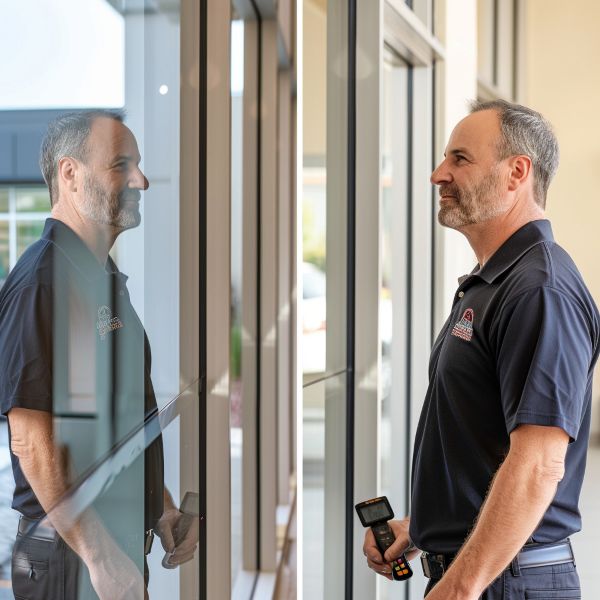
The effect is entirely dependent on a significant difference in brightness, or illuminance, on either side of the glass. The surface will appear as a mirror from the brighter side and as a tinted window from the darker side.
Think of a police interrogation room. The suspect’s room is intensely lit, causing the glass to reflect light and act as a mirror. The adjacent observation room is kept dark, allowing observers to see through the glass into the lit space.
If the lights were reversed, the effect would flip. For your project, this means the mirror effect on a building’s exterior only works when the outside is significantly brighter than the inside, a condition that is typical during daytime hours.
How Reflective Window Film Creates the Mirror Effect
To manipulate this light differential and create the desired daytime privacy, we use high-performance reflective window film. The key performance metric here is Visible Light Transmission, or VLT.
VLT is the percentage of visible light that passes through a glazing system. A lower VLT value means less light is transmitted. Highly reflective privacy glass film is engineered with very low VLT values, often in the 10% to 20% range.
Here’s how it functions on a project:
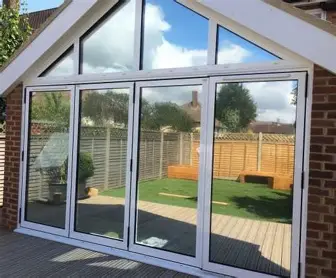
- When installed on a window, a low-VLT reflective film reflects a large portion of the bright, exterior daylight. This high exterior reflectance is what creates the mirror-like appearance.
- From the darker interior, the occupants’ eyes adjust and can see through the small percentage of light that is transmitted, preserving the view to the outside.
The film ensures the exterior is always the “bright side” during the day by reflecting most of the sunlight, thus maintaining the light differential needed for privacy.
Setting Expectations: Daytime Privacy vs. Nighttime Visibility
It is crucial to manage your client’s expectations about how this effect functions after sunset. The physics of light differential do not change when the sun goes down.
At night, the situation reverses. The primary light source is now inside the building, making the interior the “bright side.” As a result, passersby will be able to see into the illuminated interior, and the privacy effect is lost. From the inside, occupants will see a reflection of themselves, making it difficult to see out.
This is not a failure of the film but a predictable behavior. For spaces requiring 24/7 privacy, such as ground-floor offices, the film solution must be paired with a secondary solution for nighttime like blinds or shades. Communicating this early in the design phase is key to a successful project.
Project Decision Point: Reflective Film vs. One Way Mirror Glass
When a specification calls for one-way privacy, the decision often comes down to two options: installing specialized mirrored glass units or retrofitting existing glass with a high-performance reflective film. For the vast majority of commercial projects, a detailed analysis of cost, timeline, and performance reveals that film is the strategically superior choice.
Analyzing the Budget: A Clear Win for Film
From a purely budgetary perspective, the choice is clear. Reflective window film offers a dramatic cost advantage over specialized one way mirror glass, both in material and installation.
- Material Cost: Mirrored or spandrel glass is a premium architectural product with a per-square-foot cost many times higher than standard glass. If a unit is damaged, the replacement cost is just as high and can involve long lead times. High-performance reflective film, by contrast, is a fraction of the material cost.
- Installation Cost: Installing new glass units is a labor-intensive process requiring glaziers and heavy equipment. For retrofit projects, it involves the costly and disruptive removal of existing panes. Film installation is a quiet, clean process completed by a small crew with minimal equipment, drastically reducing labor costs and project complexity.
For a project manager tasked with delivering value, film allows you to achieve the client’s privacy goals while freeing up capital for other priorities.
Compressing the Schedule: Timelines and Project Disruption
Project schedules are just as critical as budgets. Here again, film presents a clear logistical advantage.
Specialized privacy glass often involves long and unpredictable lead times, as it is frequently a custom-order product. Any delays can have a cascading effect on your entire project timeline. The installation itself is disruptive, creating noise, debris, and potential security vulnerabilities in the building envelope.
Window film installation is fast and efficient. An experienced team can apply film to a large number of windows in a single day. The process is quiet and clean, allowing it to be scheduled around business operations with minimal to no downtime. This makes film the ideal solution for retrofit projects in occupied buildings where minimizing disruption is paramount.
Performance Beyond Privacy: Security and Energy Efficiency
While the primary goal may be privacy, specifying reflective film introduces a host of additional performance benefits that specialized glass often cannot match without a significant cost increase.
- Energy Efficiency: Highly reflective films excel at solar control. They reject solar heat gain, significantly reducing the load on a building’s HVAC system. This translates directly into lower energy consumption and operational cost savings.
- UV Protection: Professional-grade window films block up to 99% of harmful ultraviolet (UV) radiation. This helps protect expensive interior furnishings, flooring, and merchandise from fading, extending their lifespan.
- Enhanced Security: Many reflective films are available as a thicker commercial security film. These films bond to the glass, holding shattered panes together after an impact from forced entry attempts or seismic events. This adds a critical layer of safety that standard glass does not provide.
Design Flexibility and Future-Proofing
Architectural needs and client tastes evolve. Choosing a solution that offers future flexibility is a hallmark of smart project management.
Once specialized privacy glass is installed, its appearance is permanent. If a client wishes to change the building’s aesthetic, the only option is a complete and costly replacement. Window film is the epitome of design flexibility. It is available in a wide range of colors and reflectivity levels, and it can be removed and replaced at a fraction of the cost of new glass, allowing the building to adapt to future branding changes or new design trends.
How to Specify the Right Reflective Film
Moving from concept to a project specification hinges on understanding a few key performance metrics. These data points, found on any reputable manufacturer’s spec sheet, are the language we use to translate a client’s goals into a tangible, warrantied installation.
Decoding the Spec Sheet for Privacy and Performance
Think of the spec sheet as the film’s resume. Three metrics are critical for specifying a one-way privacy solution.
- Visible Light Transmitted (VLT): This is the percentage of visible light passing through the filmed glass. A lower VLT number means a darker film, which contributes to the privacy effect. A film with a 20% VLT allows only 20% of light to pass through.
- Solar Heat Gain Coefficient (SHGC): This value represents the fraction of solar radiation admitted through the window. The lower the SHGC, the less solar heat it transmits, and the better its energy-saving performance. A low SHGC translates directly to a reduced HVAC load.
- UV Rejection: This metric measures the percentage of ultraviolet radiation blocked. Nearly all high-quality solar control films block 99% or more of UV rays, protecting interiors from fading and degradation.
Sputter-Coated vs. Dyed Films
When evaluating film, you will encounter two primary manufacturing technologies: dyed and sputter-coated. For any commercial project where performance and longevity are priorities, sputter-coated film is the correct choice.
Dyed films are an older, less expensive technology where a layer of dye absorbs solar energy. They are less effective at rejecting heat and can fade over time.
Sputter-coated films are a high-performance solution. This process deposits a microscopically thin, durable layer of metal onto the film that is highly effective at reflecting solar energy. This technology provides stable color, high durability, and superior heat rejection, making it the only viable choice for a professional one-way mirror application. A benchmark product like the 3M Sun Control Window Film, Mirror Film series, uses this technology to deliver the strong daytime privacy and energy efficiency commercial projects demand.
Common Commercial Applications for One-Way Mirror Film
The true value of reflective film is its ability to solve multiple common challenges in commercial environments.
Corporate Lobbies and Perimeter Offices
For a corporate headquarters, ground-floor offices are a critical security and branding interface. A medium-reflectivity film (e.g., 20-35% VLT) provides a clean, modern exterior look while preventing clear views in during the day. Inside, employees retain their view, avoiding a closed-in feeling.
Ground-Floor Retail Storefronts
A retail storefront needs to attract customers while protecting merchandise from sun damage. A film with high UV rejection is essential. A moderately reflective film can be used on upper transom windows or designated sections to mask storage areas or offices from street view, balancing marketing needs with operational privacy.
Securing Sensitive Areas like Data Centers
In high-security zones, the one-way mirror effect is a critical operational tool. For a guard house or data center, the goal is to give security personnel a clear view out while making it impossible for anyone to see in. Here, a highly reflective film with a low VLT is the optimal specification.
Managing Sightlines in Modern Offices
Modern office design heavily features interior glass for walls and conference rooms. This can create privacy issues for sensitive meetings. Rather than resorting to costly etched or smart glass, reflective film can be applied to interior glass partitions to manage sightlines and reduce visual distractions while preserving an open aesthetic.
The Project Manager’s Advantage: Why Film Excels
While the technical performance is impressive, the primary value of reflective film from a project management standpoint lies in its logistical and financial efficiency.
The Strategic Benefit of Retrofit Application
The most significant advantage of window film is its ability to be retrofitted directly onto existing glass. This transforms what would be a major demolition and construction project into a simple, high-impact upgrade. A retrofit application leverages the asset you already have, the building’s windows, and enhances their performance. There is no need for demolition, heavy machinery, or structural modification.
Budget Certainty and Scalability
For a project manager tasked with a portfolio-wide upgrade, budget predictability is critical. Window film offers a clear, scalable cost model that specialty glass cannot match. Film project costs are calculated on a straightforward square-foot basis for material and labor. This allows for precise, repeatable budgeting across dozens or even hundreds of locations.
Minimizing Tenant Disruption
In commercial real estate, tenant satisfaction is a core objective. The installation process for window film is quiet, clean, and contained entirely within the building. A professional crew can typically complete an entire office floor in a matter of days with minimal disruption to daily operations, keeping your project on schedule and your tenants happy.
Partnering with an Expert for a Flawless Installation
Specifying the correct film is only half the battle. The long-term performance and success of your project depend entirely on the quality of the installation. For a technical product like reflective window film, professional partnership is a core project requirement.
Why Professional Installation is Non-Negotiable
Leading manufacturers like 3M back their commercial window films with comprehensive warranties, often covering 10 to 15 years against defects like bubbling or peeling. These warranties are contingent upon installation by a certified professional. An improper installation voids the manufacturer’s warranty, turning a capital investment into a future liability. A professional installer ensures a flawless application that performs to specification for its full service life.
The Value of a Consultative Approach
A true technical partner provides critical upfront consultation to ensure the chosen film is the right solution for the building’s specific conditions. This process should include:
- Glazing System Analysis: The consultant will identify the type of glass currently installed to prevent thermal stress fractures, as some films are not compatible with certain glass types.
- Lighting Condition Assessment: An expert will evaluate lighting conditions to confirm that the necessary light ratio for a one-way mirror effect can be consistently achieved.
- Goal Alignment: By understanding the primary driver, be it privacy or energy savings, the consultant can recommend a film that optimizes for that specific priority.

From Scoping to Walkthrough: What to Expect
A structured, transparent process is the hallmark of a professional partnership.
- Initial Consultation: A deep dive into your project requirements, client objectives, and budget.
- Site Survey and Analysis: A technical expert visits the site to measure windows and assess existing conditions.
- Film Recommendation and Mock-up: We provide specific film recommendations and can install a sample so you and your client can see how it will perform.
- Formal Proposal: A detailed quote outlines the full project scope, costs, and schedule.
- Professional Installation: Our certified team executes the project with a focus on quality, safety, and minimal disruption.
- Final Walkthrough: A project lead conducts a walkthrough with you to ensure every detail meets your standards, followed by the delivery of all warranty documentation.
Conclusion: The Strategic Choice for Daytime Privacy
Achieving a one-way mirror effect is a function of a controlled light differential, not an inherent property of a specific material. For project managers tasked with delivering daytime privacy, security, and aesthetic value within commercial constraints, this principle is the key to specifying a solution that succeeds on every front.
When comparing high-performance reflective film against factory-made one way mirror glass, the film emerges as the strategically sound choice. It offers significant cost reduction, rapid and non-disruptive installation, and a suite of performance benefits like UV protection and energy savings. This makes it a more versatile and value-driven specification for nearly all commercial building projects.
To ensure your project benefits from the optimal solution, the next step is to engage a qualified window film consultant. With building elevations, privacy goals, and an overview of your timeline, a specialist can help you analyze site conditions and provide film samples that meet your performance and design criteria. This collaborative approach ensures the final specification is not just a product, but a fully integrated solution that supports your project’s success.
Work with Window Film Depot to implement one-way mirror film for windows that delivers consistent privacy, performance, and long-term results.
Frequently Asked Questions
Does one way glass work at night?
No, the effect reverses at night. The one way mirror effect relies on the outside being significantly brighter than the inside. At night, when interior lights are on and it’s dark outside, the interior becomes the “bright side,” allowing passersby to see in. For 24/7 privacy, you must supplement the film with blinds or curtains.
Is reflective window film a better choice than buying one way mirror glass?
For most commercial projects, yes. Reflective window film offers a far better return on investment. It is significantly less expensive, faster to install, and causes minimal disruption to tenants. It also provides added benefits like 99% UV rejection and improved energy efficiency, making it a comprehensive upgrade, not just a privacy solution.
How much does one way mirror film cost compared to privacy glass?
While exact costs vary by project, high-performance reflective window film is consistently a fraction of the cost of purchasing and installing specialized privacy glass. The savings come from both lower material costs and drastically reduced labor and logistical expenses, as film is a simple retrofit application rather than a major construction process.
What VLT is best for daytime privacy?
For strong daytime privacy where obscuring the view in is the top priority, a film with a low Visible Light Transmission (VLT) in the 10% to 20% range is ideal. These films are highly reflective on the exterior, creating a strong mirror effect during the day.
Can I install commercial security film myself?
No, professional installation is non-negotiable for any commercial window film, especially a commercial security film. Manufacturer warranties, which can last 10-15 years, are only valid if the film is installed by a certified professional. An expert ensures a flawless, durable application free of contaminants and guarantees the film’s security and privacy performance.