Table of Contents:
- Deconstructing the “One Way Glass” Request
- The Professional Standard: One-Way Mirror Film vs. Glass
- Key Benefits Beyond Daytime Privacy
- Specifying the Right Solution for Your Project
- Common Applications for One-Way Mirror Film
- Partnering for a Predictable, High-Quality Outcome
- Frequently Asked Questions
- Related Posts from Window Film Depot
Deconstructing the “One Way Glass” Request
As a project manager, you are the critical link between a client’s vision and its real-world execution. When a request for a “one way glass window” lands on your desk, it’s shorthand for a desired outcome, not a specific material. Translating this request into tangible project goals is the first step toward delivering a successful solution that meets the client’s objectives on time and on budget.
Typically, the demand is driven by three core needs:
- Daytime Privacy: The primary goal is to prevent outsiders from seeing into a building during the day, whether to protect sensitive operations, secure a private environment, or ensure employee comfort.
- Aesthetics: The request often includes a desire for a modern, uniform exterior. A reflective finish can update a building’s facade, hide interior clutter, and create a sleek, professional look.
- Security: By obscuring the view from outside, you also enhance security. This acts as a visual deterrent, making it difficult for potential threats to assess a building’s interior layout or the location of valuable assets.
Understanding that the client is seeking a performance outcome, not a specific type of glass, allows you to guide the conversation toward the industry’s most effective and practical solution.
The Professional Standard: One-Way Mirror Film vs. Glass
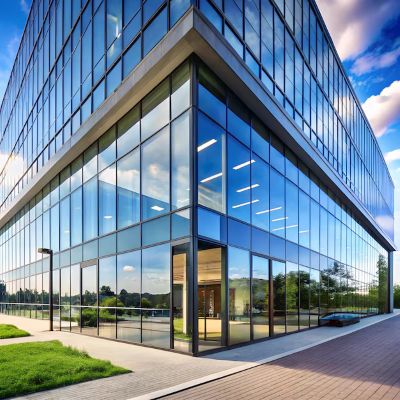
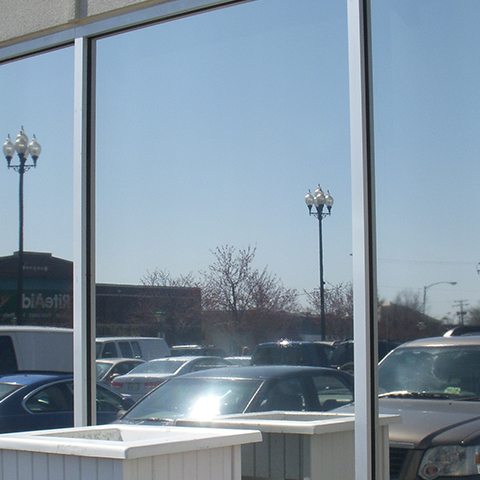
Here is a critical piece of information that will position you as an expert: what is commonly called one-way glass is actually a visual effect, not a property of the glass itself. The phenomenon relies on a significant light differential, where one side of the glass is much brighter than the other. Any glass or film with a mirrored surface will reflect light on the brighter side, creating privacy.
During the day, the bright exterior causes people outside to see a reflection. From the darker interior, those inside can see out clearly. This effect reverses at night when the interior is lit, which is a crucial point to manage with your client.
While laminated reflective glass exists, it presents significant logistical and financial hurdles for most commercial projects. This is why seasoned project managers and architects specify high-performance one way mirror film.
It’s the strategic choice for delivering on the client’s goals without derailing the project’s budget or timeline. This retrofit solution involves applying a specialized film, such as 3M mirror film, directly to existing window panes, sidestepping the cost and disruption of full glass replacement.
Cost Analysis: A Clear Win for Film
The initial cost is the most dramatic point of difference. Specifying and installing new reflective glass units can be 5 to 10 times more expensive than retrofitting with high-performance film. On a large-scale project, this translates into hundreds of thousands of dollars in savings.
The lifecycle return on investment for film is just as compelling. The energy savings from solar heat rejection caused by heat control window film can lead to a payback period of as little as three to five years. This transforms the film from a simple privacy solution into a capital improvement that positively impacts the building’s operational budget.
Installation Timeline: Hours vs. Weeks
Time is a critical resource in project management. A comparison makes the choice clear:
- Reflective Glass: This process involves long lead times for manufacturing, shipping, and staging. The installation itself is a major construction activity requiring glaziers, potential scaffolding, and significant worksite disruption that can span weeks or even months.
- Window Film: A certified team of installers can cover thousands of square feet of glass per day. The film arrives on-site in rolls, ready for immediate application. Work can often be scheduled during off-hours to avoid impacting building tenants. What takes weeks for glass replacement is often accomplished in a matter of days with film.
Performance and Versatility
With reflective glass, you are locked into the aesthetic and performance characteristics of the product you order. If the client decides the tint is too dark or the reflectivity is too low after installation, there is no practical recourse.
Privacy window film for office and commercial spaces offers unparalleled versatility. You can choose from a wide array of products with varying levels of Visible Light Transmission (VLT), reflectivity, and color. Different films can be used on different elevations of the same building to account for varying sun exposure. If needs change, the film can be professionally removed and replaced, a flexibility impossible with glass.
Key Benefits Beyond Daytime Privacy
While privacy is the primary goal, specifying a product like 3M Sun Control Window Film allows you to deliver a suite of additional benefits, adding significant value to the project.
- Solar Heat Rejection: This reflective window film is designed to reject a significant amount of solar energy, often up to 79%. This reduces the load on HVAC systems, leading to measurable energy savings and improved comfort.
- UV Protection: Quality films block up to 99% of the sun’s harmful ultraviolet rays. This is a critical benefit for protecting expensive interior assets like furniture, flooring, and artwork from fading.
- Enhanced Safety: While not their primary function, many of these films provide an added layer of safety by helping to hold shattered glass fragments together in the event of an impact, reducing the risk of injury from flying shards.
- Glare Reduction: The film softens the intensity of incoming sunlight, reducing eye strain and discomfort for building occupants and improving the visibility of computer screens.

Specifying the Right Solution for Your Project
Choosing the right film requires balancing client needs with building science. Understanding a few key variables will empower you to guide the selection process and ensure a successful outcome.
How to Read a Technical Data Sheet
A film’s technical data sheet provides the objective metrics you need to compare products. The key terms to know are:
- Visible Light Transmission (VLT): The percentage of visible light passing through the filmed glass. A lower VLT means a darker tint.
- Visible Light Reflection (VLR): The percentage of visible light reflected by the film. A higher VLR on the exterior creates a stronger mirror effect.
- Total Solar Energy Rejected (TSER): A measure of the film’s heat-blocking capability. Higher TSER means better energy performance.
- UV Rejection: The percentage of UV radiation blocked. For quality films like those from 3M, this should be 99% or greater.
Balancing Privacy with Interior Light
It is essential to communicate the fundamental trade-off of one-way mirror films: a film with higher exterior reflectivity (more privacy) will generally have a lower VLT (less light inside). The goal is to find the sweet spot. For an office requiring maximum privacy, a film with high reflectivity and low VLT might be perfect. For a storefront that wants to reduce glare but maintain a bright interior, a film with moderate reflectivity and higher VLT is more appropriate.
The 3M Sun Control Window Film, Mirror Series (often called the Silver Series) is a workhorse for these applications, offering a range of films with different levels of light transmission and reflectivity to match project needs.
Common Applications for One-Way Mirror Film
This technology solves critical challenges across a diverse range of commercial properties. The film’s versatility is its greatest asset in commercial window tinting projects.
- Ground-Floor Offices and Storefronts: For ground-floor spaces, one-way mirror film creates a mirrored facade during the day that prevents passersby from seeing inside. This shields sensitive work and protects assets while maintaining a clear view from the inside out.
- Interior Glass Partitions: The modern office aesthetic favors expansive interior glass. One-way mirror film can be applied to conference rooms or HR offices. By managing lighting, keeping the “public” corridor brighter than the private office, the film creates one-way visibility internally.
- Security Booths and Loss Prevention: The classic use case for one-way visibility is in security. Applying the film to security booths provides a distinct tactical advantage, allowing guards to monitor traffic discreetly without revealing their presence.
- Building Aesthetics and Energy Efficiency: Architecturally, the film provides a clean, uniform exterior appearance, masking visual clutter. Functionally, it is a powerful tool for energy management, offering a tangible return on investment that makes it a smart financial specification.
Partnering for a Predictable, High-Quality Outcome
When a client asks for a one way glass window, they are asking for a solution. By understanding the physics of light and the modern materials available, you can guide them away from costly and disruptive glass replacement and toward the industry standard: advanced one-way mirror film.
The most effective approach is to partner with a knowledgeable film consultant. An experienced professional can provide physical samples, conduct a site assessment, and help you interpret technical data to ensure the final result aligns perfectly with your client’s vision. This collaborative process removes the guesswork and de-risks your project, guaranteeing a successful outcome that meets performance, budget, and timeline requirements.
Partner with Window Film Depot to install one-way glass window film that delivers reliable privacy, performance, and long-term value.
Frequently Asked Questions
Does one way glass work at night?
No, the effect reverses at night. The “one-way” visibility is created when one side of the glass is significantly brighter than the other. During the day, the sun makes the outside bright, creating a mirror for those outside. At night, if interior lights are on, people outside will be able to see in, while those inside will see their own reflection.
What is the difference between VLT and VLR on a spec sheet?
VLT (Visible Light Transmittance) measures how much light passes through the film, indicating how dark the tint will be. VLR (Visible Light Reflectance) measures how much light the film reflects, which determines the strength of the mirror effect. For strong daytime privacy, you want a film with a high VLR.
How much does one way mirror film cost compared to reflective glass?
Retrofitting existing windows with high-performance one-way mirror film is significantly more cost-effective than full glass replacement. Installation of new reflective glass units can be 5 to 10 times more expensive than a professional film application.
Can privacy window film be installed on any type of glass?
Most modern window films can be installed on standard single-pane or double-pane annealed glass. However, a professional consultation is critical to ensure film-to-glass compatibility, especially for tempered, laminated, or treated glass, to prevent any risk of thermal stress.
How long does 3M mirror film last?
Professionally installed 3M Sun Control Window Film is highly durable and features a scratch-resistant coating. It is backed by a comprehensive manufacturer’s warranty that covers issues like cracking, peeling, and delamination for up to 15 years on commercial applications, ensuring long-term performance.