If your office feels like a greenhouse by mid-afternoon, or if glare on monitors is draining your team’s focus, you already know something needs to change. The good news: the right window film can solve multiple workspace problems at once – cutting heat, blocking UV damage, improving privacy, and trimming energy bills – without replacing a single pane of glass.
Table of Contents:
- Need Office Window Tint Near Me Right Now?
- What Is Office Window Tint and How Does It Work?
- Key Benefits of Office Window Tint for Workspaces
- Types of Commercial Window Film for Offices
- The Office Window Tinting Process: What to Expect
- How to Choose the Right Office Window Tint Near You
- FAQs About Office Window Tint Near Me
If you’re searching for office window tint near me, keep reading to find exactly what your workspace needs.
Need Office Window Tint Near Me Right Now?
Businesses searching for office window tint want fast, local, professional help to cut glare, heat, and distractions. Whether you manage an open-plan office, a medical practice, a school, or a retail space, quick response times and flexible scheduling matter. Our team offers on-site estimates, works around your hours, and can usually start within days.
The core benefits – privacy, energy savings of 5–15% annually on cooling bills, uv protection, and improved comfort – are real and measurable. We handle everything from measuring and film selection to installation and clean-up, with minimal disruption to your workday. Call today, fill out our contact form, or request a free commercial window tinting quote to get started.
What Is Office Window Tint and How Does It Work?
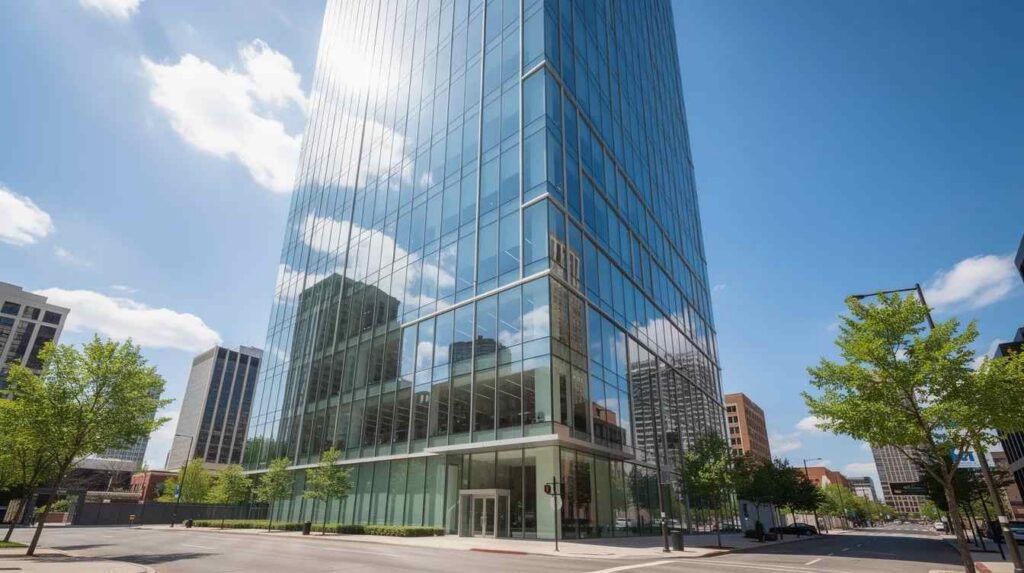
Commercial window film is a thin, multi-layer polyester or nano-ceramic material applied directly to existing office glass. It modifies how windows interact with visible light, solar heat gain, and UV transmission – while preserving natural daylight and outside views. Installation typically occurs on the inside of the glass, making it non-invasive and far more affordable than replacing windows entirely.
Modern window films can be nearly clear, tinted, reflective, or matte. They are engineered for commercial properties, not just automotive window tinting. Visible Light Transmission (VLT) indicates the percentage of light passing through the film, and commercial window structures often use distinct glass compositions that require films specifically designed for office and building applications. Quality films include scratch-resistant coatings, UV absorbers, and pressure-sensitive adhesives for long-term durability.
Key Benefits of Office Window Tint for Workspaces
Installing window tint reduces energy costs and eliminates screen glare in a single upgrade. Here is what your workspace gains:
- Energy efficiency: Reducing solar heat gain cuts HVAC runtime and smooths hot and cold spots. Installing commercial window tint can reduce HVAC costs by 15% to 30%.
- UV protection: Films block harmful uv rays – up to 99% – helping protect employees, computers, flooring, and furnishings from fading and damage over time.
- Glare reduction: Window tint can reduce glare by up to 94%. Tinting minimizes harsh glare on monitors, reducing eye strain and fatigue during long workdays.
- Comfort: Tinting improves comfort by regulating indoor temperatures, so your team stays comfortable without constant thermostat battles.
- Privacy: Options range from subtle tints to frosted glass film, ideal for HR offices, medical exam rooms, glass partitions, and street-facing windows.
- Safety and security: Security film options help hold glass together during break-ins, accidents, or storms, reducing injury risks and downtime.
Types of Commercial Window Film for Offices
Different office needs – heat control, privacy, branding, or security – call for different window film solutions. Here are the main categories:
- Solar control films block up to 99% of UV rays, reject infrared heat, and lower solar heat gain coefficients to reduce cooling bills. LLumar window films block over 99% of harmful uv rays. Upfront costs of metalized or dyed film are typically lower but less efficient at cooling compared to premium options.
- Ceramic film provides top-tier heat and UV rejection without distorting visibility, making it the preferred choice for offices that want performance without a dark appearance.
- Decorative and frosted films enhance aesthetics and provide privacy. Frosted films increase privacy and add artistic design – custom patterns, logos, gradients, and glass frosting can be applied without replacing glass.
- Security films protect against break-ins and vandalism. These thicker films (4–14 mil) pair with anchoring systems for robust protection of ground-level glass doors, storefronts, and server rooms.
Unlike automotive window tinting or home window film, office installations use films engineered for commercial performance, larger glass surfaces, and the specific demands of business environments.
How Office Window Tint Improves Energy Efficiency and Comfort
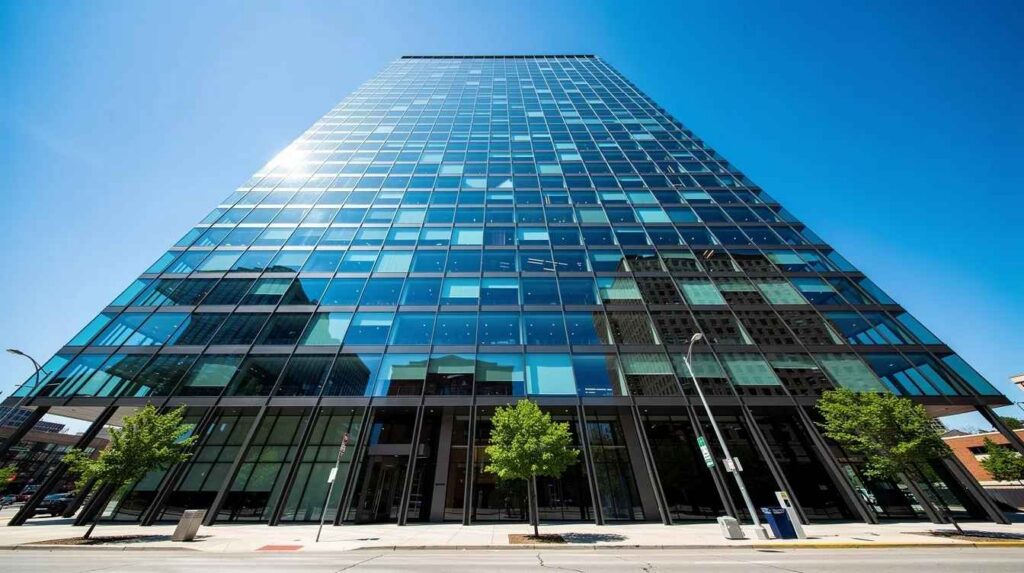
Unprotected glass on a south or west-facing facade can push interior surface temperatures well above comfortable levels, forcing HVAC systems to work overtime. Window film reduces solar heat gain by reflecting and absorbing infrared and visible light before it enters the space. South and west-facing windows require higher UV and thermal protection than north-facing glass.
The numbers are compelling. Madico films can reduce air conditioning costs by up to 86%. Window films can block up to 86% of solar heat. Advanced films can reduce heat by up to 88%, and home window tinting can similarly reduce heat by up to 88%. Buildings with LLumar film save 5–15% on energy annually. According to the US General Services Administration, Low-E film produced approximately 29% perimeter HVAC energy savings on single-pane glass facades.
Window films block incoming solar heat and help retain interior warmth during colder months, making them a year-round solution. Energy-efficient films improve HVAC performance and reduce costs, and home heat rejection films reduce energy bills and improve comfort in residential settings too. Home window films can pay for themselves in 2 to 3 years. Energy-efficient commercial window film can also support sustainability initiatives, LEED strategies, and corporate ESG goals. Building managers can model films in energy audits to estimate payback periods for their specific building.
Privacy, Branding, and Aesthetics with Office Window Tint
Offices use tinted and frosted window film to create private meeting rooms, executive offices, and client waiting areas without building solid walls. Lower VLT percentages offer high privacy and block heavy light, while high-quality films provide excellent heat control without drastically darkening offices.
Decorative film options can incorporate logos, brand colors, directional graphics, and custom patterns on interior glass partitions and doors. The result is a uniform exterior appearance, reduced visibility of interior clutter from outside, and a more polished, professional look for visitors. Films can be applied to conference rooms, lobbies, stairwells, and interior glass railings to create a cohesive design theme. Because decorative films are removable and updatable, they are ideal for rebrands, seasonal campaigns, and tenant turnover in commercial buildings.
Safety, Security Film, and UV Protection for Offices
Security film is a discreet way to strengthen existing glass against forced entry, accidental impact, and extreme weather events. Specialized security films hold shattered glass together during severe weather or break-ins, reducing injury risk and business downtime. Typical office uses include ground-level glass doors, storefronts, server rooms, pharmacies, and areas with valuable equipment.
Standard glass allows damaging UVA rays to enter, accelerating fading of carpets, hardwood floors, office artwork, retail displays, and reception furniture. High-quality commercial tint filters out 99% of UVA rays. Window films block up to 99% of UV rays, protecting skin, furnishings, and flooring from the kind of damage that becomes visible within just a few years.
The Office Window Tinting Process: What to Expect
Here is the typical process, step by step:
- Initial consultation – Discuss your goals: heat reduction, privacy, security, or branding.
- On-site survey and measurements – We assess glass type, orientation, and access. Testing physical film swatches allows evaluation of light alteration and glare reduction before you commit.
- Film selection and proposal – You receive a detailed quote with performance specs.
- Scheduling – Most office projects can be completed outside peak hours or in phases.
- Installation – Glass is cleaned, floors and furniture protected. Film is applied with slip solutions and squeegees, then allowed to cure.
- Final inspection and aftercare – We walk through every pane with you and provide cleaning guidance (ammonia-free cleaners, soft cloths, no abrasive pads).
For context on speed, in auto work a two-man crew can tint a 4-door car in under 45 minutes, one tinter can complete a car in one hour, and the average tinting time for a 4-door car is two hours. Office projects scale differently, but professional installers are fast and fully insured for work in occupied environments.
How to Choose the Right Office Window Tint Near You
Use this checklist when evaluating a local provider:
- Experience and references: Companies like Edmond Window Film have served customers for over 25 years. Look for a dealer with proven commercial project history.
- Performance data: Ask for TSER, VLT, UV blocking, and SHGC specs for the specific films offered. Request physical samples.
- Local knowledge: Many commercial districts enforce strict rules on window reflectivity levels. A locally based company understands regional climate, sun angles, and building codes.
- Scheduling flexibility: Can the provider offer off-hours or phased installation?
- Licensing and insurance: Verify credentials and read recent customer reviews from office and commercial projects.
Compare proposals on film quality, projected energy savings, and warranty coverage – not just price.
Why Choose Our Team for Your Office Window Tinting Project
Over 150,000 window tint installations have been performed by Sun Stoppers, and over 150,000 window tint installations completed by Sun Stoppers reflect a depth of experience few companies can match. Our team uses premium commercial window film from trusted manufacturers, certified installers, and meticulous quality control on every pane.
We pride ourselves on clear communication, detailed written quotes, on-time arrival, and respect for corporate security and confidentiality. Our customers consistently describe a great experience – from the initial phone call through final inspection. We specialize in window film solutions for offices, clinics, schools, and retail, and we are proud of the professionalism and outcome we deliver every time.
Office Window Tint Cost, ROI, and Typical Project Timelines
Cost depends on total glass square footage, film type (solar, decorative, security), access complexity, and scheduling. Most window film installations pay for themselves in 2 to 3 years through energy savings, extended life of furnishings, and reduced need for blinds or shades. Tinting reduces energy bills by 5–15% annually, and the addition of security or decorative films adds further value.
Typical timelines: a site survey takes one visit, lead time to scheduling is usually a few business days, and small offices may be completed in a single day. Larger buildings or multi-floor projects are phased to keep your business running smoothly. We recommend requesting a customized quote and, if available, an energy savings estimate for your specific building.
FAQs About Office Window Tint Near Me
How long does office window tint last?
Most commercial films last 10–15 years with proper care, and manufacturer warranties typically cover that full period.
Will window film void my glass warranty?
It depends on the glass manufacturer. We verify compatibility before installation to address any warranty concerns.
Can office window film be removed or replaced later?
Yes. Films are removable, making them easy to update for rebrands or tenant changes.
How dark will my office windows look from outside?
High-quality films provide excellent heat control without drastically darkening offices. We help you choose the right VLT for your needs.
Can security film stop a break-in?
Security film delays forced entry and holds shattered glass together, but it does not make glass impenetrable. It is a deterrent and a safety layer, not a guarantee.
How do I clean windows after tinting?
Use ammonia-free cleaners and soft cloths. Avoid abrasive pads. Wait for the curing period to end before the first cleaning.
Get a Free Quote for Office Window Tint Near You
The right window film delivers energy savings, glare control, privacy, uv protection, and improved comfort for employees and visitors alike. Whether you manage a single-floor office, a house converted to a family practice, or a multi-story building, we offer a variety of window films to match your expectations and budget.
We serve offices, clinics, schools, residential properties, and commercial buildings across the local region with fast site visits and detailed proposals. Schedule a walkthrough and let us recommend specific film options for each facade or room. Contact us by phone, visit our website, or fill out our form to start your project this week and create a more comfortable, energy efficient workspace sooner.