Table of Contents:
- The Science Behind Mirror Tint for House Windows
- Decoding the Data: Key Performance Metrics for Window Film
- Why Expert Installation is Non-Negotiable for Performance
- Planning Your Project with Mirror Tint for House Windows
- Conclusion: A Calculated Investment in Your Home’s PerformanceS
- Frequently Asked Questions
- Related Posts from Window Film Depot
The Science Behind Mirror Tint for House Windows
To move beyond the simple aesthetics of mirror tint, it is essential to understand the material science that makes it a high-performance building asset. The “one-way” effect is not an inherent property of the film itself, but the result of advanced manufacturing and the physics of light. A professional-grade film is an engineered solution, designed to manipulate the solar spectrum for a calculated outcome.
The Principle of Light Differential: The “Magic” Behind Daytime Privacy
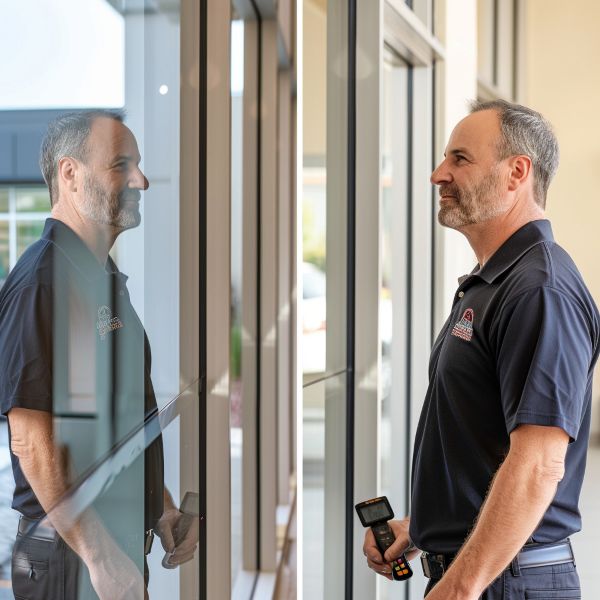
The privacy effect of mirror film is governed by a simple principle. The film appears as a mirror on whichever side is more brightly lit. During the day, the sun makes the exterior of your building significantly brighter than the interior. An occupant looking out will see clearly, while someone on the outside will see their own reflection.
This is why it is correctly termed a daytime privacy film. At night, this effect reverses. If lights are on inside your home or office, the interior becomes brighter than the dark exterior.
A person standing outside will now be able to see in, while you will see a reflection of your own room when looking out. Understanding this light differential is critical for setting correct expectations. The privacy is a conditional benefit, whereas the film’s energy-saving performance works around the clock.
Deconstructing the Film: Sputtered vs. Metallized Layers
The performance and quality of a mirror film are directly tied to its manufacturing process. While several methods exist, the most significant distinction in professional applications is between older metallized films and modern sputtered films.
A traditional metallized film is created by depositing a thin, single layer of metal, typically aluminum, onto a polyester sheet. While effective at reflecting light, this process can result in a harsher reflectivity and may interfere with cellular and Wi-Fi signals.
Sputtering, or sputter coating, is a far more advanced and precise technique. Inside a vacuum chamber, microscopic particles of durable metals like titanium, stainless steel, or copper are uniformly “sputtered” atom-by-atom onto the film. This process allows for multiple, exceptionally thin layers, each engineered to manage a different part of the solar spectrum. The result is a film with superior optical clarity, more stable color, and higher performance without the high interior reflection or signal interference associated with older technologies.
How Advanced Films Selectively Manage the Solar Spectrum
The most significant value of a professional mirror film lies in its ability to selectively manage the sun’s energy. Sunlight is composed of three primary components:
- Visible Light: The light we see, which contributes to brightness and glare.
- Infrared Radiation (IR): Invisible to the human eye, but it accounts for approximately 53% of the sun’s heat.
- Ultraviolet Radiation (UV): An invisible spectrum that causes fading in furniture, flooring, and artwork, as well as skin damage.
A basic film might simply reduce Visible Light Transmission (VLT), making the window darker to block some heat and glare. A high-performance sputtered film, however, is engineered to be spectrally selective. It can allow a high percentage of visible light to pass through, maintaining a bright interior, while simultaneously rejecting a massive percentage of infrared heat.
This is why the ultimate metric for performance is Total Solar Energy Rejected (TSER), which measures the film’s ability to block heat from all three parts of the spectrum. Virtually all professional-grade films, including premium products like 3M mirror film, are designed to block over 99% of damaging UV radiation. This level of engineered performance transforms a standard window into a strategic tool for reducing energy costs, protecting interior assets, and improving comfort.
Decoding the Data: Key Performance Metrics for Window Film
While the visual effect of a mirror film is its most obvious characteristic, the true value of an architectural film is defined by its performance data. Understanding these key metrics separates a purely aesthetic choice from a calculated investment in building efficiency. A film’s specification sheet provides the verifiable data needed to forecast energy savings and ensure the product meets your project’s objectives.
Visible Light Transmission (VLT): Balancing Light, Privacy, and View
Visible Light Transmission measures the percentage of visible light that passes through a window with film applied. A lower VLT number indicates a darker, more reflective film, which in turn provides greater daytime privacy. For example, a film with a 15% VLT allows 15% of visible light to enter, creating a strong one-way mirror effect from the exterior.
The selection of a VLT level is a strategic balance. While a very low VLT maximizes privacy and glare reduction, it also reduces the amount of natural light entering a space. Our role is to help you analyze your specific needs, whether for a conference room that demands privacy or a retail storefront that requires a clear view, to select a VLT that achieves the desired outcome without compromising the interior environment.
Total Solar Energy Rejected (TSER): The True Measure of Heat Reduction
If one metric quantifies a film’s impact on energy efficiency, it is Total Solar Energy Rejected. TSER is a comprehensive value that indicates how much of the sun’s total energy, comprising UV, visible light, and infrared radiation, is blocked from entering through the glass.
Many off-the-shelf products might only highlight a single aspect, like glare reduction, but TSER provides the complete picture of thermal performance. A higher TSER value directly translates to a greater reduction in solar heat gain. This lessens the load on HVAC systems and leads to tangible energy savings. When evaluating films for return on investment, TSER is the most critical performance indicator.
UV Rejection: Protecting Interiors from Fading and Damage
Ultraviolet radiation is the primary driver of fading and degradation for interior furnishings, flooring, artwork, and merchandise. Professional-grade architectural films are engineered to act as a powerful shield, blocking over 99% of harmful UVA and UVB rays.
This level of protection is a standard, non-negotiable feature of the high-performance films we install. It effectively preserves the value of interior assets, extending their life and maintaining their appearance for years. This is a crucial, often-overlooked benefit that provides continuous value long after the installation is complete.
Solar Heat Gain Coefficient (SHGC) and Glare Reduction
Two additional metrics provide a more granular view of a film’s performance: Solar Heat Gain Coefficient and Glare Reduction.
- Solar Heat Gain Coefficient (SHGC): This value represents the fraction of solar radiation that is transmitted through a window and absorbed, subsequently being released as heat inside a building. The scale runs from 0 to 1, and a lower SHGC indicates superior heat-blocking performance. In cooling-dominant climates, selecting a film with a low SHGC is paramount for minimizing air conditioning costs.
- Glare Reduction: Measured as a percentage, this metric indicates how effectively a film reduces intense, uncomfortable brightness. High levels of glare can cause eye strain and make viewing computer screens or televisions difficult. A film with 70% glare reduction, for example, can transform a harsh, sun-drenched room into a comfortable and productive workspace.
Why Expert Installation is Non-Negotiable for Performance
Understanding the advanced technology inside a professional-grade mirror film is only half the equation. To unlock the engineered performance, that technology must be flawlessly integrated with your existing glass. This is where installation moves from a simple task to a technical discipline. The difference between a beautifully performing window film and a peeling, bubbling eyesore is almost always the skill of the installer.
The Risks of Improper Installation: Contamination, Bubbles, and Reduced Lifespan
Even the most sophisticated solar control film is rendered ineffective by a poor application. The risks of an amateur or rushed installation go far beyond aesthetics, representing a complete failure of the investment.
Microscopic dust, hair, or skin particles trapped between the film and the glass create blemishes and prevent the adhesive from forming a complete, uniform bond.
Similarly, air and water bubbles are not just cosmetic flaws. They are pockets of failure where the film is not adhered to the glass. These areas are weak points that will likely lead to premature peeling, curling at the edges, and delamination.
An improper installation drastically shortens the film’s operational lifespan, meaning the promised decade or more of energy savings is lost, and you are left with a product that requires costly removal and replacement.
Achieving a Flawless Bond: The Professional Process
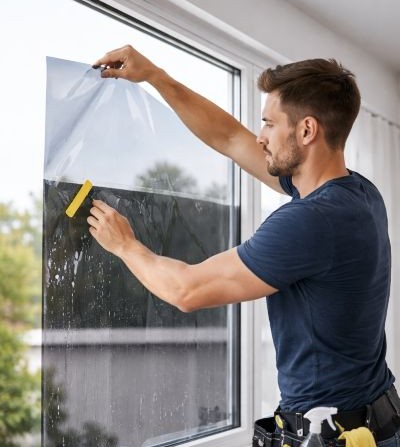
A certified technician approaches window film installation as a meticulous, multi-step procedure designed to achieve a perfect, contamination-free bond. This process ensures the film performs exactly as specified by the manufacturer.
- Systematic Surface Preparation: The process begins with a deep cleaning of the glass and surrounding frames. Professionals use specialized scrapers and cleaning agents to remove any paint, residue, or microscopic grit that could compromise the bond.
- Precision Templating and Cutting: Each window pane is precisely measured. The film is then cut to those exact dimensions, often using a digital plotter for unparalleled accuracy. This ensures edge-to-edge coverage with a consistent, minimal gap that is nearly invisible.
- Proprietary Mounting Solutions: Professionals use a specific “slip solution” that does more than just let them position the film. It chemically prepares the film’s adhesive to create the strongest possible bond with the glass as it cures.
- Expert Squeegee Technique: The installer uses specialized squeegees and proven techniques to evacuate all of the mounting solution from between the film and the glass. This requires applying firm, consistent pressure in a precise pattern to ensure a flawless, flat surface.
- Final Detailing and Curing: After the main application, the technician inspects and details all edges, ensuring a perfect seal. They will then advise you on the curing process, during which any residual microscopic water evaporates and the adhesive bond reaches maximum strength.
Activating Your Warranty and Ensuring Maximum ROI
Perhaps the most critical factor for any project manager or homeowner concerned with long-term value is the manufacturer’s warranty. Leading film manufacturers like 3M, LLumar, and Solar Gard offer comprehensive warranties covering issues like peeling, bubbling, and discoloration for 10 years or more on commercial projects.
These warranties, however, are almost universally contingent upon installation by a certified and authorized dealer. By attempting a DIY installation or using an uncertified installer, you immediately void this protection. A professional installation is your only mechanism for activating the warranty, safeguarding your investment and guaranteeing the film’s performance for its entire service life. This assurance is fundamental to achieving a maximum return on investment.
Planning Your Project with Mirror Tint for House Windows
Achieving optimal performance from window film begins long before the first squeegee touches the glass. The planning phase, where project goals are defined and the right material is selected, is just as critical as the installation itself. Engaging a window film specialist early in the process transforms the project from a simple purchase to a calculated building upgrade.
Assessing Your Home’s Unique Needs and Sun Exposure
A one-size-fits-all approach to one way window film for home will always yield suboptimal results. A specialist will conduct a thorough assessment of your property’s specific conditions to inform their recommendation. This evaluation includes analyzing:
- Window Orientation: The solar heat gain on a west-facing window at 4 PM is dramatically different from that on a north-facing window. Each elevation may require a different film solution.
- External Shading: The impact of trees, roof overhangs, or adjacent buildings can significantly alter the performance needs of a particular window.
- Interior Use: The goals for a home office, where glare reduction is paramount, differ from those for a living room, where preserving natural light may be the priority.
- Glass and Frame Type: A specialist will identify your window type, such as single pane or dual pane, to ensure the selected film is compatible and will not create a risk of thermal stress fractures.
The Consultation Process: What to Expect from an Expert
A professional consultation is a collaborative, data-driven process designed to align your goals with the best possible technical solution. You should expect the following:
- A detailed discussion to understand your primary objectives, whether they are privacy, heat reduction, UV protection, or glare control.
- An on-site analysis of your windows, including measurements and an assessment of environmental factors.
- A presentation of different film options, complete with physical samples and clear explanations of their performance metrics like VLT and TSER.
- A transparent proposal outlining the recommended film, total cost, project timeline, and full warranty details.
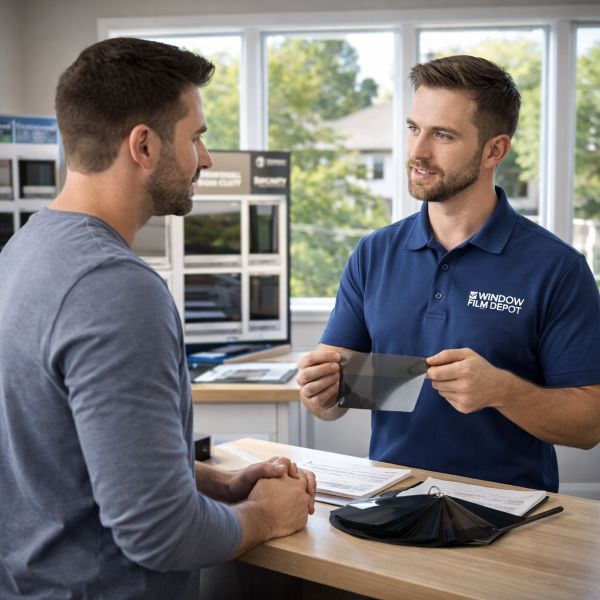
Selecting the Right Film: A Guided Decision for Optimal Performance
The final selection is a guided decision, not a guess. With data from the on-site assessment and a clear understanding of your priorities, a specialist can help you make an informed choice. For example, to combat intense afternoon sun in a media room, they may recommend a highly reflective film with a low VLT. For a kitchen where you want to cut heat but maintain abundant natural light, they might propose a spectrally selective film that is less reflective and has a higher VLT.
This consultative approach ensures you are not just buying a privacy window film. You are strategically deploying a specific building material engineered to solve your unique challenges, ensuring the final result delivers quantifiable performance and lasting value.
Conclusion: A Calculated Investment in Your Home’s Performance
Modern mirror window films represent a significant leap beyond simple privacy solutions. Approaching this decision not as a decorative choice, but as a calculated upgrade to your building’s performance is the key to unlocking its true value. The sleek, reflective aesthetic is simply a visual indicator of the sophisticated technology working within the film to control solar energy, protect interiors, and enhance comfort.
The most successful projects are rooted in a clear understanding of the film’s function as a technical material.
- Performance Defines the Product. The primary value of professional-grade film lies in its high Total Solar Energy Rejection (TSER) and near-total UV blocking capabilities. The reflective finish is a direct consequence of the metallic layers engineered to achieve this performance.
- Technology is Not Universal. There is a vast difference between basic dyed films and the advanced, multi-layered sputtered films used by professionals. Sputtering technology delivers a durable, optically clear film with consistent, measurable energy savings.
- Installation is Critical. Professional installation ensures a flawless application and proper curing. More importantly, it activates the manufacturer’s warranty and guarantees the film will perform to its specifications.
- It’s a Building Envelope Enhancement. When professionally selected and installed, window film acts as a retrofitted upgrade to your existing glazing, improving a key component of your building envelope.
Planning Your Mirror Tint Installation the Right Way
Moving forward requires a methodical approach. First, clearly define your project objectives: are you focused on energy savings, glare reduction, UV protection, or daytime privacy? Second, demand performance data. Request the manufacturer’s specification sheet for each product to compare TSER, VLT, and UV rejection percentages.
Finally, engage with a specialist. An experienced Window Film Depot technician can assess your specific situation, including window type, glass construction, and building orientation. This site-specific analysis is crucial for recommending a solution that is both effective and safe for your existing glass, ensuring a successful, long-term investment.
Frequently Asked Questions
How long does mirror tint for house windows last?
Professionally installed, high-quality mirror films from manufacturers like 3M are designed to last for 10 to 15 years or even longer. The lifespan is backed by a comprehensive manufacturer’s warranty that covers issues like peeling, bubbling, or discoloration, but this warranty is only valid when the film is installed by a certified professional.
Will a one-way window film for home, work at night?
Yes. By rejecting a significant amount of solar heat (measured by TSER), mirror film reduces the amount of heat entering your home. This lessens the strain on your air conditioning system, leading to lower cooling costs in the summer. The exact savings depend on your climate, window orientation, and the specific film’s performance data.
Does mirror film really save money on energy bills?
Retrofitting existing windows with security window film offers significant advantages for project managers. It is substantially more cost-effective than full glass replacement, avoiding high material, labor, and disposal costs associated with new windows. Installation is also faster and causes minimal disruption to ongoing operations, ensuring business continuity. Furthermore, films can enhance building value by offering combined security and energy efficiency benefits without altering the building’s aesthetic.
Can I install privacy window film myself?
While DIY kits are available, professional installation is strongly recommended for a performance-grade product. An improper installation can lead to bubbles, contamination, and peeling, which negates the film’s benefits. More importantly, self-installation will void the manufacturer’s warranty, leaving you with no protection for your investment.
Will a dark mirror tint make my house too dark inside?
This depends on the Visible Light Transmission (VLT) you choose. A film with a very low VLT (e.g., 15%) will be quite dark but offer maximum privacy and glare reduction. However, many modern films are spectrally selective, meaning they can block significant heat (high TSER) with a much higher VLT, allowing more natural light to pass through. A professional can help you select a film that balances your needs for light, privacy, and heat rejection.