Table of Contents:
- When ‘Home’ Window Tinting Means a 200-Unit Project
- Specifying for Performance: A Guide to Home Window Tinting for Privacy
- The Strategic Difference: Frosted, Decorative, and One-Way Mirror Films
- Logistics and Installation: The Commercial Advantage
- Conclusion: Elevating Your Project with a Commercial Film Strategy
- Frequently Asked Questions
- Related Posts from Window Film Depot
When ‘Home’ Window Tinting Means a 200-Unit Project
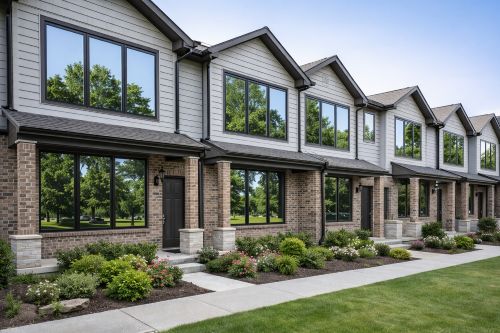
The term ‘home window tinting’ often conjures images of a weekend DIY project. For a single bathroom window, this approach may suffice. When the scope expands to a multi-family development, a row of luxury townhomes, or a high-end custom residence, the entire paradigm must shift.
What was a simple task becomes a complex logistical and technical challenge where success is measured by consistency, durability, and adherence to architectural specifications.
At this scale, you are no longer just applying a product. You are implementing a building-wide system.
This requires a commercial mindset focused on de-risking the project, ensuring long-term performance, and achieving a uniform aesthetic that enhances the property’s value.
Why Consumer-Grade Privacy Film Fails at Scale
Relying on consumer-grade privacy films sourced from retail channels introduces significant risks to a large-scale residential project. While seemingly cost-effective upfront, these products are not engineered or packaged for the demands of a commercial application, leading to predictable points of failure.
- Material Inconsistency: Rolls of consumer film, even from the same brand, can exhibit variations in color, tint, and even thickness from one batch to another. Across a 200-unit facade, these subtle differences become glaringly obvious, creating a patchwork effect that undermines the building’s architectural integrity.
- Lack of Performance Data: Commercial specifications demand verifiable data. A project manager needs a specification sheet detailing a film’s Visual Light Transmission (VLT), UV rejection, and adhesive properties. Consumer products rarely provide this level of technical documentation, making it impossible to guarantee that the client’s privacy and natural light requirements will be met.
- Durability and Warranty Issues: Films intended for DIY application often use less robust adhesives and are more susceptible to premature failure, including bubbling, peeling, and discoloration. A single failure is an annoyance. Hundreds of failures become a significant, long-term maintenance liability for the property owner and a mark against the project’s quality.
The Critical Shift to a Professional Specification
Treating window film as a professional trade requires a fundamental shift in perspective. The focus moves from the simple act of application to the process of specification, procurement, and quality-controlled installation. This is the difference between hoping for a good outcome and engineering one.
A professional specification treats privacy film as an architectural finish, just like flooring or paint. The process begins by defining the exact performance and aesthetic requirements. From there, the project team selects a specific commercial-grade product, such as a 3M privacy window film, based on its documented technical data. The team prepares a submittal package and schedules installation, and certified technicians execute the work to ensure consistency and quality from the first unit to the last. This structured approach mitigates risk, ensures predictable results, and provides the client with a reliable, warrantied solution.
Establishing a Baseline: Goals for Privacy in Residential Projects
Before selecting a specific film, it is critical to define what “privacy” means for your project. The objectives can differ significantly between a large apartment complex and a bespoke luxury home.
For Multi-Family Developments
In a multi-family context, the primary goals for privacy film are typically uniformity and functionality. The solution must look the same across every unit and provide a consistent level of privacy, particularly for ground-floor apartments, fitness centers, laundry rooms, and leasing offices. The objective is to block direct sightlines into private spaces without excessively darkening the interior, maintaining a bright, welcoming environment for residents.
For High-End Custom Homes
For high-end residential projects, the goals are often more nuanced and client-driven. Privacy might be needed to obscure a cluttered utility room, shield a glass-walled bathroom, or reduce unwanted visibility from a neighboring property. Here, aesthetics are paramount. The film must not only perform its function but also integrate seamlessly with the home’s interior design, often serving as a decorative element in its own right. The specification process is collaborative and designed to realize the architect’s and homeowner’s specific vision.
Specifying for Performance: A Guide to Home Window Tinting for Privacy
Successfully specifying window film for a large-scale residential project is a technical exercise in balancing competing priorities. The client’s demand for privacy must be met without compromising the aesthetic appeal of the building or the comfort of its residents. This requires a clear understanding of performance metrics and how they translate to real-world outcomes.
Decoding the Specification Sheet: Visual Light Transmission (VLT)
The single most important metric on a window film specification sheet is Visual Light Transmission, or VLT. Expressed as a percentage, VLT measures the amount of visible light that passes through a window after the film has been applied. A lower VLT percentage indicates a darker film that allows less light to pass through.
For example, a film with a 15% VLT is significantly darker and will typically offer greater daytime privacy than a film with a 50% VLT. As a project manager, your role is not to simply choose the lowest VLT, but to specify a VLT level that achieves the desired privacy outcome while still meeting goals for natural light and occupant comfort. This figure is a critical data point in your project documentation.
Defining Privacy Levels Without Creating a Cave
The goal is privacy, not isolation. Specifying a film with an extremely low VLT across an entire building can result in living spaces that feel dark and disconnected from the outdoors, a common cause of tenant dissatisfaction. The key is to match the VLT to the specific need and building orientation.
A north-facing apartment with limited direct sun may feel too dark with a 20% VLT film, whereas the same film on a south-facing unit could be ideal for cutting glare and heat. A more effective strategy often involves using different film densities for different elevations or specifying frosted films that obscure views entirely while still allowing a high percentage of diffused light to pass through. This nuanced approach moves beyond a one-size-fits-all solution and addresses the unique conditions of each unit.
Beyond Privacy: UV Rejection and Glare Reduction
While privacy is often the primary driver, commercial-grade window films are engineered to provide multiple performance benefits. Overlooking these in your specification means leaving significant value on the table. When reviewing film options, consider these critical secondary metrics:
- UV Rejection: Most high-quality films block up to 99.9% of ultraviolet radiation. This is a crucial selling point for protecting high-end interior furnishings, flooring, and artwork from fading. It also provides a tangible health benefit for occupants.
- Glare Reduction: Direct sunlight can make viewing screens difficult and create uncomfortable environments. A properly specified film can reduce glare by 70% or more, dramatically improving the usability and comfort of a space, especially in home offices or media rooms.
- Total Solar Energy Rejected (TSER): This metric indicates how well a film blocks heat from the sun. A high TSER value translates into a reduced load on HVAC systems and can contribute to lower energy costs for the building and its tenants.
By incorporating these factors, the film specification shifts from a simple privacy solution to a comprehensive building envelope enhancement.
Matching the Film to the Application
The film used on a building’s exterior-facing windows differs fundamentally from the film used on interior glass in areas such as fitness centers, conference rooms, or office partitions. The selection process accounts for the unique demands of each application.
Exterior films are designed to withstand constant UV exposure, manage solar heat gain, and endure weather. The choice of film must also be compatible with the type of glazing, like annealed, tempered, or insulated glass units, to avoid creating thermal stress that could lead to glass failure.
Interior films, by contrast, are primarily focused on aesthetics and privacy between spaces. The technical demands are lower, which opens up a wider range of decorative and frosted options that may not be suitable for exterior use. Specifying the wrong film type can lead to premature failure, voided warranties, or even damage to the glass itself.
The Strategic Difference: Frosted, Decorative, and One-Way Mirror Films
Understanding the technical metrics is the first step. The second is selecting the correct type of film for the intended function. Frosted, decorative, and one-way mirror films are not interchangeable. Each offers a distinct solution tailored to specific scenarios within a residential project.
When to Specify Frosted Glass Film for Apartments
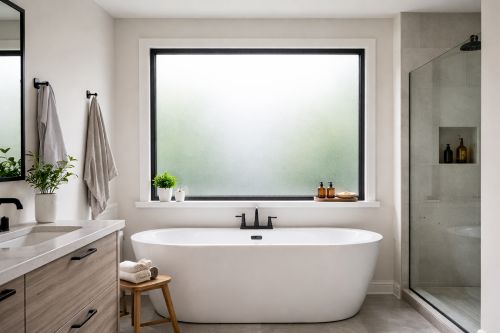
Frosted films are the most reliable solution for absolute, 24/7 privacy. By rendering the glass translucent, they obscure views completely from both inside and out, regardless of the time of day or lighting conditions.
This makes them the ideal specification for bathroom privacy windows or ground-floor bedrooms in close proximity to public walkways. A common choice is a frosted glass film for apartments that need total visual separation.
Unlike reflective films, frosted films achieve privacy by diffusing light rather than reflecting it. This allows for a high level of natural light to enter the space, preventing a cave-like effect while ensuring complete privacy. They are available in various densities, from a light etch to a completely opaque white finish.
Elevating Common Areas with Decorative Film
In common areas like lobbies, hallways, and amenity spaces, decorative films serve as a powerful design tool. They can transform standard glass panels into high-end architectural features that reinforce the building’s brand and aesthetic. Options like 3M Fasara Glass Finishes and 3M Scotchcal offer nearly limitless possibilities.
You can specify simple bands of frosted film to create a sense of privacy in a glass-walled meeting room or use intricate, custom-cut patterns and logos to add visual interest to a lobby entrance. This is a cost-effective way to achieve the look of expensive etched or sandblasted glass, adding a layer of sophistication to the project’s design.
Using One-Way Mirror Film for Daytime Privacy
One-way mirror film, also known as reflective film, is an excellent choice for daytime privacy in areas with significant exterior exposure. It is highly effective for ground-floor residential units, street-facing fitness centers, and common areas where tenants want an unobstructed view out without being seen from the outside.
The Light Differential Requirement
A one-way mirror effect is not inherent to the film itself. It is created by a significant imbalance in light levels. The film works by reflecting the brighter side, so for it to provide privacy, the area outside the window must be substantially brighter than the area inside.
During the day, this works perfectly. At night, the effect reverses when lights are on inside and it is dark outside. People outside can see in clearly, while the occupant sees a reflection of themselves. Project teams must clearly communicate this limitation to stakeholders and pair it with traditional window coverings for nighttime privacy.
Logistics and Installation: The Commercial Advantage
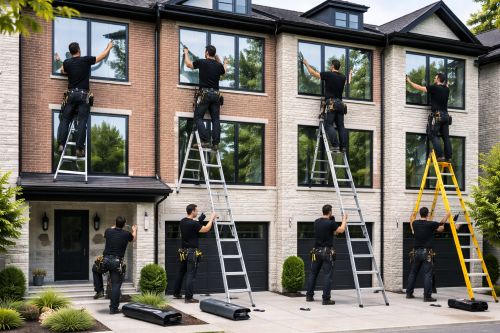
Moving from a single-family home to a multi-unit residential project transforms window film installation from a simple task into a complex logistical operation. Success is no longer just about the quality of the film, but about the capability of the team executing the installation. Partnering with a national installer provides a framework for managing quality, consistency, and scheduling across a large-scale rollout.
Ensuring Consistency Across Hundreds of Windows
On a multi-family project, even minor variations in application can become major aesthetic issues when viewed across an entire building facade. A solo contractor or small team may struggle to maintain uniformity over weeks or months of installation.
A national provider manages these variables:
- Material Batch Variation: A centralized inventory ensures the entire project is sourced from a single master roll or lot, eliminating color or reflectivity differences.
- Technician-Specific Techniques: Standardized training and quality control mean every window receives the same high-quality application, with consistent edge gaps and no visible contamination.
- Environmental Variables: A professional team understands how to mitigate on-site temperature and humidity to ensure the film’s adhesive cures correctly on every window.
Working with a Certified Decorative Window Film Contractor
The term “certified” is a critical project credential, not a marketing buzzword. Leading manufacturers like 3M provide rigorous certification programs that require installers to demonstrate mastery of technical specifications, application procedures, and quality standards.
When you engage a certified decorative window film contractor, the manufacturer formally vets the team working on your project. This serves as your primary mechanism for de-risking the installation. It ensures the team can handle the specific films you have specified and understands the protocols required to keep the manufacturer’s warranty valid.
Minimizing Disruption and Coordinating with Other Trades
In both new construction and occupied retrofits, the window film installer is just one part of a larger project ecosystem. A national installation partner excels at integrating seamlessly into a complex project schedule. Their operational model is built around minimizing disruption.
This includes pre-project planning to coordinate with painters, glaziers, and cleaners to ensure the work area is properly prepared.
For occupied buildings, it means developing a phased installation plan, providing clear communication to tenants, and maintaining a clean, professional worksite. This level of coordination prevents costly delays and ensures a smooth workflow for all trades involved.
The Importance of a Single Point of Contact
Managing a dozen different local installers for a project is a recipe for administrative overload and inconsistent results. A national installer provides a single point of contact responsible for the entire scope of work.
This streamlined structure offers significant advantages. You have unified quality standards, simplified communication, centralized billing, and comprehensive warranty management. If a film fails five years from now, you have one phone number to call. The national installer manages the claim and coordinates the replacement, backed by the full power of the manufacturer’s warranty.
Conclusion: Elevating Your Project with a Commercial Film Strategy
Treating window film as a final, decorative touch is a missed opportunity. For large-scale residential projects, a well-specified film strategy is a core component of the building envelope, directly impacting resident satisfaction, energy performance, and your project’s reputation. Shifting your perspective from simple home window tinting for privacy to a commercial-grade specification process is the key to delivering predictable, high-quality results across every unit.
A professional team operates under strict protocols for glass preparation, film application, and curing. They have the experience to manage site conditions, coordinate with other trades, and execute the work efficiently to meet project timelines. A national partner provides a single point of contact for project management, quality control, and warranty service, eliminating the complexity of managing multiple local subcontractors. This centralized approach guarantees a uniform standard of quality that protects your project’s integrity and your firm’s reputation.
Your Next Steps
Integrating a commercial film strategy into your project is a straightforward process when approached systematically.
- Engage in an Early-Stage Consultation: Bring a window film specialist into discussions during the design or early construction phases. This allows for the proper evaluation of needs and ensures the film solution integrates with building design and performance goals.
- Request Samples and On-Site Mockups: Before finalizing a specification, request physical samples of the proposed films. Applying larger mockups to a representative window on-site is the best way to evaluate the aesthetic and privacy level in the actual environment.
- Develop a Formal Specification Sheet: Work with your film consultant to create a detailed specification document. This should include the manufacturer, film series, required performance data like VLT, installation standards, and warranty requirements. This document becomes the baseline for accurate bidding and quality assurance.
Frequently Asked Questions
What is the difference between frosted and one-way mirror window film?
Frosted window film provides 24/7 privacy by making the glass translucent, obscuring views from both inside and out while still allowing diffused light to pass through. One-way mirror film is reflective and provides daytime privacy by making it difficult to see inside from a brighter exterior. Its effectiveness reverses at night when interior lights are on.
Does one-way mirror film work for privacy at night?
No, one-way mirror film does not provide privacy at night. The effect is created by a light imbalance. When it is dark outside and lights are on inside, the film’s effect reverses, allowing people outside to see in clearly. For nighttime privacy, these films must be paired with blinds or curtains.
How long does professionally installed home window tinting for privacy last?
When a certified professional installs high-quality commercial-grade window films, they deliver exceptional durability. Manufacturers back most with a comprehensive warranty, often covering 10–15 years for commercial applications against issues like bubbling, peeling, or discoloration.
Can you use different types of privacy film in the same building?
Yes, and it is often the best strategy. A project can specify a one-way mirror film for ground-floor units needing daytime privacy, a less reflective film for upper floors to preserve views, and a frosted film for all bathroom windows. Using films from a single manufacturer, like 3M, ensures a cohesive exterior appearance.
Why hire a certified decorative window film contractor for a residential project?
Certification from a manufacturer guarantees that the installer has been trained on specific products and application techniques. For a large residential project, this ensures consistent quality, prevents installation errors that could void the warranty, and protects the project from premature film failure and aesthetic inconsistencies.