Comparing Glass Printing Methods and the Flexibility of Printed Window Film
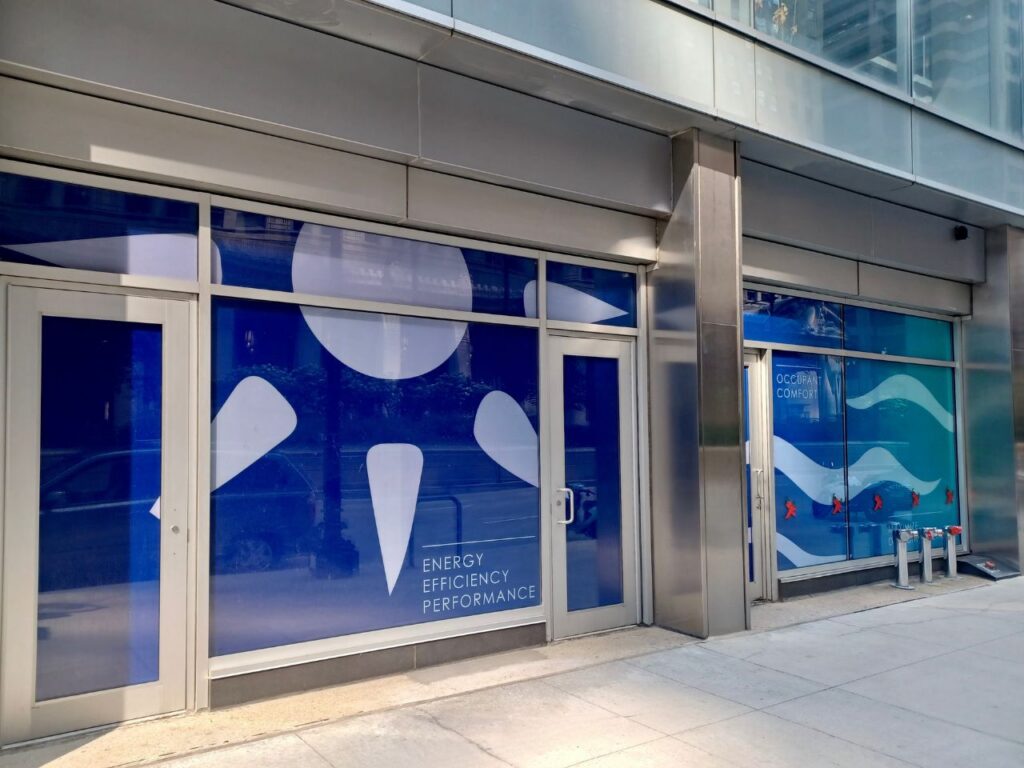
Printed window film has changed how architects and designers add graphics to glass. It applies a digitally printed film to existing glass surfaces. The result is branding, privacy, or artwork without replacing a single pane.
Glass graphics once meant permanent treatments like ceramic frit or screen printing. Today, designers have more options. Each method offers different trade-offs in cost, durability, and flexibility. Understanding those trade-offs helps teams specify the right solution.
Recent advances push the field further. With the 2026 Canon Colorado M5W UVgel printer, Window Film Depot now produces graphics at up to 1,800 dpi. This article compares the main digital printing methods for glass and explains where each one fits.
What Is Printed Window Film?
Printed window film is a digitally printed material applied directly to glass. It carries graphics, patterns, or full-color imagery. The film bonds to the glass surface rather than fusing into it. That single difference shapes most of its advantages.
Designers use printed film for both function and style. Common applications include:
- Branding and environmental graphics
- Privacy film for offices and healthcare spaces
- Decorative designs for interior glass partitions
- Wayfinding and signage systems
Because the film is applied and not permanently fused, it stays flexible. Teams can update, replace, or remove it as needs change. This makes printed window film a strong fit for tenant improvements and phased projects. It also reduces long-term material waste.
Comparing Digital Printing Methods for Glass
No single printing method is best for every project. The right choice depends on durability needs, budget, timeline, and whether the glass will stay in place. The four methods below are the most common for architectural glass. Each offers clear strengths and limits.
| Method | Strengths | Limitations | Best Fit |
| Digital ceramic (direct-to-glass) | Extremely durable; suited to exterior use; permanent finish | Requires new glass fabrication; hard to change; higher cost and longer lead times | Permanent exterior graphics |
| UV digital printing on glass | Vibrant color; wide design flexibility | Surface-level ink; less durable than ceramic; commits the project to that glass | Interior accents on fixed glass |
| Printed laminated interlayers | Graphic protected inside the glass assembly | Requires new glass fabrication; little retrofit value | Decorative new construction |
| Printed window film | No glass replacement; fast, lower cost; updatable; interior and exterior use; layered and one-way options | Surface-applied, so it depends on quality installation and material choice | Retrofits, rebrands, and phased projects |
Digital Ceramic Printing (Direct-to-Glass)
Ceramic inks are printed on glass, then fused into the surface during the tempering process. The result is a permanent application that is extremely durable and well suited for exterior use. However, it requires new glass fabrication. This makes digital printing directly on the glass more expensive.
UV Digital Printing on Glass
UV printing applies ink to the glass surface and cures it with ultraviolet light. Colors are vibrant, and design options are wide. Still, the ink sits on the surface, so it is less durable than fused ceramic. It also commits the project to that specific pane.
Printed Laminated Interlayers
In this process, the image is printed on the laminated glass interlayer. The graphic is protected within the assembly, which adds durability for exterior applications. The trade-off is significant. The method requires new glass fabrication and may involve more than one fabricator: one to create the decorative glass film and the other to manage the laminating process.
Printed Window Film
Printed film may be applied to existing glass, so no replacement is needed. Installation is faster and costs less than fabricating new glass. The film can be updated or removed later. It also supports interior and exterior use, one-way visibility, and layered graphics.
For renovation and adaptive reuse work, this flexibility matters even more. Printed window film allows teams to reuse existing glass rather than discard it. That choice supports sustainable building practices and lowers project waste. It also keeps timelines short when schedules are tight.
How UVgel Technology and the New Canon Colorado M5W Advance Printing
Printing technology keeps improving, and UVgel is a clear example. It is a digital inkjet process built for wide-format work. Window Film Depot recently installed the 2026 Canon Colorado M5W UVgel printer. This state-of-the-art technology improves quality while shortening lead times.
“We invested in the Canon Colorado M5W UVgel printer to expand what is possible with printed window film. Our customers need high-quality graphics, faster sampling, shorter lead times, and flexible solutions that can adapt as spaces change. This technology allows us to deliver sharper, more durable, and more sustainable glass graphics while helping clients avoid unnecessary glass replacement,” said Krissy Mosby, president of Window Film Depot.
The Canon Colorado M5W runs a fully digital workflow. It prints directly from design files for on-demand customization. The UVgel ink stays in a gel state until heated in the printhead. On contact with the film, it solidifies instantly and forms a sharp, stable image.
The benefits reach customers directly. Key advantages include:
- Production speeds up to five times faster than older systems
- Many projects finished in hours instead of days
- Faster sampling for quicker design decisions
- Consistent results across large runs
This speed helps teams move from concept to installation without losing quality. Faster sampling also removes guesswork early in design. For architects on tight schedules, that efficiency is a real advantage.
High-Resolution Detail and Multi-Layer Design
Resolution and layering shape what designers can achieve on glass. The Canon Colorado M5W can print at up to 1,800 dpi. That level of detail brings magazine-quality images to large surfaces.
High resolution unlocks sharper, more ambitious graphics. It supports:
- Sharp image clarity
- Smooth gradients and color transitions
- Fine detail across large-scale graphics
- Photorealistic murals and patterns
Designers can even combine matte, gloss, or mixed finishes in a single print. That removes the need for added coatings.
Multi-layer printing expands the options further. The system applies multiple ink layers in a single pass, up to 5 layers total. This enables effects that older printers could not match. Examples include:
- Dual-sided graphics with different visuals on each side
- Opaque layers for privacy and light control
- Greater color depth and vibrancy
- Stronger ink bonding for durability
These capabilities serve healthcare, corporate, and hospitality spaces well. A single film can carry branding on one side and privacy on the other. That combination once required separate products.
Durability and Sustainability Advantages of Printed Window Film
Two questions come up often with glass graphics. How long do they last, and how green are they? Printed window films perform well on both. Advances in UVgel printing strengthen each area.
Modern printed films resist fading and scratching. They hold strong adhesion and stable ink bonding over time. Color stays consistent across long-term projects. When a panel needs replacement, advanced systems can closely match the original graphic. That reduces waste and keeps designs uniform.
Sustainability is a growing priority in material selection. The Canon Colorado M5W UVgel system is a low-VOC solution built for responsible printing. It carries GREENGUARD Gold certification for low chemical emissions. Its environmental benefits include:
- Low VOC emissions and odorless output for indoor use
- Negligible hazardous air pollutants and no ozone generation
- Lower energy use through low-temperature LED curing
- Up to 40 percent less ink than many other technologies
- Support for PVC-free, recycled, and paper-based media
Printed window film also cuts waste at the project level. It avoids glass replacement and enables targeted updates rather than full system swaps. Window Film Depot reinforces this commitment through its membership in the U.S. Green Building Council. That alignment supports responsible building practices across projects.
Choosing the Right Glass Printing Method
The best method depends on the project, not on any single rule. Architects and designers should weigh several factors before specifying. A short checklist keeps the decision clear.
Key questions to consider include:
- What is the project timeline?
- How tight is the budget?
- What durability does the location demand?
- Will the design need future updates?
- Are environmental goals a priority?
Printed window film is often the strongest choice when existing glass must stay in place. It also fits when speed, flexibility, and cost control matter most. For permanent exterior graphics with no future changes, fused ceramic may suit better. Matching the method to the goal protects both budget and design intent.
Technology alone does not guarantee results. Good outcomes also depend on design expertise. Window Film Depot supports projects with an in-house design team that prepares artwork for high-resolution printing. This helps align design intent with production and installation.
Frequently Asked Questions
What is the difference between printed window film and printing directly on glass?
Printed window film is applied to existing glass, while direct-to-glass printing fuses or cures ink onto the pane. Film offers more flexibility, lower cost, and easier updates. Direct-to-glass methods provide a more permanent result.
What does 1,800 dpi mean for window film graphics?
It refers to ultra-high resolution, measured in dots per inch. Higher dpi produces sharper detail, smoother gradients, and photorealistic images. The quality holds even on large surfaces.
Is printed window film durable?
Yes. Modern UVgel-printed films resist fading and scratching and hold color well. Lifespan depends on environmental exposure and material choice.
Is printed window film environmentally friendly?
Yes. UVgel printing produces low VOC emissions, meets GREENGUARD Gold standards, and uses less ink and energy. It also avoids glass replacement, which reduces waste.
Can printed graphics be matched and replaced later?
Yes. The 2026 Canon Colorado M5W offers strong color stability. That allows accurate matching of existing installations over time.
A Flexible, Sustainable Approach to Glass Graphics
Digital printing has expanded what designers can do with glass. Each method has a place, from durable ceramic to protected laminated interlayers. Printed window film stands out for its flexibility, speed, and sustainability. It lets teams reuse existing glass while achieving high-quality, high-resolution graphics.
As demand grows for adaptable and responsible materials, printed window film will play a larger role. New technology like the Canon Colorado M5W only widens that lead. To explore how custom printed window film can support an upcoming project, connect with Window Film Depot. The team can help match the right method to each design goal.