Table of Contents:
- What Is Opaque Window Film & How Does It Add Privacy Day and Night?
- Key Benefits of Opaque Window Films
- Best Uses for Opaque Window Film in Homes and Commercial Buildings
- Types of Opaque and Privacy Window Films (Frosted, Matte White, Blackout & More)
- Performance, Durability & Building Code Considerations
- Installation Process: From Site Walk to Finished Glass
- Cost, ROI & Project Planning for Opaque Window Films
- Common Mistakes to Avoid When Choosing Privacy Window Film
- Why Choose Window Film Depot for Opaque and Privacy Window Films?
- FAQs About Opaque Window Film and Privacy Window Films
- Next Steps: Get Expert Help with Opaque Window Film Selection & Installation
What Is Opaque Window Film & How Does It Add Privacy Day and Night?
Opaque window film is a type of privacy window film applied directly to existing glass that fully or almost fully blocks the view from both sides. Unlike curtains or blinds that collect dust and require constant adjustment, privacy window films allow natural light while blocking visibility, giving you a clean, maintenance-free alternative that works around the clock. Opaque window film offers 24/7 privacy by blocking visibility from both sides, and with the right product, it delivers 96% privacy protection without turning your space into a cave.
The distinction between opaque films and standard tinted or reflective window films matters more than most people realize. Reflective films rely on a light imbalance between inside and outside: during the day, when the sun is brighter than your interior, they act as a mirror. But at night, when interior lights are on and it is dark outside, that effect reverses, and people can see in. Opaque and matte white films avoid this entirely. They scatter or block light regardless of conditions, providing consistent day and night privacy whether it is noon or midnight.
Consider a simple scenario. A conference room with standard clear glass sits along a busy hallway. During a team meeting or a sensitive video call, everyone walking by can see your screen, your whiteboard, and your facial expressions. Apply an opaque film to that same glass, and the room stays bright with filtered light, but the view is completely obscured. Window Film Depot works with leading manufacturers, including 3M window film products and installation, and installs opaque and frosted privacy window film across the U.S. for commercial, institutional, and residential clients who need exactly this kind of reliable privacy.
Key Benefits of Opaque Window Films
Opaque window film is a stylish and functional solution that combines privacy, aesthetics, UV protection, and potential energy savings in a single retrofit application. Rather than tearing out glass or hanging heavy drapes, you get a permanent upgrade applied directly to your existing windows and doors.
The privacy itself is the headline benefit. Whether you need to create privacy in bathrooms, exam rooms, HR offices, or storage areas, opaque films deliver complete privacy without sacrificing natural light. Matte white and frosted options transmit a generous portion of visible light, keeping interiors brighter while hiding everything behind the glass. Opaque window films are also easier to clean compared to heavy curtains or blinds-a damp cloth and non-abrasive cleaner is all you need.
Frosted window film can reduce glare and deflect solar heat, which makes a meaningful difference in conference rooms and classrooms where screens are in constant use. The film reduces glare on monitors and projectors by softening incoming light rather than letting it hit surfaces at sharp angles. And because opaque window films help keep rooms cooler by reducing solar heat, you may notice lower HVAC costs in sun-drenched spaces.
UV protection is another major advantage. Opaque window film blocks 99% of UV light in the 300–380nm range, protecting flooring, furniture, artwork, and merchandise from fading. Opaque window films also increase the tensile strength of glass, enhancing security by holding fragments together if the pane cracks or shatters. In healthcare and education settings, this combination of safety and privacy helps meet compliance requirements for HIPAA and other regulations.
On the aesthetics front, opaque film gives any glass surface a clean, etched-glass appearance at a fraction of the cost of specialty glazing. Films can also be cut into logos, bands, or patterns for brand consistency. In a recent office renovation in Atlanta, for example, opaque bands were applied to glass office fronts while upper transoms were left clear-the result was a private workspace that still felt open and connected to the rest of the floor.
Best Uses for Opaque Window Film in Homes and Commercial Buildings
Opaque and frosted privacy films are highly versatile and renter-friendly because they are applied to existing glass and, in many cases, can be removed later without damaging the surface. They generally do not require permits or major construction, making them ideal for both quick residential fixes and phased commercial rollouts.
Bathroom windows and shower enclosures are among the most common residential applications. A frosted or matte white film applied to bathroom windows adds full privacy without replacing the glass. Most installations cover the lower 36 to 48 inches of the window, letting daylight pass above eye level. For shower enclosures, adhesive films rated for wet environments seal tightly to prevent water ingress along edges.
Bedrooms and street-facing windows in urban apartments or ground-floor units benefit from opaque film that keeps passersby from looking in while still admitting natural light. Matte white or frosted film allows a soft, diffused glow without revealing silhouettes, even at night when interior lights are on. For sleepers bothered by streetlights, blackout films can deliver complete darkness.
Home offices have become a priority space. Glass doors or sidelights behind a workstation can reveal clutter and personal items during video calls. Adding privacy film from eye level down solves that instantly. Switchable smart films even let you toggle between transparent and opaque modes depending on whether you are on camera.
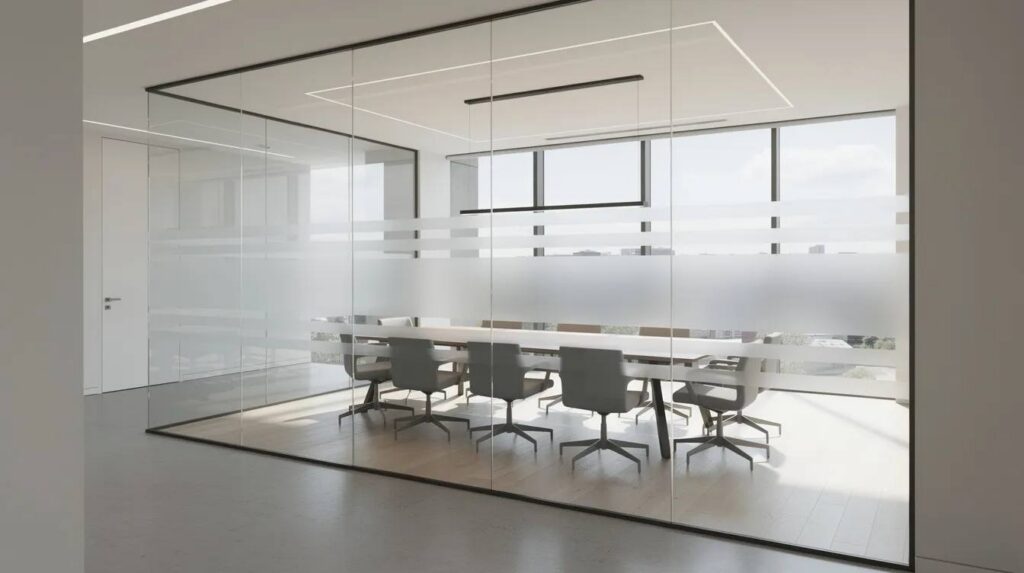
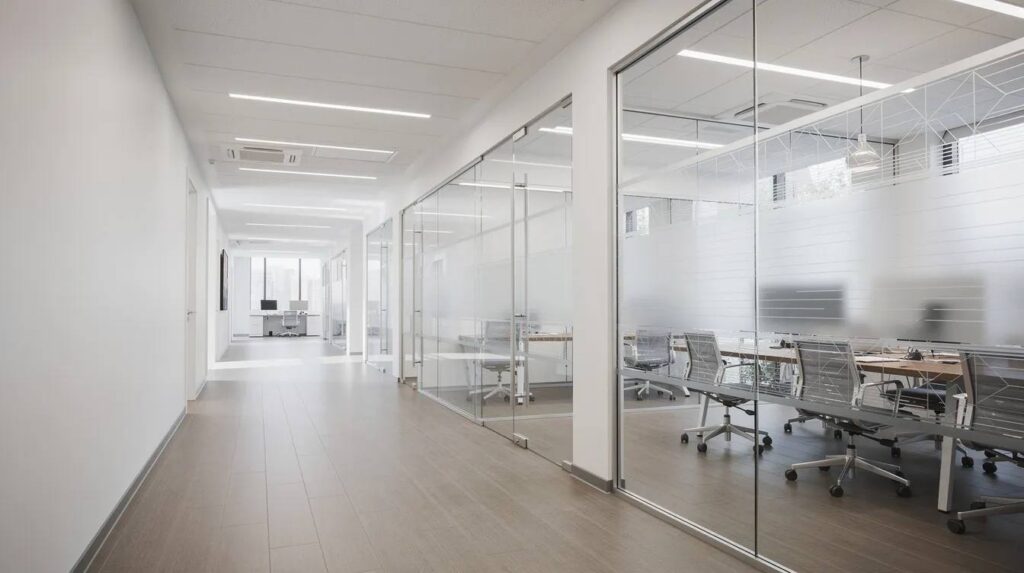
Conference rooms and glass-fronted offices often use banding at eye level (roughly 42 to 48 inches above the floor) to protect sensitive conversations while preserving the open feel of a modern office. Full-coverage opaque film on a door or partition panel is another popular approach for office partitions that need total visual separation.
Schools and universities use privacy films on counselor offices, testing rooms, and lab doors to shield students and staff. Similar solutions have been deployed at institutions across the Northeast, where counseling centers needed to block line-of-sight into session rooms without removing glass panels.
Healthcare and government facilities face strict rules about protecting patient and citizen information. Opaque film on exam room glass, intake windows, and records areas helps maintain compliance without structural changes. Retail, banks, and back-of-house areas use film to hide safes, inventory, break rooms, and stock from public view while keeping the storefront looking polished.
Types of Opaque and Privacy Window Films (Frosted, Matte White, Blackout & More)
“Opaque” is actually a spectrum. Some films offer a soft, milky diffusion. Others block every photon. Choosing the right type depends on how much light you want, how much privacy you need, and whether the space is occupied day and night.
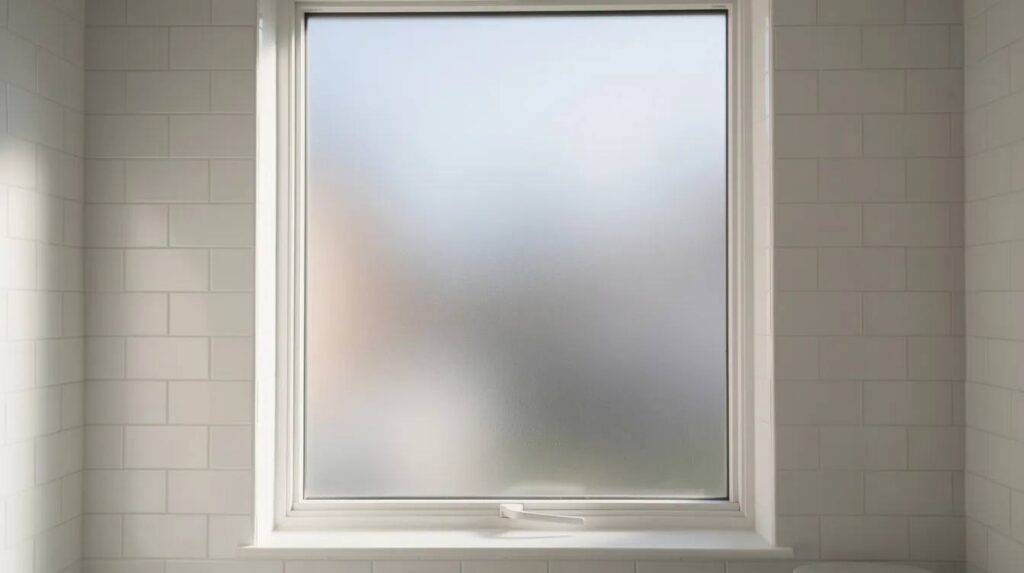
Frosted privacy window film creates a surface that scatters light, producing an effect visually similar to sandblasted glass at a much lower price. Frosted window film is a cost-effective alternative to sandblasted glass, and it provides 96% privacy protection while still letting a moderate-to-high percentage of visible light through. Frosted films can block up to 98% of UV rays, protect interiors from fading, and frosted window film is removable and reusable for easy updates when your space or style changes. These films are perfect for sidelites, internal partitions, and bathroom windows where you want privacy without giving up brightness.
Matte white opaque window film takes things a step further. It fully obscures the view in both directions while maintaining a light and bright interior. Matte White film transmits 66% of visible light, so rooms still feel airy and well-lit. UV rejection sits at about 99%. This type is commonly sold for entry doors, sidelites, conference rooms, and cabinetry where you want to cover and hide contents without a dark or heavy look. Opaque films are a cost-effective alternative to sandblasted glass and offer a clean, uniform appearance that works in virtually any setting.
Blackout and solid opaque films target near 0% visible light transmission. Blackout films provide total light blockage and are suitable for darkrooms, media rooms, server closets, and storage areas where you want complete darkness. Fully opaque films maximize privacy but block most natural light, so they are best reserved for spaces where daylight is not a priority. Note that dark, absorptive films generate more heat on the glass surface, so the correct glass type and interior application matter to avoid thermal stress.
Decorative and branded privacy films blend aesthetics with function. Decorative options for window films include patterns and custom designs for branding-everything from reeded glass textures to gradient fades to full-color logo panels. Reeded Glass Film offers a medium privacy level of 3/5, making it a stylish choice for spaces that need partial visual separation without full opacity. These are popular in offices, retail storefronts, and hospitality settings where the film doubles as a design element.
Window Film Depot supplies and installs a broad range of window glass film products and brands, including both adhesive and removable static-cling options depending on project needs. Some opaque window films can be easily applied without glue, making them a simple option for renters or temporary installations. Adhesive films are typically used for long-term commercial work where durability and edge sealing are critical. When matching film type to goals, consider whether you need full blackout versus filtered light versus subtle diffusion, and whether the space is occupied around the clock.
Performance, Durability & Building Code Considerations
Not all window films perform the same, and the material you choose will determine how long it lasts, how it looks over time, and whether it is safe for your glass type.
Premium architectural films installed on interior glass typically last 5 to 10 years or more. Scratch-resistant coatings, UV-stable adhesives, and color-stable polyester constructions from leading manufacturers help extend that lifespan. Correct surface prep during installation is equally important-any debris trapped under the film can cause premature failure.
When you review spec sheets, pay attention to these key metrics:
- Visible Light Transmission (VLT): The percentage of light that passes through. Lower VLT means darker film.
- UV Rejection: Most quality films block 99% or more of UV radiation.
- Solar Heat Gain Coefficient (SHGC): How much solar energy enters as heat. Lower is better in cooling climates.
- Reflectance: Affects appearance and whether the film creates a mirror effect.
Building code and glass compatibility deserve careful attention. Tempered glass handles thermal stress far better than annealed glass. Insulated glass units (IGUs) can be vulnerable to seal failure if a high-absorption film creates excessive temperature differentials between panes. Window Film Depot coordinates with architects and facility managers to match film selections to manufacturer glazing guidelines and local codes, avoiding risks that could void glass warranties.
On the sustainability side, some films contribute to LEED points through daylighting optimization and energy reduction. Films with recycled PET content are increasingly available for projects with environmental performance targets.
Installation Process: From Site Walk to Finished Glass
Professional window film installation is designed to be fast and low-disruption, even in occupied spaces like hospitals, schools, and multi-tenant offices. Most rooms can be completed without relocating furniture or shutting down operations for more than a few hours.
Here is how the typical Window Film Depot process works:
- Consultation and goals: Discuss privacy needs, day-and-night performance expectations, aesthetics, and budget.
- Site survey: Measure glass dimensions, identify glass type and any existing coatings, and note access challenges like height or security requirements.
- Product recommendation: Select the right film type, opacity level, and any decorative or branded elements based on survey findings.
- Scheduling and prep: Coordinate with building operations, post notices if needed, and protect flooring and furniture.
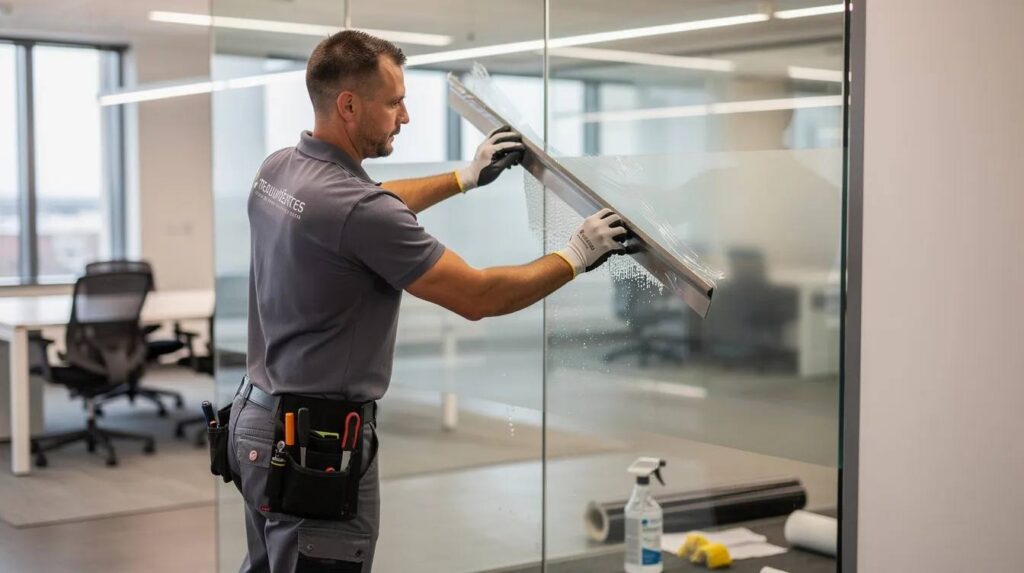
- Installation: Clean glass thoroughly, cut film to size, apply using a wet solution that allows repositioning, squeegee out bubbles and moisture, trim edges, and inspect every pane.
- Curing and aftercare: Minor haze or small bubbles may appear initially and typically dissipate within days to a few weeks as the adhesive cures. Use non-abrasive, ammonia-free cleaners going forward.
Many conference rooms, storefronts, and bathroom windows can be completed in a single day or over a weekend window. The process is super easy to schedule around business hours.
For small residential projects, renter-friendly static-cling films are a simple DIY option-just apply and trim. But large commercial projects benefit from professional installers from Window Film Depot who understand film-to-glass compatibility, carry proper lifts and safety equipment, and back the work with manufacturer warranties.
Cost, ROI & Project Planning for Opaque Window Films
Costs for opaque window film vary by film type, total square footage, access difficulty, and whether custom graphics are included. Applying window film is generally less expensive than replacing glass with etched or specialty glazing, often by a significant margin. A single bathroom door or entry sidelight is a modest-ticket purchase, while a full-building office privacy upgrade may be a phased capital project.
Return on investment comes in both soft and hard forms. On the soft side, you gain enhanced privacy, consistent brand image, improved staff comfort, and reduced visual distraction in glass-heavy open offices. On the hard side, you avoid the much higher price of re-glazing, extend the life of interior finishes by cutting UV exposure, and can achieve moderate energy savings when privacy films are paired with solar control films. One commercial demonstration project showed roughly 8.8% annual energy savings after installing performance window films, with a simple payback period under three years.
Planning tips that save money: bundle multiple areas-conference rooms, HR offices, restroom windows-into a single mobilization to reduce the per-square-foot cost. Coordinate with other renovations like painting or carpet replacement to avoid schedule conflicts and rework. When you are ready to get accurate pricing, share precise measurements, photos of the glass, and your performance goals with your installer for a fast, detailed quote.
Common Mistakes to Avoid When Choosing Privacy Window Film
Selecting the wrong film or installing it incorrectly can lead to poor privacy, glass damage, or premature failure. Here are the most common pitfalls and how to avoid them:
- Assuming all privacy films work day and night. Reflective films often lose their privacy effect after dark when interior lights are on and it is dark outside. If you need around-the-clock privacy, choose a matte white, frosted, or solid opaque film instead. Ask your installer to show you sample panels at different times of day before you buy.
- Choosing full blackout when natural light is needed. A darkroom film in a regularly occupied office or bedroom will leave occupants unhappy and drive up lighting costs. Match opacity to the room’s function-most spaces do better with a film that lets filtered light pass through.
- Ignoring glass type and size. Dark, absorptive films on large annealed glass panes or certain insulated glass units can cause thermal stress fractures or seal failure. Verify film-to-glass compatibility data from the manufacturer before you commit.
- DIY installation on large panes without proper tools. Trapped dirt, creases, visible seams, and sticky residue are common results. Small residential projects can be easy DIY jobs, but large commercial panes demand professional equipment and technique.
- Overlooking brand and warranty differences. Commodity films sold at a low price may lack UV stability, scratch resistance, and manufacturer-backed warranties against thermal stress or seal failure. Investing in professional-grade film from a trusted supplier protects your glass and your budget long-term.
Why Choose Window Film Depot for Opaque and Privacy Window Films?
Window Film Depot is a family-owned business founded in 1992 in Marietta, Georgia, with more than 30 years of experience in window film sales and professional installation. From single-location residential projects to complex, multi-site commercial rollouts across nationwide service locations, WFD delivers turnkey project management that keeps timelines tight and quality consistent.
What sets Window Film Depot apart is breadth and depth. The company carries a broad portfolio of high-performance films-including 3M solar control, security glazing, decorative privacy, and specialty opaque films-so you are never forced into a one-size-fits-all solution. WFD has deep experience in sensitive environments like schools, government buildings, and healthcare facilities, including off-hours installation and security protocols. In-house installation teams and vetted partners across North America ensure the same quality and warranty support regardless of where your project is located.
For glass and glazing trade partners, Window Film Depot also operates as a wholesale supplier of window film rolls shipped across the continent. And because WFD can integrate privacy films with cloaking film, security glazing upgrades, anti-graffiti film, and branded graphics, you can address multiple building performance needs in a single project rather than coordinating separate vendors.
FAQs About Opaque Window Film and Privacy Window Films
These are real questions facility managers, architects, and homeowners ask before specifying films for their spaces.
Will opaque window film give me privacy at night as well as during the day?
Yes. Unlike reflective films that depend on exterior brightness to work, fully opaque and matte white films block visibility from both sides regardless of lighting conditions. You get complete privacy whether it is midday or midnight.
Can I use frosted privacy window film on bathroom windows inside a shower?
You can, provided you choose a film rated for wet environments with an adhesive that seals tightly at the edges. Professional installation ensures water does not seep behind the film and cause it to peel. Static-cling films are generally not recommended for direct shower exposure.
Is window film renter-friendly and removable without damaging glass?
Static-cling films are specifically designed for this. They apply without adhesive, remove cleanly, and can even be reused if you move. Adhesive-based films are more durable but may require professional removal. Always confirm with your landlord before you install.
How long does opaque window film last before it needs to be replaced?
Premium architectural films on interior glass typically last 5 to 10 years or longer with proper care. Factors like direct sun exposure, humidity, and cleaning methods influence lifespan. Scratch-resistant and UV-stable coatings help extend service life.
Can I combine privacy film with security or solar control film on the same glass?
In many cases, yes. Window Film Depot regularly recommends layered or multi-function film solutions that address privacy, solar heat rejection, UV protection, and shatter resistance. The key is ensuring the combined films do not exceed the thermal stress tolerance of your glass, which is why a professional assessment is important.
How do I clean windows after privacy film has been installed?
Use a soft cloth or sponge with a mild, non-abrasive cleaner. Avoid ammonia-based products and abrasive pads, as these can scratch or cloud the film surface. After installation, wait for the film to fully cure-usually a few days to a couple of weeks-before cleaning.
Next Steps: Get Expert Help with Opaque Window Film Selection & Installation
Opaque and frosted privacy films are one of the fastest, most cost-effective ways to add privacy day and night to bathroom windows, conference rooms, classrooms, offices, and virtually any glass surface. They protect against harmful UV rays, reduce glare, enhance security, and deliver a clean, modern appearance-all without the disruption or expense of replacing your existing glass.
If you are ready to take the next step, contact Window Film Depot for a consultation or site survey. Share basic project details-your location, photos of the glass, approximate dimensions, and privacy goals-and the team will provide a fast, accurate quote. Whether you need a single residential door or a nationwide commercial rollout with local installers in markets like Dallas-Fort Worth, WFD has the expertise, the product range, and the installation network to get it done right.
Window film is a flexible part of any building performance and design upgrade strategy. The sooner you choose the right film, the sooner your space starts working harder for you.