Table of Contents:
- What a Commercial Window Tinting Service Should Actually Deliver at Scale
- The Full Spectrum of Commercial Film Options: Matching Technology to Project Requirements
- ROI and Payback Period: Data-Backed Calculations for Budget-Conscious Project Managers
- Project Logistics and Timeline Management for Large-Scale Commercial Installations
- Compliance and Building Code Requirements You Cannot Afford to Overlook
- How to Vet and Select a Commercial Window Tinting Service Partner for a Multi-Site Project
- Project Execution FAQs from Construction and Renovation Managers
- Conclusion: Selecting the Right Partner Is the Project Decision That Determines All the Others
- Frequently Asked Questions
What a Commercial Window Tinting Service Should Actually Deliver at Scale
Commercial Window Tinting Service selection is one of the most critical decisions in any large-scale building project, yet it is often treated as a simple line item. In reality, the right provider must deliver consistent installation quality, meet strict compliance requirements, and manage complex multi-site coordination without delays or rework. Choosing the wrong partner can create costly risks, while the right one ensures smooth execution and long-term performance
Reframing Window Film as a Project Management Decision, not a Commodity Line Item
Most procurement teams treat window film like janitorial supplies: they award the contract to the lowest qualified bidder, standardize the scope, and assume execution will follow.
That logic works for a single building. It breaks down completely across a 15-site corporate campus rollout or a 30-location retail expansion program.
The real decision you’re making when you select a commercial window tinting service isn’t which film performs best on a spec sheet. It’s whether the vendor’s operational infrastructure can hold quality, schedule, and compliance standards across every site simultaneously. Film performance is table stakes. Project management is the differentiator.
A manager who treats this as a commodity procurement and selects on unit price alone typically discovers the gap during execution: inconsistent installation quality between locations, no standardized documentation to satisfy the general contractor’s closeout requirements, and a service provider with no dedicated coordinator to escalate problems through.
The Hidden Risk: Why Vendors Who Perform on Pilot Locations Fail on 20-Site Rollouts
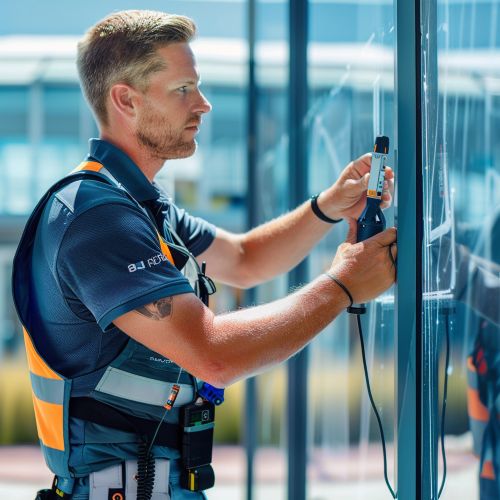
A regional installer can absolutely deliver a flawless pilot. One experienced crew, direct owner involvement, and a single site to focus on are conditions that favor quality. The failure mode appears when that same vendor attempts to replicate the pilot across 20 locations using subcontracted crews, inconsistent film inventory sourcing, and no centralized coordination layer.
The specific failure points are predictable:
- Subcontracted crews with no shared installation protocol produce visible variation in edge tolerances, film alignment, and surface prep quality.
- Inventory management breaks down when multiple sites need the same high-demand film SKU on overlapping schedules.
- Without a dedicated project coordinator, schedule slippage on one site cascades into downstream delays for subsequent locations.
- Compliance documentation, required for energy code sign-off or safety glazing certification, gets generated inconsistently or not at all.
None of these failures show up in the pilot. They only emerge at scale, when the vendor’s actual operational capacity is tested.
Defining the Deliverables: Film Performance, Installation Consistency, and Documentation Standards
A credentialed commercial window tinting service at enterprise scale should be contractually accountable for three distinct deliverable categories, not one.
Film performance means installers use the specified products as submitted: they install films with the correct total solar energy rejected (TSER) ratings, confirm visible light transmission (VLT) percentages, and document UV rejection values that match the energy compliance calculation submitted to the building authority.
Installation consistency means every location receives the same surface prep, the same application technique, and the same post-installation inspection process, regardless of which crew completes the work. This requires a written installation playbook and a QA checklist that travels with every crew.
Documentation standards mean the project produces a complete closeout package for each location, including film certifications, installation sign-off forms, warranty registration confirmation, and compliance documentation organized by site. General contractors and building owners increasingly require this, and vendors who cannot produce it create liability exposure for the manager who selected them.
What Commercial Window Tinting Is and What It Delivers for Your Business
Window film is a polyester-based laminate applied to the interior surface of commercial glazing. Depending on the product category, it achieves its performance through metallic layers, nano-ceramic particles, dyed substrates, or multi-ply safety constructions. The film modifies how the glass transmits, reflects, and absorbs solar energy, UV radiation, and visible light.
For commercial applications, the business case typically spans four categories:
- Energy cost reduction: High-performance solar films block a significant portion of solar heat gain, directly reducing cooling load. Buildings with substantial south- and west-facing glass commonly achieve meaningful reductions in annual HVAC energy consumption.
- Occupant comfort and productivity: Glare reduction improves screen visibility and reduces eye strain in office environments, a benefit that translates to measurable productivity improvements in workplace studies.
- Safety and security: Safety films hold broken glass in place, reducing injury risk. Blast-mitigation and forced-entry-resistant films address specific threat profiles in government, education, and high-security commercial facilities.
- UV protection: Most commercial films block 99 percent of UV-A and UV-B radiation, protecting interior furnishings, merchandise, and artwork from fading.
Need More Info?
The Window Film Depot team is happy to help.
The installation process itself is minimally disruptive when properly sequenced. A trained crew can complete a standard 10,000-square-foot office floor in one to two days, with no required building shutdown and a typical cure window of 30 days before the film reaches full adhesion.
The Full Spectrum of Commercial Film Options: Matching Technology to Project Requirements
Solar Control Films: TSER Ratings, VLT Percentages, and Energy Compliance
TSER and VLT are the two numbers that drive solar film specification decisions. TSER measures what percentage of incoming solar energy the film prevents from entering the building. VLT measures how much visible light passes through. The tension between them is the core engineering trade-off: higher TSER typically means lower VLT, and occupants notice when a building goes dark.
For ASHRAE 90.1 energy compliance in commercial renovation projects, the relevant metric is the Solar Heat Gain Coefficient (SHGC) of the combined glazing system after film installation. Most solar control films bring SHGC values down from the 0.60 to 0.70 range typical of uncoated commercial glass to 0.25 to 0.40, which satisfies prescriptive compliance thresholds in most climate zones.
For specification purposes, target TSER above 50 percent for south- and west-facing exposures in warm climates, and confirm that VLT stays above 40 percent if daylighting or occupant comfort is a design priority.
3M Prestige Series: Performance Metrics and Large-Portfolio Applicability
The 3M Prestige Series uses multi-layer optical film technology without metal content, which eliminates signal interference concerns for facilities with cellular repeaters or WiFi infrastructure. The Prestige 70 delivers 60 percent TSER while maintaining 70 percent VLT, making it one of the few products that satisfies aggressive energy targets without visible darkening. The Prestige 40 pushes TSER to 72 percent for maximum heat rejection where VLT reduction is acceptable.
For large portfolio projects, 3M’s authorized dealer network provides consistent product availability, warranty registration systems that support multi-site documentation, and a manufacturer backing structure that protects the building owner independently of installer continuity.
SolarGard and Johnson Window Films: Where They Fit in a Competitive Specification
SolarGard and Johnson Window Films both offer competitive solar control products and are commonly included in open specifications for commercial projects. SolarGard’s Ecolux and Neutral series provide comparable TSER performance and are frequently specified where the project requires a non-proprietary open bid process. Johnson’s products address similar performance tiers at competitive price points.
The practical consideration for large-scale projects is installer certification depth. Both brands have authorized installer networks, but the breadth of that network relative to your project geography should be verified before locking in a specification that could limit your vendor pool.
Security and Safety Films: Understanding the Distinctions That Matter for High-Risk Facilities
Security film is not a uniform product category. The performance gap between an entry-level safety film and a blast-mitigation system is significant, and specifying the wrong product for the threat profile creates liability exposure the project team may not recognize until an incident occurs.
Anti-Shatter Safety Film vs. Blast Mitigation Film
Anti-shatter safety film, typically 4 to 8 mil polyester, holds broken glass fragments in place after impact. It significantly reduces laceration injuries from accidental breakage or minor forced-entry attempts. This product is appropriate for general commercial applications, ground-floor retail perimeters, and interior glass partitions.
Blast mitigation film operates on a different engineering basis. Products in this category range from 8 to 14 mil, and manufacturers test them to GSA and DoD standards for explosive overpressure scenarios.
They require edge attachment systems, typically anchored to the window frame or structural wall, because the film must transfer load to the building structure rather than simply hold fragments. Specifying anti-shatter film where blast mitigation is required is a compliance and liability failure, not just a performance shortfall.

Custom Glass Security Systems: How Film Integrates with Structural Glazing Solutions
For perimeter security applications, film alone is rarely the complete solution. Attachment systems, wet-seal edge bonding, and in some cases combined film-and-interlayer configurations are required to achieve rated performance under IBC or GSA threat-level specifications. A qualified commercial window tinting service with security expertise will assess the existing glazing system, frame construction, and anchor capacity before recommending a film specification. Vendors who sell film without this structural assessment are not equipped for high-risk facility work.
Education and Government Facility Specifications: Why ANSI Z97.1 Compliance Is Non-Negotiable
ANSI Z97.1 is the safety glazing performance standard referenced in the IBC and IFC for glazing in hazardous locations: doors, sidelites, low-height windows, and areas with high human impact risk. When window film is applied to glazing in these locations, the combined system must retain certification. Applying an uncertified film to originally tempered or laminated glazing can eliminate the original safety classification and create a code violation.
Verified ANSI Z97.1 compliance requires film products with documented testing on representative glazing assemblies, not just generic safety claims. For education and government projects, require the film manufacturer’s test report and confirm the specific glazing type tested matches your project conditions.
Privacy, Decorative, and Specialty Films: Application Logic for Retail and Office Environments
Privacy and decorative films address a different set of project requirements than solar control or security products, but the specification logic follows the same principle: match the product to the use case, not to the broadest available option.
Frosted and opaque films are the standard solution for conference room glazing, private office sidelites, and retail storefronts that require daytime visibility control. Dual-reflective films provide one-way privacy during daylight hours by creating a mirror effect on the higher-illuminance side. At night, when interior lighting reverses the contrast, the privacy effect disappears. This is a condition many specifiers fail to communicate to building owners, and it should be addressed explicitly during scope review.
Decorative films, including printed graphics, patterned films, and architectural gradient designs, are increasingly used in commercial interiors as a cost-effective alternative to etched or patterned glass. For retail applications, they serve both branding and code compliance functions: OSHA requires manifestation on floor-to-ceiling glass panels to prevent pedestrian collision, and decorative film is a common, practical solution.

Comparing Major Commercial Film Brands: Performance and ROI
The performance gap between top-tier and mid-tier commercial film brands is real but often smaller than sales presentations suggest. The more significant differentiators are warranty structure, product consistency across manufacturing batches, and the depth of technical documentation available for compliance submissions.
Premium brands like 3M provide lifetime warranties for commercial applications backed by the manufacturer, with established claims processes and replacement programs. Mid-tier products may offer comparable initial TSER performance but carry shorter warranty terms, less robust documentation for code compliance, and less consistent color stability over time.
For multi-site portfolios, product consistency across manufacturing batches matters more than single-unit performance. A film that produces slightly different visible tint between an installation completed in Q1 and one completed in Q4 creates a visible inconsistency across your portfolio that is difficult to remedy after the fact.
ROI comparison across brands should be calculated on a total cost of ownership basis: installed cost, projected energy savings using location-specific utility rates and cooling degree days, expected film lifespan before replacement, and warranty claim probability based on manufacturer history.
Commercial Film Selection Matrix
The table below matches film category to project type, key performance benchmarks, compliance requirements, and appropriate product lines. Start with project type to identify relevant film categories, confirm the key performance specs align with your energy model or threat assessment, and verify compliance relevance against the applicable code jurisdiction for each site. Use the product line column as a specification starting point, not a closed list. Open specifications should reference performance thresholds rather than brand names to maintain competitive bid eligibility while protecting performance minimums.
| Film Category | Best-Fit Project Types | Key Performance Specs | Compliance Relevance | Representative Product Lines |
|---|---|---|---|---|
| Solar Control | Office, retail, healthcare, mixed-use | TSER: 45–75%, VLT: 35–70%, UV rejection: 99% | ASHRAE 90.1 SHGC thresholds, LEED EQ credits | 3M Prestige Series, 3M Night Vision Series |
| Safety (anti-shatter) | Retail perimeter, office interiors, schools | Mil thickness: 4–8 mil, fragment retention to ANSI Z97.1 | IBC hazardous location glazing, ANSI Z97.1 | 3M Safety Series S40, S70, S140 |
| Blast Mitigation | Government, military, high-security commercial | Mil thickness: 8–14 mil, tested to GSA/DoD overpressure standards | GSA TS01-2003, UFC 4-010-01, site-specific threat assessment | 3M Scotchshield Ultra Series |
| Privacy / Decorative | Office conference rooms, retail storefronts, hospitality | VLT: 0–50% (product-dependent), dual-reflective or opaque options | OSHA glazing manifestation requirements | 3M Fasara Series, 3M Dusted Crystal |
| Specialty (daytime privacy, low-E retrofit) | Healthcare, education, government | One-way visibility, low-E U-value improvement, glare control | ASHRAE 90.1 (low-E retrofit applications), ADA (glare reduction) | 3M Night Vision, 3M Thinsulate Climate Control |
ROI and Payback Period: Data-Backed Calculations for Budget-Conscious Project Managers
Energy Cost Reduction Benchmarks: What Commercial Film Realistically Delivers
Solar control film delivers measurable cooling load reduction, but actual savings vary enough by building and climate that any vendor quoting a single percentage without site-specific inputs deserves scrutiny. The realistic benchmark range for commercial buildings with significant south- and west-facing glazing is a 5 to 15 percent reduction in annual HVAC energy consumption. Buildings in high cooling-degree-day climates, such as Phoenix, Houston, and Miami, tend to land at the upper end. Buildings in temperate climates with modest solar exposure land at the lower end.
The mechanism is direct: high-performance solar film reduces solar heat gain through glass, which reduces the cooling load the HVAC system must offset. For a building consuming 20 kWh per square foot annually with glazing comprising 30 percent of the envelope, a 10 percent cooling load reduction can translate to meaningful avoided energy costs at current commercial utility rates. On a 100,000-square-foot building, that savings potential compounds significantly before any demand charge reduction is factored in.

Illustrative Payback Model: Applying 3 to 7 Year Timelines Across a Multi-Site Portfolio
A straightforward payback calculation for a mid-size commercial office building illustrates the value at scale. Assume 40,000 square feet of gross floor area, 8,000 square feet of west-facing glazing, and an installed film cost of $8 to $12 per square foot for a 3M Prestige-class product. Total installed cost for that glazing footprint falls in the range of $64,000 to $96,000.
At an estimated $20,000 per year in realized energy savings, simple payback falls between 3.2 and 4.8 years. For buildings in hotter climates with higher utility rates, a 3-year payback is achievable. For temperate climate locations with lower cooling loads, the realistic range extends to 6 or 7 years.
Across a 15-site portfolio, the aggregate math becomes significant: a $1 to $1.5 million total installation investment against substantial annual energy savings produces portfolio-level payback in the same 3 to 7 year window. With film lifespans of 15 to 20 years, the long tail of savings after payback makes a compelling case for capital budgeting models that include NPV analysis.
Occupant Productivity, Glare Reduction, and the Comfort Dividend
Glare is a productivity cost that most energy ROI models ignore entirely. Workplaces where occupants are managing screen glare from unfiltered windows see measurable reductions in task performance, and the cumulative cost of that lost productivity can exceed the annual energy savings the film provides. Research on office environment factors consistently shows that optimized lighting conditions, including glare reduction, correlate with improvements in worker output.
For open-plan offices with east or west exposure, high-VLT solar control film that maintains 50 to 70 percent visible light transmission while cutting a significant share of solar heat gain addresses both metrics simultaneously. Occupants retain daylight quality while glare is controlled. This is the practical case for specifying a premium product like the 3M Prestige 70 over an aggressive low-VLT alternative that maximizes TSER at the cost of a noticeably darker interior.

How Much Does Commercial Window Tinting Cost?
Installed commercial window film costs range from $5 to $15 per square foot depending on film category, glazing accessibility, and building complexity. Entry-level solar films sit at the low end, multi-layer security or blast-mitigation systems at the high end, and premium solar control products occupy the $8 to $12 range.
For multi-site portfolios, the relevant pricing structure is not per-square-foot unit cost. It is total program pricing. Enterprise commercial window film installation providers structure large portfolio engagements with program-level pricing that reflects mobilization efficiencies, dedicated coordinator overhead, and volume purchasing. A unit cost reduction relative to single-location pricing is achievable when the program exceeds 10 sites with consistent specifications, but that discount is only real if the vendor has the operational infrastructure to execute at that scale. Without it, the savings disappear in change orders and remediation costs.
Project Logistics and Timeline Management for Large-Scale Commercial Installations
How Long Does Commercial Window Film Installation Take Across Multiple Locations?
A trained two-person crew installs roughly 500 to 1,000 square feet of commercial film per day, depending on glazing complexity, access conditions, and film type. A standard 10,000-square-foot office floor takes one to two days. A full-building installation on a 100,000-square-foot mid-rise takes two to three weeks with a single crew, or can be compressed with parallel crews operating on multiple floors simultaneously.
For a 15-site portfolio with an average of 8,000 square feet of glazing per location, total installation volume is 120,000 square feet. A national large-scale window tinting contractor deploying multiple crews in parallel across regions can complete that program in 8 to 12 weeks. A single regional crew working sequentially would take significantly longer, a timeline that creates real schedule risk for renovation programs with hard completion dates tied to tenant occupancy or construction closeout milestones.
Multi-Location Coordination: Phased Scheduling, Sequencing, and Tenant Disruption Protocols
Sequencing a multi-site installation program requires more than a Gantt chart. Each location has its own access constraints: occupied tenant floors, loading dock availability, elevator reservation requirements, after-hours restrictions, and local permitting timelines. A vendor who cannot accommodate these constraints at the site level, within a coordinated program schedule, will create disruption that puts them in breach of the general contractor’s site access protocols.
The standard approach for occupied commercial buildings is phased installation by floor or zone, scheduled during off-peak hours or over weekends where tenant agreements require it. For retail locations, installations typically occur before store opening or during closed periods. The project coordinator’s role is to map these constraints across all sites simultaneously and build a master schedule that absorbs them without compressing installation quality.

What an Enterprise Installer’s Project Management Infrastructure Actually Looks Like
Dedicated Project Coordinators: Role, Accountability, and Communication Cadence
A dedicated project coordinator is not a customer service contact who answers questions after problems occur. The role is a proactive scheduling and quality accountability function assigned to your program from kickoff through final closeout. That coordinator owns the master schedule, manages crew deployment logistics, tracks per-site documentation completion, and serves as the single escalation point for the general contractor and building owner.
Communication cadence should be defined contractually: weekly program status reports, 48-hour advance notification for each site mobilization, and same-day issue reporting when field conditions change. Without this structure, a manager overseeing 15 sites is dependent on ad-hoc calls to get status, which is not a scalable model.
Standardized Installation Playbooks: Replicating Pilot-Location Quality Across Every Site
The pilot location succeeds because experienced people are paying close attention. The playbook is how that attention gets replicated across every subsequent site. A written installation protocol covers surface preparation standards, film handling and cutting requirements, application technique and tool specifications, edge tolerance standards, and post-installation inspection criteria. Every crew on every site works from the same document.
Vendors without a written playbook are relying on individual crew judgment, which produces the visible quality variation that generates punch-list problems at closeout.
Quality Assurance Documentation: Inspection Checklists, Sign-Off Protocols, and Punch-List Management
QA documentation is the paper trail that protects the project manager when a general contractor’s closeout auditor reviews the work. Each site should produce an installation record that includes the film product and lot number installed, square footage completed by zone, crew certification verification, post-installation inspection checklist results, and a signed site acceptance form. Warranty registration for each location should be submitted to the manufacturer before the crew demobilizes, not at the end of the program.
Punch-list management for film installations is straightforward when the inspection process is rigorous. Bubbles, contamination, edge lifting, and alignment defects are identified at installation and remediated before sign-off, not flagged six months later during a building systems audit.
Can a Single National Installer Handle Coordination Across 15 or More Sites Without Quality Degradation?
Yes, but only if the installer’s operational model is actually built for it. The differentiator is not crew count or geographic coverage. It is whether the company has invested in the coordinator layer, documentation infrastructure, and standardized training systems that prevent quality drift as the program scales. A regional installer who has expanded into multi-state work by adding subcontractors without adding operational structure is not a national installer. It is a regional installer with a larger geographic footprint and the same single-point-of-failure coordination model.
Ask any prospective vendor for references on programs of comparable scope. Not testimonials but contact information for the general contractor or construction manager on a 10-plus-site program they completed in the past 24 months. The answer to that request tells you more than any capability presentation.
Compliance and Building Code Requirements You Cannot Afford to Overlook
ASHRAE 90.1 Energy Standards: What Project Managers Need to Specify and Verify
ASHRAE 90.1 is the energy efficiency standard adopted by reference in the International Energy Conservation Code and enforced in most U.S. jurisdictions. For commercial renovation projects that modify the building envelope, including commercial window film installations that materially alter the SHGC of existing glazing, compliance with the prescriptive fenestration requirements in Table 5.5 is typically required.
The specific obligation varies by jurisdiction and project type, but the practical implication is this: if you are installing solar control film to achieve energy code compliance as part of a renovation, the film specification must demonstrate that the post-installation SHGC meets the threshold for your climate zone and building type. That demonstration requires a manufacturer-documented SHGC value for the film-plus-glazing assembly, not just the film alone. Require this documentation from the installer before specification finalization, not after the work is complete.
ANSI Z97.1 Safety Glazing Standards and Their Relevance to Film Selection
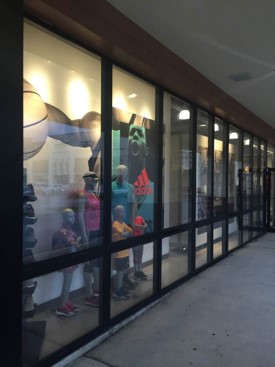
When the same building type, such as a retail storefront with floor-to-ceiling glazing at the entry, repeats across 20 locations, a single specification error on the safety glazing requirement replicates across every site. The exposure is not one code violation. It is 20.
Verify that the film product specified for any hazardous location has been tested on glazing assemblies that match your actual conditions: same glass type, thickness, and framing configuration.
Generic safety film certifications that do not document the specific test assembly do not satisfy the building official’s requirement, and they should not satisfy yours.
State-Level Building Code Variances: Managing Compliance Across a Distributed Portfolio
California, Florida, Texas, and New York each have energy code amendments that modify ASHRAE 90.1 baseline requirements, and several states have adopted more recent IECC cycles than the national baseline. For a portfolio that spans multiple states, compliance cannot be managed with a single specification. Each state’s adopted code cycle, climate zone assignment, and fenestration requirements must be verified independently.
The practical workflow is to map each site by state, identify the applicable code cycle and climate zone, pull the prescriptive SHGC limit for the glazing type, and confirm the specified film meets or exceeds it. A national commercial window tinting service partner with compliance documentation experience should be able to support this mapping process, but the verification responsibility rests with the project manager, not the installer.
Is Commercial Window Tinting Legal? Compliance Documentation You Should Always Require
Window film is legal in all U.S. commercial building applications when installed in accordance with applicable building codes and manufacturer specifications. There are no federal restrictions on commercial window film. State and local code requirements govern the performance thresholds the installed system must meet, not the use of film itself.
The compliance documentation package you should require at project closeout for each site includes:
- Manufacturer’s product data sheet confirming SHGC, VLT, and TSER values for the installed film
- Test report confirming ANSI Z97.1 compliance for any safety glazing application, with the specific test assembly documented
- Energy compliance calculation or prescriptive compliance form showing post-installation SHGC against the applicable code threshold
- Warranty registration confirmation from the manufacturer for each location
- Signed installation acceptance form with crew certification verification
This package is the minimum a diligent project manager should hold before releasing final payment to the installer. It is also the document set a building owner will need if a code compliance question arises during a future sale, refinancing, or tenant audit.
How to Vet and Select a Commercial Window Tinting Service Partner for a Multi-Site Project
The Vendor Qualification Framework: Credentials, Insurance, and Manufacturer Partnership Tiers
Credentials separate vendors who can execute a single-location project from those who can execute a program. The minimum credential threshold for a multi-site commercial window tinting service engagement includes general liability coverage of at least $2 million per occurrence, workers’ compensation for all installation personnel, and verified manufacturer certification at the authorized dealer or preferred installer tier.
Manufacturer partnership tiers matter because they determine more than product access. A 3M Authorized Dealer, for example, receives training on current installation standards, access to manufacturer technical support during complex installs, and the ability to register warranties directly with the manufacturer on behalf of the building owner. An uncertified installer purchasing product through distribution does not have the same support structure, and the building owner’s warranty protection reflects that gap.
Confirm insurance certificates name your organization as an additional insured. Require manufacturer certification documentation in writing, not just a logo on a website. These are go/no-go requirements, not differentiators.
How to Qualify a Window Tinting Vendor for a Multi-Location Deployment
The qualifying conversation for a multi-site program should happen before pricing discussions, not after. Three questions reveal operational capacity rather than sales capability.
First: provide two or three references from general contractors or construction managers on programs of 10 or more sites completed in the past 24 months. Not client testimonials. Contact names at the GC level who can speak to schedule adherence and documentation quality. Second: describe the project coordinator structure for a program of this scope. Who is assigned, what is their accountability, and what does the weekly reporting cadence look like? Third: walk through your quality assurance process for a site where field conditions differ from what was scoped. How is that documented, escalated, and resolved?
Vendors who answer the first question with single-location references, the second with “we’ll assign someone,” and the third with a vague process description are telling you what you need to know.
Warranty Structure Transparency: Manufacturer Coverage vs. Installer Coverage
Most commercial window film installations carry two distinct warranties, and most vendors present them as one. Understanding the difference protects you when a claim arises years after project closeout.
The manufacturer warranty covers product defects: delamination, adhesive failure, excessive color shift, and loss of performance characteristics. For 3M commercial products, this warranty is typically lifetime for film performance and is registered by the authorized dealer on the building owner’s behalf. It survives changes in the installer relationship.
The installer warranty covers workmanship: edge lifting, contamination, bubbling, and alignment defects attributable to the installation process rather than the product itself. Installer warranties vary widely, ranging from one to ten years depending on the provider, and they are only as durable as the company behind them. If a regional installer dissolves or gets acquired two years into a seven-year installer warranty, the building owner loses any recourse for workmanship claims.
For multi-site programs, you must document both warranty types per site, obtain manufacturer registration confirmation for each location before final payment, and ensure the installer applies identical warranty terms across all sites in the program.
What Warranty and Ongoing Support Can an Enterprise Provider Guarantee Across All Sites?
An enterprise-grade commercial window tinting service provider should offer program-level warranty administration, not just individual site documentation. You must assign a single point of contact to handle warranty claims across all locations, define a response time for site assessments when a claim is submitted, and enforce a replacement protocol that matches the original film specification regardless of when the claim occurs.
Ongoing support also includes change-order management for sites added to the program after initial rollout, replacement film availability for locations damaged by renovation or casualty events, and compliance documentation retrieval if a building authority or insurance auditor requests records years after installation. Ask prospective vendors how they handle each of these scenarios. The answers reveal whether their support model is built for a long-term portfolio relationship or a transactional project closeout.
Vendor Qualification Checklist
Before advancing any vendor to final selection on a multi-site program, confirm all five criteria are satisfied.
- National project portfolio evidence: References from a GC or construction manager on a completed 10-plus-site program within the past 24 months, with direct contact information.
- Dedicated coordinator assignment: A named coordinator with defined accountability, not a shared customer service queue.
- Standardized QA documentation: Written inspection checklists and signed site acceptance forms that travel with every crew on every site.
- Manufacturer-tier certification: Verified authorized dealer or preferred installer status with at least one major film manufacturer, confirmed in writing.
- Warranty parity across all sites: Identical installer warranty terms for every location in the program, plus manufacturer warranty registration completed per site before final payment.
Any “no” on this list is a disqualification, not a negotiation point.
Project Execution FAQs from Construction and Renovation Managers
How Do You Prevent Scope Creep and Schedule Slippage Across a Distributed Installation Program?
Three sources typically drive scope creep in film programs: field teams discover glazing conditions that differ from the original survey, teams miss tenant access restrictions during site qualification, and stakeholders introduce substitution requests after locking the specification.
Prevent all three by having the installer’s own personnel complete a pre-installation site survey based on direct observation, not drawings, before you build the master schedule. Lock the film specification in the contract before mobilization begins, with a formal change order process required for any deviation. Require 48-hour advance access confirmation from each site contact before crew mobilization. When field conditions change, same-day reporting to the project coordinator prevents a one-site problem from creating a cascading schedule impact across the program.
What Should Be Included in a Commercial Window Film Specification Document?
A complete window film specification document includes:
- Film product designation by manufacturer and series, with performance values (TSER, VLT, UV rejection, SHGC) documented per product
- Applicable glazing types and locations, including any exclusions
- Installation standards reference pointing to the manufacturer’s published installation guidelines
- QA inspection criteria and acceptance thresholds
- Compliance documentation requirements, including ASHRAE 90.1 SHGC confirmation and ANSI Z97.1 test reports where applicable
- Warranty requirements for both manufacturer and installer coverage
- Closeout documentation package requirements by site

An open specification references performance thresholds rather than brand names to preserve competitive bid eligibility, but should be tight enough on performance minimums that substitutions cannot silently reduce the installed system’s compliance or durability.
How Does Window Film Interact with Existing Glazing Warranties on New Construction?
This is the question that catches new-construction project managers off guard most often. Most insulating glass unit (IGU) manufacturers include film application restrictions in their glazing warranties. Applying window film to IGUs without verifying those restrictions can void the glass warranty, which typically covers seal failure and argon gas retention for 10 to 20 years.
The resolution is straightforward but requires advance planning. Before specifying film on new construction glazing, request the IGU manufacturer’s film application policy. Most major manufacturers maintain approved film lists or establish acceptable heat absorption limits. 3M’s technical team can provide glazing compatibility calculations for specific IGU configurations, which can be submitted to the glazing manufacturer for pre-approval. Document that approval before the film is installed and retain it in the project file. A film application that voids a substantial glazing warranty is not a cost-saving measure.
Conclusion: Selecting the Right Partner Is the Project Decision That Determines All the Others
Why Film Specs Alone Cannot Protect a Multi-Site Budget or Schedule
A film that delivers strong TSER performance but is installed inconsistently across 20 locations is not a high-performance solution. It is a quality problem with a strong spec sheet. The product specification is the starting point of a multi-site project, not the guarantee of its outcome. What protects the budget and the schedule is the operational infrastructure of the commercial window tinting service you choose to execute it.
The Attributes That Separate an Enterprise-Grade Provider from a Regional Subcontractor
The gap is specific and measurable. An enterprise-grade provider brings a dedicated coordinator structure, a written installation playbook that produces consistent results across crews and geographies, per-site QA documentation that satisfies GC closeout requirements, compliance mapping across multiple state code jurisdictions, and warranty administration that covers the full portfolio under identical terms. A regional subcontractor, regardless of installation quality, brings none of those systems at scale. It brings individual expertise, which is not the same thing.
That distinction matters because when a program spans 15 sites and six months of rolling mobilization, individual expertise cannot be in 15 places at once. Systems can.
Next Step: Requesting a Multi-Site Project Assessment from Window Film Depot
Window Film Depot operates as a national commercial window tinting service provider with documented multi-site project management infrastructure, 3M authorization, and a project coordinator model built for enterprise-scale rollouts. If you are managing a program of five or more locations, the appropriate starting point is a multi-site project assessment, not a per-square-foot quote.
Use that assessment to map your glazing inventory by site, identify applicable compliance requirements by jurisdiction, confirm film specification options against your energy and security objectives, and define a program-level scope with clear coordinator accountability before signing any contract. Request that assessment to establish whether Window Film Depot’s operational capacity matches your program requirements. The answer to that question is the one that determines everything else.
Frequently Asked Questions
What is commercial window tinting and what are its primary business benefits?
Commercial window tinting is the application of a polyester-based film to the interior surface of building glazing, engineered to control how the glass transmits solar heat, UV radiation, and visible light. For businesses, the primary benefits are reduced HVAC energy costs through lower solar heat gain, improved occupant comfort through glare reduction, enhanced safety by holding broken glass in place, and UV protection that slows the degradation of interior furnishings and merchandise. The right film category depends on the building type, climate, and specific performance objectives for each location.
How much does commercial window tinting cost, and what pricing models do national vs. local providers offer?
Installed commercial window film typically costs between $5 and $15 per square foot, with entry-level solar control films at the lower end and multi-ply security or blast-mitigation systems at the upper end. Premium solar control products like 3M commercial window film generally fall in the $8 to $12 per square foot range. Local providers typically price on a per-square-foot basis for individual locations, while national commercial window film installation providers structure large portfolio engagements with program-level pricing that reflects volume purchasing, mobilization efficiencies, and dedicated coordinator overhead. For programs exceeding 10 sites, program-level pricing typically produces a meaningful reduction compared to treating each location as a standalone project.
Is commercial window tinting legal, and what compliance standards apply?
Commercial window film is legal throughout the United States for commercial building applications when installed in accordance with applicable building codes and manufacturer specifications. There are no federal restrictions on its use. The relevant compliance standards are determined at the state and local level. ASHRAE 90.1 governs energy performance requirements for fenestration in commercial renovation projects, requiring the post-installation SHGC of the glazing assembly to meet prescribed thresholds by climate zone. ANSI Z97.1 applies to safety glazing in hazardous locations, and any film installed in those areas must retain the assembly’s safety certification. Requiring complete compliance documentation at project closeout for every site is the most effective way to manage this obligation across a distributed portfolio.
How long does commercial window film installation take across multiple locations?
A trained two-person crew typically installs 500 to 1,000 square feet per day, meaning a 10,000-square-foot office floor takes one to two days and a full mid-rise can take two to three weeks with a single crew. For a 15-site portfolio averaging 8,000 square feet of glazing per location, a national large-scale window tinting contractor deploying parallel crews across regions can realistically complete the program in 8 to 12 weeks. A single regional crew working sequentially would require several months, a timeline that introduces real risk for renovation programs with hard completion deadlines tied to tenant occupancy or construction closeout.
What warranty and ongoing support can an enterprise window tinting provider guarantee across all sites?
Enterprise-grade commercial window film installation providers should offer two distinct warranties: a manufacturer warranty covering product defects such as delamination and adhesive failure, and an installer warranty covering workmanship issues like edge lifting and contamination. For 3M commercial products installed by an authorized dealer, the manufacturer warranty is typically lifetime and is registered per site on behalf of the building owner. On multi-site programs, require identical installer warranty terms across all locations, per-site manufacturer registration confirmation before final payment, and a single point of contact for warranty claims across the entire portfolio. The ability to retrieve compliance documentation years after installation is also a reasonable expectation from a program-level partner.
Can a single national installer handle coordination across 15 or more sites without quality degradation?
Yes, but only if the company’s operational model is genuinely built for it. The differentiating factors are not crew count or geographic reach. They are the presence of a dedicated coordinator layer, a written installation playbook applied consistently across all crews, and documentation systems that produce a complete, auditable record for each site. A regional installer who has expanded geographically by adding subcontractors without adding operational infrastructure cannot deliver consistent quality at that scale, regardless of how the pilot location performed. Before committing to a multi-site program, request direct references from a general contractor or construction manager on a comparable program completed within the past 24 months. That reference check is the most reliable indicator of whether an installer’s national capability is real or simply claimed.