Table of Contents:
- Understanding Day and Night Privacy
- The Solution: Achieving One Way Window Film Day and Night Privacy
- Specifying Dual-Reflective Film for Your Project
- Practical Application: A Commercial Office Scenario
- Conclusion: Preventing Rework with the Right Specification
- Frequently Asked Questions
- Related Posts from Window Film Depot
Understanding Day and Night Privacy
Specifying reflective window film for privacy seems straightforward, but it’s a critical decision point where projects can fail if the underlying technology is misunderstood. When a client requests 24/7 privacy, reaching for a standard “one-way mirror” film is one of the most common and costly specification errors. The film that performs perfectly during the day can become a significant liability after sunset, leading to client complaints and expensive rework.
Debunking the “One-Way Mirror” Misconception
The term “one-way mirror” film (also read about one way glass) is a commercial misnomer that creates a fundamental misunderstanding of how the product works. No such thing as a truly one-way transparent material exists. These films are more accurately described as highly reflective. Their “one-way” effect is not an intrinsic property but is entirely dependent on the light conditions on either side of the glass.
The privacy effect is achieved when one side of the glass is significantly brighter than the other. The film’s reflective surface mirrors the brighter environment, preventing visual intrusion. This is why it works so effectively during the daytime when the sunlit exterior is far brighter than the building’s interior. However, this dependency on light is also its critical, unalterable limitation.
The “Reverse Fishbowl” Effect: How Standard Film Fails After Dark
The problem arises when the sun goes down and interior lights turn on. The light conditions that created daytime privacy are now completely reversed. The inside of the room becomes the brightly lit environment, and the outside is dark.
As a result, the film does exactly what it is designed to do, it reflects the brighter side. The film’s mirrored effect flips, turning the interior of the window into a mirror for the occupants.
Simultaneously, anyone on the outside can see in with perfect clarity. This phenomenon is often called the “reverse fishbowl” effect, and it completely negates the client’s privacy and security objectives. Instead of a shield, the window becomes a brightly lit stage, exposing the very space it was meant to protect.
For a project manager, this failure translates directly into tangible costs that can jeopardize project profitability and client relationships. The consequences typically include:

- Financial Costs: This involves the expense of removing the incorrect film, a labor-intensive process, and the cost of purchasing and installing the correct material. You are effectively paying for the same scope of work twice.
- Project Delays: The rework process introduces unplanned delays to your project schedule, impacting other trades and pushing back the completion date.
- Client Dissatisfaction: A client who feels their privacy has been compromised loses confidence. This erodes trust and can lead to difficult conversations, withheld payments, and a refusal to sign off on the project.
- Reputational Damage: Word of a failed installation can damage your firm’s reputation as a competent partner, potentially costing you future bids.
The Science of Privacy: Why Light Differentials are Key
To prevent this costly scenario, it is essential to understand the physics that govern window film performance. A firm grasp of these concepts empowers you to guide your clients and specify the right solution from the start.
The foundational principle is simple: standard reflective films create a mirror effect on whichever side is brighter. During the day, the exterior is almost always illuminated by sunlight to a far greater degree than the interior. This predictable condition allows standard films to provide excellent daytime privacy.
This relationship between interior and exterior brightness is known as the light differential. For the “one-way mirror” effect to function, industry standards suggest a light differential ratio of at least 3:1, where the “public” side is three times brighter than the “private” side. At night, this light differential is inverted. With interior lights on and a dark exterior, the ratio may become 1:10, making the interior transparent to the outside world.
Every privacy window film has a Visible Light Transmission (VLT) rating, which measures how much visible light passes through the filmed glass. A film with a low VLT, such as 15%, is darker and more reflective. While a low VLT enhances daytime privacy, it does not solve the nighttime problem. A dark, highly reflective film will simply create a stronger, more pronounced mirror effect on the inside at night when the light differential reverses. Standard sputtered film and other reflective films are passive products. They are physically incapable of overcoming a reversed light differential.
The Solution: Achieving One Way Window Film Day and Night Privacy
Where standard reflective films fail, advanced dual-reflective technology provides a reliable and technically sound solution. Relying on this engineered approach is the critical difference between a successful project and one that requires costly rework.
What is Dual Reflective Window Film?
Dual-reflective film is a specialized window film engineered with two distinct surfaces, each with a different level of reflectivity. The exterior-facing surface is highly reflective to provide superior privacy during the day. The interior-facing surface has a much lower, controlled level of reflectivity. This construction directly solves the nighttime reversal problem inherent in standard films.
During the day, the highly reflective exterior surface creates a mirror effect for anyone looking in. At night, its engineering proves its value. When interior lights are on, the low-reflectivity interior surface prevents the glass from turning into a mirror for occupants inside. While the exterior is no longer a perfect mirror, its higher reflectivity compared to the interior surface helps obscure the view in, maintaining a functional level of privacy that standard films cannot offer. This allows occupants to see out, preserving their connection to the exterior environment.
Beyond 24 Hour Privacy: Additional Benefits
A key deliverable for any window-centric project is the preservation of views. The low-reflectivity interior of a dual-reflective film is fundamental to achieving this, especially at night. It mitigates the disorienting “wall of mirrors” effect that occupants experience with standard films after sunset. The less metallic interior finish also provides a warmer, more natural aesthetic.
While solving the privacy challenge is its primary function, these advanced films deliver multiple performance benefits that add significant value:
- Superior Solar Heat Rejection: The reflective exterior is highly effective at rejecting solar heat, which can lower cooling costs.
- Exceptional Glare Control: By reducing visible light, these films cut harsh glare on computer screens and reduce eye strain.
- UV Radiation Blockage: Dual-reflective technology blocks over 99% of harmful ultraviolet (UV) rays, protecting interior furnishings, flooring, and artwork from fading.
- Enhanced Exterior Aesthetics: The uniform, reflective appearance can modernize a building’s facade and hide visual clutter from mismatched window treatments.
Specifying Dual-Reflective Film for Your Project
Selecting the right dual-reflective film requires a clear understanding of its performance data. Knowing how to read a spec sheet is essential for matching the product to the project’s specific goals.
When evaluating a film, focus on the delta between the interior and exterior reflectivity values. A large difference confirms the film is engineered for this specific application. Look for these key metrics on the manufacturer’s data sheet:
- Visible Light Transmitted (VLT): The percentage of visible light passing through.
- Exterior Visible Light Reflection: The percentage of light reflected by the exterior surface.
- Interior Visible Light Reflection: The percentage of light reflected by the interior surface.
- Solar Heat Gain Coefficient (SHGC): The fraction of solar energy transmitted. A lower number indicates better heat rejection.
These metrics exist in a delicate balance. A darker film (lower VLT) will offer more privacy but reduce natural light. The key is to discuss these trade-offs with the client. For a boardroom where confidentiality is paramount, a lower VLT may be ideal. For a living room with a prized nighttime view, the primary goal will be the lowest possible interior reflectivity. Read more about non reflective glass film here.
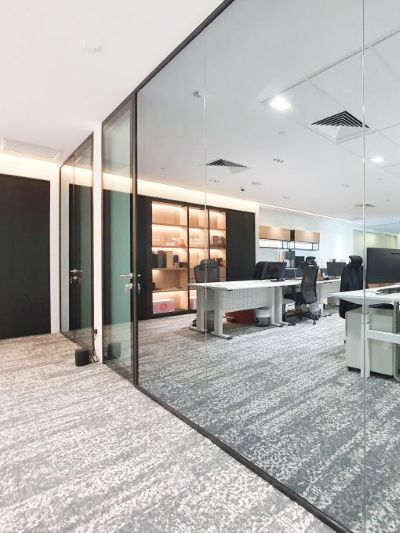
Practical Application: A Commercial Office Scenario
Let’s walk through a common commercial scenario to demonstrate how to translate a client’s request into a precise technical solution.
The Challenge: Ground-Floor Office Suite
A company is leasing a new ground-floor office suite with large, street-facing windows. The client plans to use the area for executive offices and a conference room. The project brief requires:
- Daytime Privacy: Prevent pedestrians from looking into the offices.
- Nighttime Security: Obscure the view into the lit conference room during evening meetings.
- Maintain Views: Employees must be able to see out clearly, day and night.
- Energy Efficiency: Reduce solar heat gain and glare.
This scenario presents a classic challenge. The need for privacy and security when the interior is brighter than the exterior is the critical factor.
Evaluating Film Options and Presenting the Solution
A methodical approach ensures the selected product is fit for purpose.
- Option 1: Standard Reflective Film (The Error): This cost-effective choice would address daytime privacy and heat gain. However, it completely fails the nighttime security and view criteria. At night, it would create a “reverse fishbowl,” leading to immediate client dissatisfaction.
- Option 2: 3M Night Vision Series (The Solution): A product from the 3M Night Vision line is the correct technical solution. This dual-reflective film provides high exterior reflectivity for daytime privacy and heat rejection. Crucially, its low interior reflectivity minimizes the nighttime reversal. Employees can still see out clearly after dark, and interior privacy is greatly enhanced.
Justifying the Specification to Your Client
When presenting your recommendation for a dual-reflective film like 3M Night Vision, frame the discussion around performance and risk avoidance, not just price.
- Solves the Core Problem: Emphasize that this technology is specifically designed to solve the nighttime privacy reversal issue.
- Prevents Project Failure: Position the choice as a risk mitigation strategy. The “cheaper” alternative would fail to meet the client’s needs, resulting in rework.
- Protects Usability: Highlight the benefit of maintaining clear views out at night, which improves the work environment.
- Delivers Added Value: Remind stakeholders of the comprehensive benefits, including superior solar energy rejection, glare reduction, and UV protection.
By justifying the specification based on total performance, you reinforce your role as a trusted partner committed to the project’s long-term success.
Conclusion: Preventing Rework with the Right Specification
When a client’s primary requirement is 24/7 privacy, selecting a standard reflective film is a costly specification error. By understanding the principles of light differential and leveraging the correct dual-reflective technology, you can prevent this outcome and deliver a successful project.
- The Light Differential is Key: All reflective films function based on which side is brighter. This is why standard films work during the day but fail at night.
- The Reversal Effect is Physics: A standard film reversing its privacy effect at night is a predictable scientific outcome, not a product defect.
- Dual-Reflective Technology is the Solution: For true one way window film day and night privacy, the correct specification is a dual-reflective film. These films are engineered to maintain the view out at night while preserving exterior privacy. This is common for home use, or as a bathroom window film option for privacy.
- Scrutinize Performance Metrics: Always verify the technical data sheet for any proposed film. Pay close attention to the distinct values for exterior and interior reflectivity. For nighttime privacy, a low interior reflectivity is non-negotiable.
Navigating the nuances between film technologies can be complex. Partnering with a technical film consultant is an invaluable risk mitigation strategy. An experienced consultant acts as an extension of your team, helping translate client goals into precise specifications and ensuring the selected film will perform as expected from day one.
Partner with Window Film Depot to install one-way window film day and night privacy solutions that deliver consistent performance and long-term value. They can also educate about other options, such as frosted window film, glazing windows, and decorative window film.
Read more: is tempered glass stronger than regular glass, one way privacy window film, day and night privacy window film, privacy window film bath uv
Need More Info?
The Window Film Depot team is happy to help.
Frequently Asked Questions
What is the best film for one way window film day and night privacy?
The best solution for one way window film day and night privacy is a dual reflective window film. This technology is specifically engineered with a highly reflective exterior surface for daytime privacy and a low-reflectivity interior surface. This design minimizes the “reverse fishbowl” effect at night, allowing you to see out while making it harder for others to see in, even with lights on.
Will a very dark, mirrored film give me privacy at night?
No. A standard dark or highly reflective film will not provide privacy at night when interior lights are on. Its privacy effect is based on the light differential. At night, the brighter interior will cause the film to become a mirror on the inside, while allowing clear views in from the outside.
Can people still see into my building at night with dual reflective film?
Dual-reflective film significantly enhances nighttime privacy compared to standard films, but it does not create a completely opaque barrier. It works by reducing interior reflections so you can see out, while the more reflective exterior helps obscure the view in. The level of privacy depends on the specific film’s VLT and the intensity of interior lighting. It’s designed to prevent casual observation, not to be a total blackout security shield.
How is dual reflective film different from frosted privacy film?
Dual-reflective film uses reflectivity to create a one-way mirror effect and is designed to preserve the view out. Frosted window film is a translucent film that obscures the view from both sides by scattering light. It provides 24/7 privacy but blocks the ability to see through the glass in either direction, day or night. The choice depends on whether preserving the view is a project requirement.