Table of Contents:
This guide covers everything you need to choose the right privacy film for windows nearby and find a qualified installer for your home or commercial space. Whether you need window privacy film for a bathroom, decorative window film for an office partition, or solar control window tint for an overheating storefront, the sections below walk you through each step.
Introduction: Why People Search for Privacy Film for Windows Nearby
Ground-floor living rooms where neighbors walk past at eye level. Glass-walled conference rooms that broadcast every whiteboard session to the hallway. South-facing bedrooms that turn into greenhouses by 2 p.m. in summer. These are the problems that drive people to search for privacy film for windows nearby.
Modern window film is a fast, non-invasive alternative to replacing glass, hanging blinds, or retrofitting curtains. A single product layer applied directly to existing glass surfaces can deliver privacy, decorative style, and solar control without a renovation. Window privacy film allows natural light while blocking views, making it practical for homes, offices, schools, healthcare facilities, and retail stores alike.
This article covers the types of films available (frosted glass film, stained glass designs, one-way daytime privacy window tint, static cling vs. adhesive), how to find reputable installers in your area, what the installation process looks like, and how to avoid common mistakes.
Key Benefits of Privacy Window Film for Homes and Commercial Buildings
Window privacy films offer a practical, budget-friendly way to secure space while delivering comfort, energy savings, and UV protection without replacing glass. Different window films provide various benefits such as heat control and glare reduction, all in a single retrofit layer.
- Daytime privacy: Reflective and tinted films let occupants see out while limiting inward views during daylight. This is a popular choice for street-facing living rooms, storefronts, and office façades.
- 24/7 privacy: Frosted films are particularly good for privacy both day and night, making them ideal for bathrooms, conference rooms, and entry doors where constant seclusion matters.
- Glare reduction and screen comfort: Many window films can cut down harsh glare on screens and workspaces. Solar control tints reduce glare on monitors, smartboards, and TVs in offices, schools, and home theaters.
- UV protection: Quality window films can block between 80% and 99% of harmful UV rays. Privacy films provide UV protection for interior furnishings, and window films can prevent furniture and floors from fading due to UV exposure.
- Energy efficiency: Reflective and solar control films can reduce solar heat entering homes. Window films can enhance energy efficiency by regulating temperature, easing HVAC load in summer and stabilizing indoor heat in winter. Window films can also reduce UV exposure and energy costs over time.
- Safety and security: Thicker window films add structural tensile strength to glass panes, holding fragments together during breakage. This is relevant for storefronts, schools, and government buildings seeking a shield against forced entry or accidental impact.
These advantages come without sacrificing natural light. The right film selection preserves the brightness people value from their windows while solving the problems that drove the search.
Types of Window Films: From Frosted Glass to Stained Glass and Beyond
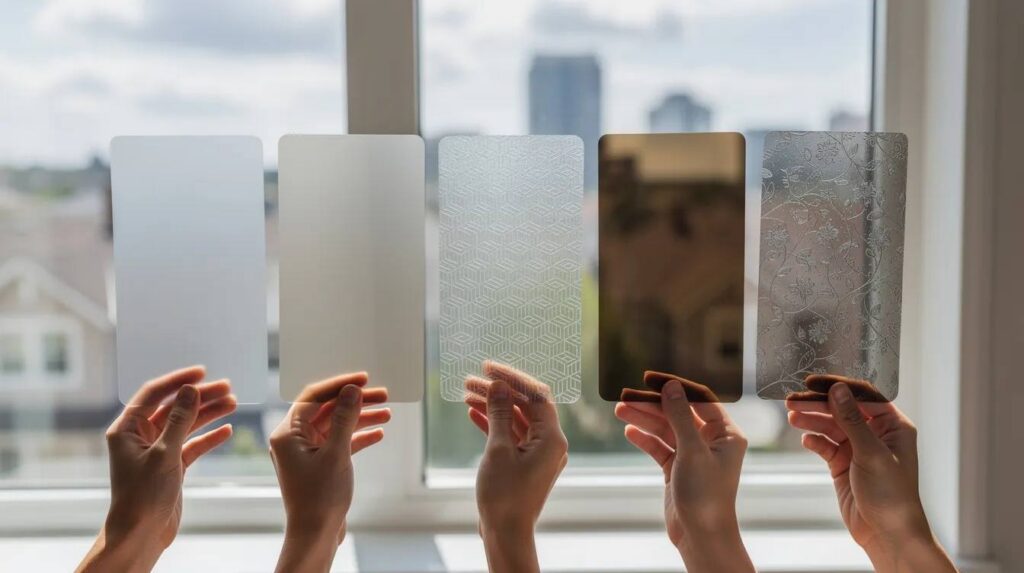
Window films come in several styles for privacy and decorative purposes. The term covers privacy films, decorative window film, solar control window tint, and specialty options. Here is what each category delivers:
- Frosted privacy window film: Frosted window films obscure views while allowing light to pass freely. They mimic sandblasted or etched glass and work well on bathroom windows, sidelights, clinic doors, and office partitions.
- Decorative window film and stained glass designs: Decorative window films include stained glass and etched patterns, geometric motifs, and faux leaded glass. Decorative films can transform glass surfaces into focal points, adding elegance to front doors, transoms, and interior partitions. Decorative films can offer aesthetic benefits while providing privacy at the same time.
- One-way mirror and reflective window tint: One-way mirror films block outside views during the day but reverse at night when interior lights are on. For exposed façades and glass offices, they provide strong daytime privacy; pair with blinds or curtains after dark.
- Neutral and ceramic solar control films: Heat control window films in this category reduce heat and UV with minimal change to exterior appearance. They are a popular choice for Class-A office buildings and historic properties where reflective finishes are restricted.
- Blackout and room-darkening films: Near-opaque options used for media rooms, security rooms, vacant space masking, or sensitive back-of-house areas where blocking light entirely is the goal.
- Static cling vs. adhesive: Static cling films are removable and reusable, ideal for renters who need a simple, non-permanent solution. Adhesive films bond permanently, delivering longer-lasting functionality for permanent retrofit glazing. Adhesive films currently hold about 55% of the U.S. privacy film market share.
The right film often combines privacy with energy performance, so product selection should be guided by both aesthetic and technical needs for each space.
DIY Window Film vs. Professional Installation Nearby
Retailers like Walmart online, Menards, and Ace Hardware sell window films in-store and online. WindowFilmWorld.com sells various designs of privacy window films, and Artscape offers window films that are easy to install. So when does DIY make sense, and when should you call a professional?
- When DIY works: Small residential projects; a single bathroom window, a rental apartment sidelight, or a glass cabinet door using static cling decorative film. Window film application kits include a squeegee and application solution, and installation takes less than 30 minutes for most films on a standard pane.
- Common DIY challenges: Streaks, trapped dust, miscuts, light gaps at edges, bubbles from incorrect application, and films peeling in corners. These issues multiply on large panes or multi-window projects.
- Advantages of professional installers nearby: Access to higher-performance films (premium solar control, security glazing, specialty decorative), trained techniques for large panes and multi-story glass, and manufacturer-backed warranties that require certified installation.
- Risk management for commercial sites: Offices, schools, hospitals, and retail chains need insured, background-checked crews with lift equipment and project management that coordinates around building operations.
Use DIY for small, low-risk panes. Call local experts for anything involving multiple rooms, high-value interiors, or business-critical spaces where results need to be right the first time.
How to Find and Compare Privacy Film Installers Near You
Searching “privacy film for windows nearby” often returns a mix of auto tint shops, online retailers, and architectural film specialists. Not all are equally suited for building projects. Here is a practical checklist:
- Search with intent: Use terms like “commercial window film installer near me,” “residential privacy window film installation,” or “decorative glass film for offices” to filter out primarily automotive shops.
- Check experience and portfolio: Review project photos of bathrooms, conference rooms, store façades, schools, and healthcare facilities. Confirm real experience with architectural glass, not just vehicles.
- Ask about product lines: Ask which privacy window films, frosted glass films, solar control tints, and safety glazing options they carry. A broad selection of films indicates a specialist, not a generalist.
- Verify training, insurance, and warranties: Reputable installers hold manufacturer training, provide written warranties on both film and labor, and carry liability insurance for residential and commercial jobs.
- Read recent reviews (2023-2026): Focus on Google Business Profile and trade references. Look for feedback about cleanliness, punctuality, and how crews handled occupied spaces.
- Compare proposals, not just price: Evaluate film performance specs (total solar energy rejected, visible light transmission, UV rejection), scope of work, and surface prep details. The lowest bid often skips prep steps that determine longevity.
The right nearby installer should feel like a glazing partner; answering questions clearly, providing recommendations tailored to each room’s privacy and daylight needs, and backing the work with documentation.
Best Uses by Space: Where Privacy Film Delivers the Most Value
Window privacy film is highly adaptable. The ideal product depends on room function, orientation to the sun, and the range of privacy required.
- Bathrooms and showers: Window privacy films are ideal for bathrooms and bedrooms. Frosted or patterned films on street-facing bathroom windows and glass shower enclosures allow daylight while blocking direct outside views.
- Bedrooms and nurseries: Light-filtering privacy film paired with soft window treatments protects from neighbors’ sightlines while keeping the space bright and comfortable during the day.
- Entry doors, sidelights, and transoms: Decorative stained glass or geometric frosted films on front doors add curb appeal and hide direct views into hallways and living rooms.
- Home offices and media rooms: Solar control window tint cuts glare on screens plus provides mild daytime privacy, especially on south- and west-facing windows that overheat in late afternoon during summer.
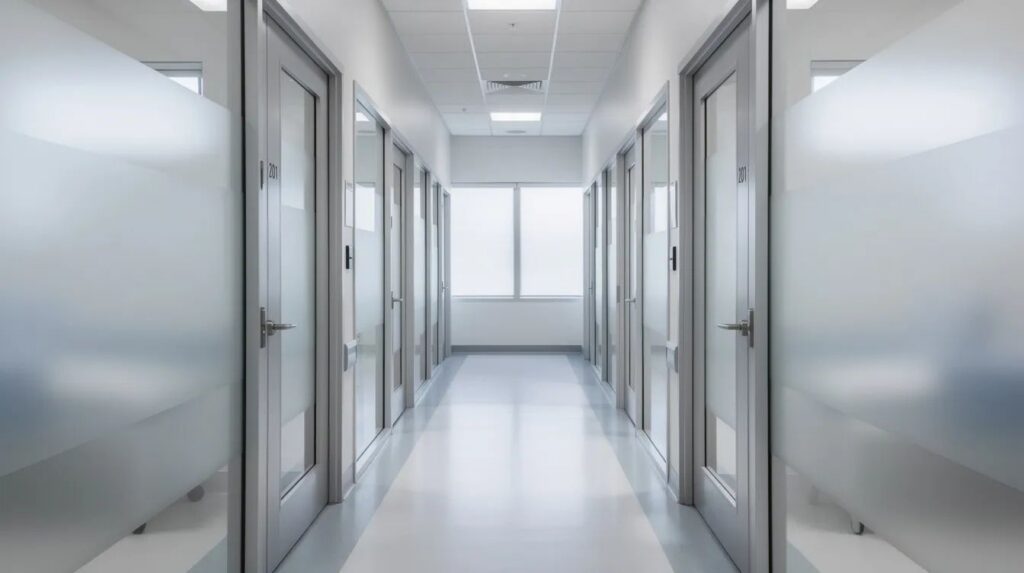
- Conference rooms and glass office fronts: Banded frosted stripes at eye level or full-height frosted glass film prevent visual distractions and protect confidential meetings while borrowing natural light from adjacent spaces.
- Healthcare and education: Privacy film on exam rooms, counseling offices, and classroom interior windows meets visual privacy needs without darkening corridors. Durable, cleanable films withstand frequent sanitization.
- Retail and restaurants: Front glazing that balances visibility and heat control. Decorative window film and branding graphics on interior partitions create defined spaces while keeping an open feel for customers browsing the store.
Each space may need a different combination of privacy, daylight, and energy performance. A room-by-room assessment with an experienced installer saves time and produces better results than a one-size-fits-all approach.
How Professional Window Film Installation Works
Here is what happens after you contact a local window film company, from first call to final inspection.
- On-site assessment and measurements: A technician evaluates existing glass types (tempered, laminated, insulated glass units), measures panes, identifies sun exposure, and discusses privacy goals, glare issues, and any code or safety requirements.
- Film selection and proposal: The installer presents film samples for privacy, decorative, and solar control options, providing data sheets with visible light transmission, solar heat rejection, and UV blocking metrics. A written quote and timeline follow.
- Surface preparation: Cleaning the glass thoroughly is essential before installing window film. Crews protect floors and furnishings, scrape contaminants, and frame off work areas to control water and debris in occupied spaces.
- Film application: Window films can be applied using just water and soap as a slip solution. The installer wets the glass, positions the cut film, squeegees out water and bubbles, and details edges for a clean finish.
- Curing and aftercare: Most films take several days to several weeks to fully cure depending on climate. Instructions include not cleaning the glass for a set period and using non-abrasive, non-ammonia cleaners afterward.
- Quality check and warranty handoff: Reputable installers do a final inspection with the customer, address minor issues like trapped dust or edge trim, and provide warranty documentation and care guidelines.
For typical homes, most privacy and decorative window film projects finish in a single day. Larger commercial projects may be phased to minimize disruption to business operations.
What to Know Before You Buy: Mistakes to Avoid with Window Film
Before committing to a product or installer, review these common pitfalls:
- Ignoring glass type and warranty: Certain films are not recommended for some insulated or tinted glass. Using the wrong product can void the window manufacturer’s warranty or cause thermal stress that cracks panes.
- Expecting nighttime one-way privacy: Reflective one-way films provide daytime privacy, but after dark with interior lights on, they can become transparent from outside. Pair with blinds or curtains for full nighttime coverage.
- Choosing film only by darkness: Darker is not always better. Assess total solar energy rejected, UV protection, and visible light transmission instead of shade alone. A film with 21% VLT and 62% TSER (like certain premium solar lines) outperforms a cheap dark tint with low heat rejection.
- Overlooking building codes and safety glazing: Some doors, sidelights, and low-level glass have safety requirements. Adding certain films can help meet safety glazing standards, but they must be specified correctly.
- Underestimating maintenance: Use non-ammonia cleaners, soft cloths, and avoid sharp tools that can scratch or lift film edges over time.
- Hiring non-specialists: Be cautious about low-bid contractors without specific architectural window film experience, references, or insurance for multi-story work. Auto tint shops often lack the tools and glazing knowledge for building projects.
Ask detailed questions and request film specifications with performance data before committing to any purchase or installer.
Frequently Asked Questions About Privacy Window Film
These FAQs address the most common questions from homeowners, building owners, and facility managers searching for privacy window film and related products.
How long does privacy window film typically last?
Most films can last several years with proper care. Interior decorative films often exceed 10 years. Sun-exposed solar control and privacy films on exterior-facing glass commonly last 10 to 15 years or more with quality products. Climate, orientation, and cleaning routines affect longevity.
Will privacy film make my rooms too dark?
Frosted and many decorative films still allow high levels of natural light. Neutral or ceramic solar films cut heat and glare without creating a “tinted car” look. Test samples on your glass before deciding; a reputable installer will bring options to your site.
Can window film be removed later without damaging the glass?
Professionally installed architectural window films are designed to be removable. Installers use specialized tools and solutions to lift adhesive cleanly. Static cling films are removable and reusable for easy application, leaving no residue on the glass.
Is privacy window film safe for double-pane or low-E glass?
Many modern films are engineered and tested for use on insulated and low-E units. Film type must be matched to glass construction to avoid thermal stress. Work with a knowledgeable installer who can check manufacturer compatibility charts before application.
Does privacy film work at night as well as during the day?
Frosted and decorative films provide consistent privacy day and night. Reflective one-way mirror tints rely on light balance and mainly provide daytime privacy. Combining tint with window coverings delivers full nighttime privacy.
Can I install window film on textured or patterned glass?
Most films are designed for smooth glass and may not adhere properly or look uniform on heavily textured or seeded glass. A site visit allows an installer to evaluate specific surfaces and recommend alternative options where needed.
Why Choose Our Team for Privacy Film for Windows Nearby
Window Film Depot has specialized in architectural window film since 1992, serving both residential and commercial clients across North America from our home base in Marietta, Georgia.
- Deep architectural focus: Decades of experience with building window films, including offices, schools, government facilities, and national retail rollouts.
- Full product spectrum: High-performance solar control films, security glazing films, decorative and privacy window films, anti-graffiti films, and architectural surface finishes; tailored to each project’s needs.
- Turnkey project management: Assessment, specification support, logistics, installation, and warranty documentation for single locations and multi-site programs.
- Certified, insured installers: Trained crews accustomed to working in occupied environments, coordinating around business hours, and minimizing disruption.
- National reach with local execution: Field teams and partners who understand regional climate, building stock, and code requirements across the country.
- Trade partner support: Wholesale supply and installation support for glass shops, glaziers, and industry partners needing reliable window film sourcing.
If you are early in the research process, reach out for advice with no pressure. Our approach is consultative; we help you find the right solution before any commitment.
Next Steps: Get a Local Quote for Privacy Film on Your Windows
Privacy film is a fast, low-disruption way to solve privacy, glare, and heat issues without replacing glass.
- Note which rooms or façades need attention, including specific problems like fading floors, uncomfortable workstations, or visible conference room contents.
- Gather basic information before calling: building type (home, office, school, retail), window sizes, floor levels, and whether glass is single-pane, double-pane, or tempered.
- Request an on-site assessment and written proposal with transparent pricing, film specifications, and realistic installation timelines.
- Scheduling is available by phone, online form, or email. Most residential assessments book within a few business days; larger commercial surveys coordinate around your operations.
Contact Window Film Depot today to explore privacy, decorative, and solar control window film options for your nearby home or facility. A quick conversation now can solve the privacy and comfort problems you have been living with.