If your windows make a room too hot, too bright, or too exposed, the right window film can be a simple upgrade. This guide shows you how to compare local options for privacy, heat control, security, and style without guessing.
Quick Answer: How to Find the Best “Window Film Near Me” Today
When people search “window film near me,” they usually want fast local help for privacy, heat rejection, or decoration. Start with a targeted Google search such as “window film near me Gilbert AZ,” then review the top 5–10 organic results and map listings.
Look for providers with 4.5+ stars, at least 20 reviews, years in business, and recent before/after photos. Check whether each company focuses on residential properties, commercial offices, or DIY window film sales, then pick the one that fits your project.
Call at least two installers and ask about availability this week, film types such as nano-ceramic or dual-reflective, written warranty length, and whether measurement, film selection, prep, installation, and clean-up are included. Avoid unlicensed “cash-only” tinting from parking lots or temporary setups because warranty, glass safety, and workmanship can become expensive problems later.
Table of Contents:
Understanding Different Types of Window Film Near You
Window film is a broad category, and local shops in 2026 usually carry several products with different benefits. Choosing window films involves prioritizing goals such as heat rejection, glare control, privacy, or security.
- Privacy film: Frosted window films provide privacy while allowing natural light. Privacy films obstruct views from specific angles by manipulating glass transparency, making a 24″ x 36″ frosted privacy film ideal for bathroom windows.
- Decorative film: Decorative window films come in various patterns and colors for a front door, sidelight, sign accent, or glass partition.
- Solar control film: A 36″ x 72″ nano-ceramic heat control film can reduce heat gain on south-facing living room windows. Window film reduces heat gain, improving energy efficiency.
- Security/safety film: Security films strengthen glass and reduce injury risks.
- Blackout film: Best for a media room, nursery, or any space where visibility and light need to be minimized.
Visible Light Transmission (VLT) indicates how much light is allowed through a window film. A 70% VLT film stays bright, 35% adds noticeable shade, and 20% gives stronger privacy but may conflict with HOA rules. High-quality film can block up to 99% of UV rays, and UV-blocking films can block up to 99% of harmful rays to protect floors, art, and furniture.
Local Use Cases: Bathrooms, Living Rooms, Storefronts & More
People searching for local window films usually have a specific room or surface in mind. In bathrooms, frosted or patterned privacy window film works well for shower windows and street-facing glass because window films enhance privacy without blocking natural light.
In living rooms and bedrooms, heat-reducing film helps during summer afternoons, while glare-control film improves TV and monitor viewing. Window film enhances indoor comfort by lowering temperatures, and window film reduces glare for a clearer viewing experience.
Kitchens and entries often need a lighter touch. A decorative pattern on sidelights can add privacy without making the home feel closed off.
For businesses, films can support storefront branding, conference-room privacy bands, and security on street-facing glass. Glare reduction films can help cut down reflections in office environments without darkening the space too much. Window films protect interior assets and provide customizable visibility levels.
Less obvious applications include garage windows to protect stored items from sun, home gyms that overheat, sunrooms that need comfort, and rental units where static cling films are popular because some films are designed for easy removal and repositioning.
How to Compare Local Window Film Installers
Not every “window film near me” result offers the same product quality, warranty, or craftsmanship. Review each Google Business Profile for the year first listed, number of reviews, average rating, and recent job photos.
On company websites, look for clear residential and commercial services, insurance or licensing information, and real local projects from the last 12 months. Ask direct questions:
- What film brands and types do you apply?
- Is the installer factory-certified?
- Is the warranty written, such as 10–15 years against peeling and bubbling?
- Is the quote itemized by film cost per square foot, labor, travel, and removal?
Not all window films are compatible with every glass type; some can cause thermal stress. A good installer should evaluate tempered, laminated, double-pane, or low-e glass before recommending a product.
Ask for a small on-glass sample. Reflective films can create a mirror effect during the day while allowing outside visibility, but you should see that effect in your own light before committing.
2026 Window Film Technology: What’s New Near You
Today’s window films are more advanced than older dyed tints. Window films enhance energy efficiency by targeting components of sunlight that generate heat, especially infrared and UV.
Nano-ceramic and multi-layer metal oxide films can reject heat with less mirror effect. High-performance films can reject up to 70% of solar heat and 99% of UV rays. Window films block up to 99% of UV rays, and architectural window film reduces solar heat significantly.
You may see quotes listing total solar energy rejected (TSER), UV rejection, and glare reduction. Window films offer a cost-effective way to reduce energy bills while enhancing aesthetics, and window films can lower commercial or residential energy bills by up to 30%. Window film installation can lower utility bills over time.
Low-emissivity insulating films can lower HVAC stress by rejecting summer heat and retaining winter warmth. Safety technology has improved too: thicker, tear-resistant films are designed to hold shattered glass together for safety. Window films can protect against natural disasters and reduce injury from broken glass.
DIY vs. Professional “Window Film Near Me”
Big-box stores and online retailers sell rolls and pre-cut film, while local pros provide custom fitting and pro-grade products. Before you put a roll in your cart, match the method to the job.
DIY makes sense for:
- Small bathroom windows
- Temporary rentals
- Budget projects under a few hundred dollars
- Simple static-cling patterns
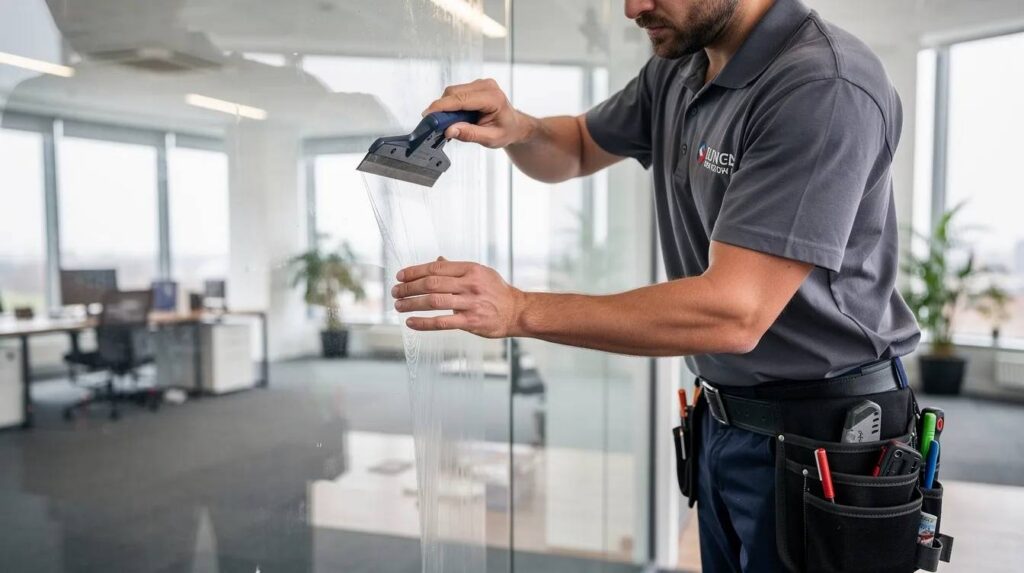
Static cling window films are non-adhesive and easy to install. Static cling films do not require adhesive for installation. Window films can be installed easily with just water and soap. Window films apply easily using water and soap. Installation takes less than 30 minutes for most films, especially small panes.
Professional installation is better for large sliding doors, second-story windows, bay windows, security film, and premium solar film. Common DIY issues include dust bubbles, crooked cuts, visible seams, and early peeling on hot glass.
DIY film often costs about $1–$5 per square foot for materials. Professional residential installation commonly ranges from about $7–$24 per square foot, depending on glass size, access, and film technology. Standard professional window films typically last 8–12 years, while premium products can last longer with proper care.

Frequently Asked Questions About Local Window Films
How long does window film last in real-world conditions?
Modern residential and commercial films often last 10–20 years depending on exposure, film type, and installation quality. Standard professional window films typically last 8–12 years, while harsh west-facing sun can shorten lifespan.
Can window films be removed without damaging glass or frames?
Yes. Static-cling products usually peel away cleanly, while adhesive film may need heat, solution, and careful scraping. Some films are designed for easy removal and repositioning, especially rental-friendly products.
Does applying window film affect double-pane or low-e glass warranties?
It can if the wrong film is used. Reputable installers follow manufacturer compatibility charts, document the selected film, and avoid products that may cause thermal stress.
How do I maintain filmed windows?
Wait for the curing period before cleaning, often up to 30 days. Use mild soap, water, and a soft cloth; avoid abrasive pads, sharp tools, and ammonia where the film maker advises against it.
Does film go inside or outside the glass?
Most residential film is applied to the interior side of the glass. Exterior films exist for specialty cases, but they need products designed for weather exposure.
What should I ask after searching window film near me?
After searching window film near me, ask for a written quote, warranty details, sample swatches, glass compatibility review, and a clear explanation of how the film will work in your house or office.
Conclusion & Next Steps
Quality window films can improve comfort, privacy, energy efficiency, and security for homes and businesses. Use what you learned to shortlist 2–3 nearby installers, compare samples side by side, and request detailed quotes this week.
If you want straightforward guidance, schedule a consultation or on-site assessment before choosing a film. The right window film can make your rooms cooler, reduce glare, protect interiors, and make your space feel better every day.