Table of Contents:
- The Project Manager’s Challenge: Balancing Security, Safety, and Budget
- Understanding the Core: The Difference Between Tempered Glass and Laminated Glass
- Beyond Breakage: Security Performance, Safety Standards, and Real-World Protection
- Strategic Application: Matching Glass Types to Project Demands and Regulatory Compliance
- Elevating Security: The Strategic Imperative of Advanced Security Film
- The Integrated Approach: Creating a Comprehensive, High-Performance Glazing System
- Conclusion: Optimizing Your Project’s Security and Budget with Informed Decisions
- Frequently Asked Questions
- Related Posts from Window Film Depot
The Project Manager’s Challenge: Balancing Security, Safety, and Budget
Project managers frequently encounter a critical junction when specifying glazing: how to reconcile demanding security and safety requirements with often stringent budgetary constraints. The choice of glass is not merely aesthetic, it is a fundamental design and functional decision that directly impacts occupant safety, asset protection, and project viability. This balancing act necessitates a clear understanding of material properties and performance characteristics. Ignoring these complexities can lead to costly retrofits, project delays, or, more critically, compromises in the intended level of protection for commercial buildings.
Understanding Client Demands and Regulatory Requirements
A project’s success hinges on meticulously interpreting client security demands and navigating complex regulatory requirements. Client specifications range from basic impact resistance for storm protection to advanced blast mitigation and ballistic protection.
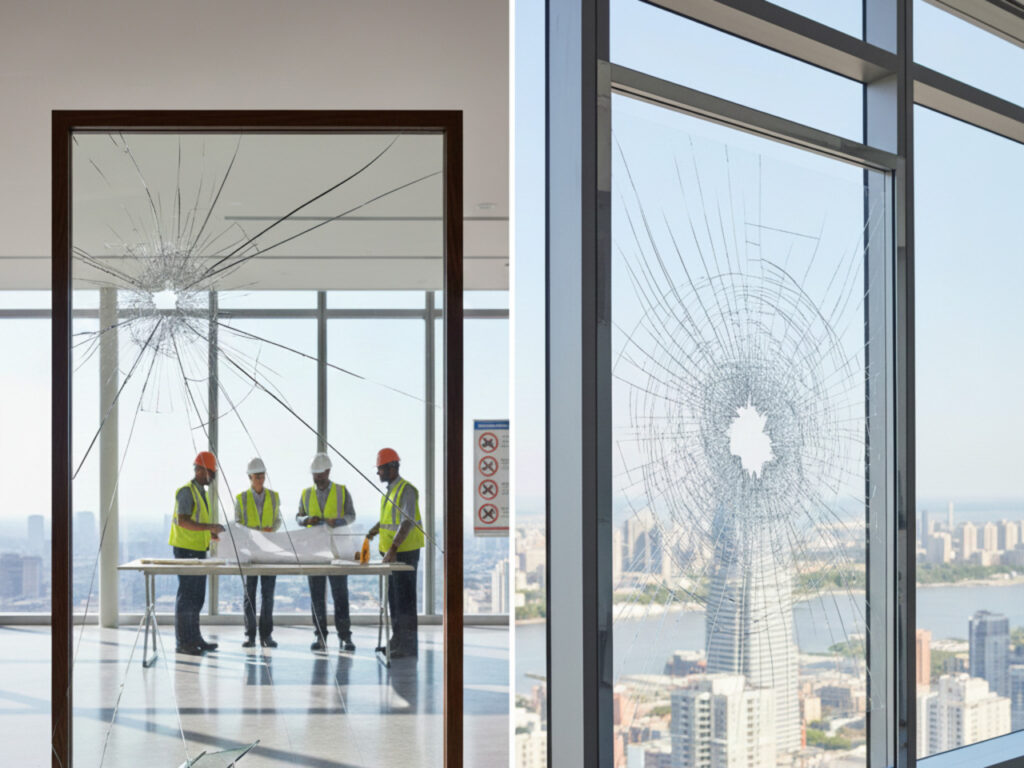
Concurrently, building codes mandate specific safety glazing in high-risk areas. This includes wet locations, glass near doors, and overhead glazing. These codes often require glass that breaks safely or remains largely intact after impact. Compliance with diverse standards—including hurricane impact ratings and fire ratings—is non-negotiable. These requirements directly inform the appropriate glass type and configuration for the project.
The Need for Expert Knowledge in Glass Specification
Given the intricate interplay of performance criteria, cost, and regulatory compliance, generic glass specifications are insufficient. Project managers must possess expert knowledge to make informed decisions. They must also effectively communicate these decisions to stakeholders and installation teams.
A deep understanding of how different glass types behave under various stresses—from accidental impact to deliberate attack—is paramount. This foundational knowledge empowers managers to optimize material choices and prevent potential vulnerabilities. It ensures that the installed security glazing solution genuinely meets the project’s multifaceted objectives.
Understanding the Core: The Difference Between Tempered Glass and Laminated Glass
Tempered Glass: The Process of Heat Strengthening and Its Unique Properties
Tempered glass, often referred to as safety glass, undergoes a specialized heat treatment process to enhance its strength and alter its breakage characteristics. Standard annealed glass is heated to approximately 650°C (1,200°F) and then rapidly cooled, or “quenched,” with forced air.
This rapid cooling causes the outer surfaces of the glass to cool and contract more quickly than the interior. This creates a state of permanent compressive stress on the surfaces and tensile stress in the core. This internal tension is what gives tempered glass its increased strength and its unique ability to shatter into small, blunt fragments rather than sharp shards.
The resulting glass is typically four to five times stronger than annealed glass of the same thickness. Its primary safety feature lies in its unique breakage pattern: upon impact, tempered glass shatters into small, relatively blunt, cube-like fragments, significantly reducing the risk of severe injury compared to the large, sharp shards of annealed glass. However, once the surface compression is breached, the entire pane will typically disintegrate. Tempered glass also offers improved resistance to thermal shock.
Laminated Glass: The Polyvinyl Butyral (PVB) Interlayer and Its Structural Role
Laminated glass is engineered by permanently bonding two or more panes of glass together with one or more interlayers, most commonly made of polyvinyl butyral (PVB). This bonding process, involving heat and pressure, creates a composite material with distinct performance advantages. The PVB interlayer is transparent and exhibits exceptional elasticity and adhesion to glass.
The PVB interlayer is critical during an impact event. While glass layers may break, fragments remain adhered to the interlayer. This shard retention preserves the integrity of the pane and the frame. Laminated glass is superior for forced entry, blast mitigation, and ballistic protection. The interlayer also provides excellent sound dampening and UV light reduction. In overhead glazing, it prevents dangerous glass fallout after a failure.
Key Differences in Material Composition and Annealing Processes
The fundamental distinction between tempered glass and laminated glass stems directly from their manufacturing processes and material composition, leading to divergent performance profiles. Tempered glass is a single monolithic pane, its strength derived from the internal stresses induced by a thermal annealing process. Its primary safety attribute is its characteristic fragmentation into small, dull pieces upon breakage.
Laminated glass, conversely, is a composite assembly. It consists of multiple annealed or heat-strengthened glass panes mechanically bonded by a viscoelastic interlayer, typically PVB. This interlayer prevents the glass from separating into dangerous fragments when broken. While tempered glass offers superior resistance to initial impact and thermal shock, its complete disintegration upon failure can leave an immediate, open breach. Laminated glass, even when shattered, maintains a structural barrier, providing a delaying action against intrusion and preventing glass fallout, an essential characteristic for safety and security applications.
Beyond Breakage: Security Performance, Safety Standards, and Real-World Protection
Understanding the fundamental differences in how tempered and laminated glass perform under stress is critical for project managers. This goes beyond simple breakage patterns and extends into their inherent security capabilities, response to extreme forces, and compliance with essential safety glass standards. Each glass type offers distinct advantages and vulnerabilities that must be considered when specifying glazing for various project demands.
Distinct Breakage Patterns: The ‘Dicing’ of Tempered Glass vs. the ‘Web’ of Laminated Glass
The most immediately recognizable difference between tempered glass and laminated glass lies in their post-breakage state, a factor with direct implications for both safety and security.
- Tempered Glass: This glass undergoes a thermal tempering process, which creates internal stresses that cause it to shatter into thousands of small, relatively blunt, pebble-like pieces upon impact. This characteristic, known as “dicing,” is primarily a safety feature, designed to reduce the risk of severe lacerations compared to annealed glass. However, once tempered glass breaks, its structural integrity is entirely compromised, leaving a large, open void.
- Laminated Glass: Composed of two or more panes of glass bonded together by an interlayer (typically PVB or SGP), laminated glass reacts differently. Upon impact, the glass may crack or break, but the fragments remain adhered to the interlayer. This creates a “spiderweb” pattern, maintaining the overall integrity of the glazed opening and preventing immediate penetration. The interlayer acts as a barrier, holding the shattered glass in place.
Assessing Forced Entry Resistance: Inherent Strengths and Vulnerabilities of Each Glass Type
The chosen glass type significantly dictates a building’s resilience against forced entry attempts. Understanding these inherent strengths and vulnerabilities is paramount for security planning.
- Tempered Glass: While its initial resistance to impact is greater than annealed glass, tempered glass offers minimal forced entry protection once its surface integrity is breached. A concentrated impact can cause it to completely shatter, leaving an immediate and unobstructed opening for intruders. Its “all or nothing” failure mode means that once broken, it provides no further deterrent or delay.
- Laminated Glass: This glass provides a substantially higher level of forced entry resistance. Even after the glass plies are broken, the interlayer continues to deter entry by holding the fragments together. An intruder must repeatedly strike and tear through the tough, flexible interlayer to create an opening large enough to pass through. This sustained resistance provides crucial delay time, which is often the most valuable asset in deterring or mitigating security threats.
Blast Mitigation Capabilities: How Tempered and Laminated Glass Respond to Explosive Forces
In environments where blast resistance is a concern, the disparity in performance between these glass types becomes even more pronounced.
- Tempered Glass: Tempered glass is generally not considered suitable for blast mitigation. Under blast pressure, it will shatter explosively, propelling countless small, sharp glass fragments over a wide area. These fragments become dangerous projectiles, posing a significant risk of injury to occupants and property damage, often far from the blast source.
- Laminated Glass: Laminated glass with a robust interlayer is specifically engineered for blast mitigation applications. When subjected to an explosive force, the glass layers may break, but the interlayer absorbs and distributes the shockwave energy. Crucially, the interlayer retains the broken glass fragments, preventing them from becoming hazardous projectiles. This helps maintain the building envelope’s integrity post-blast, protecting occupants from primary blast effects and flying debris. Specific types of interlayers, such as SGP, offer even greater post-blast strength and adhesion.
Compliance with Safety Glazing Standards: ANSI Z97.1 and CPSC 16 CFR 1201 Implications for Commercial Buildings
Compliance with safety glass standards is a non-negotiable aspect of commercial building projects, dictating where specific glass types must be used to prevent injury.
- ANSI Z97.1 (Safety Glazing Materials Used in Buildings – Safety Performance Specifications and Methods of Test): This standard outlines impact performance requirements for glazing materials. Both tempered glass and laminated glass are widely used to meet ANSI Z97.1 requirements, particularly in areas subject to human impact such as doors, sidelites, and large windows close to the floor.
- CPSC 16 CFR 1201 (Safety Standard for Architectural Glazing Materials): Developed by the U.S. Consumer Product Safety Commission, this regulation categorizes safety glazing materials based on their impact resistance.
- Category I (Class A): Requires materials to withstand a 150 ft-lb impact.
- Category II (Class B): Requires materials to withstand a 400 ft-lb impact. Tempered glass is a primary material for meeting these building codes, particularly in its capacity to break safely. Laminated glass also qualifies as safety glazing and often exceeds these requirements, particularly in higher-performance variants, while offering the added benefit of post-breakage integrity. Specifying the correct safety glazing is a fundamental responsibility for project managers, ensuring occupant protection and regulatory adherence for security glass for commercial buildings.
Strategic Application: Matching Glass Types to Project Demands and Regulatory Compliance
Selecting the appropriate glass type is a strategic decision that balances project demands, cost considerations, and regulatory compliance. Each glass type possesses distinct characteristics that make it suitable for specific applications.
When to Specify Tempered Glass: High-Impact Areas, Safety Glazing, and Cost Considerations
Tempered glass is a foundational choice in numerous building applications, primarily due to its safety profile and cost-effectiveness.
- High-Impact Areas: Its characteristic dicing pattern makes it the go-to choice for areas where human impact is likely, such as glass doors, shower enclosures, partitions, and large windows near walkways. The goal here is to minimize serious injury should the glass break.
- Safety Glazing: Tempered glass consistently meets ANSI Z97.1 and CPSC 16 CFR 1201 requirements for safety glazing, making it compliant for code-mandated applications.
- Cost Considerations: Generally, tempered glass is more economical than laminated glass, making it a preferred option when the primary concern is meeting basic safety codes without needing enhanced security or specific acoustic performance.
When to Specify Laminated Glass: Enhanced Security, Noise Reduction, and UV Protection
Laminated glass offers a robust solution for projects demanding performance beyond basic safety, providing significant added value.
- Enhanced Security: Its post-breakage integrity, with fragments adhering to the interlayer, makes laminated glass excellent for deterring forced entry and reducing the risk of fallout in case of breakage. This is crucial for retail storefronts, government buildings, and secure facilities requiring security glazing.
- Noise Reduction: The interlayer in laminated glass acts as a dampening layer, effectively reducing sound transmission. This acoustic benefit is highly valued in environments requiring quiet, such as hospitals, schools, offices, or buildings near busy roadways and airports.
- UV Protection: The interlayers in laminated glass typically block 99% or more of harmful UV rays, protecting interior furnishings, artwork, and occupants from sun damage and fading. This is a significant advantage for museums, art galleries, and commercial spaces with valuable merchandise.
Real-World Applications in Commercial, Retail, and Education Settings
The strategic application of glass types is best illustrated through real-world scenarios across various sectors.
- Commercial Offices: Tempered glass is common in interior partitions and conference rooms for safety. Laminated glass is increasingly used for exterior facades, offering security against forced entry, noise reduction in urban settings, and UV protection for interior finishes.
- Retail Storefronts: While tempered glass may be used for display cases, laminated glass is the standard for storefront windows due to its superior forced entry resistance. This protects valuable merchandise and deters smash-and-grab theft, providing precious minutes for security response.
- Educational Institutions: Tempered glass is specified for gymnasium doors and science lab windows for safety. However, schools and universities are increasingly adopting laminated glass for ground-floor windows and entryways to enhance security against various threats, including active shooter scenarios, by delaying ingress.
Navigating Building Codes and Industry Best Practices for Security Glazing
Project managers must diligently navigate a complex web of building codes and industry best practices when specifying security glazing.
- Local and State Building Codes: These codes dictate minimum requirements for safety glazing, fire ratings, and sometimes specific security provisions based on occupancy type and risk assessment. It is crucial to consult local jurisdictions early in the project.
- Industry Standards: Beyond code, organizations like ASTM International provide standards for forced entry resistance (e.g., ASTM F1915 for glazed security barriers) and blast resistance (e.g., ASTM F1642 for glass in windows subject to blast pressures). Meeting these standards often goes beyond basic building code and reflects an elevated security posture.
- Risk Assessment Integration: Best practices involve integrating a comprehensive risk assessment into the glazing specification process. This considers the specific threats a building faces, its location, and the value of its assets, guiding decisions on when to move beyond standard tempered or even basic laminated glass to more advanced solutions. This often involves considering the integration of security film to augment the performance of the chosen glass.
Elevating Security: The Strategic Imperative of Advanced Security Film
The Limitations of Glass Alone: Why Tempered and Laminated Aren’t Always Enough for Advanced Threats
While tempered glass and laminated glass represent significant advancements over annealed glass, they possess inherent limitations when confronted with sophisticated or sustained security threats. Tempered glass, engineered for safety, shatters into small, blunt fragments upon impact. This characteristic, while mitigating injury risk, creates an immediate and large opening, offering minimal resistance to forced entry. A single, well-placed impact can compromise the entire pane, providing rapid access for an intruder.
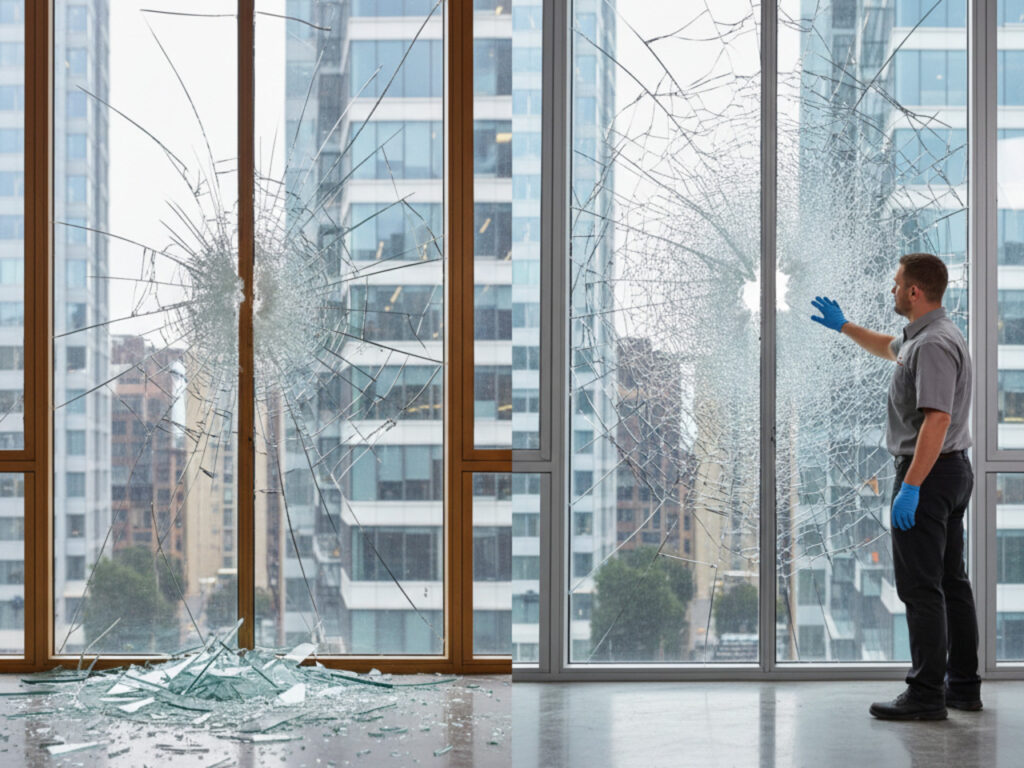
Laminated glass, on the other hand, excels at glass shard retention due to its interlayer. However, against a determined attack involving repeated blows or specialized tools, the glass layers can be breached and the interlayer can deform or tear, allowing for eventual penetration. Neither of these glass types, in isolation, is designed to indefinitely withstand a prolonged, aggressive attempt at forced entry or to fully mitigate the effects of blast pressure waves. Their primary functions, safety and basic containment, do not always align with the multi-faceted demands of modern security protocols.
How Does Security Film Work: Enhancing Glass Shard Retention and Impact Resistance
Advanced security film operates as a robust, invisible barrier applied to the interior surface of existing glazing. Its fundamental mechanism involves holding the glass shards together upon impact. Composed of multiple layers of high-tensile polyester, these films form a powerful membrane that prevents the glass from shattering into dangerous projectiles or creating an immediate breach.
When struck, the film absorbs and redistributes the kinetic energy across the pane, significantly enhancing the glass’s overall impact resistance. This translates directly into increased “dwell time”, the crucial period required for an intruder to penetrate the barrier. By delaying access, security film provides valuable minutes for security personnel to respond, often deterring the attack entirely due to the prolonged effort required. It transforms the brittle nature of glass into a more resilient, ductile system that resists immediate catastrophic failure.
Unpacking Performance: Comparing Security Film to Standard Glass Performance
The performance differential between standard glass and glass enhanced with security film is substantial and quantifiable across various threat scenarios.
- Annealed Glass: Offers minimal resistance to impact and shatters into sharp, dangerous fragments.
- Tempered Glass: Provides increased strength against blunt force but shatters completely into small pieces, creating an instant, large opening.
- Laminated Glass: Resists penetration more effectively than tempered glass and retains shards, but its resistance to sustained, repeated impacts is finite, and it can still deform significantly.
Security film elevates the performance of any underlying glass type. When applied to annealed or tempered glass, it prevents uncontrolled fragmentation. This turns a safety hazard into a cohesive, impact-resistant shield.
For laminated glass, the film adds another layer of tear resistance. It creates a multi-layered defense that is exceptionally difficult to breach. This system disperses impact energy across the entire surface. Independent testing shows film-enhanced glass withstands significantly more impacts. It resists intruders for longer durations than its unfilmed counterparts. The specification can meet industry standards for forced entry and blast mitigation. This technology bridges the gap between basic safety and advanced security.
Specific Film Technologies: Insights into 3M™ Scotchshield™ Safety & Security Window Film Ultra Series
3M™ Scotchshield™ Ultra Series is among the most advanced security film technologies available. This product uses a unique, patented micro-layered construction. It does not rely on simple thickness for its strength. Dozens of fine, cross-hatched polyester layers provide superior resilience. This technology far exceeds the performance of thicker, mono-layered films.
The micro-layering provides exceptional tear resistance and elasticity. This allows the film to stretch and absorb impact energy without breaking. It holds glass shards together with extraordinary tenacity during a breach. This maintains the integrity of the window opening during forced entry or blasts. The film also offers substantial UV protection and improves energy efficiency.
This micro-layering technology provides exceptional tear resistance and elasticity, allowing the film to stretch and absorb significantly more impact energy without breaking. When subjected to forced entry attempts, blast events, or extreme weather, the Ultra Series holds the glass shards together with extraordinary tenacity, maintaining the integrity of the window opening and preventing rapid breach. Beyond its security benefits, it also offers substantial UV protection, reducing fading of interiors, and can contribute to energy efficiency.
The Integrated Approach: Creating a Comprehensive, High-Performance Glazing System
Bridging the Gap: How Security Film Complements Tempered and Laminated Glass
The most effective security solutions do not view glass types and film as mutually exclusive choices, but rather as complementary components of an integrated system. Security film bridges critical performance gaps inherent in glass alone.
- With Tempered Glass: Film transforms the safety benefit of tempered glass (shattering into small pieces) into a security advantage by preventing those pieces from separating. The film holds the shattered pane cohesively within the frame, denying immediate access while still allowing for emergency egress if needed.
- With Laminated Glass: Applying security film to laminated glass creates a formidable multi-layered defense. The film reinforces the existing interlayer, significantly increasing the overall tear resistance and impact strength. This combined system makes it exponentially harder for an intruder to cut through or repeatedly impact the glazing to create a breach, offering a superior level of protection against sophisticated threats.
Maximizing Security Through Attachment Systems: The Crucial Link Between Film and Frame
For security films to perform at their highest level, especially in scenarios involving blast mitigation or extreme forced entry attempts, the film itself must be securely anchored to the window frame. Without a robust attachment system, even the strongest film could simply be peeled or pushed out of the frame along with the glass, negating its protective qualities.
Attachment systems typically involve mechanically or chemically bonding the film-to-glass composite directly to the window frame. Common methods include:
- Structural Silicone: A high-strength, flexible sealant applied along the perimeter, bonding the film directly to the frame.
- Mechanical Battens: Aluminum or steel bars that mechanically clamp the filmed glass edge to the frame, providing exceptional resistance to dislodgement.
These systems ensure that the entire window system, glass, film, and frame, acts as a single, cohesive barrier, capable of withstanding significant dynamic loads and preventing the rapid removal of the glazing unit. Specifying the appropriate attachment systems is as critical as selecting the film itself for advanced security applications.
The Cost-Effectiveness of Security Film: A Strategic Alternative to Full Glass Replacement
From a project management perspective, the cost-effectiveness of security film presents a compelling argument against full glass replacement, particularly for existing structures. Replacing all existing windows with specialized security glazing (e.g., thicker laminated glass, polycarbonates) can be an immensely expensive and disruptive undertaking, impacting budgets, timelines, and building operations.
Security film offers a strategic alternative:
- Lower Upfront Cost: Film installation typically costs a fraction of full glass replacement.
- Reduced Disruption: Installation is performed on-site with minimal disruption to daily operations, avoiding the need for extensive scaffolding, specialized lifting equipment, or prolonged closure of facilities.
- Faster Implementation: Film can be installed much more quickly than glass replacement, accelerating project completion and security enhancement.
- Preservation of Aesthetics: It maintains the existing architectural aesthetics and often enhances energy performance through solar control and UV rejection.
By strategically upgrading existing glazing with security film, project managers can achieve significant security enhancements, often exceeding the performance of standalone laminated glass, while adhering to budget constraints and minimizing operational impact.
Specifying the Right System: A Collaborative Model for Project Success and Budget Adherence
Achieving optimal security and value requires a collaborative approach to specifying security film solutions. It transcends simply selecting a product, it involves designing an integrated system tailored to specific project demands.
- Threat Assessment: Begin with a clear understanding of the project’s unique security threats (e.g., smash-and-grab, forced entry, blast, natural disaster).
- Performance Metrics: Match film specifications and attachment systems to performance criteria established by standards such as ASTM F1642 (for blast mitigation), EN 356 (for forced entry), or GSA-TS01 (for blast).
- Budget Alignment: Work with an expert consultant to identify solutions that meet security objectives without exceeding financial parameters, leveraging the cost-effectiveness of film where appropriate.
- Collaboration: Engage early with security consultants, architects, and certified film applicators. This ensures the chosen film and attachment system integrate seamlessly with the existing or planned building envelope, meet aesthetic requirements, and adhere to structural limitations.
This collaborative model empowers project managers to make informed decisions, translating advanced film technology into tangible security benefits while maintaining control over project scope and budget.
Conclusion: Optimizing Your Project’s Security and Budget with Informed Decisions
Successfully navigating the complexities of modern construction requires a nuanced understanding of materials and their synergistic capabilities. For glazing solutions, this means recognizing that while tempered glass and laminated glass offer distinct foundational benefits, true security optimization and budget efficiency are often achieved through a more integrated approach. Project managers armed with this knowledge are better positioned to meet stringent client demands, mitigate risks, and deliver superior value.
Key Takeaways: The Distinctive Roles of Tempered, Laminated, and Security Film
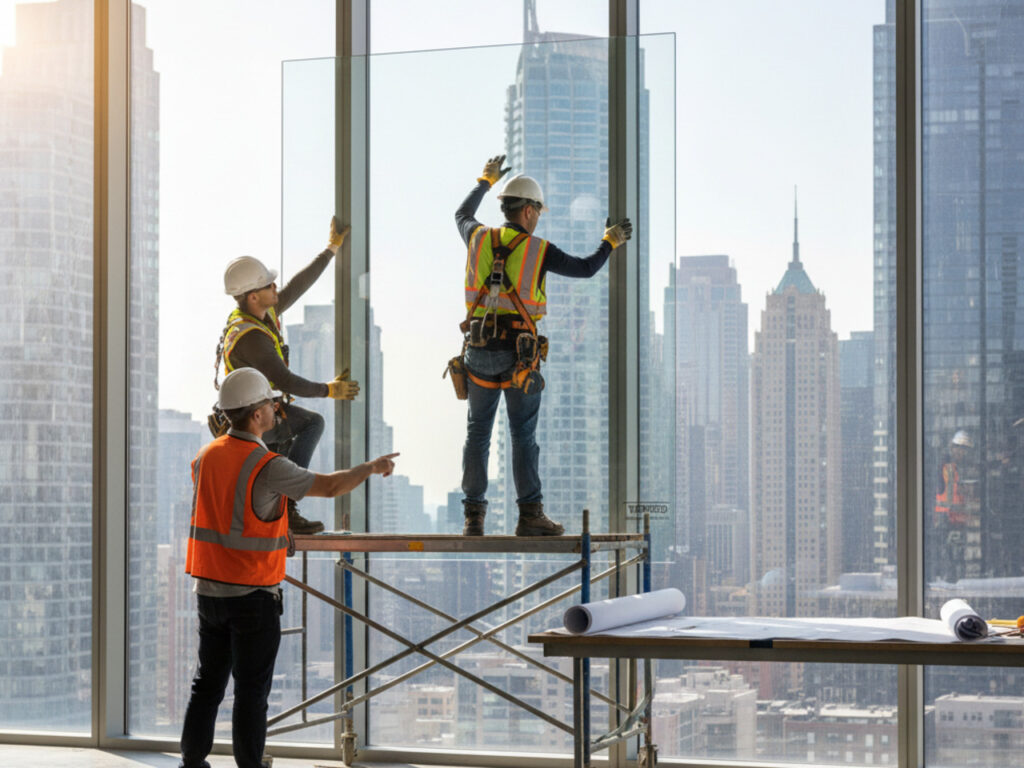
Our analysis underscores that each glazing component plays a specific role in a building’s overall resilience and safety profile, highlighting what is the difference between tempered glass and laminated glass in practical terms.
- Tempered Glass: Primarily valued for its enhanced strength against blunt impact and its safety characteristics upon breakage, shattering into small, relatively harmless pieces. Its applications are widespread where thermal stress or incidental impact resistance is crucial.
- Laminated Glass: Distinguished by its integral interlayer, which holds glass fragments together upon impact. This provides a critical post-breakage barrier, significantly delaying forced entry attempts, offering superior sound attenuation, and blocking ultraviolet radiation.
- Advanced Security Film: This technology acts as a powerful enhancer, upgrading the performance of both tempered glass and laminated glass. When applied, security film transforms ordinary glass into a robust protective system, holding fragments together to deter breaches, mitigate blast effects, and even contribute to energy efficiency. It is the critical element for fortifying existing glazing without complete replacement.
The strategic combination of these elements, particularly integrating advanced security film, moves beyond basic code compliance to establish a comprehensive, high-performance glazing system.
Empowering Project Managers with Knowledge for Superior Glazing Solutions
For project managers, understanding the distinct yet complementary attributes of tempered glass, laminated glass, and security film translates directly into actionable project intelligence. This insight allows for a precise specification process, moving beyond generic recommendations to tailored solutions that address specific threat profiles and performance objectives. By accurately assessing a project’s vulnerability points and security requirements, you can strategically allocate resources. This avoids the common pitfalls of over-specifying costly glass where film would suffice, or under-specifying security where it is critically needed. This informed approach directly impacts the project’s bottom line while elevating the security posture.
Partnering for Success: Expert Consultation and Installation for Integrated Security Systems
While product knowledge is fundamental, the successful implementation of an integrated glazing security system hinges on expert partnership. Engaging with specialists in advanced film technology provides invaluable support, from initial threat assessment and material selection to precise installation. These partners bring deep experience in:
- Threat Analysis: Identifying specific vulnerabilities and potential attack vectors relevant to the building’s location and purpose.
- Solution Engineering: Recommending the optimal combination of glass type and film specifications to meet performance criteria, often validated by industry testing standards.
- Professional Installation: Ensuring films are applied correctly, with proper edge retention systems, to maximize their intended protective benefits and warranty coverage.
This collaborative approach ensures that the chosen solution is not just a product, but a fully integrated, high-performance security system designed for longevity and effectiveness.
Future-Proofing Commercial Buildings with Advanced Film Technology
The dynamic nature of security threats necessitates adaptive building solutions. Advanced film technology offers a uniquely flexible and scalable pathway to future-proof commercial properties. Retrofitting existing glazing with high-performance security film is a sustainable and economical upgrade path. This approach avoids the high costs and disruptions of full glass replacement. Buildings can evolve their security profile in response to emerging threats. This adaptability allows for changes without extensive structural modifications.
Project managers contribute to the long-term resilience of their managed assets. Investing in a maintainable system ensures long-term value for the property. These solutions remain effective against future challenges and changing tenant needs. This strategic choice balances immediate security goals with long-term budget management.
Frequently Asked Questions
What is the main difference between tempered glass and regular glass?
The main difference lies in their strength and how they break. Regular glass (annealed glass) is slowly cooled, making it brittle and causing it to break into large, sharp shards. Tempered glass undergoes a thermal tempering process, making it four to five times stronger than regular glass, and it shatters into small, relatively harmless, blunt fragments upon impact.
Why is understanding glass types important for project managers?
For project managers, understanding the differences between annealed glass and tempered glass is critical for risk management, ensuring code compliance, and effective security system design. It directly impacts project timelines, budgets, safety, and potential liability, reducing the risk of injuries, rework, and legal issues.
What are safety glazing requirements, and which codes apply?
Safety glazing requirements mandate the use of glass that minimizes injury risk in specific applications. These requirements are typically outlined in building codes like the International Building Code (IBC) and standards such as ANSI Z97.1 and CPSC 16 CFR 1201. They specify areas where safety glass, like tempered glass, must be used, such as in doors, shower enclosures, and windows near walking surfaces.
How does glass type impact security window film performance?
The type of glass significantly dictates how a security window film will perform. For annealed glass, film helps contain dangerous sharp shards, delaying entry. For tempered glass, film keeps the smaller, blunt fragments bonded together, preventing an immediate open entry point and maintaining the building envelope. Understanding this interaction is crucial for effective security window film and blast mitigation film strategies.
Where is tempered glass typically required by building codes?
Tempered glass is commonly required in “hazardous locations” where human impact is likely. These include glass in or adjacent to doors, shower and bathtub enclosures, windows near floors (within specific height and size parameters), glass in balustrades and railings, and often in commercial storefronts and vehicle windows.