Table of Contents:
- The Project Manager’s Dilemma: Balancing Safety, Security, and Cost
- Understanding Tempered Glass: Production, Properties, and Performance
- Exploring Laminated Glass: The Interlayer Advantage for Enhanced Safety
- What is the Difference Between Tempered and Laminated Glass: Critical Differentiators for Project Managers
- Beyond the Glass: The Indispensable Role of Security Window Film
- Optimizing Security Performance: How Film Elevates Both Glass Types
- Strategic Specification: Designing Comprehensive Glass Security Solutions
- Conclusion: Key Takeaways and Next Steps for Enhanced Project Security
- Frequently Asked Questions
- Related Posts from Window Film Depot
The Project Manager’s Dilemma: Balancing Safety, Security, and Cost
Project Managers routinely face the complex challenge of specifying building materials that meet stringent safety regulations, provide adequate security, and remain within budgetary constraints. When it comes to glazing, these considerations become particularly acute. The choice of glass impacts everything from occupant protection against accidental impacts to resistance against forced entry and severe weather events.
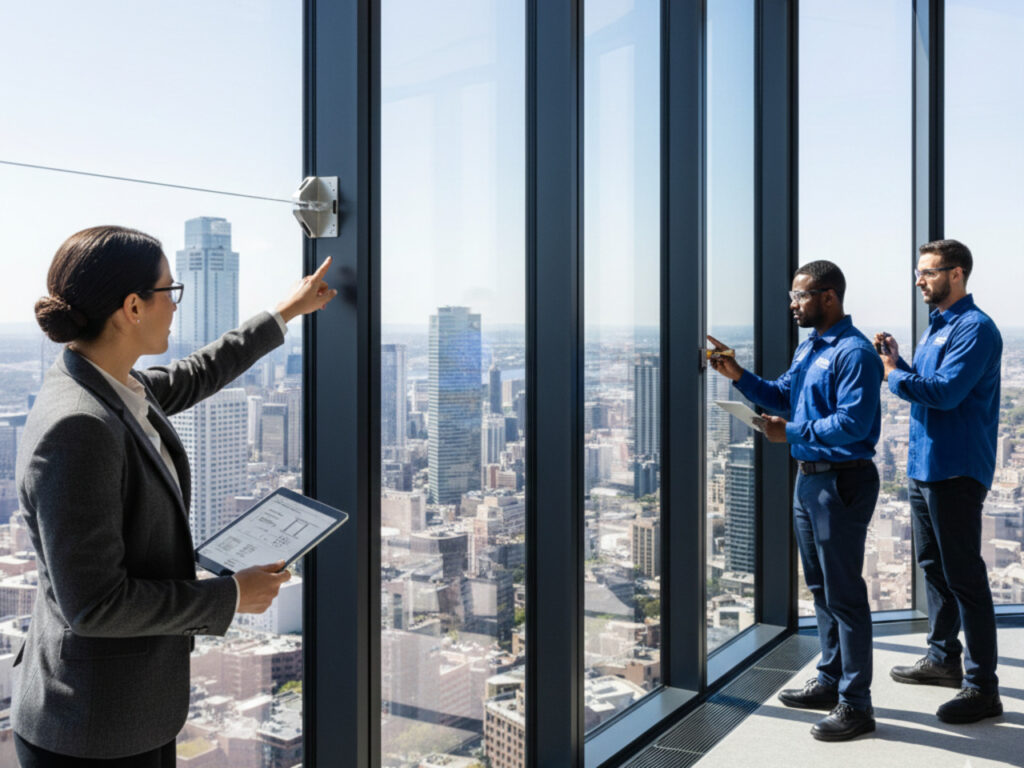
Ignoring glass nuances can significantly elevate project risks and potential liabilities. Decisions based solely on initial cost often lead to long-term problems. This approach can increase operational expenses over time. More critically, it may compromise the safety of building occupants. Our role is to provide the insights needed for informed choices. This helps managers mitigate risks effectively and protect their projects.
The Evolving Landscape of Building Security and Liabilities
The demands on building security and safety systems are continually evolving, driven by changing threats and increasingly rigorous compliance standards. From active shooter incidents in educational facilities to smash-and-grab burglaries in retail environments, the vulnerabilities of standard glazing are more apparent than ever. Project Managers must address these evolving threats proactively.
The legal landscape surrounding building liabilities is becoming more stringent. Incidents resulting from inadequate security or safety measures can lead to significant financial repercussions, reputational damage, and legal action. Therefore, the specification of glazing systems is no longer a simple material choice. It is a critical risk management decision that directly impacts the project’s long-term viability and the safety of its occupants.
Introducing the Core Comparison: Tempered, Laminated, and the Missing Link
Historically, the primary debate in glass specification for enhanced safety and security has centered on tempered versus window laminate. Both types offer distinct advantages over standard annealed glass, but their performance profiles are fundamentally different. Understanding these differences is crucial for the appropriate application.
A comprehensive strategy for modern building envelopes extends beyond this binary choice. Tempered and laminated glass serve as foundational components. However, their inherent properties are often insufficient for contemporary demands. The advanced solution involves integrating professionally installed security window film. This represents a critical “missing link” in many project specifications. This third variable significantly augments the performance of the base glass. It offers a synergistic approach to total risk mitigation.
Understanding Tempered Glass: Production, Properties, and Performance
How Tempered Glass is Made: The Thermal Quenching Process
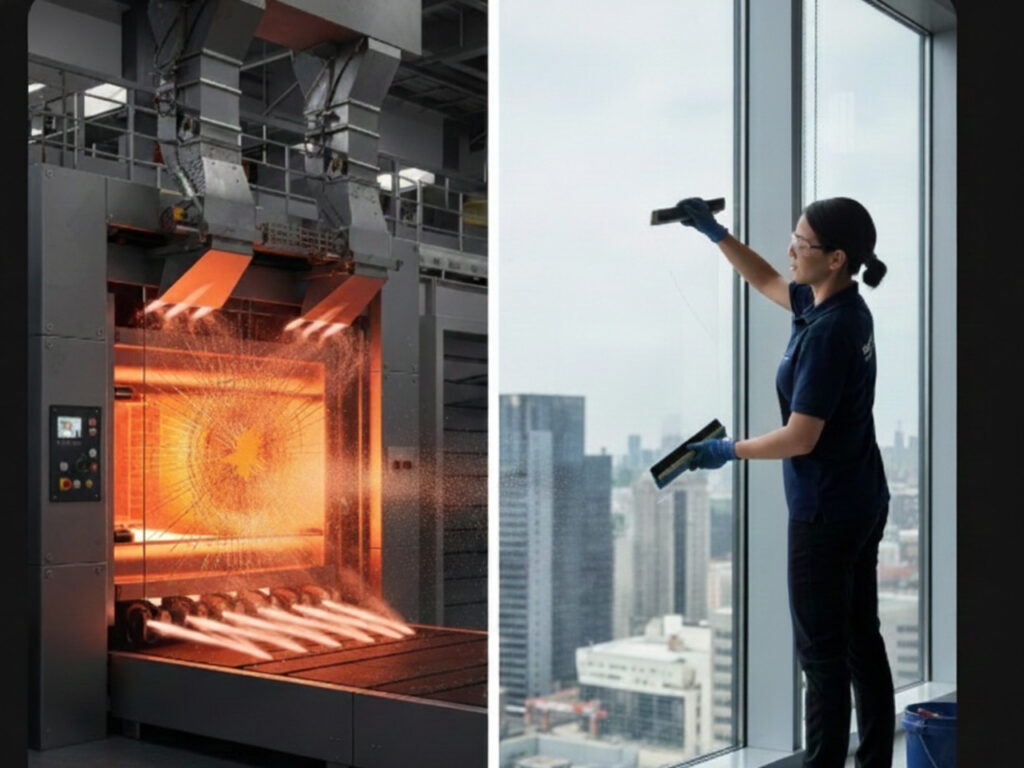
Tempered glass, often referred to as toughened glass, undergoes a specific manufacturing process designed to enhance its strength and alter its breakage characteristics. This process, known as thermal quenching, involves heating annealed glass to approximately 1,200 degrees Fahrenheit (650 degrees Celsius). Once heated, the glass is rapidly cooled, or “quenched,” with blasts of cold air.
This rapid cooling causes the outer surfaces of the glass to cool and contract much faster than the inner core. As the inner core eventually cools and contracts, it tries to pull away from the already solidified outer surfaces. This action induces powerful compressive stresses on the surface and tensile stresses in the core, creating a state of balanced stress that gives tempered glass window its enhanced properties.
Distinctive Characteristics: Strength, Thermal Resistance, and Break Pattern
The thermal quenching process imparts several distinctive characteristics to tempered glass:
- Increased Strength: Tempered glass is typically four to five times stronger than annealed glass of the same thickness when subjected to impact or thermal stress. This makes it highly resistant to bending, impacts, and temperature fluctuations.
- Enhanced Thermal Resistance: Due to its pre-stressed state, tempered glass can withstand larger temperature differences across its surface. This characteristic makes it suitable for applications where thermal stress might cause annealed glass to break. It is often specified for windows exposed to intense sunlight or located near heating and cooling vents where uneven temperature distribution is common.
- Unique Break Pattern: Unlike annealed glass, which breaks into sharp, jagged shards, tempered glass shatters into small, relatively blunt, cube-like fragments. This characteristic, known as the “dicing” effect, is a primary safety feature.
Understanding the “Dicing” Effect and Its Safety Implications
The “dicing” effect is the most recognized safety feature of tempered glass. Breaking releases the internal tensile stress stored within the material. This causes the pane to disintegrate into thousands of small, granular pieces. These pieces are less likely to cause severe lacerations or impalement. They are much safer than the large, sharp shards of annealed glass.
This mechanism makes tempered glass mandatory where human impact is a risk. It is common in doors, sidelites, and large windows. However, this fragmentation pattern also makes the opening immediately vulnerable. Once the glass shatters, an intruder can easily breach the space.
Common Applications and Limitations in Commercial Settings
Tempered glass is widely utilized in commercial, retail, and education projects where safety from human impact is a primary concern. Its common applications include:
- Glass doors and entryways (storefront doors, interior office doors)
- Sidelites adjacent to doors
- Shower enclosures and partitions
- Windows in high-traffic areas or at specific heights above the ground
- Automotive side and rear windows
Despite its superior strength and safety-breaking characteristics, tempered glass has significant limitations, particularly concerning security. Once the glass surface integrity is compromised, the entire pane shatters instantly, creating an immediate and unimpeded point of entry. This makes tempered glass highly susceptible to forced entry, blast fragmentation, or projectile impacts. For applications requiring sustained security or resistance to intrusion, tempered glass alone presents a notable vulnerability that must be addressed through additional measures.
Exploring Laminated Glass: The Interlayer Advantage for Enhanced Safety
Laminated glass represents a significant advancement in safety glazing, offering a distinct set of performance characteristics crucial for modern commercial, retail, and educational environments. Its fundamental design provides a level of integrity and containment that monolithic glass cannot match, directly addressing numerous project risks.
The Lamination Process: Bonding Glass with Polyvinyl Butyral (PVB)
The creation of laminated glass involves a precise manufacturing process where two or more panes of glass are permanently bonded together. This process uses an interlayer material, most commonly Polyvinyl Butyral (PVB).
The bonding occurs under intense heat and pressure inside an autoclave. This environment creates a single, integrated unit from multiple layers. The resulting composite material leverages the structural strength of the glass along with the flexibility and adhesion of the interlayer. This produces a product far more resilient than its individual components.
The Role of the Interlayer: Retention, Security, and Sound Attenuation
The PVB interlayer is the cornerstone of laminated glass performance, providing multiple critical benefits:
- Fragment Retention: In the event of breakage, the interlayer holds the shattered glass fragments firmly in place, preventing them from scattering and causing injury. This significantly reduces the risk of falling glass shards, a primary safety concern in high-traffic or overhead glazing applications.
- Enhanced Security: The interlayer acts as a formidable barrier against penetration. While the glass layers may break, the PVB remains largely intact, making forced entry significantly more difficult and time-consuming. This delay mechanism is invaluable for security applications, providing precious time for response.
- Sound Attenuation: The viscoelastic properties of PVB are highly effective at dampening sound vibrations. This inherent acoustic benefit helps to reduce external noise transmission, creating quieter interior environments essential for productive workspaces, serene retail experiences, or focused learning in educational facilities.
How Laminated Glass Fails: The “Spiderweb” Effect and Containment
When subjected to impact beyond its tolerance, laminated glass typically exhibits a characteristic “spiderweb” or “bullseye” fracture pattern. Unlike monolithic glass that fragments into sharp, disconnected pieces, the broken glass in a laminated unit remains adhered to the interlayer. This containment property is vital. It ensures the integrity of the glazing opening is largely maintained, preventing immediate breach or the dangerous expulsion of glass. This structural continuity also provides temporary weatherproofing and security until replacement can be arranged.
Benefits Beyond Breakage: UV Protection and Sound Control
Beyond its safety and security capabilities, laminated glass offers additional performance advantages. The PVB interlayer naturally blocks a substantial portion of harmful ultraviolet (UV) radiation, often exceeding 99%. This protection helps to safeguard interior furnishings, merchandise, and artwork from fading and degradation. The inherent sound attenuation properties mentioned earlier contribute significantly to occupant comfort and interior acoustic control, which can be a key specification for projects located near busy roads, airports, or in open-plan office designs.
Applications Requiring Laminated Glass: Security and Safety Glass Standards
Given its unique properties, laminated glass is frequently mandated or strongly recommended for a wide range of applications where enhanced safety and security are paramount. Common uses include:
- Overhead glazing, skylights, sloped glazing, and canopies where falling glass poses a severe risk.
- Balustrades and railings, to prevent fall-through and retain structural integrity.
- Storefronts and entrances, to deter forced entry and protect occupants from projectiles.
- Schools and public buildings, where occupant safety and security are critical concerns.
- Security glazing in areas requiring specific blast mitigation or ballistic resistance.
Compliance with safety glass standards such as CPSC 16 CFR 1201 and ANSI Z97.1 is a fundamental requirement, and laminated glass meets these stringent criteria by preventing hazardous fragment dispersal.
What is the Difference Between Tempered and Laminated Glass: Critical Differentiators for Project Managers
Project Managers frequently face decisions regarding glass specifications that balance performance, safety, and budget. Understanding the core differences between tempered and laminated glass is essential for mitigating project risks and ensuring long-term value. While both are categorized as safety glass, their failure modes and primary advantages are distinctly different.
A Direct Comparison: Strength, Safety, and Cost Implications
When evaluating tempered versus laminated glass, project managers must consider their specific performance characteristics:
- Strength Before Breakage: Tempered glass is approximately four to five times stronger than annealed glass of the same thickness when subjected to blunt impact or thermal stress. Laminated glass, while stronger than annealed, does not possess the same pre-breakage strength as tempered glass in terms of pure impact resistance.
- Failure Mode and Safety: Tempered glass, upon impact, shatters into small, relatively blunt, pebble-like fragments, designed to reduce injury. Laminated glass, conversely, tends to crack but remains largely intact, with glass fragments adhering to the interlayer, thereby maintaining the opening’s integrity and preventing shards from flying.
- Cost: Generally, tempered glass is more economical than laminated glass due to a simpler manufacturing process and lower material costs. However, this initial cost difference must be weighed against the long-term benefits and risk reduction capabilities of laminated glass.
Performance Under Stress: Impact Resistance and Break Patterns
The performance characteristics of tempered and laminated glass under stress are fundamentally different. Tempered glass undergoes a thermal tempering process that creates internal stresses, resulting in high surface compression and a tension core. This makes it highly resistant to blunt impact, thermal shock, and bending stresses. However, once its integrity is breached, the break pattern is catastrophic and complete, leaving an open void. Laminated glass, while not as strong against initial blunt impact as tempered glass, excels in post-breakage performance. Its interlayer ensures that even when shattered, the glass remains within the frame, resisting penetration and maintaining a barrier. This makes it superior for applications requiring forced entry resistance or fall-through protection.
Meeting Building Codes and Safety Glass Standards
Both tempered and laminated glass are recognized as safety glass. They comply with critical building codes like CPSC 16 CFR 1201. The specific application always dictates the choice. Codes mandate safety glazing in hazardous locations like doors and sidelites. Laminated glass is required for overhead and sloped glazing. It is essential where glass retention and fall-through protection are non-negotiable. Project managers must consult local building codes and specifications rigorously. This ensures the correct safety glass is selected for each component. Following these steps effectively mitigates regulatory risks.
Evaluating Durability and Longevity for Commercial Projects
Both tempered and laminated glass are engineered for durability in commercial applications. Tempered glass offers excellent resistance to scratching and general surface wear due to its hardened surface. Its resistance to thermal stress also contributes to its longevity in varying environmental conditions.
Modern laminated glass uses advanced PVB interlayers for high durability. It resists delamination and discoloration even under prolonged UV exposure. This longevity is beneficial for maintaining the building enclosure’s integrity. It reduces the immediate need for costly replacements after minor damage. This ensures consistent occupant comfort and security over time.
Initial Investment vs. Long-Term Value and Risk Mitigation
While tempered glass typically presents a lower initial investment, a comprehensive project analysis must extend beyond upfront costs to include long-term value and critical risk mitigation. Laminated glass, despite its higher initial cost, often provides superior long-term value through:
- Reduced Replacement Frequency: Its containment properties mean minor impacts might not necessitate immediate replacement, especially in security or weather protection scenarios.
- Enhanced Security: The delay in forced entry directly mitigates security risks, potentially reducing property loss and liability.
- Occupant Safety: Minimizing injury from falling or flying glass fragments significantly reduces liability exposure.
- Operational Benefits: UV protection contributes to energy efficiency and preservation of interior assets, while sound attenuation enhances the quality of the indoor environment.
For Project Managers, selecting between tempered and laminated glass is a risk management decision. Each offers distinct advantages, but neither provides a universal solution for all safety and security challenges. The true strategic advantage, and the most robust approach to risk mitigation for your projects, emerges when these glass types are optimally paired with advanced security film systems.
Beyond the Glass: The Indispensable Role of Security Window Film
The Fundamental Argument: Why Glass Type Alone is Insufficient for Modern Security
Project Managers meticulously evaluate the performance characteristics of every material. The distinction between tempered and laminated glass is critical for safety. However, relying solely on base glass is often insufficient for modern protocols. Glass remains a primary vulnerability in any building envelope regardless of strength. It faces risks from forced entry, severe weather, and deliberate attacks. The integrity of building glass presents a consistent risk to the project. This necessitates an advanced mitigation strategy beyond the glass itself. True risk management demands a more robust and comprehensive solution.
Introducing Security Window Film: A Critical Layer of Protection
This is where security window film emerges as an indispensable component of any project specification. Rather than replacing the protective qualities of tempered or laminated glass, security film acts as a powerful enhancement, transforming ordinary or even high-performance glass into a far more resilient and protective barrier. It represents a critical third variable in the equation, designed to keep glass intact, prevent dangerous fragmentation, and significantly delay unauthorized access.
How Security Film Works: Reinforcing Glass at a Molecular Level
Security window film is typically constructed from multiple layers of high-tensile polyester, bonded together with robust, proprietary adhesives. When applied to glass, this system forms an incredibly strong, yet flexible, membrane across the entire pane.
Upon impact, the film holds broken glass fragments firmly together instead of allowing them to shatter into hazardous shards. This prevents immediate penetration of the building envelope. This action significantly increases the glass’s overall tear resistance and elongation capabilities. It effectively turns a brittle material into a flexible, tenacious barrier. The system can then absorb and distribute impact energy across the entire surface.
Bridging the Gap: Enhancing Both Tempered and Laminated Glass
The true power of security window film lies in its ability to bridge performance gaps. It amplifies the inherent benefits of both tempered and laminated glass. For tempered glass, it addresses the primary concern of explosive fragmentation. The film holds the blunt shards together to protect occupants from falling debris.
For laminated glass, the film acts as an additional layer of reinforcement. It improves overall interlayer adhesion and impact resistance. This makes the system significantly more difficult to penetrate. It elevates the performance of each glass type to a higher standard of security and safety.
Addressing Vulnerabilities: Forced Entry, Blast Events, and Natural Disasters
Implementing security film directly addresses multiple project vulnerabilities, thereby significantly reducing potential liabilities and enhancing occupant safety.
- Forced Entry: The film drastically delays attempts at breaching, converting a rapid entry into a prolonged, noisy, and highly visible event. This crucial delay provides valuable time for occupants to react and for security personnel to respond.
- Blast Events: In the event of an explosion, blast mitigation film is engineered to absorb and dissipate the immense energy, holding the glass within the frame or in a single, flexible sheet, preventing deadly flying shards from becoming projectiles. This is critical for occupant protection.
- Natural Disasters: During severe weather, seismic events, or high winds, the film strengthens the glass against flying debris, maintaining the building envelope’s integrity and protecting interior assets from exposure.
Optimizing Security Performance: How Film Elevates Both Glass Types
Enhancing Tempered Glass: Mitigating Shatter Hazards and Delaying Forced Entry
While tempered glass offers superior strength against direct impact compared to annealed glass, its inherent characteristic of shattering into small, relatively blunt fragments poses a significant safety concern. Security window film directly mitigates this hazard by bonding to the tempered glass surface. When tempered glass shatters, the film holds these thousands of fragments together in a single unit, preventing dangerous dispersal into occupied spaces. This containment dramatically reduces the risk of injury from flying glass. Furthermore, this cohesive, film-backed pane still requires substantial effort to breach, effectively delaying forced entry and acting as a formidable deterrent against intruders.
Reinforcing Laminated Glass: Improving Interlayer Adhesion and Impact Resistance
Laminated glass already provides a degree of safety and security due to its interlayer (typically PVB or SGP) which holds glass fragments together upon breakage. However, security film enhances this protection by providing an additional, robust layer of adhesion and impact absorption. When applied to laminated glass, the film’s strong adhesive bonds synergistically with the existing interlayer, further distributing impact forces across a wider area. This collaboration significantly improves the overall impact resistance and tear strength of the entire glass unit, making it exponentially more difficult for an intruder to create an opening or for the glass to be dislodged from its frame during severe impact events.
The Science of Protection: 3M Ultra Series Films and Advanced Impact Resistance
To illustrate advanced performance, consider technologies such as 3M Ultra Series Films. These films are engineered with a unique, multi-layer micro-laminate construction that sets them apart from conventional security films. Unlike standard films that are typically single-layer polyester, Ultra Series films combine multiple, thinly layered films into one product. This patented construction provides significantly enhanced tear resistance, superior elongation to break, and greater energy absorption capabilities. The result is a film that can withstand and recover from impacts that would cause conventional films to tear and allow penetration. This scientific approach delivers a robust barrier designed to delay forced entry, provide advanced blast mitigation film properties, and resist extreme weather-related impacts more effectively than simpler film designs.
Understanding Attachment Systems: Securing the Film-to-Frame Bond
Even the most advanced security film can be compromised if the entire glass-film system is pushed out of the frame. This is where a professionally installed attachment system becomes critical. An attachment system creates a secure bond between the security film and the window frame itself, preventing the pane from being dislodged or pushed inwards.
Types of Attachment Systems:
- Wet Glaze Systems: Utilize a structural silicone sealant to bond the film directly to the frame, creating a continuous, flexible seal.
- Mechanical Systems: Employ metal battens or other mechanical devices to physically secure the film edge to the frame structure.
Specifying an appropriate attachment system is paramount for achieving the highest levels of protection, especially in applications requiring blast mitigation or advanced forced entry resistance. Without this critical film-to-frame bond, the full performance potential of the security film cannot be realized.
Blast Mitigation Film: Protecting Occupants from Severe Threats
Blast mitigation film is a specialized category of security film engineered to address the catastrophic effects of explosive events. Its primary function is not necessarily to prevent glass breakage, but rather to mitigate the primary cause of injury and fatality in a blast: flying glass fragments. These films are designed to withstand extreme blast pressures by holding the shattered glass together within the frame, or at least in one flexible, coherent piece. This containment prevents deadly shards from becoming high-velocity projectiles, thus protecting occupants within the building. For projects in high-risk areas or critical infrastructure, specifying film that meets stringent blast resistance standards is a non-negotiable aspect of occupant safety and risk management.
Adherence to Industry Standards: ASTM Testing and Performance Benchmarks
For Project Manager Paul, ensuring verifiable performance and reducing liability is paramount. This necessitates specifying security films that adhere to recognized industry standards and have undergone rigorous third-party testing.
- Key Standards:
- ASTM F1642: Standard Test Method for Glazing and Glazing Systems Subject to Airblast Loadings. This standard evaluates the performance of glazing systems under simulated blast conditions.
- ASTM F1233: Standard Test Method for Forced Entry Resistant Glazing Systems. This test assesses the resistance of glazing to various forced entry attempts using specific tools and impact energies.
- GSA Level C, B, A: These are U.S. General Services Administration standards often referenced for blast protection levels in government and critical infrastructure projects.
By requiring products that meet or exceed these ASTM benchmarks and GSA classifications, project specifications can be grounded in objective performance data. This approach not only guarantees a predictable level of security and safety but also provides a clear framework for liability assessment and compliance, assuring stakeholders of the project’s robust protective measures.
Strategic Specification: Designing Comprehensive Glass Security Solutions
Moving beyond the fundamental characteristics of tempered and laminated glass, the true strategic advantage for project managers lies in their comprehensive integration into a building’s security envelope. This involves not only selecting the appropriate glass substrate but crucially, enhancing it with advanced security film systems. This holistic approach transforms a design decision into a robust risk mitigation strategy, directly addressing the complexities faced in commercial, retail, and educational facilities.
Assessing Project-Specific Risks: Tailoring Solutions for Commercial, Retail, and Education Facilities
Effective security specification begins with a granular understanding of the unique risks associated with each project type. A one-size-fits-all approach is insufficient given the diverse threat landscapes.
- Commercial Facilities: For commercial properties, risk assessment often centers on data protection, intellectual property, executive safety, and asset security. Glass vulnerabilities can be exploited for forced entry to access sensitive areas or to cause significant business disruption. The goal here is to create robust barriers that delay unauthorized access, allowing time for security personnel or law enforcement to respond.
- Retail Environments: Retail locations face distinct challenges, primarily concerning theft deterrence, smash-and-grab incidents, and maintaining a secure environment for customers and staff. Large glass storefronts, while critical for display, are inherent vulnerabilities. The focus is on deterring opportunistic crime and containing glass fragments during a breach to prevent injuries and minimize product loss.
- Educational Institutions: Schools and universities present a complex risk profile, with paramount importance placed on student and staff safety, particularly in active threat scenarios. Windows and doors often represent critical points of entry. Security solutions must be designed to significantly delay forced entry, providing invaluable time for lockdown procedures and emergency response, thereby directly mitigating potential casualties.
By systematically identifying these project-specific vulnerabilities, project managers can move past generic solutions and specify glass and film combinations that offer targeted, effective protection.
Integrating Glass and Film: A Holistic Approach to Building Envelope Security
The synergy between glass and professionally installed security film is the cornerstone of advanced building envelope security. Neither component performs optimally in isolation when comprehensive protection is the objective.
- Enhancing Tempered Glass: While tempered glass offers superior thermal shock resistance and shatters into relatively harmless fragments, it provides minimal resistance to forced entry. A high-performance security film system applied to tempered glass significantly enhances its integrity. The film bonds the fragments together upon impact, maintaining a formidable barrier that can delay intruders for critical minutes, prevents harmful glass shards from entering the building, and contains the glass within the frame. This represents an effective security window film for tempered glass.
- Fortifying Laminated Glass: Laminated glass, with its internal polyvinyl butyral (PVB) or SentryGlas Plus (SGP) interlayer, already offers a degree of forced entry resistance and fragment retention. However, applying a security film to laminated glass can further bolster its performance. This creates a multi-layered defense, adding another robust barrier that requires more force and time to compromise, exceeding the capabilities of laminated glass for security alone. This is particularly relevant in high-security applications where maximum delay is paramount.
The integration transforms the glass system into a resilient membrane, designed to absorb impact energy, resist penetration, and maintain its structural integrity far longer than unfilmed glass, regardless of its original composition.
Navigating Building Codes and Compliance for Advanced Security Systems
For project managers, adherence to building codes and industry standards is non-negotiable. Advanced security film systems play a crucial role in meeting, and often exceeding, these regulatory requirements, particularly concerning safety glazing and impact resistance.
- Safety Glazing Standards: In many jurisdictions, building codes mandate the use of safety glazing in specific locations to prevent injury from accidental human impact. While tempered and laminated glass inherently meet these requirements, security film can be specified to upgrade existing non-safety glazing to meet these safety glass standards without the cost and disruption of full window replacement. This is particularly valuable in renovation projects for older buildings.
- Forced Entry and Ballistic Ratings: For higher security needs, such as those in government facilities or critical infrastructure, specific forced entry or even ballistic resistance ratings may be required. Security film, especially when coupled with an attachment system, can dramatically increase the performance of standard glazing to meet various levels of these stringent standards, often quantified by standards such as UL 752 or ASTM F1233. Project managers must work with certified film professionals to ensure the proposed solutions meet the exact specifications of the relevant codes and performance benchmarks.
Understanding how security film integrates with these regulatory frameworks allows project managers to make informed decisions that enhance safety, improve security, and ensure project compliance.
Practical Considerations: Installation, Maintenance, and Longevity
Beyond initial specification, the long-term effectiveness and value of a glass security system depend heavily on practical aspects such as professional installation, proper maintenance, and understanding product longevity. These factors are critical for minimizing project risks and ensuring sustained performance.
Installation Precision
- Expert Application: The performance of security film is directly proportional to the quality of its installation. Professional installation by certified technicians ensures proper surface preparation, precise trimming, and meticulous application to avoid common issues like bubbling, creasing, or edge lifting. Incorrect installation compromises the film’s ability to absorb and distribute impact forces effectively, rendering the investment less effective.
- Edge Retention Systems: For maximum security and forced entry resistance, particularly in active threat mitigation, the film often requires an edge retention or anchor system. These systems mechanically attach the film and glass unit to the window frame, preventing the entire filmed glass pane from being pushed out upon impact. Proper installation of these systems is complex and demands specialized training and tools, emphasizing the need for an experienced installer.
Maintenance and Care
- Simple Regimen: Once installed, security film requires minimal special maintenance. Standard window cleaning solutions are typically safe, provided they are non-abrasive and do not contain harsh chemicals like ammonia, which can degrade the film’s adhesive or surface coating over time. A soft cloth or squeegee is generally recommended for cleaning.
- Damage Assessment: Regular visual inspections can help identify any potential damage to the film, such as deep scratches or delamination. Prompt attention to these issues ensures the film’s protective properties remain intact.
Longevity and Warranty
- Durable Performance: High-quality security films are engineered for durability and long-term performance, often backed by substantial manufacturer warranties covering issues like peeling, bubbling, cracking, or delamination. These warranties typically range from 10 to 15 years, or even a lifetime for residential applications, underscoring the film’s inherent robustness.
- Consistent Protection: Unlike some other building materials, security film’s protective properties do not degrade significantly over its warranted lifespan, assuming proper installation and maintenance. This ensures a consistent level of protection throughout the film’s service life, making it a reliable, long-term security enhancement.
Leveraging Expert Partnerships: The Value of a 3M Window Film Installer
For project managers navigating the complexities of glass security, partnering with a certified 3M Window Film Installer is a critical strategic decision. These experts offer specialized knowledge and support that extends far beyond simple product application.
- Comprehensive Risk Assessment: Certified 3M installers are trained to conduct thorough site assessments, identifying specific vulnerabilities and understanding the unique threat profile of each facility. They can advise on the appropriate film type, thickness, and attachment system required to meet defined security objectives and performance standards.
- Product Expertise and Specification: With an extensive portfolio of 3M security films, these professionals possess deep product knowledge. They can articulate the performance characteristics of each film, explaining how different technologies (e.g., micro-layered film, anti-graffiti film, combinations with solar control) can address multiple project requirements simultaneously, ensuring optimal specification.
- Guaranteed Professional Installation: Adhering to stringent 3M installation protocols, certified installers ensure meticulous application, which is paramount for warranty validation and achieving the film’s rated performance. This minimizes risks associated with faulty installation and ensures the long-term integrity of the security system.
- Code Compliance and Documentation: Expert installers are often well-versed in local building codes and relevant safety standards. They can provide essential documentation, performance data, and test reports to assist project managers in demonstrating compliance and justifying specification choices to stakeholders.
Engaging such a partner early in the design phase transforms the glass security aspect from a potential project liability into a proactively managed and highly effective protective measure.
Illustrative Scenarios: Matching Solutions to Specific Security Objectives
To solidify the understanding of how glass and security film integrate into tailored solutions, consider these common project scenarios:
High-Value Retail Storefront Protection
- Objective: Deter smash-and-grab theft and contain glass fragments to prevent injury and loss.
- Solution: Specify existing tempered storefront glass to be upgraded with a multi-layered, robust security film (e.g., 3M Safety & Security Film Ultra Series). An optional wet glaze or attachment system reinforces the film’s bond to the frame, significantly increasing the time and effort required for forced entry. This creates a highly resistant barrier that frustrates intruders and protects assets.
Active Threat Mitigation in an Educational Facility
- Objective: Delay forced entry into classrooms and administrative offices to provide time for lockdown procedures and emergency response.
- Solution: Apply a thick, high-performance security film (e.g., 3M Safety & Security Film Ultra S600) to existing annealed or tempered glass windows and doors. Crucially, this must be paired with a comprehensive attachment system (e.g., 3M Impact Protection Attachment System) that mechanically bonds the filmed glass to the window frame. This system transforms the window into a tenacious barrier, significantly increasing the delay time against violent forced entry attempts.
Commercial Office Perimeter Security and Data Integrity
- Objective: Enhance perimeter security against break-ins, protect sensitive data, and provide occupant safety from potential blast events or severe weather.
- Solution: Utilize laminated glass for its inherent fragment retention and sound-dampening properties. Augment this with a robust security film on the interior surface, potentially a combination film that also offers solar control benefits. This multi-layered system provides superior forced entry resistance, ensures that glass fragments remain contained during an incident (whether an intentional attack or an accidental explosion nearby), and contributes to the overall energy efficiency and comfort of the building.
These scenarios illustrate that the most effective solutions are not found in isolated product choices but in the strategic combination and professional installation of glass and security film, precisely aligned with project-specific security objectives.
Conclusion: Key Takeaways and Next Steps for Enhanced Project Security
The landscape of building safety and security is continuously evolving, placing increasing demands on project managers to implement robust, forward-thinking solutions. The insights presented reaffirm that achieving optimal protection extends beyond the traditional debate of glass types.
Reaffirming the Thesis: The Synergy of Glass and Security Film
Our central thesis holds: while project managers meticulously evaluate the merits of tempered versus laminated glass, the most effective security and safety strategy lies not in the glass alone, but in a professionally installed security window film system that strategically enhances the inherent properties of the base glass. This synergy creates a defense mechanism that is significantly more resilient, delaying forced entry, mitigating hazards from broken glass, and ultimately safeguarding occupants and assets more comprehensively than any single component could achieve.
Empowering Project Managers to Make Informed, Risk-Averse Decisions
For Project Manager Paul and his peers, understanding this nuanced relationship between glass and film is critical for making informed, risk-averse decisions. By proactively incorporating advanced security film into project specifications, project managers can:
- Minimize liabilities associated with glass-related injuries.
- Enhance a building’s resilience against a spectrum of threats, from accidental impacts to intentional acts of violence.
- Ensure compliance with safety glass standards and elevate security performance standards.
- Deliver greater value and peace of mind to building owners and occupants.
This proactive approach transforms a potential vulnerability into a managed strength, contributing significantly to the overall success and safety profile of any commercial, retail, or educational facility.
The Future of Glass Security: Proactive Protection for Modern Facilities
The future of security glass is unequivocally proactive. As threats continue to evolve and demands for occupant safety intensify, static security measures are no longer sufficient. Advanced security film systems, applied to both new and existing glazing, offer a dynamic, scalable, and highly effective solution for modern facilities. They provide an invisible yet formidable layer of protection that can adapt to changing risk profiles, offering a cost-effective alternative to full window replacement while significantly upgrading security performance. This technology represents a crucial element in creating truly resilient and protected environments.
Partnering for Success: Specifying Comprehensive Security Solutions
To effectively implement these comprehensive security solutions, collaboration is key. Project managers are strongly encouraged to partner with certified experts, such as 3M Window Film Installers, early in the project lifecycle. These professionals provide invaluable assistance in conducting thorough risk assessments and recommending appropriate film technologies. They ensure precise installation and help navigate complex building codes and requirements. By leveraging this specialized expertise, project managers can confidently deploy glass security solutions. These solutions meet and exceed contemporary safety expectations, establishing a new benchmark for facility protection.
Frequently Asked Questions
What is the primary difference between tempered and laminated glass?
Tempered glass is heat-treated to be much stronger and shatters into small, blunt pieces when broken. Laminated glass consists of two or more panes of glass bonded by a polyvinyl butyral (PVB) interlayer, which holds glass fragments in place upon impact, preventing them from scattering and maintaining the opening’s integrity.
Can security window film enhance the security of existing tempered glass?
Yes, security window film significantly enhances tempered glass. When applied, the film bonds to the glass and holds the shattered fragments together upon impact, preventing dangerous dispersal and creating a more resilient barrier that delays forced entry. This is known as a security window film for tempered glass applications.
How does security film improve laminated glass for security purposes?
Security film adds a layer of reinforcement to laminated glass. It improves the interlayer adhesion and impact resistance, making it even more difficult to penetrate or dislodge from its frame during severe impacts, providing a superior level of laminated glass for security.
What are blast mitigation films, and what standards should Project Managers look for?
Blast mitigation film is a specialized security film designed to absorb and dissipate the energy from an explosive event, holding shattered glass within the frame to prevent deadly flying fragments. Project Managers should look for films that meet industry standards such as ASTM F1642 and GSA Level C, B, or A for verified performance.
Is the professional installation of security film and attachment systems necessary?
Absolutely. The performance and effectiveness of security film, especially for forced entry or blast mitigation, depend heavily on professional installation by certified technicians. This includes the precise application and the correct installation of attachment systems to bond the film-glass unit securely to the window frame.