Table of Contents:
- Defining Tempered Glass: Properties and Purpose
- From Annealed to Resilient: How is Tempered Glass Made?
- The Critical Distinction: Why “Safety Glass” Doesn’t Equate to “Security Glass”
- Navigating Compliance: Building Codes, Safety Standards, and Identifying Tempered Glass
- Exposing the Vulnerability: Where Tempered Glass Fails Against Modern Threats
- Bridging the Gap: How Advanced Security Films Transform Tempered Glass Protection
- Unlocking Superior Protection: The Power of 3M Safety & Security Window Film
- Strategic Implementation: Integrating Advanced Film Solutions into Your Projects
- Conclusion: Key Takeaways and Next Steps
- Frequently Asked Questions
- Related Posts from Window Film Depot
Defining Tempered Glass: Properties and Purpose
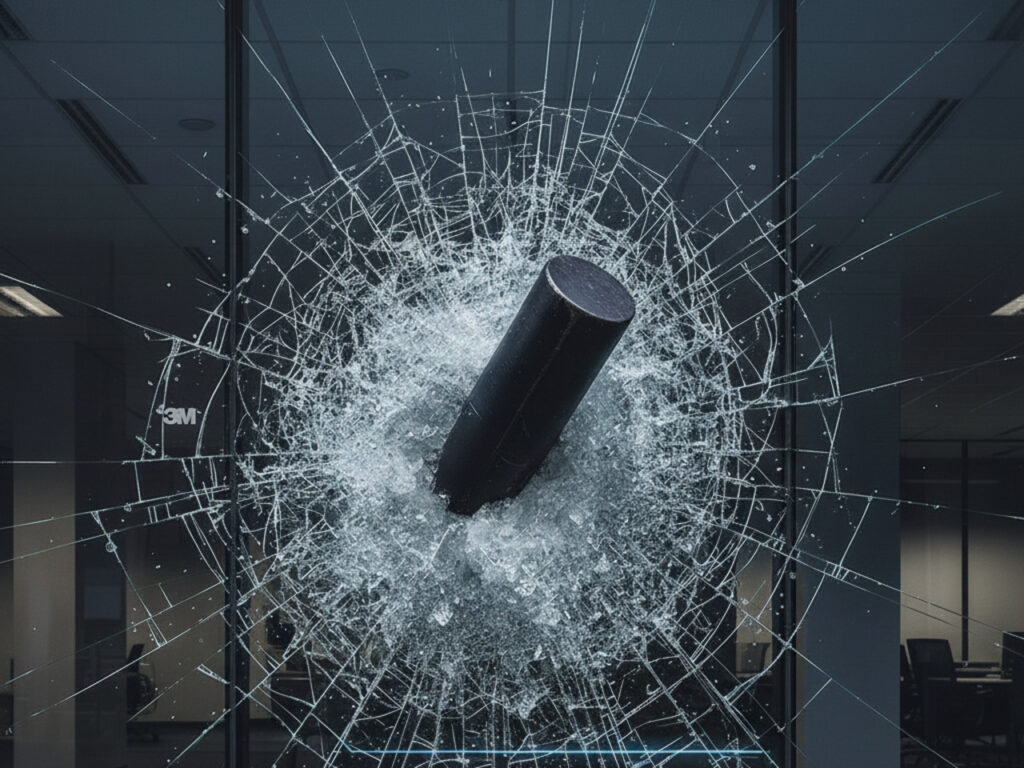
Tempered glass is a type of safety glazing processed by controlled thermal or chemical treatments to increase its strength compared with normal, or annealed glass. Its primary purpose, central to its design and manufacture, is to enhance safety by preventing serious injury when breakage occurs. This makes it a foundational component in modern building codes. It is used where human impact is a risk. Common areas include doors and windows near walkways. It is also used for shower enclosures. Tempered glass is significantly stronger than standard glass. However, its design intent focuses on how it breaks. It does not prioritize resistance to sustained forced entry.
Contrasting Tempered Glass with Annealed and Laminated Alternatives
To fully appreciate the role and limitations of what is tempered safety glass, it helps to understand how it differs from other common glass types:
- Annealed Glass: This is standard, untreated glass. When broken, it fractures into large, jagged, and potentially dangerous shards. It offers minimal resistance to impact and poses a significant laceration hazard.
- Tempered Glass: As previously noted, this glass is heat-treated to dramatically increase its strength and alter its breakage pattern. It is approximately four to five times stronger than annealed glass of the same thickness. Its key differentiator is how it breaks.
- Laminated Glass: Comprising two or more layers of glass bonded together by an interlayer (typically polyvinyl butyral or PVB), laminated glass is designed to hold together when shattered. The interlayer keeps the glass fragments adhered, maintaining the integrity of the opening even after severe impact. This property is what often leads to its specification for security applications, as it resists penetration and provides a crucial delay. The comparison of tempered glass vs laminated glass highlights a critical distinction in security performance.
The Characteristic Breakage Pattern: A Safety Feature
The defining characteristic of tempered glass is its unique breakage pattern. This pattern serves as its core safety feature. When it fails, the glass shatters into small, blunt fragments. These pebble-like pieces replace sharp, jagged shards. This fragmentation significantly reduces the risk of serious lacerations. It is a critical safety standard for many applications. However, this disintegration also represents a primary security vulnerability. The glass breaks immediately and completely into small pieces. While it prevents injury, it eliminates the barrier function. It offers no meaningful resistance to an intruder once compromised.
From Annealed to Resilient: How is Tempered Glass Made?
The Thermal Tempering Process: Heating and Rapid Cooling
The transformation of ordinary annealed glass into robust tempered glass is a precise scientific process, predominantly achieved through thermal tempering. Manufacturers begin the process by cutting the glass to its final size and shape, as they cannot modify it after tempering. The operator then heats the glass in a tempering oven to temperatures exceeding 1100°F (around 600°C), which brings the material close to its softening point. This uniform heating ensures that the entire pane reaches the temperature necessary for structural transformation.
Quenching: How Stress Layers Create Strength
Immediately after heating, the glass undergoes a rapid cooling process known as “quenching.” High-pressure air blasts both surfaces of the glass simultaneously. The outer surfaces cool and solidify much faster than the interior of the glass. As the inner core continues to cool and contract, it pulls the already solidified outer layers into a state of high compression. Concurrently, the interior of the glass remains in tension. It is this carefully balanced system of compression on the surfaces and tension in the core that gives tempered glass its remarkable strength, making it significantly more resistant to impact, bending, and thermal stress compared to annealed glass.
How the Manufacturing Process Impacts Performance and Limitations
The thermal tempering process fundamentally alters the glass’s stress profile, directly influencing its performance and inherent limitations. The induced surface compression provides tempered glass with its superior strength against blunt force impacts and thermal shock. This makes it ideal for applications requiring enhanced durability against everyday stresses, such as high winds or minor accidental bumps. However, this same internal stress system dictates its characteristic breakage. Once the compressed surface is breached, the stored energy releases instantly. This causes the entire pane to shatter violently into fragments. For Project Manager Paul, tempered glass meets basic safety codes. However, its fundamental design offers negligible resistance to forced entry. It transforms from a solid barrier into a pile of pieces. This happens almost instantaneously upon impact. Tempered glass fails to meet demands for true intrusion deterrence. It does not provide the delay necessary for security.
The Critical Distinction: Why “Safety Glass” Doesn’t Equate to “Security Glass”
One of the most significant misunderstandings in construction and facility management is the conflation of “safety glass” with “security glass.” While both serve important functions, their design parameters and performance characteristics are fundamentally different. Failing to grasp this distinction can lead to critical vulnerabilities in a building’s perimeter.
Defining Safety: Mitigating Injury from Glass Breakage
As established, safety glass, including tempered glass, is specifically engineered to reduce the risk of injury when broken. Its primary mechanism is to fracture into small, blunt pieces rather than large, jagged shards. This property is paramount in areas where human impact is foreseeable, such as doors and low-level windows. The goal is simple: prevent or minimize harm from accidental breakage. It fulfills codes but offers no meaningful delay to an intruder.
Defining Security: Preventing Forced Entry and Mitigating External Threats
Security glass, in contrast, is designed to withstand and deter specific external threats, delaying or preventing entry. Its purpose extends far beyond injury mitigation. True security glazing aims to:
- Resist forced entry by delaying or stopping attempts to break through the glass using blunt force, cutting tools, or projectiles.
- Mitigate ballistic threats by offering protection against firearms.
- Protect against blast events by preventing the glass from becoming dangerous projectiles.
- Contain occupants in controlled environments.
These capabilities are achieved through different manufacturing processes, typically involving laminates or specialized coatings, not simply heat treatment.
The False Sense of Security: Why Tempered Glass Can Mislead
The perception that tempered glass offers enhanced security is a common misconception that can mislead project managers and ultimately compromise a building’s defenses. Because tempered glass resists direct impact better than annealed glass, many people mistakenly assume it resists forced entry. However, this perceived strength actually creates a security vulnerability. Once an intruder breaches the surface integrity, the entire pane shatters instantaneously. This “all or nothing” break offers almost no resistance to a motivated intruder.
Project Manager Paul, who must meet specific security requirements, must recognise that tempered glass meets basic safety codes but provides only limited protection against break-ins. Relying solely on this glass leaves a project vulnerable and ignores the client’s core security needs.
Navigating Compliance: Building Codes, Safety Standards, and Identifying Tempered Glass
Understanding the baseline requirements for safety glazing in commercial construction is fundamental for any project manager. Tempered glass serves a crucial role in meeting these foundational safety codes, primarily by mitigating injury hazards. However, it is vital to recognize the specific scope of these mandates to avoid mistaking safety for comprehensive security. These are important safety glass requirements.
Where Building Codes Mandate Safety Glazing Requirements
Building codes, such as the International Building Code (IBC) and local amendments, explicitly delineate areas where manufacturers must install safety glazing. The potential for human impact and the resulting risk of injury from broken glass drive these requirements. Common locations include:
- Doors, including sliding and storm doors.
- Panels adjacent to doors, where the bottom edge is less than 60 inches above the walking surface.
- Windows and panels in bathrooms, especially those near bathtubs or showers.
- Glazing in hazardous locations like stairways, ramps, and landings.
- Windows near walking surfaces in high-traffic areas where accidental impact is likely.
The intent here is solely injury prevention, dictating that if glass breaks, it does so in a manner that reduces laceration risk.
Adhering to ANSI Z97.1: The Standard for Safety Glazing Materials
The American National Standards Institute (ANSI) Z97.1 standard is the cornerstone for safety glazing materials used in buildings. This standard specifies the performance criteria that safety glass must meet when subjected to impact tests. It defines what constitutes “safety glass” by requiring products to withstand specific impact energies without creating large, sharp shards that could cause severe injury. Tempered glass meets this standard by fracturing into small, relatively harmless pebble-like pieces upon impact. While essential for preventing accidental harm, compliance with ANSI Z97.1 solely addresses injury mitigation, not resistance to forced entry or other security threats.
Identifying Tempered Glass on a Job Site: Visual Cues and Indicators
Accurately identifying tempered glass on a job site is a practical skill for construction managers. While often indistinguishable from annealed glass by casual observation, several indicators can confirm its presence.
- Manufacturer’s Bug or Label: Most tempered glass will have a permanent, etched “bug” in one corner. This mark typically includes the manufacturer’s name, the tempering plant code, the glass type (e.g., “TEMPERED”), and compliance with relevant standards like ANSI Z97.1 or CPSC 16 CFR 1201.
- Roller Marks: During the tempering process, the glass is moved through rollers in a furnace. Under certain lighting conditions or with polarized glasses, faint roller marks, appearing as subtle lines or distortions, may be visible on the surface.
- Edge Examination: The edges of tempered glass, though often concealed by frames, can sometimes reveal a slight waviness or distortion if exposed.
- Polarized Lenses: When viewed through polarized sunglasses, tempered glass will often display a distinct pattern of stress marks, sometimes resembling small dots or lines, which are absent in annealed glass. This is due to the internal stresses locked into the glass during the tempering process.
Exposing the Vulnerability: Where Tempered Glass Fails Against Modern Threats
While tempered glass excels at its intended purpose of injury prevention, its inherent characteristics render it highly vulnerable to deliberate attacks. Understanding these weaknesses is crucial for making informed decisions about glazing specifications, especially when security is a primary concern.
The “All or Nothing” Break: A Weakness Against Forced Entry
The defining characteristic of tempered glass is its greatest weakness against forced entry. It fragments into small, dull pieces upon impact. A single, well-placed impact can cause the entire pane to disintegrate instantly. This provides immediate, unimpeded access for an intruder. The glass offers virtually no delay or resistance. Traditional glass cracks or shards, which creates a jagged barrier an intruder must clear. In contrast, tempered glass simply vanishes as a protective element the moment it breaks.
Smash-and-Grab Scenarios: Tempered Glass as an Ineffective Barrier
In smash-and-grab scenarios, where speed and ease of entry are paramount for criminals, tempered glass offers virtually no defense. Its immediate and complete failure mechanism allows perpetrators to gain access within seconds, often before alarm systems can effectively signal a response or security personnel can react. High-value retail establishments, often unknowingly relying on tempered glass for what they perceive as robust protection, are particularly susceptible to this vulnerability. The glass might resist a single casual bump, but it collapses entirely under a targeted attack.
Insufficient Protection Against Ballistic and Blast Mitigation Needs
For projects requiring protection against ballistic threats or blast events, tempered glass is entirely inadequate. It provides no meaningful resistance to projectiles from firearms. Even laminated annealed glass offers more ballistic protection than tempered glass. Similarly, in the event of an explosion, tempered glass panels will not contain the force of the blast. Instead, they will shatter into countless small pieces that, while individually less sharp, collectively become a dangerous shower of shrapnel traveling at high velocity, posing a significant secondary hazard to occupants within the building. These specific security requirements demand specialized safety glazing solutions that incorporate layered materials designed to absorb and dissipate energy.
Addressing Project Manager Paul’s Pain Point: Client Demands Beyond Basic Safety
Project Manager Paul frequently faces client demands that extend beyond the fundamental safety glass requirements met by tempered glass. Clients are increasingly aware of threats like forced entry, theft, and even active shooter situations, and they expect their buildings to offer a robust defense. When a client requests “security windows,” they are not simply asking for glass that will not cause severe lacerations upon accidental breakage. They are articulating a need for resistance against intentional attacks, a delay in entry for intruders, and enhanced protection for occupants and assets.
Relying solely on tempered glass for these projects fails to address the client’s actual security pain point. It meets the letter of the safety code but entirely misses the spirit of enhanced security. This discrepancy creates a gap between expectation and reality, potentially leading to client dissatisfaction, increased risk, and project liabilities. Paul needs solutions that actively address these advanced security concerns, providing real-world protection against modern threats.
Bridging the Gap: How Advanced Security Films Transform Tempered Glass Protection
While tempered glass excels in safety by shattering into manageable fragments upon impact, this characteristic, as we have established, leaves a critical vulnerability for security. For construction project managers, addressing specific client demands for enhanced security often means looking beyond the inherent properties of glass alone. Advanced security window film bridges this gap by transforming the performance of existing glass, turning a safety feature into a robust security component.
Introducing Security Window Film: An Overview of the Technology
Security window film is a multi-layered polyester laminate, engineered for high tensile and tear strength. Applied directly to the interior surface of glass, these films create a virtually invisible barrier that significantly enhances the glass’s integrity without altering its appearance. Security films outperform decorative films by handling extreme stress and transforming ordinary tempered glass into a resilient protective barrier.
The Mechanism of Enhancement: How Film Holds Fragmented Glass Together
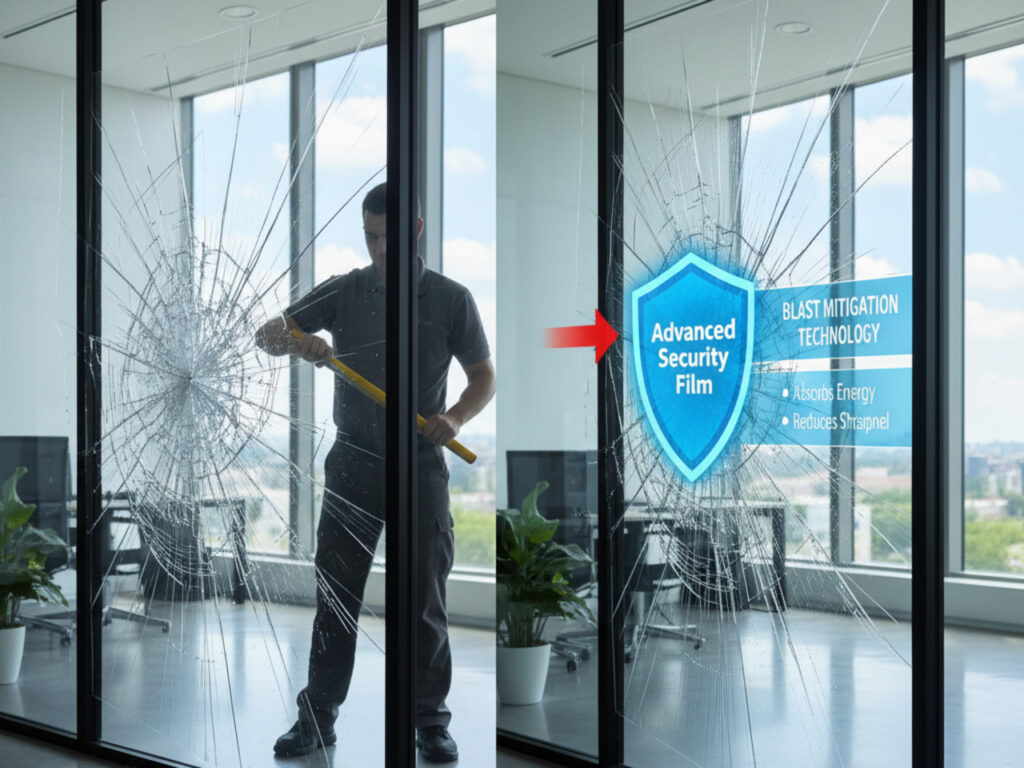
The core mechanism of security window film is its ability to hold glass fragments together upon impact. When tempered glass shatters, the film’s aggressive adhesive and durable polyester layers grip the thousands of small glass fragments. This bond prevents the glass from falling out of the frame and leaving an unsecured opening. Instead, the film holds the shattered glass together to form a protective membrane that significantly delays or deters entry.
Elevating Forced Entry Resistance: Deterring Intruders Effectively
For clients prioritizing security against break-ins, the ability of security film to hold glass together is paramount. A pane of tempered glass without film might offer mere seconds of resistance before an intruder can gain entry. With the addition of a high-performance security film, that same pane can withstand repeated impacts, turning a quick smash-and-grab into a prolonged, noisy, and highly visible attempt. This substantial increase in delay time provides critical minutes for security personnel or law enforcement to respond, effectively deterring many opportunistic attackers who seek swift, quiet access. It directly addresses the gap where tempered glass alone fails to meet a client’s demand for true forced entry protection.
Mitigating Blast Effects: Enhancing Structural Integrity Post-Impact
Beyond everyday security, advanced films offer a crucial layer of protection against more severe threats, such as blasts. In the event of an explosion, tempered glass would typically project dangerous shards over a wide area, posing a significant risk of injury or fatality. Security film acts as a critical containment system, absorbing some of the blast energy and, more importantly, holding the shattered glass firmly within the window frame or preventing it from becoming dangerous projectiles. This maintains the building envelope for a longer duration and drastically reduces the potential for blast-related injuries, a vital consideration for high-security facilities or buildings in vulnerable locations.
Unlocking Superior Protection: The Power of 3M Safety & Security Window Film
When considering advanced film solutions, the quality and proven performance of the product are non-negotiable. 3M, a pioneer in material science, offers a robust portfolio of safety and security window films that exemplify the highest standards in the industry. For project managers looking to meet stringent security specifications, understanding the underlying technology and support systems is crucial.
The Science Behind 3M’s Advanced Film Technologies
3M’s security window films are distinguished by their patented micro-layered construction. Instead of a single thick layer, 3M films consist of multiple, ultra-thin layers of polyester, creating a film that is surprisingly thin yet incredibly strong. This unique architecture allows the film to absorb and dissipate impact energy more effectively than conventional films, offering superior tear and puncture resistance. Combined with 3M’s proprietary, pressure-sensitive adhesive systems, these films bond exceptionally well to glass, providing unparalleled protection against various threats. This is the hallmark of 3M Safety & Security Window Film.
Exploring Different Grades and Applications of 3M Security Films
3M offers a comprehensive range of security films, each designed to meet specific threat levels and project requirements.
- Standard Security Films: Ideal for basic shatter protection, holding glass together to prevent injury from accidental breakage or minor impacts.
- Advanced Security Films (e.g., Scotchshield™ Safety & Security Film): Featuring enhanced tear resistance and thicker gauges, these films significantly improve forced entry protection and offer a higher degree of blast mitigation.
- Ultra Series Films: These are 3M’s top-tier films, utilizing the micro-layered technology for maximum impact and tear resistance, providing the highest level of protection against repeated impacts and extreme pressure events.
- Combined Solutions: Many 3M security films can also incorporate solar control or low-emissivity properties, allowing projects to achieve multiple performance benefits with a single application, such as reducing energy costs while enhancing security.
Choosing the appropriate grade involves a detailed assessment of the project’s specific vulnerabilities and the desired level of protection.
From Concept to Installation: Leveraging Window Film Depot’s Expertise as a Top 3M Installer
The performance of any advanced film solution is only as good as its installation. This is where the expertise of a certified installer becomes invaluable. Window Film Depot, as a top 3M installer, brings a wealth of experience and precision to every project. Their certified technicians follow rigorous installation protocols to ensure optimal adhesion, proper edge sealing, and seamless integration with the existing glazing system. Their involvement ensures that the film performs to its specified capabilities, from the initial consultation and threat assessment to the final application, guaranteeing peace of mind for project managers and their clients.
Long-Term Value: Durability, Warranty, and Maintenance of 3M Solutions
Investing in 3M security window films represents a long-term commitment to safety and security. Engineers design these films for long-term durability by incorporating scratch-resistant coatings and UV inhibitors that prevent yellowing and degradation. 3M stands behind its products with comprehensive warranties, covering both the film and, when installed by an authorized dealer, the labor. Maintenance is straightforward, typically requiring only standard glass cleaning practices. This combination of robust design, strong warranty backing, and minimal upkeep ensures that the enhanced security provided by 3M films delivers lasting value and a strong return on investment for any commercial or government project.
Strategic Implementation: Integrating Advanced Film Solutions into Your Projects
Integrating advanced film solutions effectively requires a strategic approach that moves beyond simply specifying a product. It involves a thorough understanding of project-specific needs, careful selection, professional installation, and a clear justification of the investment. For project managers, this means proactively addressing security challenges with informed decisions.
Assessing Security Vulnerabilities: A Project-Specific Approach
Before any film is selected, a comprehensive security vulnerability assessment is paramount. This involves identifying potential threats, evaluating existing security measures, and pinpointing specific areas where glass presents a weak point. Factors such as building location, occupancy, adjacent activities, and historical threat data should all inform this assessment. Is the primary concern forced entry, blast protection, or protection against natural disasters? Understanding these unique requirements allows for the precise tailoring of a film solution rather than a one-size-fits-all approach. This step ensures that the client’s specific demands for security are met directly and efficiently.
Selecting the Right Film: Matching Protection Levels to Threat Profiles
With a clear vulnerability assessment in hand, the next step is to select the most appropriate film. This is not merely about choosing the thickest film. It involves matching the film’s performance characteristics, such as tensile strength, tear resistance, and adhesive strength, to the identified threat profile. For instance, a facility needing to deter casual vandalism might opt for a different film than a government building requiring blast mitigation. Considerations also include balancing security needs with factors like natural light transmission, aesthetic impact, and local building codes. Collaborating with experts, such as 3M representatives or certified installers, is crucial during this selection phase to ensure optimal performance without over-specifying or under-specifying.
Installation Considerations: Best Practices for Optimal Performance
The efficacy of security film is heavily dependent on the quality of its installation. Professional installation by certified technicians adhering to best practices is non-negotiable.
- Clean Environment: Dust and debris can compromise adhesion and film clarity.
- Proper Edge Attachment: For maximum security, particularly against forced entry and blast, the film should be anchored to the window frame using a structural silicone or similar edge retention system. This prevents the entire sheet of film and glass from being pushed out of the frame.
- Curing Time: The adhesive requires a specific curing period to achieve its full bond strength, during which the film should not be disturbed.
Skipping these critical steps can severely diminish the film’s protective capabilities, rendering the investment less effective.
Budgeting and ROI: Justifying the Investment in Enhanced Security
While security films represent an added cost, they often provide a superior return on investment compared to alternative security measures. Replacing existing tempered glass with specialized security glazing, for example, can be prohibitively expensive and disruptive. Security film offers a cost-effective upgrade that leverages existing infrastructure. The ROI is realized through various benefits: reduced risk of property damage and theft, minimized injury potential from broken glass, avoided downtime after an incident, and enhanced occupant safety. Presenting clients with a clear analysis that quantifies these benefits, alongside the long-term durability and warranty of 3M solutions, helps project managers justify the investment and meet client expectations for a truly secure environment.
Conclusion: Key Takeaways and Next Steps
Recap: The Imperative to Move Beyond Tempered Glass for True Security
Our comprehensive analysis has illuminated a critical distinction for modern construction projects. The inherent purpose of what is tempered safety glass is to minimize injury upon breakage, not to resist forced entry or mitigate advanced security threats. While tempered glass is an essential component for meeting safety codes and preventing harm from accidental impact, its design to shatter into small, blunt fragments paradoxically makes it highly susceptible to rapid compromise during a security incident. This fundamental characteristic means that relying solely on tempered glass leaves significant vulnerabilities in a building’s perimeter security, directly impacting a project manager’s ability to satisfy a client’s specific demands for robust protection against intrusions.
Reaffirming the Thesis: Proactive Security Planning is Non-Negotiable
The core message remains clear: viewing what is tempered safety glass as a primary security barrier is a critical oversight. For project managers like Paul, understanding this limitation is paramount, as it directly impacts risk mitigation and client satisfaction. True security requires a proactive, layered approach that extends beyond baseline safety standards. Integrating advanced security window films addresses the shortcomings of tempered glass, providing a crucial line of defense against forced entry, blast fragmentation, and other dynamic threats. Such forward-thinking planning is not merely an upgrade. It is an essential component of modern building design, ensuring that security measures align with today’s complex threat landscape and meet the sophisticated expectations of informed clients.
Your Trusted Partner: Elevating Project Standards with Advanced Film Solutions
Elevating a project’s security profile to meet stringent client requirements demands collaboration with experts who understand both glass performance and advanced protective solutions. Incorporating high-performance security window films, such as those engineered for superior impact and tear resistance, transforms standard tempered glass into a formidable barrier.
Key advantages of partnering for advanced film solutions include:
- Enhanced Forced Entry Resistance: Significantly delays and deters intruders, buying critical response time.
- Shatter Retention: Holds broken glass safely within the frame, reducing injury risk and containing potential debris.
- Blast Mitigation: Provides protection against the devastating effects of pressure waves and flying glass fragments in the event of an explosion.
- Tailored Solutions: Expert consultation ensures the selection of the precise film specifications for each unique security challenge and building type.
By integrating these advanced film technologies, project managers can confidently deliver solutions that not only adhere to safety regulations but also far exceed baseline security expectations, providing a tangible and measurable enhancement to overall building resilience. This strategic enhancement directly addresses the sophisticated security demands that tempered glass alone cannot fulfill.
Frequently Asked Questions
What is tempered safety glass, and how is it made?
Tempered safety glass is a type of safety glazing made by heating ordinary annealed glass to over 1,100°F (600°C) and then rapidly cooling it in a process called quenching. This creates surface compression and internal tension, making the glass four to five times stronger than standard glass. Its key safety feature is that it shatters into small, blunt pieces upon impact, reducing injury risk.
What are the main differences between tempered glass vs laminated glass for security?
Tempered glass is designed to break into small, harmless pieces for injury prevention, offering minimal resistance to forced entry as it fails. Laminated glass, however, uses an interlayer to hold glass fragments together when shattered, maintaining the integrity of the opening and significantly delaying forced entry or preventing penetration. Laminated glass is generally considered superior for security applications.
Does tempered glass meet all safety glass requirements for buildings?
Tempered glass meets fundamental safety glass requirements, particularly those outlined by standards like ANSI Z97.1 and various building codes, which mandate its use in areas prone to human impact to prevent injury from breakage. However, these requirements primarily focus on mitigating injury risk, not on providing resistance against forced entry, ballistic threats, or blast mitigation, where tempered glass is largely ineffective.
Can security window film enhance the forced entry resistance of tempered glass?
Yes, security window film significantly enhances the forced entry resistance of tempered glass. When applied to tempered glass, the film’s strong adhesive and durable polyester layers hold the shattered glass pieces together within the frame. This prevents the immediate collapse of the glass barrier, turning a quick smash-and-grab into a prolonged and difficult attempt, thereby delaying intruders and buying critical response time.
How does 3M Safety & Security Window Film contribute to blast mitigation?
3M Safety & Security Window Film, with its patented micro-layered construction, acts as a critical containment system in the event of an explosion. It helps absorb some of the blast energy and, crucially, holds shattered glass firmly within the window frame or prevents it from becoming dangerous projectiles. This dramatically reduces the risk of blast-related injuries from flying glass fragments and helps maintain the building envelope longer.